A four-hour kayak fishing session burns between 400 and 1,200 calories depending on paddling intensity, water conditions, and your body weight. Kayak fishing qualifies as legitimate exercise because it combines sustained cardiovascular activity with resistance training for your upper body, core, and legs, while the fishing component adds intermittent bursts of strength work when casting, reeling, and landing fish.
Key Takeaways
- Kayak fishing burns 100-300 calories per hour depending on paddling intensity, water conditions, and whether you use a paddle or pedal kayak
- The activity primarily works your shoulders, back, arms, core, and obliques, with pedal kayaks adding significant leg engagement
- Paddle kayaks provide more upper-body workout than pedal-drive models, but pedal kayaks offer better leg conditioning
- Kayak fishing counts as moderate-intensity cardio when paddling steadily, with strength-training elements during casting and fish-fighting
- Water conditions dramatically affect calorie burn—rough water or current can double your energy expenditure compared to calm lakes
- Most anglers can use kayak fishing as their primary exercise if they fish 2-3 times weekly for 2+ hours per session
- Beginners should start with calm water and shorter sessions (1-2 hours) to build endurance and avoid overuse injuries
Does Kayak Fishing Count as Exercise?
Kayak fishing absolutely counts as exercise because it requires continuous physical effort to propel and control your kayak while simultaneously engaging multiple muscle groups during casting, reeling, and fish handling. Unlike motorized fishing from a boat, kayak anglers must provide all the propulsion through paddling or pedaling, which maintains an elevated heart rate throughout the outing.
The exercise intensity varies based on several factors:
- Paddling frequency: Constant paddling to fight wind or current versus occasional strokes on calm water
- Water conditions: Flat lakes require less effort than rivers with current or ocean kayak fishing with waves and wind
- Kayak type: Paddle kayaks demand more upper-body work; pedal kayaks shift effort to your legs
- Fishing activity: Casting heavy lures, fighting large fish, and reaching for gear all add resistance training elements
The American College of Sports Medicine classifies kayaking as moderate-intensity aerobic exercise when performed at a recreational pace. When you add the stop-and-go nature of fishing—periods of steady paddling interrupted by bursts of casting and fish-fighting—you create an interval training effect that can be more beneficial than steady-state cardio alone.
Common mistake: Many anglers anchor or drift for extended periods, which dramatically reduces the workout benefit. To maximize exercise value, choose spots that require active positioning or fish while slowly paddling along shorelines and structure.
How Many Calories Do You Burn Kayak Fishing?
Kayak fishing burns approximately 100-300 calories per hour for most anglers, with the wide range depending on your body weight, paddling intensity, water conditions, and kayak type. A 180-pound person paddling at a moderate pace in calm water burns roughly 150 calories per hour, while the same person battling wind and current can burn 250-300 calories per hour.
Here’s how different factors affect calorie burn:
Body weight impact:
- 130-pound angler: 90-200 calories/hour
- 180-pound angler: 120-280 calories/hour
- 230-pound angler: 150-350 calories/hour
Paddling intensity:
- Light paddling (calm water, frequent drifting): 100-150 calories/hour
- Moderate paddling (steady recreational pace): 150-220 calories/hour
- Vigorous paddling (fighting current or wind): 250-350 calories/hour
Water conditions:
- Calm lake or pond: baseline calorie burn
- Light current or wind: 20-30% increase
- Strong current, wind, or waves: 50-100% increase
A typical 4-hour kayak fishing trip with moderate paddling burns 600-1,000 calories total, comparable to an hour-long gym session. The calorie burn is spread over a longer period, making it feel less strenuous than concentrated exercise, but the cumulative effect is significant.
Choose kayak fishing for weight loss if: You prefer outdoor activities over gym workouts and can commit to 2-3 sessions weekly. The lower perceived exertion means you’re more likely to stick with it long-term compared to high-intensity gym routines you might dread.
What Muscles Does Kayak Fishing Work Out?
Kayak fishing primarily works your latissimus dorsi (lats), deltoids, trapezius, biceps, triceps, forearms, and core muscles including your rectus abdominis and obliques. Each paddle stroke engages your back and shoulder muscles to pull the blade through the water, while your core rotates and stabilizes your torso, and your arms control the paddle angle and recovery.
Upper body muscles engaged:
- Lats and rhomboids: Primary pulling muscles during the power phase of each stroke
- Deltoids: Stabilize your shoulders and lift the paddle during recovery
- Rotator cuff: Maintains shoulder stability throughout the paddling motion
- Biceps and triceps: Control paddle angle and provide additional pulling power
- Forearms and grip: Maintain paddle control for hours, building grip endurance
Core engagement:
- Obliques: Rotate your torso with each stroke, providing most of the power
- Rectus abdominis: Stabilizes your spine and maintains posture
- Lower back (erector spinae): Supports upright position and prevents slouching
Lower body involvement:
- Hip flexors and glutes: Brace your body against the seat and footrests
- Quadriceps and hamstrings: Provide stability and power transfer (especially in pedal kayaks)
- Calves: Maintain foot position on pedals or footrests
Fishing-specific movements add resistance training:
- Casting: Engages shoulders, chest, and triceps with each cast
- Reeling: Works biceps, forearms, and grip strength
- Fighting fish: Recruits back, shoulders, and core in sustained isometric contractions
- Reaching and twisting: Activates obliques and improves functional flexibility
Edge case: Stand-up fishing in a stable kayak adds significant leg and balance work, engaging your calves, quads, and stabilizer muscles throughout your lower body and core.
Is Kayak Fishing Better Exercise Than Regular Kayaking?
Kayak fishing provides comparable cardiovascular exercise to regular kayaking but adds intermittent strength training and functional movement that recreational kayaking lacks. The main difference is that fishing involves frequent stops, starts, and upper-body resistance work from casting and fish-fighting, creating an interval-style workout rather than the steady-state cardio of continuous paddling.
Kayak fishing advantages:
- Adds resistance training through casting (10-100+ casts per session)
- Includes grip strength and forearm endurance from reeling and rod handling
- Requires more core rotation and twisting to access gear and land fish
- Provides mental engagement that makes the physical effort feel less tedious
- Creates natural interval training with alternating paddling and fishing periods
Regular kayaking advantages:
- Maintains more consistent elevated heart rate for pure cardio benefits
- Covers more distance, increasing total calorie burn per hour
- Allows focus on paddling technique and efficiency
- Better for building sustained aerobic endurance
For overall fitness, kayak fishing offers more balanced exercise because it combines cardio with functional strength movements. Regular kayaking provides superior cardiovascular conditioning if you maintain a steady pace without breaks.
Choose kayak fishing if: You want a full-body workout disguised as recreation and prefer variety over repetitive motion. Choose regular kayaking if your primary goal is cardiovascular endurance and you enjoy sustained rhythmic exercise.
Can You Lose Weight from Kayak Fishing?
You can lose weight from kayak fishing if you maintain a consistent schedule of 2-3 sessions per week lasting 2-4 hours each, combined with a modest caloric deficit from your diet. A typical 3-hour session burns 300-900 calories depending on intensity, which creates a meaningful weekly calorie deficit when repeated regularly—but kayak fishing alone won’t overcome a poor diet.
Weight loss math:
- Three 3-hour sessions weekly at moderate intensity: 1,350-2,400 calories burned
- One pound of fat requires a 3,500-calorie deficit
- Kayak fishing alone could create 0.4-0.7 pounds of fat loss per week
- Combined with a 300-calorie daily diet reduction: 1.0-1.4 pounds lost per week
Factors that maximize weight loss:
- Paddle over pedal: Paddle kayaks burn 15-25% more calories than pedal-drive models
- Choose challenging conditions: River kayak fishing with current or windy lakes increase energy expenditure
- Minimize anchoring: Stay mobile and actively position your kayak rather than sitting stationary
- Add distance: Explore new water rather than fishing the same small area repeatedly
- Fish standing: If your kayak allows it, standing engages more muscles and burns additional calories
Realistic expectations: Kayak fishing works for weight loss because it’s enjoyable enough to maintain long-term, which matters more than the per-hour calorie burn. Many anglers find it easier to spend 10 hours weekly kayak fishing than to force themselves through 3 hours of gym workouts they dislike.
Common mistake: Treating kayak fishing trips as excuses to overeat. Bringing high-calorie snacks and post-trip restaurant meals can easily erase the caloric deficit you created on the water.
Is Kayak Fishing Good Cardio or Strength Training?
Kayak fishing functions primarily as moderate-intensity cardiovascular exercise with secondary strength-training benefits, placing it in the “cardio with resistance” category similar to swimming or rowing. Your heart rate typically stays in the 50-70% of maximum range during steady paddling, which qualifies as aerobic exercise, while casting and fish-fighting provide brief anaerobic bursts.
Cardiovascular benefits:
- Sustained elevated heart rate during paddling sessions
- Improved aerobic capacity with regular practice
- Enhanced cardiovascular endurance for daily activities
- Lower resting heart rate over time with consistent participation
Strength training benefits:
- Muscular endurance in shoulders, back, and core (not maximum strength)
- Improved grip strength and forearm development
- Core stability and rotational power
- Functional strength for real-world movements
What kayak fishing won’t do:
- Build significant muscle mass (insufficient resistance and volume)
- Develop maximum strength (no progressive overload)
- Replace dedicated strength training for serious muscle building
The activity is best classified as muscular endurance training rather than true strength training. You’re performing hundreds of low-resistance repetitions (paddle strokes) rather than the low-rep, high-resistance work needed to build maximum strength.
Combine kayak fishing with: Two weekly strength-training sessions focusing on legs and pushing movements (chest, shoulders) to balance the pulling-dominant motion of paddling. This creates a complete fitness program that addresses all muscle groups and movement patterns.
Do Pedal Kayaks Give You Less of a Workout Than Paddle Kayaks?
Pedal kayaks provide a different workout than paddle kayaks rather than simply “less” exercise—they shift the primary effort from your upper body to your legs while reducing overall calorie burn by approximately 15-25% at similar speeds. A pedal kayak allows you to maintain position and cover distance using leg power, which frees your hands for fishing but reduces the upper-body conditioning that makes paddle kayaking such effective exercise.
Paddle kayak workout profile:
- 70% upper body, 30% core, minimal legs
- 200-300 calories per hour at moderate pace
- Builds shoulder, back, and arm endurance
- Requires constant hand-paddle contact (limits fishing time)
- More intense workout per mile traveled
Pedal kayak workout profile:
- 60% legs, 30% core, 10% upper body
- 150-225 calories per hour at moderate pace
- Develops quadriceps, hamstrings, and hip flexor endurance
- Hands-free operation (more fishing, less exercise)
- Lower perceived exertion for same distance
Choose a pedal kayak if: You have shoulder or rotator cuff issues, want to maximize fishing time over exercise, or prefer leg-dominant workouts. Pedal kayaks are also better for anglers who need to cover long distances to reach fishing spots without arriving fatigued.
Choose a paddle kayak if: You want maximum upper-body conditioning, prefer traditional kayaking, or have knee problems that make pedaling uncomfortable. Paddle kayaks also cost significantly less and weigh less than pedal-drive models.
Edge case: Some serious fitness enthusiasts use pedal kayaks specifically to add leg training to their routine, treating the pedal drive like a recumbent bike on water. For these anglers, the pedal kayak provides a workout their paddle kayak doesn’t offer. Check out our pedal kayak guide for more details on different drive systems.

HANDS-FREE PEDAL POWER: Cover more water and keep attention on fish with a smooth fin-drive system built for efficient hunting and quiet movement. This pedal kayak delivers precise handling for kayak fishing adventures on lakes, rivers, and coastal waters.

Powerful & Responsive Propeller Drive System: Take control with our smooth kayak propeller drive system, offering hands-free power, quiet acceleration, and easy reverse maneuvering. Perfect for tight spaces, docks, or mangrove fishing

HyDryve II pedal system: The HyDryve II pedal system makes maneuvering in shallow water or around aquatic plants, an absolute breeze.
Is Kayak Fishing Enough Exercise for Beginners?
Kayak fishing provides sufficient exercise for beginners if practiced 2-3 times weekly for 2+ hours per session, meeting the American Heart Association’s recommendation of 150 minutes of moderate-intensity aerobic activity per week. For someone transitioning from a sedentary lifestyle, kayak fishing offers a low-impact entry point that builds cardiovascular fitness and muscular endurance without the joint stress of running or the intimidation factor of a gym.
Why kayak fishing works for beginners:
- Low perceived exertion: The recreational aspect distracts from physical effort
- Self-paced: You control intensity by choosing water conditions and paddling speed
- Progressive overload: Natural progression from calm ponds to rivers and ocean fishing
- Low impact: Minimal stress on knees, ankles, and hips compared to running
- Sustainable: Higher adherence rate because it’s enjoyable rather than purely exercise
Beginner progression plan:
Weeks 1-4:
- 1-2 hour sessions on calm water
- Focus on basic paddling technique
- Take frequent breaks
- Goal: Build baseline endurance
Weeks 5-8:
- 2-3 hour sessions
- Add light current or wind
- Reduce break frequency
- Goal: Increase stamina and confidence
Weeks 9-12:
- 3-4 hour sessions
- Explore varied water conditions
- Maintain active positioning
- Goal: Establish consistent routine
What beginners should add: One or two weekly sessions of basic strength training (bodyweight exercises or light weights) to prevent muscle imbalances from the pulling-dominant motion of paddling. Focus on pushing movements (push-ups, overhead press) and leg exercises (squats, lunges).
Common beginner mistake: Starting with too-long sessions in challenging conditions, leading to extreme soreness or injury that derails the new habit. Start conservatively and add duration and intensity gradually. Our beginner kayak fishing guide offers additional tips for getting started safely.
Common Mistakes That Reduce the Workout Benefits of Kayak Fishing
The biggest mistake anglers make is excessive anchoring or drifting, which transforms kayak fishing from active exercise into sedentary sitting that burns fewer calories than walking. Staying anchored for hours eliminates the cardiovascular component entirely, leaving only the minimal calorie burn from occasional casting and the isometric core engagement of maintaining seated posture.
Top workout-killing mistakes:
1. Anchoring for extended periods
- Reduces calorie burn by 60-80% compared to active paddling
- Eliminates cardiovascular benefits
- Turns the activity into passive sitting
- Fix: Use a drift sock instead of an anchor, or reposition frequently by paddling rather than anchoring
2. Poor paddling technique
- Arm-only paddling (not engaging core rotation) reduces power and calorie burn
- Reduces efficiency, causing early fatigue
- Increases injury risk to shoulders and elbows
- Fix: Rotate from your core, not your arms; the paddle is just the connection point
3. Choosing only calm, protected water
- Minimal resistance means minimal workout
- No progression or challenge
- Fitness plateaus quickly
- Fix: Gradually introduce wind, current, and waves as your skills improve
4. Overpacking gear
- Heavy kayaks are harder to transport, reducing trip frequency
- Excess weight increases drag, making paddling feel harder without proportional fitness benefit
- Fix: Minimize gear to essentials; a lighter kayak means more trips and better workouts
5. Sitting exclusively (never standing)
- Misses opportunity for balance training and leg engagement
- Reduces core activation
- Fix: If you have a stable fishing kayak, practice standing for short periods
6. Inconsistent schedule
- Sporadic trips prevent fitness adaptation
- Each session feels difficult because you never build base fitness
- Fix: Commit to specific days/times each week, treating kayak fishing like scheduled workouts
7. Neglecting complementary exercise
- Creates muscle imbalances (overdeveloped back, underdeveloped chest)
- Increases injury risk
- Limits overall fitness development
- Fix: Add 1-2 weekly sessions of pushing exercises and leg training

COMPLETE DRIFT CONTROL KIT: Includes drift sock, dump line, harness, buoy ball and rope float—all-in-one setup for immediate use with fishing boats, kayaks, canoes, pontoons and trolling boats

24 inch sea anchor for 15ft boat, and 30 feet kayak throw line with stainless steel clips

SIMPLE AND EFFECTIVE: Provides a convenient, simple and economical way to slow your drift or more-precisely follow breaklines or other fish-attracting structure when the wind kicks up
Does Kayak Fishing in Calm Water vs Rough Water Burn More Calories?
Kayak fishing in rough water burns 50-100% more calories than calm water fishing because you must paddle continuously to maintain position and control, fight wind and current, and engage your core constantly for balance and stability. A session that burns 150 calories per hour on a calm lake might burn 225-300 calories per hour in moderate wind and waves, with the difference increasing as conditions worsen.
Calorie burn by water conditions:
Calm lake or pond:
- Minimal current or wind
- Frequent drifting and anchoring possible
- 100-150 calories/hour for average angler
- Primarily upper-body engagement
Light wind or current:
- Requires occasional corrective strokes
- Must paddle to maintain position
- 150-200 calories/hour
- Adds core stability work
Moderate wind, waves, or current:
- Constant paddling required
- Significant balance and stability demands
- 200-280 calories/hour
- Full-body engagement including legs for bracing
Strong conditions (advanced anglers only):
- Continuous vigorous paddling
- High core activation for stability
- 280-400+ calories/hour
- Comparable to moderate-intensity gym cardio
Water type comparison:
- Calm lake: Lowest calorie burn, best for beginners
- River with current: Moderate to high burn depending on flow rate
- Windy reservoir: Variable burn based on wind speed and direction
- Coastal/ocean: Highest burn due to waves, wind, and tidal current
Safety consideration: Don’t choose rough water solely for exercise benefits. Match conditions to your skill level. Pushing beyond your abilities creates dangerous situations that outweigh any fitness gains. Progress gradually from protected water to more challenging environments as your skills and fitness improve.
Strategic approach: Plan your season to naturally progress through conditions. Start with calm water in spring, build fitness through summer, and tackle more challenging fall conditions when you’re in peak form.
Is Kayak Fishing Good Exercise for Seniors or People with Bad Knees?
Kayak fishing is excellent exercise for seniors and people with knee problems because it provides effective cardiovascular conditioning and strength training without impact stress on joints, making it one of the few outdoor activities that becomes more accessible with age rather than less. The seated position eliminates the weight-bearing load that makes walking, hiking, and running problematic for people with arthritis or joint issues.
Benefits for seniors and those with joint issues:
- Zero impact: No pounding on knees, hips, or ankles
- Seated support: Kayak seat provides back support and reduces fall risk
- Adjustable intensity: Easy to moderate pace as needed
- Upper-body focus: Builds strength in areas that decline with age
- Balance training: Improves stability without fall risk of standing exercises
- Outdoor exposure: Vitamin D and mental health benefits
Considerations for seniors:
Kayak selection:
- Choose a stable, wide kayak (32+ inches) for easy entry and exit
- Sit-on-top designs are easier to get in and out of than sit-inside models
- Consider a pedal kayak if you have shoulder or rotator cuff issues
- Look for kayaks with comfortable, adjustable seats with good back support
Safety modifications:
- Fish with a partner or in groups
- Stay close to shore, especially when starting
- Wear a properly fitted PFD (personal flotation device) at all times
- Bring a waterproof phone or VHF radio
- Check weather carefully and avoid wind forecasts above 10-15 mph
Physical limitations to consider:
- Shoulder problems: Pedal kayaks eliminate repetitive overhead motion
- Knee issues: Paddle kayaks are better (pedaling may aggravate knee pain)
- Limited flexibility: Sit-on-top kayaks require less flexibility than sit-inside models
- Reduced grip strength: Use paddles with ergonomic grips and consider paddle gloves
When kayak fishing may not be appropriate:
- Severe balance disorders (high capsize risk)
- Inability to swim or extreme water fear
- Recent surgery or acute injuries
- Severe cardiovascular disease without medical clearance
Recommendation: Seniors and those with joint issues should start with a stable sit-on-top kayak on calm, warm water with a fishing partner nearby. Take a basic kayaking safety course to build confidence and skills. Many find kayak fishing becomes their primary exercise activity because it’s enjoyable enough to maintain consistently.

STABLE: The tunnel hull offers maximum stability for a secure and steady ride. It also makes it incredibly easy to get in and out of the kayak. Its wide and flat deck platform allows you to safely stand up to cast lines and reel in fish without tripping over your gear.
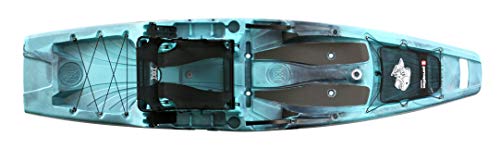
Ultimate Fishing and Storage Space: Perception Outlaw 11.5 is a fishing-optimized sit on top kayak with superior stability and an impressive weight capacity of 425 lbs. It boasts a large rear tankwell and front storage area for all your fishing and personal gear.
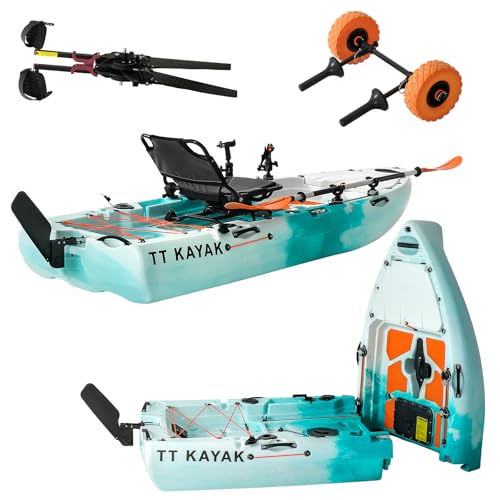
【2-Piece Modular Design | 573 lbs Capacity】This 110" (9.2 ft) sit-on-top fishing kayak splits into two sections (57" front + 53" rear), each light enough for one person to carry. With a total weight of only 86 lbs and a wide 38" stable hull, it loads easily into SUVs, pickups, or vans — including Tesla Model Y and Cybertruck. Max capacity: 573 lbs / 260 kg, suitable for most anglers with full gear.
How Long Do You Need to Kayak Fish to Get a Good Workout?
A good workout from kayak fishing requires a minimum of 90 minutes to 2 hours of active paddling time, which typically translates to a 2.5-3 hour total trip when you account for launching, rigging, and time spent stationary while fishing. This duration allows you to burn 250-500 calories and accumulate sufficient cardiovascular stimulus to improve fitness, assuming you maintain moderate paddling intensity rather than sitting anchored for extended periods.
Workout duration by fitness goal:
Minimum effective dose (maintaining current fitness):
- 90-120 minutes per session
- 2 sessions per week
- Moderate intensity (can hold a conversation while paddling)
- Total: 3-4 hours weekly
Fitness improvement (building endurance and strength):
- 2-3 hours per session
- 2-3 sessions per week
- Mix of moderate and vigorous intensity
- Total: 6-9 hours weekly
Serious training (kayak fishing as primary exercise):
- 3-4 hours per session
- 3-4 sessions per week
- Include challenging water conditions
- Total: 9-16 hours weekly
Time breakdown for a typical 3-hour trip:
- Launch and setup: 15-20 minutes (minimal calorie burn)
- Active paddling: 90-120 minutes (primary workout time)
- Stationary fishing: 30-60 minutes (minimal calorie burn)
- Return paddle: 20-30 minutes (often higher intensity)
- Load and pack: 10-15 minutes (minimal calorie burn)
Maximizing workout efficiency:
- Front-load the paddling: Explore distant spots first while you’re fresh
- Minimize stationary time: Fish while slowly moving rather than anchoring
- Add interval intensity: Include 5-10 minute bursts of faster paddling
- Choose longer routes: Plan trips that require distance to reach fishing spots
For busy schedules: Three 90-minute sessions provide better fitness results than one 4-hour weekend trip. Frequency matters more than duration for cardiovascular adaptation and habit formation.
Edge case: Tournament anglers who spend 8-12 hours on the water get exceptional workouts but also risk overuse injuries. If you’re fishing this much, pay extra attention to stretching, recovery, and cross-training to prevent repetitive strain injuries.
Can Kayak Fishing Replace Going to the Gym?
Kayak fishing can replace gym workouts for general fitness and health maintenance if you fish 2-3 times weekly for 2+ hours per session and add minimal supplementary exercise at home, but it cannot fully replace a comprehensive gym program that includes heavy strength training and dedicated leg work. The activity provides excellent cardiovascular conditioning and upper-body muscular endurance but lacks the progressive resistance needed to build maximum strength or significant muscle mass.
What kayak fishing provides:
- ✅ Cardiovascular fitness (aerobic capacity)
- ✅ Upper-body muscular endurance
- ✅ Core strength and stability
- ✅ Functional fitness for daily activities
- ✅ Calorie burn for weight management
- ✅ Mental health benefits
What kayak fishing lacks:
- ❌ Progressive overload for maximum strength
- ❌ Sufficient leg training (except pedal kayaks)
- ❌ Pushing movements (chest, shoulders)
- ❌ High-intensity interval training
- ❌ Flexibility and mobility work
Minimal home supplement routine (15-20 minutes, 2x weekly):
- Push-ups or dumbbell chest press: 3 sets of 10-15 reps
- Squats or lunges: 3 sets of 12-15 reps
- Overhead press: 3 sets of 10-12 reps
- Plank holds: 3 sets of 30-60 seconds
- Basic stretching: 5 minutes
This combination creates a balanced program that addresses the gaps in kayak fishing’s exercise profile.
Choose kayak fishing over the gym if:
- You hate traditional gym workouts and struggle with consistency
- Your primary goals are general fitness and weight management (not bodybuilding)
- You value outdoor time and mental health benefits
- You have 6+ hours weekly to dedicate to fishing
Keep the gym membership if:
- You’re training for specific strength or physique goals
- You need structured progression and measurable benchmarks
- You prefer shorter, more intense workouts
- Weather or water access limits your kayak fishing frequency
Real-world example: Many kayak anglers maintain excellent overall fitness with 3 weekly fishing sessions (8-10 hours total) plus one 30-minute home workout for pushing movements and legs. This approach provides 95% of the health benefits of a full gym program while being far more enjoyable and sustainable for people who love fishing.
For those just getting started, our fishing kayak buying guide can help you choose the right kayak to support your fitness and fishing goals.
Frequently Asked Questions
Does kayak fishing build muscle?
Kayak fishing builds muscular endurance and moderate muscle tone in your back, shoulders, arms, and core, but it won’t build significant muscle mass like weight training. The resistance is too low and repetitions too high for hypertrophy, making it more similar to swimming than lifting weights.
How many calories does 4 hours of kayak fishing burn?
Four hours of kayak fishing burns approximately 400-1,200 calories depending on your body weight, paddling intensity, and water conditions. A 180-pound person paddling at moderate intensity in calm water burns roughly 600-800 calories during a 4-hour session.
Is kayak fishing harder than regular kayaking?
Kayak fishing is not necessarily harder but involves more varied physical demands, including upper-body resistance work from casting and fish-fighting that recreational kayaking lacks. The cardiovascular intensity is often lower because fishing involves frequent stops rather than continuous paddling.
Can kayak fishing help you lose belly fat?
Kayak fishing can help reduce overall body fat, including belly fat, when combined with a caloric deficit from diet, but it cannot spot-reduce fat from your midsection. The core engagement during paddling does strengthen abdominal muscles, which become more visible as you lose fat.
What’s better for exercise, a paddle kayak or pedal kayak?
Paddle kayaks provide better upper-body exercise, burning 15-25% more calories per hour than pedal kayaks. Pedal kayaks offer superior leg conditioning and allow hands-free fishing but reduce overall workout intensity. Choose based on your fitness priorities and any existing injuries.
Is kayak fishing good for your back?
Kayak fishing strengthens your back muscles (lats, rhomboids, trapezius) through repetitive pulling motions, but poor posture or technique can cause lower back pain. Maintain an upright posture, use proper paddling technique with core rotation, and take breaks to stretch during long sessions.
How often should I kayak fish for fitness benefits?
Fish 2-3 times per week for 2-4 hours per session to achieve meaningful fitness benefits. This frequency provides sufficient cardiovascular stimulus and recovery time, meeting the American Heart Association’s recommendation of 150 minutes of moderate-intensity aerobic activity weekly.
Do you need to be in shape to start kayak fishing?
You don’t need to be in shape to start kayak fishing, but basic mobility to get in and out of the kayak and enough upper-body strength to paddle for 30-60 minutes is helpful. Start with short sessions on calm water and build endurance gradually over several weeks.
Does kayak fishing count as cardio?
Kayak fishing counts as moderate-intensity cardiovascular exercise when you maintain steady paddling, elevating your heart rate to 50-70% of maximum. The cardio benefit decreases significantly if you spend most of your time anchored or drifting without paddling.
Can seniors safely kayak fish for exercise?
Seniors can safely kayak fish for exercise by choosing stable, wide kayaks, fishing calm water close to shore, wearing a PFD, and starting with short sessions to build confidence and endurance. The zero-impact nature makes it ideal for people with joint issues who can’t run or hike.
What muscles get sore after kayak fishing?
First-time kayak anglers typically experience soreness in their shoulders, upper back (lats and rhomboids), obliques, and forearms. This soreness usually peaks 24-48 hours after fishing and decreases significantly after 3-4 sessions as your body adapts.
Is kayak fishing better exercise than fishing from a boat?
Kayak fishing provides significantly more exercise than motorized boat fishing because you must propel and position the kayak using your own power. Boat fishing is essentially sedentary except for casting and reeling, while kayak fishing adds continuous cardiovascular and strength work.
Conclusion
Kayak fishing absolutely qualifies as legitimate exercise, offering a unique combination of cardiovascular conditioning, muscular endurance training, and functional strength work that few other recreational activities provide. With calorie burns ranging from 400-1,200+ per session and comprehensive engagement of your upper body, core, and (with pedal kayaks) legs, it delivers fitness benefits comparable to gym workouts while providing the mental health advantages of outdoor recreation.
The key to maximizing kayak fishing as exercise is consistency and intentionality. Fish 2-3 times weekly, minimize stationary time by staying mobile on the water, gradually progress to more challenging conditions, and supplement with basic pushing movements and leg exercises at home. This approach creates a balanced fitness program that most people find far more sustainable than traditional gym routines because the recreational aspect makes the physical effort feel like play rather than work.
Your next steps:
- Assess your current fitness level and choose appropriate water conditions and session lengths
- Select the right kayak for your goals—paddle for maximum upper-body work, pedal for leg conditioning and hands-free fishing
- Schedule specific days and times for kayak fishing trips to build consistency
- Track your sessions to ensure you’re meeting the 150+ minutes weekly target for health benefits
- Add 1-2 weekly home workouts focusing on pushing movements and legs to balance your fitness
- Progress gradually from calm, protected water to more challenging conditions as your skills and fitness improve
Whether you’re looking to lose weight, build functional strength, improve cardiovascular health, or simply find an enjoyable way to stay active, kayak fishing offers a proven path to better fitness that doesn’t feel like exercise. The best workout is the one you’ll actually do consistently, and for many anglers, kayak fishing becomes a lifelong fitness habit disguised as their favorite hobby.