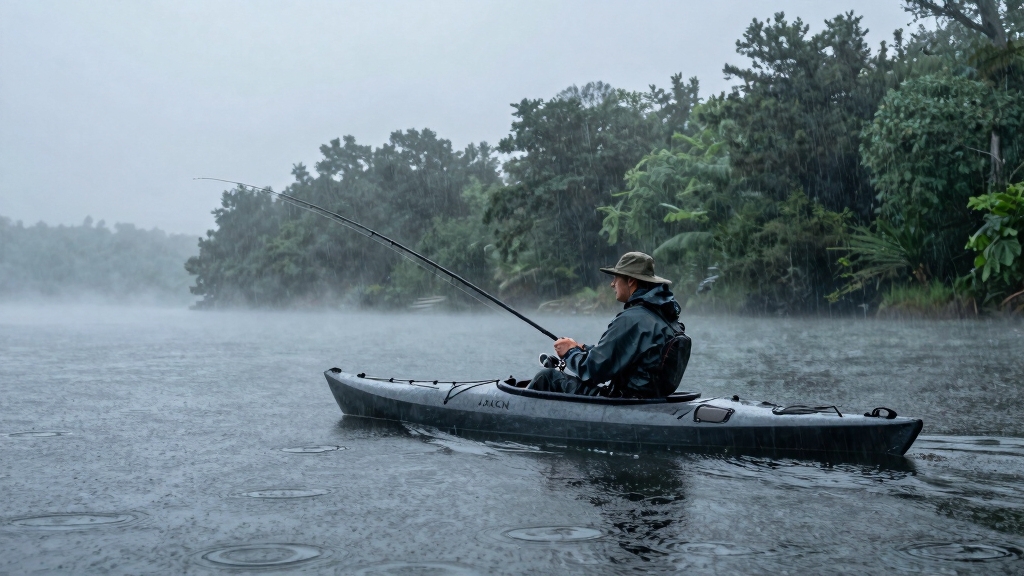
More than 60% of kayak anglers cancel their trips when rain appears in the forecast, but they’re often missing some of the best fishing opportunities of the season. Kayak fishing in rain can be absolutely worth it when you have the right gear, understand the safety limits, and know how fish behavior changes in wet conditions. Light to moderate rain often triggers feeding activity and reduces fishing pressure, giving prepared anglers a significant advantage over fair-weather competitors.
Key Takeaways
- Light to moderate rain is generally safe and productive for kayak fishing, while thunderstorms and heavy downpours require immediate evacuation
- Fish often feed more actively during rain due to increased oxygen levels, reduced light penetration, and insects washing into the water
- Proper rain gear is essential: waterproof jacket with hood, dry bags for electronics, and non-slip footwear prevent discomfort and equipment damage
- Lightning poses the greatest danger when kayak fishing in rain; exit the water immediately if you see lightning or hear thunder within 10 seconds
- Visibility and hypothermia risks increase in rainy conditions, making it unsuitable for beginners without experienced guidance
- Your existing kayak works fine in rain as long as it has adequate drainage (scupper holes or bilge pump access)
- Electronics need waterproof protection through marine-rated cases, dry bags, or built-in waterproof housings rated IPX7 or higher
- Rain fishing requires no special techniques for most species, though topwater lures and shallow presentations often outperform deep-water tactics
Is It Safe to Kayak Fish in the Rain?
Kayak fishing in light to moderate rain is generally safe when you monitor weather conditions, wear appropriate safety gear, and understand your limits. The primary safety concerns are lightning, reduced visibility, hypothermia from prolonged exposure, and increased water flow in rivers or tidal areas.
Safe rain fishing conditions include:
- Light to moderate steady rain without lightning
- Visibility of at least 100 yards
- Water temperature above 60°F (or you’re wearing appropriate thermal protection)
- Calm to moderate winds (under 15 mph)
- No flash flood warnings for river systems
Immediate evacuation is required when:
- Lightning is visible or thunder is heard
- Rain becomes so heavy you can’t see the shoreline
- Wind speeds exceed your comfort level or kayak’s rating
- You begin shivering uncontrollably (early hypothermia sign)
- Water levels rise rapidly in rivers or streams
Always file a float plan with someone onshore, carry a waterproof VHF radio or cell phone in a dry bag, and wear your personal flotation device at all times. Rain reduces your visibility to other boaters, so consider adding a bright flag or light to your kayak. For more foundational safety practices, review our kayak safety guidelines.
Common mistake: Many anglers focus only on lightning but ignore hypothermia risk. Even in summer, prolonged exposure to rain and wind can drop your core temperature dangerously low, especially if you’re wet and sitting still while fishing.
What Are the Benefits of Fishing in the Rain From a Kayak?
Rain creates several advantages for kayak anglers, including increased fish activity, reduced competition, better stealth, and access to feeding patterns that don’t occur in sunny weather. Fish often move into shallower water and feed more aggressively during and immediately after rain events.
Key benefits of rain fishing:
- Reduced fishing pressure – Most anglers stay home, giving you prime spots to yourself
- Increased oxygen levels – Rain aerates the water, triggering fish activity especially in warm months
- Natural food sources – Insects, worms, and terrestrial prey wash into the water
- Lower light conditions – Fish feel safer moving into shallow feeding zones
- Cooler water temperatures – Summer rain can drop surface temps and activate lethargic fish
- Noise cover – Rain on the water surface masks your paddle strokes and movements
- Overcast skies – Extend prime feeding times beyond the typical dawn and dusk windows
The kayak advantage becomes even more pronounced in rain because you can access shallow, structure-rich areas that larger boats avoid, and your low profile makes you nearly invisible to fish in low-light conditions. This combination often produces exceptional catches when other anglers are sitting at home.
Choose rain fishing if: You’re targeting species like bass, pike, or panfish that feed aggressively in low-light conditions, and you have waterproof gear that keeps you comfortable for 3-4 hours on the water.
Do Fish Bite More When It Rains?
Yes, fish typically bite more during light to moderate rain due to increased oxygen, reduced light penetration, and the influx of food sources washing into the water. The effect is most pronounced in warm weather when rain cools surface temperatures and breaks up stagnant conditions.
Why rain triggers feeding:
- Oxygen boost – Raindrops aerate surface water, especially important in summer when oxygen levels drop
- Insect activity – Flying insects get knocked onto the water surface, triggering surface-feeding fish
- Runoff food – Worms, grubs, and terrestrial prey wash into the water from banks and vegetation
- Barometric pressure changes – Falling pressure before rain often triggers a feeding frenzy
- Reduced predator visibility – Fish feel safer leaving cover to feed in dimmer conditions
The intensity matters significantly. Light, steady rain produces the best fishing, while heavy downpours can muddy the water too quickly and actually shut down the bite. The 2-3 hours before a rain system arrives often produces the most aggressive feeding as barometric pressure drops.
Species-specific responses:
- Bass (largemouth and smallmouth) – Extremely active in light rain, especially in shallow water
- Pike and muskie – Hunt aggressively during overcast, rainy conditions
- Panfish (bluegill, crappie) – Move shallow and feed actively on insects
- Trout – Excellent rain fishing, especially when terrestrial insects are abundant
- Catfish – Less affected by rain but benefit from increased water flow and scent dispersal
Edge case: In already murky or high-flow water (like after several days of rain), additional rain may reduce bite rates because fish struggle to locate prey in extremely turbid conditions.
Kayak Fishing in Rain vs Sunny Weather: Which Is Better?
Neither rain nor sun is universally better for kayak fishing; the best choice depends on target species, water temperature, season, and your comfort level. Rain often produces more active fish and less competition, while sunny weather offers safer conditions, better visibility, and more predictable fish location patterns.
Rain fishing advantages:
- More aggressive fish feeding behavior
- Access to prime spots without crowds
- Extended feeding windows (all-day action possible)
- Better stealth and approach opportunities
- Cooler conditions in hot summer months
Sunny weather advantages:
- Safer conditions (no lightning risk, better visibility)
- Easier to spot structure, vegetation, and fish
- More comfortable for long sessions
- Better for sight-fishing species
- Electronics and gear stay dry without extra protection
Choose rain when: You’re targeting aggressive feeders (bass, pike, panfish) in warm weather, you have proper rain gear, and forecasts show steady light rain without storms. The best rain fishing occurs in spring through early fall when water temperatures are moderate to warm.
Choose sun when: You’re a beginner, fishing unfamiliar water, targeting deep-water species, or conditions include cold water temperatures where hypothermia risk increases. Sunny weather is also better for techniques requiring precise lure placement or sight-fishing.
For anglers who fish frequently, developing rain-fishing skills opens up significantly more fishing days per year and often produces trophy catches when fair-weather anglers stay home. Many experienced kayak anglers specifically target rainy days for their best opportunities.
What Gear Do I Need for Kayak Fishing in the Rain?
Essential rain fishing gear includes a waterproof jacket with hood, waterproof pants or bibs, dry bags for electronics and valuables, non-slip footwear, and a brimmed hat or hood to keep rain off your face. Quality rain gear transforms a miserable experience into a comfortable, productive fishing session.
Core rain gear checklist:
Clothing layers:
- Waterproof/breathable rain jacket (not just water-resistant)
- Waterproof pants or fishing bibs with suspenders
- Moisture-wicking base layer (avoid cotton)
- Insulating mid-layer for cool conditions
- Wide-brimmed waterproof hat or jacket hood
Protection and safety:
- PFD (personal flotation device) worn at all times
- Waterproof VHF radio or cell phone in dry bag
- Bright-colored clothing or flag for visibility
- Whistle attached to PFD
- Headlamp or flashlight in waterproof case
Equipment protection:
- Dry bags (multiple sizes) for electronics, phone, wallet
- Waterproof tackle boxes or bags
- Rod covers or sleeves (optional but helpful)
- Towels in waterproof bag for drying hands
- Waterproof camera case if documenting catches
Kayak-specific items:
- Bilge pump or large sponge for removing water
- Extra paddle leash (wet paddles are slippery)
- Anchor system to stay positioned in wind
- Scupper plugs if fishing sit-on-top kayak in cold water
Your fishing kayak should already have adequate drainage through scupper holes or a cockpit drain, but verify water isn’t pooling before heading out in rain.
Investment priority: Start with a quality rain jacket ($100-200 range) and dry bags for electronics. These two items provide the most significant improvement in comfort and equipment protection. Budget rain gear often fails within a season, while quality pieces last for years.

High quality special waterproof and windproof fabric offers a breathable and comfortable wear experience in any kinds of weather condition

Silicone case wraps around the 4 corners of your phone Works with side mounted and center mounted cameras.

Crafted with a premium ripstop polyester shell and replaceable EPE foam inside for superior buoyancy. Inside zipper opening for convenient to take out the floating foam to be a super thin and breathable vest.
How to Stay Dry While Kayak Fishing in Rain
Staying completely dry while kayak fishing in rain is nearly impossible, but you can stay comfortable by managing moisture, protecting core body areas, and choosing breathable waterproof gear that prevents sweat buildup. The goal is controlling moisture rather than achieving total dryness.
Effective moisture management strategies:
- Layer properly – Start with moisture-wicking synthetic or merino wool base layer, add insulation if cool, finish with waterproof shell
- Ventilate your rain gear – Open pit zips and adjust closures to prevent sweat accumulation
- Protect your core and head – These areas lose heat fastest when wet
- Keep one dry towel – Store in waterproof bag for drying hands before handling electronics or eating
- Change positions regularly – Sitting still in wet gear accelerates heat loss
- Use a spray skirt – For sit-inside kayaks, this keeps water out of the cockpit
- Install scupper plugs strategically – In sit-on-top kayaks, plug some scuppers to reduce water entry while maintaining drainage
Breathability matters more than waterproofing: A fully waterproof but non-breathable rain suit will trap sweat and leave you soaked from the inside. Look for gear with ratings like Gore-Tex, eVent, or similar breathable waterproof membranes that allow moisture vapor to escape while blocking rain.
Quick tip: Apply a DWR (durable water repellent) treatment to your rain gear annually. Even quality waterproof fabrics lose their ability to shed water over time, and reapplication restores performance significantly.
Common mistake: Wearing too many layers under rain gear. You’ll generate heat while paddling and fishing, and excess insulation causes sweating that leaves you wet and cold. Start slightly cool; you’ll warm up quickly once active.

Waterproof & Windproof for Ultimate Protection – This rain jacket men is made of high-quality waterproof fabric, effectively blocking rain while offering excellent wind resistance to keep you dry and comfortable outdoors.

Ultra-Lightweight & Packable Design – This rain jacket men is made with an ultra-light fabric; even size 4XL weighs only 0.7 lb (about the weight of a 330 ml soda), making this mens rain jacket easy to wear and carry anywhere with the included portable storage bag.

Enhanced Waterproof: Outdoor Ventures Womens raincoat features high density polyester fabric with 100% fully sealed and TPU membrane, with 10000mm H2O in waterproof level. All zippers outside are 100% fully sealed, prevents water droplets from soaking through the inside garment's surface, keeping you completely dry.
Common Mistakes People Make Kayak Fishing in Rain
The most common mistakes when kayak fishing in rain include ignoring lightning danger, wearing cotton clothing, failing to protect electronics, and staying out too long as conditions deteriorate. These errors range from uncomfortable to genuinely dangerous.
Critical mistakes to avoid:
Safety errors:
- Ignoring lightning – “It’s far away” thinking kills people; exit water when thunder is audible
- Skipping the PFD – Rain reduces visibility and increases capsize risk; always wear it
- Fishing alone – Rain emergencies escalate faster; bring a buddy or tell someone your plan
- Ignoring hypothermia signs – Shivering, confusion, and fumbling hands require immediate action
Gear and comfort errors:
- Wearing cotton – “Cotton kills” in wet conditions; it stays wet and pulls heat from your body
- Cheap rain gear – Water-resistant (not waterproof) gear fails in sustained rain
- Unprotected electronics – One splash can destroy a $500 fish finder; use proper cases
- Forgetting spare dry clothes – Keep a complete change of clothes in your vehicle
- No towel access – Wet hands can’t grip paddles or handle fish safely
Fishing errors:
- Using the same tactics – Rain changes fish location and feeding; adjust your approach
- Staying in one spot – Fish move during rain; cover water to find active feeders
- Ignoring water clarity changes – Switch to brighter lures or scent-based baits in muddy water
- Fishing through heavy rain – Sometimes the smart move is taking a break under cover
Edge case: In river kayak fishing, rain upstream can cause sudden water level rises even when it’s not raining at your location. Always check upstream weather and be prepared to exit quickly if water begins rising or flowing faster.
Should Beginners Kayak Fish in the Rain?
Beginners should avoid kayak fishing in rain until they’ve developed solid paddling skills, self-rescue abilities, and comfort managing their kayak in normal conditions. Rain adds complexity that can overwhelm new anglers and create dangerous situations when basic skills aren’t yet automatic.
Prerequisites before rain fishing:
- At least 5-10 successful kayak fishing trips in good weather
- Demonstrated ability to re-enter kayak after capsize
- Comfortable paddling in light wind and chop
- Understanding of weather patterns and forecast interpretation
- Proper rain gear and safety equipment already owned and tested
Beginner-friendly introduction to rain fishing:
- Start with light drizzle – Not your first rain experience in a kayak
- Fish familiar water – Know the layout, hazards, and exit points
- Go with experienced anglers – Learn from someone who regularly fishes in rain
- Stay close to shore – Keep launch point visible and within easy paddling distance
- Set a time limit – Plan for 2 hours maximum on your first rain trip
- Pick warm weather – Summer rain is more forgiving than spring or fall
The learning curve for kayak fishing is steep enough without adding weather challenges. New anglers should focus on mastering boat control, fish handling, and basic safety before introducing rain variables. For foundational skills, explore our beginner kayak fishing resources.
Choose rain fishing when: You’ve capsized and successfully re-entered your kayak at least once in practice, you own proper rain gear, and you’re fishing with someone experienced who can assist if problems arise.
When Is Rain Too Heavy for Kayak Fishing?
Rain becomes too heavy for kayak fishing when visibility drops below 100 yards, water accumulates faster than your kayak can drain, or conditions include lightning, strong winds, or rapidly rising water levels. These thresholds vary slightly based on your experience level and kayak type.
Clear exit signals:
- Visibility under 100 yards – Can’t see shoreline or navigate safely
- Lightning or thunder – Any electrical activity requires immediate evacuation
- Wind gusts over 15-20 mph – Creates dangerous waves and paddling difficulty
- Heavy downpour – Rain so intense it’s painful on exposed skin
- Water accumulation – Kayak taking on water faster than scuppers drain
- Hypothermia symptoms – Uncontrollable shivering, confusion, loss of coordination
- Flash flood warnings – Especially critical for river fishing
- Deteriorating forecast – Conditions expected to worsen significantly
The 30-30 lightning rule: If you see lightning and hear thunder in less than 30 seconds, lightning is within 6 miles and you should be off the water. Wait 30 minutes after the last thunder before returning.
Intensity scale for decision-making:
- Light rain (can see 1/4 mile+) – Generally safe, excellent fishing
- Moderate rain (visibility 100-1/4 mile) – Safe for experienced anglers with proper gear
- Heavy rain (visibility under 100 yards) – Exit the water
- Severe storms (lightning, high winds, hail) – Dangerous; seek immediate shelter
River-specific considerations: Rain intensity matters less than watershed size and soil saturation. A moderate rain after a dry period may be safe, while light rain on already-saturated ground can cause flash flooding. Always check upstream weather conditions and water level gauges before fishing rivers in any rain.
Common mistake: Waiting to see if conditions improve. Weather on the water deteriorates faster than forecasts predict. When you’re questioning whether it’s too rough, it probably is. Exit early rather than pushing your limits.
Do I Need a Different Kayak for Fishing in Rain?
No, you don’t need a different kayak for fishing in rain; your existing fishing kayak will perform the same in wet conditions as long as it has adequate drainage through scupper holes (sit-on-top) or a cockpit drain (sit-inside). Rain affects your gear and comfort, not your kayak’s fundamental capabilities.
Kayak features that help in rain:
- Self-bailing scupper holes – Sit-on-top kayaks drain automatically
- Sealed storage hatches – Keep spare clothes and gear dry
- Adequate deck space – Room for dry bags and waterproof containers
- Good stability – Confidence in rough conditions matters more in rain
- Rod holders – Free your hands for paddling and managing gear
Sit-on-top vs sit-inside in rain:
Sit-on-top advantages:
- Self-draining design handles rain accumulation automatically
- Easier to manage water that does collect
- Simpler to re-enter after capsize
- More popular for fishing, so better gear compatibility
Sit-inside advantages:
- Spray skirt keeps rain out of cockpit entirely
- Better protection from wind and spray
- Warmer in cold conditions
- Lower profile in wind
Most kayak anglers prefer sit-on-top designs for fishing regardless of weather, and these work perfectly well in rain. The scupper holes that drain water when you paddle also drain rainwater continuously. For more guidance on choosing the right boat, see our fishing kayak buying guide.
Optional modifications for rain fishing:
- Add scupper plugs for cold-water fishing (reduces water entry)
- Install additional sealed storage hatches
- Add a small bilge pump for sit-inside kayaks
- Mount a waterproof electronics case or housing
Choose a different kayak only if: Your current kayak lacks basic stability, has no drainage system, or doesn’t have space for the dry bags and gear you need. Rain doesn’t require a specialty kayak, but it does expose weaknesses in poorly designed boats.
How to Keep Electronics Dry When Kayak Fishing in Rain
Keep electronics dry during rain fishing by using marine-rated waterproof cases (IPX7 or higher), mounting fish finders in waterproof housings, storing phones and radios in dry bags, and creating redundant protection layers for critical devices. Even “waterproof” electronics benefit from additional protection in sustained rain.
Protection strategies by device:
Fish finders and GPS units:
- Use manufacturer’s waterproof housing or marine-rated case
- Apply silicone sealant around mounting hardware
- Cover screen with clear waterproof protector
- Verify all cable connections have waterproof seals
- Consider removable units you can store in dry bag when not actively using
Smartphones:
- Store in waterproof dry bag or hard case rated IPX7 minimum
- Use waterproof phone pouch with lanyard for quick access
- Keep in sealed hatch when not needed
- Bring portable charger in separate dry bag
- Consider waterproof Bluetooth speaker for hands-free calls
Cameras:
- Use waterproof action cameras (GoPro, etc.) or waterproof housings
- Store regular cameras in hard-sided waterproof case
- Keep lens cloth in separate dry bag
- Bring extra batteries in waterproof container
VHF radios:
- Choose marine-rated waterproof models (most are IPX7 or IPX8)
- Store in PFD pocket or waterproof case when not in use
- Test regularly to ensure seals remain intact
Waterproof rating guide:
- IPX4 – Splash resistant (not enough for kayak fishing)
- IPX6 – Water resistant (brief exposure okay)
- IPX7 – Waterproof to 1 meter for 30 minutes (minimum for rain fishing)
- IPX8 – Waterproof beyond 1 meter (ideal for kayak fishing)
Dry bag best practices:
- Use roll-top closure – Fold top down 3-4 times and clip securely
- Double-bag critical items – Phone and wallet get two layers of protection
- Choose bright colors – Easier to spot if dropped
- Attach to kayak – Use carabiner or leash so bags can’t float away
- Test before trips – Submerge sealed bag in bathtub to verify seal
Common mistake: Assuming “water-resistant” means waterproof. Water-resistant devices can handle splashes but will fail in sustained rain or submersion. Always verify IPX ratings and add extra protection for expensive electronics.
For more on protecting your fish finder specifically, check out our guide on how to read a fish finder screen, which includes setup and protection tips.
Is Lightning Dangerous When Kayak Fishing in Rain?
Yes, lightning is extremely dangerous when kayak fishing because you’re the highest point on flat water, making you a prime strike target, and water conducts electricity efficiently, extending the danger zone around any strike. Lightning is the number one weather-related killer of outdoor recreationists and requires immediate evacuation.
Why kayak anglers are at extreme risk:
- You’re often the tallest object on the water
- Graphite fishing rods act as lightning rods
- Water conducts electricity for hundreds of feet from strike point
- No protection or grounding available on a kayak
- Wet conditions increase electrical conductivity through your body
Lightning safety rules (non-negotiable):
- Monitor weather before launching – Check radar and forecasts for thunderstorm potential
- Watch for warning signs – Towering cumulus clouds, darkening skies, increasing wind
- Use the 30-30 rule – Count seconds between lightning and thunder; if under 30 seconds (6 miles), exit immediately
- Don’t wait for rain – Lightning can strike 10+ miles from the storm center (“bolt from the blue”)
- Seek proper shelter – Get to a building or vehicle, not just under trees
- Wait 30 minutes – After the last thunder before returning to water
What to do if caught on water during lightning:
- Paddle to shore immediately – Don’t wait to see if it gets closer
- Get as low as possible – Crouch in kayak if you can’t reach shore quickly
- Store fishing rods – Lay them flat in the kayak
- Avoid metal objects – Don’t touch anchors, rod holders, or other metal
- Separate from others – If in a group, spread out to reduce multiple casualties
- Once on shore, move away from water – Get at least 100 yards from the water’s edge
Lightning myths that can kill you:
- ❌ “Lightning never strikes the same place twice” – It absolutely does
- ❌ “I’m safe if it’s not raining” – 25% of lightning casualties occur before rain starts
- ❌ “I can see the storm, so I have time” – Lightning travels up to 10 miles from storm center
- ❌ “Rubber kayak/shoes insulate me” – The voltage overwhelms any insulation
- ❌ “I’ll be fine under a tree” – Trees are frequent strike targets; you’re at extreme risk beneath them
Edge case: Heat lightning (lightning visible but thunder inaudible) indicates storms within 10-20 miles. While not immediately dangerous, it’s a warning that conditions are favorable for storm development. Monitor closely and be prepared to exit quickly.
Lightning should be your absolute red line for kayak fishing. No fish is worth the risk, and survivors of lightning strikes often suffer permanent neurological damage, cardiac issues, and chronic pain.
Best Rain Jacket for Kayak Fishing
The best rain jacket for kayak fishing combines waterproof/breathable fabric (Gore-Tex or equivalent), articulated arms for casting mobility, a hood that stays in place while paddling, and ventilation options to prevent sweat buildup. Expect to invest $150-300 for a jacket that performs well and lasts multiple seasons.
Essential features for kayak fishing rain jackets:
Waterproofing and breathability:
- Minimum 10,000mm waterproof rating (20,000mm+ is better)
- Breathability rating of 10,000g/m²/24hr or higher
- Sealed or taped seams (not just water-resistant fabric)
- DWR (durable water repellent) finish on outer fabric
Mobility and comfort:
- Articulated or raglan sleeves for casting range of motion
- Adjustable cuffs with Velcro or snaps (not elastic that rides up)
- Longer back hem to cover lower back when seated
- Adjustable hood that turns with your head
- Lightweight (under 1 pound if possible)
Ventilation:
- Pit zips for airflow during active paddling
- Back vents (some models)
- Adjustable hem and cuffs to control airflow
Fishing-specific features:
- Large chest or hand pockets (waterproof zippers)
- Rod-holder-friendly design (no excess fabric to snag)
- Bright colors for visibility to other boaters
- Attachment points for tools or accessories
Top-rated options for kayak fishing:
Premium tier ($250-400):
- Patagonia Torrentshell 3L
- Arc’teryx Beta AR
- Simms G3 Guide Jacket
- Helly Hansen Skagen Offshore
Mid-range ($150-250):
- Columbia PFG Storm Jacket
- Frogg Toggs Pro Action
- Grundéns Neptune
- Marmot Minimalist
Budget ($75-150):
- Frogg Toggs Ultra-Lite2
- Columbia Watertight II
- Huk Packable Rain Jacket
Sizing tip: Buy rain jackets one size larger than your normal size to accommodate layers underneath and ensure full range of motion for casting. Try casting motions in the store before purchasing.
Maintenance extends life: Wash your rain jacket 2-3 times per season with technical fabric cleaner, then reapply DWR treatment. This simple maintenance can double the effective life of quality rain gear.
Common mistake: Buying a jacket based on waterproofing alone. A fully waterproof but non-breathable jacket will leave you soaked in sweat within an hour of active fishing. Breathability matters as much as waterproofing for all-day comfort.

WATERPROOF – Made with frogg toggs breathable, non-woven fabric that is waterproof, wind resistant and extremely lightweight. Perfect for light use when reliable waterproof protection is necessary. ASTM F1695 protection and blood penetration rated
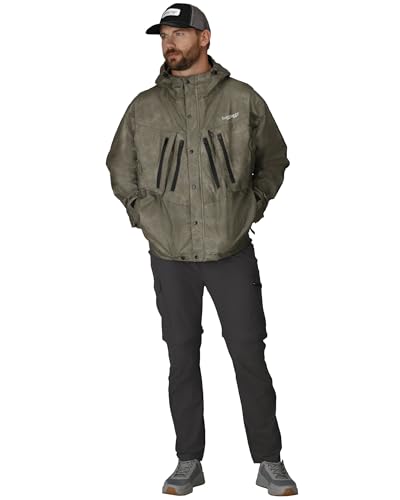
WATERPROOF - 100% waterproof, seam taped, lightweight and durable anglers jacket constructed with DriPore 2 Gend technology for dependable weather protection

WATERPROOF and BREATHABLE – Constructed with frogg toggs L83 bi-laminate materials for dependable waterproof protection
Can You Catch Bass While Kayak Fishing in Light Rain?
Yes, you can catch bass while kayak fishing in light rain, and conditions are often ideal for aggressive feeding behavior. Bass move shallow during rain to feed on insects and baitfish, making them more accessible to kayak anglers and more willing to strike a variety of lures.
Why light rain is excellent for bass fishing:
- Reduced light penetration – Bass feel safer leaving heavy cover
- Oxygen increase – Raindrops aerate surface water, activating fish
- Insect activity – Terrestrial insects on the water trigger surface feeding
- Noise cover – Rain masks your approach and lure presentation
- Barometric pressure – Falling pressure before rain triggers feeding frenzies
- Cooler surface temps – Summer rain brings lethargic bass back to life
Best tactics for bass in light rain:
Lure selection:
- Topwater – Buzzbaits, poppers, and walking baits excel in rain
- Spinnerbaits – Vibration and flash work well in reduced visibility
- Soft plastics – Worms and creature baits in shallow cover
- Crankbaits – Shallow-running models over structure
- Jigs – Flip into heavy cover where bass feel secure
Location strategies:
- Target shallow water (2-8 feet) near cover
- Fish points and pockets where runoff enters
- Work shoreline structure (docks, laydowns, vegetation)
- Focus on areas with hard bottom (gravel, rock) where runoff creates current
- Don’t overlook surface activity; bass often feed on top in rain
Color selection in rain:
- Clear to lightly stained water – Natural colors (green pumpkin, watermelon)
- Stained water – Brighter colors (chartreuse, white, bright orange)
- Muddy water – Dark colors (black, blue) or bright colors with strong contrast
Time windows:
- 2-3 hours before rain – Often the best fishing as pressure drops
- During light rain – Excellent action, especially first 1-2 hours
- After rain stops – Good for 1-2 hours, then returns to normal patterns
Species-specific note: Largemouth bass respond more dramatically to rain than smallmouth, but both species feed actively. Smallmouth often stay slightly deeper but still move up to feed during rain events.
For techniques that work well from a seated position in a kayak, explore our resources on fishing techniques adapted for kayak anglers.
Frequently Asked Questions
Will rain ruin my fishing kayak?
No, rain will not damage your fishing kayak. Kayaks are designed to handle water exposure, and rain is far less stressful than normal paddling and wave action. Rinse your kayak after use to remove any debris, and store it properly to prevent UV damage, which is a much bigger concern than rain.
How do I keep my tackle dry when kayak fishing in rain?
Use waterproof tackle boxes or bags with sealed lids, store them in sealed hatches or dry bags when not actively fishing, and keep a towel handy to dry your hands before opening tackle storage. Many anglers use waterproof tackle backpacks that can be sealed completely between lure changes.
Can I use my regular PFD in the rain?
Yes, all PFDs are designed to function when wet, and rain doesn’t affect their flotation or safety performance. However, some PFDs have pockets and storage that aren’t waterproof, so use dry bags for items stored in PFD pockets during rain.
Does rain affect fish finder performance?
Rain does not affect fish finder sonar performance underwater, but heavy rain on the screen can make it difficult to read the display. Use a screen protector and position yourself to minimize rain hitting the screen directly, or cover it with a waterproof case between active use.
Should I use different fishing line in the rain?
No, rain doesn’t require different fishing line. However, wet line can affect knot strength slightly, so check your knots periodically and retie if you notice any slippage. Fluorocarbon and braided lines perform identically in rain compared to dry conditions.
How cold is too cold for kayak fishing in rain?
When air temperatures drop below 50°F and water temperatures are below 60°F, rain fishing becomes dangerous without proper thermal protection like wetsuits or drysuits. The combination of cold water, rain, and wind can cause hypothermia within 30-60 minutes even for experienced anglers.
Can I kayak fish in rain with kids?
Kayak fishing in rain with kids is not recommended unless they’re experienced paddlers with proper rain gear and you’re fishing very close to shore in light drizzle. Children are more susceptible to hypothermia, less able to manage discomfort, and may panic if conditions deteriorate quickly.
Will rain wash away fish scent from lures?
Rain does dilute scent on lures faster than dry conditions, but it also disperses scent through the water column more effectively. Reapply scent attractants more frequently in rain (every 15-20 minutes instead of every 30-45 minutes), and consider using stronger scent formulations.
Do I need special paddles for rain fishing?
No, standard kayak paddles work fine in rain. However, wet paddles can be slippery, so consider paddles with textured grips or add grip tape to your paddle shaft. Some anglers prefer paddles with drip rings to minimize water running down the shaft onto their hands.
Can rain damage my fishing rods?
Rain will not damage quality fishing rods, which are designed to handle water exposure. However, rinse rods with fresh water after use in saltwater or dirty water, and dry reel seats thoroughly to prevent corrosion of metal components and reel attachment points.
Is it legal to kayak fish during rain in all states?
Kayak fishing during rain is legal in all states, but some areas may have restrictions during flood conditions or when water levels exceed safe limits. Always check local regulations and water level restrictions, especially on rivers and reservoirs with dam-controlled flows.
How do I prevent my kayak seat from getting soaked?
Cover your kayak seat with a waterproof seat cover or garbage bag when not in use, or accept that it will get wet and bring a dry towel to sit on. Some anglers use waterproof stadium seat cushions that dry quickly and provide padding even when wet.
Conclusion
Kayak fishing in rain is absolutely worth it when you understand the safety boundaries, invest in proper gear, and target the right conditions. Light to moderate rain creates some of the best fishing opportunities of the year, with active fish, reduced competition, and extended feeding windows that don’t occur in sunny weather. The key is distinguishing between productive rain fishing and dangerous conditions that require staying off the water.
Your action plan for successful rain fishing:
- Build your skills first – Master basic kayak control and self-rescue before adding weather challenges
- Invest in quality rain gear – A good jacket and dry bags transform the experience from miserable to enjoyable
- Start small – Begin with short trips in light drizzle on familiar water
- Monitor weather constantly – Exit immediately if lightning appears or conditions deteriorate
- Protect your electronics – Use proper waterproof cases and dry bags for all devices
- Learn the patterns – Fish behavior changes in rain; adjust your tactics accordingly
- Know your limits – There’s no shame in calling a trip early when conditions exceed your comfort level
The anglers who consistently catch the biggest fish are often those willing to fish when others won’t. Rain fishing separates casual anglers from serious ones, and the rewards include not just better catches but also the satisfaction of mastering challenging conditions. With the right preparation and respect for safety limits, kayak fishing in rain opens up dozens of additional fishing days each year and access to feeding patterns that fair-weather anglers never experience.
Start your rain fishing journey on a warm summer day with light drizzle, familiar water, and a fishing buddy. You’ll quickly discover why experienced kayak anglers often hope for rain in the forecast rather than dreading it.