Quick Answer: Your kayak tracks poorly because of hull design limitations (short length, flat bottom, wide beam), improper paddling technique (uneven strokes, poor posture), unbalanced weight distribution, or environmental factors like wind and current. Recreational kayaks naturally track worse than longer, narrower fishing kayaks because they prioritize stability over straight-line performance. Most tracking problems can be fixed by adjusting your load, improving paddle technique, or adding a skeg or rudder.
Key Takeaways
- Tracking means a kayak’s ability to maintain a straight course without constant correction—poor tracking forces you to zigzag and waste energy
- Hull shape matters most: short, wide kayaks with flat bottoms track poorly but offer great stability; long, narrow hulls with defined keels track straight but feel tippier
- Uneven paddling is the #1 beginner mistake—dominant-side strokes, asymmetric power, and poor rotation all cause your kayak to veer off course
- Weight distribution directly affects tracking—gear piled in the stern or bow creates drag and makes the kayak weathercock (turn into wind)
- Wind and current expose tracking weaknesses—kayaks with minimal keel or rocker struggle in crosswinds and moving water
- Skegs and rudders solve tracking problems without changing your kayak—skegs prevent weathercocking, rudders let you steer with foot pedals
- Recreational kayaks are designed for stability, not speed—poor tracking is normal and expected for short, wide models under 12 feet
- Upgrading to a fishing kayak (12-14 feet with pronounced keel) dramatically improves tracking for anglers who cover distance
What Does Tracking Mean in Kayaking?
Tracking refers to a kayak’s ability to maintain a straight line through the water with minimal steering correction. A kayak that tracks well requires fewer corrective paddle strokes and glides efficiently in the direction you point it. Poor tracking means your kayak constantly veers left or right, forcing you to zigzag and expend extra energy just to stay on course.
Think of tracking like the alignment on your car. Good tracking feels effortless—you paddle on both sides evenly and the kayak holds its line. Bad tracking feels like fighting a shopping cart with a wobbly wheel—you’re always compensating, never relaxed.
Key factors that determine tracking:
- Hull length: Longer kayaks (13+ feet) track straighter because more surface area contacts the water
- Keel depth: A pronounced keel (the ridge running bow to stern) acts like a fin to resist sideways drift
- Rocker: Kayaks with significant rocker (upward curve at bow and stern) turn easily but track poorly
- Beam width: Wider kayaks are more stable but create more drag and track worse than narrow hulls
For fishing kayak enthusiasts, tracking matters because you often paddle long distances to reach fishing spots. Poor tracking turns a 2-mile paddle into an exhausting workout. If you’re constantly correcting course instead of enjoying the water, your kayak’s tracking needs attention.
Why Does My Kayak Keep Turning to One Side?
Your kayak turns to one side because of uneven paddle strokes, asymmetric weight distribution, or wind pushing the bow or stern. Most paddlers unknowingly apply more power on their dominant side, which pushes the kayak off course. If your kayak consistently veers left, you’re probably stroking harder on the right side (and vice versa).
Common causes of one-sided turning:
- Dominant-side bias: Right-handed paddlers often pull harder on the right, pushing the bow left
- Poor torso rotation: Paddling with just your arms (not rotating your core) creates uneven power
- Incorrect paddle angle: Blade entering the water at an angle instead of vertical creates steering force
- Stern-heavy load: Gear piled in the back makes the bow light and prone to wind drift
- Crosswind: Wind hitting the side of your kayak pushes the high end (usually bow) downwind
Quick diagnostic test: Paddle 10 strokes with equal effort on both sides. If your kayak curves consistently in one direction, you have a stroke imbalance. If it only turns in windy conditions, you have a weight distribution or hull design issue.
To fix stroke imbalance, focus on torso rotation (not arm strength) and vertical blade entry. Plant the blade fully in the water near your toes, rotate your torso, and pull the kayak past the paddle. Your arms should stay relatively straight—power comes from core rotation. For wind-related turning, redistribute weight so the kayak sits level, or add a skeg to prevent weathercocking.
Many beginner kayak fishing paddlers struggle with this until they develop muscle memory for balanced strokes.
How to Tell If My Kayak Has a Tracking Problem
Your kayak has a tracking problem if you need constant corrective strokes to maintain a straight course, if it drifts sideways in wind, or if you zigzag even in calm water. A well-tracking kayak should hold its line for at least 5-10 paddle strokes per side without veering more than a few degrees.
Tracking problem symptoms:
- You paddle 3-4 strokes on one side, then must switch to correct course
- Your wake shows a serpentine pattern instead of a straight line
- In crosswind, the kayak spins broadside (weathercocking) despite paddling
- You arrive at destinations exhausted from fighting the kayak
- Other paddlers in similar conditions maintain straight lines while you zigzag
Field test for tracking: On a calm day with no wind, paddle 10 strokes on your right side only, then 10 on your left. A kayak with good tracking will curve gently but maintain forward momentum. A kayak with poor tracking will spin almost in place or veer sharply after just 3-4 strokes.
When tracking problems are normal: Short recreational kayaks (under 10 feet), inflatable kayaks with minimal keel, and wide sit-on-top kayaks designed for stability will always track worse than dedicated fishing kayaks. If you bought a 9-foot recreational kayak for $300, poor tracking is a design feature, not a defect. These kayaks prioritize stability and maneuverability over straight-line speed.
If you’re paddling a fishing kayak over 12 feet and still experiencing severe tracking problems, the issue is likely technique, weight distribution, or hull damage—not the kayak itself.
Kayak Tracking vs Stability: What’s the Difference?
Tracking and stability are opposing design priorities in kayak hulls. Tracking refers to straight-line efficiency, while stability refers to resistance to tipping. Kayaks with excellent tracking (long, narrow, deep keel) feel tippier, while kayaks with excellent stability (short, wide, flat bottom) track poorly. You can’t maximize both in a single hull design.
Tracking-focused design:
- Long length (13-16+ feet)
- Narrow beam (under 30 inches)
- Deep V-shaped hull with pronounced keel
- Minimal rocker (flat profile bow to stern)
- Result: Fast, efficient, holds a line, but feels unstable for beginners
Stability-focused design:
- Short length (8-11 feet)
- Wide beam (32+ inches)
- Flat or pontoon-style hull
- Significant rocker for quick turns
- Result: Feels rock-solid, easy to fish from, but zigzags and requires constant correction
The fishing kayak compromise: Most fishing kayaks land in the middle—12 to 14 feet long, 30-34 inches wide, with moderate keel depth. This balances enough stability to stand and cast with acceptable tracking for covering distance. A 12 foot kayak tracks significantly better than a 10 foot kayak while remaining stable enough for gear and fish.
Choose tracking if: You paddle long distances, fish open water, or prioritize speed and efficiency. Accept that you’ll need better kayak balance skills.
Choose stability if: You fish from a stationary position, prefer calm ponds and slow rivers, or want a confidence-inspiring platform for beginners. Accept that you’ll work harder to maintain course.
Understanding this tradeoff helps you set realistic expectations. If you bought a stable kayak for its fishing platform, don’t expect it to track like a sea kayak.
Does Kayak Hull Shape Affect Tracking?
Yes, hull shape is the single biggest factor in tracking performance. A kayak’s length, keel depth, rocker, and cross-sectional profile determine how easily it maintains a straight line. Long, narrow hulls with deep keels and minimal rocker track best. Short, wide hulls with flat bottoms and significant rocker track worst.
Hull features that improve tracking:
- Length: Every additional foot of length improves tracking—a 14 foot kayak tracks noticeably better than a 12-footer
- Keel depth: A pronounced V-shaped keel (the ridge running bow to stern) resists sideways drift like a sailboat’s centerboard
- Minimal rocker: Flat profile from bow to stern keeps maximum hull in contact with water
- Narrow beam: Less width means less surface area for wind to push and less drag to slow you down
- Displacement hull: V-shaped cross-section cuts through water efficiently (versus planing hull that rides on top)
Hull features that hurt tracking:
- Short length: Kayaks under 10 feet pivot easily but can’t hold a line
- Flat bottom: No keel means nothing prevents sideways drift
- Heavy rocker: Upward curve at bow and stern lifts hull out of water, reducing directional stability
- Wide beam: More surface area creates drag and makes the kayak want to spin
- Pontoon/tunnel hull: Multiple hulls or channels prioritize stability over tracking
Real-world example: A typical recreational kayak (10 feet, 32-inch beam, flat bottom) will require corrective strokes every 3-5 paddles. A dedicated fishing kayak (13 feet, 30-inch beam, pronounced keel) will hold a line for 10+ strokes per side. The difference is dramatic and immediately noticeable.
Can’t change your hull? If you’re stuck with a short, wide kayak, focus on perfect paddle technique and consider adding a skeg or rudder (covered below). You can’t make a 9-foot recreational kayak track like a sea kayak, but you can minimize the problem.
How to Fix Poor Kayak Tracking
Fix poor tracking by improving paddle technique, redistributing weight, adding a skeg or rudder, or upgrading to a longer kayak. Most tracking problems have multiple causes, so address technique first (it’s free), then equipment.
Step 1: Fix your paddle stroke
- Use torso rotation: Power comes from rotating your core, not pulling with your arms
- Vertical blade entry: Plant the blade near your toes, perpendicular to the water surface
- Equal power both sides: Count strokes and consciously match effort left and right
- Full blade immersion: Bury the entire blade before pulling—shallow strokes waste energy
- Exit cleanly: Lift the blade out near your hip, don’t drag it behind you
Step 2: Balance your load
- Center heavy gear: Place coolers, tackle boxes, and batteries near the seat (kayak’s center of gravity)
- Trim bow and stern: Kayak should sit level in the water—if bow is high, move weight forward
- Secure everything: Loose gear shifting mid-paddle changes weight distribution
- Account for your body position: Sitting too far back makes the bow light and prone to wind drift
Step 3: Add tracking aids
- Skeg: Retractable fin that drops from the stern to prevent weathercocking (turning into wind)
- Rudder: Steerable blade controlled by foot pedals—lets you correct course without paddle strokes
- Aftermarket tracking fin: Adhesive or bolt-on keel extension for kayaks without built-in options
Step 4: Adjust for conditions
- Headwind: Lean forward slightly to keep bow down
- Crosswind: Deploy skeg or rudder, or angle your body to counterbalance wind push
- Current: Paddle at an angle upstream to compensate for drift
When to upgrade: If you’ve mastered technique, balanced your load, and your kayak still tracks poorly, the hull design is the limiting factor. A fishing kayak buying guide can help you choose a model with better tracking for your needs.

[Premium Material] Made from PVC material for durable long time use.Center fin, kayak skeg tracking fin mounting points watershed board canoe for inflatable stand up paddle boards surfboard & paddleboard. (Size: 21x6.5x6cm)

✅ Heavy-Duty Wear-Resistant Construction: Made of premium rigid impact-resistant composite material, resisting abrasion from rocky riverbeds, sandbars and underwater debris; durable build avoids bending or cracking after repeated grounding and rough water use per verified customer field tests.
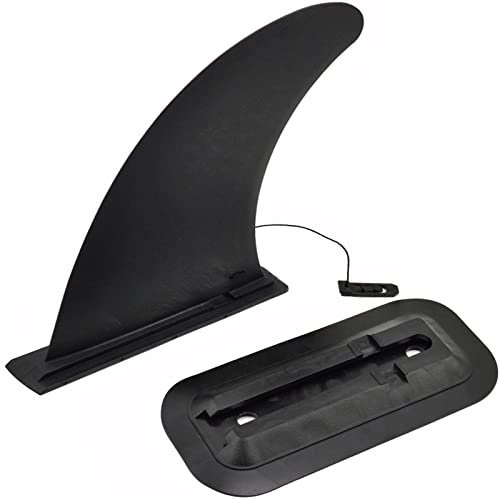
DSHE universal fin with base is designed for center fins for surfboard and paddle boards. Its classic design provides good hold in both flat water paddling and turning around.
Do I Need a Skeg or Rudder for Better Tracking?
You need a skeg or rudder if your kayak weathercocks in wind (turns into the wind despite paddling straight), if you paddle long distances in open water, or if your hull design prioritizes stability over tracking. Skegs and rudders are tracking aids that compensate for short length, flat bottoms, or high-profile bows that catch wind.
Skeg (retractable fin):
- What it does: Drops from the stern to increase keel depth and prevent weathercocking
- Best for: Crosswinds, following seas, kayaks with minimal keel
- Pros: Simple, no moving parts above deck, doesn’t interfere with paddle stroke
- Cons: Only prevents turning—doesn’t let you steer; can jam with sand or debris
Rudder (steerable blade):
- What it does: Pivoting blade controlled by foot pedals lets you steer without paddle strokes
- Best for: Long-distance paddling, strong currents, hands-free course correction
- Pros: Active steering, keeps paddle rhythm consistent, great for fishing while drifting
- Cons: More complex, cables can break, adds weight and cost
Do you actually need one? If you paddle calm lakes and ponds in light wind, probably not. If you fish open water, coastal areas, or windy reservoirs, a skeg or rudder transforms tracking performance. Many fishing kayak models over $800 include rudders as standard equipment.
Aftermarket options: You can add bolt-on or adhesive tracking fins to most kayaks for $30-$100. These won’t match a built-in skeg or rudder but can noticeably improve tracking on short recreational kayaks.
Common mistake: Deploying a skeg or rudder in shallow water or near obstacles. Retract tracking aids when launching, landing, or paddling through vegetation to avoid damage.

[KAYAK COMPATIBILITY] Designed for simple install and mounting this tracking fin fits most kayak boats and works as a practical replacement part for paddlers who need dependable straight tracking.
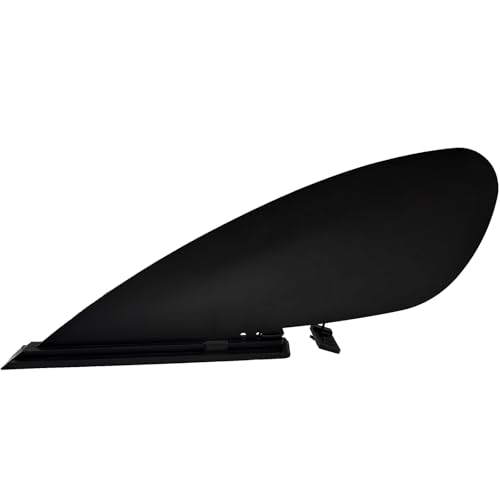
【Reduce Drag】With our kayak tracking fin, you can say goodbye to frustrating kayak drifting. Our proven fin template provides outstanding tracking abilities, ensuring your kayak maintains a straight and stable course, while effectively shedding weeds & debris to prevent interference during your paddling adventures.
➽ This is a tracking fin suitable for most kayaks.
Can Uneven Weight Distribution Cause Tracking Issues?
Yes, uneven weight distribution is a major cause of tracking problems that paddlers often overlook. When your kayak sits bow-heavy or stern-heavy, the light end catches wind and the heavy end acts as a pivot point, causing constant weathercocking and course deviation. Proper weight distribution keeps the kayak level and balanced, allowing the hull to track as designed.
How weight affects tracking:
- Stern-heavy: Bow lifts out of water, catches wind, kayak turns downwind (most common problem)
- Bow-heavy: Stern lifts, kayak turns into wind, harder to paddle efficiently
- Side-heavy: Kayak lists to one side, creating asymmetric drag and constant turning
- Centered weight: Kayak sits level, hull contacts water evenly, tracks straight
Common weight distribution mistakes:
- Piling all gear in the stern tank well behind the seat
- Mounting heavy batteries or fish finders at the extreme bow or stern
- Sitting too far forward or back in an adjustable seat
- Carrying a full cooler on one side with nothing to balance it
- Not accounting for your own body weight (if you’re 250 lbs, gear placement matters more)
How to balance your load:
- Place heaviest items near the seat (kayak’s center of gravity)
- Distribute weight symmetrically left and right
- Adjust seat position to level the kayak—if bow is high, slide seat forward
- Test in shallow water before paddling out—kayak should sit level when you’re seated with gear
- Secure everything—gear shifting mid-paddle changes balance
Quick field test: Sit in your loaded kayak in calm water. Look at the waterline at bow and stern. If one end sits noticeably higher, redistribute weight. A properly balanced kayak should have nearly identical freeboard (height above water) at both ends.
For fishing kayak enthusiasts carrying coolers, tackle, rods, and electronics, weight distribution is as important as hull design for tracking performance. Spending 5 minutes organizing gear can eliminate hours of frustration fighting your kayak.
Why Does My Kayak Track Worse in Wind?
Your kayak tracks worse in wind because wind pushes the highest part of your kayak (usually the bow), creating a weathervaning effect that constantly turns you off course. Kayaks with high bows, flat bottoms, and minimal keel have nothing to resist sideways wind force, so they weathercock (turn into the wind) or blow downwind depending on wind direction and weight distribution.
How wind affects tracking:
- Crosswind (wind from the side): Pushes the bow or stern downwind, forcing constant corrective strokes
- Headwind (wind from the front): Slows you down but doesn’t usually affect tracking much
- Tailwind (wind from behind): Can push you off course if your stern is light or you have significant rocker
- Quartering wind (wind from an angle): Worst case—combines speed loss with constant course deviation
Why some kayaks handle wind better:
- Low profile: Less surface area above water means less wind resistance
- Deep keel: Acts like a sailboat’s centerboard to resist sideways drift
- Longer length: More hull in the water provides directional stability
- Balanced weight: Kayak sits level so wind doesn’t preferentially push one end
Techniques for paddling in wind:
- Deploy skeg or rudder: Prevents weathercocking by increasing stern resistance
- Lean into the wind: Shifts your center of gravity to counterbalance wind push
- Paddle harder on the downwind side: Compensates for wind pushing you off course
- Angle your approach: Paddle at a slight angle into the wind to maintain your intended track
- Stay low: Reduce your profile by not sitting upright—lean forward slightly
When to stay off the water: If wind is strong enough that you’re making zero forward progress despite hard paddling, or if whitecaps are forming, it’s time to head in. Fighting wind in a kayak with poor tracking is exhausting and potentially dangerous.
For kayak fishing in open water or coastal areas, wind is the #1 environmental challenge. Understanding how your kayak responds to wind and adjusting your technique accordingly is essential for safety and enjoyment.
Is Poor Tracking Normal for Recreational Kayaks?
Yes, poor tracking is completely normal and expected for recreational kayaks under 12 feet with wide beams and flat bottoms. These kayaks are designed for stability, maneuverability, and low cost—not straight-line efficiency. If you bought a short, wide recreational kayak for under $500, it will track worse than a dedicated fishing or touring kayak, and that’s by design.
Why recreational kayaks track poorly:
- Short length (8-11 feet): Not enough hull in the water to maintain directional stability
- Wide beam (32+ inches): Prioritizes stability over speed and tracking
- Flat bottom: No keel to resist sideways drift
- Significant rocker: Upward curve at bow and stern makes turning easy but tracking difficult
- High bow profile: Catches wind and weathercocks
What recreational kayaks do well:
- Extremely stable—hard to tip, confidence-inspiring for beginners
- Highly maneuverable—easy to turn in tight spaces, navigate obstacles
- Affordable—often $300-$600 versus $800-$2000+ for fishing kayaks
- Lightweight—easier to transport and launch solo
- Forgiving—you can make paddle mistakes without capsizing
When poor tracking becomes a problem: If you’re paddling more than 1-2 miles per trip, fishing open water, or dealing with wind and current, a recreational kayak’s tracking limitations will frustrate you. These kayaks are designed for calm ponds, slow rivers, and short paddles—not covering distance efficiently.
Should beginners worry about tracking? Not initially. If you’re learning to kayak, stability and confidence matter more than tracking. Master basic paddle strokes, balance, and kayak safety first. Once you’re comfortable and want to paddle farther or faster, then consider upgrading to a kayak with better tracking.
The upgrade path: Many anglers start with a cheap recreational kayak, discover they love the sport, then upgrade to a proper fishing kayak in the 12-14 foot range. The tracking improvement is dramatic and immediately noticeable.
Am I Paddling Wrong If My Kayak Won’t Go Straight?
Probably yes—poor paddle technique is the #1 cause of tracking problems for beginners, even in kayaks with good hull design. If your kayak constantly veers left or right despite your best efforts, you’re likely applying uneven power, using improper blade angle, or paddling with your arms instead of your torso.
Common paddling mistakes that ruin tracking:
- Dominant-side bias: Pulling harder on your strong side pushes the kayak off course
- Arm paddling: Using arm strength instead of torso rotation creates weak, uneven strokes
- Angled blade entry: Blade entering the water at an angle acts like a rudder, steering you off course
- Incomplete strokes: Starting too far back or ending too far forward reduces efficiency
- Asymmetric rhythm: Taking more strokes on one side than the other
- Death grip: Squeezing the paddle too hard causes fatigue and uneven power
- Poor posture: Slouching or leaning to one side creates asymmetric drag
Correct paddle technique for straight tracking:
- Sit upright with good posture, core engaged
- Rotate your torso to plant the blade near your toes
- Vertical blade angle—blade should enter perpendicular to water surface
- Push with top hand while pulling with bottom hand (torso rotation, not arm strength)
- Full blade immersion—bury the entire blade before pulling
- Exit at your hip—don’t drag the blade behind you
- Equal power both sides—count strokes and consciously match effort
Self-diagnosis test: Have someone video you paddling from behind. Watch for:
- Blade angle at entry (should be vertical, not angled)
- Torso rotation (shoulders should twist, not just arms moving)
- Stroke length (should be equal on both sides)
- Splash pattern (excessive splash means inefficient stroke)
How long to master technique? Most paddlers need 3-5 hours of focused practice to develop muscle memory for balanced strokes. If you’re self-taught, consider taking a lesson or watching instructional videos—bad habits are hard to break once ingrained.
Even the best-tracking kayak will zigzag if you paddle poorly. Fix your technique before blaming your equipment.
Should Beginners Worry About Kayak Tracking?
Beginners should prioritize stability and confidence over tracking when choosing their first kayak. A stable kayak that tracks poorly is safer and more enjoyable for learning than a tippy kayak that tracks perfectly. Once you’ve mastered basic paddle strokes, balance, and water safety, then tracking becomes important.
What beginners should focus on first:
- Stability: Feeling secure and confident, not worried about tipping
- Comfort: Adjustable seat, adequate legroom, easy entry and exit
- Safety skills: Self-rescue, swimming ability, understanding water conditions
- Basic paddle technique: Forward stroke, stopping, turning
- Gear management: Securing equipment, staying organized
When tracking starts to matter:
- You’re paddling 2+ miles per trip and getting exhausted from zigzagging
- You want to fish open water, not just calm ponds
- Wind and current are making it hard to maintain course
- You’re confident with balance and ready for a more performance-oriented kayak
The beginner’s dilemma: Short, wide, stable kayaks are perfect for learning but frustrating once you develop skills. Long, narrow, fast kayaks track beautifully but intimidate beginners. Most kayak for beginners guides recommend starting with stability, then upgrading for performance.
Budget-friendly approach: Buy a used recreational kayak for $200-$400 to learn on. Once you’re hooked and paddling regularly, invest in a proper fishing kayak with better tracking. You’ll appreciate the upgrade more after experiencing the limitations of a beginner kayak.
Skills that improve tracking regardless of kayak:
- Balanced, powerful paddle strokes
- Reading wind and current
- Weight distribution awareness
- Efficient body positioning
- Understanding your kayak’s behavior in different conditions
Don’t let tracking concerns prevent you from getting on the water. A “bad” tracking kayak that you actually use beats a “perfect” tracking kayak that intimidates you into staying home.
Can a Bent or Damaged Keel Cause Tracking Problems?
Yes, a bent, warped, or damaged keel can severely impact tracking, causing your kayak to pull consistently to one side or spin unpredictably. Hull damage is less common than technique or design issues, but if your kayak suddenly tracks worse than it used to, inspect the keel and hull for damage.
Types of hull damage that affect tracking:
- Bent keel: Impact with rocks or dragging over concrete can bend the keel ridge, creating asymmetric drag
- Warped hull: Storing a kayak improperly (hanging by bow/stern, sitting in hot sun) can warp the plastic
- Cracks or gouges: Deep scratches or cracks disrupt water flow and create turbulence
- Deformed stern: Damage near the stern (where water exits) has outsized impact on tracking
- Loose or missing skeg: If your kayak has a retractable skeg, damage or debris can prevent proper deployment
How to inspect for hull damage:
- Flip the kayak over and examine the entire keel line from bow to stern
- Look for asymmetry—keel should be centered and straight
- Check for soft spots—press on the hull; it should feel uniformly rigid
- Inspect the stern—look for cracks, warping, or deformation
- Test skeg/rudder deployment—should move smoothly without binding
Can hull damage be repaired?
- Minor scratches: Usually cosmetic, don’t affect tracking
- Deep gouges: Can be filled with marine epoxy or plastic welding
- Warped hull: Sometimes fixable by heating and reshaping (risky—can make it worse)
- Bent keel: Difficult to repair; may require professional help or kayak replacement
- Cracked hull: Repairable with plastic welding, but structural integrity may be compromised
Prevention tips:
- Never drag your kayak over rocks, concrete, or rough surfaces
- Store kayak on padded racks or suspended by straps under the cockpit (not hanging by bow/stern)
- Avoid leaving kayak in direct sun for extended periods (UV and heat warp plastic)
- Use kayak transport methods that support the hull properly
- Inspect hull regularly for damage, especially after impacts
When damage isn’t the problem: If your kayak has always tracked poorly and you can’t find visible damage, the issue is hull design or technique—not damage. Don’t waste time and money on repairs when the real problem is a short, flat-bottomed hull that was never designed to track well.
When Should I Upgrade My Kayak for Better Tracking?
Upgrade your kayak for better tracking when poor tracking limits your fishing range, when you’re paddling 3+ miles per trip, when you fish open water or coastal areas, or when you’ve mastered technique but still struggle with course maintenance. If you’re fighting your kayak instead of enjoying the water, it’s time to upgrade.
Signs you’ve outgrown your current kayak:
- You arrive at fishing spots exhausted from zigzagging
- Wind and current make paddling miserable
- You avoid longer paddles because tracking is so frustrating
- You’ve mastered paddle technique but still can’t maintain a straight line
- Other paddlers in similar kayaks easily outpace you
- You’re considering adding a motor because paddling is too much work
What to look for in an upgrade:
- Length: 12-14 feet minimum for fishing kayaks (longer = better tracking)
- Pronounced keel: Deep V-shaped hull with visible keel ridge
- Moderate beam: 30-33 inches (balances tracking and stability)
- Built-in skeg or rudder: Huge advantage for wind and current
- Quality construction: Rotomolded polyethylene or thermoformed plastic (not cheap blow-molded)
Upgrade options by budget:
- $600-$900: Entry-level fishing kayaks with decent tracking (12-13 feet, basic features)
- $900-$1,500: Mid-range fishing kayaks with good tracking, rudders, comfortable seats
- $1,500-$3,000: Premium fishing kayaks with excellent tracking, pedal drive options, extensive features
- $3,000+: High-end fishing kayaks with exceptional tracking, pedal/motor-ready, pro-level features
Don’t upgrade if:
- You’re still learning basic paddle technique (fix technique first)
- You only paddle calm ponds and short distances (tracking doesn’t matter much)
- Your budget is tight (improve technique and add aftermarket tracking aids first)
- You primarily fish from a stationary position (stability matters more than tracking)
The sweet spot for fishing kayak enthusiasts: A 13-14 foot fishing kayak with a rudder, comfortable seat, and adequate storage will transform your experience if you’re upgrading from a short recreational kayak. The tracking improvement is dramatic—you’ll cover twice the distance with half the effort.
Check out fishing kayak comparison resources to find the best upgrade for your needs and budget.
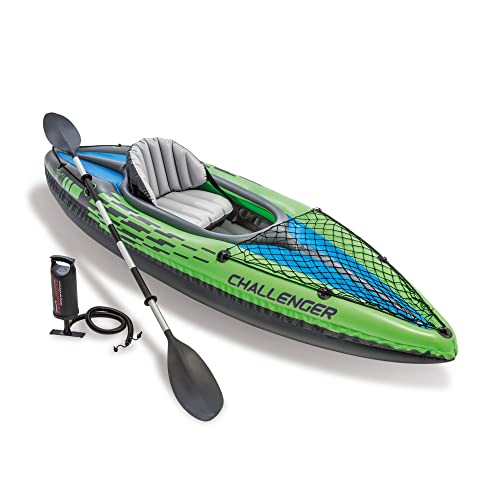
SUPER-STRONG – SuperStrong enhanced molecular formulation PVC provides superior strength and durability, ensuring high impact and abrasion resistance

SUPER-TOUGH – 3-ply laminate construction combined with SuperStrong enhanced molecular formulation PVC provides superior structural strength and unmatched resistance to damage from abrasion, impact and sunlight, while allowing more pressure for rigidity

SUPER-TOUGH – 3-ply laminate construction combined with SuperStrong enhanced molecular formulation PVC provides superior structural strength and unmatched resistance to damage from abrasion, impact and sunlight, while allowing more pressure for rigidity
Frequently Asked Questions
Why does my kayak turn left when I paddle?
Your kayak turns left because you’re applying more power on the right side (or vice versa). Right-handed paddlers naturally pull harder on their dominant side, pushing the bow left. Focus on equal power and torso rotation on both sides, or your kayak may have unbalanced weight distribution causing asymmetric drag.
Can I add a keel to my kayak to improve tracking?
Yes, you can add aftermarket tracking fins or keel strips to most kayaks using adhesive or bolt-on mounts. These cost $30-$100 and can noticeably improve tracking on flat-bottomed kayaks. However, they won’t transform a short recreational kayak into a touring kayak—hull length and shape still matter most.
Do longer kayaks always track better?
Generally yes—longer kayaks track better because more hull surface contacts the water, providing directional stability. A 14-foot kayak will almost always track better than a 10-foot kayak of similar design. However, extremely long kayaks (16+ feet) can be harder to maneuver in tight spaces and may be overkill for most fishing applications.
Why does my kayak spin in circles when I stop paddling?
Your kayak spins when you stop paddling because of wind, current, unbalanced weight, or significant rocker in the hull. Kayaks with flat keels and balanced loads should coast straight for several seconds after you stop. If yours spins immediately, check weight distribution and consider adding a skeg for windy conditions.
Is a rudder better than a skeg for fishing kayaks?
Rudders are generally better for fishing kayaks because they allow hands-free steering with foot pedals, letting you maintain paddle rhythm and adjust course while drifting. Skegs only prevent weathercocking—they don’t let you steer. However, rudders are more complex and expensive. Choose a rudder if you paddle open water regularly.
Can paddle length affect kayak tracking?
Yes, incorrect paddle length can affect tracking. A paddle that’s too short forces you to lean and reach, creating uneven strokes. A paddle that’s too long is inefficient and tiring. For fishing kayaks (30-34 inch beam), most paddlers need a 230-250cm paddle. Proper length helps you maintain balanced, powerful strokes that improve tracking.
Why does my inflatable kayak track so poorly?
Inflatable kayaks track poorly because they typically have flat bottoms, minimal keel depth, short lengths, and flexible hulls that deform under paddle pressure. The air chambers prioritize stability over performance. Some high-end inflatable fishing kayaks include drop-stitch floors and tracking fins to improve performance, but they’ll never match rigid-hull tracking.
Does water depth affect kayak tracking?
Water depth doesn’t significantly affect tracking unless you’re in extremely shallow water (under 6 inches) where your hull or keel drags bottom. In normal depths, tracking is determined by hull design, technique, and environmental factors. However, shallow water often has more current and obstacles that make tracking more challenging.
Can I improve tracking by changing my paddle blade shape?
Paddle blade shape affects power and efficiency but has minimal impact on tracking. Tracking is determined by hull design and stroke technique, not blade shape. However, a properly sized paddle with blades that match your strength and paddling style will help you maintain consistent, balanced strokes—which indirectly improves tracking.
Why does my kayak track worse when loaded with gear?
Your kayak tracks worse when loaded if the gear is unevenly distributed, making the kayak sit bow-heavy or stern-heavy. Proper weight distribution is critical—heavy gear should be centered near the seat, with balanced loads left and right. An overloaded kayak also sits lower in the water, increasing drag and making it harder to maintain speed and direction.
Do sit-on-top kayaks track worse than sit-inside kayaks?
Not necessarily—tracking depends on hull length, shape, and keel depth, not whether the kayak is sit-on-top or sit-inside. However, many sit-on-top fishing kayaks prioritize stability (wide beam, flat bottom) over tracking, so they often track worse than narrow sit-inside touring kayaks. Compare specific models rather than generalizing by kayak type.
Can I fix tracking problems with better paddling alone?
If your kayak is reasonably well-designed (12+ feet, some keel depth), yes—perfect paddle technique can overcome minor tracking issues. However, if you’re paddling a 9-foot flat-bottomed recreational kayak, even Olympic-level technique won’t make it track like a touring kayak. Fix technique first, then upgrade equipment if needed.
Conclusion
Poor kayak tracking frustrates anglers and turns enjoyable paddles into exhausting battles against your own boat. The good news? Most tracking problems have straightforward solutions. Start by mastering balanced paddle technique—torso rotation, vertical blade entry, and equal power on both sides eliminate the most common cause of tracking issues. Next, check your weight distribution and ensure your kayak sits level in the water with heavy gear centered near the seat.
If technique and weight distribution are dialed in but your kayak still tracks poorly, the hull design is the limiting factor. Short, wide recreational kayaks prioritize stability over tracking, and that’s a design feature you can’t overcome with technique alone. Adding a skeg or rudder helps manage wind and current, but ultimately, upgrading to a longer fishing kayak (12-14 feet) with a pronounced keel delivers the dramatic tracking improvement serious anglers need.
Take action now:
- Film yourself paddling from behind to identify stroke imbalances
- Redistribute your gear to balance the kayak bow to stern
- Practice torso rotation and vertical blade entry for 30 minutes
- Test in calm conditions to establish a baseline before blaming wind
- Research upgrade options if you’ve outgrown your current kayak’s capabilities
Remember that tracking and stability are opposing design priorities. If you’re fishing calm ponds from a stationary position, a stable kayak with mediocre tracking serves you well. If you’re covering miles of open water to reach fishing spots, tracking becomes critical. Match your kayak to your actual fishing style, master proper technique, and you’ll spend more time fishing and less time fighting your kayak.