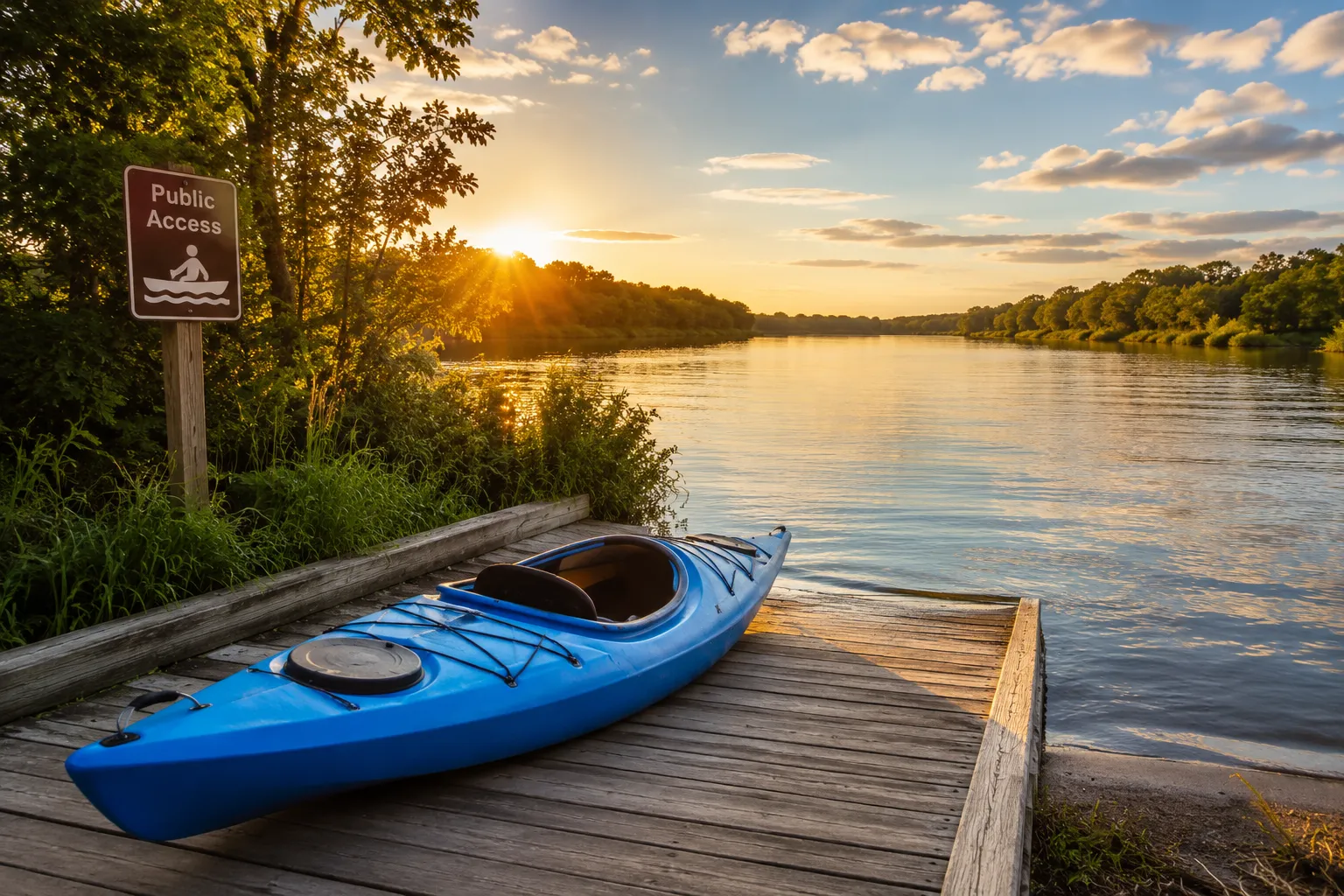
Quick Answer: Kayak launch sites include public boat ramps, dedicated kayak launches, beaches, parks with water access, and designated water trail access points. You can find them using apps like OnX Offroad, FishBrain, or local park websites, and most public launches are free, though some charge daily fees or require permits. Always verify access rules before launching, as private property and restricted areas require permission.
Key Takeaways
- Public boat ramps, kayak-specific launches, and designated beach access points are the most common places to launch a kayak legally
- Free apps and websites like Google Maps, state park systems, and paddling-specific tools help locate access points near you
- Most public launches are free, but some charge $3-10 daily fees or require annual passes
- Boat ramps designed for trailers work for kayaks but require extra caution due to traffic and steep slopes
- Private property launches require explicit landowner permission, even if the water itself is public
- Safe launch sites have gradual slopes, stable footing, clear entry points, and minimal boat traffic
- Kayak launch etiquette includes staying out of the way of larger boats, loading gear before approaching the ramp, and respecting other paddlers’ space
What Is a Kayak Launch Site or Access Point?
A kayak launch site is any designated or suitable location where you can legally and safely enter the water with your kayak. These access points range from formal facilities with paved ramps and parking to informal natural shorelines marked for public use.
Formal launch sites typically include:
- Concrete or gravel boat ramps with parking areas
- Floating docks with kayak-specific entry points
- Designated kayak launches with gradual slopes and handrails
- Beach access points with clear signage
- Water trail access stations with amenities
Informal access points might be:
- Public park shorelines without dedicated ramps
- River access points along public land
- Beach areas open to hand-launched watercraft
- Bridge crossings with shoulder parking and bank access
The key difference between a launch site and just any waterfront is legal access. A launch site provides public right-of-way to the water, while random shoreline may be private property where launching without permission constitutes trespassing.
Common mistake: Assuming all waterfront is public. In many states, even if the water itself is public, the land leading to it may be privately owned, and you cannot cross it without permission.
How Do I Find Public Kayak Launches Near Me?
Finding kayak launches near you requires checking multiple sources because no single database covers every access point. Start with your state’s Department of Natural Resources or Parks and Recreation website, which typically maintains lists of public water access points with addresses and amenities.
Best resources for finding launches:
- State agency websites, Most states publish interactive maps of public boat ramps and water access points
- Google Maps, Search “kayak launch near me” or “boat ramp near me” and filter by reviews mentioning kayaks
- Local paddling clubs, Regional kayak clubs often maintain detailed access guides
- County and city park departments, Municipal parks frequently have water access not listed on state sites
- Water trail organizations, Designated water trails publish comprehensive access point guides
Apps that help locate launches:
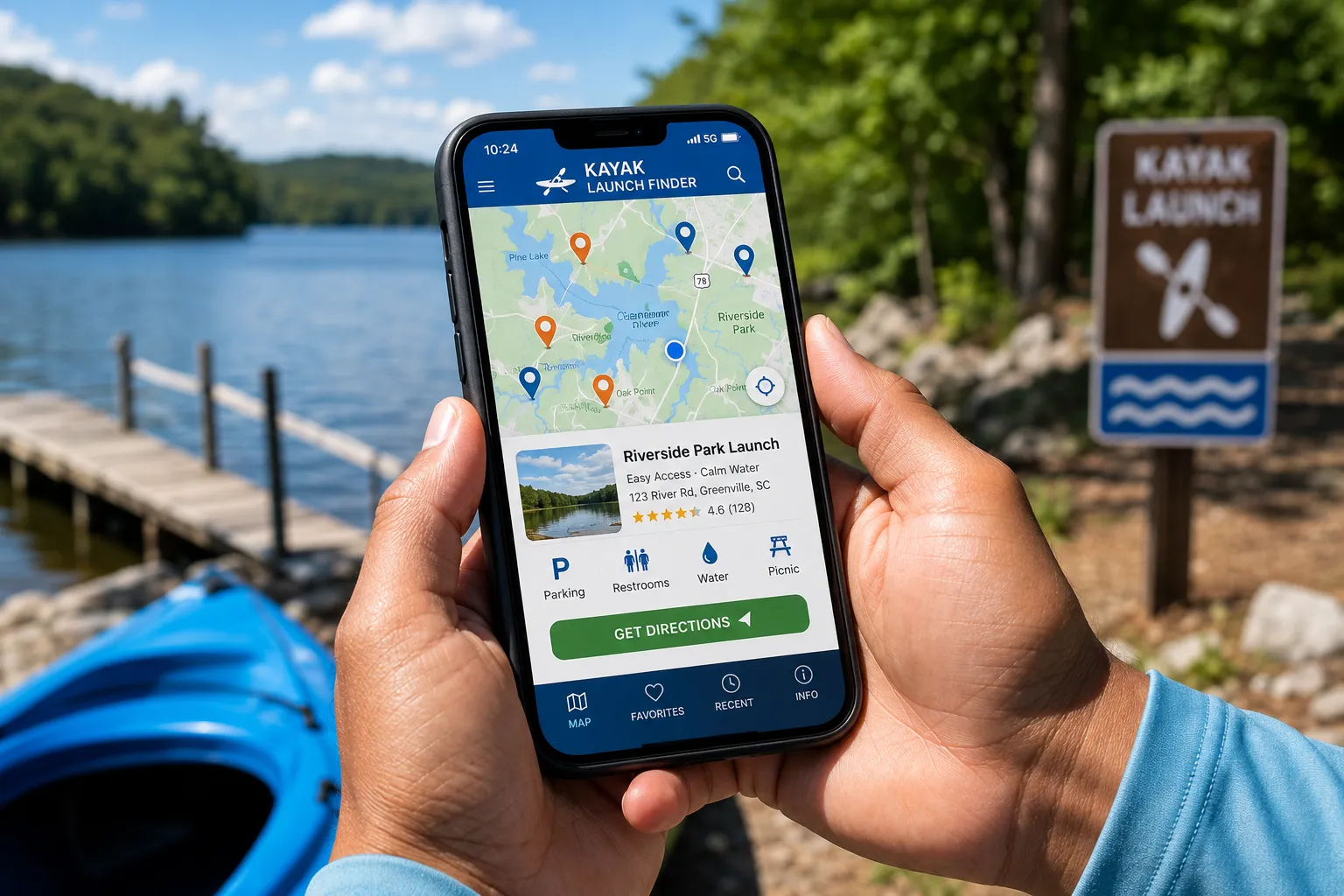
- OnX Offroad/Hunt, Shows public land boundaries and water access points
- FishBrain, Fishing app that marks boat ramps and shore access
- Argo, Paddling-specific app with user-submitted launch locations
- AllTrails, Some kayak launches appear as water access trailheads
Pro tip: Call ahead to verify access is still available. Launch sites occasionally close for maintenance, seasonal restrictions, or water level issues that aren’t updated online.
Choose state agency maps if you want verified, official access points with amenities. Use paddling apps if you’re exploring remote areas where informal access points may not appear on official lists.

Unparalleled Durability: Crafted with super-strong geotextile fabric, our Kayak Mat withstands wear and tear, providing a reliable launch surface for kayaks, paddleboards, and other small watercraft.

Durable Poly Construction: Built from heavy-duty polypropylene to support up to 1000 lbs without cracking or warping, ensuring reliable long-term use for residential or commercial needs.

VERSATILE DESIGN: Available in 3, 5 or 7 step configurations with welded aluminum construction and stainless steel cables for durability and longevity.
What’s the Difference Between a Boat Ramp and a Kayak Launch?
A boat ramp is designed primarily for trailered powerboats and typically features a steep concrete slope extending into deeper water, while a kayak launch is built specifically for hand-carried watercraft with gentler slopes, handrails, and shallower entry points.
Boat ramp characteristics:
- Steep grade (often 12-15%) to accommodate trailers
- Extends into water deep enough for motorboat props
- Wide lanes for backing trailers
- Often busy with vehicle traffic
- May have courtesy docks for loading
Kayak launch characteristics:
- Gradual slope (often 5-8%) for easier carrying
- Handrails or railings for stability
- Textured or non-slip surface
- Designed for shallow-draft entry
- Often includes staging areas for gear
Can you use a boat ramp for kayaks? Absolutely. Most kayakers use standard boat ramps regularly. Just stay to the side, load your kayak away from the ramp itself, and be quick when you do enter the water to avoid blocking boaters with trailers.
Safety consideration: Boat ramps can be slippery from algae and boat oil. Wear shoes with good traction, and be extra cautious on steep ramps where a slip could send you and your kayak sliding into the water uncontrollably.

FUN ON THE WATER: The YAKport Kayak Launch makes water activities accessible to all ages and experience levels; Spend more time on the water by easily launching your kayak, canoe, or stand-up paddle board

H2o Anchor Trolley Kit Marine Grade Fixings
Best Apps for Finding Kayak Access Points
Several apps specialize in helping paddlers locate water access, each with different strengths depending on whether you prioritize official sites, user-generated content, or detailed maps.
Top apps for 2026:
| App Name | Best For | Cost | Key Features |
|---|---|---|---|
| OnX Offroad | Public land boundaries | $35.99/year | Shows property lines, public access, offline maps |
| FishBrain | Fishing access points | Free (premium $9.99/mo) | User reports, ramp locations, fish activity |
| Argo | Paddling-specific routes | Free | Water trails, launch points, trip planning |
| Google Maps | Quick local searches | Free | Reviews, photos, directions, hours |
| Avenza Maps | Detailed topo maps | Free (map purchases vary) | Offline maps, GPS tracking, water trail PDFs |
OnX Offroad is the gold standard if you paddle in areas where public vs. private land is unclear. The app overlays property boundaries on satellite imagery, so you can see exactly where public access begins and ends.
FishBrain works well for kayak anglers because fishing access points are usually kayak-friendly, and the community actively reports ramp conditions, parking availability, and fees.
Google Maps remains surprisingly effective for urban and suburban paddlers. Search “boat ramp” or “kayak launch,” then read recent reviews to confirm the site is kayak-accessible and currently open.
Common mistake: Relying solely on one app. Cross-reference at least two sources, especially for remote locations, because user-generated content can be outdated and official databases miss informal access points.

NOTES: NOT for one-piece paddles. Only suitable for paddles with a diameter of 30mm/1.18 inches. Please take a while to measure the diameter of your paddle shaft before order

Perfect Kayaking Gift: Our Classic retro baseball caps are not only stylish and practical, but also one of a perfect gifts. They are suitable for friends, family member, or colleague during birthdays, holidays like Christmas, thanksgiving Day, Mothers Day, and so on.

Made to fit Wilderness Systems ATAK 120 - Bow. Check your model and dry-fit the guard before installation.
Can I Launch a Kayak From Any Beach or Shoreline?
You can launch a kayak from any beach or shoreline where you have legal access to both the land and the water, but this varies significantly by state, municipality, and property ownership. Public beaches generally allow kayak launching, while private beaches and shorelines require landowner permission.
Where you can typically launch:
- Public beaches and swimming areas (check local ordinances)
- State and national park shorelines with water access
- Public land adjacent to navigable waterways
- Designated water access points on public property
- Your own private property
Where you cannot launch without permission:
- Private residential shoreline
- Beaches marked “No Trespassing” or “Private Property”
- Homeowners association beaches (unless you’re a member)
- Commercial waterfront property
- Conservation areas with restricted access
The navigable waters rule: In many states, navigable waters are public, but the land leading to them may be private. You can paddle on the water legally, but you cannot cross private land to reach it without permission.
State-specific variations:
- Texas: Beaches below the mean high tide line are public
- Montana: Stream access law allows use of rivers up to the high-water mark, but you must enter from public land or bridges
- Florida: Most beaches are public, but some residential areas have private beaches
- Great Lakes states: Ordinary high-water mark often determines public access boundaries
How to verify access: Check county GIS maps, contact local parks departments, or use OnX to see property boundaries. If you’re unsure, ask permission or find an official access point.
How to Tell If a Kayak Launch Is Free or Paid
Most kayak launches are free, but some charge daily fees, require annual passes, or restrict access to residents or permit holders. You can usually determine the cost by checking signage at the site, visiting the managing agency’s website, or calling ahead.
Free launch indicators:
- Municipal parks in small towns (often free)
- State Wildlife Management Areas (typically free)
- Bridge crossings and roadside pullouts on public land
- Informal access points without facilities
- Some state parks (varies by state)
Paid launch indicators:
- State parks with entrance fees ($5-10 per vehicle)
- County parks with daily launch fees ($3-8)
- Marinas with launch facilities ($10-20)
- Private campgrounds with water access (guest fees)
- Popular recreation areas with fee stations
Annual pass options:
Many states offer annual passes ($25-75) that cover all state park entrance and launch fees. If you paddle frequently, these passes pay for themselves after 3-5 visits.
Resident vs. non-resident fees: Some counties charge higher fees for non-residents. For example, a launch might be free for county residents but $5 for visitors.
How to check before you go: Search “[launch name] fees” or visit the managing agency’s website. State park websites list fees clearly. For municipal launches, call the city parks department.
Do I Need a Permit to Launch a Kayak at Public Ramps?
Most public boat ramps do not require a special permit to launch a kayak, but some states require kayak registration, and certain high-use areas may require launch permits or reservations. The requirements depend on your state’s boating laws and the specific launch site’s regulations.
Typical requirements:
- No permit needed: Most public ramps allow free kayak launching without advance permission
- Vehicle entrance fee: State parks may charge $5-10 per vehicle, which covers launch access
- Kayak registration: Some states require kayaks to be registered (see your state’s boating agency)
- Launch permits: Rare, but some popular rivers require permits to manage crowding
States with kayak registration requirements (2026):
Registration requirements vary, but states like Ohio, Pennsylvania, and Minnesota require all kayaks to be registered, while states like Florida only require registration for kayaks with motors. Check your state’s Department of Natural Resources for current rules.
Special permit situations:
- National Parks: Some require backcountry permits for overnight kayak camping
- Wildlife refuges: May require free permits during nesting seasons
- Popular rivers: Rivers like the Buffalo National River limit daily launches and require permits during peak season
- Urban waterways: Some cities require free launch permits for liability tracking
Common mistake: Assuming registration equals a launch permit. Kayak registration is a one-time fee that makes your kayak legal to operate; it doesn’t grant access to specific launch sites that may have separate requirements.
What to Look for in a Safe Kayak Launch Location
A safe kayak launch has a gradual slope, stable footing, clear entry and exit points, minimal boat traffic, and protection from strong currents or waves. Before launching, assess the site for hazards like submerged obstacles, steep drop-offs, or congested waterways.
Essential safety features:
- Gradual slope, Easier to carry your kayak and less risk of slipping
- Stable surface, Gravel, sand, or textured concrete (avoid mud or loose rocks)
- Clear water entry, No submerged logs, rocks, or debris near the launch
- Adequate depth, Enough water to float your kayak without scraping bottom
- Low current, Calm water near shore makes launching and landing easier
- Visible exit point, You can clearly see where to return
Red flags to avoid:
- Steep, slippery ramps with no handrails
- Launches directly in boat traffic lanes
- Areas with strong currents or undertows
- Shorelines with unstable banks that could collapse
- Launches with submerged hazards (check for warning signs)
- Sites with no cell service and no other people around
Assess conditions before launching:
- Walk to the water’s edge and check footing and slope
- Look for hazards in the first 20 feet of water
- Watch the current, drop a stick in the water to see flow speed
- Note wind direction, launching into wind is harder but safer than being blown offshore
- Check for boat traffic, wait for a gap if powerboats are launching
Choose a launch with a dock or staging area if: You’re paddling solo with a heavy kayak, you have mobility limitations, or you’re launching in tidal areas where water levels fluctuate significantly.
Launching a Kayak From Private Property Rules
Launching a kayak from private property requires explicit permission from the landowner, even if the water itself is public. Trespassing to access water is illegal and can result in fines or criminal charges, regardless of whether the waterway is navigable.
Legal framework:
In most states, property rights extend to the water’s edge (or the ordinary high-water mark). Even though you may have the right to paddle on a public river or lake, you do not have the right to cross private land to reach it without permission.
How to get permission:
- Identify the landowner using county property records or apps like OnX
- Contact them directly, knock on the door or call if contact info is available
- Explain your request, be specific about when you want to launch and how long you’ll be there
- Offer something in return, some paddlers offer to pick up trash or provide a small fee
- Get permission in writing if possible, especially for repeated access
Liability considerations:
Some landowners hesitate to grant access due to liability concerns. In many states, recreational use statutes limit landowner liability for injuries to people using their property for free recreation, but not all landowners are aware of these protections.
Alternatives to private property access:
- Use public access points even if they’re farther from your target area
- Join a local paddling club that may have negotiated access agreements
- Check if the landowner participates in a public access program (some states pay landowners to allow access)
Common mistake: Assuming “no one will notice” or “it’s just for a minute.” Property owners have the right to call law enforcement, and trespassing charges can result in fines of $100-500 or more, plus a criminal record.
Kayak Launch Etiquette and Common Mistakes
Proper kayak launch etiquette means preparing your kayak away from the ramp, launching quickly when it’s your turn, staying clear of boat traffic lanes, and being courteous to other paddlers and boaters. Poor etiquette creates safety hazards and frustrates others trying to use the same access point.
Core etiquette rules:
- Load your kayak in the parking area, attach gear, adjust foot pegs, and put on your PFD before approaching the ramp
- Wait your turn, if boaters are launching, let them go first (they can’t maneuver as easily)
- Launch quickly, once at the water, get in and paddle away within 1-2 minutes
- Stay to the side, use the edge of the ramp, not the center lane meant for trailers
- Clear the area, paddle at least 50 feet from the launch before stopping to organize gear
- Be aware of others, look before backing up or turning your kayak
Common mistakes that annoy others:
- Blocking the ramp while loading gear, adjusting equipment, or taking photos
- Launching during peak times without being prepared (Saturday mornings at popular lakes)
- Leaving gear scattered on the ramp or dock
- Not watching for boats backing down the ramp with trailers
- Paddling slowly in the launch lane instead of moving to the side
- Returning to the launch during busy periods and expecting immediate access
How to handle crowded launches:
If the ramp is busy, wait in a staging area until there’s a clear gap. Load your kayak completely before approaching the water. If you’re launching with a group, go one at a time rather than clustering at the ramp.
Courtesy tip: If you see someone struggling (especially older paddlers or those with heavy kayaks), offer to help. The kayaking community thrives on mutual support, and you’ll likely need help yourself someday.
Are All Boat Ramps Suitable for Kayaks?
Not all boat ramps are suitable for kayaks. Ramps designed exclusively for large powerboats may be too steep, too busy, or lack safe areas for hand-launching small watercraft. The best kayak-friendly boat ramps have gradual slopes, low traffic, and space to launch away from the main trailer lanes.
What makes a boat ramp kayak-friendly:
- Moderate slope (under 12%) that’s easy to walk on
- Textured surface to prevent slipping
- Multiple lanes so kayaks can use the side while boats use the center
- Courtesy dock or staging area for loading
- Low to moderate traffic, not a high-volume powerboat launch
Ramps to avoid or use with caution:
- Steep ramps (over 15% grade) that are hard to walk down with a kayak
- High-traffic marinas during peak hours (weekend mornings)
- Ramps with strong currents at the base
- Narrow single-lane ramps with no room to stay out of the way
- Ramps with deep water immediately (no shallow area to stabilize)
How to assess a new ramp:
Before launching, watch the ramp for 5-10 minutes. Note how busy it is, how steep the slope looks, and whether other kayakers are using it. If you see only large boats and trailers, consider finding a different access point.
Alternative if the ramp is unsuitable:
Look for a beach, shoreline, or grassy area adjacent to the ramp. Many boat launches have informal kayak launch spots nearby where you can carry your kayak to the water without using the main ramp.
Safety note: Never launch from a boat ramp if you feel unsafe or rushed. It’s better to drive to another access point than to risk injury or conflict with impatient boaters.
How to Launch a Kayak Without a Designated Ramp
You can launch a kayak without a designated ramp by using natural shorelines, beaches, grassy banks, or rocky areas where you have legal access. The key is finding stable ground, a gradual entry, and water deep enough to float your kayak without damaging the hull.
Best natural launch techniques:
- Sandy beaches, Drag your kayak to the water’s edge, wade in until it floats, then climb in
- Grassy banks, Use a kayak cart or drag the kayak on grass (less abrasive than gravel)
- Rocky shorelines, Wear water shoes, place the kayak parallel to shore, and step in carefully
- Muddy banks, Avoid if possible, but if necessary, use a board or mat to create a stable path
Gear that helps with improvised launches:
- Kayak cart, Wheels that attach to your kayak for rolling over grass, sand, or gravel
- Foam pads, Protect your hull when dragging over rough surfaces
- Water shoes, Essential for rocky or uneven entries
- Paddle float, Helps stabilize the kayak while you’re getting in from shore
Step-by-step for launching from shore:
- Scout the entry point, walk the shoreline to find the best spot
- Place your kayak parallel to shore in shallow water (6-12 inches deep)
- Straddle the kayak with one foot on each side
- Sit on the seat while keeping feet in the water for stability
- Lift your legs in one at a time
- Push off with your paddle or hands
What if the shoreline is too steep?
Look for a spot where the bank slopes gradually, even if it means walking 50-100 yards from your parking spot. Steep banks make entry dangerous and can damage your kayak if it slides uncontrollably.
Common mistake: Trying to launch from a spot that looks convenient but has hidden hazards like submerged logs, sharp rocks, or drop-offs. Always wade in first to check the bottom before bringing your kayak.
What If There Are No Kayak Launches in My Area?
If there are no official kayak launches in your area, you can often find alternative access through bridge crossings, public parks with shoreline, fishing access sites, or by joining a paddling club that knows informal access points. You can also advocate for new access by contacting local government or conservation groups.
Alternative access options:
- Bridge crossings, Many bridges over rivers have shoulder parking and bank access
- Fishing access sites, Managed by state wildlife agencies, often free and kayak-friendly
- Public parks, City and county parks with lakes or rivers may allow shoreline launching
- Campgrounds, Public campgrounds on water often allow day-use launching for a small fee
- Marinas, Some allow kayak launching for a daily fee even if you’re not a member
How to find hidden access points:
- Talk to local paddlers, join Facebook groups or forums for your region
- Visit tackle shops, fishing shops often know shore access points
- Check satellite imagery, Google Earth can reveal informal access spots
- Drive the shoreline, scout roads that run along water and look for pullouts
Advocating for new access:
If your area truly lacks access, contact your city council, county parks department, or state water trails coordinator. Many communities are receptive to adding kayak launches, especially if you can demonstrate demand (gather signatures, form a paddling club, or present usage data from nearby areas).
Organizations that help:
- American Canoe Association, Advocates for paddling access nationwide
- Local land trusts, Often work to secure public water access
- State water trail programs, Develop and maintain paddling access networks
Temporary solution: If you’re willing to drive, use apps like OnX or Argo to find access points within 30-60 minutes of your location. Building a list of 5-10 launches within driving distance gives you options based on weather, water conditions, and your schedule.
Frequently Asked Questions
Can I launch a kayak from a public park?
Yes, if the park has water access and allows watercraft launching. Check park rules online or call ahead, as some parks restrict launching to designated areas or charge fees.
Do I need insurance to launch a kayak?
No, kayak insurance is not required to use public launches. However, some paddlers carry personal liability insurance or add watercraft coverage to homeowners policies for theft or damage protection.
Can I launch a kayak at night?
Most public launches are open dawn to dusk, and launching at night may violate park hours or local ordinances. If you plan to paddle at night, verify the launch site allows 24-hour access and ensure your kayak has proper navigation lights.
What if a launch is closed for construction?
Check the managing agency’s website for closure notices and alternative access points. State and county park departments usually list temporary closures and suggest nearby launches.
Can I launch a kayak from a fishing pier?
Generally no, unless the pier specifically allows it. Fishing piers are designed for anglers, and launching from them can be dangerous and may violate pier rules.
How early should I arrive at a popular launch?
Arrive at least 30 minutes before you want to be on the water, or earlier on weekends and holidays when launches are busiest. Peak times are typically 8-11 a.m. on Saturday and Sunday mornings.
Do I need to rinse my kayak after launching in saltwater?
Yes, rinse your kayak, paddle, and gear with fresh water after saltwater use to prevent corrosion and salt buildup. Many coastal launches have rinse stations, or you can rinse at home.
Can I launch a kayak from a swimming beach?
Some beaches allow kayak launching outside designated swimming areas, but many prohibit it during swimming hours for safety. Check beach rules and launch from the side, away from swimmers.
What if I can’t find parking at a launch site?
Arrive earlier, choose a less popular launch, or visit on weekdays when traffic is lighter. Never park illegally or block access, as you may be towed or ticketed.
Are there apps that show real-time launch conditions?
Some apps like FishBrain and local paddling forums share user-reported conditions, but real-time data is limited. Check weather apps for wind and water conditions, and call the managing agency for water levels or closures.
Can I launch an inflatable kayak from the same places as hard-shell kayaks?
Yes, inflatable kayaks use the same access points as hard-shell kayaks. Just ensure you have space to inflate your kayak away from the ramp before launching.
What should I do if someone is rude at a launch?
Stay calm, apologize if you inadvertently broke etiquette, and move out of the way. Most conflicts arise from misunderstandings or crowding. If someone is aggressive, leave the area and report the incident to park authorities if necessary.
Conclusion
Finding the right place to launch your kayak opens up countless paddling opportunities, from quiet morning paddles on local lakes to multi-day river expeditions. The key is knowing where to look, understanding access rules, and respecting both the law and other water users.
Start by exploring official resources like state park websites and DNR access maps, then supplement with apps like OnX, FishBrain, or Google Maps to find both formal and informal launch points. Always verify that access is legal, check for fees or permits, and assess the site for safety before launching.
Remember that good launch etiquette makes the experience better for everyone. Prepare your kayak away from the ramp, launch quickly, and stay clear of boat traffic. If you’re new to an area, don’t hesitate to ask local paddlers for advice, the kayaking community is generally welcoming and happy to share knowledge about the best access points.
Your next steps:
- Search for launches within 30 minutes of your location using at least two different resources
- Save 5-10 access points in your phone with addresses, fees, and notes about conditions
- Visit a new launch site during off-peak hours to scout it before a busy weekend
- Join a local paddling group or online forum to learn about hidden access points
- Advocate for new or improved access in your area if options are limited
The more access points you know, the more flexibility you have to paddle in different conditions, explore new waters, and make the most of every opportunity to get on the water. Start building your personal launch site database today, and you’ll never be stuck wondering where to put in.