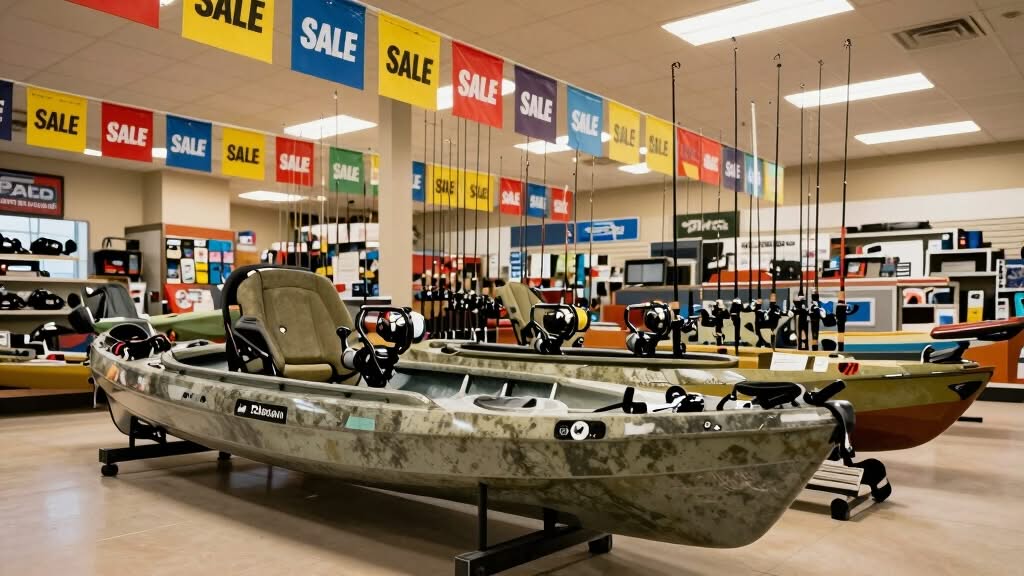
Fishing kayaks typically go on sale during three major windows: late fall through winter (October-February) when retailers clear seasonal inventory, major holiday weekends like Memorial Day and Black Friday, and during manufacturer model-year transitions in late summer. Discounts during these periods range from 15% to 40% off retail prices, with the deepest clearance deals appearing in January and February when demand is lowest.
Key Takeaways
- Best overall time: Late January through February offers the steepest discounts (25-40% off) as retailers clear winter inventory
- Holiday sales: Black Friday, Memorial Day, and Labor Day weekend typically feature 15-25% discounts
- End-of-season: September through November brings model-year closeouts when new versions arrive
- Winter months: December through February sees the lowest prices but also the smallest selection
- Spring caution: March through May brings full-price inventory as demand peaks for fishing season
- Store-specific timing: Bass Pro Shops, Cabela’s, and Dick’s Sporting Goods run major kayak sales 3-4 times yearly
- Used market: Private sellers and retailers discount used fishing kayaks most aggressively in late fall
- Savings potential: Patient buyers can save $200-$800 on mid-range to premium fishing kayaks by timing purchases strategically
What Time of Year Are Fishing Kayaks Cheapest?
Fishing kayaks reach their lowest prices from late January through February, when retailers aggressively clear remaining winter inventory to make room for spring merchandise. During this window, discounts of 25-40% off original retail prices are common, especially on previous-year models.
The post-holiday period creates a perfect storm for buyers. Retailers have already run their Black Friday and holiday promotions, fishing season remains months away in most regions, and warehouse space becomes valuable. Stores need to move kayaks that have been sitting since fall, and they’re willing to accept deeper markdowns to do it.
Why winter pricing works in your favor:
- Minimal customer traffic means less competition for deals
- Retailers prioritize cash flow over profit margins after holiday spending
- Storage costs motivate aggressive clearance pricing
- New model-year inventory arrives in March, forcing older stock out
However, winter shopping comes with trade-offs. Selection shrinks dramatically as popular models and colors sell out. If you’re flexible on fishing kayak length or features, you’ll find excellent deals. If you need a specific configuration, waiting until winter may leave you empty-handed.
Choose winter clearance if: You’re flexible on color and features, want maximum savings, and can store a kayak until spring. Skip winter sales if: You need a specific model or plan to fish immediately in warmer climates.
Do Fishing Kayaks Go on Sale During Black Friday?
Yes, Black Friday consistently brings fishing kayak discounts of 15-25% at major retailers, though these sales rarely match the deeper clearance pricing available in January and February. Black Friday works well for buyers who want good selection combined with solid savings.
Major outdoor retailers like Bass Pro Shops, Cabela’s, Dick’s Sporting Goods, and Academy Sports run coordinated Black Friday promotions. These sales typically start Thanksgiving evening and extend through Cyber Monday, with some deals lasting the entire week.
What to expect from Black Friday kayak sales:
- Discounts on current-year models, not just closeouts
- Better selection than winter clearance sales
- Doorbusters on entry-level and mid-range models
- Bundle deals including paddles, life vests, and accessories
- Online and in-store pricing parity at most chains
The catch? You’re competing with thousands of other shoppers. Popular models in desirable colors sell out within hours, especially online. If you’re targeting a specific fishing kayak, create accounts at multiple retailers beforehand and set up price alerts.
Common mistake: Assuming Black Friday offers the year’s best prices. While convenient, January clearance sales typically beat Black Friday discounts by 10-15 percentage points on comparable models.

Powerful & Responsive Propeller Drive System: Take control with our smooth kayak propeller drive system, offering hands-free power, quiet acceleration, and easy reverse maneuvering. Perfect for tight spaces, docks, or mangrove fishing
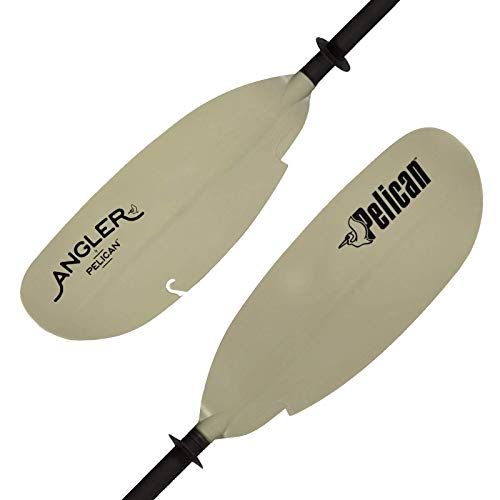
The Poseidon Angler Kayak Paddle is ideal for angler paddlers taller than 5'5". Measuring 98.5” (250cm) long, this paddle is the perfect match for wider fishing kayaks

SUPER-TOUGH – 3-ply laminate construction combined with SuperStrong enhanced molecular formulation PVC provides superior structural strength and unmatched resistance to damage from abrasion, impact and sunlight, while allowing more pressure for rigidity
When Do End-of-Season Kayak Sales Happen?
End-of-season kayak sales occur primarily from September through November, when manufacturers release new model years and retailers need to clear space for next year’s inventory. These sales offer 20-35% discounts on outgoing models, with the steepest markdowns appearing in October.
Unlike winter clearance (which focuses on moving any remaining stock), end-of-season sales target specific models being discontinued or updated. You’ll find better selection than winter sales but smaller discounts than January clearance events.
Timeline for end-of-season opportunities:
- Late August/Early September: First markdowns appear (10-15% off)
- October: Peak clearance period (20-30% off) as new models arrive
- November: Final closeouts (25-35% off) on remaining inventory
- December: Leftover stock transitions to winter clearance pricing
Regional variation matters significantly. Southern retailers may extend kayak season into November, delaying clearance sales. Northern stores often start markdowns earlier, sometimes in late August, as local fishing seasons wind down.
For beginner kayak fishing enthusiasts, end-of-season sales provide an ideal entry point. Previous-year models typically offer identical performance to new releases, and the savings can fund essential accessories like fish finders and rod holders.

HIGH QUALITY - The kayak fishing rod holder Made of High Quality Material PC+ABC, strong and durable, corrosion resistant, hard to damage.
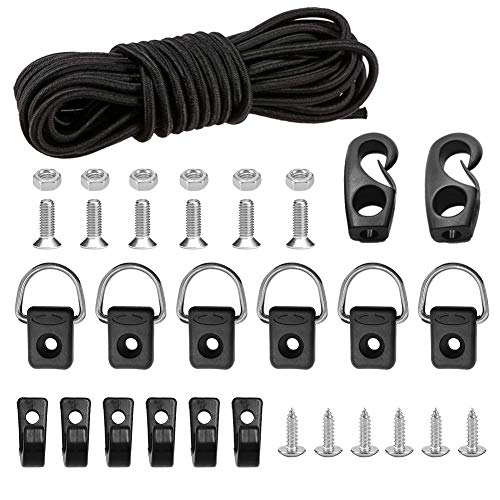
【Package Included】: Kayak deck rigging Kit Included A 8 feet 1/4 inch elastic bungee cord, 6 pcs D Ring with 6 PCs 304 M6 stainless steel screws, 6 pcs J hooks with 6 screws and 2 Bungee Cord Ends

UV-Protected HDPE Construction for Durability: Built with high-density polyethylene (HDPE) plastic, this kayak is both lightweight and highly durable, offering long-lasting protection against UV rays for years of use in various conditions. Paddle included.
How Much Can I Save on a Fishing Kayak During a Sale?
Typical sale discounts on fishing kayaks range from 15% during modest promotions to 40% during aggressive clearance events, translating to $150-$800 in savings depending on the kayak’s original price point. Entry-level kayaks ($400-$700) see smaller absolute savings, while premium models ($1,500-$3,000) offer the largest dollar-value discounts.
Here’s a realistic breakdown by kayak category and sale type:
Entry-level fishing kayaks ($400-$700 retail):
- Holiday sales (Black Friday, Memorial Day): $50-$125 off (15-20%)
- End-of-season: $80-$175 off (20-25%)
- Winter clearance: $100-$210 off (25-30%)
Mid-range fishing kayaks ($800-$1,500 retail):
- Holiday sales: $120-$300 off (15-20%)
- End-of-season: $160-$375 off (20-25%)
- Winter clearance: $240-$525 off (30-35%)
Premium fishing kayaks ($1,600-$3,000 retail):
- Holiday sales: $240-$600 off (15-20%)
- End-of-season: $400-$750 off (25-25%)
- Winter clearance: $560-$1,200 off (35-40%)
Additional savings opportunities:
- Floor models and display units: Extra 10-15% off sale prices
- Package deals: Save 20-30% when buying kayak + paddle + PFD bundles
- Manufacturer rebates: Occasional $50-$150 mail-in rebates during promotions
- Price matching: Some retailers match competitor pricing plus an additional 5-10%
Keep in mind that the deepest discounts apply to limited inventory. A 40% clearance deal means nothing if the only remaining kayak is the wrong size or color for your needs. When comparing fishing kayak options, factor in whether a discounted model truly meets your requirements or if paying full price for the right kayak makes more sense.
What Is the Best Month to Buy a Fishing Kayak?
February stands out as the single best month to buy a fishing kayak for most buyers, offering the optimal combination of deep discounts (25-40% off), reasonable selection, and timing that allows for spring season preparation. January runs a close second, though selection becomes more limited.
February works because retailers have exhausted their holiday promotions and are preparing for spring inventory arrivals in March. They’re motivated to clear remaining winter stock but haven’t yet received new shipments, creating maximum negotiating leverage for buyers.
Month-by-month buying strategy:
January: Deepest discounts (30-40%) but smallest selection; best for flexible buyers
February: Sweet spot with 25-35% discounts and decent selection remaining
March: Prices rise as new inventory arrives; discounts drop to 10-15%
April-May: Full retail pricing as fishing season peaks; avoid unless necessary
June-August: Occasional mid-summer promotions (10-20% off) but inconsistent
September-October: End-of-season sales begin (20-30% off) with good selection
November: Black Friday sales (15-25% off) offer convenience and variety
December: Post-holiday deals (20-30% off) if inventory remains
Choose February if: You want maximum savings with acceptable selection and can wait 4-8 weeks before fishing season starts.
Choose September-October if: You prefer shopping when new models arrive and want to compare current and previous-year options side-by-side.
Choose November if: Convenience matters more than maximum savings and you want the widest selection of current models on sale.
Regional climate affects optimal timing. Warm-weather states with year-round fishing see less dramatic seasonal pricing, while northern states with hard winters offer the steepest discounts during cold months.
Are Fishing Kayaks Cheaper in Winter or Spring?
Fishing kayaks are significantly cheaper in winter, with prices typically 15-25% lower than spring retail pricing. Winter clearance sales (December-February) offer the year’s deepest discounts, while spring (March-May) brings full-price inventory as retailers capitalize on peak fishing season demand.
The price difference stems from basic supply and demand. In winter, few people shop for kayaks, storage costs money, and retailers need cash flow. In spring, everyone wants a kayak immediately, new inventory has arrived, and retailers have no incentive to discount.
Winter advantages:
- Prices 25-40% below retail on clearance models
- Negotiating leverage with motivated salespeople
- No competition from other buyers
- Time to research and compare without pressure
Winter disadvantages:
- Limited selection, especially in popular colors and sizes
- Can’t test paddle in realistic conditions
- Must store kayak for weeks or months before use
- Risk of missing out if you wait too long
Spring advantages:
- Full selection of new models and colors
- Ability to test paddle in actual fishing conditions
- Immediate use after purchase
- Latest features and technology
Spring disadvantages:
- Full retail pricing with minimal discounts
- High competition for popular models
- Sales pressure during peak season
- Impulse buying risk when you need a kayak now
For budget-conscious fishing kayak buyers, winter shopping makes financial sense if you can tolerate limited selection and delayed use. Spring shopping works better if you need a specific model or want to fish immediately, but expect to pay premium prices.
Decision rule: If saving $300-$600 matters more than having your exact first choice, buy in winter. If getting precisely the right kayak matters more than price, shop in spring but expect to pay full retail.
Where to Find Clearance Deals on Fishing Kayaks
Clearance deals on fishing kayaks appear most consistently at big-box outdoor retailers (Bass Pro Shops, Cabela’s, Dick’s Sporting Goods), regional sporting goods chains, and manufacturer direct-to-consumer websites during end-of-season and winter clearance periods.
Top sources for clearance fishing kayaks:
National retail chains:
- Bass Pro Shops: Major clearance events in January, March, and September
- Cabela’s: Synchronized sales with Bass Pro (same parent company)
- Dick’s Sporting Goods: Aggressive clearance pricing, especially on house brands
- Academy Sports + Outdoors: Strong regional presence in South/Southwest with frequent promotions
Manufacturer direct sales:
- Hobie: Factory outlet sales and demo day discounts
- Old Town: Direct website clearance section with previous-year models
- Perception: Seasonal promotions through their online store
- Wilderness Systems: Demo boat sales at kayak fishing tournaments
Online marketplaces:
- Amazon: Lightning deals and warehouse discounts on select models
- REI: Garage sales (returned/used gear) and annual member sales
- Overstock/Wayfair: Occasional deep discounts on overstocked models
Local opportunities:
- Independent kayak shops: End-of-season demo boat sales
- Outdoor gear consignment stores: Used kayaks at 40-60% off retail
- Craigslist/Facebook Marketplace: Private sellers clearing garage space
Pro tip: Small independent kayak dealers often negotiate on price, especially during slow periods. A polite “What’s your best price if I buy today?” can yield an extra 5-10% discount that big-box stores won’t offer.
Common mistake: Focusing only on big retailers. Local kayak shops frequently sell demo boats and rental fleet kayaks at steep discounts (30-50% off) in excellent condition. These kayaks have been maintained professionally and often include accessories.
For serious deal hunters, sign up for email lists at multiple retailers. Many announce flash sales and exclusive discounts to subscribers 24-48 hours before public promotions begin.

Galvanized, rust resistant, compact, folding and convenient

SUPER-TOUGH – 3-ply laminate construction combined with SuperStrong enhanced molecular formulation PVC provides superior structural strength and unmatched resistance to damage from abrasion, impact and sunlight, while allowing more pressure for rigidity

Do Bass Pro Shops Have Kayak Sales?
Yes, Bass Pro Shops runs major kayak sales 3-4 times annually, typically during their Spring Fishing Classic (March-April), Fall Hunting Classic (August-September), Black Friday weekend, and post-holiday clearance (January). Discounts range from 15-30% depending on the event and specific models.
Bass Pro Shops represents one of the largest fishing kayak retailers in North America, carrying brands like Ascend (their house brand), Old Town, Perception, and Ocean Kayak. Their sale events often feature the deepest discounts on Ascend models, which offer solid value for recreational and entry-level fishing kayak enthusiasts.
Bass Pro Shops sale calendar:
- January Clearance: 20-35% off remaining winter inventory
- Spring Fishing Classic (March-April): 10-20% off select models, focus on new arrivals
- Memorial Day Weekend: 15-20% off with bundle deals
- Fall Hunting Classic (August-September): 15-25% off as end-of-season approaches
- Black Friday: 20-30% off doorbusters and select models
- After Christmas: 25-35% off remaining holiday inventory
Insider strategies for Bass Pro Shops:
- Join the Bass Pro Shops Club (free) for early sale access and exclusive coupons
- Stack manufacturer rebates with sale pricing when available
- Check the “Bargain Cave” section in-store for damaged-box and floor-model deals
- Price match with Cabela’s (same parent company) if one location has better pricing
What to watch for: Bass Pro Shops heavily promotes their Ascend house brand during sales. While these kayaks offer good value, compare specifications and features against name-brand alternatives before assuming the sale price represents the best deal. Sometimes a 20% discount on a premium brand beats a 30% discount on an entry-level model.
Cabela’s runs nearly identical promotions on the same schedule, so check both if you have locations nearby. Occasionally one store will have better in-stock selection or slightly deeper discounts on specific models.
Should I Wait for Memorial Day to Buy a Fishing Kayak?
Memorial Day sales offer moderate discounts of 15-20% on fishing kayaks with excellent selection of current models, making the holiday worthwhile if you need a kayak for immediate summer use but not optimal for maximum savings. For the deepest discounts, winter clearance sales (January-February) beat Memorial Day pricing by 10-20 percentage points.
Memorial Day weekend marks the unofficial start of summer fishing season, and retailers know customers are ready to buy. This demand reduces their incentive to offer aggressive discounts compared to off-season clearance events.
Memorial Day advantages:
- Good selection of current-year models in all sizes and colors
- Convenient timing right before peak fishing season
- Bundle deals often include paddles, PFDs, and accessories
- Ability to test paddle immediately in summer conditions
- No storage wait time
Memorial Day disadvantages:
- Discounts typically 10-15% smaller than winter clearance
- High customer traffic and competition for deals
- Less negotiating leverage with salespeople
- Impulse buying pressure when “sale ends Monday”
When Memorial Day makes sense:
- You missed winter clearance sales and need a kayak now
- You want current-year models with latest features
- Immediate use justifies paying slightly more
- You’re buying accessories anyway and can benefit from bundle pricing
When to skip Memorial Day:
- You can wait until fall for end-of-season sales
- Maximum savings matter more than immediate use
- You’re flexible on model and color selection
- You prefer shopping without crowds and pressure
For buyers planning ahead, a better strategy combines patience with timing: research models during spring, wait for September-October end-of-season sales, then buy at 20-30% off with good selection still available. You’ll save more than Memorial Day pricing while still getting your preferred model.
Why Are Fishing Kayaks More Expensive Than Regular Kayaks?
Fishing kayaks cost 30-100% more than comparable recreational kayaks because they include specialized features like rod holders, gear tracks, anchor systems, enhanced stability for standing, and reinforced hulls to handle fishing equipment weight. A basic recreational kayak might cost $300-$500, while an equivalent-length fishing kayak typically runs $600-$1,200.
The price premium reflects both additional features and engineering requirements specific to fishing applications. Fishing kayaks must remain stable when you’re fighting a fish, provide storage for tackle and gear, and accommodate accessories like fish finders and anchor trolleys.
Key features that increase fishing kayak costs:
Stability modifications:
- Wider hulls (32-36 inches vs. 24-28 inches for recreational kayaks)
- Flatter bottoms or pontoon-style designs for standing
- Higher weight capacity to handle gear and catch
Fishing-specific features:
- Molded rod holders (typically 2-4 per kayak)
- Gear tracks for mounting accessories
- Tackle storage compartments with waterproof hatches
- Anchor trolley systems
- Paddle holders for hands-free fishing
Durability enhancements:
- Thicker hull material to prevent punctures from hooks and gear
- UV-resistant plastic that withstands sun exposure
- Reinforced scupper holes that don’t compromise stability
Premium options that drive prices higher:
- Pedal drive systems ($1,000-$1,500 additional cost)
- Integrated rudder systems for better tracking
- Elevated seating for improved sight fishing
- Built-in live wells for bait
For kayak fishing beginners wondering if the premium is worth it, consider your fishing style. If you’re paddling calm lakes for bass and panfish, a mid-range fishing kayak ($600-$900) provides everything you need. If you’re targeting bigger fish in rougher water or want to stand while fishing, premium models ($1,200-$2,000) justify their cost through enhanced safety and functionality.
Common mistake: Buying a cheap recreational kayak and trying to retrofit it for fishing. You’ll spend $200-$300 on aftermarket rod holders, gear tracks, and accessories while still lacking the stability and storage of a purpose-built fishing kayak. Start with the right tool for the job.
Is It Worth Waiting for a Sale or Should I Buy Now?
Waiting for a sale is worth it if you can delay your purchase by 1-6 months and want to save 20-35% ($200-$800 on most fishing kayaks), but buying now makes sense if you’re in peak fishing season, need a specific model with limited availability, or the delay costs you more in lost fishing time than you’d save in dollars.
The decision hinges on three factors: timing, flexibility, and opportunity cost.
Wait for a sale if:
- It’s currently March-August (peak pricing season)
- You’re flexible on model, color, and features
- You can store a kayak for several months if needed
- Saving $300-$600 significantly impacts your budget
- You’re a first-time buyer still researching options
Buy now if:
- It’s currently September-February (already sale season)
- You need a specific model that’s selling out
- You have immediate fishing trips planned
- Lost fishing time outweighs potential savings
- A current promotion offers 20%+ off (close enough to clearance pricing)
Calculate your opportunity cost:
If you fish 20 times per season and a kayak extends your fishing access significantly, waiting 4 months to save $400 means you’re paying $20 per missed trip. For passionate anglers, that math doesn’t work. For casual weekend fishermen, waiting makes perfect sense.
Middle-ground strategy: Buy a used fishing kayak now at 40-50% off retail, use it for a season or two, then upgrade to your dream kayak during a clearance sale. You’ll get on the water immediately while still saving money long-term.
Red flag scenario: Don’t wait indefinitely for the “perfect deal.” Buyers who wait year after year hoping for an extra 5% discount miss entire fishing seasons. If a current sale offers 25%+ off a kayak that meets your needs, that’s good enough. Diminishing returns set in quickly beyond 30% discounts.
The best approach? Research thoroughly during peak season (spring/summer), identify your top 2-3 models, then wait for the first major sale (Labor Day, Black Friday, or January clearance) that discounts one of your target kayaks by 20% or more. Buy immediately when that threshold hits.
What Stores Have the Best Fishing Kayak Discounts?
Bass Pro Shops, Cabela’s, and Dick’s Sporting Goods consistently offer the deepest fishing kayak discounts among major retailers, with clearance pricing reaching 30-40% off during January and February sales. Regional chains like Academy Sports and independent kayak dealers also provide competitive pricing, especially on demo boats and previous-year inventory.
Retailer comparison for fishing kayak sales:
Bass Pro Shops / Cabela’s:
- Typical sale discounts: 20-35% off
- Best timing: January clearance, Black Friday
- Strengths: Largest selection, strong house-brand deals (Ascend)
- Weaknesses: Limited negotiation flexibility
Dick’s Sporting Goods:
- Typical sale discounts: 20-30% off
- Best timing: End-of-season (September-October)
- Strengths: Aggressive clearance pricing, frequent coupons
- Weaknesses: Smaller kayak selection than specialty outdoor retailers
Academy Sports + Outdoors:
- Typical sale discounts: 15-30% off
- Best timing: Seasonal transitions (March, September)
- Strengths: Regional pricing advantages, good bundle deals
- Weaknesses: Limited premium brand selection
REI:
- Typical sale discounts: 20-30% off during sales, 40-60% at garage sales
- Best timing: Anniversary sale (May), Labor Day, garage sales (monthly)
- Strengths: High-quality brands, excellent return policy, member dividend
- Weaknesses: Higher base prices, smaller kayak-specific inventory
Independent kayak dealers:
- Typical sale discounts: 25-40% off demo boats, 15-25% off new
- Best timing: End-of-season, demo day events
- Strengths: Negotiable pricing, expert advice, demo boat deals
- Weaknesses: Limited inventory, inconsistent sales schedule
Online retailers (Amazon, Wayfair):
- Typical sale discounts: 15-25% off, occasional lightning deals at 30-40% off
- Best timing: Prime Day, Black Friday, random flash sales
- Strengths: Convenience, price comparison ease
- Weaknesses: Shipping costs, can’t inspect before buying, limited expert advice
Pro strategy: Create a spreadsheet tracking your target kayak models across multiple retailers. Set up price alerts using tools like CamelCamelCamel (for Amazon) or Honey. When any retailer hits your target discount (typically 25%+ off), buy immediately rather than hoping for an extra 5% elsewhere.
Regional variation matters: Southern states with year-round fishing see smaller seasonal discounts (15-25% typical) compared to northern states with hard winters (25-40% clearance pricing). If you live near a state border, check retailers in both states as sale timing and depth can vary significantly.
Do Used Fishing Kayaks Go on Sale Too?
Yes, used fishing kayaks see the most aggressive price drops during late fall (October-November) when private sellers want to clear garage space before winter and during early spring (March-April) when sellers upgrade to new models. Expect to pay 40-60% of original retail for used kayaks in good condition, with prices dropping to 30-40% of retail during peak selling periods.
The used fishing kayak market follows seasonal patterns similar to new kayak sales but with more dramatic price swings. Private sellers lack the carrying costs of retailers, so they’re often willing to accept lowball offers during off-season periods.
Best times to buy used fishing kayaks:
Late fall (October-November):
- Sellers clearing space before winter storage
- Prices drop 10-20% below typical used values
- Good selection as season ends
- Negotiating leverage: “I’ll pick it up today for $X”
Early spring (March-April):
- Sellers upgrading to new models for upcoming season
- Moderate selection, competitive pricing
- Less negotiating room as demand increases
Mid-winter (January-February):
- Smallest selection but most motivated sellers
- Best deals if you find inventory
- Sellers who listed in fall and didn’t sell become very flexible
Where to find used fishing kayak deals:
- Facebook Marketplace: Largest selection, easy communication, local pickup
- Craigslist: Still active in many markets, good for finding older listings
- OfferUp/Letgo: Growing platforms with younger sellers
- Kayak fishing forums: Enthusiasts selling to upgrade, often well-maintained
- Retailer trade-in programs: Bass Pro Shops and local dealers occasionally sell trade-ins
What to inspect before buying used:
- Hull integrity (no cracks, deep scratches, or soft spots)
- Scupper plugs present and functional
- Seat condition and mounting hardware
- Rod holders and gear tracks undamaged
- Hatch covers seal properly
- No persistent odors (mold, fish rot)
Pricing guide for used fishing kayaks:
- Excellent condition (1-2 years old, minimal use): 60-70% of current retail
- Good condition (3-5 years old, normal wear): 45-55% of original retail
- Fair condition (5+ years old, visible wear but functional): 30-40% of original retail
- Needs work (repairs required, missing parts): 20-30% of original retail
Negotiation tip: Research the current new price and any ongoing sales. If a used kayak is listed at $600 but the same model is on clearance new for $700, you have strong leverage to offer $450-$500 for the used version.
Common mistake: Buying a used kayak without researching the model first. Some older fishing kayaks lack modern features like gear tracks and have poor resale value. Verify the model is still desirable before committing, even at a low price.
For buyers comfortable with used gear, the combination of late-fall used kayak shopping (40-50% off retail) beats even the best new kayak clearance sales (30-40% off retail) while still getting a functional fishing platform.
Common Mistakes When Buying a Fishing Kayak on Sale
The most common mistake when buying a fishing kayak on sale is prioritizing discount percentage over actual fit and functionality, leading buyers to purchase the wrong kayak simply because it’s heavily discounted. A 40% discount on a kayak that doesn’t meet your needs wastes more money than paying full price for the right model.
Critical mistakes to avoid:
Buying the wrong size or style:
- Mistake: Choosing a 10-foot kayak on clearance when you need 12+ feet for your height and gear
- Why it matters: Kayak length affects tracking, speed, and storage capacity
- Fix: Define your requirements first, then look for sales on appropriate models
Ignoring weight capacity:
- Mistake: Buying a kayak with 300-pound capacity when you weigh 200 pounds plus 50 pounds of gear
- Why it matters: Overloaded kayaks sit low, handle poorly, and become unsafe
- Fix: Choose kayaks with capacity at least 125% of your combined weight (you + gear + fish)
Skipping the test paddle:
- Mistake: Buying online or in winter without ever sitting in the kayak
- Why it matters: Comfort and fit vary dramatically between models
- Fix: Visit a store to sit in similar models, or buy from retailers with good return policies
Falling for “doorbuster” pressure:
- Mistake: Buying the first day of a sale because “limited quantities” creates urgency
- Why it matters: Many sales run for days or weeks with adequate inventory
- Fix: Research beforehand, compare prices across retailers, then buy confidently
Overlooking last year’s premium models:
- Mistake: Buying this year’s entry-level kayak on sale instead of last year’s premium model at similar price
- Why it matters: Previous-year premium kayaks often offer better features than current budget models
- Fix: Compare specifications, not just model years and prices
Forgetting about accessories:
- Mistake: Spending your entire budget on the kayak and having nothing left for paddle, PFD, and safety gear
- Why it matters: You can’t fish without essential accessories
- Fix: Budget 20-30% of total spending for accessories, or look for bundle deals
Not checking return policies:
- Mistake: Assuming all sales are final without reading the fine print
- Why it matters: Clearance items often have restricted return windows
- Fix: Confirm return policy before buying, especially for online purchases
Buying damaged clearance without inspection:
- Mistake: Accepting “minor cosmetic damage” without thorough inspection
- Why it matters: Hull damage can compromise structural integrity
- Fix: Inspect carefully or ask for detailed photos if buying online
Waiting too long for a better deal:
- Mistake: Passing on a 25% discount hoping for 35% and missing both
- Why it matters: Popular models sell out quickly during sales
- Fix: Set a target discount (20-25% is excellent) and buy when you hit it
Decision framework to avoid mistakes:
- Define your needs (water type, fishing style, storage, transport)
- Research 3-5 models that meet those needs
- Set a target price (retail minus 20-30%)
- Monitor sales on your target models
- Buy immediately when any target model hits your price threshold
- Stop second-guessing after purchase
The best sale price means nothing if you end up with a kayak that doesn’t fit your body, doesn’t suit your fishing style, or lacks the capacity for your gear. Define “right kayak” first, then find the best price on that specific type of kayak.
Frequently Asked Questions
When is the absolute cheapest time to buy a fishing kayak?
Late January through mid-February offers the absolute lowest prices, with discounts reaching 30-40% off retail as retailers aggressively clear winter inventory. However, selection is most limited during this window, so you must be flexible on color and features.
Can I negotiate the price of a fishing kayak at big-box stores?
Big-box retailers like Bass Pro Shops and Dick’s Sporting Goods rarely negotiate on advertised prices, but you can sometimes get an extra 5-10% off floor models, damaged-box items, or by asking managers to match competitor pricing. Independent kayak dealers offer much more negotiating flexibility, especially on demo boats and during slow periods.
Are fishing kayak Black Friday deals actually good or just marketing?
Black Friday fishing kayak deals are legitimate, typically offering 15-25% discounts on current models with good selection. However, they’re not the year’s deepest discounts—January clearance sales usually beat Black Friday pricing by 10-15 percentage points on comparable models. Black Friday works well if you want convenience and selection over maximum savings.
How long do fishing kayak sales typically last?
Major holiday sales (Black Friday, Memorial Day) typically run 3-7 days, while seasonal clearance events (end-of-season, winter clearance) can last 4-8 weeks until inventory sells out. The best selection appears in the first week of any sale, with remaining inventory becoming increasingly picked-over as weeks pass.
Should I buy a previous year’s model or wait for the new version?
Buy the previous year’s model if it’s discounted 20% or more, as most year-to-year changes are cosmetic (new colors, minor feature tweaks) rather than substantial performance improvements. New model releases rarely justify paying 20-30% more unless they introduce genuinely innovative features like a new hull design or pedal drive system.
Do fishing kayak prices drop more in northern or southern states?
Northern states with hard winters see steeper seasonal discounts (25-40% off during winter clearance) because demand drops to nearly zero for 4-6 months. Southern states with year-round fishing see smaller seasonal swings (15-25% typical discounts) because retailers maintain steady sales throughout the year.
What’s a good price for a quality fishing kayak?
A quality entry-level fishing kayak should cost $400-$700 at full retail ($300-$500 on sale), a mid-range model runs $800-$1,500 retail ($600-$1,100 on sale), and premium fishing kayaks cost $1,600-$3,000 retail ($1,200-$2,100 on sale). If you’re paying more than these ranges, you’re either buying top-tier specialty models or overpaying.
Can I return a fishing kayak bought on clearance?
Return policies vary by retailer, but many restrict returns on clearance items to 14-30 days (versus 60-90 days for regular-price items) and some clearance sales are final. Always check the specific return policy before buying, especially for online purchases where you can’t inspect the kayak first.
Are online fishing kayak deals better than in-store?
Online deals occasionally beat in-store pricing by 5-10%, especially during flash sales, but you’ll pay $100-$300 in shipping for most kayaks, negating much of the savings. In-store shopping lets you inspect the kayak, get expert advice, and take it home immediately. For the best of both worlds, research online but buy in-store during major sales events.
How can I tell if a fishing kayak sale price is actually good?
Track the kayak’s price history using tools like CamelCamelCamel (for Amazon) or by checking multiple retailers over several weeks. A genuine sale offers at least 20% off the typical selling price (not an inflated “original” price). If a kayak is “always on sale,” the sale price is likely the real price.
Do fishing kayak manufacturers offer direct sales or discounts?
Some manufacturers like Hobie, Old Town, and Perception sell directly through their websites and offer occasional factory sales, demo boat discounts, and refurbished models at 20-40% off retail. Sign up for manufacturer email lists to receive notifications about these direct sales, which often beat retailer pricing.
What should I do if the kayak I want never goes on sale?
If a specific model rarely discounts, consider buying a used version at 40-50% off retail, waiting for the next model-year transition (when current models get clearanced), or looking at comparable alternatives from competing brands that do go on sale. Sometimes paying full price for exactly the right kayak beats compromising on a discounted alternative.
Conclusion
Finding the right time to buy a fishing kayak on sale can save you $200-$800 while still getting a quality boat that meets your needs. The sweet spot for most buyers is late January through February, when clearance pricing hits 25-40% off and selection remains reasonable. If you miss that window, end-of-season sales in September and October offer solid discounts of 20-30% with better selection than winter clearance.
The key is defining your requirements first—fishing kayak size, features, and capacity—then waiting for sales on models that actually fit those needs. A 40% discount on the wrong kayak wastes more money than paying full price for the right one.
Your action plan:
- Research and identify 3-5 fishing kayak models that meet your specific needs
- Set price alerts at multiple retailers for those models
- Target late January-February for maximum savings or September-October for better selection
- Buy immediately when any target model hits 20-25% off
- Don’t second-guess after purchase—get on the water and fish
For buyers ready to start their search, explore our fishing kayak buying guide for detailed comparisons and recommendations. Whether you’re a beginner or experienced angler, the right kayak at the right price is out there—you just need to time it correctly.