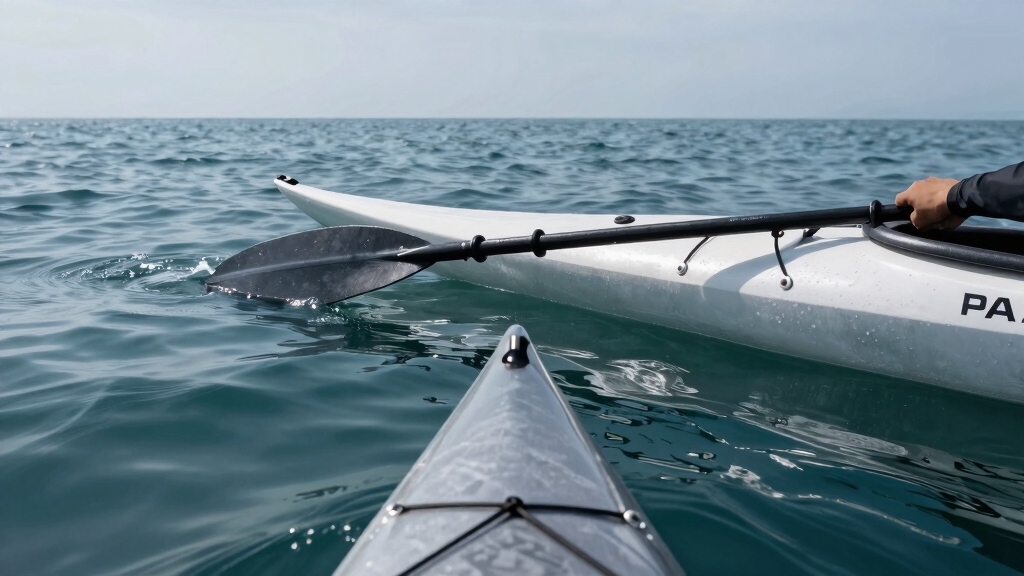
Quick Answer: A skeg is a retractable blade that drops down from the stern of a kayak to improve tracking in wind and current. It helps prevent weathercocking (the tendency for your bow to turn into the wind) without affecting your ability to turn the kayak. Deploy it when paddling in crosswinds, following seas, or when you need to maintain a straight course with less corrective paddling effort.
Key Takeaways
- A skeg is a retractable fin mounted in the stern that improves straight-line tracking without limiting maneuverability like a rudder does
- Deploy your skeg partially or fully when facing crosswinds, quartering winds, or following seas to reduce weathercocking
- Skegs work best for intermediate to advanced paddlers who understand how wind affects their specific kayak hull design
- Unlike rudders, skegs don’t steer—they only help maintain your chosen course by adding lateral resistance at the stern
- Retract your skeg completely in shallow water, when surfing waves, during tight maneuvering, or in heavy following seas
- Common skeg problems include cable binding, sand jamming the mechanism, and improper deployment depth for conditions
- Short kayaks (under 12 feet) typically don’t benefit much from skegs due to their inherently loose tracking characteristics
- Skeg maintenance requires regular freshwater flushing, cable lubrication, and clearing debris from the skeg box
What Is a Skeg on a Kayak?
A skeg is a retractable blade or fin that drops vertically from a slot (called a skeg box) in the stern of a kayak, controlled by a slider mechanism in the cockpit. The skeg adds lateral resistance at the back of the kayak, which counteracts the tendency of the bow to turn into the wind—a phenomenon called weathercocking. Unlike a rudder, a skeg doesn’t pivot or steer; it simply provides a fixed vertical surface that helps the kayak track straight.
Most skegs are made from durable plastic or composite materials and can be deployed in increments from fully retracted to fully extended, typically ranging from 4 to 8 inches of blade depth. The control slider is connected to the skeg via a stainless steel cable that runs through the inside of the hull. This design allows you to adjust the amount of tracking assistance based on wind and water conditions without taking your hands off the paddle.
When to consider a kayak with a skeg: If you plan to paddle in open water, coastal environments, or anywhere you’ll face consistent wind, a skeg-equipped kayak offers significant advantages. Touring kayaks and sea kayaks commonly feature skegs because these longer boats are more susceptible to weathercocking. For beginner kayak fishing in protected waters, a skeg may be less critical than other features like stability and storage.
How Does a Skeg Help with Wind and Tracking?
A skeg improves tracking by adding lateral resistance at the stern, which balances the forces acting on your kayak in wind. When wind hits your kayak from the side or rear quarter, it pushes more strongly on the bow (which sits higher out of the water) than the stern, causing the bow to turn downwind. By deploying the skeg, you create a pivot point at the back of the kayak that resists this turning force, allowing you to maintain your intended course with fewer corrective paddle strokes.
The effectiveness depends on how much skeg you deploy. In light crosswinds, a partially deployed skeg (25-50%) may be sufficient. In stronger winds or quartering conditions, you might need the skeg fully extended. The key is finding the sweet spot where your kayak tracks straight with minimal effort, but you can still turn when needed.
Common mistake: Many paddlers deploy the skeg fully in all wind conditions, which can make the kayak track too aggressively and become difficult to turn. Start with partial deployment and adjust based on how your kayak responds. If you’re still weathercocking, add more skeg. If the boat feels locked on course and won’t turn easily, retract it slightly.
Difference Between Skeg and Rudder
Skegs and rudders both improve tracking, but they work differently and suit different paddling styles. A skeg is a fixed blade that only moves up and down—it doesn’t pivot or steer. A rudder is a movable blade controlled by foot pedals that both improves tracking and allows you to steer the kayak by deflecting water flow.
Key differences:
- Steering capability: Rudders actively steer; skegs only help maintain course
- Control method: Rudders use foot pedals; skegs use a cockpit-mounted slider
- Paddling style impact: Rudders allow you to steer without paddle strokes; skegs require you to use proper paddling technique to turn
- Maintenance: Skegs have fewer moving parts and are generally more reliable; rudders have more complex linkages that can fail
- Shallow water: Skegs retract completely inside the hull; rudders typically remain exposed and vulnerable to damage
- Cost: Skeg systems are usually less expensive to purchase and repair
Choose a skeg if: You prefer traditional paddling technique, want a simpler system with less maintenance, paddle in areas with rocks or shallow water, or value the clean lines of a rudderless stern. Skegs work particularly well for sit on top kayak fishing where you’re frequently moving around and don’t want to worry about foot pedal positions.
Choose a rudder if: You paddle long distances and want to reduce fatigue, frequently paddle in strong winds, prefer steering with your feet while keeping your paddle free for fishing, or have limited torso rotation that makes sweep strokes difficult.

Replacement Model: 12181
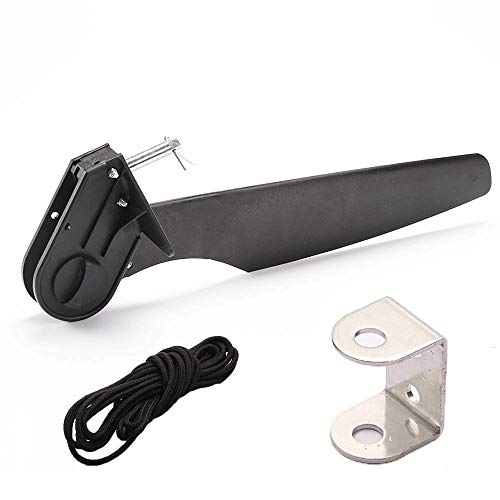
The Kayak Rudder Size - Size: Approx. 47 *15.5 * 14.2cm / 18.5 * 6.1 * 5.6 in (L * W * H); Rudder blade length: Approx. 45cm / 17.7in

✅ Heavy-Duty Wear-Resistant Construction: Made of premium rigid impact-resistant composite material, resisting abrasion from rocky riverbeds, sandbars and underwater debris; durable build avoids bending or cracking after repeated grounding and rough water use per verified customer field tests.
When Should I Deploy My Kayak Skeg?
Deploy your skeg when you’re fighting to keep your kayak on course and spending more energy on corrective strokes than forward paddling. The most common scenarios include crosswinds (wind hitting your kayak from the side), quartering winds (wind from behind at an angle), and following seas where waves push your stern around.
Specific deployment guidelines:
- Light crosswind (5-10 mph): Deploy 25-50% of the skeg and test your tracking
- Moderate crosswind (10-15 mph): Deploy 50-75% and adjust based on your kayak’s response
- Strong crosswind or quartering wind (15+ mph): Deploy 75-100% for maximum tracking assistance
- Following seas: Deploy 50-75% to prevent the stern from being pushed sideways by waves
- Beam seas (waves from the side): Use minimal or no skeg, as you need maneuverability to handle each wave
Start with less skeg and add more if needed. The goal is to find the minimum deployment that keeps you on course, preserving your ability to turn when necessary. Different kayak designs respond differently—some hulls weathercock more aggressively and need more skeg assistance than others.
When fishing: Deploy your skeg when paddling to fishing spots in wind, but retract it partially or completely once you’re positioned and casting. A fully deployed skeg can make it harder to adjust your position for different casting angles. For ocean fishing kayak situations where you’re drifting and casting, experiment with partial deployment to maintain your drift line without losing maneuverability.
Skeg vs Rudder: Which Is Better for Beginners?
For beginners, a skeg is often the better choice because it encourages proper paddling technique and has a simpler learning curve. A skeg forces you to learn how to turn your kayak using sweep strokes, edging, and body rotation—fundamental skills that make you a better paddler. Rudders can become a crutch that allows beginners to avoid learning these essential techniques.
Skegs also have fewer things to go wrong. There are no foot pedals to adjust, no steering cables to tangle, and no blade sticking out behind the kayak to hit rocks or get caught in weeds. For kayak for beginners who are still building confidence, the simplicity of a slider control is less intimidating than coordinating foot pedals while managing paddle strokes.
However, rudders may be better for beginners if:
- You have physical limitations that make torso rotation or sweep strokes difficult
- You’re learning in consistently windy conditions where tracking is a constant battle
- You’re paddling a tandem kayak where coordinated steering is challenging
- You plan to cover long distances and want to reduce the learning curve for efficient travel
The real answer: Try both if possible before committing. Many kayak rental operations and demo days offer both skeg and rudder-equipped boats. Pay attention to which system feels more intuitive and which helps you enjoy your time on the water more. For fishing-focused paddlers, consider that a skeg leaves your feet free to brace against foot pegs in any position, which can be valuable when fighting a fish or standing to cast in a pedal kayak or stable platform.
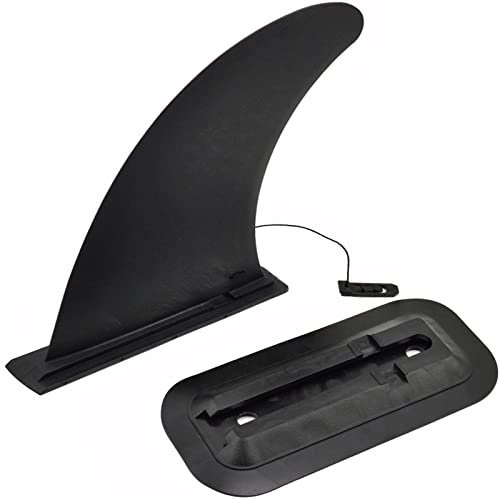
DSHE universal fin with base is designed for center fins for surfboard and paddle boards. Its classic design provides good hold in both flat water paddling and turning around.

[Premium Material] Made from PVC material for durable long time use.Center fin, kayak skeg tracking fin mounting points watershed board canoe for inflatable stand up paddle boards surfboard & paddleboard. (Size: 21x6.5x6cm)
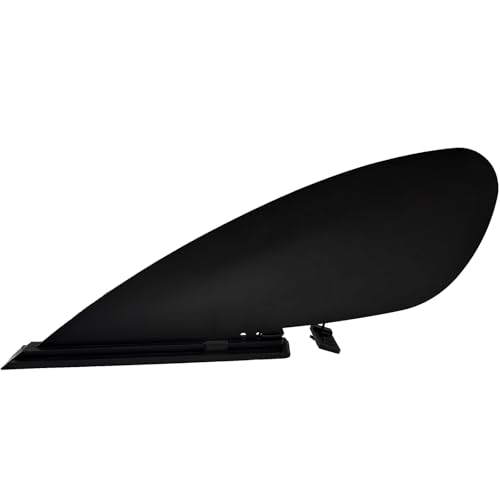
【Reduce Drag】With our kayak tracking fin, you can say goodbye to frustrating kayak drifting. Our proven fin template provides outstanding tracking abilities, ensuring your kayak maintains a straight and stable course, while effectively shedding weeds & debris to prevent interference during your paddling adventures.
Do I Need a Skeg for Calm Water Paddling?
No, you don’t need a skeg for calm water paddling in protected environments with minimal wind. In fact, deploying a skeg in calm conditions can make your kayak track too aggressively, reducing the playful maneuverability that makes paddling in sheltered waters enjoyable. Lakes, slow rivers, and protected bays on calm days are ideal for paddling with your skeg fully retracted.
Calm water is also the perfect environment to practice your paddling technique without the skeg as a crutch. Work on forward strokes that don’t pull your kayak off course, practice sweep strokes for turning, and develop the edge control that helps you carve turns efficiently. These skills become invaluable when you do encounter wind and need to use your skeg effectively.
When calm water might still benefit from a skeg:
- You’re paddling a very long kayak (16+ feet) that tracks aggressively even in calm conditions and you want to make turning easier by deploying a small amount of skeg to shift the pivot point
- You’re learning to paddle and your stroke technique is inconsistent, causing the kayak to wander—a small amount of skeg can help you maintain course while you develop better form
- You’re on a long crossing where maintaining a precise bearing is important and even slight course deviations add significant distance
For river kayak fishing in current, keep your skeg retracted. River paddling requires constant maneuvering around obstacles, and a deployed skeg will make your kayak less responsive when you need to avoid rocks, logs, or other hazards.
Is a Skeg Necessary for Ocean Kayaking?
A skeg is highly recommended but not absolutely necessary for ocean kayaking, depending on your skill level and the conditions you paddle in. Ocean environments typically involve wind, swell, and changing sea states that make tracking assistance valuable. A skeg allows you to maintain course with less effort, conserving energy for the long distances common in coastal paddling.
Ocean paddlers face unique challenges that make skegs particularly useful. Wind patterns along coastlines can be unpredictable, with sudden gusts and direction changes. Swell from multiple directions can push your kayak off course. A skeg gives you a tool to adapt quickly to these changing conditions without stopping to install or adjust other gear.
Ocean scenarios where a skeg excels:
- Coastal touring: Maintaining a bearing along a coastline with offshore or onshore winds
- Island crossings: Keeping a precise course over open water where small deviations add significant distance
- Following seas: Preventing the stern from being pushed sideways by waves approaching from behind
- Wind against current: Balancing the competing forces that can make kayaks difficult to control
When experienced ocean paddlers skip the skeg: Some advanced paddlers prefer rudderless, skegless kayaks for rock gardening, surf zone play, or technical coastal environments where maximum maneuverability is more important than tracking. These paddlers rely entirely on paddle technique and hull design to manage their kayak in challenging conditions.
For fishing: If you’re targeting inshore fishing spots along the coast, a skeg helps you reach your destination efficiently, then can be retracted for better maneuverability while you’re fishing. The ability to deploy and retract on the fly is one of the skeg’s biggest advantages in dynamic ocean environments.
My Skeg Is Stuck: How Do I Fix It?
A stuck skeg is usually caused by sand, debris, or a kinked cable. Start by trying to work the skeg free with gentle pressure—move the control slider back and forth while applying light force. Don’t force it aggressively, as you can damage the cable or bend the skeg blade.
Step-by-step troubleshooting:
Check the control slider: Make sure it’s not jammed or obstructed in the cockpit. Remove any debris around the slider mechanism.
Flush with water: If you’re on the water, try flushing the skeg box by rocking the kayak side to side while moving the slider. This can dislodge sand or small pebbles.
Inspect the cable: Look for kinks or fraying where the cable enters the skeg box. A kinked cable won’t move smoothly through the housing.
Clear the skeg box: When you’re off the water, remove the skeg blade (most designs have a pin or bolt that allows removal) and flush the skeg box thoroughly with fresh water. Use a hose with good pressure to blast out accumulated sand and debris.
Lubricate the cable: Apply a silicone-based lubricant to the cable where it enters the housing. Avoid petroleum-based products that can attract dirt.
Check for damage: Inspect the skeg blade for bends or cracks. Even a slight bend can cause the blade to bind in the skeg box.
Prevention tips: Rinse your skeg system with fresh water after every saltwater or sandy beach session. Deploy and retract the skeg several times during rinsing to flush the entire mechanism. Store your kayak with the skeg partially deployed to prevent the cable from developing a permanent set in the retracted position.
When to seek professional repair: If the cable is frayed, kinked beyond repair, or the skeg blade is bent, take your kayak to a dealer or repair shop. Cable replacement requires routing new cable through the hull, which can be tricky without experience. Expect to pay $75-150 for professional cable replacement, depending on your kayak model.
![3-IN-ONE RVcare Slide-Out Silicone Lube, Smart Straw, 11 OZ [1-Pack]](https://m.media-amazon.com/images/I/31qfQSSn2RL._SL500_.jpg)
Specially formulated to lubricate, waterproof slide-outs

DuPont Silicone Lubricant with Teflon Fluoro Polymer

ENHANCE PERFORMANCE - B'laster Silicone Lubricant contains a higher concentration of silicone than competitor brands, which provides longer-lasting lubrication.
Skeg Not Retracting Properly: Troubleshooting
A skeg that won’t retract fully is often caused by debris in the skeg box, a stretched cable, or damage to the skeg blade itself. This problem is particularly common after paddling in sandy or silty conditions where fine particles work their way into the mechanism.
Immediate fixes to try:
- Gravity assist: Lift the stern of your kayak out of the water and let gravity help pull the skeg down while you work the control slider
- Manual retraction: Reach under the stern and gently push the skeg blade up into the box while someone else operates the slider
- Flush and cycle: Repeatedly deploy and retract the skeg while flushing the box with water to clear obstructions
- Check cable tension: If the cable has stretched, the slider may reach the “retracted” position before the skeg is fully up—this requires cable adjustment or replacement
Common causes and solutions:
| Problem | Cause | Solution |
|---|---|---|
| Skeg retracts 90% but not fully | Sand or debris at top of skeg box | Remove skeg blade and clean box thoroughly |
| Skeg won’t retract at all | Bent blade catching on box | Inspect blade for damage; may need replacement |
| Slider moves but skeg doesn’t | Broken or disconnected cable | Cable replacement required |
| Skeg retracts slowly | Cable friction or corrosion | Lubricate cable; check for rust or kinks |
Cable adjustment: Some skeg systems have an adjustment mechanism where the cable attaches to the skeg blade. If your cable has stretched, you may be able to take up the slack by adjusting this connection point. Consult your kayak’s manual for specific instructions, as the adjustment method varies by manufacturer.
Long-term maintenance: Prevent retraction problems by establishing a post-paddle routine. Rinse the skeg system with fresh water, deploy and retract several times, and store the kayak with the skeg in a neutral position (neither fully deployed nor fully retracted). This prevents cable memory and reduces the chance of debris settling in the mechanism.
Common Mistakes Using a Kayak Skeg
The most common mistake is deploying the skeg fully in all conditions, which makes the kayak track too aggressively and reduces maneuverability. Skegs are designed for variable deployment—use just enough to maintain course without making the kayak feel locked on rails. Start with 25-50% deployment and adjust based on conditions.
Other frequent errors:
Leaving the skeg deployed in shallow water: This is the fastest way to damage or break your skeg blade. Retract completely when approaching shore, paddling over shoals, or navigating areas where you might touch bottom.
Using the skeg as a rudder: Some paddlers try to steer by deploying the skeg on one side or the other. Skegs don’t work this way—they only move straight up and down. Attempting to steer with a skeg indicates you need to work on your paddle technique or consider a rudder-equipped kayak.
Ignoring maintenance: Skeg systems need regular cleaning and lubrication. Neglecting maintenance leads to stuck skegs, broken cables, and expensive repairs. Spend five minutes rinsing and cycling your skeg after each paddle session.
Deploying in following seas: In large following seas, a deployed skeg can make your kayak harder to control as waves pass under you. The skeg locks your stern in place when you might need it to move with the wave. Use minimal or no skeg in these conditions.
Not adjusting for changing conditions: Wind and sea state change throughout a paddle. Adjust your skeg deployment as conditions evolve rather than setting it once and forgetting it.
Learning curve mistake: New skeg users often can’t feel the difference between various deployment levels. Practice in moderate conditions where you can experiment with different settings and learn how your specific kayak responds. Every hull design interacts differently with skeg deployment.
When Not to Use a Skeg
Retract your skeg completely in shallow water, when surfing waves, during tight maneuvering in confined spaces, and when paddling in heavy following seas. These situations require maximum maneuverability or present a risk of damaging the skeg blade.
Specific scenarios to avoid skeg deployment:
Shallow water and beach landings: Any time you might touch bottom, the skeg should be fully retracted. Even a gentle grounding can bend or break the blade.
Surfing and wave play: Surfing requires quick turns and dynamic boat control. A deployed skeg makes the kayak track too aggressively and reduces your ability to carve turns on wave faces.
Rock gardens and technical paddling: Navigating around rocks, through narrow channels, or in other technical environments demands maximum maneuverability. The skeg should be up.
Strong following seas: When large waves are overtaking you from behind, a deployed skeg can make your kayak harder to control. The skeg locks the stern when you need it to move with the wave.
River paddling with current: Moving water requires constant maneuvering. A deployed skeg reduces your ability to make quick corrections around obstacles.
Fishing in tight spots: When you’re positioned in a specific location and making frequent small adjustments for casting angles, a retracted skeg gives you better control.
Wind from directly ahead or behind: When wind is coming straight from the bow or stern, a skeg provides minimal benefit. Weathercocking occurs with crosswinds and quartering winds, not headwinds or tailwinds. Save the wear on your skeg system and leave it retracted in these conditions.
Do Short Kayaks Benefit from Skegs?
Short kayaks (under 12 feet) generally don’t benefit much from skegs because their hull design prioritizes maneuverability over tracking. These kayaks are meant to turn easily, and their short waterline length means they’re less affected by weathercocking than longer boats. Adding a skeg to a short, maneuverable kayak can make it feel sluggish and unresponsive.
The physics of kayak design explain why length matters. Longer kayaks have more surface area for wind to push against, creating stronger weathercocking forces. They also have a longer waterline that naturally wants to track straight. Short kayaks have less surface area exposed to wind and a shorter waterline that allows them to pivot easily. The weathercocking problem that skegs solve is simply less pronounced in short hulls.
When a short kayak might have a skeg:
- Hybrid designs: Some 12-13 foot kayaks blend touring and recreational features and may include skegs to improve tracking without sacrificing too much maneuverability
- Fishing-specific models: Short fishing kayaks designed for open water may include skegs to help paddlers reach fishing spots efficiently in wind
- Sit-on-top touring kayaks: Some shorter SOT designs intended for coastal paddling include skegs for versatility
Better alternatives for short kayaks: If you’re paddling a short kayak and struggling with tracking, focus on improving your forward stroke technique rather than wishing for a skeg. A clean, centered forward stroke that doesn’t pull the kayak off course is more effective than a skeg on a short hull. Consider whether a longer kayak might better suit your paddling goals if tracking is consistently frustrating.
For recreational kayak paddling in protected waters, the maneuverability of a short, skegless kayak is usually an advantage rather than a limitation. Save skegs for longer touring and sea kayaks where they provide clear benefits.
Skeg Alternatives for Tracking Control
If your kayak doesn’t have a skeg, several alternatives can improve tracking. The most common is a rudder system, which provides both tracking assistance and steering capability. Rudders are particularly popular on fishing kayaks and tandem boats where the added control justifies the increased complexity.
Other tracking solutions:
Removable tracking fins: Adhesive or bolt-on fins that attach to the stern provide fixed tracking assistance without the complexity of a retractable skeg. These work well for kayaks used primarily in open water.
Improved paddle technique: A clean forward stroke with proper torso rotation and blade placement is the most reliable tracking aid. Many tracking problems stem from asymmetric paddle strokes that pull the kayak off course.
Hull design selection: Some kayak hulls track naturally better than others. V-shaped hulls and longer waterlines track straighter, while flat hulls and shorter boats turn more easily. Choose a hull design that matches your typical paddling conditions.
Trim and loading: How you load your kayak affects tracking. Weight too far forward makes the stern light and prone to being pushed around by wind. Distribute weight evenly or slightly toward the stern for better tracking.
Leeboard or centerboard: Some kayaks, particularly sailing-capable models, use a centerboard or leeboard that drops down through the hull to provide lateral resistance. These are less common on fishing kayaks but can be effective.
DIY tracking fin: Some paddlers install a small fixed fin on the stern using marine adhesive or bolts. This provides modest tracking improvement without the complexity of a skeg system. Use a fin 2-4 inches deep and position it on the centerline as far back as possible. Test in calm water before committing to permanent installation.
The best alternative: For most paddlers struggling with tracking, investing time in paddle technique yields better results than any hardware solution. Take a lesson, watch instructional videos, or paddle with more experienced kayakers who can observe and correct your stroke. A proper forward stroke eliminates most tracking problems regardless of hull design.
How Much Does It Cost to Replace a Skeg Cable?
Professional skeg cable replacement typically costs between $75 and $150, depending on your kayak model and local labor rates. The cable itself is relatively inexpensive ($15-30), but the labor to route it through the hull and adjust the tension properly accounts for most of the cost. Some kayak designs make cable replacement straightforward, while others require removing deck fittings or accessing hard-to-reach areas inside the hull.
DIY cable replacement: If you’re mechanically inclined, you can replace a skeg cable yourself and save the labor cost. You’ll need the correct replacement cable for your kayak model, basic hand tools, and patience to route the cable through the hull. Manufacturer-specific instructions are usually available online or from your kayak dealer. Budget 2-4 hours for your first cable replacement as you learn the process.
Cost breakdown:
- Replacement cable: $15-30 (varies by kayak brand and model)
- Labor (professional installation): $60-120
- Additional parts (if needed): $10-40 for slider components, cable housing, or mounting hardware
- Total DIY cost: $15-70
- Total professional cost: $75-150
When to replace vs. repair: If your cable is frayed, kinked, or broken, replacement is necessary. If the cable is intact but the skeg isn’t working properly, troubleshoot other potential causes (debris in the skeg box, bent blade, slider mechanism issues) before replacing the cable. Many skeg problems can be fixed with cleaning and adjustment rather than parts replacement.
Preventive maintenance to extend cable life: Regular rinsing, lubrication, and avoiding over-tensioning the cable can extend its lifespan significantly. Most skeg cables last 5-10 years with proper care. Cables fail prematurely when exposed to salt water without rinsing, when debris causes excessive friction, or when the skeg is forced against obstructions.
Frequently Asked Questions
Can I add a skeg to a kayak that doesn’t have one?
Adding a skeg to a kayak not designed for one is technically possible but rarely practical. It requires cutting a slot in the hull, installing a skeg box, routing cable through the hull, and mounting a control slider—all of which can compromise hull integrity if not done expertly. Aftermarket skeg kits exist but are expensive ($200-400+) and require professional installation. Consider whether a different kayak or a removable tracking fin would better meet your needs.
How do I know if my kayak has a skeg or rudder?
Look at the stern of your kayak. A skeg retracts into a slot in the hull bottom, usually visible as a narrow opening along the keel line. A rudder is mounted on the outside of the stern, typically on a hinge system that allows it to kick up. Inside the cockpit, a skeg has a slider control, while a rudder has foot pedals that move independently to steer.
Should I deploy my skeg when paddling into a headwind?
No, a skeg provides minimal benefit in a direct headwind. Weathercocking occurs with crosswinds and quartering winds, not headwinds. Paddling into wind is simply hard work that requires good forward stroke technique and persistence. Save your skeg for conditions where it actually helps.
Can a skeg break off if I hit a rock?
Yes, skeg blades can break if they strike rocks or other hard objects while deployed. Most modern skegs are designed to break away or bend rather than damage the hull, but replacement blades cost $30-80 depending on the model. Always retract your skeg completely in shallow water or when approaching shore.
How often should I maintain my skeg system?
Rinse your skeg system with fresh water after every saltwater paddle and after any session in sandy or silty conditions. Deploy and retract the skeg several times during rinsing to flush the entire mechanism. Apply lubricant to the cable every 10-15 paddle sessions or whenever you notice increased friction. Remove and thoroughly clean the skeg box 2-3 times per season if you paddle frequently.
Does a skeg slow down my kayak?
A deployed skeg creates minimal drag and has negligible impact on speed. The slight increase in wetted surface area is offset by the reduced energy spent on corrective paddle strokes when the skeg helps you track straight. In conditions where a skeg is beneficial, you’ll actually paddle more efficiently with it deployed.
Can I use a skeg and a rudder together?
Kayaks are designed with either a skeg or a rudder, not both. The two systems serve similar purposes and would interfere with each other. Some kayaks offer skeg and rudder as alternative options, allowing you to choose which system to install, but you wouldn’t use both simultaneously.
Why does my skeg rattle when deployed?
A rattling skeg usually indicates loose mounting hardware or a worn cable connection. Check the bolt or pin that holds the skeg blade in place and tighten if necessary. Inspect where the cable attaches to the skeg blade for wear or looseness. Some rattle is normal as the skeg moves slightly in the skeg box, but excessive noise suggests a component needs attention.
Is a skeg better than a rudder for fishing?
Many fishing kayak enthusiasts prefer skegs because they leave your feet free to brace in any position, which is valuable when fighting fish or standing to cast. Skegs are also simpler, with fewer parts to fail and no exposed blade to catch fishing line. However, rudders offer advantages for long-distance paddling to fishing spots and hands-free steering while trolling. The choice depends on your fishing style and typical conditions.
What’s the difference between a skeg and a keel?
A keel is a permanent ridge or fin that runs along the bottom of the hull, providing tracking and protecting the hull from abrasion. A skeg is a retractable blade that can be deployed or retracted as needed. Some kayaks have both a keel and a skeg, with the skeg retracting into a slot in the keel.
Can I paddle with my skeg partially deployed?
Yes, partial deployment is actually the recommended approach for most conditions. Start with 25-50% deployment and adjust based on how your kayak tracks. Partial deployment provides tracking assistance while preserving maneuverability. Full deployment should be reserved for strong wind conditions where maximum tracking help is needed.
How do I adjust skeg cable tension?
Most skeg systems have an adjustment point where the cable attaches to the skeg blade. Consult your kayak’s manual for specific instructions, as the mechanism varies by manufacturer. Generally, you’ll loosen a set screw or bolt, adjust the cable position to take up slack, and retighten. Proper tension allows the skeg to deploy and retract smoothly without excessive force on the slider.
Conclusion
Understanding what a skeg is and when it helps transforms your kayaking experience, particularly when paddling in wind and open water. A skeg is a simple but effective tool that improves tracking by adding lateral resistance at the stern, counteracting weathercocking without limiting your ability to turn. Deploy it in crosswinds, quartering winds, and following seas, and retract it in shallow water, calm conditions, and when you need maximum maneuverability.
The key to effective skeg use is experimentation and adjustment. Start with partial deployment and fine-tune based on how your specific kayak responds to conditions. Maintain your skeg system with regular rinsing and lubrication to prevent the stuck skeg and cable problems that plague neglected systems. Remember that a skeg is a tracking aid, not a substitute for good paddle technique—invest time in developing a clean forward stroke that complements your skeg rather than relying on it to compensate for poor form.
Next steps: If you’re shopping for a kayak, test both skeg and rudder-equipped models to determine which system suits your paddling style. If you already own a skeg-equipped kayak, spend a session in moderate wind conditions experimenting with different deployment levels to learn how your boat responds. Establish a post-paddle maintenance routine that includes rinsing and cycling your skeg system. For more guidance on choosing the right kayak features for your needs, explore our fishing kayak comparison resources and kayak buying guide.