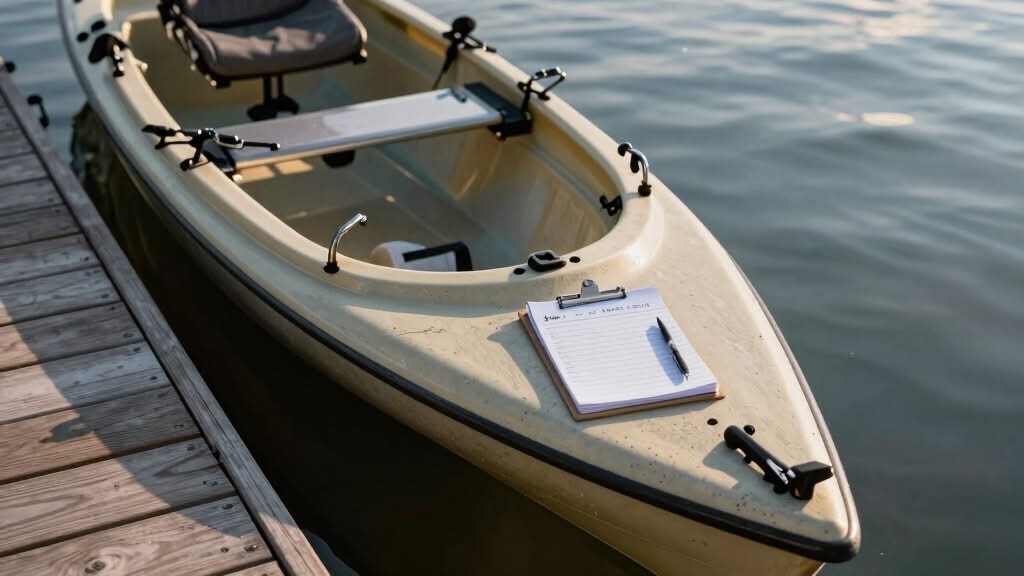
Buying a used fishing kayak can save you 30-60% compared to new models, but only if you know what to inspect. Before handing over cash for a secondhand kayak, you need to check the hull integrity, verify all fishing-specific features still work, and confirm the kayak was stored properly to avoid UV damage and warping that can ruin your time on the water.
Key Takeaways
- Hull integrity is non-negotiable – stress cracks, soft spots, and warping can’t be easily fixed and compromise safety
- Expect to pay 40-70% of original retail for kayaks 2-5 years old in good condition, less for older or budget brands
- Test before buying – always do a water test to check for leaks, stability issues, and pedal/rudder function
- Storage matters more than age – a 7-year-old kayak stored indoors beats a 3-year-old left in the sun
- Get a bill of sale with hull ID number, seller info, and date to prove ownership and aid registration
- Red flags include multiple repairs, missing original hardware, strong chemical smells, and sellers who won’t allow inspection
- Premium brands (Hobie, Old Town, Native Watercraft) hold value better and last longer than budget models
What Are the Most Important Things to Inspect on a Used Fishing Kayak?
The hull condition, seat integrity, and all fishing-specific accessories should be your top priorities when inspecting a used fishing kayak. Start with the hull because structural damage can’t be easily repaired and affects safety, then verify that rod holders, tracks, and pedal drives (if equipped) are functional and not missing critical parts.
Critical inspection checklist:
- Hull exterior – Run your hands along the entire bottom and sides feeling for soft spots, cracks longer than 2 inches, or areas that flex abnormally when pressed
- Hull interior – Look inside for stress cracks radiating from scupper holes or hardware mounting points, water stains indicating leaks, or delamination in composite kayaks
- Seat and mounting hardware – Check that the seat adjusts smoothly, foam isn’t compressed flat, and mounting bolts aren’t stripped or corroded
- Scupper plugs and drain holes – Verify all scuppers are present and plugs fit snugly without gaps
- Rod holders and tracks – Test that flush-mount rod holders rotate freely, track systems have no cracks, and all mounting screws are present
- Rudder or skeg – Deploy and retract multiple times checking for smooth operation, inspect cables for fraying, and look for bent or damaged blades
- Pedal drive systems – If the kayak has a Hobie MirageDrive, Bonafide BOSS, or similar system, test the full range of motion and listen for grinding sounds
Common mistake: Many buyers focus only on visible cosmetic damage and miss structural issues. A few scratches on the deck are normal wear, but a hull that’s oil-canned (permanently deformed) or has stress cracks near high-load areas will only get worse.
Decision rule: If you find any hull damage that goes through more than 50% of the plastic thickness, or any crack longer than 3 inches, walk away unless the price reflects a major repair job.
How to Check for Hull Damage on a Used Kayak
Press firmly on the hull bottom in multiple spots checking for soft areas that indicate UV degradation or impact damage, then inspect the entire surface in bright sunlight where stress cracks show up as white lines in colored plastic. Hull damage is the most expensive problem to fix and the most dangerous to ignore.
Step-by-step hull inspection:
- Flip the kayak over and examine the entire bottom in direct sunlight – stress cracks appear as white or lighter-colored lines in the plastic
- Press test – Push hard on the hull bottom every 12 inches; it should feel firm and spring back immediately, not stay indented or feel spongy
- Check high-stress zones – Pay extra attention around scupper holes, seat tracks, and anywhere hardware is bolted through the hull
- Look for repairs – Previous patches, welded areas, or epoxy repairs aren’t automatic deal-breakers but should lower the price 20-30%
- Keel inspection – Run your hand along the keel (center ridge) feeling for gouges deeper than 1/8 inch or areas that have been ground flat from dragging
- Warping test – Place the kayak on a flat surface and check if it rocks or has visible twists in the hull shape
What to look for in different materials:
- Rotomolded polyethylene (most common) – Watch for white stress marks, oil-canning, and UV fade that makes plastic brittle
- Thermoformed plastic – Check for cracks near seams and delamination where layers separate
- Composite/fiberglass – Look for spider-web cracking, soft spots from water intrusion, and gelcoat damage
Edge case: Small scratches and scuffs on the hull bottom are normal and don’t affect performance. If the seller has touched up minor scratches with marine epoxy or plastic weld, that’s actually a good sign they maintained the kayak properly.
For more guidance on evaluating different kayak types, check our fishing kayak buying guide.

SUPERIOR RELIABILITY AND STRENGTH: The Gator Patch protects and repairs kayaks, canoes, stand up paddleboards and small boats. Bonding to fiberglass, aluminum, wood or plastic surfaces, it shields your marine investment from everyday boating hazards.

Multifunctional Marine Fiberglass Repair Kit - It is suitable for repairing chips, cracks, pits, gouges, scratches and holes on various watercraft such as jet skis, canoes, kayaks, sailboats, speedboats, yachts, dinghies, surfboards and decks, keeping the vessels in good condition.

AquaPro is a perfect durable heavy duty saltwater ready Inflatable Hot Tub Repair kit, Kayak Patch kit, Float Repair kit, Waders Repair kit, Patch Kit for Inflatables, Air Mattress Patch Kit, Patch for Above Ground Pools, Pool Liner Repair kit, Air Track Patch Kit, PVC Glue, PU Glue, Inflatable Glue
What Are Red Flags When Buying a Used Fishing Kayak?
Sellers who refuse to let you inspect the kayak thoroughly, won’t provide the hull identification number, or can’t explain the kayak’s history are immediate red flags that should make you walk away. Other warning signs include strong chemical odors (indicating attempted cover-ups), multiple amateur repairs, and prices significantly below market value without clear explanation.
Major red flags:
- No water test allowed – Any seller who won’t let you test paddle or at minimum fill the kayak with water to check for leaks is hiding something
- Missing original hardware – Replaced rod holders, aftermarket seats, or missing hatch covers suggest hard use or poor maintenance
- Strong chemical smell – Bleach, acetone, or solvent odors may indicate the seller tried to hide mold, mildew, or other damage
- Vague ownership history – Can’t remember when they bought it, where they used it, or why they’re selling
- Multiple hull repairs – One or two small patches are fine, but kayaks with 5+ repairs have been abused
- Won’t provide HIN – The Hull Identification Number is required for registration; refusing to share it suggests stolen property or title issues
- Pressure to buy immediately – “I have three other people coming to look at it today” is often a sales tactic
- Mismatched accessories – A budget kayak loaded with $800 worth of premium electronics might be stolen or the accessories don’t convey with the sale
Decision rule: If you spot two or more red flags, move on to the next listing. The used kayak market has plenty of options, and rushing into a bad deal will cost you more in repairs and frustration.
How Much Should I Pay for a Used Fishing Kayak?
Expect to pay 50-70% of the current retail price for a used fishing kayak that’s 2-3 years old in good condition, dropping to 40-50% for kayaks 4-6 years old, and 30-40% for kayaks older than 7 years. Premium brands like Hobie and Native Watercraft hold value better than budget brands, and pedal-drive kayaks retain more value than paddle-only models.
Pricing guidelines by age and condition:
| Kayak Age | Excellent Condition | Good Condition | Fair Condition |
|---|---|---|---|
| 1-2 years | 70-80% of retail | 60-70% of retail | 50-60% of retail |
| 3-4 years | 55-65% of retail | 45-55% of retail | 35-45% of retail |
| 5-6 years | 45-55% of retail | 35-45% of retail | 25-35% of retail |
| 7+ years | 35-45% of retail | 25-35% of retail | 20-25% of retail |
Factors that increase value:
- Premium brand (Hobie, Old Town PDL, Native Slayer) – add 10-15%
- Pedal drive system in working condition – add 15-20%
- Includes quality accessories (fish finder, anchor system, premium seat) – add $100-300
- Garage-stored with minimal UV exposure – add 10%
- Original owner with maintenance records – add 5-10%
Factors that decrease value:
- Budget brand (Lifetime, Sun Dolphin, generic imports) – subtract 15-20%
- Visible UV damage or fading – subtract 10-15%
- Missing original hardware or accessories – subtract $50-200
- Any hull repairs – subtract 15-25%
- No documentation or unknown history – subtract 10%
Example: A 4-year-old Hobie Pro Angler 12 that retailed for $3,200 should sell for $1,600-2,080 (50-65%) if well-maintained. If it includes a fish finder and has been garage-stored, you might pay closer to $2,200-2,400.
Common mistake: Comparing used prices to current sale prices instead of original MSRP. If a kayak is on sale new for $800 (down from $1,200), a used one should be priced off the $1,200 figure, not the sale price.

HANDS-FREE PEDAL POWER: Cover more water with a responsive propeller drive system that delivers instant forward and reverse control for precise maneuvering. This pedal kayak gives you the agility needed for kayak fishing in tight spots, open water, and changing conditions.

HANDS-FREE PEDAL POWER: Cover more water with a responsive propeller drive system that delivers instant forward and reverse control for precise maneuvering. This pedal kayak gives you the agility needed for kayak fishing in tight spots, open water, and changing conditions.

HANDS-FREE PEDAL POWER: Cover more water and keep attention on fish with a smooth fin-drive system built for efficient hunting and quiet movement. This pedal kayak delivers precise handling for kayak fishing adventures on lakes, rivers, and coastal waters.
Used Fishing Kayak vs New Fishing Kayak: Is It Worth It?
Buying used makes sense if you’re budget-conscious, want to try kayak fishing without a major investment, or are targeting a premium model you couldn’t afford new. New kayaks are worth the premium if you want the latest features, full warranty coverage, or plan to keep the kayak 10+ years and want to control its entire maintenance history.
When to buy used:
- Budget under $800 – You can get a quality used kayak for $500-700 versus a basic new one for $800-1,000
- First fishing kayak – Test the hobby before committing to a $2,000+ new kayak
- Targeting premium brands – A 3-year-old Hobie for $1,800 beats a new budget kayak at the same price
- Seasonal use – If you only fish 10-15 days per year, used offers better value
- Specific discontinued model – Some older models (like certain Hobie Outbacks) are highly regarded and only available used
When to buy new:
- Want latest technology – Pedal drives, standing platforms, and fish finder integration improve yearly
- Warranty matters – Most manufacturers offer 1-5 year warranties on new kayaks
- Plan to keep 10+ years – New kayaks have zero wear and you control all maintenance from day one
- Financing needed – Many retailers offer payment plans on new kayaks but not used
- Specific customization – Ordering new lets you choose exact color, accessories, and configuration
Cost comparison example:
- New entry-level fishing kayak: $900-1,200 (Lifetime Tamarack, Pelican Catch)
- Used premium kayak (3-4 years old): $1,200-1,800 (Hobie Outback, Old Town Sportsman)
- New mid-range kayak: $1,500-2,200 (Bonafide SS127, Vibe Sea Ghost)
- Used premium pedal kayak (4-5 years old): $1,800-2,500 (Hobie Pro Angler, Native Slayer Propel)
Decision rule: Choose used if the kayak is from a premium brand, less than 6 years old, and priced at 50% or less of current retail. Choose new if you’re buying a budget brand anyway (where used savings are minimal) or if the used options in your area are poorly maintained.
For help deciding which type of kayak fits your needs, see our fishing kayak comparison resources.

Ergoboost seating system: The Ergoboost seating system is one of our most comfortable fishing chairs. It's adjustable to allow a higher seating position and better angle of vision while also outfitted with a comfortable EVA seat pad and convenient under seat storage.


★ [ Safe ] - Your hands are one of your most important assets. That’s why these sailing gloves were created to protect your hands when rowing or paddling gets especially rough.
Best Used Fishing Kayak Brands That Hold Up Over Time
Hobie, Old Town, Native Watercraft, and Jackson Kayak are the top brands for used purchases because they use quality materials, offer replacement parts for older models, and maintain strong resale value. These manufacturers build kayaks that regularly last 10-15 years with proper care, making them safer used purchases than budget brands that may only last 5-7 years total.
Premium brands worth buying used:
Hobie – Industry leader in pedal-drive kayaks; MirageDrive parts available for models 15+ years old; excellent hull durability; expect to pay 55-70% of retail for 3-5 year old models
Old Town – PDL pedal drive system is reliable; rotomolded hulls hold up well; strong dealer network for parts; Predator and Sportsman lines are particularly durable
Native Watercraft – Innovative designs with good build quality; Slayer Propel pedal system is robust; hulls resist UV damage better than average; strong enthusiast community
Jackson Kayak – Excellent rotomolded construction; Coosa and Big Rig models are workhorses; good standing stability holds up over time; parts readily available
Bonafide – Newer brand (since 2015) but exceptional quality; SS127 and RS117 models built tough; BOSS drive system is serviceable; limited used market but worth seeking out
Brands to approach cautiously when buying used:
- Lifetime, Sun Dolphin, Emotion – Budget brands with thinner plastic that degrades faster; fine if under 3 years old and priced under $300
- Unknown imports – Generic kayaks sold under multiple brand names; replacement parts unavailable; difficult to assess quality
- Discontinued brands – Companies no longer in business mean no parts or warranty support
Parts availability matters: Before buying a used kayak with a pedal drive, verify you can still get replacement parts. Hobie’s MirageDrive parts are available for models back to 2001, while some other brands discontinued parts support after just 5 years.
For more on different kayak types and their durability, explore our sit on top kayak and pedal kayak guides.
Is a 5 Year Old Fishing Kayak Too Old to Buy?
A 5-year-old fishing kayak from a quality brand is not too old if it was stored properly and shows minimal UV damage, stress cracks, or hull deformation. Age matters less than storage conditions and usage intensity – a 5-year-old kayak used 20 times and garage-stored is a better buy than a 2-year-old kayak used 200 times and left outside year-round.
What matters more than age:
- Storage location – Indoor/covered storage prevents 80% of UV degradation; kayaks stored outside age 2-3x faster
- Usage frequency – A kayak used 10 times per year for 5 years (50 trips) has less wear than one used 50 times per year for 2 years (100 trips)
- Water type – Saltwater kayaks need more thorough inspection for corrosion and hardware degradation
- Maintenance history – Regular cleaning, UV protectant application, and hardware lubrication extend life significantly
Age-based guidelines:
- 1-3 years old – Should look nearly new with minimal wear; expect 60-75% of retail value
- 4-6 years old – Acceptable wear includes minor scratches, slight fading, and worn seat foam; expect 40-55% of retail value
- 7-10 years old – Requires thorough inspection; only buy premium brands; expect 25-40% of retail value
- 10+ years old – Only consider if it’s a sought-after model in excellent condition; expect 20-30% of retail value
Red flags for older kayaks:
- Significant color fading (indicates UV damage throughout the plastic)
- Chalky or powdery surface texture (advanced UV degradation)
- Hull feels noticeably lighter or more flexible than when new
- Multiple stress cracks or previous repairs
- Original hardware is corroded or has been replaced with non-marine grade parts
Decision rule: For kayaks 5-7 years old, only buy from premium brands (Hobie, Old Town, Native, Jackson) and insist on a water test. For kayaks 8+ years old, the price should be low enough that you’re comfortable with potential repairs or shorter remaining lifespan.
Do I Need a Bill of Sale When Buying a Used Fishing Kayak?
Yes, always get a bill of sale when buying a used fishing kayak because it proves ownership, provides documentation for registration in states that require it, and protects you legally if the kayak turns out to be stolen. A proper bill of sale should include the hull identification number (HIN), purchase price, date, and both buyer and seller contact information with signatures.
What to include in a bill of sale:
- Hull Identification Number (HIN) – 12-character code stamped on the stern (back) of the kayak
- Full description – Brand, model, year, color, length, and any distinguishing features
- Purchase price – Actual amount paid (needed for tax purposes in some states)
- Date of sale – Month, day, and year of transaction
- Seller information – Full legal name, address, phone number, and signature
- Buyer information – Your full legal name, address, phone number, and signature
- “As-is” clause – Statement that kayak is sold in current condition with no warranty (protects seller)
- Accessories included – List any paddles, seats, or equipment that conveys with the sale
Why the HIN matters:
The Hull Identification Number is like a VIN for boats and kayaks. It lets you verify the kayak isn’t reported stolen, proves you’re the legal owner when registering, and helps if you need to file an insurance claim. Never buy a kayak if the HIN is missing, ground off, or the seller refuses to provide it.
State registration requirements:
Some states require kayak registration regardless of propulsion type, while others only require it for motorized kayaks or those over certain lengths. Check your state’s requirements, but having a bill of sale makes registration easier even in states where it’s optional.
Template language:
“I, [Seller Name], hereby sell and transfer ownership of one [Brand] [Model] kayak, HIN [12-digit number], color [color], to [Buyer Name] for the sum of $[amount] on [date]. This kayak is sold as-is with no warranty expressed or implied. Included accessories: [list items].”
For more on kayak registration requirements, see our guide on kayak registration.
How to Tell If a Used Kayak Has Been Stored Properly
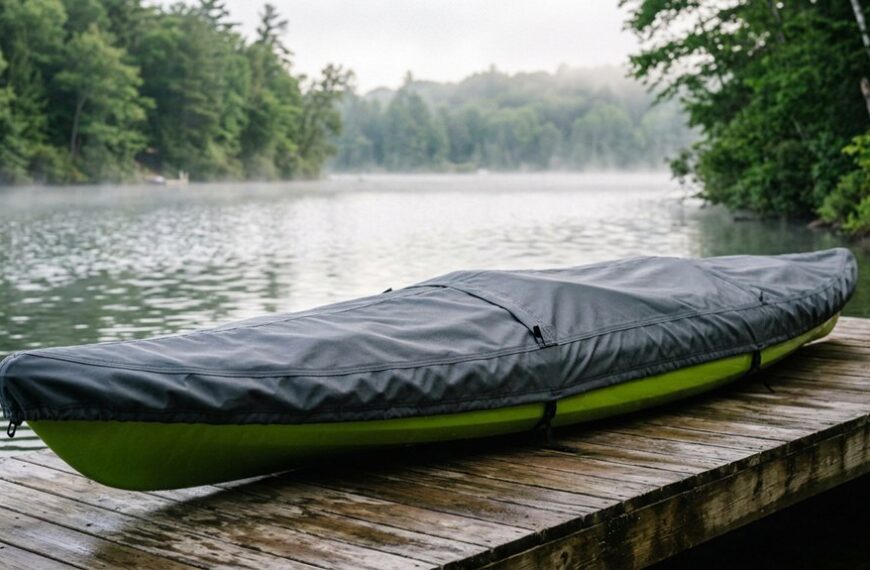
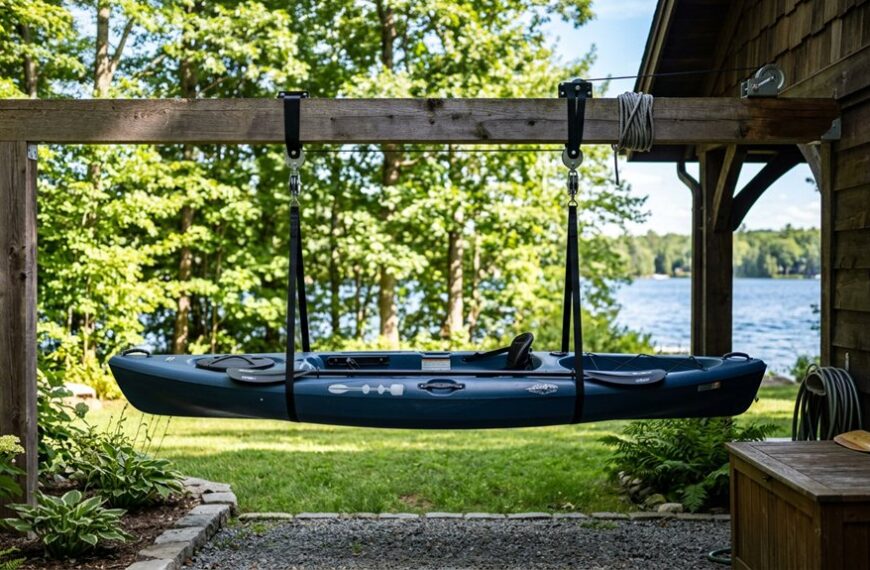
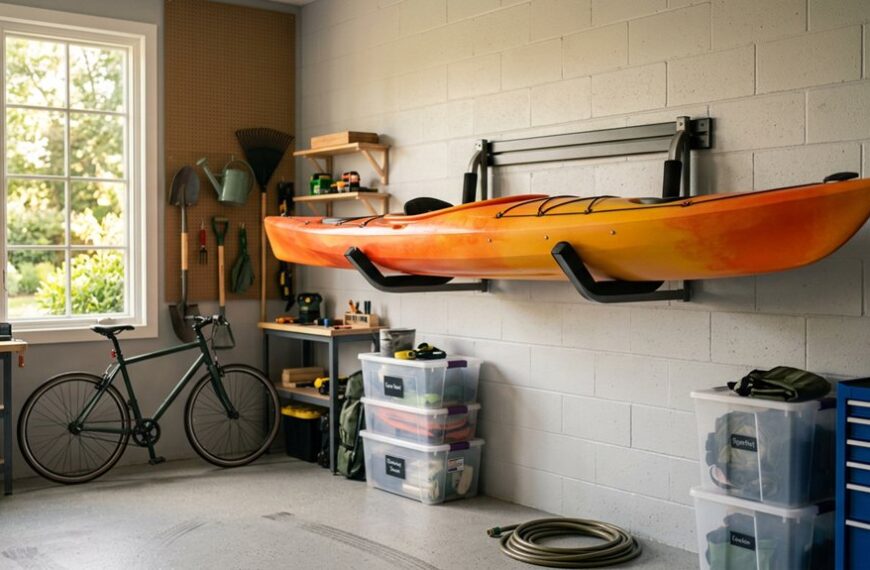
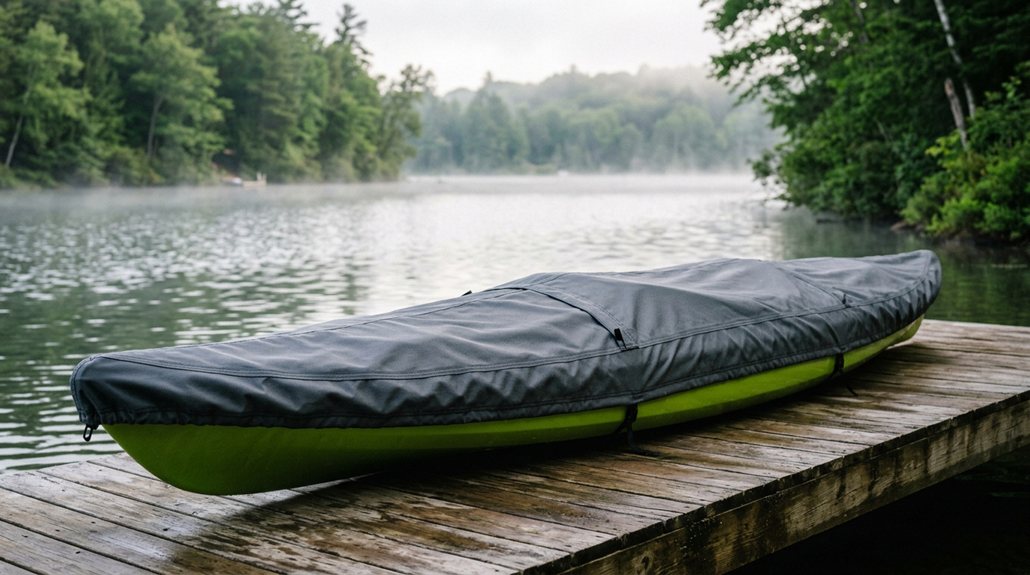
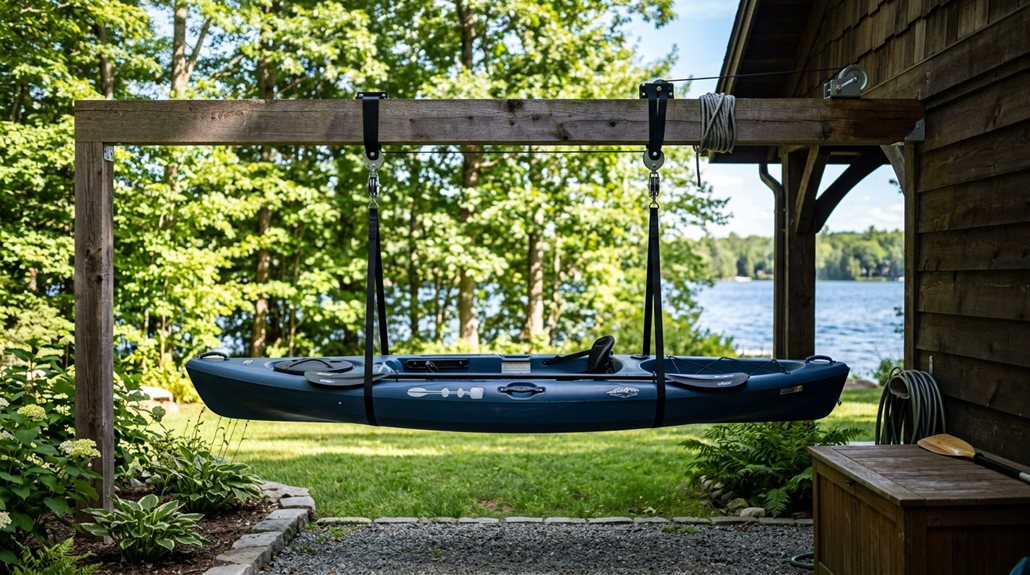
A properly stored kayak shows minimal color fading, has no warping or hull deformation, and features hardware that’s free from corrosion or UV damage. Ask the seller where they stored it – indoor or covered storage is ideal, while kayaks stored outside in direct sun for years will show significant UV degradation even if they’re only 3-4 years old.
Signs of good storage:
- Vibrant color – Plastic should match the manufacturer’s original color, not be faded or chalky
- No warping – Hull maintains its designed shape with no flat spots, twists, or sagging
- Clean hardware – Bolts, tracks, and metal fittings show minimal corrosion or oxidation
- Flexible plastic – Hull has some flex when pressed, not brittle or overly stiff
- No mold or mildew – Interior is clean and dry with no musty odors
- Intact bungee cords – Deck rigging is still elastic, not dry-rotted or broken
Signs of poor storage:
- Severe fading – Color is washed out or has turned chalky white in spots
- Hull deformation – Kayak was stored flat on the ground or suspended incorrectly, causing permanent warping
- Dry rot – Bungee cords, seat straps, or rubber components are cracked and brittle
- Corrosion – Stainless steel hardware has rust spots or aluminum parts have white oxidation
- Stress cracks – Multiple cracks radiating from high-stress points indicate UV damage
- Water stains – Interior shows evidence of standing water from being stored upside down without drainage
Questions to ask the seller:
- Where did you store the kayak? (Garage, shed, under a tarp, outside uncovered?)
- Was it stored on a rack or on the ground?
- Did you use any UV protectant products?
- How often did you clean it after use?
- Was it stored in direct sunlight?
Storage best practices (what you want to hear):
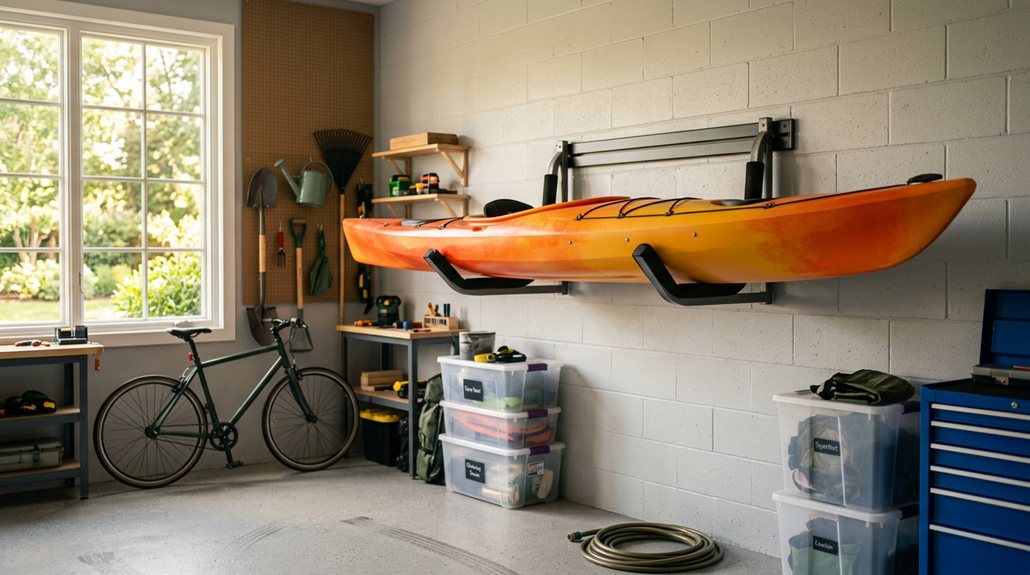
“I kept it in my garage on a wall rack when not in use. I rinsed it with fresh water after every trip and applied 303 Protectant twice a year. It was never left outside for more than a day or two.”
Decision rule: If the kayak was stored outside uncovered for more than 2 years, expect significant UV damage even if it’s not immediately visible. Offer 15-20% less than you would for a garage-stored kayak of the same age.
What Fishing Kayak Features Should I Not Compromise on When Buying Used
Never compromise on hull integrity, seat comfort, and stability when buying a used fishing kayak because these core features can’t be easily upgraded and directly affect your safety and fishing success. You can add rod holders, fish finders, and other accessories later, but you can’t fix a poorly designed hull or replace a kayak’s inherent stability characteristics.
Non-negotiable features:
Hull integrity – Any significant damage, warping, or stress cracks should be a deal-breaker regardless of price. Repairs are expensive and often don’t hold up long-term.
Stability – The kayak’s width and hull design determine stability; this can’t be modified. If you plan to stand while fishing, test the kayak’s standing stability before buying.
Seat quality – A comfortable, adjustable seat is critical for all-day fishing. Replacement seats cost $150-400, so factor that into your offer if the seat is worn out.
Weight capacity – Verify the kayak’s rated capacity handles your weight plus 75-100 lbs of gear. Overloading affects stability and performance.
Length appropriate for your waters – Longer kayaks (12-14 feet) track better in open water and wind; shorter kayaks (10-11 feet) are more maneuverable in tight spaces. Choose based on where you’ll fish most.
Features you can compromise on:
- Rod holders – Aftermarket flush-mount and rail-mount holders are easy to add for $20-60 each
- Fish finder – You can install your own fish finder for $150-600 depending on the model
- Anchor system – Anchor trolleys and cleats can be added for $50-100
- Storage hatches – While convenient, you can use dry bags if hatches are damaged or missing
- Paddle holder – Aftermarket paddle clips cost $10-30
- Bungee rigging – Deck bungees can be replaced for $20-40
Decision rule: If the kayak has the right hull design, good stability, and solid structure, but is missing accessories or has worn components, offer a lower price and plan to upgrade those items yourself. If the core kayak isn’t right for your needs, no amount of accessories will fix it.
For guidance on choosing the right kayak size for your needs, check our resources on fishing kayak length and kayak stability.
Common Problems with Older Fishing Kayaks
Older fishing kayaks commonly develop UV-related plastic degradation, corroded or seized hardware, worn-out seats and bungee rigging, and pedal drive system failures in models equipped with them. These issues are repairable but should significantly reduce the asking price – expect to spend $100-400 on refurbishment for a kayak with typical age-related problems.
Most common age-related issues:
UV damage and brittleness – Plastic becomes chalky, loses flexibility, and develops stress cracks; most common in kayaks stored outdoors; no real fix except replacement
Corroded hardware – Stainless steel bolts rust, aluminum parts oxidize, and fasteners seize; replacement hardware costs $50-150 depending on how many pieces need replacing
Worn seats – Foam compresses, fabric tears, and adjustment mechanisms break; replacement seats cost $100-400 depending on brand and style
Dry-rotted bungee cords – Deck rigging becomes brittle and breaks; easy DIY fix for $20-40 in new bungee and hardware
Scupper plug deterioration – Rubber plugs crack and no longer seal properly; replacements cost $15-30 for a set
Hatch leaks – Rubber gaskets dry out and hatch covers crack; replacement covers cost $30-80 each
Pedal drive issues – Cables fray, gears wear, and fins crack; parts range from $50 for cables to $400+ for major components
Rudder problems – Cables stretch or break, blade bends, and deployment mechanisms fail; repair costs $50-200
Problems specific to kayak type:
- Sit-on-top kayaks – Scupper holes can enlarge from wear, reducing efficiency
- Sit-inside kayaks – Bulkheads can delaminate, causing flooding in storage compartments
- Inflatable fishing kayaks – Valve failures and slow leaks in air chambers; check our inflatable fishing kayak guide for inspection tips
- Pedal kayaks – Drive systems have multiple wear points and are expensive to repair
Inspection tip: Bring a flashlight and inspect the interior hull carefully. Water stains, mold, or a musty smell indicate the kayak has been taking on water, which could mean hull damage or failed seals.
Negotiation strategy: If you find issues that need repair, calculate the cost of parts and labor, then deduct that amount plus 20% from your offer. For example, if the kayak needs a new seat ($200), hardware replacement ($100), and new bungees ($30), offer $400-450 less than asking price.
Should Beginners Buy Used Fishing Kayaks or Start with New
Beginners should buy a quality used fishing kayak from a premium brand rather than a cheap new kayak from a budget brand because the used premium kayak will perform better, last longer, and retain more resale value if you decide kayak fishing isn’t for you. A 3-4 year old Hobie or Old Town for $1,200 is a smarter first kayak than a new budget model at the same price.
Why used makes sense for beginners:
- Lower financial risk – If you discover kayak fishing isn’t your thing, you’ll lose less money reselling a used kayak
- Better quality at same price – $1,000 buys a used premium kayak or a new budget kayak; the used premium is the better choice
- Learn what you need – After a season, you’ll know if you want pedal drive, more storage, or different features
- Less worry about damage – Beginners inevitably scratch and bump their first kayak; better to learn on used
- Strong resale market – Quality used kayaks sell quickly if you decide to upgrade or quit
When beginners should buy new:
- Budget under $600 – At this price point, new and used are similar quality; new comes with warranty
- Want specific features – If you know you need a pedal drive or standing platform, buying new ensures you get exactly what you want
- No quality used options locally – If your area has limited used inventory or only poorly maintained kayaks available
- Plan to fish 50+ days per year – Heavy users should buy new to maximize lifespan
- Financing needed – Retailers offer payment plans on new kayaks
Beginner-friendly used kayaks to target:
- Hobie Outback (any year) – Stable, comfortable, MirageDrive is easy to use
- Old Town Predator/Sportsman – Versatile, stable, good for various water types
- Native Slayer – Excellent stability for standing, comfortable for long days
- Jackson Coosa – Maneuverable, stable, great for rivers and small lakes
- Bonafide SS127 – Newer brand but excellent quality and beginner-friendly design
Decision rule: If you’re unsure about the hobby, buy used from a premium brand and plan to use it for 1-2 seasons. If you love kayak fishing, you can upgrade to exactly what you want and recoup most of your initial investment. If you don’t, you’ll lose minimal money selling it.
For more beginner guidance, see our beginner kayak fishing resources.
How to Test a Used Fishing Kayak Before Purchasing
Always insist on a water test before buying a used fishing kayak – launch it, paddle for at least 15 minutes, check for leaks, test all moving parts, and verify the stability meets your needs. A seller who refuses a water test is hiding problems; walk away and find a kayak you can fully evaluate on the water.
Pre-water test inspection (on land):
- Visual inspection – Complete the hull, hardware, and accessory checks described earlier
- Weight test – Lift the kayak to verify it’s not significantly heavier than spec (indicates water intrusion)
- Flex test – Press on hull sides and bottom checking for abnormal flexibility or soft spots
- Hatch test – Open all hatches and check for water, mold, or damage inside
- Seat test – Sit in the kayak and adjust the seat through its full range of motion
Water test procedure:
- Launch and initial stability – Get in the kayak and assess initial stability; it should feel solid, not tippy
- Paddle test – Paddle for 10-15 minutes in various directions checking tracking and maneuverability
- Leak check – After 10 minutes, check inside hatches and hull for water intrusion
- Pedal drive test (if equipped) – Test forward, reverse, and full range of motion; listen for unusual sounds
- Rudder test – Deploy and retract the rudder multiple times; test steering response
- Standing test (if you plan to stand) – Carefully stand up and assess stability; try shifting your weight
- Scupper check – Verify water drains properly through scupper holes and doesn’t pool on deck
- Re-entry test – Get out and back in the kayak to test stability during entry/exit
What to bring for testing:
- Paddle (if not included with kayak)
- Personal flotation device (PFD)
- Towel and dry clothes
- Smartphone to take photos/video of any issues you find
- Friend to help launch and document the test
Red flags during water test:
- Kayak takes on water through hull (not just scuppers)
- Pedal drive makes grinding, clicking, or binding sounds
- Rudder doesn’t deploy smoothly or steering is unresponsive
- Kayak tracks poorly or constantly pulls to one side (indicates warped hull)
- Unusual instability or rocking motion
- Seat slides or adjustment mechanism fails under your weight
Decision rule: If the seller won’t allow a water test, offer 20-30% less than asking price to account for unknown issues, or simply walk away. Any serious seller should understand that water testing is standard practice for used kayak sales.
Where Is the Safest Place to Buy a Used Fishing Kayak
Buy used fishing kayaks from local kayak shops that take trade-ins, established online marketplaces with buyer protection (Facebook Marketplace, Craigslist with cash in person), or kayak fishing clubs and forums where sellers have reputations to maintain. Avoid deals that seem too good to be true, require shipping before inspection, or involve sellers who won’t meet in person.
Safest buying venues (ranked):
1. Local kayak shops with used inventory – Shops often take trade-ins and refurbish them; you get some warranty protection and can test before buying; prices are 10-15% higher but worth it for peace of mind
2. Kayak fishing clubs and forums – Members have reputations to protect; other members can vouch for sellers; often the most honest descriptions and fair prices
3. Facebook Marketplace (local pickup) – Large inventory, can check seller profiles and mutual friends, meet in person and inspect before paying; use cash or secure payment method
4. Craigslist (local pickup) – Good inventory but more scams; always meet in public place, inspect thoroughly, bring a friend, use cash only
5. Manufacturer-certified used programs – Some brands (like Hobie) have certified pre-owned programs with inspections and limited warranties; limited availability but excellent option when available
Venues to approach cautiously:
- eBay or online-only sales – Can’t inspect before buying; shipping costs are high; difficult to resolve disputes
- Pawn shops – Often stolen property; no history or documentation; usually poor condition
- Estate sales – Unknown history; often stored poorly; sold as-is with no recourse
Safety tips for in-person transactions:
- Meet in a public place (police station parking lots are ideal)
- Bring a friend or family member
- Tell someone where you’re going and when you’ll be back
- Inspect during daylight hours
- Use cash or secure payment apps (avoid wire transfers or checks)
- Get a bill of sale with HIN before handing over money
- Trust your instincts – if something feels wrong, walk away
Online marketplace red flags:
- Seller has no profile history or recently created account
- Photos are stock images or clearly from manufacturer website
- Price is 40%+ below market value with no explanation
- Seller won’t provide phone number or meet in person
- Requests payment via wire transfer, gift cards, or cryptocurrency
- Claims to be military/overseas and needs to ship
- Won’t provide HIN or additional photos
Decision rule: Stick to local, in-person transactions where you can inspect the kayak and test it before paying. If buying from an individual, verify their identity matches the name on any registration or title documents.
FAQ
How can I verify a used fishing kayak isn’t stolen?
Check the Hull Identification Number (HIN) against your state’s stolen boat registry and ask the seller for the original purchase receipt or registration documents. Most states maintain online databases of stolen watercraft; if the HIN isn’t in the system and the seller has documentation, the kayak is likely legitimate.
What’s a fair price for a used fishing kayak with a broken pedal drive?
Expect to pay 30-50% less than the same kayak with a working pedal drive, depending on repair costs. Hobie MirageDrive repairs range from $200-600, while other systems may cost more. If the kayak is still usable as a paddle kayak, it’s worth 40-50% of a working pedal model; if it needs immediate repair to be functional, offer 30-40% less.
Can I negotiate the price on a used fishing kayak?
Yes, negotiation is expected in private-party used kayak sales. Start by offering 10-15% below asking price if the kayak is in good condition, or 20-30% below if you’ve identified issues that need repair. Most sellers price slightly high expecting negotiation.
Should I buy a used fishing kayak without trying it first?
Only if the price is low enough to account for potential issues and you’re comfortable with the risk. If you can’t test the kayak, offer at least 20% below market value and budget for possible repairs. Never buy sight-unseen from online-only sellers.
How do I transport a used fishing kayak home after buying it?
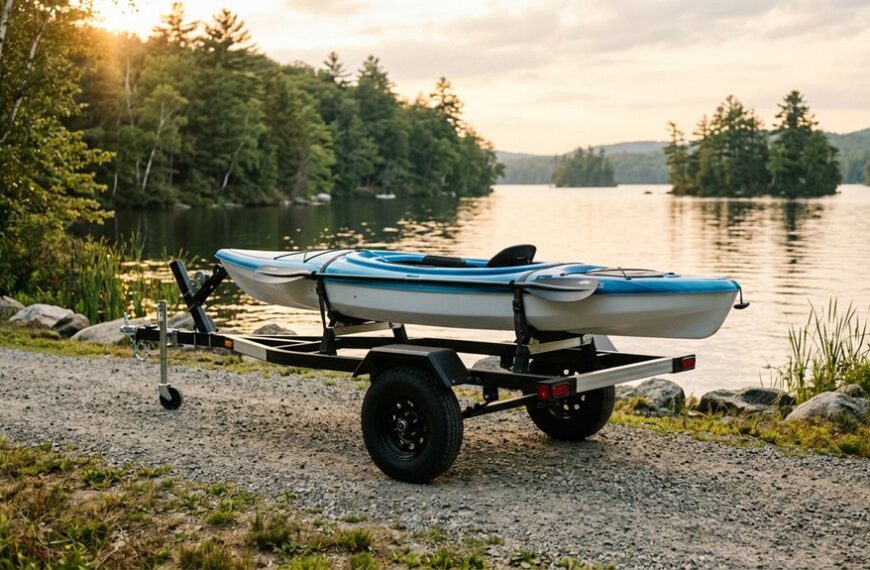
Bring roof racks, a truck bed, or a trailer to transport the kayak. Most kayaks are 10-14 feet long and won’t fit inside vehicles. Use cam straps (not ratchet straps, which can over-tighten and damage the hull) and secure both bow and stern. Check our kayak transport guide for detailed instructions.
What accessories should come with a used fishing kayak?
At minimum, expect the kayak to include the seat, any factory-installed rod holders, and scupper plugs. Paddles, PFDs, and aftermarket accessories (fish finders, anchor systems) may or may not be included – clarify with the seller before agreeing on price. Pedal-drive kayaks should include the complete drive system.
Is it worth buying a used fishing kayak that needs repairs?
Yes, if the repairs are cosmetic or involve easily replaceable parts and the price reflects the needed work. Avoid kayaks with hull damage, warping, or major structural issues. A kayak needing a new seat, bungees, and hardware refresh can be a good deal if priced $300-500 below market.
How long do fishing kayaks typically last?
Quality fishing kayaks from premium brands last 10-15 years with proper care and storage, while budget brands typically last 5-8 years. The biggest factors affecting lifespan are UV exposure (outdoor storage accelerates aging), usage frequency, and maintenance. A well-maintained kayak can remain functional for 20+ years.
Can I get financing for a used fishing kayak?
Most retailers don’t offer financing on used kayaks, but you can use a personal loan or credit card. Some credit unions offer recreational vehicle loans that include kayaks. Private sellers expect cash or immediate payment via secure methods like Venmo or Zelle.
What’s the best time of year to buy a used fishing kayak?
Late fall and winter (October-February) offer the best deals as sellers want to clear space before winter and buyers are scarce. Spring (March-May) has the most inventory but higher prices as demand peaks. Summer deals are rare unless someone needs quick cash.
Should I buy a used fishing kayak from a different state?
Only if it’s a rare model you can’t find locally and you can inspect it in person before buying. Factor in travel costs and the complexity of transporting the kayak home. Registration requirements may vary between states, so verify you can legally register an out-of-state kayak.
How do I clean and maintain a used fishing kayak after purchase?
Wash thoroughly with mild soap and water, treat with UV protectant (303 Aerospace Protectant is popular), replace any worn bungees or hardware, and lubricate all moving parts. Check scupper plugs for proper fit and replace if needed. Store indoors or covered when not in use to prevent further UV damage.
Conclusion
Buying a used fishing kayak can save you hundreds or even thousands of dollars while getting you on the water with quality equipment. The key is knowing what to inspect, what to pay, and where to buy safely. Focus on hull integrity, verify the kayak was stored properly, and always insist on a water test before handing over money.
Start by targeting premium brands like Hobie, Old Town, Native Watercraft, or Jackson Kayak that are 3-6 years old – these offer the best balance of quality, remaining lifespan, and value. Expect to pay 40-60% of current retail for kayaks in this age range, adjusting based on condition and included accessories.
Your next steps:
- Research current retail prices for the models you’re interested in to establish fair used pricing
- Join local kayak fishing groups on Facebook to find leads and get advice from experienced buyers
- Create a checklist based on this guide and bring it to every kayak inspection
- Set a firm budget that includes $200-400 for potential repairs or upgrades
- Schedule water tests for any kayak you’re seriously considering
- Get a bill of sale with the HIN before completing any purchase
Remember that a well-chosen used fishing kayak from a quality brand will serve you for years and retain good resale value if you decide to upgrade. Take your time, inspect thoroughly, and don’t let excitement override careful evaluation. The right used kayak is out there waiting for you.