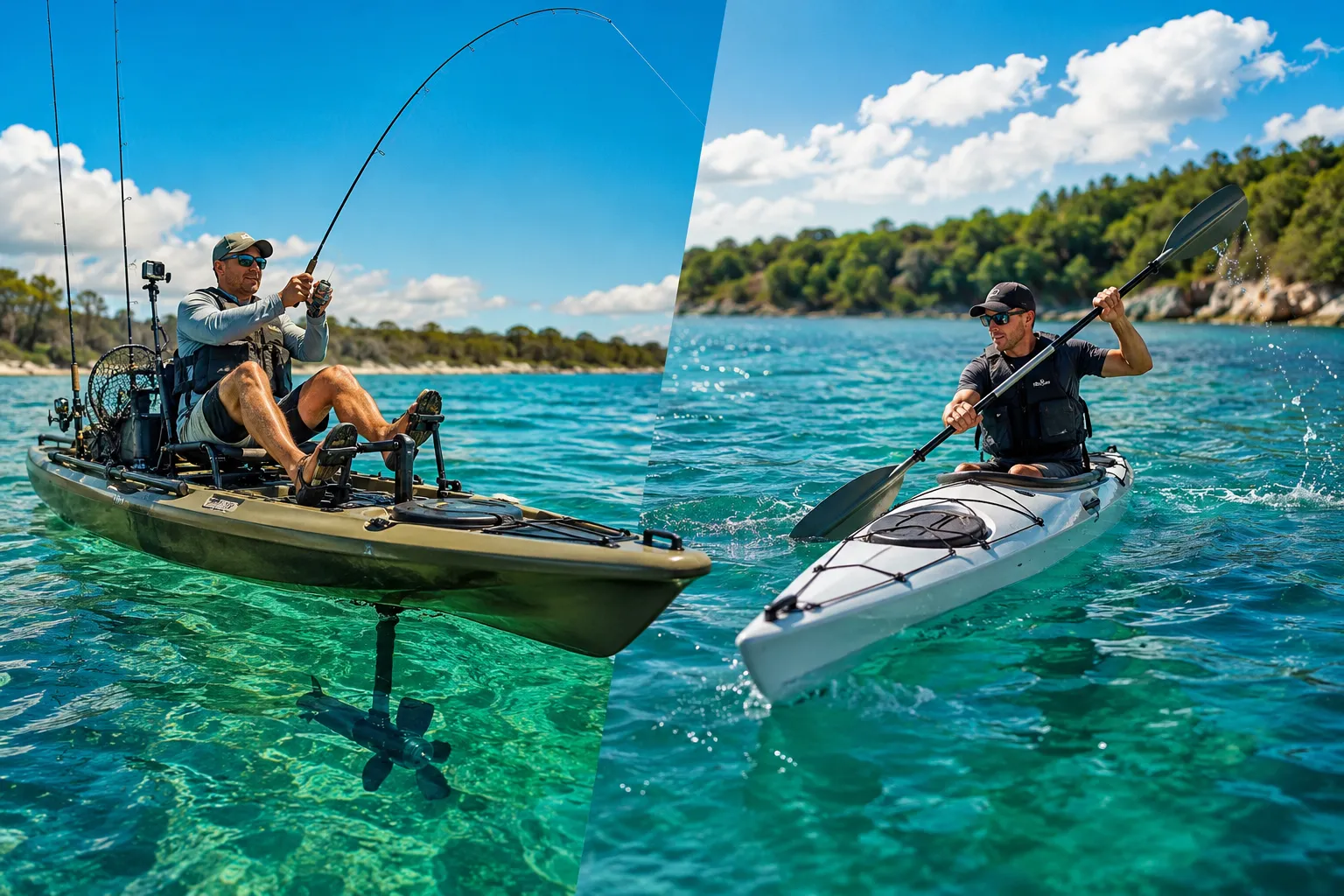
Pedal kayaks now account for nearly 40% of fishing kayak sales, yet most buyers still wrestle with whether the extra investment makes sense for their specific needs. The choice between pedal and paddle kayaks isn’t about which is objectively better, it’s about matching propulsion style to your fishing habits, budget, and the waters you’ll actually paddle. This guide breaks down the real-world differences, costs, and trade-offs to help you make the right call.
Key Takeaways
- Pedal kayaks cost $1,500-$5,000 compared to $400-$2,000 for comparable paddle kayaks, with the premium buying hands-free fishing capability
- Hands-free operation is the biggest advantage of pedal systems, letting you fish, cast, and fight fish while maintaining position and speed
- Pedal kayaks are faster in open water (3-5 mph sustained vs 2-3 mph paddling) but struggle in shallow water, heavy vegetation, and tight spaces
- Weight and transport challenges are significant, pedal kayaks typically weigh 80-120 lbs vs 50-80 lbs for paddle models, and drive systems add complexity
- Maintenance requirements are higher for pedal systems, with moving parts that need regular cleaning, lubrication, and occasional replacement
- Paddle kayaks excel in shallow water, narrow creeks, rocky areas, and situations requiring quick maneuverability or minimal transport hassle
- Beginners often do better starting with paddle kayaks to learn water reading and basic kayak handling before investing in pedal systems
- Fishing style matters most,if you fish open water, cover distance, or troll frequently, pedal systems shine; if you fish tight cover or shallow flats, paddles win
What Is the Difference Between Pedal and Paddle Kayaks?
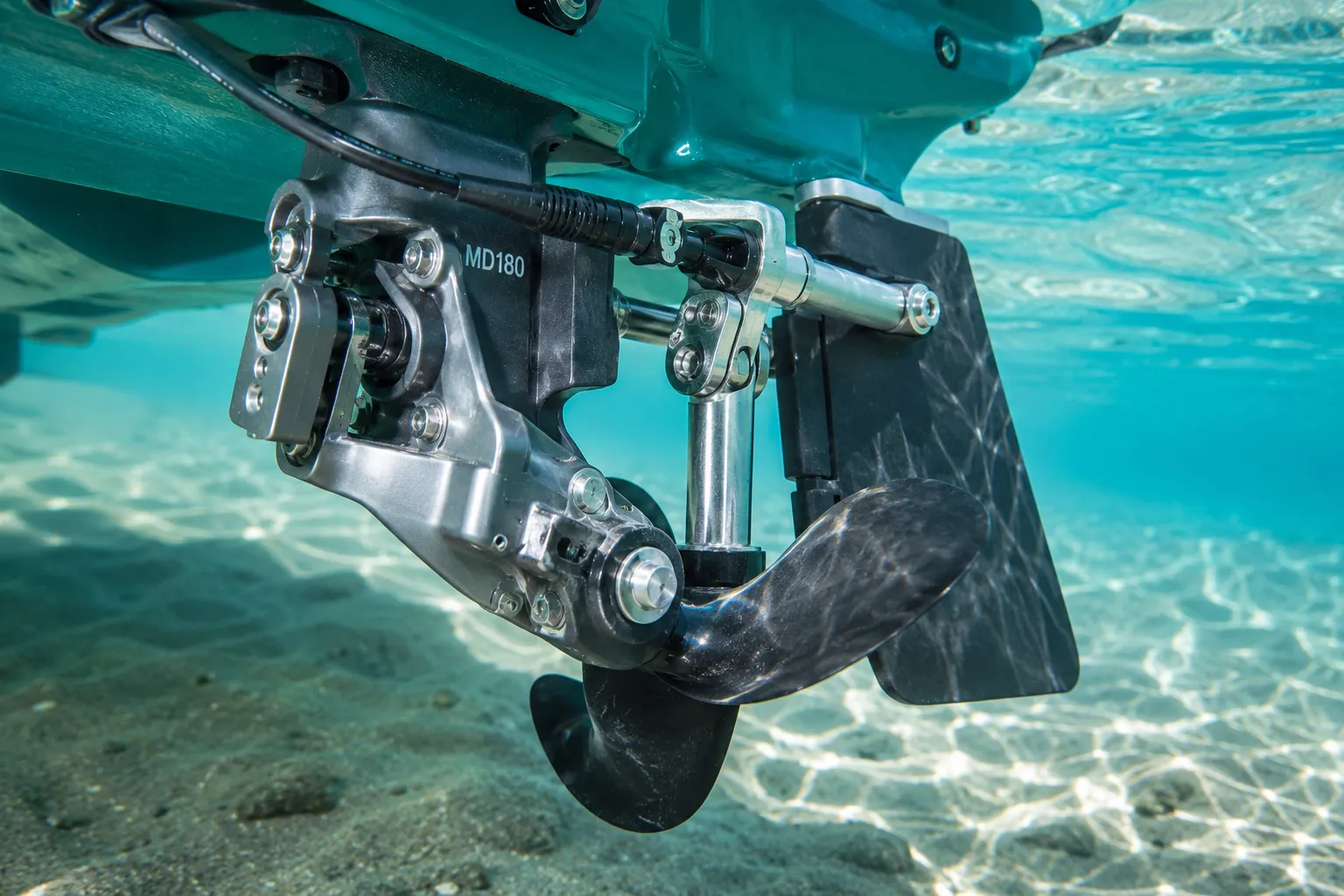
Pedal kayaks use foot-powered drive systems (propeller or fin-based) to move through water, leaving your hands free for fishing, while paddle kayaks rely on traditional double-bladed paddles for propulsion. The fundamental difference is that pedal systems convert leg power into forward motion through mechanical drives, whereas paddle kayaks require continuous arm and torso work with a paddle.
Propulsion mechanics:
- Pedal systems use either rotational propellers (like Hobie’s MirageDrive) or reciprocating fins that mimic penguin flippers, powered by bicycle-style pedals or push-pedals
- Paddle kayaks rely on blade surface area pulling against water resistance, with technique and cadence determining speed and efficiency
- Power source differs significantly, legs generate more sustained power than arms, which is why pedal kayaks maintain higher cruising speeds with less fatigue
Design implications:
- Pedal kayaks feature larger cockpits to accommodate drive systems, typically with recessed wells for the mechanism
- Hull designs differ, with pedal kayaks often having wider, more stable platforms to support the standing and hands-free fishing they enable
- Weight distribution changes, pedal systems add 15-30 lbs of mechanical components in the center of the kayak
Common mistake: Assuming pedal kayaks completely eliminate the need for a paddle. You’ll still need a paddle as backup for shallow water, tight spaces, and mechanical failures. Most pedal kayak anglers carry a breakdown paddle for these situations.
Are Pedal Kayaks Worth the Extra Cost?
Pedal kayaks are worth the extra cost if you fish open water frequently, cover significant distances, troll regularly, or have physical limitations that make paddling difficult, but not if you primarily fish shallow creeks, tight cover, or launch from difficult access points. The value equation depends entirely on how often you’ll use the hands-free advantage and whether your fishing environment suits pedal drive limitations.
When the premium pays off:
- Open-water anglers who cover 3-5 miles per trip see immediate time and energy savings
- Trolling enthusiasts maintain consistent speeds hands-free, a game-changer for techniques requiring precise speed control
- Multi-rod fishermen can manage multiple lines, adjust drags, and net fish while staying on the move
- Anglers with shoulder, back, or arm injuries find leg-powered propulsion more sustainable for full-day trips
When paddle kayaks make more sense:
- Budget-conscious buyers who fish occasionally and can’t justify the $1,500-$3,000 premium
- Shallow-water specialists fishing flats, creeks, or areas with heavy vegetation where drives can’t deploy
- Minimalist anglers who prioritize light weight and simple transport over hands-free convenience
- Exploratory paddlers who navigate tight mangrove tunnels, rocky areas, or frequently portage between water bodies
Choose pedal if: You fish open bays, lakes, or coastal waters at least 15-20 times per season, frequently troll or cover distance, and have reliable deep-water access points. The time savings and reduced fatigue compound over dozens of trips.
Choose paddle if: You fish less than once weekly, target shallow or technical water, need to car-top solo regularly, or want to keep total investment under $1,500 including all gear.

HANDS-FREE PEDAL POWER: Cover more water with a responsive propeller drive system that delivers instant forward and reverse control for precise maneuvering. This pedal kayak gives you the agility needed for kayak fishing in tight spots, open water, and changing conditions.

HANDS-FREE PEDAL POWER: Cover more water and keep attention on fish with a smooth fin-drive system built for efficient hunting and quiet movement. This pedal kayak delivers precise handling for kayak fishing adventures on lakes, rivers, and coastal waters.

How Much Do Pedal Kayaks Cost Compared to Paddle Kayaks?
Entry-level pedal kayaks start around $1,500-$2,200, mid-range models run $2,500-$3,500, and premium pedal fishing kayaks cost $4,000-$5,000, while comparable paddle kayaks range from $400-$800 (entry), $900-$1,500 (mid-range), and $1,600-$2,500 (premium). The pedal premium typically adds $1,200-$2,000 to the cost of a similarly equipped paddle kayak from the same manufacturer.
Price breakdown by category:
| Category | Paddle Kayak | Pedal Kayak | Premium |
|---|---|---|---|
| Entry-level fishing | $400-$800 | $1,500-$2,200 | +$1,100-$1,400 |
| Mid-range with features | $900-$1,500 | $2,500-$3,500 | +$1,600-$2,000 |
| Premium fully-rigged | $1,600-$2,500 | $4,000-$5,000 | +$2,400-$2,500 |
Hidden costs to factor:
- Replacement drives cost $400-$800 if damaged, while paddles run $50-$200
- Maintenance supplies (lubricants, seals, cables) add $30-$60 annually for pedal systems
- Transport solutions often require upgraded roof racks or trailers ($200-$800) due to pedal kayak weight
- Storage may require more space or specialized racks to protect drive systems
Depreciation differences: Pedal kayaks hold value better in the used market (60-70% of original price after 2-3 years) compared to paddle kayaks (50-60%), partially offsetting the higher initial cost if you upgrade later.
Budget reality check: If your total kayak fishing budget is under $2,000 including kayak, paddle/drive, PFD, rod holders, and fish finder, a quality paddle kayak with good accessories beats a bare-bones pedal kayak every time.

【Help Relieve Pain】Double-layer gel cushion design. thicker than traditional cushions. Not only provides Maximum Support for Complete Comfort but also more comfortable effectively prevent and alleviate various pain symptoms, help avoid numbness in the buttock’s muscles and lumbar strain. Ensuring you remain comfortable while kayaking

【Partner For Paddles】 Designed to prevent losing your paddle on water, paddle leash is an essential kayak accessory for every paddler. A leash at a nice price but could keep your paddle always secure. Find the perfect partner for your paddles!

Perfect Offset Paddle Holder Solution -- When you install two paddle holders on a section of the track, your paddle can get a good grip, but the paddle will also cover the track, wasting the installation space of other parts on the track. This product can move your paddle away from the side of the kayak, freeing up orbital space
Can You Fish Better With a Pedal Kayak or Paddle Kayak?
Pedal kayaks provide superior fishing capability in open water, when trolling, or when you need to maintain position in current or wind, because both hands stay free to manage rods, land fish, and adjust tackle while moving. Paddle kayaks fish better in shallow water, tight cover, around structure, and when precise positioning matters more than sustained mobility, because they’re more maneuverable and work in any depth.
Pedal kayak fishing advantages:
- Hands-free casting while moving lets you cover water efficiently, making repeated casts to structure as you glide past
- Fighting fish becomes dramatically easier, you can pedal to follow running fish, maintain tension, and net without dropping your rod
- Trolling precision allows consistent speed control (critical for crankbaits, spoons, and live bait) without constant paddle strokes
- Wind and current management is simpler, just pedal to hold position or make slow adjustments while rigging or unhooking fish
Paddle kayak fishing advantages:
- Shallow water access to flats, creek headwaters, and skinny backwaters where pedal drives can’t deploy (under 18-24 inches)
- Tight cover fishing around docks, laydowns, lily pads, and mangroves where pedal kayaks can’t maneuver effectively
- Stealth approaches to spooky fish in clear water, paddles are quieter than mechanical drives and propellers
- Quick repositioning for precise casts, a few paddle strokes adjust position faster than pedaling and steering
Technique-specific considerations:
- Sight fishing: Paddle kayaks win, you need quick, precise movements and often fish ultra-shallow water
- Vertical jigging: Pedal kayaks excel, hold position over structure hands-free while working jigs
- Topwater fishing: Paddle kayaks edge ahead, you’re often in shallow cover and need stealth
- Live bait fishing: Pedal kayaks dominate, troll or drift while managing multiple rods
Common mistake: Thinking pedal systems make you a better angler. They make certain techniques easier, but paddle kayak anglers who master positioning and one-handed fishing catch just as many fish in the right environments.

2 arm 12pcs white nylon monofilament leaders,main leader test 90lb, arm leader test 55lb, keep hooks free of leader.
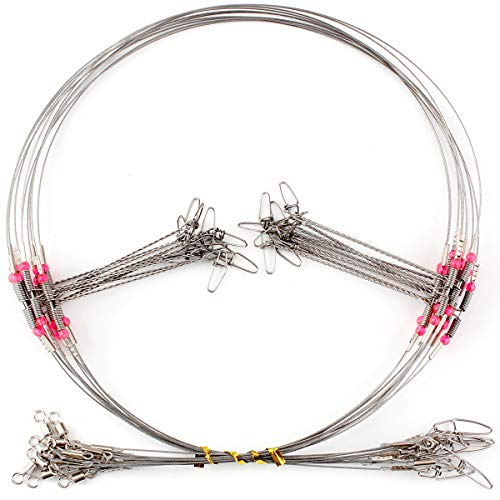
Fishing Rig, Test:25 KG or 50 pounds,The Eagle Claw Snelled Bottom Rig features an interlocking snap, red beads with spreader arms, and many other loaded features that will help you catch more fish,is one of the greatest tools offered in the fishing industry today.

STABLE & NATURAL SURF FISHING RIG-FISH FINDER RIG: The fish finder rig is one of the best surf fishing rigs, especially if you are surf fishing or using live bait! The fish finder rig Resists Wind and Current, allowing bait to move Naturally and Flexibly with the current, and can excel in challenging conditions just off the surf! Next time you are surf fishing give the fish finder rig a try!
Pedal Kayak vs Paddle Kayak for Beginners
Beginners should start with paddle kayaks to learn fundamental kayak control, water reading, and safety skills before investing in more expensive pedal systems, unless physical limitations make paddling difficult or impossible. Paddle kayaks teach essential skills like bracing, edging, and reading current that pedal kayaks can mask, and the lower cost reduces financial risk while you’re discovering whether kayak fishing suits you.
Why paddle kayaks build better foundational skills:
- Direct feedback from paddle strokes teaches you how kayaks respond to different inputs and water conditions
- Balance development happens faster when you’re actively paddling and bracing rather than sitting and pedaling
- Water reading skills improve when you must paddle efficiently, forcing you to use current, wind, and structure to your advantage
- Lower consequences for mistakes, if you discover kayak fishing isn’t for you after 5 trips, you’re out $600, not $2,500
When beginners should consider pedal kayaks:
- Physical limitations like shoulder injuries, arthritis, or limited upper body strength make paddling painful or impossible
- Fishing with experienced mentors who can teach kayak handling skills while you focus on fishing from the pedal platform
- Specific fishing goals like open-water trolling where the hands-free advantage is essential from day one
- Budget isn’t a constraint and you’re committed to kayak fishing long-term based on extensive research
Learning curve differences:
- Paddle kayaks: 3-5 trips to feel comfortable, 10-15 trips to handle wind and current confidently
- Pedal kayaks: 2-3 trips to master pedaling and steering, but 15-20 trips to develop the same water awareness paddle kayakers gain faster
Smart beginner path: Rent or borrow both styles for 2-3 trips each before buying. Many kayak shops and outfitters offer demo days where you can try multiple models in real fishing conditions. This $100-$200 investment in rentals can save you thousands in buyer’s remorse.
What Are the Main Disadvantages of Pedal Kayaks?
The main disadvantages of pedal kayaks are higher cost ($1,500-$3,000 more than comparable paddle models), significantly greater weight (typically 80-120 lbs vs 50-80 lbs), shallow water limitations (most drives need 18-24 inches minimum depth), increased maintenance requirements, and transport challenges due to size and weight. These trade-offs are substantial and eliminate pedal kayaks from consideration for many fishing scenarios.
Cost and value concerns:
- Initial investment is 2-3x higher than paddle kayaks with similar features and build quality
- Replacement parts are expensive, a damaged drive unit costs $400-$800 to replace
- Depreciation risk if you discover the style doesn’t suit your fishing after purchase
Weight and transport issues:
- Solo loading onto roof racks becomes difficult or impossible for many anglers without assistance or mechanical aids
- Vehicle requirements often necessitate trailers or heavy-duty roof racks, adding $300-$1,000 to total cost
- Launch site limitations,some access points with steep banks, stairs, or long carries become impractical
Operational limitations:
- Shallow water under 18-24 inches requires retracting the drive and switching to paddle power
- Heavy vegetation (lily pads, grass beds, hydrilla) fouls drives, requiring frequent cleaning and slowing progress
- Rocky areas risk damaging expensive drive components on submerged obstacles
- Tight spaces like narrow creeks, under docks, or through mangrove tunnels are difficult to navigate
Maintenance and reliability:
- Moving parts (cables, gears, seals, propellers) require regular inspection, cleaning, and lubrication
- Saltwater exposure accelerates corrosion and wear, demanding thorough post-trip rinsing and maintenance
- Mechanical failures on the water leave you paddling a heavy, inefficient hull designed for pedal propulsion
Storage considerations:
- Garage space requirements increase, pedal kayaks are typically 12-14 feet long and need careful positioning to protect drives
- Drive removal for storage adds 5-10 minutes to pre- and post-trip routines
Do Pedal Kayaks Break Down More Often Than Paddle Kayaks?
Pedal kayaks do experience more mechanical issues than paddle kayaks because they have moving parts (cables, gears, propellers, seals) that wear, corrode, or break, while paddle kayaks have no mechanical components to fail beyond the hull itself. However, quality pedal systems from established manufacturers (Hobie, Old Town, Native Watercraft) are generally reliable with proper maintenance, with most anglers reporting years of trouble-free use.
Common pedal system issues:
- Cable stretch or fraying after 2-3 seasons of heavy use, requiring adjustment or replacement ($30-$80)
- Seal degradation allowing water into drive housings, especially in saltwater environments
- Propeller or fin damage from striking bottom, rocks, or debris ($50-$150 for replacement parts)
- Corrosion of metal components in saltwater, even with regular rinsing and maintenance
Reliability by drive type:
- Hobie MirageDrive (fin-based): Proven 20+ year track record, most reliable system, but fins can break on hard strikes
- Propeller drives (Old Town, Native): Efficient and fast, but props are vulnerable to line wrap and impact damage
- Push-pedal systems: Fewer moving parts than rotational systems, but cable routing can be problematic
Maintenance prevents most failures:
- Post-trip rinsing (especially saltwater) extends component life dramatically
- Monthly lubrication of moving parts during active season prevents premature wear
- Annual inspection of cables, seals, and mounting hardware catches problems before they strand you
Paddle kayak simplicity advantage: With no mechanical propulsion, the only failure points are hull integrity and paddle breakage. Carrying a spare paddle (which you should do anyway) eliminates the single failure mode. This simplicity is valuable for remote fishing or multi-day trips where mechanical failure could be serious.
Reality check: Most pedal kayak breakdowns happen due to neglected maintenance, not inherent design flaws. Anglers who rinse after every saltwater trip and perform basic seasonal maintenance report reliability comparable to paddle kayaks.
Can You Use a Pedal Kayak in Shallow Water?
Pedal kayaks can operate in shallow water only if the drive system is retracted and you switch to paddle power, because most pedal drives require 18-24 inches of water depth to deploy without striking bottom. Some newer systems (like Hobie’s Kick-Up Fins) automatically retract when they hit bottom, but you still lose propulsion until you reach deeper water, making pedal kayaks poorly suited for consistent shallow-water fishing.
Depth requirements by system:
- Standard propeller drives: 20-24 inches minimum for safe operation without bottom strikes
- Hobie MirageDrive with standard fins: 18-20 inches minimum depth
- Hobie Kick-Up Fin technology: Automatically retracts on impact, works in 12-16 inches but with reduced efficiency
- All systems: Performance degrades significantly in depths under 24 inches due to turbulence and limited blade/prop clearance
Shallow water workarounds:
- Retractable drives can be pulled up into the hull, converting the kayak to paddle power in seconds
- Trimming the route to stay in deeper channels and avoid the shallowest areas
- Tidal timing to fish shallow areas during high tide when depth increases 1-3 feet
Performance impact in marginal depths:
- Reduced efficiency when drives operate close to bottom due to turbulence and restricted water flow
- Sediment stirring in soft-bottom areas creates visible mud plumes that spook fish
- Increased wear on drive components from sand and silt intrusion into moving parts
When shallow water eliminates pedal kayaks from consideration:
- Flats fishing in 6-18 inches of water where you’re sight-casting to tailing redfish or bonefish
- Creek fishing in headwaters where depth varies from 8-30 inches around every bend
- Grass flats with scattered potholes where you’re constantly moving between 12-inch grass and 3-foot holes
- Low-water seasons when your favorite lake or river drops 1-2 feet below normal levels
Common mistake: Buying a pedal kayak for “general fishing” without mapping the actual depths of your most-frequented spots. If 40% of your fishing happens in water under 20 inches deep, you’ll spend nearly half your time paddling a heavy, inefficient hull designed for pedal propulsion.
Are Pedal Kayaks Harder to Transport and Store?
Pedal kayaks are significantly harder to transport and store than paddle kayaks because they weigh 20-40 lbs more (typically 80-120 lbs vs 50-80 lbs), have protruding drive systems that require careful positioning, and often exceed the weight capacity for solo roof-top loading by average-strength individuals. Most pedal kayak owners eventually invest in trailers, kayak carts, or mechanical loading assists to manage the weight and bulk.
Transport challenges:
- Weight exceeds solo-carry limits for many anglers, lifting 100+ lbs overhead onto roof racks is difficult and risks injury
- Drive system protection requires either removing the drive (5-10 minutes) or careful positioning to prevent damage during transport
- Roof rack limitations,many factory racks are rated for only 75-100 lbs, requiring upgrades to heavy-duty systems ($200-$400)
- Vehicle height becomes a factor, lifting a 100-lb kayak onto an SUV or truck roof rack (6+ feet high) is challenging even for strong individuals
Storage complications:
- Garage space requirements increase due to length (typically 12-14 feet) and need to protect drive systems from damage
- Wall rack mounting must support greater weight, requiring heavy-duty brackets and proper stud mounting
- Drive removal for long-term storage is recommended to prevent seal degradation and cable tension issues
- Indoor storage is more important for pedal kayaks to protect mechanical components from weather and UV damage
Solutions that help:
- Kayak trailers ($400-$1,200) eliminate lifting and safely transport multiple kayaks, but require storage space and towing capacity
- Kayak carts ($80-$200) make moving kayaks from vehicle to water manageable, essential for longer carries
- Hoist systems ($100-$300) for garage storage lift kayaks to ceiling level, saving floor space
- Removable drives on most systems let you transport the 15-30 lb drive separately, reducing kayak weight for loading
Paddle kayak advantage: A 60-lb paddle kayak can be car-topped solo by most adults, stored on simple wall hooks, and carried 100+ yards to launch sites without mechanical aids. This simplicity matters if you fish multiple locations or have limited storage space.
Reality check: If you can’t comfortably lift 80 lbs overhead, don’t have a garage or covered storage, or frequently fish remote locations requiring long carries, the transport challenges of pedal kayaks may outweigh their on-water advantages.
Which Is Faster: Pedal or Paddle Kayak?
Pedal kayaks are faster than paddle kayaks in sustained cruising, with experienced users maintaining 3-5 mph for extended periods compared to 2-3 mph for paddle kayakers, because leg muscles generate more power with less fatigue than arms and shoulders. However, paddle kayaks can match or exceed pedal kayak speed in short bursts (sprints under 30 seconds) when paddlers use proper technique and maximum effort.
Speed comparison by scenario:
- Sustained cruising (30+ minutes): Pedal kayaks average 3.5-4.5 mph vs 2-3 mph for paddle kayaks
- Sprint speed (30 seconds): Experienced paddlers reach 5-6 mph vs 4-5 mph for pedal kayaks
- Against wind: Pedal kayaks maintain better speed due to continuous power and hands-free steering
- With current: Speed advantage narrows, both styles benefit equally from current assist
Factors affecting speed:
- Hull design matters more than propulsion type, a fast touring hull with paddle power beats a wide, stable fishing hull with pedals
- User fitness and technique create huge variation, a strong paddler in good form beats an average pedal kayaker
- Water conditions (wind, waves, current) impact paddle kayaks more because maintaining cadence is harder when bracing and steering
- Distance covered amplifies pedal advantages, over 3-5 miles, the fatigue difference becomes dramatic
Real-world speed expectations:
- Casual fishing pace: 1.5-2 mph (both styles, with frequent stops)
- Covering water: 3-4 mph pedal, 2-3 mph paddle (sustained for 20-30 minutes)
- Racing/fitness pace: 5-6 mph pedal, 4-5 mph paddle (short duration, high effort)
When speed matters for fishing:
- Large reservoirs or bays where you cover 4-6 miles round-trip to reach productive areas
- Trolling where maintaining 2-3 mph consistently is critical for lure action
- Current fishing where you need to make headway against flow to reach upstream spots
- Time-limited sessions where getting to distant structure and back matters
When speed doesn’t matter:
- Pond or small lake fishing where productive water is within 0.5 miles of launch
- Drift fishing where you’re moving with current or wind, not fighting it
- Anchored fishing where you spend 80% of time stationary over structure
Best Situations to Use a Paddle Kayak Instead of Pedal
Paddle kayaks are the best choice for shallow water under 20 inches, narrow creeks and tight spaces, fishing around heavy vegetation or structure, rocky areas where drive damage is likely, situations requiring frequent portaging or long carries, car-top transport without trailers, and budget-conscious anglers who fish occasionally. These scenarios either prevent pedal systems from functioning or negate their advantages while amplifying their drawbacks.
Shallow water environments:
- Flats fishing in 6-18 inches where you’re sight-casting to cruising fish
- Creek fishing with constantly varying depth and frequent shallow riffles
- Low-water conditions during drought or seasonal drawdowns
- Wade-fishing transitions where you beach the kayak and walk flats between deeper potholes
Technical water and tight spaces:
- Narrow creeks under 10 feet wide with overhanging vegetation and tight turns
- Mangrove tunnels requiring precise maneuvering through twisting channels
- Under docks and piers where vertical clearance and quick direction changes matter
- Through lily pad fields where vegetation would constantly foul pedal drives
Structure-heavy environments:
- Rocky areas with submerged boulders that risk drive damage
- Laydown timber and submerged logs requiring constant maneuvering
- Oyster bars and shell beds in saltwater that can destroy propellers and fins
- Stump fields in reservoirs where precise positioning around obstacles is constant
Access and transport scenarios:
- Difficult launch sites with steep banks, stairs, or long carries from parking
- Remote locations requiring portaging between water bodies or around obstacles
- Multi-spot fishing days where you launch at 3-4 different locations
- Car-top transport without trailers, especially for solo anglers
Budget and occasional use:
- Fishing 10 or fewer times per season where the pedal premium doesn’t pay off
- Total budget under $1,500 including kayak, paddle, safety gear, and accessories
- Trying kayak fishing before committing to expensive specialized equipment
- Backup or second kayak for guests or family members
Stealth and finesse fishing:
- Clear water sight-fishing where noise from drives spooks fish
- Pressured waters where fish are wary and quiet approaches matter
- Topwater fishing in calm conditions where surface disturbance affects strikes
Common Mistakes When Switching From Paddle to Pedal Kayak
The most common mistakes when switching from paddle to pedal kayaks are underestimating the weight and transport challenges, failing to budget for necessary accessories (cart, upgraded rack, trailer), not practicing drive retraction before encountering shallow water, neglecting maintenance routines that prevent mechanical failures, and choosing pedal kayaks for fishing environments where paddle kayaks actually perform better. These errors lead to buyer’s remorse and expensive corrections.
Transport and logistics mistakes:
- Assuming you can car-top solo like your old paddle kayak, the extra 30-40 lbs makes a huge difference
- Not upgrading roof racks before purchase, discovering factory racks can’t safely carry the weight
- Skipping the kayak cart and struggling with long carries from parking to water
- Forgetting about storage space for the longer, heavier kayak and needing to reorganize garage
Operational errors:
- Not practicing drive retraction in controlled conditions before encountering unexpected shallow water
- Forgetting to carry a paddle as backup, then getting stranded when drives fail or water becomes too shallow
- Pedaling in vegetation instead of retracting drives, fouling the system and requiring extensive cleaning
- Ignoring depth and striking bottom repeatedly, damaging expensive drive components
Maintenance neglect:
- Skipping post-trip rinsing especially after saltwater use, leading to accelerated corrosion
- Not lubricating moving parts regularly, causing premature cable and seal wear
- Ignoring unusual noises or resistance until minor issues become expensive repairs
- Storing with drives deployed long-term, causing seal degradation and cable tension problems
Fishing technique mistakes:
- Over-relying on pedal power in situations where paddle kayaks would be more effective
- Not adjusting anchor systems for the different hull design and weight distribution
- Assuming hands-free means no paddle needed, then struggling in wind or current when drives can’t provide enough power
- Pedaling at full speed while fishing instead of using the variable speed advantage for better presentations
Financial planning errors:
- Not budgeting for replacement drives ($400-$800) as eventual maintenance items
- Underestimating total cost by forgetting cart, upgraded rack, maintenance supplies, and backup paddle
- Buying used without inspecting drive condition, inheriting worn components needing immediate replacement
- Choosing pedal for the wrong reasons (status, novelty) rather than genuine fishing advantages for your specific situations
Smart transition approach: Keep your paddle kayak for 6-12 months after buying a pedal kayak. Use each in appropriate situations to truly understand the strengths and limitations of both. Many experienced kayak anglers eventually own both styles, choosing the right tool for each fishing scenario.
Are Pedal Kayaks Good for Long Distance Touring?
Pedal kayaks are excellent for long-distance touring on open water, large lakes, and coastal routes where sustained speed and reduced upper-body fatigue matter more than maneuverability, but they’re poorly suited for touring that involves portaging, shallow rivers, or technical water. The leg-powered propulsion lets you cover 15-25 miles per day comfortably compared to 8-15 miles in a paddle kayak, but the 80-120 lb weight makes any land-based carrying impractical.
Advantages for touring:
- Sustained speed of 3-4 mph for hours without the arm and shoulder fatigue that limits paddle kayakers
- Hands-free navigation lets you check maps, GPS, eat snacks, or take photos while maintaining forward progress
- Reduced upper-body fatigue means you arrive at camp with energy for setting up, cooking, and enjoying the destination
- Consistent pacing is easier to maintain without the cadence variations that come with paddle fatigue
Limitations for touring:
- Weight eliminates portaging as a practical option, carrying 100+ lbs around rapids or between lakes isn’t feasible
- Mechanical failure risk on multi-day trips far from vehicle access is more serious than paddle breakage
- Shallow water in rivers or tidal areas may force extended paddle-power sections
- Storage capacity is sometimes reduced by drive system placement, limiting gear for extended trips
Ideal touring scenarios for pedal kayaks:
- Coastal island-hopping with deep-water routes and established campsites
- Large lake circumnavigation where you’re covering 15-20 miles per day on open water
- Bay and estuary exploration with consistent depth and minimal portaging
- Fitness-focused touring where covering distance is the primary goal
Poor touring scenarios for pedal kayaks:
- River touring with frequent shallow sections, rapids requiring portaging, or technical water
- Remote wilderness trips where mechanical failure could be dangerous and repair parts unavailable
- Multi-lake routes requiring portages between water bodies
- Expeditions where every pound matters and mechanical simplicity is critical
Hybrid approach: Some touring kayakers use pedal kayaks for the water portions and arrange vehicle shuttles or water-only routes to avoid portaging. This works well for coastal touring and large lake systems with good road access.
Do Pedal Kayaks Require More Maintenance Than Paddle Kayaks?
Pedal kayaks require significantly more maintenance than paddle kayaks because they have mechanical drive systems with moving parts (cables, gears, seals, propellers or fins) that need regular cleaning, lubrication, inspection, and eventual replacement, while paddle kayaks only require basic hull care and paddle maintenance. Expect to spend 15-30 minutes on maintenance after each saltwater trip and 1-2 hours on seasonal maintenance for pedal systems.
Regular maintenance requirements:
After every saltwater trip:
- Rinse drive system thoroughly with fresh water (5-10 minutes)
- Flush internal components if system has flush ports
- Wipe down and dry all metal components
- Check for line wrap, vegetation, or debris in propeller or fins
After every 5-10 freshwater trips:
- Rinse drive system with fresh water
- Inspect cables for fraying or stretch
- Check mounting bolts and hardware for tightness
- Clean any accumulated debris from moving parts
Monthly during active season:
- Lubricate moving parts per manufacturer specifications (10-15 minutes)
- Inspect seals for cracks or degradation
- Check cable tension and adjust if needed
- Test drive deployment and retraction for smooth operation
Annual or seasonal maintenance:
- Complete drive disassembly and deep cleaning (1-2 hours)
- Replace worn seals and gaskets ($20-$40)
- Inspect and potentially replace cables ($30-$80)
- Check propeller or fins for cracks, chips, or wear
- Lubricate all pivot points and moving parts
- Inspect mounting hardware and replace corroded fasteners
Paddle kayak maintenance comparison:
- Rinse hull after saltwater use (2-3 minutes)
- Inspect hull for cracks or damage (2-3 minutes)
- Store out of direct sunlight to prevent UV damage
- Paddle maintenance: rinse, inspect blades and shaft, store properly (5 minutes)
- Annual: deep clean, inspect hatches and bungees, apply UV protectant (30 minutes)
Maintenance cost comparison (annual):
- Pedal kayak: $50-$150 (lubricants, seals, cables, cleaning supplies)
- Paddle kayak: $10-$30 (cleaning supplies, UV protectant, bungee replacement)
Consequences of neglected maintenance:
- Saltwater corrosion can destroy metal components in a single season without proper rinsing
- Cable failure from lack of lubrication can strand you mid-trip
- Seal degradation allows water intrusion, damaging internal components
- Propeller damage from debris accumulation reduces efficiency and can cause vibration
Reality check: The maintenance isn’t difficult, but it’s non-negotiable. If you’re the type who throws gear in the garage after trips and deals with it later, pedal kayaks will frustrate you with preventable failures. Paddle kayaks are far more forgiving of casual maintenance habits.
Conclusion
The pedal vs paddle kayak decision ultimately comes down to matching propulsion style to your specific fishing environments, budget, and physical capabilities. Pedal kayaks excel in open water, for anglers who cover distance, troll frequently, or need hands-free fishing capability, but they demand higher investment ($1,500-$3,000 premium), more maintenance, and careful attention to depth and transport logistics. Paddle kayaks remain the better choice for shallow water, tight spaces, technical fishing around structure, budget-conscious buyers, and situations where simplicity and light weight matter more than sustained speed.
Take action:
- Map your fishing locations and honestly assess typical depths, distances covered, and water types you fish most often
- Calculate total cost including kayak, necessary accessories (cart, rack, trailer), and ongoing maintenance for both options
- Demo both styles through rentals or dealer demo days in conditions similar to your actual fishing before committing
- Consider starting with paddle if you’re new to kayak fishing, then upgrading to pedal once you understand your needs and preferences
- Choose based on your fishing, not what looks cool or what others recommend, the best kayak is the one that matches your specific situations
The honest truth is that neither style is universally better. Experienced kayak anglers often own both, selecting the right tool for each trip. If you can only afford one, choose the style that fits 70% or more of your fishing situations, and you’ll be satisfied with the trade-offs for the remaining 30%.
FAQ
Can you convert a paddle kayak to a pedal kayak?
Some kayak models offer retrofit pedal drive kits that can convert paddle kayaks to pedal power, but this typically costs $800-$1,500 and only works with specific hull designs that have compatible mounting points and hull thickness. Most paddle kayaks cannot be converted, and buying a purpose-built pedal kayak is usually more cost-effective than retrofitting.
How long do pedal kayak drives last?
Quality pedal drive systems last 5-10 years with proper maintenance, though individual components like cables, seals, and propellers may need replacement every 2-4 years depending on use frequency and saltwater exposure. Neglected drives in saltwater environments can fail within 1-2 seasons, while well-maintained freshwater drives often exceed 10 years.
Can you stand up in a pedal kayak?
Most pedal fishing kayaks are designed with wide, stable hulls that allow standing, and the pedal drive actually improves standing stability by lowering the center of gravity compared to paddle kayaks. However, you must retract the drive or be in deep water to avoid striking bottom when standing shifts your weight.
Are pedal kayaks legal everywhere paddle kayaks are?
Pedal kayaks are legal in the same waters as paddle kayaks in most jurisdictions, classified as human-powered vessels rather than motorized craft. However, some wilderness areas, specific rivers, or local regulations may restrict mechanical propulsion systems, so check local rules before fishing new waters with a pedal kayak.
What happens if the pedal drive breaks while you’re on the water?
If your pedal drive fails on the water, you retract or remove the drive system and paddle back using a backup paddle, which is why experienced pedal kayak anglers always carry a breakdown paddle. The kayak will paddle less efficiently than a purpose-built paddle kayak due to hull design, but it’s manageable for getting back to launch.
Can you use a pedal kayak in rivers with current?
Pedal kayaks work well in rivers with moderate current and sufficient depth (20+ inches), providing excellent upstream progress and hands-free drift fishing. However, shallow rocky rivers, rapids, or rivers requiring frequent portaging are better suited to paddle kayaks due to depth limitations and weight considerations.
Do pedal kayaks scare fish more than paddle kayaks?
Pedal kayaks can produce more noise from mechanical components and propeller cavitation than quiet paddle strokes, potentially spooking fish in shallow clear water or pressured environments. However, in most fishing situations with moderate depth and normal water clarity, the noise difference is negligible and fish behavior is more affected by hull shadow and angler movement.
How much does it cost to replace a pedal drive system?
Complete replacement pedal drive systems cost $400-$800 depending on the manufacturer and model, while individual components like propellers ($50-$150), fins ($80-$200), or cables ($30-$80) can be replaced separately. This is why protecting drives from impact damage and maintaining them properly is critical.
Can you fish in saltwater with a pedal kayak?
Pedal kayaks work excellently in saltwater for inshore, bay, and near-coastal fishing, but saltwater dramatically accelerates corrosion and wear on drive components. Thorough freshwater rinsing after every saltwater trip and more frequent maintenance are essential to prevent expensive corrosion damage to metal components.
Are pedal kayaks more stable than paddle kayaks?
Pedal fishing kayaks are typically more stable than paddle kayaks because they’re designed with wider hulls to support hands-free fishing and standing, not because of the pedal drive itself. However, you can find equally stable paddle kayaks with similar hull designs, the propulsion type doesn’t inherently determine stability.
What’s the best pedal kayak for beginners?
For beginners considering pedal kayaks, mid-range models from established brands (Hobie Compass, Old Town Sportsman PDL 106, Native Slayer Propel 10) offer proven reliability, good stability, and manageable size (10-12 feet) at $2,500-$3,500. However, most beginners are better served starting with a quality paddle kayak to learn fundamentals before investing in pedal systems.
Can you use a pedal kayak for duck hunting?
Pedal kayaks can be used for duck hunting and offer hands-free positioning advantages for setting decoys and retrieving birds, but their larger size and mechanical noise may be disadvantages in shallow marshes compared to low-profile paddle kayaks. The best choice depends on your specific hunting water depth and cover density.