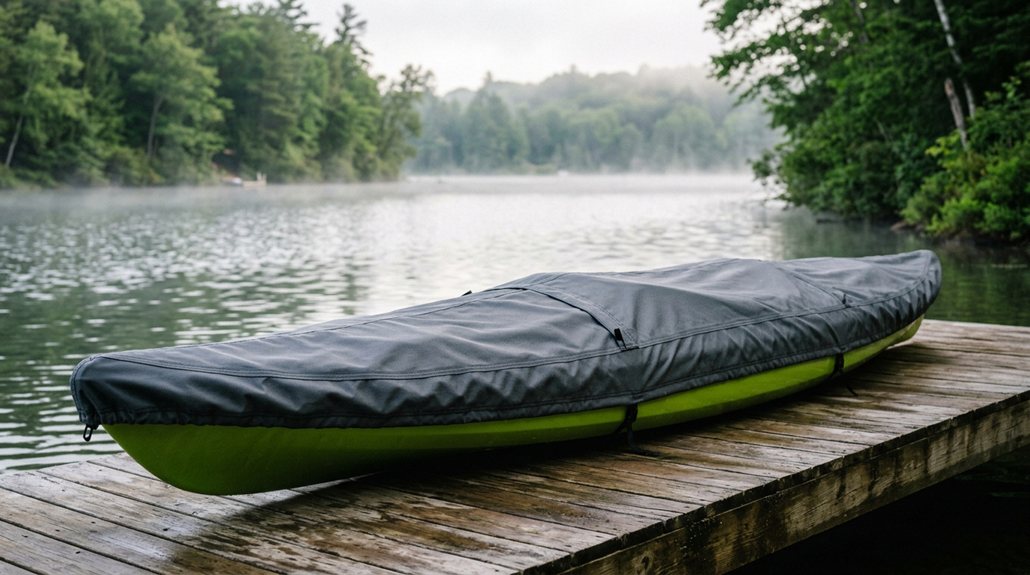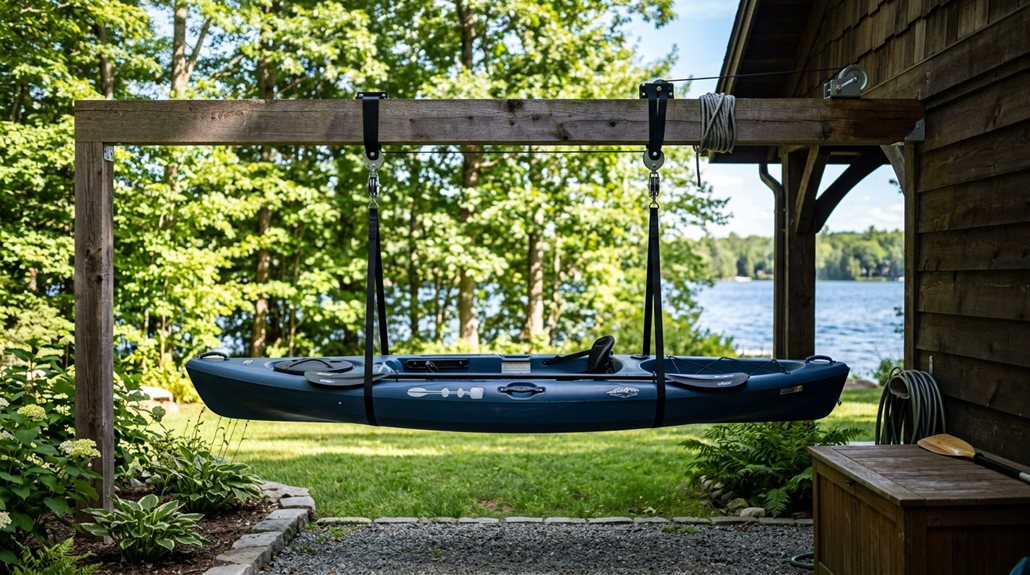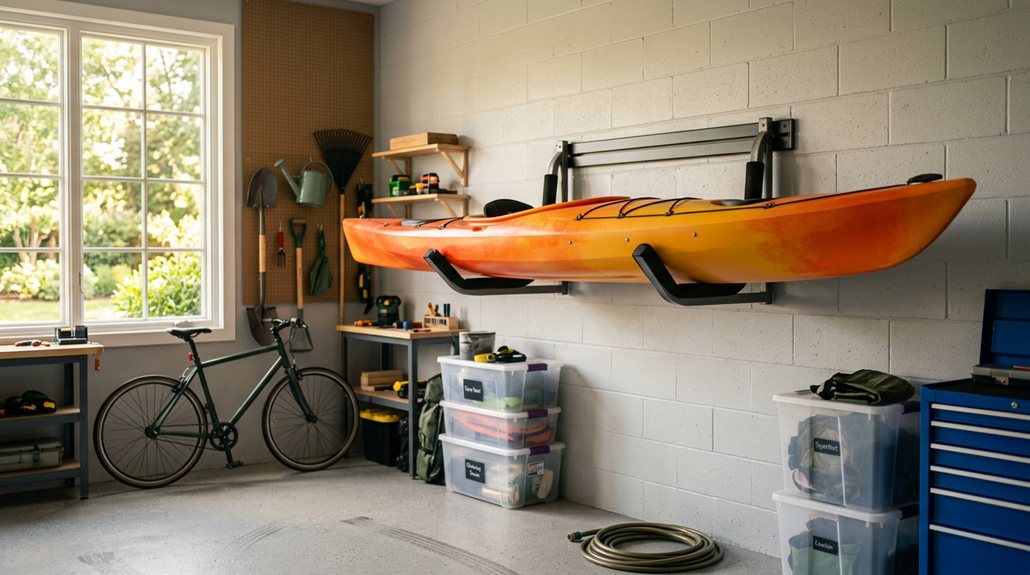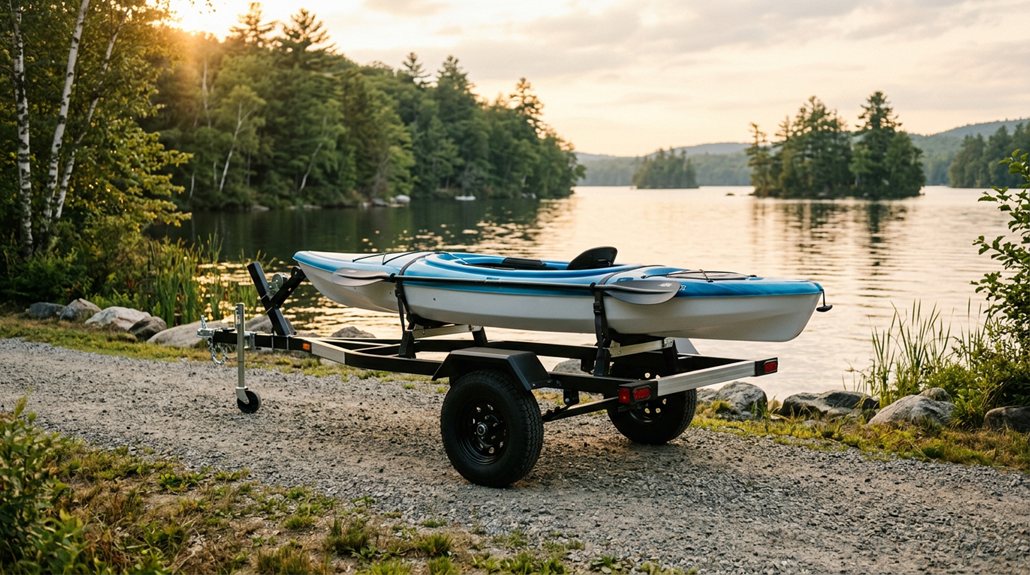
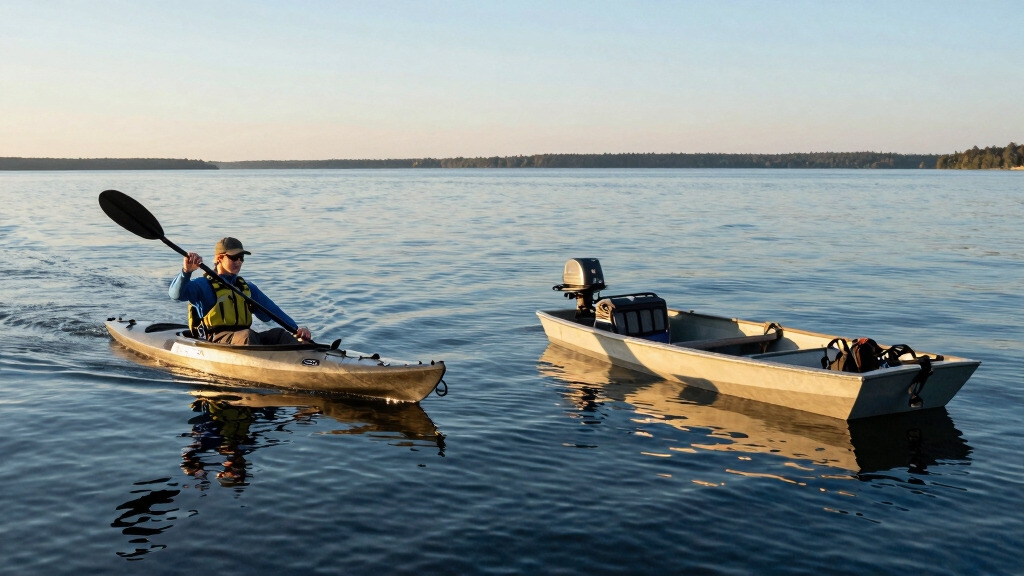
More than 140 million Americans went fishing in 2025, and a growing number are choosing between two budget-friendly platforms: kayaks and jon boats. The Kayak vs Jon Boat: Cost and Capability debate boils down to this—kayaks typically cost $300-$1,500 and require no trailer or motor, while jon boats run $800-$3,000 but demand trailers, registration, and often a small outboard. Each excels in different water conditions, storage scenarios, and fishing styles, making the right choice dependent on where you fish, how you transport gear, and whether you fish alone or with a partner.
Key Takeaways
- Kayaks cost significantly less upfront ($300-$1,500) compared to jon boats ($800-$3,000), with minimal ongoing expenses and no trailer required
- Jon boats offer more interior space for gear, passengers, and standing room, while kayaks provide superior portability and car-top transport
- Shallow water access favors kayaks (can navigate 6-8 inches of water) versus jon boats that need 10-12 inches minimum
- Stability differs by design—wide fishing kayaks allow standing in calm water; jon boats provide a stable platform in chop and waves
- Registration and insurance requirements apply to motorized jon boats in most states, while many states exempt non-motorized kayaks
- Maintenance costs stay minimal for kayaks (occasional hull repairs), but jon boats require motor servicing, hull paint, and trailer upkeep
- Solo fishing trips favor kayaks for ease of launch and retrieval; jon boats shine for two-person outings or family fishing
- Beginners find kayaks more forgiving due to lower financial commitment and simpler operation, though jon boats offer easier re-entry after a fall
What Is the Main Difference Between a Kayak and a Jon Boat?
The main difference between a kayak and a jon boat is hull design and propulsion method. Kayaks feature a narrow, enclosed or sit-on-top hull propelled by a double-bladed paddle, while jon boats are flat-bottomed aluminum or fiberglass skiffs typically powered by a small outboard motor or trolling motor. This fundamental design distinction drives every other difference in cost, capability, and fishing application.
Kayaks sit low in the water with a V-shaped or pontoon-style hull that slices through waves and allows paddling in extremely shallow areas. Most fishing kayaks measure 10-14 feet long and 28-36 inches wide, with molded seats, rod holders, and gear tracks built into the deck. You sit at or near water level, which keeps your center of gravity low and makes paddling efficient.
Jon boats feature a flat, wide bottom (typically 36-60 inches wide) with squared-off bow and stern, aluminum or fiberglass construction, and bench seating. They range from 8 to 16 feet in length and are designed to plane on top of the water when powered by an outboard motor. The flat bottom provides maximum interior space and stability when stationary but creates more drag than a kayak’s streamlined hull.
Key Design Contrasts
- Propulsion: Kayaks use paddle power (or pedal drives); jon boats rely on gas or electric motors
- Draft: Kayaks draw 4-6 inches; jon boats need 8-12 inches depending on motor
- Seating: Kayaks position you low and reclined; jon boats offer elevated bench seats
- Storage: Jon boats provide open interior space; kayaks use sealed hatches and deck bungees
- Transport: Kayaks fit on car roofs; jon boats require trailers
Choose a kayak if you value portability, silent approach, and minimal gear. Pick a jon boat when you need to cover more water quickly, fish with a partner, or carry bulky equipment like coolers and multiple tackle boxes.
How Much Does a Jon Boat Cost Compared to a Kayak?
A basic jon boat costs $800-$3,000 for the hull alone, while a quality fishing kayak runs $300-$1,500, making kayaks the clear budget winner for upfront investment. However, the total cost of jon boat ownership includes a trailer ($400-$1,200), outboard motor ($500-$2,500 for a small 5-10 HP), registration fees, and fuel, which can push the all-in price to $2,500-$7,000 or more.

Clear Vu scanning Sonar shows you more of what is in the water around your boat; This high frequency sonar gives near photographic images with detailed representations of objects, structure and fish
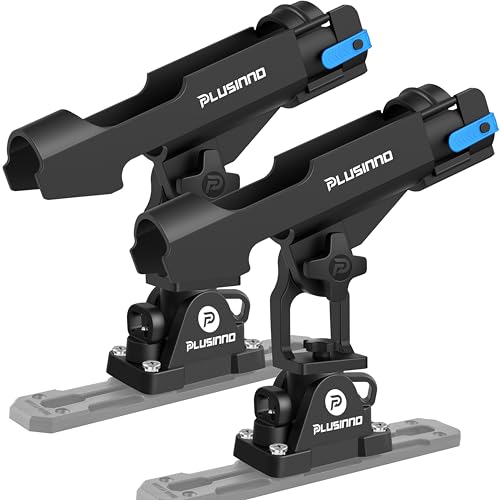
Innovative Stable Fishing Rod Holders: The rod holders for fishing boat features silicone gaskets that designed for optimal stability, maximize contact area and enhance friction, ensuring a secure and stable grip without leaving any scratches on your boat, which allows anglers to focus entirely on the thrill of the catch. A must-have boat pole holders fishing accessories for kayak fishing enthusiasts, this kayak rod holder enhances both convenience and performance on the water.

Galvanized, rust resistant, compact, folding and convenient
Kayak Cost Breakdown
- Entry-level recreational kayak: $300-$600 (basic sit-on-top, limited features)
- Mid-range fishing kayak: $700-$1,200 (rod holders, gear tracks, comfortable seat)
- Premium fishing kayak: $1,300-$1,500 (pedal drive, standing stability, advanced rigging)
- Paddle: $50-$150
- PFD and safety gear: $50-$100
- Transport (roof rack or foam blocks): $50-$300
- Total initial investment: $450-$2,050
Jon Boat Cost Breakdown
- Basic 10-12 ft aluminum jon boat: $800-$1,500
- Mid-range 12-14 ft jon boat: $1,600-$2,500
- Premium 14-16 ft jon boat: $2,600-$3,500
- Trailer: $400-$1,200
- Small outboard motor (5-10 HP): $500-$2,500
- Trolling motor (optional): $200-$800
- Registration and title: $50-$200 annually
- Safety equipment (fire extinguisher, throwable, lights): $100-$200
- Total initial investment: $2,050-$8,400
For anglers on a tight budget or those just starting out, kayaks offer a dramatically lower barrier to entry. You can be on the water fishing for under $500 with a used kayak and basic gear. Jon boats demand a larger upfront commitment but provide more versatility for family outings, hunting, and covering large bodies of water. Learn more about initial costs in our fishing kayak buying guide.
Which Is Better for Fishing in Shallow Water: Kayak or Jon Boat?
Kayaks dominate shallow water fishing because they draw only 4-6 inches of water when loaded, compared to 10-12 inches for a jon boat with a motor. This allows kayak anglers to access backwater creeks, flooded timber, grass flats, and marsh areas that would ground a jon boat. If you target bass in lily pads, redfish in skinny water, or trout in shallow streams, a kayak provides unmatched access.
Kayak advantages in shallow water:
- Navigate water as shallow as 6-8 inches without risk of grounding
- Silent paddle approach doesn’t spook fish in clear, calm shallows
- Easily slide over submerged logs, sandbars, and oyster beds
- Maneuver through tight spaces between cypress knees and mangroves
- No propeller to damage or get fouled in vegetation
Jon boat limitations in shallow water:
- Outboard motor skeg and lower unit require 10-12 inches minimum depth
- Flat bottom can get stuck on mud or sand in ultra-shallow areas
- Motor noise alerts fish in quiet backwaters
- Wider beam makes threading through narrow channels difficult
- Tilting motor up reduces draft but eliminates propulsion
That said, jon boats with a trolling motor or push pole can access water as shallow as 8-10 inches, making them viable for many shallow-water scenarios. Some anglers run “micro skiffs” (lightweight jon boats) with jack plates and shallow-water motors specifically designed for skinny water. But for the average angler targeting shallow flats and creeks, a kayak wins on access and stealth. Explore more shallow-water tactics in our guide to river kayak fishing.

Dimensions and Weight: Length: 236 cm (7.75’), Diameter: 3.1 cm (1.22"). The pole features a buoyant two-piece design that allows it to float on water and be compactly stored or mounted on standard paddle holders.

WATERPROOF & BREATHABLE: 100% waterproof lightweight PU membrane prevents the external water molecules from entering the socks. RANDY SUN waterproof socks are designed with breathable membrane and COOLMAX fabric to wick sweat away from your skin, thus keeping feet cool and dry during sports and exercise
Can You Stand Up and Fish in a Kayak Like You Can in a Jon Boat?
You can stand and fish in a wide, stable fishing kayak, but it requires more balance and technique than standing in a jon boat. Modern fishing kayaks with 34-36 inch widths and pontoon-style hulls are specifically designed for standing, offering enough stability for sight-casting, working topwater lures, and fighting fish while upright. However, jon boats provide a more secure, spacious standing platform with less risk of capsizing.
Standing in a fishing kayak:
- Requires a kayak at least 33 inches wide (34-36 inches ideal)
- Best in calm water with minimal wind and waves
- Demands good balance and core strength
- Limits your range of motion compared to a boat
- Increases capsize risk in choppy conditions
- Works well for short periods (casting, netting fish)
Standing in a jon boat:
- Stable platform even in moderate chop
- Allows full range of motion for casting and fighting fish
- Accommodates two anglers standing simultaneously
- Provides secure footing on flat, textured aluminum floor
- Safer for beginners and those with balance concerns
Many experienced kayak anglers stand routinely in their sit-on-top kayaks for sight-fishing redfish, casting to structure, or working a specific area. The key is choosing a kayak designed for standing (look for terms like “stand-up stability” or “SUP-style hull”) and practicing in calm, shallow water before attempting it in rougher conditions. If standing is a non-negotiable requirement for your fishing style, a jon boat offers a more forgiving platform. For more on kayak stability, check our kayak stability guide.
What Are the Maintenance Costs for Jon Boats vs Kayaks?
Kayaks require minimal maintenance—typically under $50 per year for basic care—while jon boats demand $200-$500 annually for motor servicing, hull upkeep, and trailer maintenance. This ongoing cost difference compounds over years of ownership, making kayaks significantly cheaper to maintain long-term.

ALL-IN-ONE BOAT CLEANING KIT: This versatile drill-powered brush kit tackles cleaning tasks on kayaks, canoes, personal watercraft, and party barges. Say goodbye to algae, pond scum, oxidation, and oily residue. Clean faster and spend more time enjoying the water with our professional-grade boat cleaning brushes for drills and impact drivers.

DRILLBRUSH POWER SCRUBBER - kit for fast and efficient cleaning of Kayaks, Personal Watercraft, Boats, Canoes, Party Barges, Bass Boats, and more. Blast through pond scum, discoloration, oily residue, and oxidation. Get your ride spotless in less time so you can spend more time on the water.

POOL CLEANER Use a combination of our drill driven brushes and cleaning pads outdoors around your pool or spa. Use indoors to power clean around the house. Clean your kitchen, bath, and flooring like never before.
Kayak Annual Maintenance
- Hull cleaning and UV protectant: $20-$30 in supplies
- Hatch seal inspection and replacement: $10-$20 every 2-3 years
- Bungee cord and rigging replacement: $15-$30 as needed
- Paddle maintenance: Minimal (rinse after saltwater use)
- Storage: Free if kept indoors or under cover
- Total annual cost: $25-$75
Kayaks made from rotomolded polyethylene are virtually indestructible. The most common repairs are small cracks from impacts (easily fixed with plastic welding kits for $20-$40) and replacing worn bungee cords or rigging hardware. Proper storage out of direct sunlight extends hull life to 15-20 years or more.
Jon Boat Annual Maintenance
- Outboard motor servicing: $100-$200 (oil change, spark plugs, lower unit oil)
- Hull cleaning and paint touch-up: $50-$100
- Trailer bearing repack and tire check: $50-$100
- Registration renewal: $30-$150 depending on state
- Fuel stabilizer and winterization: $20-$40
- Battery maintenance (if electric start): $20-$50
- Total annual cost: $270-$640
Jon boats also face corrosion issues if used in saltwater, requiring more frequent hull inspections and sacrificial anode replacement. Aluminum hulls can develop leaks at rivets and seams, necessitating professional welding repairs ($100-$300). Trailer maintenance adds another layer of cost, including tire replacement every 3-5 years ($100-$200) and bearing failures ($50-$150 to repair).
Common mistake: Many first-time jon boat owners underestimate ongoing motor maintenance. A small outboard requires annual servicing even with light use, and neglecting it leads to costly repairs or replacement. Kayak owners avoid this entirely.
Is a Kayak or Jon Boat Better for Beginners?
A kayak is better for beginners because it requires less financial investment, simpler operation, and no trailering or motor skills. New anglers can learn basic paddling in an hour, launch from any shoreline, and focus on fishing rather than boat handling. Jon boats demand more upfront learning—trailer backing, motor operation, navigation rules—but offer easier re-entry if you fall in and a more forgiving platform for those uncomfortable with the low seating position of a kayak.
Why kayaks suit beginners:
- Lower cost reduces financial risk while learning
- Simpler operation—no motor to start, maintain, or troubleshoot
- Easier transport—no trailer backing or ramp etiquette to master
- Forgiving learning curve—most people paddle competently within 30 minutes
- Less intimidating—smaller, lighter, easier to handle solo
- Quiet operation helps beginners focus on fishing, not boat noise
When jon boats make sense for beginners:
- Fishing with family or friends—jon boats accommodate 2-3 people comfortably
- Physical limitations—easier to enter/exit than a kayak for those with mobility issues
- Larger water bodies—motor power covers more water with less fatigue
- Comfort preference—elevated seating feels more natural than kayak position
- Hunting crossover—jon boats serve double duty for duck hunting
The biggest beginner mistake is buying too much boat (or kayak) too soon. Start with a basic, stable platform to learn water reading, fish behavior, and your own preferences before upgrading. A used kayak for $300-$500 lets you experiment with minimal commitment. If you discover you love fishing and want more range, you can always upgrade to a jon boat later. For more beginner advice, see our kayak for beginners resource.
Do You Need a Trailer for a Jon Boat but Not a Kayak?
Yes, jon boats require a trailer for transport, adding $400-$1,200 to your initial cost and requiring a vehicle with a hitch and adequate towing capacity. Kayaks, by contrast, transport on roof racks, in truck beds, or even in the back of an SUV with the hatch open, eliminating trailer costs and simplifying logistics.
Kayak transport options:
- Roof racks: J-cradles or saddles ($100-$300) fit most vehicles
- Foam blocks: Budget option ($20-$50) for occasional use
- Truck bed: Kayaks fit in 6-8 ft beds with tailgate down
- Hitch-mounted carriers: Rear-mount racks ($150-$400) for easy loading
- Inside vehicle: Some 10-foot kayaks fit inside minivans or SUVs
Kayaks weigh 40-80 pounds, making them manageable for one person to load and unload with proper technique or a kayak cart. No trailer means no trailer registration, no trailer maintenance, and no backing up at boat ramps. You can launch from any beach, dock, or shoreline access point. Learn more about transport in our kayak transport guide.
Jon boat transport requirements:
- Trailer: Mandatory for any jon boat 8 feet or longer
- Hitch: Class I or II hitch ($150-$300 installed) required on tow vehicle
- Trailer registration: Annual fees ($30-$100) in most states
- Ramp access: Must use boat ramps; can’t launch from beaches or docks
- Backing skills: Learning to back a trailer takes practice and patience
- Storage: Requires space for trailer when not in use
The trailer requirement also limits spontaneity. With a kayak, you can decide to fish on your lunch break and be on the water in 15 minutes. Jon boat owners need to hitch up, check trailer lights, drive to a ramp, and launch—adding 30-45 minutes to each outing.
Edge case: Some ultra-light micro jon boats (8-10 feet) can fit in pickup beds, eliminating the trailer requirement. However, these small jon boats sacrifice interior space and stability, reducing many of the advantages that make jon boats appealing in the first place.
Which Is More Stable in Rough Water: Jon Boat or Kayak?
Jon boats are more stable in rough water and choppy conditions because their wider beam (36-60 inches) and higher freeboard (sides above waterline) handle waves better than most kayaks. A 12-14 foot jon boat can safely navigate 1-2 foot chop that would make kayaking uncomfortable or dangerous. However, sea kayaks and specialized ocean fishing kayaks with 14-16 foot lengths and sealed bulkheads can handle surprisingly rough conditions when paddled by experienced anglers.
Jon boat advantages in rough water:
- Higher sides keep waves from splashing into the boat
- Greater weight (200-400 lbs) resists being tossed by waves
- Wider beam provides stability when waves hit from the side
- Motor power lets you punch through waves or quickly retreat to calmer water
- Easier bailing if water does come aboard
Kayak challenges in rough water:
- Lower profile means waves wash over the deck
- Lighter weight (40-80 lbs) gets pushed around by wind and waves
- Narrower beam (28-34 inches) offers less initial stability
- Paddle power limits your ability to fight wind or quickly exit rough areas
- Capsize risk increases significantly in waves over 18 inches
That said, kayak stability varies dramatically by design. A 10-foot recreational kayak with a 28-inch beam will struggle in 12-inch chop, while a 14-foot sea kayak with a 33-inch beam and proper paddling technique can handle 2-3 foot seas. Experienced kayak anglers routinely fish in conditions that would intimidate beginners, using proper kayak safety gear and techniques.
Choose a jon boat for rough water if:
- You regularly fish large lakes, bays, or coastal areas with afternoon wind
- You’re uncomfortable with the possibility of capsizing
- You fish with children or inexperienced passengers
- You need to cover open water to reach fishing spots
A kayak can work in moderate chop if:
- You have solid paddling skills and self-rescue training
- You choose a longer (13-14 ft), wider (32+ inch) fishing kayak
- You wear a PFD and dress for immersion
- You check weather forecasts and avoid deteriorating conditions
Can a Jon Boat Go in the Ocean or Just Lakes and Rivers?
Jon boats can handle protected coastal waters, bays, and estuaries but are not designed for open ocean use. Their flat bottom and low freeboard make them vulnerable to swamping in ocean swells and offshore wind. Most jon boat manufacturers recommend staying within sight of shore and avoiding water conditions with waves over 2 feet. Kayaks, particularly sea kayaks and ocean-specific fishing kayaks, are better suited for nearshore ocean fishing when paddled by experienced anglers.
Jon boat ocean limitations:
- Flat bottom pounds in ocean swells, creating an uncomfortable, jarring ride
- Low sides allow waves to splash aboard, risking swamping
- Small motors (5-15 HP typical) struggle against ocean currents and wind
- No self-bailing design means water accumulates in the hull
- Aluminum construction corrodes faster in saltwater without proper maintenance
Jon boats excel in calm bays, tidal creeks, and protected estuaries where you can duck behind barrier islands or marsh grass if conditions deteriorate. Many coastal anglers use jon boats successfully for inshore fishing, staying within a mile of shore and monitoring weather closely.
Kayak ocean advantages:
- Sealed hulls with bulkheads prevent swamping
- Lower profile slices through waves rather than pounding over them
- Self-righting design (in sea kayaks) aids recovery from capsizes
- No motor means no corrosion or fuel concerns
- Maneuverability helps navigate surf zones and rocky shorelines
Ocean kayak fishing requires proper training, safety gear (VHF radio, flares, GPS), and respect for conditions. Many coastal kayak anglers fish 1-3 miles offshore in calm conditions, targeting structure and reefs inaccessible to larger boats. However, this demands experience, fitness, and appropriate safety equipment. For more on ocean fishing from kayaks, visit our ocean kayak fishing guide.
Common mistake: Assuming a jon boat’s motor provides safety in rough water. In reality, a small outboard offers little help if you’re caught offshore in deteriorating conditions. Both kayaks and jon boats should stay close to shore in coastal environments unless you have significant experience and proper safety gear.
What Are the Biggest Mistakes People Make When Choosing Between Kayak and Jon Boat?
The biggest mistake is choosing based on price alone without considering transport, storage, and where you’ll actually fish. Many anglers buy a cheap jon boat only to realize they have nowhere to store a trailer, or they purchase a kayak and discover their favorite fishing spots require covering 5 miles of open water. Matching the vessel to your specific fishing scenarios, vehicle capabilities, and storage situation prevents buyer’s remorse.
Common decision-making mistakes:
- Ignoring transport logistics: Buying a jon boat without a hitch or roof rack for a kayak
- Underestimating storage needs: No space for a trailer or kayak at home
- Overlooking ongoing costs: Forgetting about registration, fuel, and maintenance
- Choosing the wrong size: Too small for your water body or too large for your vehicle
- Skipping test sessions: Not paddling or riding in each type before buying
- Focusing on features over fundamentals: Prioritizing gadgets over stability and comfort
- Buying too much boat initially: Starting with an expensive setup before knowing your preferences
Better decision framework:
- Inventory your fishing spots: List the 5 places you’ll fish most often
- Measure access requirements: Note water depth, distance from launch, typical conditions
- Assess your vehicle: Can it tow a trailer? Does it have roof racks?
- Calculate total cost: Include all accessories, registration, and first-year maintenance
- Consider physical factors: Can you lift a kayak? Are you comfortable sitting low?
- Plan for storage: Where will it live when not in use?
Many anglers benefit from starting with a kayak to learn the water, then adding a jon boat later if their fishing evolves to require more range or capacity. The relatively low cost of entry-level kayaks makes this progression financially feasible. Alternatively, some fishing clubs and outfitters offer rentals, letting you test both platforms before committing.
Is a Jon Boat Worth the Extra Cost Over a Kayak?
A jon boat is worth the extra cost if you regularly fish with a partner, need to cover large water bodies quickly, or require space for bulky gear like coolers, live wells, and multiple tackle boxes. For solo anglers fishing small to medium-sized lakes, rivers, and ponds within a few miles of launch, a kayak delivers 80% of the capability at 30% of the cost. The value equation depends entirely on your fishing style and frequency.
Jon boat value proposition:
- Time efficiency: Cover 10 miles in 30 minutes vs. 2+ hours paddling
- Comfort: Elevated seating, more legroom, ability to move around
- Capacity: Bring a friend, child, or dog along
- Gear volume: Carry full-size coolers, multiple rod setups, camping gear
- Versatility: Use for fishing, hunting, exploring, family outings
When the extra cost pays off:
- You fish 20+ days per year (cost per trip drops significantly)
- Your primary waters are large reservoirs or coastal bays requiring long runs
- You frequently fish with a partner or family member
- You combine fishing with camping or multi-day trips requiring gear
- You have secure storage and a vehicle capable of towing
When a kayak delivers better value:
- You fish solo 90% of the time
- Your favorite spots are within 2 miles of launch
- You fish small ponds, creeks, or rivers where motors are prohibited
- You have limited storage space or no place for a trailer
- You fish 5-15 days per year (lower frequency favors lower investment)
Real-world example: An angler fishing 15 days per year spends $2,000 on a jon boat setup vs. $600 on a kayak. The $1,400 difference equals $93 per fishing day in year one, $47 per day over two years, and $31 per day over three years. If that jon boat lets you fish more productive spots, bring your kid along, or simply enjoy the experience more, the value is there. If you’d catch the same fish from a kayak, the extra cost is hard to justify.
Which One Is Better for Solo Fishing Trips: Kayak or Jon Boat?
Kayaks are better for solo fishing trips because they’re easier to launch and retrieve single-handedly, require no trailer maneuvering, and provide a more intimate, focused fishing experience. You can load a kayak on your vehicle, drive to any access point, and be fishing in 10 minutes. Jon boats require backing a trailer down a ramp, launching, parking the trailer, and reversing the process at day’s end—all manageable solo but more time-consuming and stressful.
Kayak solo advantages:
- Quick launch: Slide off roof rack or truck bed and go
- No ramp required: Launch from beaches, docks, or shorelines
- Simpler logistics: No trailer to park or secure
- Quiet, meditative experience: Paddle power connects you to the environment
- Easier to hide: Slip into tight spots and backwaters
- Lower profile: Less visible to fish in clear, shallow water
Jon boat solo challenges:
- Trailer backing: Stressful at busy ramps, especially for beginners
- Ramp etiquette: Pressure to launch quickly when others are waiting
- Parking: Must find trailer parking, sometimes far from ramp
- Tie-off: Securing boat while parking trailer requires planning
- Loading: Getting boat back on trailer solo can be tricky in wind or current
That said, experienced solo jon boat anglers develop efficient routines and appreciate the motor’s ability to cover water quickly. If your solo trips involve running 10+ miles to reach fishing spots, a jon boat’s speed advantage outweighs the launch hassle. For most solo anglers fishing within a few miles of launch, a kayak’s simplicity wins.
Pro tip: If you own a jon boat but often fish solo, consider adding a kayak for quick after-work sessions or exploring tight waters. Many serious anglers own both, using each for its ideal scenarios. The combined investment ($1,500-$4,000) still costs less than a bass boat.
How Much Does It Cost to Register and Insure a Jon Boat vs Kayak?
Jon boats require registration in all 50 states when equipped with a motor, costing $30-$150 annually depending on state and boat length. Kayaks are exempt from registration in many states unless motorized, saving $30-$100 per year. Insurance is optional for both but recommended for jon boats ($100-$300 annually) and rarely purchased for kayaks due to their low replacement cost.
Registration Requirements by Vessel Type
Jon boats (motorized):
- All states require registration for motorized vessels
- Annual fees: $30-$150 (varies by state and boat length)
- Title required in most states (one-time fee $15-$50)
- Hull identification number (HIN) must be displayed
- Registration numbers must be painted or affixed to bow
Kayaks (non-motorized):
- Many states exempt non-motorized kayaks from registration
- States requiring kayak registration: Alaska, Colorado, Hawaii, Idaho, Iowa, Kansas, Kentucky, Minnesota, Missouri, Nebraska, New Hampshire, North Dakota, Ohio, Oklahoma, Pennsylvania, Utah, Vermont, Wyoming
- Annual fees (where required): $10-$50
- No title typically required
Check your state’s specific requirements through your Department of Natural Resources or Parks and Wildlife agency. Some states offer lifetime kayak registration for a one-time fee ($20-$50), which makes sense if you plan to keep the kayak for years. For more details, see our kayak registration guide.
Insurance Considerations
Jon boat insurance:
- Recommended for boats valued over $2,000
- Annual premium: $100-$300 (depends on value, motor size, usage)
- Covers: Theft, collision, liability, medical payments
- Often required if you finance the boat purchase
Kayak insurance:
- Rarely purchased due to low replacement cost
- Homeowners/renters insurance may cover theft from home or vehicle
- Specialized kayak insurance: $50-$150 annually (available but uncommon)
- Most anglers self-insure by setting aside replacement funds
Total annual ownership cost comparison:
| Expense | Kayak | Jon Boat |
|---|---|---|
| Registration | $0-$50 | $30-$150 |
| Insurance | $0-$50 | $100-$300 |
| Maintenance | $25-$75 | $200-$500 |
| Fuel | $0 | $50-$200 |
| Total | $25-$175 | $380-$1,150 |
Over a 10-year ownership period, a jon boat costs $3,800-$11,500 more to own and operate than a kayak, even before considering the higher initial purchase price. This cost difference is the single biggest factor driving kayak popularity among budget-conscious anglers.
Can You Use a Kayak for Duck Hunting or Do You Need a Jon Boat?
You can use a kayak for duck hunting in small ponds, marshes, and calm backwaters, but jon boats are better suited for waterfowl hunting due to their greater gear capacity, stability for shooting, and ability to carry dogs and multiple hunters. Kayaks work well for solo hunters pursuing puddle ducks in tight cover, while jon boats excel for layout hunting, running decoy spreads, and hunting with partners.
Kayak duck hunting advantages:
- Stealth approach: Silent paddling gets you close to wary birds
- Access tight cover: Navigate flooded timber and narrow channels
- Low profile: Easier to conceal in marsh grass and vegetation
- No motor noise: Won’t spook birds during setup or retrieval
- Budget-friendly: Use your fishing kayak for hunting season
Kayak duck hunting limitations:
- Limited decoy capacity: Carry 6-12 decoys max
- Difficult shooting platform: Low seating position and narrow beam
- No room for dog: Most kayaks can’t accommodate a retriever
- Gear constraints: Limited space for shells, calls, extra clothing
- Stability concerns: Recoil from shotgun can tip narrow kayaks
Jon boat duck hunting advantages:
- Stable shooting platform: Stand and swing on passing birds
- Gear capacity: Carry 2-4 dozen decoys, dog, blind materials
- Multiple hunters: Accommodate 2-3 hunters comfortably
- Dog-friendly: Room for retriever to work
- Blind setup: Build permanent or temporary blind in boat
Many serious waterfowl hunters use jon boats as their primary platform, adding camouflage paint, grass mats, and layout blinds. The flat bottom and squared-off design make jon boats ideal for setting up in shallow marshes and staying put for hours. However, kayak hunters appreciate the ability to slip into tight spots and hunt pressure-free areas inaccessible to boats.
Hybrid approach: Some hunters use a jon boat to run decoys and set up, then switch to a kayak for the actual hunt, paddling into position for a more concealed approach. This combines the gear capacity of a jon boat with the stealth of a kayak.
Conclusion
The Kayak vs Jon Boat: Cost and Capability decision ultimately comes down to matching the vessel to your fishing style, budget, and logistics. Kayaks win on affordability, portability, and access to shallow, tight waters, making them ideal for solo anglers fishing small to medium-sized lakes, rivers, and marshes. Jon boats provide superior speed, capacity, and comfort for covering large water bodies, fishing with partners, and carrying bulky gear, but demand significantly higher upfront and ongoing costs.
Choose a kayak if you:
- Fish primarily solo
- Target shallow water species in tight cover
- Have limited budget ($500-$1,500 total investment)
- Value portability and car-top transport
- Fish within 2-3 miles of launch points
- Want minimal maintenance and operating costs
Choose a jon boat if you:
- Frequently fish with a partner or family
- Need to cover 5+ miles to reach productive water
- Require space for coolers, live wells, and extensive gear
- Have secure storage and a vehicle capable of towing
- Fish large reservoirs, bays, or coastal waters
- Can invest $2,500-$7,000 upfront plus ongoing costs
Next steps:
- List your top 5 fishing spots and note distance from launch, water depth, and typical conditions
- Calculate total cost including vessel, accessories, transport, registration, and first-year maintenance
- Rent or borrow both a kayak and jon boat for day trips to test real-world handling
- Start small with a basic, stable platform to learn your preferences before upgrading
- Consider buying used to reduce initial investment while you determine what works best
Many anglers find that owning both a kayak and a small jon boat provides maximum versatility, using each for its ideal scenarios. The combined investment often costs less than a single bass boat while delivering access to a wider range of fishing opportunities. Whether you choose a kayak, jon boat, or eventually both, matching your vessel to your actual fishing patterns ensures you’ll spend more time catching fish and less time fighting your equipment.
For more guidance on selecting the right fishing platform, explore our fishing kayak comparison resources and beginner kayak fishing tips.