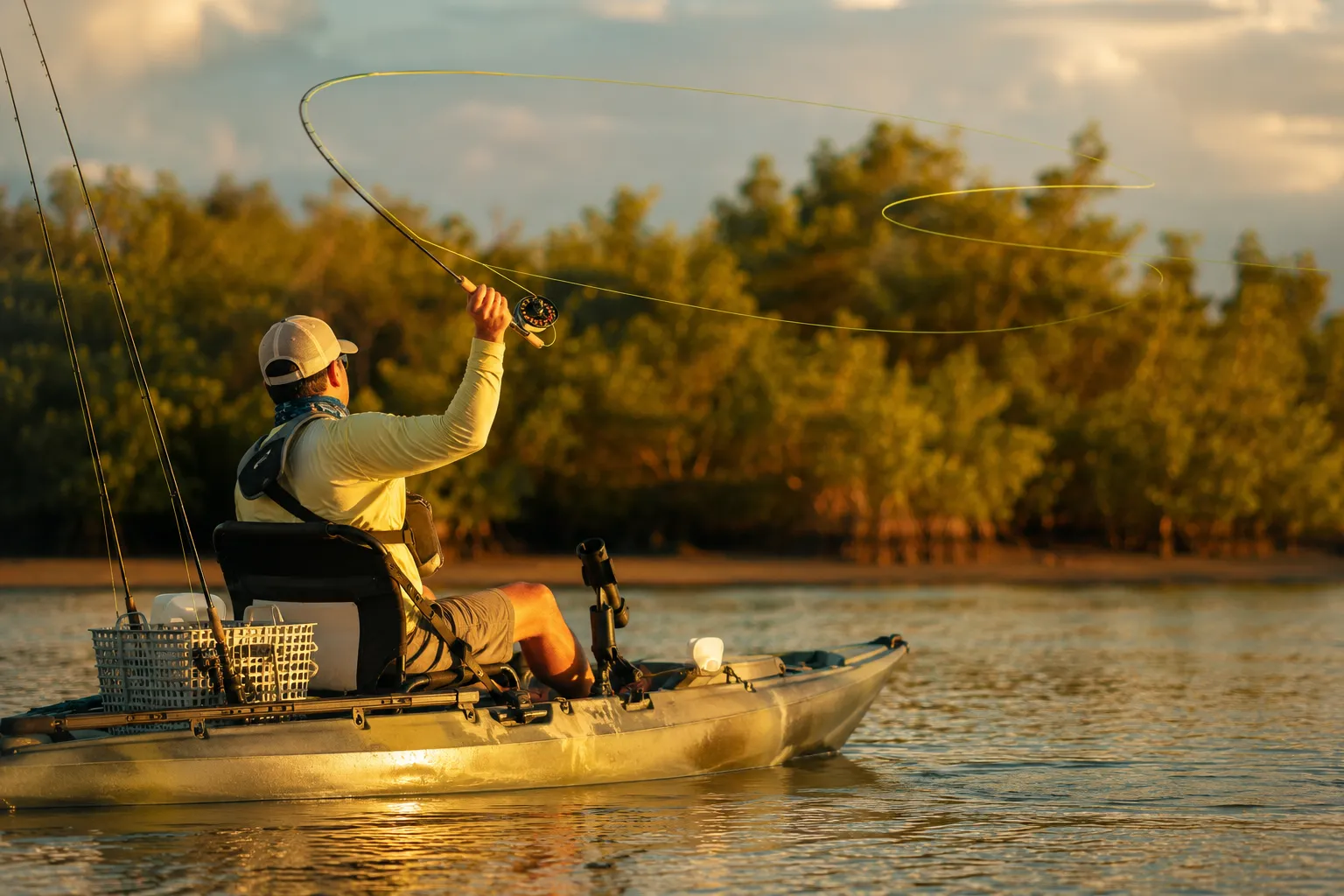
Quick Answer: Kayak fly fishing differs from traditional fly fishing primarily in casting mechanics, line management, and positioning strategy. You’ll cast from a seated position with limited backcast room, manage stripped line in a confined space using baskets or mats, and trade the mobility of wading for access to deeper water and the ability to cover more territory while remaining stealthy and low to the surface.
Key Takeaways
- Casting from a kayak requires shorter, more controlled strokes due to seated positioning and limited overhead clearance
- Line management is the biggest challenge, stripped line must be contained in baskets, mats, or between your legs to prevent tangles
- Sit-on-top kayaks work better than sit-inside models for fly fishing because they offer easier casting motion and simpler line management
- Rod length between 7-9 feet is ideal, with 8-foot rods offering the best balance of casting control and fish-fighting capability
- Anchor systems with trolleys are essential for positioning and holding against current or wind
- Kayak fly fishing opens access to water too deep for wading and too shallow for motorboats
- Wind management becomes more critical from a low, seated position with less body leverage for casting
- Both saltwater and freshwater fly fishing work from kayaks, though saltwater requires corrosion-resistant hardware
What Makes Fly Fishing From a Kayak Different From a Regular Boat
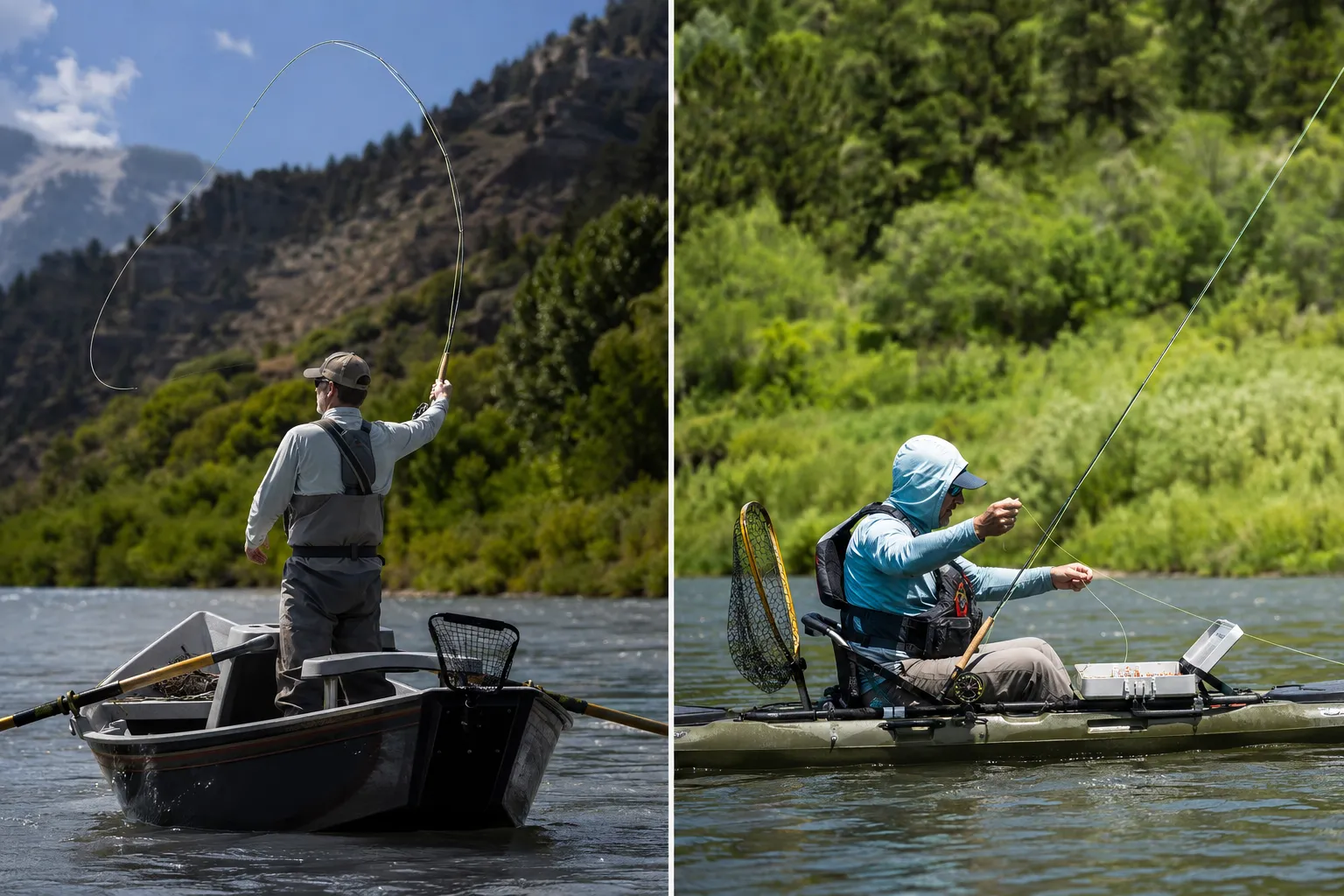
Fly fishing from a kayak puts you closer to the water and limits your range of motion compared to standing in a drift boat or flats skiff. The seated position restricts your backcast arc and reduces the power you can generate through your lower body and core rotation. Your casting stroke becomes more compact, relying on precise timing and wrist control rather than full-body mechanics.
The low profile offers significant advantages for stealth. You sit just inches above the waterline, making you nearly invisible to spooky fish in clear water. This positioning also changes your sight lines, you see the water from a fish’s perspective rather than looking down from above.
Key differences include:
- Stability trade-offs: Kayaks are narrower than boats, so weight shifts during casting or fighting fish require more balance awareness
- Mobility: You can’t walk around to reposition like in a drift boat, but you can paddle silently to new spots faster than wading
- Gear access: Everything must be within arm’s reach since you can’t stand and move around the deck
- Fighting fish: You’ll land fish from a seated position, often bringing them alongside the kayak rather than netting from above
The biggest adjustment is accepting that you’re part of a floating system. Every movement affects the kayak’s position, and every cast must account for the platform beneath you.
Can You Fly Fish From a Sit-On-Top Kayak
Yes, sit-on-top kayaks are actually better suited for fly fishing than sit-inside models. The open deck gives you more room for your casting arm and allows stripped line to fall onto the deck or into a basket without getting trapped in a cockpit. If you hook into a big fish that makes a run, loose line can peel off the deck more freely.
Sit-on-top designs also make it easier to manage the fly line during the retrieve. You can strip line between your legs or onto the deck beside your thigh, and the open layout lets you see and control every coil. When a fish strikes, the line shoots through the guides without catching on cockpit edges or spray skirts.
Additional benefits of sit-on-top kayaks for fly fishing:
- Easier to mount stripping baskets or line management mats
- Better access to rod holders positioned at optimal casting angles
- Simpler to stand and cast if your kayak has sufficient stability
- Self-bailing design means water from waves or rain drains automatically
- Easier re-entry if you capsize in warm water
The main downside is exposure to weather and water. Sit-inside kayaks keep you drier in cold conditions, but the trade-off in casting freedom and line management usually isn’t worth it for fly fishing.
Best Kayak Setup for Fly Fishing
An optimized kayak fly fishing setup prioritizes line management, rod security, and positioning control. Start with a stable platform at least 30 inches wide with a flat deck area in front of the seat. Mount flush rod holders at 45-degree angles on both sides of the cockpit so rods stay out of your casting arc but remain accessible.
Essential components:
- Stripping basket or mat: Attach a collapsible stripping basket to your lap or mount a textured rubber mat on the deck between your legs to contain stripped line
- Anchor trolley system: Install a rope trolley running bow to stern so you can adjust anchor position to hold your kayak at the optimal angle to wind or current
- Rod holders: Mount at least two angled holders for backup rods and one vertical holder behind the seat for quick storage
- Paddle keeper: A simple clip or bungee to secure your paddle when both hands are on the rod
- Gear track or mounting points: Allows you to add accessories like cup holders, tool holders, or camera mounts without drilling new holes
Keep your deck as clear as possible. Every item you mount creates a potential snag point for fly line. Choose low-profile accessories and position them outside your primary casting and line management zones.
For pedal-drive kayaks, the hands-free propulsion is a game-changer. You can work a fly with both hands while maintaining position or slowly trolling. The trade-off is added weight and mechanical complexity, plus the drive unit can spook fish in shallow water.
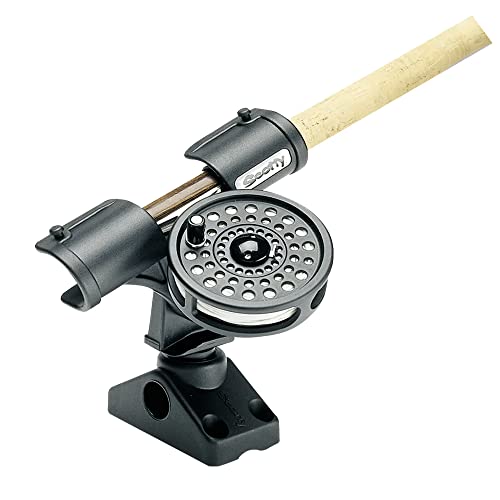
The perfect holder for rod storage or trolling with a fly rod and reel
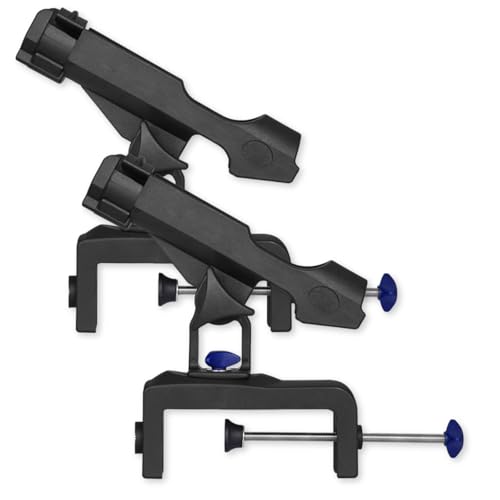
ZENFUN set of 2 adjustable boat rod holders for fishing with large clamp opening, including stainless steel screws hardware. Clamp max opening is 4.7in. Fishing rod holder gives you versatility and convenience while fishing.

An extra hand, hold and protect your rods when changing lures or removing hooks
How Do You Cast a Fly Rod While Sitting in a Kayak
Casting from a seated position requires adapting your stroke to work within a compressed vertical space. Your backcast stays lower to avoid hitting the kayak behind you, and your forward cast relies more on wrist snap and timing than full arm extension. Think of it as a “three-quarter” cast rather than a full overhead motion.
Step-by-step seated casting technique:
- Grip and posture: Sit upright with your casting arm elbow at your side, rod hand at chest height
- Backcast: Accelerate the rod tip backward to 1 o’clock (not the full 2 o’clock of a standing cast), stopping crisply to form a tight loop
- Pause: Wait for the line to straighten behind you, this pause is slightly longer than when standing because you have less visual feedback
- Forward stroke: Drive the rod forward with a sharp wrist snap, stopping at 10 o’clock and letting the line shoot through the guides
- Follow-through: Lower the rod tip as the line extends, keeping it close to the water surface
The kayak will rock slightly with each casting stroke. Use this rhythm rather than fighting it. Time your forward cast as the kayak settles from the backcast motion.
Common adjustments for kayak casting:
- Shorten your casting stroke by 20-30% compared to standing
- Use a side-arm or three-quarter arm angle to keep the line away from the kayak
- Make more false casts to work out line since you can’t shoot as much line on the initial cast
- Position your body at a slight angle to the target rather than facing it directly
Practice in your driveway or yard while sitting in a low chair. The muscle memory transfers directly to the kayak.
Kayak Fly Fishing vs Wade Fishing: Pros and Cons
Kayak fly fishing and wade fishing each excel in different situations. Wade fishing offers superior casting freedom and direct connection to the environment, while kayak fishing provides access to water that’s too deep, too far, or too soft-bottomed for wading.
Kayak fly fishing advantages:
- Access deeper water beyond wading depth (6+ feet)
- Cover more water in a session, paddle miles instead of walking hundreds of yards
- Fish over soft mud or unstable bottoms where wading is impossible
- Stay dry and comfortable in cold water
- Carry more gear, including backup rods, extra fly boxes, and lunch
- Less physical strain on knees, ankles, and back
Kayak fly fishing disadvantages:
- Restricted casting motion from seated position
- Line management requires extra equipment and attention
- Less mobility for quick repositioning to rising fish
- Harder to work tight cover like overhanging branches
- Wind affects your position more than when wading
- Requires vehicle transport and launch site access
Wade fishing advantages:
- Full range of casting motion with power from legs and core
- Simple line management, stripped line falls into current or at your feet
- Quiet approach to spooky fish in skinny water
- Easy to adjust position by taking a few steps
- Direct feel for bottom structure and current
- No equipment beyond rod, waders, and vest
Wade fishing disadvantages:
- Limited to water shallow enough to stand (typically under 4 feet)
- Physically demanding over long distances
- Cold water requires expensive waders and layering
- Dangerous in strong current or unstable bottoms
- Can’t reach fish holding in deeper holes or channels
Choose kayak fly fishing when you need to cover distance, access deeper water, or fish in comfort. Choose wading when you’re working a specific run, need maximum casting freedom, or fishing technical water with frequent position changes.
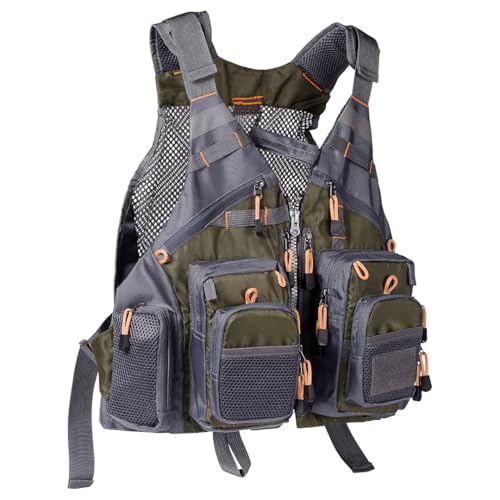
Adjustable suspension system – adjustable shoulder and waist straps, allows custom fit


【Adjustable Multi-Use Bag】Designed for comfort and convenience, the fishing backpack is equipped with padded shoulder straps which can be easily changed from a backpack to a sling shoulder bag and vice versa. It could also be adjusted as a chest bag, handbag, fishing tackle bag, and travelling bag to satisfy your different needs for a fishing trip.
Do I Need a Special Fly Rod for Kayak Fishing
You don’t need a specialized kayak fly rod, but certain rod characteristics work better from a seated position. Standard fly rods designed for standing work fine, though shorter lengths and moderate actions offer advantages in the confined space of a kayak.
The main consideration is rod length. Longer rods (9+ feet) provide better line control and mending ability but feel awkward in a kayak where your casting arc is compressed. Shorter rods (7-8 feet) are easier to manage in tight quarters but sacrifice some casting distance and line management capability.
Rod selection guidelines for kayak fly fishing:
- Length: 7-9 feet is the sweet spot, with 8 feet offering the best all-around performance
- Action: Moderate to moderate-fast actions are more forgiving with the timing adjustments required for seated casting
- Weight: Match to your target species as you would for any fly fishing, 5-6 weight for trout and panfish, 7-8 weight for bass and inshore saltwater, 9-10 weight for larger saltwater species
- Pieces: 4-piece travel rods are easier to transport and store in a kayak than 2-piece rods
Your existing fly rods will work. If you’re buying specifically for kayak use, lean toward the shorter end of the range for your target species. An 8-foot 6-weight is more versatile from a kayak than a 9-foot 6-weight, even though the longer rod would be better for wade fishing.
What Length Fly Rod Works Best in a Kayak
An 8-foot fly rod offers the best balance of casting control, fish-fighting leverage, and maneuverability for most kayak fly fishing situations. This length gives you enough rod to load properly on the backcast while keeping the tip manageable in the compressed space of a seated position.
Seven-foot rods work well in extremely tight quarters or when targeting smaller fish in calm conditions. The shorter length makes them easier to control with one hand while you manage the kayak with the other, but you’ll sacrifice casting distance and struggle to keep line off the water when mending.
Nine-foot rods are the upper limit for comfortable kayak use. They provide excellent line control and reach for working fish at distance, but the extra length becomes cumbersome when casting in wind or trying to land fish alongside the kayak. If you already own a 9-footer, it will work fine, just expect a learning curve.
Length recommendations by fishing style:
- Small streams and ponds (bass, panfish, small trout): 7-7.5 feet
- General freshwater (trout, bass, pike): 8-8.5 feet
- Large rivers and lakes: 8.5-9 feet
- Inshore saltwater (redfish, seatrout, snook): 8-9 feet
- Offshore or surf: 9-10 feet (though kayak fly fishing in these conditions is advanced)
When in doubt, choose the shorter option. You can always make a longer cast with good technique, but you can’t make a long rod shorter when you need to.
Common Mistakes When Fly Fishing From a Kayak
The most common mistake is failing to secure stripped line, leading to tangles around paddle shafts, rod holders, or your own feet. Every retrieve should deposit line into a designated area, a stripping basket, deck mat, or the space between your legs. Letting line fall randomly onto the deck guarantees frustration when a fish strikes and the line catches on something.
Other frequent errors:
- Anchoring from the side: Always anchor from bow or stern using a trolley system. Side anchoring can flip your kayak in current or when a wave hits
- Overloading the deck: Too much gear creates snag points for fly line and makes the kayak less stable
- Fighting the kayak’s movement: Trying to hold perfectly still wastes energy. Learn to cast with the kayak’s natural rhythm
- Wrong anchor weight: Too light and you drift, too heavy and you can’t retrieve it easily. Use 1.5-3 pounds for most conditions
- Ignoring wind direction: Position your kayak so wind helps your cast rather than fighting it
- Standing without practice: Standing to cast in a kayak requires specific balance skills. Practice in calm, shallow water before trying it while fishing
- Using too much fly line: Keep your working line length reasonable (30-40 feet). Longer casts mean more line to manage and more potential for tangles
Start each session with a line management check. Make sure your stripping basket is secure, your deck is clear, and you have a plan for where every foot of stripped line will go.

AUTHENTIC DANISH FISKER DESIGN: Authentic with engraved info at the bottom seeing photo different from some illegal copies in the market, those do not bear this info.

AUTHENTIC DANISH FISKER DESIGN: Authentic with engraved info at the bottom seeing photo different from some illegal copies in the market, those do not bear this info.

AUTHENTIC DANISH FISKER DESIGN: Authentic with engraved info at the bottom seeing photo different from some illegal copies in the market, those do not bear this info.
How to Strip Line and Manage It in a Kayak
Strip line directly into a stripping basket attached to your waist or lap, or onto a textured rubber mat placed on the deck between your legs. The basket method is more reliable in wind and when fighting active fish, while the deck mat method feels more natural and works well in calm conditions.
Stripping basket setup:
- Use a collapsible mesh or plastic basket designed for fly fishing
- Attach it to your waist with a belt or clip it to the kayak seat
- Position it so the opening faces up and slightly toward your stripping hand
- Strip line in smooth pulls, letting each coil fall into the basket
- Keep coils loose, don’t pack them down or they’ll tangle on the shoot
Deck mat method:
- Install a textured rubber mat (like a car floor mat) on the deck between your thighs
- Strip line onto the mat in loose coils
- Use your legs to create a “channel” that contains the line
- Keep the mat wet so line doesn’t stick to it
- Clear the mat between fish to prevent buildup
When a fish strikes, the line should shoot freely from the basket or mat through the rod guides. If you feel resistance, stop and clear the tangle before continuing to fight the fish. Trying to force tangled line through the guides will break your tippet or damage the line.
Advanced line management tips:
- Keep your rod tip low during the strip to minimize the distance line must travel
- Use your non-casting hand to guide line into the basket or onto the mat
- In wind, weight the bottom of your stripping basket with a few ounces of lead or a small water bottle
- Practice stripping and shooting line in your driveway before heading out
Good line management becomes automatic after a few sessions. The key is establishing a consistent routine so every strip goes to the same place.
Is Kayak Fly Fishing Good for Beginners or Experienced Anglers
Kayak fly fishing works best for anglers who already have basic fly casting skills and some kayaking experience. The combination of managing a kayak, casting from a seated position, and handling fly line in a confined space creates a steep learning curve if you’re new to both activities.
If you’re new to fly fishing, learn to cast on land or while wade fishing first. Master the basic overhead cast, understand line management, and catch a few fish before adding the complexity of a kayak. If you’re new to kayaking, spend time paddling and learning basic stability and safety before bringing fly fishing gear into the equation.
Kayak fly fishing is ideal for:
- Experienced fly anglers looking to access new water
- Kayak anglers who want to add fly fishing to their skillset
- Anglers with mobility issues that make wading difficult
- Anyone who wants to cover more water than wading allows
- Anglers targeting species in water too deep for wading
Consider starting with conventional kayak fishing if:
- You’ve never fly fished before
- You’ve never kayaked before
- You’re uncomfortable with the idea of managing loose line in a small space
- You primarily fish in very windy conditions
- You prefer fishing in rough water or strong current
That said, plenty of people successfully learn both skills simultaneously. It just requires patience and a willingness to deal with tangles and frustration during the learning phase. Start in calm water, use shorter casts, and focus on line management before worrying about catching fish.
How Do You Deal With Wind When Fly Fishing From a Kayak
Wind management from a kayak requires positioning strategy more than casting technique. Use your anchor system to hold the kayak at an angle that lets you cast with the wind rather than into it. A properly positioned kayak turns wind from an obstacle into an advantage.
Wind positioning strategies:
- Downwind casting: Position the kayak so wind blows from behind your casting shoulder toward your target. The wind carries your cast and helps load the rod
- Crosswind casting: Angle the kayak 45 degrees to the wind and cast across it, letting the wind straighten your line
- Avoid upwind casting: Fighting directly into wind from a seated position is frustrating and ineffective
When wind is unavoidable, modify your casting technique. Use a tighter loop with more line speed, keep your backcast low, and make shorter casts. A double-haul helps generate the line speed needed to punch through wind, though it’s an advanced technique.
Additional wind management tactics:
- Fish early morning or evening when wind typically drops
- Seek protected shorelines, coves, or tree-lined banks
- Use heavier flies that cut through wind better than light, air-resistant patterns
- Switch to shorter leaders (7-8 feet instead of 9-10 feet) to maintain control
- Accept that some days are too windy for effective kayak fly fishing
Your anchor system is critical in wind. A 3-pound folding anchor with 50 feet of rope and a trolley system lets you hold position and adjust your angle without constantly paddling. Deploy the anchor, adjust the trolley to position the kayak, and fish from a stable platform.
Kayak Fly Fishing in Saltwater vs Freshwater: Differences
The fundamental techniques of kayak fly fishing remain the same in salt and fresh water, but saltwater demands corrosion-resistant gear and different safety considerations. Saltwater also typically involves larger fish, stronger currents, and more exposure to weather and waves.
Saltwater-specific requirements:
- Corrosion-resistant hardware: Use stainless steel or aluminum rod holders, anchor cleats, and mounting hardware
- Sealed storage: Keep fly boxes, reels, and electronics in waterproof bags or hatches
- Rinse routine: Thoroughly rinse the kayak, rods, reels, and all gear with fresh water after every saltwater session
- Larger fish: Expect to fight fish that can tow your kayak, requiring stronger tippet and better fish-fighting skills
- Tides and current: Learn to read tide charts and position yourself to use current rather than fight it
- Safety gear: Carry a VHF radio, GPS, and tell someone your float plan
Freshwater advantages:
- Calmer conditions and smaller water bodies
- Less gear corrosion and maintenance
- Easier launch and recovery sites
- Typically smaller fish that are easier to land from a kayak
- More forgiving if you make positioning mistakes
The casting and line management techniques transfer directly between environments. The main adjustment is scale, saltwater often means longer casts, heavier rods (8-10 weight), and bigger flies. Freshwater typically involves lighter gear (4-6 weight) and more delicate presentations.
Many kayak fly anglers start in freshwater to develop skills, then transition to saltwater once they’re comfortable with the platform. The learning curve is less steep when you’re not also dealing with tides, waves, and fish that can pull you around.
Do You Need an Anchor System for Kayak Fly Fishing
Yes, an anchor system is essential for effective kayak fly fishing. Without an anchor, you’ll constantly drift out of position, making it nearly impossible to work a specific area or present flies to fish holding in current. The anchor lets you hold position while keeping both hands on the rod.
A basic anchor system consists of three components: the anchor itself (1.5-3 pounds for most conditions), 50-75 feet of rope, and an anchor trolley that runs the length of your kayak. The trolley is critical, it lets you adjust where the anchor line attaches, controlling the kayak’s angle to wind and current.
How to use an anchor trolley:
- Deploy the anchor from the bow or stern (never the side)
- Use the trolley line to slide the anchor attachment point forward or backward
- Position the kayak at the optimal angle for casting and fish approach
- Adjust as wind or current changes
Anchor weight guidelines:
- Calm lakes and ponds: 1.5-2 pounds
- Moderate current or wind: 2-3 pounds
- Strong current or deep water: 3-5 pounds
- Extreme conditions: Consider a drift sock instead of or in addition to an anchor
Folding grapnel anchors work well because they’re compact and grip various bottom types. Mushroom anchors hold better in soft mud but take up more space. Avoid using a rock or homemade weight, proper anchors are designed to release when pulled from different angles.
Some anglers use a drift sock (sea anchor) instead of a bottom anchor when fishing in deep water or over structure where an anchor might snag. The drift sock slows your drift without stopping you completely, letting you cover water while maintaining control.
How to Choose the Right Kayak for Fly Fishing
The right kayak for fly fishing balances stability, deck space, and weight. Look for a sit-on-top model at least 30 inches wide with a flat deck area in front of the seat. Wider kayaks (32-36 inches) offer more stability for standing and casting but paddle slower and catch more wind.
Key features to prioritize:
- Stability: Primary stability (how stable it feels sitting still) matters more than secondary stability (how far it tilts before capsizing) for fly fishing
- Deck layout: Flat, open deck with minimal obstructions for line management
- Weight capacity: Choose a kayak rated for at least 100 pounds more than your weight plus gear
- Rod holders: Pre-installed flush-mount holders or gear tracks for adding them
- Seat comfort: You’ll spend hours sitting, so test the seat before buying
- Length: 10-12 feet for maneuverability in tight spots, 12-14 feet for covering distance on big water
Propulsion options:
- Paddle: Lightest, simplest, quietest, most affordable
- Pedal drive: Hands-free fishing, faster cruising, but heavier and more expensive
- Motor: Covers the most distance but adds significant weight and cost
For most fly anglers, a 12-foot paddle kayak in the 30-32 inch width range offers the best compromise. It’s stable enough for confident casting, light enough to car-top solo, and maneuverable in the tight spots where fly fishing excels.
Test paddle before buying if possible. Sit in the kayak and simulate casting motions. Make sure you have enough room for your casting arm and that the seat position feels natural for the casting stroke.
Essential Gear Beyond the Rod and Kayak
Beyond your kayak and fly rod, a handful of specialized items make kayak fly fishing practical and safe. Start with a stripping basket or deck mat for line management, this single item prevents more frustration than anything else. Add a personal flotation device (PFD) designed for paddle sports that doesn’t restrict your casting motion.
Must-have gear list:
- Stripping basket or line management mat: Contains stripped line to prevent tangles
- Paddle sports PFD: Low-profile design that doesn’t interfere with casting
- Anchor system: 2-3 pound anchor, 50+ feet of rope, trolley system
- Paddle leash: Keeps your paddle attached when both hands are on the rod
- Rod holders: At least two flush-mount holders for backup rods and quick storage
- Waterproof storage: Dry bag or hatch for phone, keys, wallet
- Pliers and nippers: Attached to your PFD for quick access
- Sun protection: Hat, sunglasses, long sleeves, sunscreen
Nice-to-have additions:
- Fish finder for locating structure and depth changes
- GPS or phone mount for navigation
- Tackle storage crate or bag designed for kayak mounting
- Camera mount for documenting catches
- Drift sock for controlling drift speed in deep water
- Whistle or air horn for safety signaling
Keep your gear minimal at first. Every item you add is another potential snag point for fly line. As you gain experience, you’ll figure out which accessories genuinely improve your fishing versus just adding clutter.
FAQ
Can you fly fish from any kayak?
You can fly fish from any kayak, but sit-on-top models with flat, open decks work much better than sit-inside kayaks. The open design makes line management easier and gives you more room for casting motion.
What’s the hardest part of kayak fly fishing?
Line management is the most challenging aspect. Keeping stripped line organized in the confined space of a kayak while maintaining casting readiness requires practice and the right equipment like stripping baskets or deck mats.
Do you need to stand up to fly fish from a kayak?
No, you don’t need to stand. Most kayak fly fishing happens from a seated position. Standing can help with sight fishing and casting distance but requires a very stable kayak and good balance skills.
How much does a kayak fly fishing setup cost?
A complete beginner setup costs $1,200-2,000 including a basic fishing kayak ($600-1,000), entry-level fly rod and reel ($300-500), PFD ($80-150), anchor system ($50-100), and essential accessories ($200-300).
Can beginners start with kayak fly fishing?
Beginners can start with kayak fly fishing, but it’s easier to learn fly casting and kayaking separately first. The combination of both skills creates a steep learning curve that can be frustrating without a foundation in either activity.
What size fish can you catch from a kayak?
Kayaks can handle fish of any size you can land on a fly rod. Anglers regularly catch tarpon, striped bass, and pike over 30 pounds from kayaks. The kayak may get towed around, but proper technique lets you land large fish safely.
Is kayak fly fishing safe?
Kayak fly fishing is safe when you follow basic water safety rules: always wear a PFD, check weather before launching, tell someone your plans, stay within your skill level, and avoid dangerous conditions like strong current or rough water.
What’s the best time of day for kayak fly fishing?
Early morning and evening offer the best combination of calm wind, active fish, and comfortable temperatures. Midday wind often makes fly casting from a kayak frustrating, though overcast days can be productive all day.
How far can you paddle a fishing kayak?
Most anglers comfortably paddle 3-5 miles in a session, though experienced paddlers can cover 10+ miles. Pedal-drive kayaks extend this range significantly, allowing 8-12 miles with less fatigue.
Do you need a fishing license to fly fish from a kayak?
Yes, you need a valid fishing license for the state where you’re fishing, just like any other fishing method. Some states also require kayak registration depending on length and propulsion type.
Can you fly fish from a kayak in the ocean?
Yes, kayak fly fishing works well in protected ocean environments like bays, estuaries, and calm inshore waters. Open ocean kayak fly fishing is possible but requires advanced skills, proper safety gear, and favorable conditions.
What flies work best for kayak fishing?
The same flies that work from shore or boat work from kayaks. Choose patterns based on target species and conditions, not your platform. Slightly heavier or wind-resistant flies can help with casting in breezy conditions.
Conclusion
Kayak fly fishing opens water that’s inaccessible to wade anglers and too shallow for motorboats, combining the stealth of a low profile with the range of a mobile platform. The key differences from traditional fly fishing, seated casting, confined line management, and positioning strategy, become second nature with practice and the right equipment.
Start with a stable sit-on-top kayak, an 8-foot fly rod, and a reliable stripping basket. Master line management before worrying about casting distance or catching trophy fish. Position your kayak to work with wind and current rather than fighting them, and use an anchor trolley system to hold the optimal angle.
Your next steps:
- Practice seated casting on land or in a chair to develop the compressed stroke mechanics
- Set up your kayak with proper line management tools and an anchor system before your first trip
- Start in calm, protected water where you can focus on technique without fighting conditions
- Keep your first sessions short (2-3 hours) to avoid fatigue and frustration
- Join local kayak fishing groups or online communities to learn from experienced anglers
The learning curve is real, but kayak fly fishing rewards persistence with access to incredible fishing opportunities and a unique perspective on the water. Once the techniques click, you’ll wonder how you ever limited yourself to water you could reach on foot.