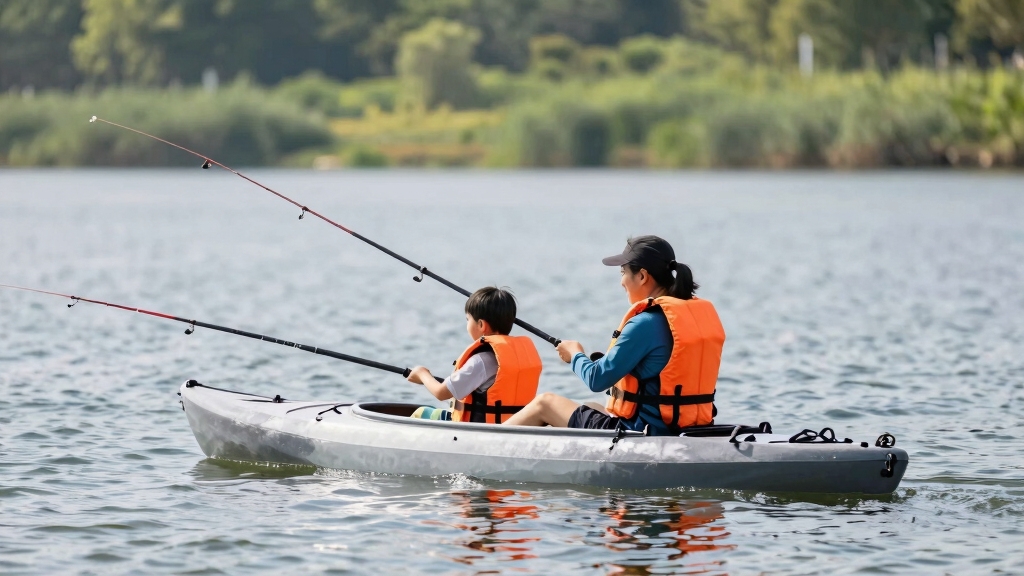
More than 13 million Americans went kayak fishing in 2025, and a growing number are bringing their children along for the adventure. Kayak fishing with kids: setup and safety requires careful planning, age-appropriate equipment, and a solid understanding of water safety protocols to create memorable experiences without compromising anyone’s wellbeing.
Key Takeaways
- Children as young as 4-5 can start kayak fishing in calm, shallow water with proper supervision and safety gear
- Tandem kayaks with wide, stable hulls (minimum 34-inch beam) work best for parent-child fishing trips
- Every child must wear a properly fitted, Coast Guard-approved life jacket at all times on the water
- Keep first trips short (30-60 minutes), focus on fun over catching fish, and bring entertainment backup
- Sit-on-top kayaks are safer than sit-inside models because kids can easily re-enter after a fall
- Budget $800-2,000 for a quality tandem fishing kayak plus $150-300 for child safety equipment
- Teach casting on land first, use short rods (4-5 feet), and practice the buddy system for stability
- Choose protected waters like small ponds, calm lakes, or slow rivers with depths under 5 feet
What Age Can Kids Start Kayak Fishing Safely
Children can begin kayak fishing as early as 4-5 years old if they can sit still for 20-30 minutes, follow basic instructions, and wear a life jacket without complaint. The key factor isn’t a specific age but rather the child’s ability to stay calm, listen to safety directions, and understand that sudden movements can affect kayak stability.
For children ages 4-6, limit trips to 30-45 minutes in protected, shallow water (3-4 feet deep) where you can easily stand if needed. These early outings should focus on getting comfortable in the kayak rather than serious fishing. Children ages 7-10 typically have the attention span and coordination for 1-2 hour trips and can handle simple casting with supervision. By age 11 and up, most kids can participate in half-day fishing adventures and learn more advanced techniques.
Age-appropriate progression:
- Ages 4-6: Ride-along passenger, practice holding a rod, learn to sit still
- Ages 7-10: Short casts with spincast reels, help with paddling, understand basic safety rules
- Ages 11+: Independent casting, navigation assistance, emergency procedure knowledge
Choose calm weather days with minimal wind (under 5 mph) and water temperatures above 60°F for young children. Cold water immersion poses serious risks even with life jackets, so avoid early spring and late fall outings until kids are older and more experienced.
Best Tandem Fishing Kayak for Parent and Child
A quality tandem fishing kayak for family use should measure 12-14 feet long with a beam width of at least 34 inches, providing the stability needed when a child moves around or casts. Tandem fishing kayaks with sit-on-top designs work best because they allow easy re-entry if someone falls in and provide more deck space for gear and movement.
Look for these essential features when selecting a family fishing kayak:
Must-have features:
- Weight capacity: Minimum 500-600 pounds to accommodate two people, gear, and safety equipment
- Multiple seating positions: Adjustable seats that convert from tandem to solo configuration
- Rod holders: At least 2-4 flush-mount holders plus 2 adjustable rod holders
- Stability: Pontoon-style hull or wide, flat bottom design
- Grab handles: Multiple handles at bow, stern, and sides for easy water rescue
- Storage: Sealed hatches or dry wells for safety gear and personal items
- Paddle parks: Built-in clips to secure paddles when fishing
Popular models for families include the Ocean Kayak Malibu Two XL (weight capacity 425-500 lbs, 12-13 feet), Perception Pescador Pilot 12 Tandem (500 lb capacity, pedal-drive option), and Brooklyn Kayak Company TK122 (12 feet, 770 lb capacity, budget-friendly). The Brooklyn Kayak Company models offer excellent value for families just starting out.
Tandem vs. two singles: A single tandem kayak keeps parent and child together, making supervision easier and communication clearer. Two separate kayaks require the child to paddle independently and maintain position, which works only for kids 10+ with prior kayaking experience. For kayak fishing with kids: setup and safety, tandem configurations win for children under 12.
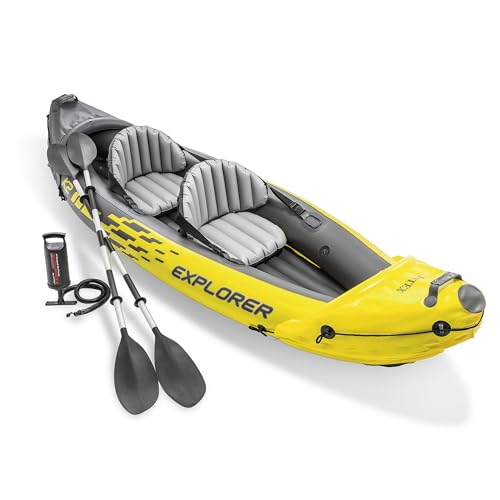
EASY TRANSPORT – Lightweight and compact, this kayak is easy to assemble and, with the Boston valve, it inflates and deflates in minutes; paddles come apart and the pieces can be conveniently stored with the boat in the included carrying bag allowing you to take the fun of kayaking wherever you go

UV-Protected HDPE Construction for Durability: Built with high-density polyethylene (HDPE) plastic, this kayak is both lightweight and highly durable, offering long-lasting protection against UV rays for years of use in various conditions. Paddle included.

SUPER-TOUGH – 3-ply laminate construction combined with SuperStrong enhanced molecular formulation PVC provides superior structural strength and unmatched resistance to damage from abrasion, impact and sunlight, while allowing more pressure for rigidity
Do Kids Need Their Own Life Jacket for Kayak Fishing
Every child must wear a properly fitted, US Coast Guard-approved Type II or Type III personal flotation device (PFD) at all times while on or near the water, regardless of swimming ability. Adult life jackets do not fit children correctly and can slip off or fail to keep a child’s head above water in an emergency.
Children’s PFDs must fit snugly with all straps fastened—you should not be able to pull the jacket up over the child’s chin when lifting from the shoulders. Check the Coast Guard approval stamp inside the jacket and verify the weight range matches your child’s current weight, not the weight you expect them to reach next year. Replace life jackets annually as children grow, since an oversized PFD provides inadequate flotation positioning.
Choosing the right child PFD:
- Type II: Turns unconscious wearers face-up, best for young children (ages 4-7) and non-swimmers
- Type III: More comfortable for active fishing, suitable for kids 8+ who swim confidently
- Bright colors: Choose neon orange, yellow, or lime green for maximum visibility
- Whistle attachment: Add a safety whistle to the PFD shoulder strap
- Reflective strips: Essential for early morning or evening trips
Test the life jacket in shallow water before your first kayak trip. Have your child practice floating on their back and front while wearing the PFD, and ensure they can breathe comfortably in both positions. This test builds confidence and verifies proper fit. For more information on required safety equipment, check our guide on kayak safety gear.
Never use inflatable life jackets or water wings as substitutes for Coast Guard-approved PFDs. These devices can deflate, puncture, or fail when needed most.
How to Keep Kids Entertained While Kayak Fishing
Plan for 50% fishing and 50% other activities because children rarely maintain focus on fishing for extended periods. Bring a waterproof bag with backup entertainment including small waterproof toys, snacks, a water bottle, and a simple nature scavenger hunt checklist (spot a turtle, find a blue feather, see a jumping fish).
Set realistic expectations by explaining that fishing involves waiting and that catching nothing is normal. Make the kayak trip itself the adventure rather than focusing solely on landing fish. Point out wildlife, let kids help paddle short distances, and celebrate small wins like successful casts or spotting fish in the water.
Entertainment strategies that work:
- Rotate activities: Fish for 15 minutes, paddle and explore for 10 minutes, snack break for 5 minutes
- Bring multiple rod setups: Pre-rigged rods let kids switch between bobber fishing and casting without retying
- Use visible targets: Set up floating targets (pool noodles, plastic bottles) for casting practice
- Incorporate learning: Teach fish identification, water safety, or basic navigation
- Buddy system games: Take turns being “captain” who calls out directions
- Photo missions: Give older kids a waterproof camera to document the trip
Keep a “fun box” in your kayak with small prizes (stickers, temporary tattoos, fishing lures) that kids can earn for good behavior, following safety rules, or trying new skills. This positive reinforcement works better than scolding when attention wanders.
If a child becomes genuinely uncomfortable, cold, or upset, end the trip immediately. Forcing kids to stay out creates negative associations that can end their interest in kayak fishing permanently. Better to have ten short, positive trips than one long, miserable experience.
Kayak Fishing With Kids vs Regular Boat Fishing: Which Is Better
Kayak fishing offers several advantages for families with children: lower cost (no boat motor, trailer, or fuel), easier launch and retrieval, quieter approach that lets kids observe wildlife up close, and the ability to access shallow waters where larger boats can’t go. However, boats provide more space, better protection from weather, and easier bathroom access for young children.
Choose kayak fishing when your child is old enough to sit relatively still (age 5+), you’re fishing calm, protected waters, and trip duration is under 3 hours. Kayaks work exceptionally well for teaching fishing basics because the intimate setting keeps parent and child close, communication is easy, and the slower pace matches a child’s attention span. The physical connection to the water—feeling the kayak respond to waves and paddle strokes—also builds water confidence and respect.
Kayak advantages for kids:
- Affordable entry point ($800-2,000 vs. $15,000+ for fishing boats)
- Quiet operation doesn’t scare fish or disrupt nature observation
- Easy storage at home (garage, shed) without marina fees
- Teaches paddling skills and water safety fundamentals
- Access to small ponds, creeks, and shallow bays
Boat advantages for kids:
- More space to move around safely
- Bathroom facilities (portable toilet)
- Better protection from sun, wind, and rain
- Can accommodate multiple children and adults
- Easier to handle emergencies or sudden weather changes
For families with children under age 5 or those planning 4+ hour trips, a stable fishing boat or pontoon boat provides a better experience. Transition to kayak fishing as kids develop the maturity and physical skills needed for the more hands-on experience. Many families use both: boats for all-day family outings and kayaks for focused parent-child fishing adventures.
What Fishing Gear Do I Need for Kids on a Kayak
Children need shorter, lighter fishing rods (4-5 feet long) with simple spincast or push-button reels that eliminate the learning curve of baitcasting or spinning reels. A complete kid’s fishing setup includes a rod-and-reel combo ($25-50), small tackle box with basic lures and hooks ($15-30), and a landing net with a short handle that fits in the kayak ($20-35).
Start with bobber fishing using live bait (worms, minnows) because it provides visual feedback—kids can watch the bobber and know exactly when to set the hook. This immediate, visible action maintains interest better than blind casting with artificial lures. As skills develop, introduce simple lures like inline spinners, small crankbaits, or soft plastic worms on jig heads.
Essential kid’s fishing gear for kayaks:
- Rod: 4-5 foot light or ultralight action, one-piece construction (no joints to break)
- Reel: Spincast (Zebco 33 or similar) pre-spooled with 6-8 lb monofilament line
- Tackle: Size 6-8 hooks, split shot weights, snap swivels, 2-3 bobbers
- Lures: 5-6 basic lures (spinners, small crankbaits, plastic worms)
- Tools: Child-safe fishing pliers, hook remover, small scissors
- Storage: Compact tackle box that fits between legs in kayak seat
Pre-rig 2-3 rods before launching so you can quickly switch setups if a child gets tangled or loses interest. Store extra rigged rods in kayak rod holders within easy reach. This preparation prevents frustration and keeps the trip moving smoothly.
For more guidance on selecting appropriate equipment, see our fishing gear recommendations and beginner kayak fishing tips.

EASY-TO-USE: Splash Kids fishing reel and rod combo is perfect for young anglers featuring a 29-inch fishing pole that floats! This combo features a patented no-tangle design, simple push-button mechanics, and an oversized handle knob making it not only easy to use, but also fun and safe for your kids

MODERATE ACTION: The Zebco Dock Demon spinning combo features a compact 30-inch 1-piece fishing rod that provides medium power and moderate action making it easier to catch light and medium species from panfish to trout, walleye, bass and more

【 Best Value Kids Fishing Gear 】- It's an all-in-one fishing rod and reel combo kit with tackle box including a selection of fishing lures accessories suited to different fishing situations. A travel carry bag is also offered. Perfect boys fishing pole for ages 3-15.
Common Mistakes Parents Make Kayak Fishing With Children
The biggest mistake parents make is planning trips that are too long, too far from shore, or in conditions beyond their child’s comfort level. Overambitious first outings create negative experiences that can permanently damage a child’s interest in kayak fishing. Start with 30-45 minute trips in protected water no more than 50 yards from shore, and gradually extend duration and distance as confidence builds.
Another critical error is inadequate safety preparation. Parents sometimes skip the pre-trip safety briefing, fail to practice capsize recovery, or don’t establish clear hand signals for communication. Children need to know exactly what to do if the kayak tips, how to signal for help, and what “freeze” means when stability is compromised.
Mistakes to avoid:
- Skipping the practice run: Always do a short test paddle without fishing gear to assess your child’s comfort and ability
- Ignoring weather: Wind above 10 mph, approaching storms, or water temps below 60°F are deal-breakers
- Bringing too much gear: Cluttered kayaks are unstable and overwhelming for kids
- Focusing only on catching fish: Pressure to catch fish ruins the experience; make the trip about being together
- Not bringing enough food/water: Hungry, thirsty kids become cranky kids quickly
- Forgetting sun protection: Sunburn ends trips early and creates miserable children
- Inadequate bathroom planning: Young kids need frequent bathroom breaks; plan accordingly
- Using adult-sized equipment: Oversized rods, reels, and PFDs frustrate children and compromise safety
Parents also frequently underestimate how much their own fishing will be interrupted. Accept that you’ll spend 80% of the trip helping your child and only 20% fishing yourself. If you want to fish seriously, leave the kids at home. If you want to introduce your child to kayak fishing, make them the priority.
Finally, never assume your child can swim well enough to skip the life jacket or handle an emergency. Even strong swimmers panic in unexpected situations, and cold water saps strength rapidly. For comprehensive safety protocols, review our kayak fishing safety guidelines.
How Much Does a Kid-Friendly Fishing Kayak Cost
A quality tandem fishing kayak suitable for parent-child trips costs $800-2,000 for new models, with budget-friendly options starting around $500-700 for basic recreational kayaks that can be adapted for fishing. Mid-range family fishing kayaks ($1,000-1,500) offer better stability, more features, and longer lifespan, while premium models ($1,500-2,000+) include pedal drives, advanced rigging, and superior construction.
Beyond the kayak itself, budget for essential safety and fishing equipment. A complete setup for kayak fishing with kids: setup and safety includes these costs:
Initial investment breakdown:
- Tandem fishing kayak: $800-2,000
- Two adult paddles: $80-200 ($40-100 each)
- Child’s paddle (optional): $25-50
- Adult PFD: $50-120
- Child PFD: $35-75
- Kayak cart/wheels: $60-150
- Anchor system: $40-80
- Child’s fishing rod combo: $25-50
- Basic tackle and gear: $50-100
- Dry bag for safety items: $20-40
- Whistle, first aid kit, safety items: $30-60
Total first-year cost: $1,200-2,900
Used kayaks can reduce costs significantly. Check local classifieds, Facebook Marketplace, and kayak fishing forums for gently used tandem models ($400-1,000). Inspect used kayaks carefully for cracks, warping, or UV damage before purchasing. For more guidance on selecting the right kayak, visit our fishing kayak buying guide.
Inflatable fishing kayaks offer another budget-friendly option ($300-800) with easier storage and transport, though they provide less stability and durability than hard-shell kayaks. Reserve inflatable models for older children (10+) who understand the importance of avoiding sharp objects.
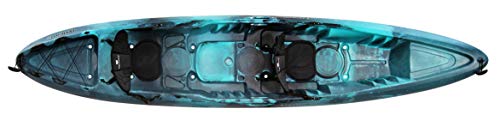
Versatile, stable and fun tandem kayak - Made in USA
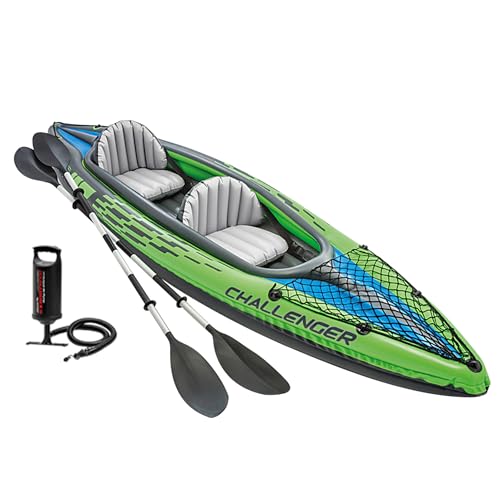
✔ SUPER-STRONG – SuperStrong enhanced molecular formulation PVC provides superior strength and durability, ensuring high impact and abrasion resistance

UPGRADED 800 LB CAPACITY: Reinforced hull supports two adults and a child plus gear, ideal for fishing trips, family lake days, and long adventures with confidence and stability
What to Do If a Kid Falls Out of a Kayak While Fishing
If your child falls into the water, immediately assess whether they’re injured, panicking, or calm. A properly fitted PFD will keep their head above water, so your first priority is reassurance. Call their name calmly, make eye contact, and tell them to float on their back and breathe. Do not panic yourself—your calm demeanor directly affects how your child responds.
For sit-on-top kayaks in shallow water (under 5 feet), the simplest solution is to help your child stand up and walk to the kayak. In deeper water, use this recovery sequence:
Water rescue steps:
- Secure your position: Stop paddling and stabilize your kayak
- Maintain visual contact: Keep talking to your child in a calm voice
- Bring child to kayak side: Have them swim or pull them to the kayak’s side (not the end)
- Re-entry technique: Child grabs the opposite side of the kayak, kicks legs horizontal, then pulls chest onto deck while you counterbalance
- Assist from water: If you must enter the water to help, do so only if you’re wearing your PFD and confident in your swimming ability
- Head to shore: Once child is back in kayak, paddle immediately to the nearest shore to warm up and assess
Practice this re-entry sequence in shallow, warm water (waist-deep) during a dedicated practice session before your first real fishing trip. Children who’ve practiced the recovery process stay calmer during actual incidents.
Prevention strategies:
- Establish a “freeze” command that means stop all movement immediately
- Teach kids to keep their center of gravity low (no standing without permission)
- Use a paddle leash so paddles don’t drift away during recovery
- Stay within 100 feet of shore on early trips
- Avoid fishing in current, wind, or boat traffic until kids are experienced
If your child shows signs of cold water shock (gasping, confusion, inability to control breathing), get them to shore immediately, remove wet clothing, and warm them with dry clothes and blankets. Seek medical attention if symptoms don’t improve within 10-15 minutes. Understanding kayak capsize protocols is essential before taking children on the water.
Is Kayak Fishing Too Dangerous for Toddlers
Kayak fishing is generally not recommended for children under age 4 due to their inability to follow safety instructions consistently, limited attention span, and tendency toward unpredictable movements. Toddlers (ages 1-3) lack the impulse control needed to stay seated and the communication skills to express discomfort or fear before it escalates into panic.
If you choose to bring a toddler on a kayak, limit the experience to very short (15-20 minute) paddles in protected water no deeper than 3 feet, with zero fishing activity. The kayak becomes purely a floating observation platform. Even then, the risks often outweigh the benefits—one sudden lunge toward a duck or dropped toy can capsize the kayak.
Toddler-specific risks:
- Cannot reliably follow “sit still” or “freeze” commands
- May try to remove life jacket if uncomfortable
- Lack understanding of water danger
- Cannot assist in emergency situations
- Prone to sudden movements when excited or scared
- May panic if splashed or if kayak rocks
Wait until children reach age 4-5 and can demonstrate these readiness skills: sitting still for 20+ minutes during other activities, following multi-step instructions, wearing a life jacket without complaint during practice sessions, and expressing their needs verbally. These developmental milestones indicate readiness for introductory kayak experiences.
For families eager to get toddlers on the water, consider a stable pontoon boat, canoe with three adults (two paddling, one managing the toddler), or a large recreational raft instead. These platforms provide more space, stability, and safety margins than kayaks. Save kayak fishing for when children can actively participate and understand safety protocols.
How to Teach Kids to Cast From a Kayak Without Tipping
Teaching children to cast from a kayak requires land-based practice first, followed by careful progression to on-water casting. Start by practicing casting technique on a lawn or in a park, focusing on smooth, controlled motions rather than distance. Use a practice plug (hookless weight) or remove hooks from lures during all practice sessions.
Once your child demonstrates consistent casting control on land, transition to a kayak on dry ground. Have them sit in the kayak on your lawn or driveway and practice casting while seated, learning how their body movement affects the kayak’s stability. This step builds muscle memory for low, controlled casting motions.
Safe kayak casting progression:
- Land practice: Master basic casting mechanics (20-30 practice sessions)
- Dry kayak practice: Practice casting while seated in kayak on land (5-10 sessions)
- Shallow water practice: Wade in waist-deep water while child practices from kayak (3-5 sessions)
- Calm water casting: Progress to actual fishing in protected water with no wind
Casting safety rules for kids:
- Always cast away from the paddler: Establish clear casting zones (front and sides only, never behind)
- Sit low and centered: No leaning or standing while casting
- Use sidearm casts: Overhead casts shift weight too much; teach sidearm or underhand techniques
- Announce before casting: Child says “casting” before each cast so you can prepare to counterbalance
- Short rods only: 4-5 foot rods provide adequate casting distance with better control
- Start with bobbers: Bobber rigs cast more slowly and predictably than lures
When your child casts, you should stop all other activity and focus on maintaining kayak stability. Brace your paddle across your lap, keep your center of gravity low, and be ready to counterbalance if needed. As skills improve, you can gradually return to your own fishing, but always maintain awareness of your child’s casting rhythm.
For children who struggle with casting coordination, consider using a simple drop line or jig setup that requires only vertical jigging motions. This technique eliminates casting entirely while still providing fishing action. Learn more about kayak balance and stability techniques.
Best Calm Water Spots for Kayak Fishing With Kids
Ideal locations for kayak fishing with kids: setup and safety include small ponds (1-10 acres), protected coves on larger lakes, slow-moving rivers with minimal current, and shallow bays with sandy or muddy bottoms. Look for water depths of 3-6 feet, easy shore access, and minimal boat traffic.
Scout potential locations without your child first. Check for hazards like submerged logs, sudden drop-offs, thick vegetation, or strong currents. Verify that shore access is easy—you should be able to launch and land the kayak without climbing steep banks or navigating rocky shorelines. Identify the nearest point where you could quickly reach shore in an emergency.
Characteristics of kid-friendly fishing spots:
- Depth: 3-6 feet (shallow enough to stand if needed, deep enough for fish)
- Bottom: Sand, mud, or fine gravel (not rocky or covered in sharp shells)
- Clarity: Clear enough to see bottom (builds confidence, helps spot hazards)
- Distance: Within 50-100 yards of launch point for first trips
- Protection: Sheltered from wind by trees, hills, or surrounding land
- Traffic: Minimal or no motorboat activity
- Fish population: Abundant panfish (bluegill, sunfish) that bite readily
Public parks with small fishing ponds, nature preserves with canoe/kayak access, and residential community lakes often provide perfect conditions. State parks typically offer well-maintained launch areas and calm, protected waters. Check local fishing reports to identify ponds with good panfish populations—catching fish dramatically improves a child’s experience.
Avoid these locations until kids are older and more experienced:
- Rivers with current stronger than 1 mph
- Lakes with frequent boat traffic or water skiing activity
- Tidal areas where water levels change significantly
- Waters deeper than 10 feet
- Locations more than 1/4 mile from shore access
- Areas with known hazards (dam outflows, rapids, strong wind funnels)
For location-specific guidance, consult our resources on river kayak fishing and beginner-friendly kayaking spots.
Do I Need a Double Kayak or Two Single Kayaks for Kids
For children under age 10, a tandem (double) kayak is strongly recommended because it keeps parent and child together, allows constant supervision, and enables immediate assistance with fishing, paddling, or safety issues. Two single kayaks require the child to paddle independently, maintain position, and manage their own fishing gear—skills that most children don’t develop until age 10-12.
Tandem kayaks also provide better weight distribution and stability when one person (the child) has less paddling skill. The parent can control direction and speed while the child learns, gradually taking on more paddling responsibility as skills improve. Many tandem kayaks offer convertible seating that allows solo use when fishing without kids, making them more versatile than dedicated tandem-only designs.
Choose a tandem kayak if:
- Child is under age 10
- Child has limited or no kayaking experience
- You want to focus on teaching fishing skills
- You’re fishing in open water or areas with boat traffic
- Child’s attention span is short (under 1 hour)
Consider two single kayaks if:
- Child is 10+ years old with solid kayaking skills
- Child can swim confidently and has practiced capsize recovery
- You’re fishing very calm, shallow water (under 4 feet deep)
- Child has demonstrated responsibility and follows safety rules consistently
- You want to cover more water and fish independently
If you choose two single kayaks, select stable, wide models (minimum 30-inch beam) designed for beginners. Sit-on-top kayaks work better than sit-inside models for children because they’re easier to re-enter after a capsize. Keep kayaks within 20 feet of each other at all times, establish clear hand signals for communication, and practice the buddy system where each person is responsible for monitoring the other.
For most families, a quality tandem fishing kayak provides the best experience for kayak fishing with kids: setup and safety, offering supervision, shared experiences, and the flexibility to fish together or solo as needs change.
What Safety Equipment Is Required for Kids Kayak Fishing
Beyond the mandatory Coast Guard-approved PFD, children kayak fishing need a safety whistle attached to their life jacket, a waterproof flashlight or glow stick (for visibility), and weather-appropriate clothing that provides sun protection and warmth. The kayak itself must carry additional safety equipment including a first aid kit, communication device, anchor, and rescue throw bag.
State regulations vary, but most require kayaks to carry a wearable PFD for each person, a sound-producing device (whistle or horn), and navigation lights if operating between sunset and sunrise. Some states mandate additional equipment for children or specific waterways. Check your state’s boating regulations before launching—violations can result in fines and, more importantly, indicate inadequate safety preparation.
Required safety equipment checklist:
Personal (each person):
- Coast Guard-approved PFD (properly fitted and worn)
- Safety whistle (attached to PFD)
- Sun protection (hat, sunglasses, sunscreen SPF 30+)
- Weather-appropriate clothing (no cotton; use synthetic or wool)
Kayak equipment:
- Paddle leash (prevents paddle loss)
- Bilge pump or large sponge (removes water from kayak)
- Anchor with 50+ feet of line (holds position, prevents drift)
- First aid kit (waterproof container with bandages, antiseptic, emergency medications)
- Communication device (cell phone in waterproof case or VHF radio)
- Rescue throw bag (50-foot floating rope for water rescue)
- Emergency blanket (treats hypothermia)
- Knife or multi-tool (cuts tangled line in emergencies)
- Waterproof flashlight (signals for help, provides light)
- Dry bag (stores extra clothes, snacks, emergency items)
Optional but recommended:
- GPS or compass (navigation backup)
- Emergency contact card (laminated card with names, phone numbers, medical info)
- Sunshade or umbrella (attaches to kayak for sun protection)
- Insect repellent (prevents bites that can ruin trips)
- Extra water and high-energy snacks
Store all safety equipment in accessible locations—not buried under fishing gear. Practice using each item before you need it in an emergency. Children should know where the whistle, first aid kit, and communication device are located and how to use them.
Create a float plan before every trip: tell someone where you’re going, when you’ll return, and what to do if you don’t check in by a specific time. This simple step dramatically improves rescue response if something goes wrong. For comprehensive safety equipment guidance, see our fishing kayak safety gear recommendations.
Frequently Asked Questions
Can a 6-year-old paddle their own kayak while fishing?
Most 6-year-olds lack the strength, coordination, and attention span to paddle their own kayak safely while fishing. They can ride as passengers in tandem kayaks and help with short paddling segments, but shouldn’t operate solo kayaks until age 10+ with extensive practice and demonstrated water safety skills.
What’s the best time of day for kayak fishing with young children?
Early morning (7-10 AM) or late afternoon (4-7 PM) work best because temperatures are cooler, fish are more active, and harsh midday sun is avoided. Morning trips are often better because children are well-rested and more patient. Avoid midday heat (11 AM-3 PM) when sun exposure and dehydration risks peak.
Should I bring a fishing net when kayak fishing with kids?
Yes, a landing net with a short handle (24-30 inches) helps kids successfully land fish without losing them at the kayak side. Choose a net with a rubber or silicone mesh that’s gentler on fish and less likely to tangle hooks. Store it within easy reach using a net holder or bungee cord.
How do I keep my child from getting sunburned during kayak fishing?
Apply SPF 30+ waterproof sunscreen 20 minutes before launching, reapply every 90 minutes, and use physical sun protection including a wide-brimmed hat, UV-protective shirt, and sunglasses with UV protection. Consider a kayak-mounted umbrella or sunshade for extended trips. Sun reflection off water intensifies exposure, so protection is critical.
What should I do if my child gets scared or wants to go back to shore?
Return to shore immediately without argument or pressure to continue. Forcing a scared child to stay on the water creates negative associations that can permanently damage their interest in kayaking. Praise them for communicating their feelings, and try again another day with a shorter, less ambitious trip.
Can we kayak fish in light rain with kids?
Light rain is acceptable if water and air temperatures are warm (70°F+), you have rain gear, and no lightning is present. However, rain reduces visibility, makes equipment slippery, and often signals changing weather. Most families find that postponing trips until conditions improve creates better experiences than fishing in rain.
How far from shore should we stay when kayak fishing with children?
Stay within 50-100 yards of shore for children under age 8, and within 200 yards for older children with experience. You should always be able to reach shore within 5 minutes of steady paddling. As skills and confidence improve, gradually extend distance, but never venture so far that shore access requires more than 10 minutes of paddling.
What’s the minimum water temperature safe for kayak fishing with kids?
Water temperatures should be at least 60°F for kayak fishing with children. Below 60°F, cold water immersion poses serious hypothermia risks even with life jackets. Water temps of 70°F+ are ideal for young children. Always check water temperature before launching and dress children in layers that provide warmth if they get wet.
Should kids wear water shoes or go barefoot in the kayak?
Kids should wear water shoes or sandals with heel straps (not flip-flops) to protect feet from hooks, sharp objects, and hot kayak surfaces. Closed-toe water shoes provide the best protection. Going barefoot increases injury risk and makes shore landings on rocky or rough surfaces difficult.
How do I teach my child to respect fish and practice catch-and-release?
Model gentle fish handling, explain that fish feel stress and pain, and demonstrate proper release techniques (wet hands, minimal handling, quick photos, gentle release in water). Let children participate in the release process and celebrate the fish swimming away. Avoid keeping fish unless you plan to eat them, and explain conservation concepts in age-appropriate terms.
What if my child catches a fish with sharp spines or teeth?
Handle the fish yourself using pliers or a fish gripper tool. Teach children to never put fingers in a fish’s mouth or grab fish with sharp spines (catfish, perch, bass). Keep a towel handy to safely grip fish, and demonstrate proper handling techniques before letting children touch any catch.
Can we use a pedal kayak instead of a paddle kayak with kids?
Pedal kayaks work well for older children (10+) who can reach the pedals and have the leg strength to operate them. For younger children, pedal kayaks are less suitable because kids can’t assist with propulsion and the mechanisms add weight and complexity. Stick with traditional paddle kayaks until children are tall enough and strong enough to pedal effectively.
Conclusion
Kayak fishing with kids: setup and safety creates lasting memories and builds lifelong outdoor skills when approached with proper preparation, realistic expectations, and a focus on safety over catching fish. Start with short trips in protected water, invest in quality safety equipment including properly fitted PFDs, and choose stable tandem kayaks that keep parent and child together during the learning process.
Success comes from matching trip difficulty to your child’s age and ability, practicing safety procedures before emergencies occur, and prioritizing fun over fishing productivity. The goal isn’t to catch limits of fish but to build confidence, teach water safety, and create positive associations with outdoor recreation.
Take these next steps to plan your first family kayak fishing adventure:
- Assess your child’s readiness using the age and skill guidelines in this article
- Research and purchase or rent a stable tandem fishing kayak with appropriate safety features
- Acquire properly fitted PFDs and essential safety equipment for both parent and child
- Practice kayaking basics in shallow water without fishing gear
- Scout calm, protected fishing locations within your local area
- Plan a short first trip (30-45 minutes) focused on fun and comfort
- Gradually extend trip duration and complexity as skills and confidence grow
Remember that every child develops at their own pace. What works for one 7-year-old may not work for another. Pay attention to your child’s signals, celebrate small victories, and never let fishing pressure override safety or enjoyment. The fish will always be there, but childhood opportunities to build these connections are fleeting.
For more guidance on getting started with kayak fishing, explore our resources on kayak fishing basics and fishing techniques for beginners.