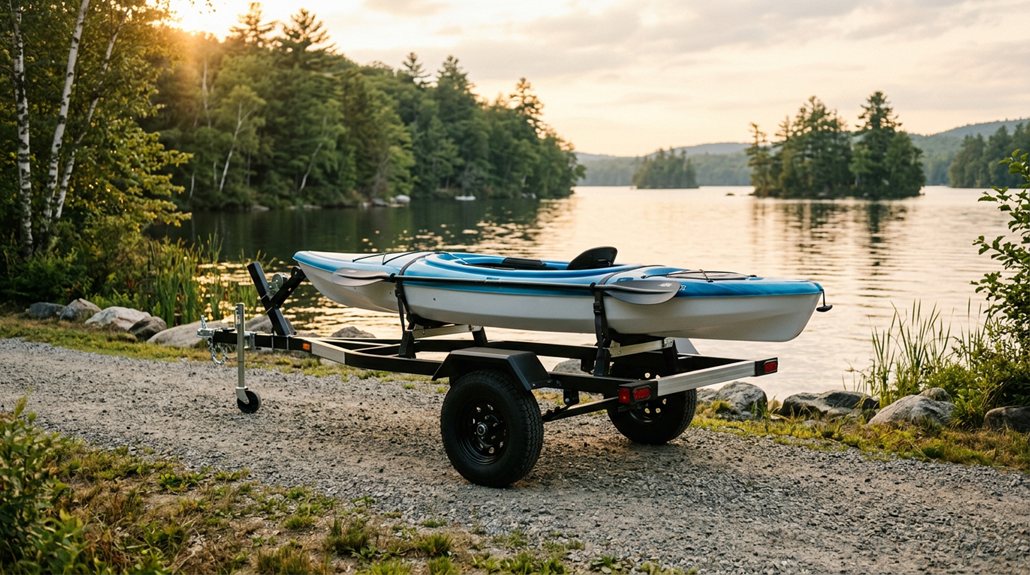
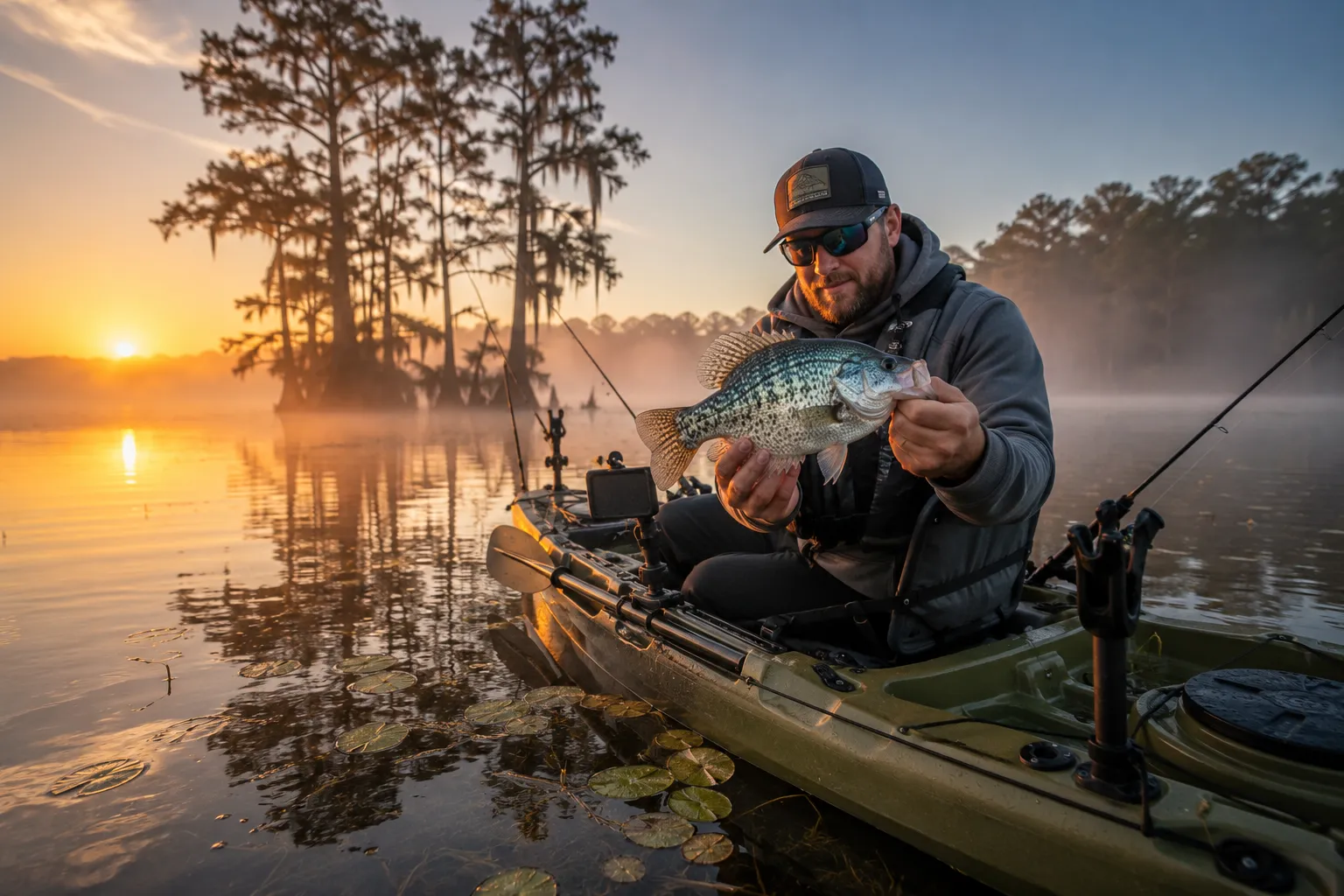
Crappie fishing from a kayak combines stealth, mobility, and access to shallow structure that larger boats can’t reach. A kayak lets you drift silently over brush piles, slip into tight coves, and position yourself precisely over suspended fish without spooking them. Success comes down to choosing stable gear, reading structure, and mastering techniques that work in the confined space of a kayak cockpit.
Key Takeaways
- Kayak stability matters more than speed, choose a fishing kayak at least 32 inches wide with a flat deck for casting and landing fish safely
- Crappie hold tight to structure, focus on submerged brush, standing timber, dock pilings, and creek channels in 8-15 feet of water
- Ultralight tackle is essential, use 6-7 foot light-action rods with 4-6 pound test line for better feel and control in tight spaces
- Spring and fall offer peak action, target shallow water (3-8 feet) during spawning season and transition periods when crappie move to banks
- An anchor trolley system is non-negotiable, it lets you position your kayak bow-first into wind or current without spinning sideways
- Fish finders dramatically improve success, even basic sonar helps locate suspended crappie and identify productive depth zones
- Master the vertical presentation, drop jigs straight down beside structure rather than casting when fishing from a stationary kayak
- Budget $600-$2,500 for a capable setup, entry-level fishing kayaks start around $600, while pedal-drive models run $2,000-$3,500
What Is Crappie Fishing From a Kayak
Crappie fishing from a kayak means targeting black crappie and white crappie from a small, human-powered watercraft that offers stealth and access advantages over traditional boats. Kayaks let anglers reach shallow coves, navigate through standing timber, and approach structure without the noise and wake of motorized boats that often spook these skittish panfish.
The technique differs from boat fishing primarily in positioning and presentation. In a kayak, you’re sitting lower to the water with limited casting room, so vertical jigging and short-range casting become your primary methods. The kayak’s narrow profile and quiet approach let you drift over brush piles and suspended fish without alarming them.
Key advantages include:
- Silent approach to shallow structure and spawning areas
- Access to water too shallow or tight for bass boats
- Lower cost than maintaining a motorized fishing boat
- Ability to launch from almost any shoreline access point
- Better feel for light bites when you’re closer to the water
Kayak crappie fishing works best in lakes, reservoirs, ponds, and slow-moving rivers where crappie congregate around structure. It’s less effective in large open water or during windy conditions when boat control becomes difficult.
Best Kayak for Crappie Fishing
The best kayak for crappie fishing is a stable sit-on-top model between 10-12 feet long with a width of at least 32 inches, multiple rod holders, and enough deck space to manage tackle and land fish safely. Stability trumps speed because you’ll spend most of your time stationary or drifting slowly while working structure.
Top features to prioritize:
- Width of 32-36 inches, provides stability for standing (optional) and prevents tipping when leaning to land fish
- Sit-on-top design, easier to manage gear, land fish, and recover from if you capsize compared to sit-inside models
- Multiple rod holders, at least 2-3 flush-mount or adjustable holders for managing multiple rods while jigging
- Flat, open deck, room to organize tackle boxes, store a landing net, and handle fish without clutter
- Anchor trolley system, essential for positioning bow or stern into wind/current
- Paddle or pedal drive, pedal systems (Hobie MirageDrive, Old Town PDL) free your hands for fishing but cost significantly more
Choose a paddle kayak if you’re budget-conscious (under $800), fish smaller waters, or don’t mind putting the paddle down to fish. Choose a pedal-drive kayak if you fish larger lakes, need hands-free positioning, or can budget $2,000+.
Common mistake: Buying a narrow touring kayak (under 28 inches wide) because it’s faster. These tip easily when you lean to land fish or reach for gear, making them frustrating for fishing.

Versatile stable and fun tandem kayak - Made in USA

UV-Protected HDPE Construction for Durability: Built with high-density polyethylene (HDPE) plastic, this kayak is both lightweight and highly durable, offering long-lasting protection against UV rays for years of use in various conditions. Paddle included.

Unleash your adventure with the Perception Tribe 9.5 sit-on kayak, designed for ultimate fun and versatility. With a robust weight capacity of 300 lbs, it's the ideal choice for paddlers of all sizes.
How to Find Crappie From a Kayak
Finding crappie from a kayak requires identifying structure and depth zones where these fish congregate, typically in 8-15 feet of water near submerged cover. Crappie are structure-oriented fish that suspend near brush piles, standing timber, dock pilings, and creek channel edges rather than roaming open water.
Prime crappie locations to target:
- Brush piles and submerged trees, crappie hold tight to branches in 10-15 feet of water, especially in reservoirs
- Dock pilings and boat docks, shade and vertical structure attract baitfish and crappie year-round
- Creek channels and drop-offs, edges where shallow flats transition to deeper water (8-12 foot depth changes)
- Standing timber, flooded trees in reservoir arms provide vertical cover crappie use to ambush prey
- Lily pad edges, transition zones where vegetation meets open water in 6-10 feet
- Bridge pilings, current breaks and shade make these consistent producers
Seasonal patterns matter: In spring (March-May), crappie move shallow (3-8 feet) near spawning banks with hard bottom. Summer pushes them deeper (12-20 feet) to thermocline zones. Fall brings them back to shallow structure (6-12 feet) as water cools. Winter concentrates them in deep creek channels (15-25 feet).
Use your kayak’s stealth advantage by drifting silently over structure with your fish finder running, marking productive spots with a handheld GPS, then returning to anchor and fish them thoroughly. Crappie school tightly, so finding one usually means finding dozens.

HIGH QUALITY - The kayak fishing rod holder Made of High Quality Material PC+ABC, strong and durable, corrosion resistant, hard to damage.
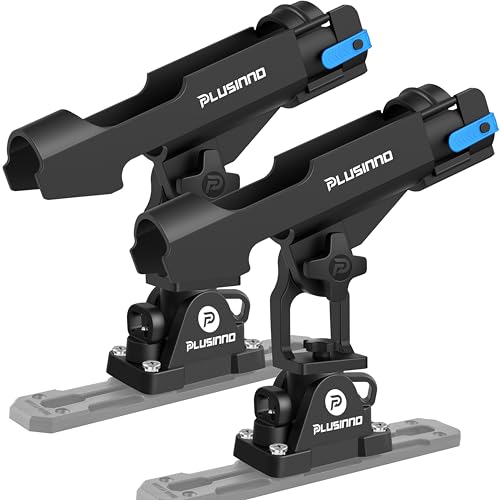
Innovative Stable Fishing Rod Holders: The rod holders for fishing boat features silicone gaskets that designed for optimal stability, maximize contact area and enhance friction, ensuring a secure and stable grip without leaving any scratches on your boat, which allows anglers to focus entirely on the thrill of the catch. A must-have boat pole holders fishing accessories for kayak fishing enthusiasts, this kayak rod holder enhances both convenience and performance on the water.

【A MUST HAVE FOR KAYAK】This paddle holder is multifunctional, it can not only great for securing the paddle while fishing or taking a break on the kayak, but also great to hold a fish net or anchor pole that as big as your paddle. This paddle clip get's the paddle securely out of the way while keeping the gear track clear for my other accessories.
What Gear Do You Need for Kayak Crappie Fishing
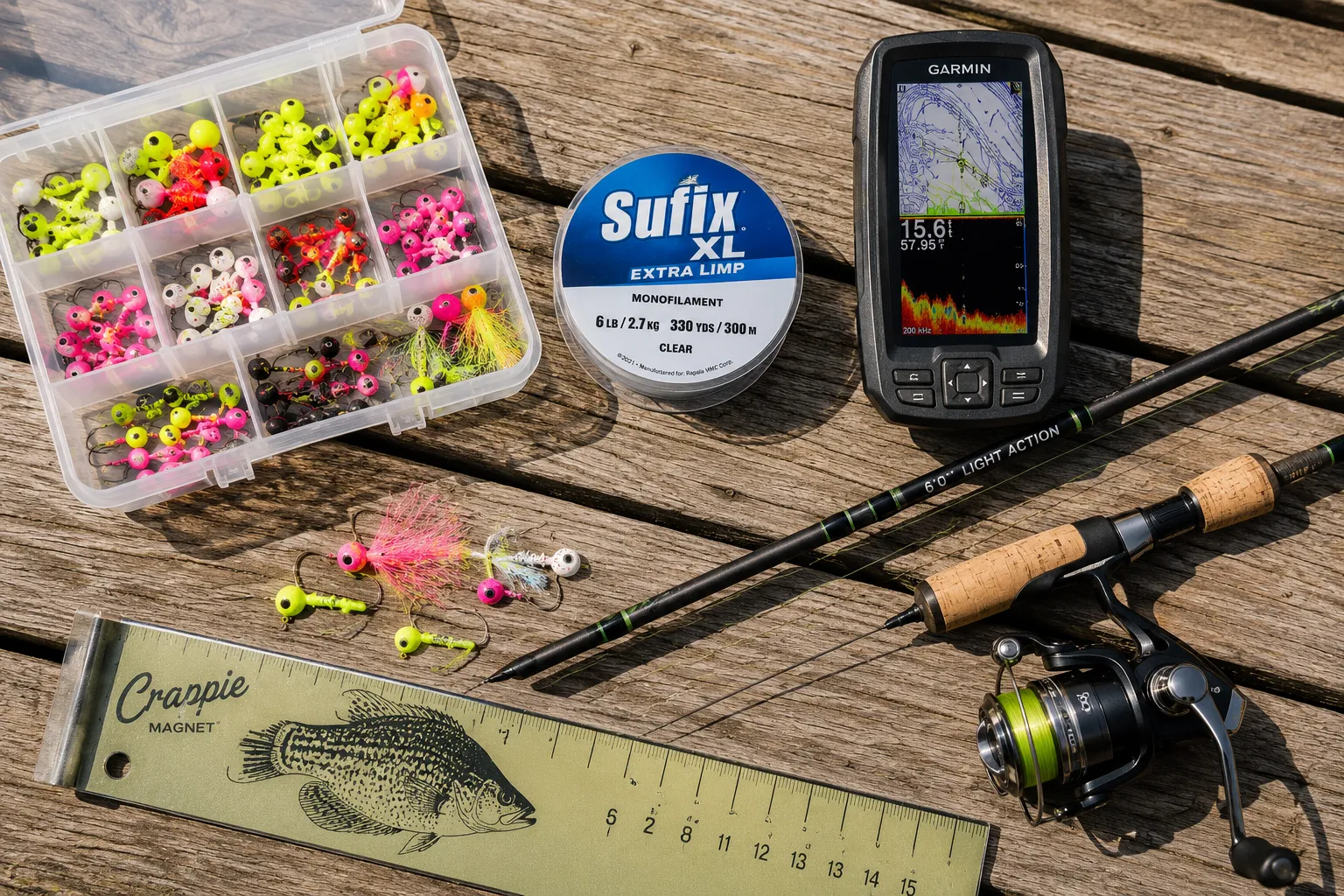
Essential kayak crappie fishing gear includes an ultralight rod and reel combo, small jigs and live minnows, a compact tackle box, landing net, fish finder, anchor system, and basic safety equipment. The key is keeping your setup minimal and organized since kayak space is limited.
Core fishing gear:
- Rod: 6-7 foot light or ultralight action spinning rod, short enough to manage in a kayak, sensitive enough to feel light bites
- Reel: 1000-2000 size spinning reel with smooth drag
- Line: 4-6 pound monofilament or 6-8 pound fluorocarbon, light line for better jig action and less visibility
- Jigs: 1/16 to 1/8 ounce jig heads in chartreuse, pink, white, and black
- Soft plastics: 2-inch grubs, tubes, and minnow imitations
- Live bait: Small minnows (1-2 inches) if regulations allow
- Bobbers: Slip bobbers for suspending baits at specific depths
- Landing net: Rubberized net with 15-18 inch hoop, easier to manage in tight kayak space
Kayak-specific equipment:
- Anchor and rope: 3-5 pound folding anchor with 50 feet of rope
- Anchor trolley: Pulley system to adjust anchor point along kayak rail
- Rod holders: Flush-mount or rail-mounted holders (2-3 minimum)
- Tackle storage: Waterproof tackle box or bag that fits in tank well
- Fish finder: Portable unit with suction-cup transducer mount (optional but highly recommended)
- Paddle leash: Prevents losing your paddle when fishing
- Measuring board: Adhesive ruler on deck for checking legal size
Safety gear (non-negotiable):
- PFD (life jacket): Must be worn at all times in most states
- Whistle: Attached to PFD for signaling
- Bilge pump or sponge: For removing water from cockpit
- Dry bag: For phone, keys, wallet
- First aid kit: Compact waterproof kit
Common mistake: Overloading your kayak with too much gear. Stick to one rod, one small tackle box, and essentials. You can always return to shore to swap tackle if needed.

Fashion Appearance: The most popular color fishing rods this year,well-made of 24T carbon fiber and stainless steel hooded reel seat, possessing resistance to seawater corrosion. Stainless steel line guide ring constructed with ceramic ring enhances better heat dissipation.EVA handle is soft and comfortable to hold.

🎣 Warm Prompt: Full Kit with Carrier Case Include 1 Fishing Rod + 1 Fishing Reel + Fishing Line + Various Fishing Lures + Fishing Hooks + Some Necessary Accessories + Carrier Bag.

PRO-GRADE 9+1 BB SPINNING REEL COMBO: This high-performance spinning reel combo features 9+1 Maxi-Dur shielded ball bearings. The 5.2:1 gear ratio and CNC machined aluminum alloy spool ensure buttery-smooth casting and retrieval, eliminating line twist for a frustration-free experience.
Kayak Crappie Fishing vs Boat Crappie Fishing
Kayak crappie fishing offers superior stealth and access to shallow structure, while boat fishing provides more range, speed, and comfort for covering large areas and fishing in rough conditions. The choice depends on where you fish, your budget, and whether you prioritize mobility or stability.
Kayak advantages:
- Stealth: Silent approach doesn’t spook fish in shallow water or tight cover
- Access: Can launch anywhere and reach water too shallow for boats (under 2 feet)
- Cost: $600-$2,500 total investment vs. $15,000+ for a basic fishing boat
- Maintenance: Minimal upkeep, no motor or trailer registration in most states
- Exercise: Paddling provides a workout while fishing
Boat advantages:
- Range: Cover miles of water quickly to locate fish
- Comfort: More space, seating options, and protection from elements
- Capacity: Fish with multiple people and carry more gear
- Stability: Larger platform for standing, casting, and landing fish
- Weather: Handle wind, waves, and rough conditions better
Choose a kayak if you fish small to medium lakes (under 500 acres), have limited storage space, fish solo or with one partner, and prioritize budget and access over speed. Choose a boat if you fish large reservoirs, need to cover water quickly, fish with multiple people, or frequently face windy conditions.
Hybrid option: Many serious crappie anglers own both, using kayaks for small ponds and tight structure, and boats for large reservoir fishing.
How Much Does a Crappie Fishing Kayak Cost
A capable crappie fishing kayak costs between $600 and $1,200 for entry-level paddle models, $1,200-$2,000 for mid-range fishing-specific kayaks, and $2,000-$3,500 for premium pedal-drive models. Total setup costs including paddle, PFD, anchor system, and basic gear typically run $800-$1,500 for beginners.
Price breakdown by category:
| Category | Price Range | What You Get |
|---|---|---|
| Budget Entry | $400-$700 | Basic 10-foot recreational kayak, limited fishing features, paddle included |
| Entry Fishing | $700-$1,200 | Purpose-built fishing kayak, rod holders, stable platform, decent weight capacity |
| Mid-Range | $1,200-$2,000 | Better stability, more storage, quality rod holders, anchor trolley, comfortable seat |
| Premium Paddle | $2,000-$2,800 | Top stability, standing capability, extensive rigging, premium materials |
| Pedal-Drive | $2,500-$3,500 | Hands-free propulsion, fishing-optimized, high stability, advanced features |
Additional costs to budget:
- Paddle: $50-$150 (quality matters for all-day comfort)
- PFD: $40-$120 (fishing-specific models with pockets)
- Anchor system: $30-$80 (anchor, rope, trolley kit)
- Rod and reel: $60-$200 (ultralight combo)
- Tackle: $40-$100 (jigs, plastics, terminal tackle)
- Fish finder: $150-$400 (optional but valuable)
- Transportation: $100-$400 (roof rack or kayak cart)
Best value approach: Start with a $700-$1,000 fishing kayak from established brands (Perception, Vibe, Old Town), add essential safety gear and a basic anchor system, and fish with gear you already own. Upgrade to pedal-drive or premium features once you’ve confirmed you’ll use it regularly.
Common mistake: Buying the cheapest kayak available (under $400) and discovering it’s too unstable, uncomfortable, or poorly equipped for fishing. The $700-$1,000 range offers significantly better fishing performance and longevity.
Why Am I Not Catching Crappie From My Kayak
The most common reasons for not catching crappie from a kayak are fishing the wrong depth, poor location selection away from structure, using tackle that’s too heavy, and failing to stay quiet and stationary over productive areas. Crappie are structure-oriented and depth-specific, so even small positioning errors result in zero bites.
Top reasons and fixes:
1. Wrong depth zone
- Problem: Fishing too shallow or too deep for current season and conditions
- Fix: Use a fish finder or count down your jig to find the depth where crappie suspend (typically 8-15 feet in summer, 3-8 feet in spring)
2. No structure nearby
- Problem: Fishing open water instead of near cover where crappie hold
- Fix: Target brush piles, docks, standing timber, and creek channels, crappie rarely roam far from structure
3. Tackle too heavy
- Problem: Using bass-sized jigs (1/4 ounce+) that fall too fast and look unnatural
- Fix: Downsize to 1/16 or 1/8 ounce jigs with 4-6 pound line for slower, more natural presentation
4. Moving too much
- Problem: Constantly paddling and repositioning instead of staying put over structure
- Fix: Anchor properly and work an area thoroughly for 15-20 minutes before moving
5. Wrong time of day
- Problem: Fishing midday when crappie are less active
- Fix: Focus on dawn and dusk when crappie feed most aggressively, especially in clear water
6. Spooking fish
- Problem: Bumping kayak hull, dropping gear, or creating excessive movement
- Fix: Move slowly, set gear down gently, and avoid sudden movements when over structure
7. Ignoring seasonal patterns
- Problem: Fishing deep in spring when crappie are shallow for spawning
- Fix: Adjust depth and location based on water temperature and season (shallow in spring/fall, deeper in summer/winter)
Quick diagnostic: If you’re not getting bites within 20 minutes at a spot, change one variable, depth, location, or presentation speed. Crappie school tightly, so if you’re positioned correctly, you should catch multiple fish from the same spot.
Best Time of Year for Kayak Crappie Fishing
The best time of year for kayak crappie fishing is spring (March through May) when crappie move into shallow water (3-8 feet) near spawning areas, making them accessible and aggressive. Fall (September through November) offers a second peak as cooling water temperatures push crappie back to shallow structure and increases feeding activity.
Seasonal breakdown:
Spring (March-May), PEAK SEASON
- Water temp: 55-65°F triggers spawning movement
- Depth: 3-8 feet near banks with hard bottom (gravel, sand)
- Location: Shallow coves, brush near shore, dock pilings, lily pad edges
- Presentation: Slow retrieve with small jigs under slip bobbers
- Kayak advantage: Maximum, stealth approach to shallow spawning areas where boats can’t go
Summer (June-August), MODERATE
- Water temp: 70-80°F pushes fish deeper
- Depth: 12-20 feet near thermocline and deep structure
- Location: Deep brush piles, creek channels, suspended over deep water
- Presentation: Vertical jigging, slow trolling with jigs
- Kayak advantage: Reduced, harder to stay positioned over deep structure in wind
Fall (September-November), EXCELLENT
- Water temp: 60-70°F brings fish back shallow
- Depth: 6-12 feet around transitional structure
- Location: Creek channel edges, shallow brush, docks
- Presentation: Active jigging, casting to visible structure
- Kayak advantage: High, comfortable conditions and accessible fish
Winter (December-February), CHALLENGING
- Water temp: Below 55°F slows metabolism
- Depth: 15-25 feet in deep holes and channels
- Location: Deep creek bends, main lake points, deep brush
- Presentation: Extremely slow vertical jigging with live minnows
- Kayak advantage: Low, cold conditions, deep water, slow bite
Best daily timing: Dawn and dusk produce the most consistent action year-round, with overcast days often outperforming sunny conditions. During spring spawning, midday can be productive as water warms.
Common mistake: Only fishing spring and ignoring fall, which often produces larger crappie with less fishing pressure than the heavily targeted spring spawn.
Do I Need a Fish Finder for Kayak Crappie Fishing
You don’t absolutely need a fish finder for kayak crappie fishing, but one dramatically improves your success rate by showing fish location, depth, and structure that’s invisible from the surface. A basic fish finder helps you identify productive depth zones, locate submerged brush piles, and confirm crappie are present before you spend time fishing an area.
What a fish finder provides:
- Fish location: Shows suspended crappie as arches or marks on the screen
- Depth reading: Confirms you’re fishing the right depth zone
- Structure mapping: Reveals brush piles, drop-offs, and bottom composition
- Thermocline identification: Shows temperature layers where fish suspend in summer
- Time savings: Eliminates unproductive water quickly
When you can skip a fish finder:
- Fishing small ponds where you can visually identify all structure
- Targeting visible cover (docks, lily pads, standing timber you can see)
- Fishing shallow water (under 8 feet) where you can probe with jigs
- Budget is extremely tight and you’re just starting out
When a fish finder is worth it:
- Fishing reservoirs or large lakes with submerged structure
- Targeting suspended crappie in open water
- Fishing depths over 12 feet where you can’t see bottom
- Serious about consistently finding and catching crappie
Budget options for kayaks: Portable fish finders with suction-cup transducer mounts start around $150-$200 (Garmin Striker 4, Humminbird PiranhaMAX). These run on rechargeable batteries and mount/dismount easily without permanent installation.
Common mistake: Buying a fish finder but not learning to interpret the screen. Spend time learning to identify fish marks, structure, and depth changes, the unit is only valuable if you understand what it’s showing you.
How to Anchor a Kayak for Crappie Fishing
Anchoring a kayak for crappie fishing requires a 3-5 pound folding anchor, 50 feet of rope, and an anchor trolley system that lets you adjust the anchor point from bow to stern. Proper anchoring keeps you positioned over structure without spinning sideways in wind or current, which is essential for vertical jigging and precise presentations.
Anchor trolley system explained:
An anchor trolley is a rope or cord loop that runs along one side of your kayak from bow to stern, passing through pulleys at each end. The anchor rope clips to a ring on this trolley loop, letting you slide the anchor attachment point forward or backward. This allows you to position your kayak bow-first or stern-first into wind or current, preventing the sideways drift that makes fishing impossible.
Step-by-step anchoring process:
- Position over structure: Drift or paddle to your target spot (brush pile, drop-off edge)
- Determine wind/current direction: Note which direction will push your kayak
- Adjust trolley: Slide the anchor ring to bow (for bow-first anchoring) or stern (for stern-first)
- Deploy anchor: Lower anchor slowly to avoid spooking fish and creating noise
- Set anchor: Let out enough rope (3:1 ratio, 30 feet of rope for 10 feet of depth)
- Fine-tune position: Use the trolley to adjust angle until you’re positioned correctly
- Secure rope: Cleat off or tie to the trolley ring
Bow vs. stern anchoring:
- Bow anchoring: Best in wind, kayak weathervanes into wind, more stable
- Stern anchoring: Best in current, keeps you facing downstream, easier to fish
Anchor weight guidelines:
- 3-4 pounds: Calm conditions, depths under 15 feet, light wind
- 5-7 pounds: Moderate wind, current, or depths over 15 feet
- Folding grapnel style: Best for brush and structure, grabs well, releases easier
Critical safety rule: NEVER anchor from the side of your kayak. Side anchoring causes the kayak to tip dangerously when wind or current pushes against the broadside. Always anchor from bow or stern using a trolley system.
Quick-release system: Use a carabiner or quick-release clip between your anchor rope and trolley ring so you can disconnect instantly if conditions change or you need to move quickly.
Common Mistakes When Crappie Fishing From a Kayak
The most common mistakes when crappie fishing from a kayak include using tackle that’s too heavy, failing to anchor properly, moving too frequently between spots, and fishing open water instead of targeting structure. These errors reduce your catch rate and make the experience frustrating instead of productive.
Top mistakes and how to avoid them:
1. Tackle too heavy for crappie
- Mistake: Using 1/4 ounce jigs and 10-pound line meant for bass
- Why it fails: Falls too fast, looks unnatural, reduces bite detection
- Fix: Use 1/16-1/8 ounce jigs with 4-6 pound line
2. No anchor or poor anchoring
- Mistake: Trying to fish while drifting or holding position with paddle
- Why it fails: Can’t maintain position over structure, constant movement spooks fish
- Fix: Install anchor trolley system and anchor over every productive spot
3. Spot-hopping too quickly
- Mistake: Fishing a spot for 5 minutes then moving when you don’t get instant bites
- Why it fails: Crappie often take 10-15 minutes to start biting after you anchor
- Fix: Work each spot thoroughly for 20 minutes, varying depth and presentation
4. Fishing open water
- Mistake: Casting randomly in open areas away from visible structure
- Why it fails: Crappie are structure-oriented and rarely roam open water
- Fix: Target docks, brush, timber, drop-offs, always fish near cover
5. Wrong depth
- Mistake: Fishing the same depth all day regardless of conditions
- Why it fails: Crappie suspend at specific depths that change with season and time
- Fix: Experiment with depth until you find fish, then stay in that zone
6. Too much noise and movement
- Mistake: Banging gear, dropping tackle boxes, excessive paddle splashing
- Why it fails: Crappie spook easily, especially in shallow water
- Fix: Move deliberately, set gear down gently, minimize hull impacts
7. Ignoring wind direction
- Mistake: Anchoring without considering wind, ending up sideways and unstable
- Why it fails: Can’t cast effectively, kayak rocks excessively, uncomfortable and unsafe
- Fix: Always anchor bow or stern into wind using trolley system
8. Fishing without a landing net
- Mistake: Trying to lip-land crappie or lift them by the line
- Why it fails: Crappie have soft mouths that tear easily, you’ll lose fish
- Fix: Always use a rubberized landing net for every crappie
9. Overloading the kayak
- Mistake: Bringing multiple rods, large tackle boxes, unnecessary gear
- Why it fails: Cluttered deck, reduced stability, gear in the way when landing fish
- Fix: One rod, one small tackle box, essentials only
10. Fishing the wrong season pattern
- Mistake: Fishing deep in spring or shallow in summer
- Why it fails: Crappie location changes dramatically with water temperature
- Fix: Learn seasonal patterns and adjust depth and location accordingly
Is Kayak Crappie Fishing Good for Beginners
Kayak crappie fishing is excellent for beginners because crappie are abundant, bite readily on simple presentations, and don’t require expensive specialized gear or advanced techniques. The combination of an easy-to-learn fish species and the straightforward nature of kayak fishing makes this one of the most accessible ways to start fishing.
Why it’s beginner-friendly:
- Crappie are forgiving: They bite small jigs readily and don’t require perfect presentations
- Simple tackle: Basic ultralight rod, small jigs, and minimal gear gets you started
- Kayaks are intuitive: Most people can paddle and control a stable fishing kayak within an hour
- Visible structure: Many productive spots (docks, lily pads) are easy to identify
- Consistent action: Crappie school tightly, so finding one usually means catching several
- Delicious reward: Crappie are among the best-tasting freshwater fish
Beginner learning curve:
- Week 1: Learn basic kayak control, paddling, and launching
- Week 2-3: Practice anchoring and positioning over structure
- Month 1-2: Develop feel for detecting bites and setting hooks
- Month 3+: Learn seasonal patterns and advanced location strategies
Start with these conditions:
- Small to medium lakes (under 200 acres) with calm water
- Visible structure like docks and lily pads you can target easily
- Spring or fall when crappie are shallow and aggressive
- Calm days with minimal wind (under 10 mph)
Skills to develop first:
- Basic kayak control and paddling
- Anchoring with a trolley system
- Detecting light bites and setting hooks gently
- Landing fish with a net without tipping
Common beginner mistake: Getting discouraged by slow days and giving up before learning seasonal patterns. Crappie fishing has a learning curve, but persistence pays off quickly once you understand where and when to fish.
Realistic expectations: Beginners can expect to catch 5-15 crappie on a good day once they learn basic location and presentation. Experienced kayak crappie anglers regularly catch 20-50 fish per trip during peak seasons.
How to Land Crappie in a Kayak Without Tipping
Landing crappie in a kayak without tipping requires keeping your weight centered, using a landing net instead of lifting fish by the line, and leaning forward over the deck rather than reaching far to the side. The key is minimizing lateral movement that shifts your center of gravity outside the kayak’s stable zone.
Safe landing technique:
- Keep rod tip high: Maintain pressure while bringing fish toward kayak
- Position fish in front: Guide fish to the bow or directly beside your seat, not behind you
- Lean forward, not sideways: Bend at the waist toward the centerline, keeping hips stable
- Net head-first: Scoop the net under the fish in one smooth motion
- Bring net aboard: Lift net straight up and over the deck, keeping weight centered
- Secure fish quickly: Remove hook over the deck or in the net, not over open water
Landing net essentials:
- Rubberized mesh: Protects fish slime and prevents hooks from tangling
- 15-18 inch hoop: Large enough for crappie but not unwieldy in a kayak
- Short handle: 12-18 inch handle is easier to manage in confined space
- Tether or clip: Attach net to kayak so it doesn’t float away if dropped
Stability tips:
- Widen your base: Spread knees against the kayak sides for more stability
- Use thigh braces: Engage thigh pads or braces to lock your lower body in place
- Keep movements slow: Quick jerky movements cause tipping, move deliberately
- Practice the lean: On calm days, practice leaning forward and to each side to learn your kayak’s tipping point
What NOT to do:
- Don’t reach far over the side with your upper body
- Don’t stand up to land fish unless you have a very stable platform and experience
- Don’t try to lift large crappie by the line alone (line breaks or mouth tears)
- Don’t lean backward, this is the most unstable position
For larger crappie (over 14 inches): Take extra time to tire the fish before netting. A strong fish thrashing near the kayak can cause you to make sudden movements that compromise stability.
If you do start to tip: Drop everything and brace with your paddle on the water surface. A paddle slap on the water provides surprising stability and can prevent a full capsize.
What Depth Should I Fish for Crappie in a Kayak
The ideal depth for crappie fishing from a kayak ranges from 8-15 feet during most of the year, with shallower depths of 3-8 feet during spring spawning and fall transitions, and deeper zones of 15-25 feet in summer heat and winter cold. Crappie are depth-specific based on water temperature, season, and available structure.
Seasonal depth guide:
Spring (spawning season):
- Early spring: 6-10 feet as fish stage near spawning areas
- Peak spawn: 3-6 feet on shallow banks with hard bottom
- Post-spawn: 8-12 feet as fish recover near deeper structure
Summer:
- Early summer: 10-15 feet around brush and timber
- Peak summer: 15-20 feet near thermocline and deep structure
- Suspended fish: Often 12-18 feet over deeper water (25+ feet bottom)
Fall:
- Early fall: 12-15 feet as water begins cooling
- Mid-fall: 8-12 feet around transitional structure
- Late fall: 6-10 feet as fish move shallow to feed
Winter:
- Mild winter: 12-18 feet in deep creek channels
- Cold winter: 20-25 feet in deepest holes and main lake points
How to find the right depth:
- Start with seasonal baseline: Use the ranges above as starting points
- Use a fish finder: Look for suspended fish marks and note the depth
- Count down your jig: Drop jig and count seconds until it hits bottom (1 second ≈ 1 foot with 1/8 oz jig)
- Experiment in 2-foot increments: If fishing 10 feet isn’t working, try 8 feet, then 12 feet
- Watch for pattern: Once you catch a fish, note the exact depth and replicate it
Depth and structure relationship:
- Shallow structure (under 8 feet): Target visible cover like docks, lily pads, shallow brush
- Mid-depth (8-15 feet): Focus on submerged brush piles, creek channel edges, drop-offs
- Deep structure (15+ feet): Fish deep brush, main lake points, creek bends, standing timber
Kayak depth advantage: Kayaks excel in 3-12 feet of water where you can anchor easily, maintain position, and work structure thoroughly. Depths over 20 feet become challenging because of anchor rope length and difficulty staying positioned in wind.
Common mistake: Fishing the same depth all day. Crappie often move up or down 3-5 feet as light conditions change, so adjust depth if the bite slows.
Conclusion
Kayak crappie fishing combines the accessibility and stealth of kayak angling with one of the most rewarding freshwater species. Success comes down to choosing a stable fishing kayak, targeting structure in the right depth zones, using light tackle, and mastering the anchoring and positioning techniques that keep you over productive water.
The spring and fall seasons offer peak action when crappie move shallow and become aggressive, but with the right approach and a fish finder, you can catch them year-round by adjusting depth and location to match seasonal patterns. Start with visible structure like docks and brush piles, invest in a proper anchor trolley system, and keep your tackle simple with ultralight rods and small jigs.
Your next steps:
- Choose your kayak: Start with a stable 10-12 foot sit-on-top fishing kayak in the $700-$1,200 range
- Install an anchor trolley: This single upgrade will transform your fishing effectiveness
- Assemble basic gear: Ultralight rod, 1/16-1/8 oz jigs, 4-6 lb line, landing net, and safety equipment
- Scout local waters: Identify lakes or reservoirs with known crappie populations and accessible structure
- Start in spring: Target shallow docks and brush in 3-8 feet during March-May for the easiest learning curve
- Fish each spot thoroughly: Anchor and work an area for 20 minutes before moving, experimenting with depth
- Consider a fish finder: Once you’re committed, a basic unit ($150-$200) will accelerate your learning
The beauty of kayak crappie fishing is that you can start simply and affordably, then gradually add skills and equipment as you gain experience. Every trip teaches you more about seasonal patterns, productive structure, and the subtle techniques that turn slow days into limits of delicious panfish.
FAQ
Can you catch crappie from a kayak?
Yes, kayaks are excellent platforms for crappie fishing and often outperform larger boats because of their stealth and ability to access shallow structure. The quiet approach and precise positioning make kayaks ideal for targeting crappie around docks, brush piles, and shallow cover.
What size kayak is best for crappie fishing?
A 10-12 foot kayak with a width of at least 32 inches provides the best balance of stability, maneuverability, and storage for crappie fishing. Shorter kayaks (under 10 feet) lack storage and stability, while longer kayaks (over 13 feet) become harder to control in tight spaces around structure.
Do I need a pedal kayak for crappie fishing?
No, a paddle kayak works perfectly well for crappie fishing since you’ll spend most of your time anchored over structure rather than moving. Pedal kayaks offer convenience for repositioning and hands-free fishing but cost $1,500-$2,000 more than comparable paddle models.
What pound test line for kayak crappie fishing?
Use 4-6 pound monofilament or 6-8 pound fluorocarbon for kayak crappie fishing. Light line provides better jig action, less visibility, and improved bite detection, which are critical for catching these light-biting fish.
How do you keep crappie fresh on a kayak?
Use a stringer attached to your kayak to keep crappie in the water alive, or place them in a small insulated cooler with ice if you have deck space. Many anglers use a mesh fish bag attached to the kayak that keeps fish in the water and alive until the end of the trip.
Can you stand up in a kayak to fish for crappie?
You can stand in kayaks wider than 34 inches with flat, stable decks, but it’s not necessary for crappie fishing. Most crappie techniques work perfectly well from a seated position, and standing increases your risk of capsizing, especially when landing fish.
What time of day is best for kayak crappie fishing?
Dawn and dusk produce the most consistent crappie action from a kayak, with the first two hours after sunrise being particularly productive. Overcast days often provide good all-day fishing, while bright sunny days typically slow down by mid-morning.
How far should you cast when crappie fishing from a kayak?
Most kayak crappie fishing involves short casts of 10-30 feet or vertical jigging straight down beside the kayak. Long casts aren’t necessary since you can position your kayak directly over or beside structure where crappie hold.
Do crappie bite in the middle of the day?
Crappie can bite midday, especially during spring spawning season or on overcast days, but action typically slows compared to dawn and dusk. Focus on deeper structure and shaded areas like docks during midday hours for the best results.
What is the best bait for crappie from a kayak?
Small jigs (1/16-1/8 oz) in chartreuse, pink, white, or black with soft plastic grubs or tubes are the most effective and convenient baits for kayak crappie fishing. Live minnows also work excellently but require more care and storage in a kayak.
How many crappie can you keep?
Crappie limits vary by state but typically range from 10-30 fish per day with minimum size limits of 8-10 inches. Always check your state’s current fishing regulations before keeping any fish, as limits change based on lake and season.
Is a fish finder necessary for kayak crappie fishing?
A fish finder isn’t absolutely necessary but dramatically improves your success by showing fish location, depth, and submerged structure. Beginners can start without one by targeting visible structure, but serious anglers benefit greatly from even basic sonar units.