Quick Answer
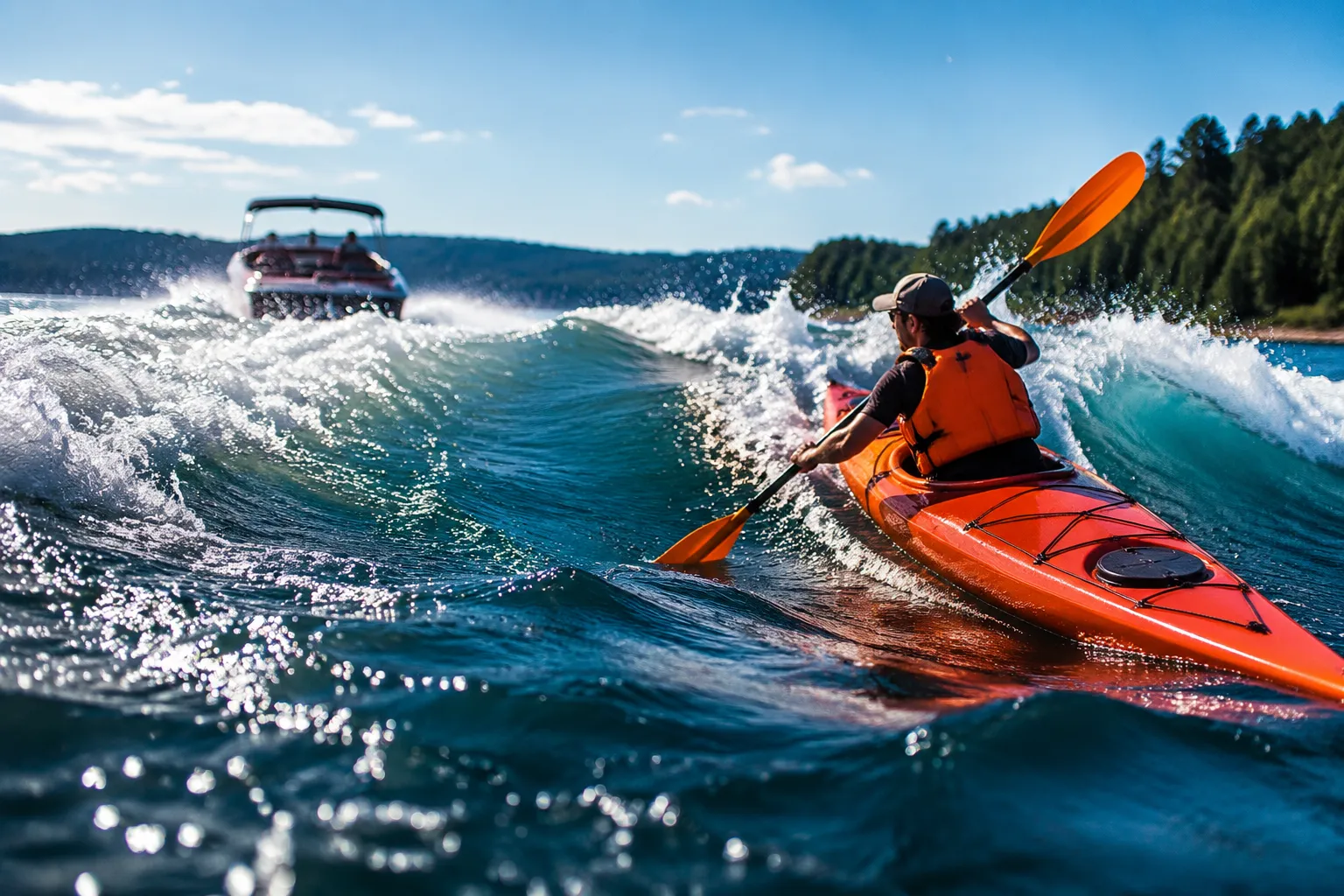
To handle boat wakes in a kayak, turn your bow perpendicular to the approaching waves at a 45-90 degree angle, lean slightly forward, and paddle through each wave crest with steady strokes. Keep your weight centered and low, use a low brace if needed for stability, and never position your kayak parallel to large wakes. Maintaining forward momentum and proper angle are the two most critical factors for safely navigating boat wakes without capsizing.
Key Takeaways
- Always angle your kayak 45-90 degrees to incoming wakes, never take them broadside or parallel to your hull
- Maintain forward momentum through wakes rather than sitting still, which makes you more stable
- Stay at least 100-150 feet from large boats to give yourself time to prepare and reduce wake intensity
- Use a low brace technique when waves hit to prevent capsizing, paddle blade flat on the water surface
- Sit-on-top kayaks are generally more forgiving for wake handling than sit-inside models due to better secondary stability
- Small wakes (under 1 foot) can be taken at any angle with basic paddling, but waves over 2 feet require proper technique
- Inflatable kayaks with multiple chambers are safe in boat traffic if properly inflated and designed for open water
- Boaters are legally required in most states to operate at no-wake speed within 100-200 feet of non-motorized vessels
- Practice the wet exit and re-entry before paddling in heavy boat traffic areas
- Lean into waves, not away, counterintuitive but essential for maintaining balance
What Is a Boat Wake and Why Is It Dangerous for Kayakers
A boat wake is the V-shaped pattern of waves created behind a moving motorboat as it displaces water, and it’s dangerous for kayakers because these waves can approach from unexpected angles, destabilize your kayak, and potentially cause a capsizing if handled incorrectly. Unlike natural wind waves that come from a consistent direction, boat wakes can hit from multiple angles as they reflect off shorelines and other boats.
The danger level depends on several factors:
- Wave height and steepness, Wakes from large cruisers and wake boats can exceed 3 feet with steep faces
- Your kayak’s beam (width), Narrower kayaks are more tippy when hit by wakes
- Wave frequency, Multiple waves in quick succession don’t give you time to recover between hits
- Your position relative to the wake, Being parallel (broadside) to a wake is the most unstable position
Boat wakes are particularly hazardous because they often arrive when you’re focused on fishing, navigating, or dealing with other water conditions. The sudden impact can catch even experienced paddlers off guard, especially when wakes from multiple boats converge or bounce off seawalls and docks.
Common mistake: Many kayakers underestimate the power of wakes from boats that appear far away. A large cruiser 200 yards away can still send a 2-foot wake that arrives with surprising force several minutes later.
Best Technique for Paddling Through Boat Wakes in a Kayak
The best technique for paddling through boat wakes is to turn your kayak bow-first into the waves at a 45-90 degree angle, maintain steady forward momentum with continuous paddle strokes, and keep your weight centered and slightly forward as you crest each wave. This approach lets your kayak ride up and over the waves rather than being pushed sideways.
Here’s the step-by-step process:
- Spot the wake early, Look around frequently when paddling in boat traffic areas
- Assess the wake size, Determine if it’s a small ripple or a serious wave train
- Turn to face it, Rotate your kayak so the bow points toward the approaching wake at 45-90 degrees
- Start paddling, Build forward momentum before the wake arrives
- Paddle through each crest, Use short, powerful strokes to maintain speed and control
- Keep your core engaged, Use your torso to absorb the up-and-down motion
- Stay loose in the hips, Let your lower body move with the kayak while your upper body stays stable
The momentum principle: A kayak in motion is significantly more stable than a stationary one. Forward momentum gives you directional stability and makes it harder for waves to push you sideways. Think of it like riding a bicycle, easier to balance when moving.
For wake trains (multiple waves in succession), maintain your angle and speed through the entire set. Don’t stop paddling after the first wave or you’ll be vulnerable when the second and third waves hit.
Choose this technique if: You’re dealing with wakes over 1 foot high, you have time to prepare, and you’re in a kayak with decent tracking ability.
UNIVERSAL MOUNTING – Installs with just two included screws for a simple, secure fit on most kayak decks, no track required.
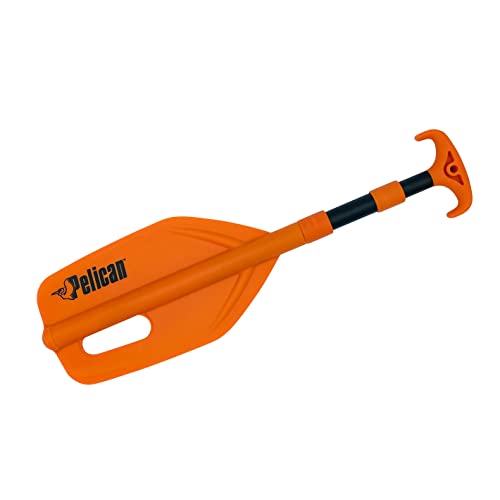
Ergonomic Handle: Ergonomic handle with integrated hooks and integrated in the blade For maximum reach. There is also a hole in the handle that allows you to secure the paddle inside your watercraft.

EXCELLENT PROTECTION: These kayaking gloves have synthetic leather on the palm and thumb to protect your hands from rope burns or blisters while sailing, kayaking or fishing without sacrificing tactility. These 3/4 finger gloves are unisex and add extra grip and durability without compromising your dexterity. Say goodbye to injuries and enjoy yourself
Should I Turn Parallel or Perpendicular to Boat Wakes
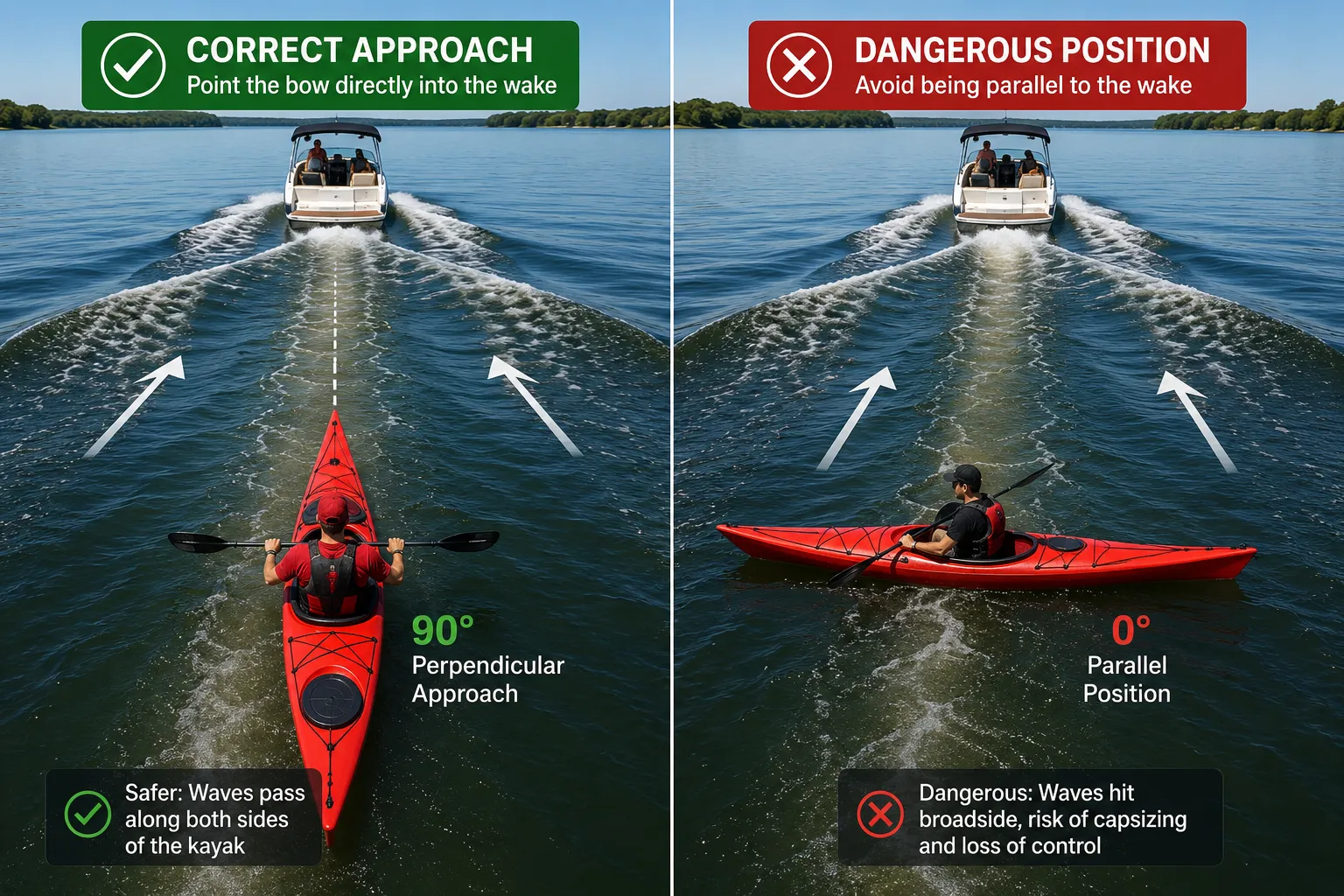
You should turn perpendicular (or nearly perpendicular at 45-90 degrees) to boat wakes, never parallel. Taking a wake parallel to your kayak, meaning the waves run along the length of your hull, is the most unstable position and the primary cause of wake-related capsizes. Perpendicular positioning lets you ride over the waves rather than being rolled by them.
Why perpendicular works:
- Your kayak’s length provides natural stability in the fore-aft direction
- The bow cuts through the wave rather than being lifted sideways
- You can use forward momentum to power through the crest
- Your center of gravity stays over the kayak’s centerline
Why parallel is dangerous:
- Waves hit your kayak’s narrow beam (width) where stability is weakest
- The rolling motion can exceed your secondary stability limits
- You have no way to paddle through the wave, you’re just along for the ride
- Multiple waves can create a cumulative rolling effect
The 45-degree compromise: If you can’t get fully perpendicular in time, a 45-degree angle is acceptable for most wakes. This gives you some of the benefits of perpendicular positioning while requiring less maneuvering time.
Exception: For very small wakes under 6 inches, your kayak’s primary stability can usually handle any angle, so precise positioning isn’t critical. Save your energy for the bigger stuff.
How to Handle Large Boat Wakes vs Small Boat Wakes in a Kayak
Large boat wakes (over 2 feet) require active technique, turning perpendicular, paddling through with momentum, and using bracing strokes, while small boat wakes (under 1 foot) can typically be handled passively by simply keeping your weight centered and letting your kayak ride over them. The key difference is that large wakes can overcome your kayak’s natural stability, so you must actively counteract them.
Small wake handling (under 1 foot):
- Minimal repositioning needed
- Keep paddling your normal course
- Stay relaxed and let the kayak move beneath you
- Optional: pause your paddle stroke as the wave passes to avoid blade catching
Medium wake handling (1-2 feet):
- Turn to face the wake at 45-90 degrees
- Add a few power strokes for momentum
- Keep weight centered and slightly forward
- Be ready with a low brace if needed
Large wake handling (over 2 feet):
- Mandatory perpendicular positioning
- Build significant forward speed before impact
- Lean slightly forward as you climb the wave face
- Use continuous paddle strokes through the entire wave train
- Employ low brace between waves if you feel unstable
- Expect 3-5 waves in the set from large boats
Wake boats and cruisers create the largest and steepest wakes. These specialty boats are designed to make big waves for water sports, and their wakes can be genuinely dangerous for kayakers. If you see a wake boat nearby, prepare for a serious wave train and consider paddling toward shore or into protected water.
Decision rule: If you can see white water or breaking crests on the approaching wake, treat it as a large wake requiring full technique. If it’s just a smooth rolling swell, basic positioning is usually sufficient.
What Mistakes Do Beginners Make When Dealing With Boat Wakes
The most common mistake beginners make is taking wakes parallel to their kayak instead of turning to face them, followed closely by stopping all forward momentum and sitting still when they see a wake approaching. Both errors dramatically increase capsize risk because they put the kayak in its least stable configuration exactly when stability matters most.
Top beginner mistakes:
- Freezing up, Stopping paddling and gripping the paddle tightly instead of staying active
- Wrong angle, Taking wakes broadside or at shallow angles under 30 degrees
- Leaning away from waves, Natural instinct but wrong, this raises your center of gravity on the high side
- Looking down, Watching the water right next to your kayak instead of scanning for approaching wakes
- Overreacting, Making sudden, jerky movements that destabilize the kayak more than the wake itself
- Ignoring small wakes, Not practicing technique on small wakes, then being unprepared for large ones
- Poor positioning, Paddling too close to boat channels and high-traffic areas
- No backup plan, Not knowing how to brace or recover if things go wrong
The tension trap: When beginners see a big wake coming, they often tense up their entire body and death-grip the paddle. This rigid posture actually makes you less stable because you can’t move with the kayak. Stay loose, especially in your hips and lower body.
Practice opportunity: Don’t avoid boat wakes entirely when learning. Small to medium wakes in controlled conditions are excellent training opportunities. Deliberately paddle near boat channels on calm days and practice your technique on progressively larger wakes.
Can a Boat Wake Flip My Kayak Over
Yes, a boat wake can flip your kayak over, especially if you take a large wake parallel to your hull, have a narrow kayak with limited stability, or make sudden movements that shift your weight to one side when the wake hits. However, capsizing from wakes is largely preventable with proper technique, most wake-related flips happen due to poor positioning or panic reactions rather than the wake’s raw power.
Factors that increase flip risk:
- Kayak beam under 28 inches (narrower = less stable)
- Flat-bottomed hulls with poor secondary stability
- Taking wakes at parallel or shallow angles
- No forward momentum when wake arrives
- High center of gravity (standing or leaning)
- Sudden weight shifts or overcorrections
- Multiple wakes hitting simultaneously from different angles
Factors that decrease flip risk:
- Wider kayaks (30+ inches) with good secondary stability
- Proper perpendicular positioning
- Active paddling through the wake
- Low, centered body position
- Relaxed lower body that moves with the kayak
- Experience reading and timing wakes
Real-world perspective: Most recreational and fishing kayaks in the 30-34 inch beam range are quite stable in typical boat wakes when handled correctly. Capsizes are uncommon for paddlers who use proper technique. However, specialized narrow kayaks (racing or touring models under 26 inches wide) require more skill and are genuinely at higher risk.
The secondary stability factor: When a wake rolls your kayak to one side, secondary stability is what keeps you upright past the initial tipping point. Kayaks with good secondary stability feel like they “catch” at an angle and resist further tipping. This characteristic is more important for wake handling than initial (flat-water) stability.
What to Do If My Kayak Capsizes From a Boat Wake
If your kayak capsizes from a boat wake, stay calm and immediately grab your kayak and paddle, position yourself at the side of the kayak near the cockpit or seat, and execute a re-entry using either the paddle-float method (sit-inside) or the scramble method (sit-on-top). In cold water, getting back on quickly is critical to prevent hypothermia.
Immediate actions (first 10 seconds):
- Don’t panic, You’re wearing your PFD, so you’ll float
- Grab your kayak, Keep it close; don’t let it drift away
- Secure your paddle, Hold it or attach it to your kayak if you have a paddle leash
- Assess the situation, Are more boats coming? How far is shore?
Re-entry for sit-on-top kayaks (easier):
- Position yourself at the side, near the middle of the kayak
- Reach across to the far side and grab the opposite edge
- Kick your legs to the surface behind you
- Pull yourself up while kicking hard, sliding your belly onto the deck
- Rotate into the seated position
- Retrieve your paddle and resume paddling
Re-entry for sit-inside kayaks (requires practice):
- Right the kayak if it’s upside down
- Inflate your paddle float and attach it to one paddle blade
- Position the paddle across the kayak behind the cockpit as an outrigger
- Approach from the paddle-float side
- Kick up and slide your chest onto the back deck
- Rotate your legs into the cockpit while keeping weight on the paddle float
- Pump out water with your bilge pump
If you can’t re-enter: Stay with your kayak (it’s a flotation device), signal for help, and conserve energy. In warm water, you can wait for assistance. In cold water (below 60°F), this is a serious emergency, get out of the water onto the overturned hull if possible.
Prevention is better than cure: Practice wet exits and re-entries in shallow, calm water before you need the skill in a real situation. Most kayakers who struggle with re-entry have never practiced it.
How Far Away From Boats Should I Stay to Avoid Dangerous Wakes
Stay at least 100-150 feet away from large motorboats and cruisers to give yourself adequate time to prepare for their wakes and to reduce wake intensity, though the specific distance depends on boat size, speed, and water conditions. For wake boats and large cruisers traveling at planing speed, increase this distance to 200+ feet when possible.
Distance guidelines by boat type:
- Small fishing boats and pontoons (under 20 feet): 50-75 feet minimum
- Mid-size cruisers and bowriders (20-30 feet): 100-150 feet minimum
- Large cruisers and yachts (30+ feet): 150-200 feet minimum
- Wake boats and surf boats: 200-300 feet minimum (they create intentionally large wakes)
- Commercial vessels and ferries: 300+ feet minimum
Why distance matters:
- Wakes lose energy and height as they travel across water
- More distance gives you more time to spot, assess, and position for the wake
- Wave spacing increases with distance, making them easier to handle
- You’re more visible to boat operators at greater distances
The time factor: A wake traveling at roughly 10-15 mph takes about 5-7 seconds to cover 100 feet. That’s your reaction and positioning window. If you’re only 50 feet away, you have 2-3 seconds, barely enough time to turn your kayak.
Channel positioning: When paddling near boat channels, stay well outside the marked channel boundaries. Boats travel fastest in channels, creating the largest wakes. Position yourself in shallow water near shore when possible, wakes lose energy quickly in water less than 4 feet deep.
Common mistake: Kayakers often judge distance poorly on water. What looks like “far enough” is often only 50-75 feet. Use landmarks or count paddle strokes to calibrate your distance estimation.
Do I Need a Specific Type of Kayak for Areas With Heavy Boat Traffic
You don’t absolutely need a specific kayak type for heavy boat traffic, but wider kayaks (30+ inches beam) with good secondary stability, higher volume, and sit-on-top designs make wake handling significantly easier and safer than narrow, low-volume, or tippy models. If you regularly paddle in areas with substantial boat traffic, choosing a kayak with these characteristics is a smart safety decision.
Best kayak characteristics for boat traffic:
- Beam of 30-34 inches, Provides good initial and secondary stability
- Sit-on-top design, Easier to remount after a capsize, no cockpit to fill with water
- Moderate to high volume, More buoyancy to ride over waves
- Rounded or multi-chine hull, Better secondary stability than flat bottoms
- Length of 10-14 feet, Maneuverable enough to reposition quickly, long enough for directional stability
Kayaks to avoid in heavy traffic:
- Racing kayaks and narrow touring models (under 26 inches wide)
- Ultra-lightweight kayaks that get pushed around easily
- Kayaks with very flat bottoms and poor secondary stability
- Extremely short kayaks (under 9 feet) that lack directional control
Sit-on-top vs sit-inside for boat wakes: Sit-on-top kayaks have a significant advantage in boat traffic because they’re self-draining and easier to remount if you capsize. A sit-inside kayak that takes on water from a capsize becomes much harder to manage and may require a tow to shore.
Decision rule: If more than 25% of your paddling happens in areas with regular boat traffic (marinas, popular lakes, intracoastal waterways), prioritize stability and ease of re-entry over speed and tracking when choosing your kayak.

Unleash your adventure with the Perception Tribe 9.5 sit-on kayak, designed for ultimate fun and versatility. With a robust weight capacity of 300 lbs, it's the ideal choice for paddlers of all sizes.

UV-Protected HDPE Construction for Durability: Built with high-density polyethylene (HDPE) plastic, this kayak is both lightweight and highly durable, offering long-lasting protection against UV rays for years of use in various conditions. Paddle included.

PADDLE INCLUDED - MODULAR TWO-PIECE DESIGN: The Lifetime Lockport 94 kayak separates into two halves that nest and stack together, allowing for compact storage and easy transport without sacrificing full-size kayak performance.
How to Brace Yourself When a Wake Hits Your Kayak
To brace yourself when a wake hits your kayak, execute a low brace by placing your paddle blade flat on the water surface on the side the kayak is tipping toward, keeping your elbows high and knuckles down, then pushing down on the blade while snapping your hips to right the kayak. This technique provides instant stability and can prevent a capsize when a wake catches you off guard.
Low brace technique (step-by-step):
- Feel the kayak start to tip, Don’t wait until you’re far over
- Extend the paddle, Reach the blade out to the side you’re tipping toward
- Flatten the blade, Keep it parallel to the water surface, not vertical
- Keep elbows high, Your knuckles should point down toward the water
- Push down firmly, Use the blade as a temporary outrigger
- Hip snap, Simultaneously snap your hips to bring the kayak back under you
- Return to neutral, Bring the paddle back to paddling position
Key principles:
- The blade is a platform, not a paddle, You’re pushing down on the water surface, not pulling or pushing through it
- Hip snap is critical, Your hips right the kayak; the paddle just gives you a stable point to push against
- React early, Bracing works best when you’re only slightly off-balance, not when you’re already far over
- Keep your head last, Your head should be the last thing to come back over the kayak, not the first
High brace vs low brace: The low brace (knuckles down) is safer for beginners because it’s less likely to cause shoulder injury. The high brace (knuckles up) provides more power but requires better technique and flexibility.
Practice drill: In shallow, warm water, deliberately rock your kayak side to side and practice low braces on both sides. Build up to larger rocks until you can recover from significant angles. This muscle memory becomes automatic in real wake situations.
When to brace: Use a brace when a wake hits you at a bad angle, when you’re caught off-guard, or when you feel the kayak tipping past your comfort zone. It’s your emergency stability tool.
Are Inflatable Kayaks Safe in Areas With Boat Wakes
Inflatable kayaks with multiple air chambers, proper inflation pressure, and designs rated for open water are safe in areas with boat wakes, though they require the same wake-handling techniques as hard-shell kayaks. The key safety factor is having independent chambers so a puncture in one chamber doesn’t sink the entire kayak, plus maintaining proper inflation (typically 2-3 PSI) for rigidity.
What makes an inflatable safe for boat traffic:
- Multiple independent chambers (minimum 3), Usually floor, left side, right side
- Drop-stitch construction, Creates a rigid, high-pressure floor
- Proper inflation, Fully inflated to manufacturer specs (feels drum-tight)
- Thicker material, 1000+ denier fabric with PVC or nitrile coating
- Open-water rating, Manufacturer specifies suitability for lakes, bays, or coastal use
Inflatable advantages in wakes:
- Generally wider and more stable than comparable hard-shell kayaks
- Softer sides can absorb some wave impact
- Less likely to be damaged if bumped against docks or other boats
- Easier to transport to less crowded launch sites
Inflatable disadvantages in wakes:
- Less directional stability makes repositioning slower
- Wind can push them around more easily
- Lower speed means less momentum for powering through wakes
- Some flex in the hull can feel less predictable
Not all inflatables are equal: Pool-toy style inflatables with single chambers and low pressure are dangerous in any boat traffic. Only use kayaks specifically designed and rated for the water conditions you’ll encounter.
Decision rule: If your inflatable has multiple chambers, feels rigid when properly inflated, and is rated for open water by the manufacturer, it’s safe for boat traffic with proper technique. If it’s soft, flexible, or has only one chamber, keep it away from boat wakes.

✎【Reinforced PVC Bladder + Drop-Stitch Floor for Stability】 Our inflatable kayak uses a puncture-resistant PVC bladder wrapped in a 600D waterproof polyester cover with a high-elastic PVC backing and a 4-inch drop-stitch floor, offering superior rigidity, impact resistance, and enhanced stability on the water.
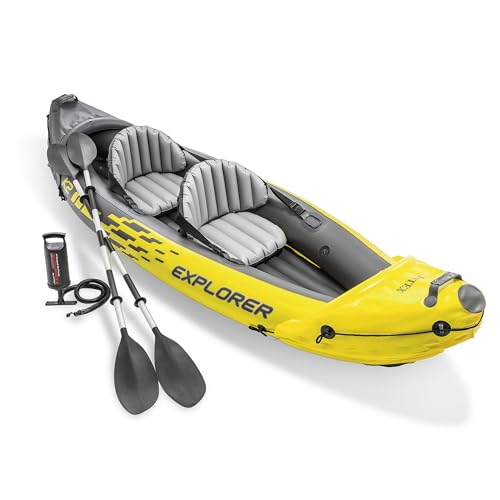
EASY TRANSPORT – Lightweight and compact, this kayak is easy to assemble and, with the Boston valve, it inflates and deflates in minutes; paddles come apart and the pieces can be conveniently stored with the boat in the included carrying bag allowing you to take the fun of kayaking wherever you go

SUPER-TOUGH – 3-ply laminate construction combined with SuperStrong enhanced molecular formulation PVC provides superior structural strength and unmatched resistance to damage from abrasion, impact and sunlight, while allowing more pressure for rigidity
What Are Boaters Required to Do to Avoid Swamping Kayakers With Wakes
Boaters are legally required in most states to operate at no-wake speed (typically defined as the slowest speed possible while maintaining steerage, usually under 5 mph) within 100-200 feet of non-motorized vessels including kayaks, and to maintain a safe distance that doesn’t create hazardous conditions. However, enforcement varies widely, and kayakers should never rely solely on boaters following these rules.
Common legal requirements (varies by state):
- No-wake zones near kayaks, typically 100-200 feet depending on jurisdiction
- Duty to avoid collision and operate at safe speeds for conditions
- Responsibility for wake damage in some states
- Required distance when passing (often 100+ feet)
- Slow speed in narrow channels where kayaks have limited maneuvering room
The reality gap: While these laws exist, many recreational boaters don’t know them, don’t see kayakers until it’s too late, or don’t understand how dangerous their wakes can be to small craft. Enforcement is minimal on most recreational waters.
What kayakers should do:
- Wear bright colors, Neon yellow, orange, or red PFDs are most visible
- Use a flag, A tall, bright flag makes you visible from much farther away
- Paddle predictably, Don’t make sudden direction changes when boats are nearby
- Make eye contact, If possible, confirm the boat operator sees you
- Assume they don’t see you, Always have a plan for handling the wake
- Know your rights, But don’t rely on them for safety
Reporting violations: In cases of egregious or repeated dangerous operation near kayakers, you can report to local marine patrol or coast guard with boat registration numbers, time, and location. However, this is after-the-fact and doesn’t help in the moment.
The defensive paddling mindset: Treat every boat as if it will create a large wake at close range, and position yourself accordingly. Being legally right doesn’t help if you’re swimming.
Frequently Asked Questions
How do you know when a boat wake is coming?
Watch for boats within 300-400 yards of your position and track their movement, the wake typically arrives 30-60 seconds after a boat passes, depending on distance. Look for the V-shaped wave pattern spreading behind the boat, and scan 360 degrees around you every minute or two when in boat traffic areas.
Can you sue a boater if their wake capsizes your kayak?
You can potentially sue a boater for negligence if their wake causes injury or property damage and they violated no-wake laws or operated recklessly, but proving fault is difficult and most kayak capsizes result in minimal damages. Document the incident with photos, witness information, and boat registration numbers if pursuing legal action.
What should you do if a boat is coming straight at you?
Paddle quickly toward the right side (starboard) of your kayak’s path since boats should pass port-to-port, make yourself as visible as possible by waving your paddle overhead, and be prepared to take evasive action if the boat doesn’t alter course. Never assume the boat operator sees you.
Are tandem kayaks better or worse for handling boat wakes?
Tandem kayaks are generally better for handling boat wakes because their longer length provides more directional stability and their greater volume helps them ride over waves, though they require both paddlers to coordinate their technique and timing. The extra weight and momentum of two people also helps maintain forward speed through wake trains.
How do you handle crossing wakes from multiple boats?
When crossing wakes from multiple boats arrive from different directions, prioritize the largest wake first by positioning perpendicular to it, then quickly adjust your angle for the second wake between wave sets. If wakes will arrive simultaneously, position at an angle that splits the difference and paddle actively through both.
Should you stop fishing when boats are creating wakes nearby?
Yes, stop fishing and secure your rod when you see a significant wake approaching so you can use both hands on your paddle for proper technique and bracing. Trying to manage a fishing rod while handling a large wake significantly increases your capsize risk and can result in lost gear.
Do you need a whistle or horn for kayaking in boat traffic?
Yes, a whistle or air horn is required safety equipment in most states when kayaking in areas with boat traffic, and it’s your primary way to alert boats that may not see you. Attach a whistle to your PFD where you can reach it instantly, and use three short blasts to signal distress or get attention.
Can you kayak in a no-wake zone safely?
Yes, no-wake zones are the safest areas for kayaking because boats must travel at slow speeds that create minimal wakes, making them ideal for beginners or when you want to focus on fishing rather than wake management. Look for no-wake zones near marinas, boat ramps, and narrow channels.
What time of day has the least boat traffic for kayaking?
Early morning (before 9 AM) and weekday afternoons typically have the least boat traffic, while weekend afternoons from noon to 6 PM see peak recreational boat activity. Plan your paddling during off-peak times if you want to avoid heavy boat traffic and wakes.
How do you practice wake handling skills safely?
Practice in a controlled environment by having a friend in a small boat create progressively larger wakes while you’re in shallow, warm water wearing your PFD, starting with small wakes to build confidence and technique before advancing to larger ones. Alternatively, position yourself near a boat channel on a calm day and practice on real wakes from passing boats.
Should you wear a wetsuit when kayaking in heavy boat traffic?
Wear a wetsuit or drysuit when kayaking in heavy boat traffic if the water temperature is below 60°F, since the increased capsize risk in boat traffic means you’re more likely to end up in the water where cold-water immersion can quickly lead to hypothermia. Follow the 120 rule: if air temperature plus water temperature is less than 120°F, wear thermal protection.
Can you kayak fish near a busy boat ramp?
You can kayak fish near busy boat ramps but stay well clear of the launch lanes (at least 100 feet to the side) where boats are maneuvering and operators are focused on launching rather than watching for kayakers. The area near ramps is typically a no-wake zone, making it safer than open water with boat traffic.
Conclusion
Learning how to handle boat wakes in a kayak transforms a potentially dangerous situation into a manageable skill that expands where and when you can safely paddle. The core principles are straightforward: position your kayak perpendicular to approaching wakes, maintain forward momentum, keep your weight centered and low, and use bracing techniques when needed. With practice, these responses become automatic, letting you focus on fishing or enjoying your paddle rather than worrying about every passing boat.
Start by practicing on small wakes in controlled conditions before progressing to larger waves. Choose launch sites and paddling routes that minimize boat traffic when you’re building skills, and always wear your PFD and carry safety equipment. Remember that wider, more stable kayaks make wake handling easier, especially for beginners or those who regularly paddle in high-traffic areas.
The most important takeaway is this: boat wakes are predictable and manageable with proper technique, but they demand respect and preparation. Scan constantly for approaching boats, position yourself defensively, and never assume boaters see you or will slow down. By mastering these wake-handling skills, you’ll paddle with greater confidence and safety in any water conditions.
Take action today: Find a calm day and a location with light boat traffic, and deliberately practice positioning and paddling through small wakes. Build your skills progressively, and consider taking a kayaking safety course that includes capsize recovery practice. The confidence you gain from knowing you can handle wakes, and recover if things go wrong, will make every future paddle more enjoyable.