Quick Answer
Fitting a trolling motor to a kayak requires selecting the right motor size (30-55 lbs thrust for most fishing kayaks), choosing a mounting location (bow or stern), installing a secure mount (either permanent with drilling or clamp-on without), connecting a marine battery, and testing for stability. Most anglers can complete the installation in 2-4 hours with basic tools, and the setup typically costs $300-$800 depending on motor quality and battery choice.
Key Takeaways
- Motor size matters: Choose 30-45 lbs thrust for kayaks under 12 feet, 45-55 lbs for longer or heavier setups
- Mounting options: Bow mounts offer better control and maneuverability, stern mounts are easier to install and more stable
- No drilling required: Clamp-on mounts work well for most kayaks and preserve hull integrity
- Battery placement is critical: Position the battery low and centered to maintain stability and balance
- Not all kayaks are suitable: Wide, stable fishing kayaks (28+ inches beam) work best; narrow recreational kayaks may become unstable
- Budget realistically: Expect $300-$800 total for motor, battery, mount, and wiring
- Check local regulations: Some states require registration for motorized kayaks
What Is a Trolling Motor for Kayak?
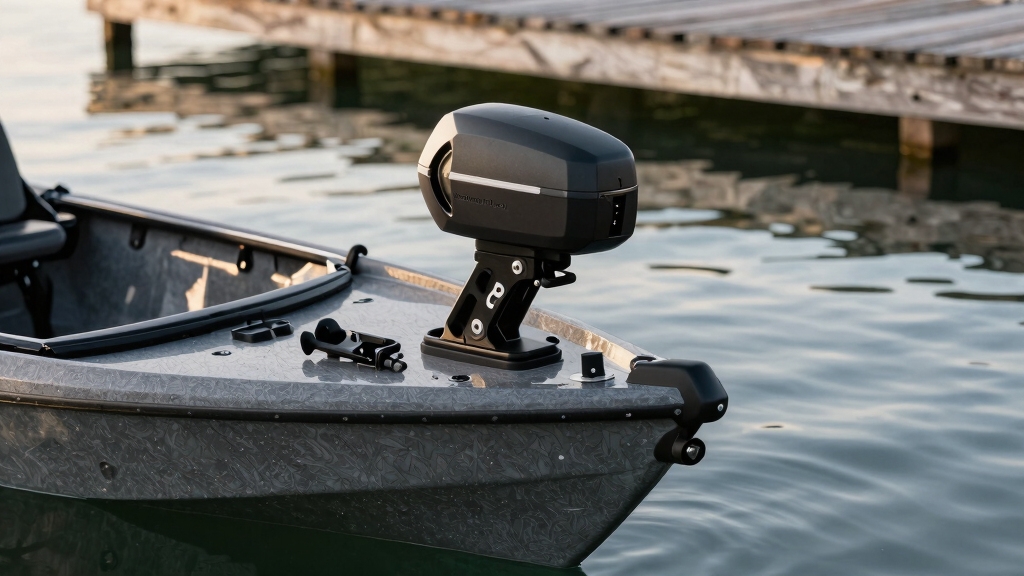
A trolling motor for kayak is a compact electric propulsion system that mounts to your kayak and provides hands-free movement on the water. Unlike traditional paddling, a trolling motor lets you control speed and direction with a foot pedal or hand tiller, freeing both hands for fishing, photography, or managing gear.
These motors consist of three main components: the motor head with propeller, a shaft that extends into the water, and a control mechanism. Most kayak trolling motors run on 12-volt marine batteries and draw between 30-55 pounds of thrust, which is plenty to move a kayak and angler at 3-5 mph in calm to moderate conditions.
Why anglers choose trolling motors:
- Maintain position in current or wind without constant paddling
- Cover more water in a single fishing session
- Approach fish quietly without paddle splash
- Fish while moving, a technique called trolling
- Reduce fatigue on long days or multi-day trips
The trade-off is added weight (typically 15-30 lbs for motor and battery combined) and the need to manage battery life, which usually provides 4-8 hours of runtime depending on speed settings and conditions.
Do I Need a Special Kayak for a Trolling Motor?
You don’t necessarily need a special kayak, but your existing kayak must meet certain stability and structural requirements. Most fishing kayaks designed for sit-on-top use work well, while narrow recreational kayaks often don’t.
Kayaks that work best with trolling motors:
- Width of 28 inches or greater for adequate kayak stability
- Flat or pontoon-style hulls that resist tipping
- Weight capacity at least 100 lbs above your body weight (to accommodate motor, battery, and gear)
- Reinforced deck areas or existing mounting points
- Sit-on-top kayaks with open decks for easy battery access
Kayaks that struggle with motors:
- Narrow recreational kayaks under 26 inches wide
- Inflatable kayaks without rigid mounting surfaces (though some specialized inflatable fishing kayaks work)
- Whitewater or touring kayaks designed for speed rather than stability
- Very short kayaks under 10 feet that lack space for battery placement
If you’re starting from scratch, look for kayaks marketed specifically for fishing with features like pre-installed motor mounts, battery compartments, and wider beams. Many tandem fishing kayaks also accommodate motors well due to their increased size and stability.
Where to Mount Trolling Motor on Kayak: Bow or Stern?
Bow mounting (front of kayak) provides superior control and maneuverability because you’re pulling the kayak rather than pushing it, similar to how a car steers from the front wheels. Stern mounting (rear of kayak) is simpler to install and creates less interference with fishing lines and casting.
Bow mount advantages:
- Better tracking and control in wind or current
- Easier to hold position while fishing
- More natural steering that follows your intended direction immediately
- Keeps motor and propeller away from fishing lines
Bow mount disadvantages:
- More complex installation requiring longer wiring runs
- Battery must be positioned forward, which can affect kayak balance
- Takes up prime real estate in the front deck area
- Harder to reach for adjustments while seated
Stern mount advantages:
- Simple installation with short wiring runs
- Battery can stay in rear hatch or tank well
- Easy to reach and adjust while fishing
- Less impact on front deck space for gear
Stern mount disadvantages:
- Pushing the kayak can feel less responsive
- More difficult to control in strong wind
- Propeller closer to where you’re fishing
- Can interfere with rudder systems if present
Choose bow mount if: You fish in windy conditions, need precise boat control, or frequently hold position over structure. Choose stern mount if you’re new to motors, want easier installation, or primarily fish in calm protected waters.
What Size Trolling Motor Do I Need for My Kayak?
For most fishing kayaks, a motor with 30-45 lbs of thrust is sufficient, while heavier setups or kayaks over 12 feet benefit from 45-55 lbs thrust. The general rule is 2 lbs of thrust per 100 lbs of total weight (kayak plus angler plus gear), but wind and current conditions matter more than this formula suggests.
Thrust recommendations by kayak size:
| Kayak Length | Recommended Thrust | Typical Use Case |
|---|---|---|
| Under 10 feet | 30-35 lbs | Small fishing kayaks, calm water |
| 10-12 feet | 35-45 lbs | Standard fishing kayaks, moderate conditions |
| 12-14 feet | 45-55 lbs | Longer kayaks, tandem setups |
| Over 14 feet | 55+ lbs | Tandem kayaks, heavy gear loads |
Factors that increase thrust needs:
- Fishing in rivers with current or tidal areas
- Frequent use in windy conditions
- Heavy anglers (over 220 lbs) or loaded gear
- Desire for higher top speeds (4+ mph)
Common mistake: Buying too much motor. A 55 lb thrust motor on a small kayak drains batteries faster, adds unnecessary weight, and provides no real advantage in calm conditions. Match your motor to your actual fishing environment, not worst-case scenarios you’ll rarely encounter.
Most quality motors offer variable speed control, so a 45 lb motor running at 60% power is more efficient than a 30 lb motor running at 100% for the same speed.
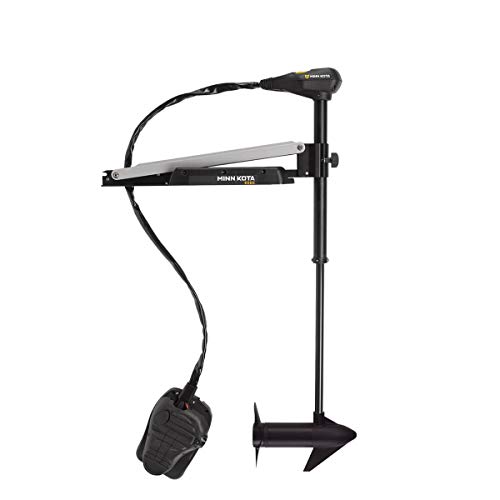
Heel-Toe/Cable-Steer Foot Pedal: Ultra-responsive foot pedal that includes speed control, and momentary and constant on/off; Made with a high-impact composite material for durability

⚡ 36LB THRUST 12V or 24V TROLLING MOTOR – LIGHTWEIGHT POWER FOR SMALL CRAFT: Efficient 36lb thrust trolling motor delivers smooth, quiet propulsion for kayaks, canoes, inflatables, and small boats. Perfect for lighter setups where battery efficiency and portability matter most
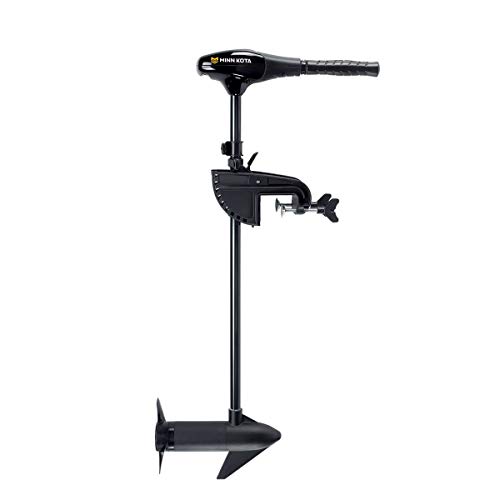
Telescoping Tiller: This 6-inch telescoping tiller provides easy, comfortable, and intuitive control of your trolling motor for all-day fishing trips; Push-to-test battery meter integrated with motor head
How Much Does a Kayak Trolling Motor Cost?
A complete trolling motor setup for a kayak typically costs $300-$800, with the motor itself ranging from $150-$400, a suitable marine battery adding $100-$200, and mounting hardware contributing another $50-$200 depending on whether you choose permanent or clamp-on installation.
Budget breakdown by component:
- Entry-level motor (30-35 lbs thrust): $150-$250
- Mid-range motor (40-45 lbs thrust): $250-$350
- Premium motor (50-55 lbs thrust): $350-$500+
- Marine battery (12V, 50-100 Ah): $100-$200
- Mounting bracket: $50-$150
- Wiring and connectors: $20-$50
- Optional battery box: $30-$60
Popular motor brands and typical pricing:
- Minn Kota Endura C2 (30-55 lbs): $180-$320
- Newport Vessels kayak series: $150-$250
- Watersnake Venom: $160-$280
- MotorGuide Varimax: $200-$350
Battery considerations: Lithium batteries cost 2-3 times more than lead-acid ($300-$500) but weigh half as much and last 3-5 times longer. For kayak applications where weight matters significantly, lithium often justifies the upfront cost.
Money-saving tip: Buy last year’s motor models in late fall or winter when retailers clear inventory. You’ll often find 20-30% discounts on perfectly good motors that differ only cosmetically from current models.
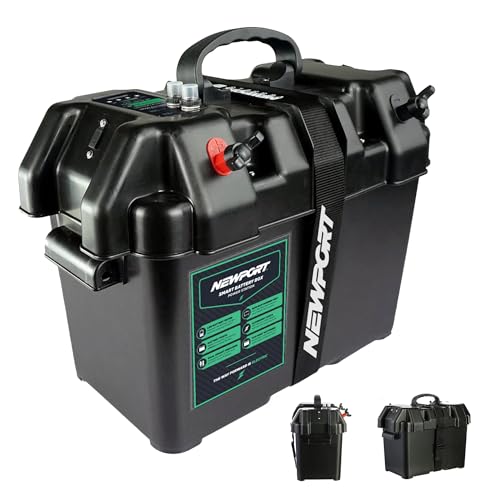
🔋 SIMPLE, CLEAN POWER SETUP FOR ANY BOAT: Take the guesswork out of wiring with a 12V trolling motor battery box power center designed to make setup fast and straightforward. No exposed terminals or messy connections—just a clean, organized marine battery solution for kayaks, jon boats, and small watercraft.

Premium A-Grade Cells with Robust 30A BMS: Engineered for reliability, ERYY 12V lithium iron phosphate battery is built with top-tier A-Grade cells for 5000+ cycles (10+ years!) and stable performance from -20°C to 60°C. The advanced 30A BMS provides ultimate protection against overcharge, over-discharge, short circuits, and overheating, while balancing cells for maximum efficiency and lifespan. Reliably powers fish finders, portable outdoor speakers, car vacuum cleaners, and more as a 12V deep cycle marine battery

🔋 DEPENDABLE DEEP CYCLE POWER – Power your next trip with the Newport 12V 50Ah Deep Cycle Lead Acid Battery, designed to deliver steady, consistent power for trolling motors and other 12V marine electronics.
How to Mount a Trolling Motor on a Kayak Without Drilling
Clamp-on mounts and rail-mounting systems let you install a trolling motor without drilling holes in your kayak hull, preserving resale value and making the setup reversible. These systems use adjustable clamps that grip the kayak’s gunwales, rails, or tank well edges with enough force to hold the motor securely.
Step-by-step no-drill installation:
- Choose your mounting location – Measure the width at your chosen spot (bow or stern) to ensure your clamp mount will fit
- Attach the clamp mount – Position the mount and tighten the clamps gradually, alternating sides to maintain even pressure
- Install the motor – Slide the motor shaft into the mount bracket and secure with the provided pins or bolts
- Position the battery – Place your battery in a waterproof box low in the hull, as close to the motor as possible
- Run the wiring – Connect positive and negative leads from motor to battery, keeping wires secured along the hull to prevent tangling
- Add a circuit breaker – Install an inline circuit breaker (30-50 amp) near the battery for safety
- Test on land – Before launching, verify the propeller spins freely and controls respond correctly
Best clamp-on mount options:
- Scotty motor mount with clamp base ($80-$120)
- RAM Mounts universal motor mount ($90-$150)
- Kayak-specific mounts from Wilderness Systems or Hobie ($100-$180)
- DIY PVC pipe mounts ($30-$50 in materials)
Common mistake: Over-tightening clamps can crack plastic kayaks, especially in cold weather when plastic is more brittle. Tighten until secure but not to the point where the kayak material deforms. Check clamp tension after the first hour of use and periodically throughout the season.
For inflatable fishing kayaks, look for mounts specifically designed for inflatable rails or consider a motor that mounts to a rigid transom attachment.
Best Trolling Motor for Fishing Kayak
The best trolling motor for most fishing kayak applications is the Minn Kota Endura C2 in the 40-45 lb thrust range, offering reliable performance, good battery efficiency, and a proven track record at a mid-range price point. However, the “best” motor depends on your specific kayak size, fishing style, and budget.
Top-rated motors by category:
Best overall value:
- Minn Kota Endura C2 (40-45 lbs) – $220-$280
- Pros: Reliable, efficient, widely available parts, 5 forward/3 reverse speeds
- Cons: Basic features, no digital display
Best for tight budgets:
- Newport Vessels X-Series (36-55 lbs) – $150-$220
- Pros: Affordable, adequate power, includes battery meter
- Cons: Shorter lifespan than premium brands
Best for serious anglers:
- Minn Kota Terrova (45-55 lbs) – $800-$1,200
- Pros: Wireless remote, GPS spot-lock, autopilot features
- Cons: Expensive, overkill for casual use
Best lightweight option:
- Watersnake Venom (34-54 lbs) – $160-$280
- Pros: Lighter than competitors, saltwater compatible
- Cons: Less refined control, shorter warranty
Features worth paying extra for:
- Variable speed control (vs. 5-speed increments) – Provides precise speed adjustment
- Digital battery meter – Prevents getting stranded with a dead battery
- Telescoping handle – Better ergonomics for different mounting positions
- Saltwater components – Essential for coastal fishing, adds $30-$50
Features you can skip:
- GPS and autopilot on kayaks (better suited for larger boats)
- Foot pedal controls (difficult to use effectively in a kayak)
- Thrust over 55 lbs for single kayaks
Match your motor to your most common fishing conditions rather than occasional extreme situations. A quality 40 lb motor will serve most kayak anglers better than a cheap 55 lb motor.
Trolling Motor vs Pedal Drive Kayak: Which Is Better?
Trolling motors offer lower upfront cost ($300-$500 complete setup), easier installation, and the ability to add them to existing kayaks, while pedal drive systems ($1,500-$2,500 for kayak with drive) provide unlimited range, better exercise, and no battery management but require buying a compatible kayak. For most anglers, trolling motors make more sense unless you’re buying a new kayak anyway.
Trolling motor advantages:
- Add to kayak you already own
- One-third to one-quarter the cost of pedal drives
- Hands-free operation for fishing while moving
- Easier to remove for transport or storage
- Simple maintenance (just rinse after use)
Trolling motor disadvantages:
- Limited by battery life (4-8 hours typical)
- Adds 15-30 lbs of weight
- Requires battery charging and management
- Can drain quickly at high speeds or in current
- May require registration in some states
Pedal drive advantages:
- Unlimited range (no battery to die)
- Good exercise and calorie burn
- Faster top speeds (4-6 mph sustained)
- No charging or battery costs
- Quieter operation in shallow water
Pedal drive disadvantages:
- Must buy compatible kayak ($1,500-$2,500+)
- More complex maintenance (cables, gears, seals)
- Difficult to pedal while casting or fighting fish
- Vulnerable to damage from underwater obstacles
- Heavier kayaks (often 80-100+ lbs)
Choose a trolling motor if: You already own a suitable kayak, fish shorter sessions (under 6 hours), want hands-free operation, or have a limited budget. Many beginner kayak anglers start with motors because the lower investment lets them test whether motorized fishing suits their style.
Choose a pedal drive if: You’re buying a new kayak anyway, regularly fish all-day sessions, want exercise, or fish in areas where battery charging is inconvenient. Pedal kayaks excel for anglers who cover lots of water or fish in remote locations.
Common Mistakes When Installing Trolling Motor on Kayak
The most frequent installation mistake is placing the battery too high or too far from the kayak’s center, which creates instability and increases the risk of kayak capsize. Other common errors include using automotive wire instead of marine-grade, mounting the motor shaft too shallow, and failing to secure loose wiring that can tangle with fishing gear.
Critical mistakes to avoid:
1. Poor battery placement
- Wrong: Battery in a milk crate on deck or in rear tank well above waterline
- Right: Battery in waterproof box in hull, low and centered, secured with straps
- Why it matters: High battery placement raises center of gravity and makes the kayak tippy
2. Inadequate wiring
- Wrong: Using household extension cord or automotive wire
- Right: Marine-grade tinned copper wire, 8-10 gauge for most applications
- Why it matters: Non-marine wire corrodes quickly in wet environments and can fail dangerously
3. Motor shaft depth
- Wrong: Propeller barely submerged or skimming surface
- Right: Propeller 8-12 inches below surface, even when kayak is loaded
- Why it matters: Shallow mounting causes cavitation (loss of thrust) and excessive noise
4. Loose wiring and connections
- Wrong: Wires draped loosely across deck or dangling in hull
- Right: Wires secured with zip ties or clips every 12-18 inches along hull
- Why it matters: Loose wires catch on fishing rods, paddles, and feet, and can disconnect
5. No circuit protection
- Wrong: Direct battery-to-motor connection
- Right: Inline circuit breaker (30-50 amp) within 12 inches of battery
- Why it matters: Prevents electrical fires if wiring shorts
6. Ignoring weight distribution
- Wrong: Motor on bow, battery on stern (or vice versa)
- Right: Motor and battery on same end, or battery centered if motor is on end
- Why it matters: Unbalanced weight makes kayak difficult to control and paddle
Testing tip: Before your first real fishing trip, take a short test run in calm water near shore. Verify the motor provides adequate thrust, the kayak remains stable at various speeds, and you can comfortably reach all controls. Make adjustments on land rather than discovering problems miles from the launch.
Trolling Motor Making Kayak Unstable: What to Do
If your trolling motor makes your kayak feel unstable or tippy, the problem is almost always weight distribution rather than the motor itself. Lower your battery position, move weight toward the kayak’s center, and consider adding outriggers or stabilizers if your kayak is inherently narrow.
Immediate fixes for instability:
- Lower the battery – Move it from deck level into the hull, as low as possible
- Center heavy items – Position battery, tackle boxes, and coolers along the kayak’s centerline
- Reduce top-heavy gear – Remove or relocate items mounted high on the deck
- Adjust your seating – Sit lower in the kayak if using a raised seat
- Trim the load – Remove non-essential gear to reduce total weight
When to add stabilizers:
If your kayak still feels unstable after optimizing weight distribution, you may need to add outriggers. These are pontoon-style floats that attach to arms extending from the kayak’s sides, dramatically increasing stability at the cost of some speed and maneuverability.
DIY stabilizer options:
- PVC pipe outriggers with pool noodles ($30-$50 in materials)
- Commercial kayak stabilizers ($100-$200)
- Inflatable pontoons that deploy when needed ($80-$150)
Is your kayak too narrow? Kayaks under 28 inches wide may never feel truly stable with a trolling motor and battery, especially for larger anglers. In this case, your best options are to upgrade to a wider stable kayak designed for fishing, or accept that a motor may not be practical for your current kayak.
Weight distribution checklist:
- Battery: Low in hull, centered or near motor
- Cooler/tackle: Centered, low in hull
- Rods: Secured flat on deck, not standing vertical
- Angler: Seated low, not on raised platform
- Motor: Shaft vertical, not angled excessively
Trolling Motor Draining Battery Too Fast on Kayak
If your trolling motor battery drains in less than 3-4 hours of normal use, you likely have an undersized battery (under 50 Ah capacity), you’re running at too high a speed setting, or you have a wiring problem creating resistance. Most kayak anglers should expect 5-8 hours of runtime with a 75-100 Ah battery at moderate speeds.
Battery capacity guide:
- 35-50 Ah battery: 2-4 hours runtime (too small for most uses)
- 50-75 Ah battery: 4-6 hours runtime (adequate for half-day trips)
- 75-100 Ah battery: 6-8 hours runtime (ideal for full-day fishing)
- 100+ Ah battery: 8-12+ hours runtime (overkill for most kayak applications)
How to extend battery life:
- Run at lower speeds – Speed 3 of 5 uses half the power of speed 5 but only reduces speed by 20-30%
- Use current and wind – Position yourself to drift with natural forces, using the motor only for corrections
- Intermittent operation – Motor to your spot, turn off while fishing, motor to next spot
- Maintain your battery – Fully charge after each use, store at 50-75% charge during off-season
- Check for resistance – Ensure propeller spins freely and isn’t fouled with weeds or debris
Diagnosing electrical problems:
- Corroded connections – Clean terminals with wire brush and apply dielectric grease
- Undersized wire – Use 8-10 gauge wire for runs under 6 feet, 6-8 gauge for longer runs
- Loose connections – Tighten all terminal connections and verify no voltage drop under load
- Damaged motor – Test motor amp draw with multimeter; should match manufacturer specs
Battery type comparison:
| Battery Type | Weight | Lifespan | Cost | Best For |
|---|---|---|---|---|
| Lead-acid | Heavy (40-60 lbs) | 2-3 years | $100-$150 | Budget setups, short trips |
| AGM | Medium (35-50 lbs) | 3-5 years | $150-$250 | Good balance of cost and performance |
| Lithium | Light (15-25 lbs) | 8-10 years | $300-$500 | Serious anglers, weight-sensitive kayaks |
For most kayak applications, a 75 Ah AGM battery offers the best balance of cost, weight, and performance. Lithium makes sense if you fish frequently (100+ days per year) or if your kayak struggles with the weight of lead-acid batteries.
Is a Trolling Motor Worth It for a Kayak?
A trolling motor is worth it for kayak anglers who fish large bodies of water, face frequent wind or current, want to cover more water per trip, or have physical limitations that make paddling difficult. It’s less worthwhile for anglers who fish small ponds, prefer the exercise of paddling, or primarily fish from anchored positions.
You’ll benefit from a trolling motor if:
- You regularly fish lakes over 100 acres or river systems
- Wind or current makes paddling exhausting
- You want to troll lures while moving
- You fish all-day sessions (6+ hours)
- You’re over 50 or have physical limitations
- You frequently fish with a partner in a tandem kayak
You probably don’t need a motor if:
- You fish small ponds or protected coves
- You enjoy the exercise and quiet of paddling
- You primarily anchor and fish one spot
- You fish short sessions (under 3 hours)
- You’re on a tight budget
- You value the lightest possible kayak setup
Real-world benefits reported by anglers:
- Cover 2-3 times more water per trip
- Arrive at fishing spots less fatigued
- Maintain position over structure without constant paddling
- Fish effectively in wind conditions that would otherwise end the trip
- Extend fishing time by reducing physical exhaustion
Honest drawbacks:
- Added weight makes kayak harder to transport and launch
- Battery management becomes part of your routine
- Initial cost of $300-$500 is significant
- More complexity means more potential problems
- May require registration depending on your state’s motorized kayak laws
Cost per use calculation: If you fish 30 times per year and a $500 motor setup lasts 5 years, that’s $3.33 per trip. For many anglers, the convenience and expanded fishing opportunities easily justify this cost. For occasional anglers (10 trips per year), the cost per use climbs to $10 per trip, which may be harder to justify.
Frequently Asked Questions
Can you put a trolling motor on an inflatable kayak?
Yes, but only on inflatable kayaks with rigid mounting points or reinforced rails designed for motor installation. Standard recreational inflatables lack the structural support needed for safe motor mounting. Look for fishing-specific inflatable kayaks from brands like Sea Eagle or Advanced Elements that include motor-ready features.
Do I need to register my kayak if I add a trolling motor?
Registration requirements vary by state. Most states require registration for kayaks with motors over a certain horsepower (typically 5-10 HP), but electric trolling motors are often exempt. Check your state’s kayak registration requirements or contact your local DNR office to confirm.
How long does a trolling motor battery last on a kayak?
A properly sized battery (75-100 Ah) typically provides 6-8 hours of runtime at moderate speeds. Factors affecting battery life include motor thrust setting, wind and current conditions, kayak weight, and battery age. Running at lower speeds dramatically extends runtime.
Can I use a car battery for my kayak trolling motor?
Technically yes, but it’s not recommended. Car batteries are designed for short bursts of high current (starting engines) rather than sustained discharge. Marine deep-cycle batteries are engineered for trolling motor use and will last 3-5 times longer. Car batteries also lack the vibration resistance needed for kayak applications.
What’s the best way to charge a trolling motor battery?
Use a smart charger designed for marine batteries that automatically adjusts charging rate and stops when the battery is full. Charge after every use, even if you didn’t fully drain the battery. For long-term storage, charge to 50-75% capacity and recharge every 2-3 months to prevent sulfation.
How fast will a trolling motor make my kayak go?
Most kayaks with trolling motors reach 3-5 mph at full throttle, depending on kayak design, total weight, and water conditions. This is comparable to a moderate paddling pace but can be maintained indefinitely without fatigue. Lighter kayaks with powerful motors (50+ lbs thrust) may reach 5-6 mph.
Where should I mount the battery in my kayak?
Mount the battery as low as possible in the hull, centered between the sides, and as close to the motor as practical (to minimize wire length). Use a waterproof battery box secured with straps to prevent movement. Never mount batteries on the deck or in elevated positions.
Can I run a fish finder and trolling motor off the same battery?
Yes, most fish finders draw minimal power (0.5-2 amps) compared to trolling motors (15-40 amps), so they can share a battery without significantly reducing runtime. Use a battery terminal splitter or distribution block to connect both devices, and ensure each has its own circuit protection.
How do I winterize my kayak trolling motor?
Rinse the motor thoroughly with fresh water, especially after saltwater use. Remove the propeller and check for fishing line wrapped around the shaft. Spray moving parts with corrosion inhibitor. Store the motor indoors if possible. Charge the battery to 50-75% and store in a cool, dry location, recharging every 2-3 months.
Will a trolling motor scare fish?
Modern trolling motors are relatively quiet and typically don’t spook fish more than paddling does. The propeller noise is usually less alarming to fish than paddle splash. However, in very shallow water (under 3 feet) or for extremely wary species, any motor noise may reduce your success compared to drifting or anchoring.
Can I use a trolling motor in saltwater?
Yes, but choose a motor with saltwater-compatible components (stainless steel shaft, sealed bearings, corrosion-resistant materials). Saltwater motors cost $30-$80 more than freshwater models but last much longer in coastal environments. Always rinse thoroughly with fresh water after saltwater use, regardless of motor type.
How much does a trolling motor setup weigh?
A complete setup typically weighs 25-40 lbs: motor (12-18 lbs), battery (15-25 lbs for lead-acid, 8-12 lbs for lithium), mount (2-5 lbs), and wiring/accessories (1-2 lbs). This represents a significant addition to your kayak’s weight, so factor it into your kayak transport plans.
Conclusion
Fitting a trolling motor to your kayak opens up new fishing opportunities and extends your range on the water, but success depends on choosing the right components and installing them properly. Start with a motor sized appropriately for your kayak (30-45 lbs thrust for most applications), invest in a quality marine battery (75-100 Ah capacity), and prioritize stability by keeping weight low and centered.
Whether you choose bow or stern mounting, permanent or clamp-on installation, the key is matching your setup to your specific fishing style and conditions. Take time to test your installation in calm water before venturing into challenging environments, and don’t hesitate to make adjustments based on real-world performance.
Your next steps:
- Measure your kayak’s width and weight capacity to confirm motor compatibility
- Decide on bow vs. stern mounting based on your fishing style
- Budget for the complete system (motor, battery, mount, wiring)
- Check your state’s registration requirements for motorized kayaks
- Purchase components and schedule a weekend for installation
- Test in calm, protected water before your first real fishing trip
The investment in time and money pays off in expanded fishing opportunities, reduced fatigue, and the ability to fish effectively in conditions that would otherwise keep you off the water. For more guidance on kayak fishing gear and techniques, explore our other resources to make the most of your motorized fishing kayak setup.