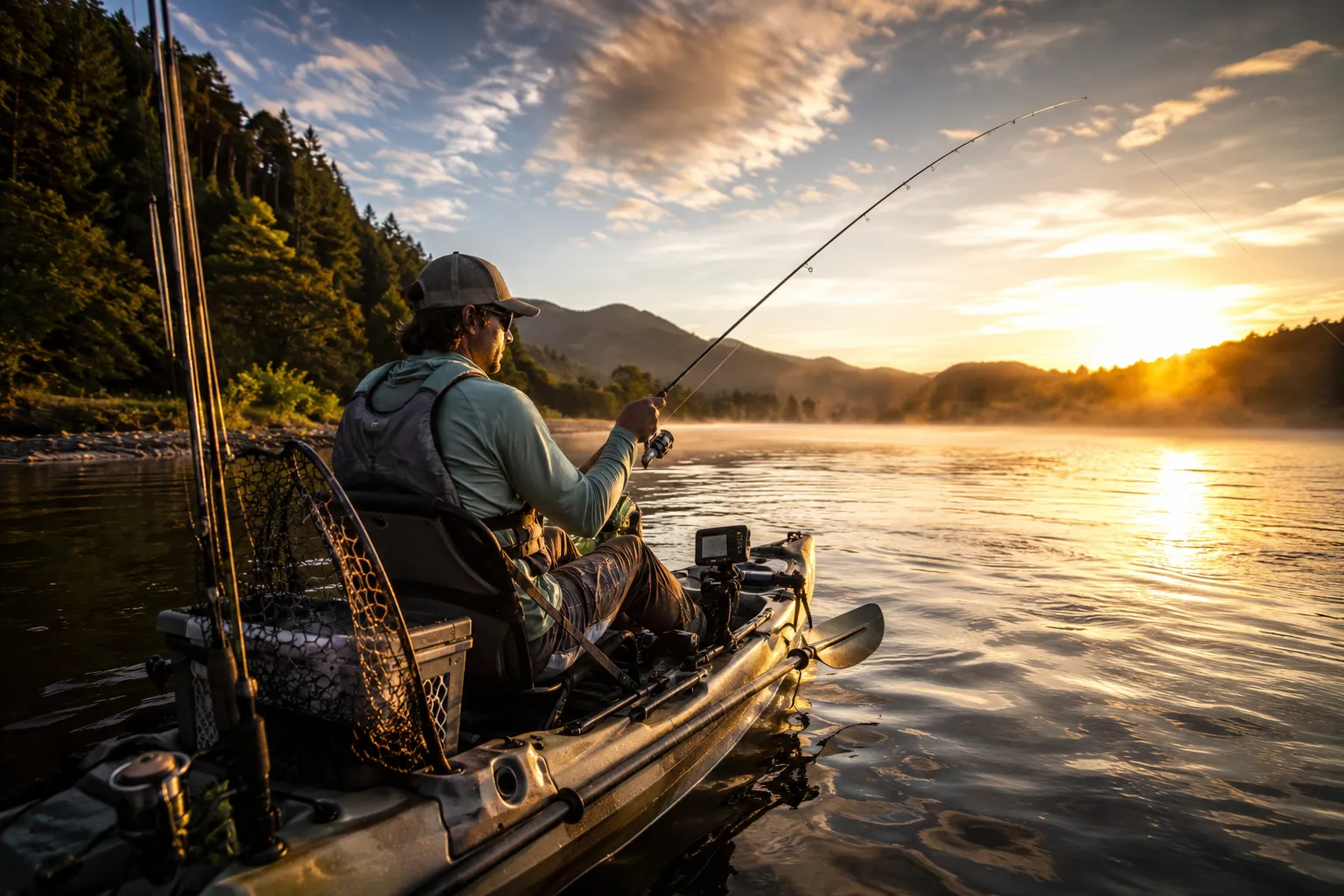
Quick Answer: Drift fishing from a kayak involves letting wind or current push your kayak naturally across the water while you cast and retrieve lures or bait through productive areas. You control your drift speed using a drift sock (also called a sea anchor or drift chute), position your kayak perpendicular to the wind, and cover large sections of water without anchoring or constantly paddling.
Key Takeaways
- Drift fishing lets you cover more water than anchoring and requires less effort than constant paddling or pedaling
- A drift sock is essential for controlling your speed in wind, it can slow your drift by 50-70% depending on size and conditions
- Position your kayak perpendicular (sideways) to the wind for the most stable, controlled drift
- Sit-on-top kayaks 10-12 feet long with good width (32+ inches) work best for drift fishing stability
- Drift fishing works exceptionally well for species like walleye, crappie, flounder, redfish, and bass over structure
- An anchor trolley system lets you deploy your drift sock from bow or stern to control kayak angle
- Beginners can start drift fishing immediately, it’s often easier than learning to anchor properly in current
- Shallow water (3-15 feet) is ideal for drift fishing; you can read bottom structure and maintain good lure contact
What Is Drift Fishing From a Kayak?
Drift fishing from a kayak is a technique where you allow natural wind or current to move your kayak across the water while you actively fish. Instead of anchoring in one spot or constantly paddling to stay mobile, you use the environment’s movement to cover water and present lures or bait to fish along a drift path.
The kayak acts as a mobile fishing platform that silently glides over productive areas like weed edges, drop-offs, flats, or structure. You cast perpendicular to your drift direction or slightly ahead, allowing your presentation to move naturally through the strike zone as the kayak drifts past.
Why drift fishing works so well from kayaks:
- Covers more water than stationary fishing without the effort of paddling
- Maintains natural presentations since your bait or lure moves with current flow
- Stays quiet compared to trolling motors or constant paddle strokes
- Lets you follow contours like weed lines, depth changes, or shoreline structure
- Keeps you in the strike zone longer when you match drift speed to fish activity
The key difference between drift fishing and simply floating is control. Effective drift fishing means managing your speed and direction so you move through productive water at the right pace for your target species and presentation.
Drift Fishing vs Anchor Fishing From a Kayak: Which Is Better?
Drift fishing is better when you need to cover large areas to locate fish or when targeting species that roam over structure, while anchor fishing excels when you’ve pinpointed a specific spot and want to thoroughly work it or when current is too strong to drift effectively.
When to choose drift fishing:
- Searching for fish over large flats, weed beds, or along shorelines
- Targeting suspended fish like crappie or walleye that move with baitfish schools
- Fishing in light to moderate wind (5-15 mph) where drift speed is manageable
- Working long edges like drop-offs, channel margins, or grass lines
- When you want to stay mobile and cover water efficiently
- In areas where anchoring is difficult (rocky bottom, deep water, heavy current)
When to choose anchor fishing:
- You’ve located a specific productive spot (reef, hump, brush pile, inlet)
- Targeting bottom-dwelling species like catfish, snapper, or grouper
- Current or wind is too strong to maintain a controlled drift
- Fishing vertical presentations like jigging or drop-shotting
- Working a small high-percentage area thoroughly
- When you need absolute position control for precise casting
Many successful kayak anglers combine both methods in a single trip: drift to locate active fish, then anchor when you find a concentration worth working thoroughly.
What Is the Best Kayak for Drift Fishing?
The best kayak for drift fishing is a stable sit-on-top model between 10-12 feet long with a width of 32-36 inches, featuring an anchor trolley system, multiple rod holders, and enough weight capacity for you plus 150-200 pounds of gear. Pedal-drive kayaks offer an advantage because you can adjust position hands-free while fighting fish.
Key features to prioritize:
- Width over 32 inches: Provides stability when casting and fighting fish during drift
- Sit-on-top design: Easier to move around, land fish, and recover from if you capsize
- Anchor trolley system: Lets you attach drift sock to bow or stern to control kayak angle
- Multiple rod holders: Keep rods ready while drifting and secure your active rod during paddle adjustments
- Standing capability (optional): Wider platforms (34+ inches) let you stand for better sight fishing
- Rudder or skeg: Helps maintain straight tracking during drift in crosswinds
Length considerations for drift fishing:
- 10-11 feet: More maneuverable, easier to transport, better for small lakes and protected bays
- 12-13 feet: Tracks straighter in wind, covers water faster, better for larger lakes and coastal areas
- 14+ feet: Faster and more efficient but harder to control drift speed and direction
Pedal vs paddle for drift fishing:
Pedal-drive kayaks (Hobie MirageDrive, Old Town PDL, Bonafide RS117) excel at drift fishing because you can make quick position adjustments without putting down your rod. When you drift past a productive spot or need to reposition, you pedal back hands-free. The trade-off is higher cost ($2,000-$4,000) and more maintenance.
Paddle kayaks work perfectly well for drift fishing and cost significantly less ($600-$1,500). You’ll just need to secure your rod in a holder when making paddle corrections.
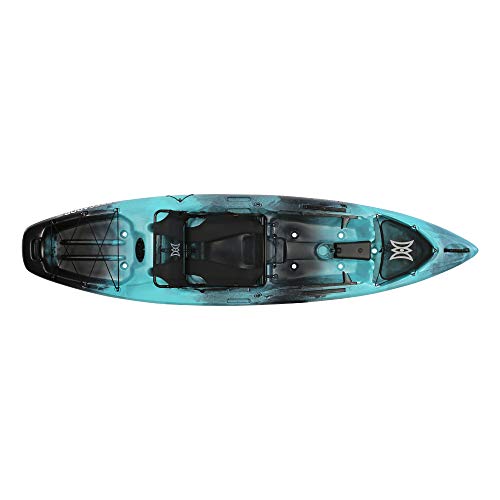
Premium Fishing Experience: The Perception Pescador Pro 10 is a sit-on-top kayak designed for the recreational angler. Equipped with a large front and rear storage area, it provides ample space for all your fishing gear and personal items.

Stable: The twin-arched multi-chine hull offers excellent stability for a secure and steady ride. It also makes it incredibly easy to get in and out of the kayak.

UV-Protected HDPE Construction for Durability: Built with high-density polyethylene (HDPE) plastic, this kayak is both lightweight and highly durable, offering long-lasting protection against UV rays for years of use in various conditions. Paddle included.
How to Control Drift Speed in a Kayak While Fishing
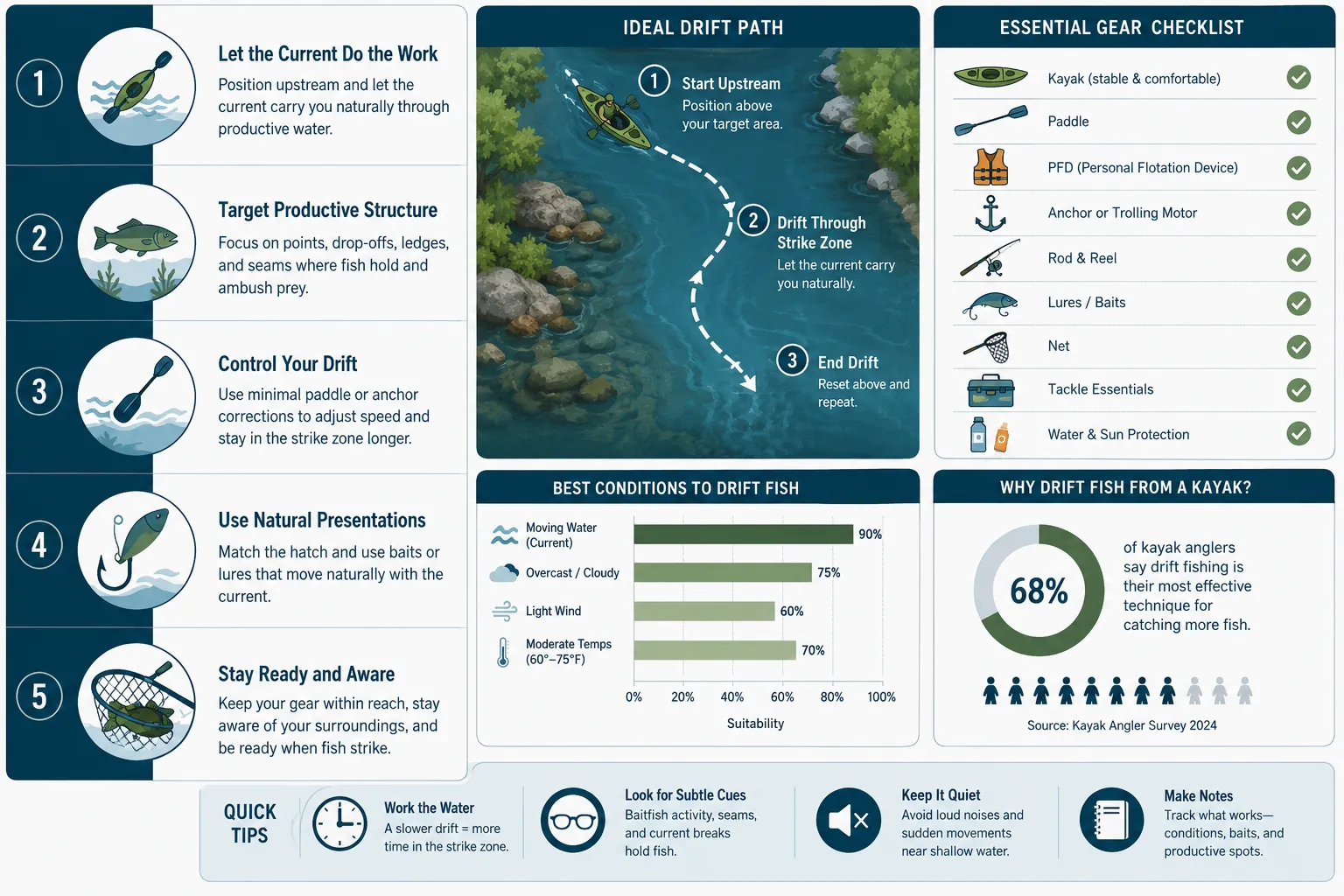
You control drift speed in a kayak primarily by deploying a drift sock (sea anchor) off your stern or bow, which creates underwater drag and can slow your drift by 50-70%. Drift sock size, deployment depth, and attachment point determine how much you slow down.
Primary drift speed control methods:
1. Drift sock (most effective)
- Small (24-30 inches): Slows drift in light wind (5-10 mph)
- Medium (36-42 inches): Handles moderate wind (10-15 mph)
- Large (48+ inches): For strong wind (15-20 mph) or fast current
Deploy your drift sock from an anchor trolley so you can adjust the attachment point. Attaching to the stern (back) keeps your bow pointed into the wind for easier casting. Attaching to the bow lets you drift stern-first, which some anglers prefer for certain presentations.
2. Body position and paddle drag
- Sit upright to catch more wind and drift faster
- Lean forward and lower your profile to reduce wind resistance
- Drag your paddle blade in the water on the upwind side as a temporary brake
3. Kayak orientation
- Perpendicular (sideways) to wind: Maximum drift speed
- Angled 45 degrees: Moderate drift speed
- Bow or stern into wind: Slowest drift (but less stable)
4. Shallow water drag
- In water under 6 feet, lower your rudder or skeg fully to create bottom drag
- Trail a rope with a weight (not anchored) to add drag without stopping
Ideal drift speed by species:
- Walleye, crappie: 0.5-1.0 mph (slow, methodical)
- Bass, redfish: 1.0-1.5 mph (moderate)
- Flounder, trout: 0.5-1.0 mph (slow for bottom contact)
Use your GPS or fish finder to monitor actual drift speed and adjust your drift sock deployment accordingly.
What Gear Do You Need for Drift Fishing From a Kayak?
Essential drift fishing gear includes a drift sock with deployment line, an anchor trolley system, 2-3 rod holders, a paddle leash, a personal flotation device (PFD), and your standard fishing tackle appropriate for your target species. Total additional investment beyond your basic kayak setup runs $150-$300.
Required drift fishing equipment:
Drift control:
- Drift sock: $40-$80 (size appropriate for your kayak length and typical wind conditions)
- Anchor trolley kit: $25-$50 (if not pre-installed on your kayak)
- Carabiner or clip: $5-$10 (for quick drift sock attachment/removal)
- Drift sock storage bag: $15-$25 (keeps wet sock contained)
Kayak fishing basics:
- PFD (life jacket): $50-$150 (required by law in most areas)
- Paddle leash: $10-$20 (prevents paddle loss during drift)
- Rod holders: $20-$40 each (flush-mount or rail-mount)
- Paddle: $60-$150 (if not included with kayak)
- Dry bag or waterproof storage: $20-$60 (protects phone, keys, wallet)
Fishing tackle for drift fishing:
- Rods: 6’6″-7’6″ medium to medium-heavy (shorter rods easier to manage in kayak)
- Reels: Spinning reels 2500-4000 size for versatility
- Terminal tackle: Appropriate for your target species and technique
- Tackle storage: Waterproof tackle box or bag
Helpful but optional:
- Fish finder with GPS: $200-$800 (tracks your drift path and marks productive spots)
- Anchor with rope: $30-$60 (for when you want to stop and thoroughly work an area)
- Landing net: $25-$50 (makes landing fish easier from low kayak position)
- Rod leash: $8-$15 (prevents losing rod overboard)
The drift sock is your single most important purchase for drift fishing. Don’t skip it or try to improvise, a proper drift sock designed for kayaks makes the difference between frustrating, uncontrolled drifts and productive, manageable fishing.

WHY YOU NEED MOPHOEXII DRIFT SOCK?:MOPHOEXII makes drift sock for fishing boat in all sizes (20''-52'') to match any technique and boat size.The drift control harness buoy features Harness Buoy and Dump Line that makes securing your drift sock to the boat simple, and allows for a quick release of the sock to make way for fighting a trophy fish. The blaze-orange Buoy is easily seen and retrieved

COMPLETE DRIFT CONTROL KIT: Includes drift sock, dump line, harness, buoy ball and rope float—all-in-one setup for immediate use with fishing boats, kayaks, canoes, pontoons and trolling boats

✔【WHY YOU NEED MOOCY DRIFTSOCK?】MOOCY makes drift socks in all sizes (18'-56'') to match any technique and boat size.The drift control 30ft. harness buoy with 30 foot Rope features stainless steel clip that makes securing your drift sock to the boat simple, and allows for a quick release of the sock to make way for fighting a trophy fish. The blaze-orange Buoy is easily seen and retrieved,comes with a 30-foot dump line.
How Much Does a Fishing Kayak Cost for Drift Fishing?
A capable fishing kayak for drift fishing costs $800-$1,500 for a quality paddle model or $2,000-$4,000 for a pedal-drive model. Budget an additional $300-$500 for essential accessories including drift sock, PFD, paddle, and basic fishing gear if you’re starting from scratch.
Price ranges by kayak type (2026):
Entry-level fishing kayaks ($600-$900):
- Basic sit-on-top designs with minimal features
- Usually 10-11 feet, adequate stability
- Limited rod holders and storage
- Examples: Lifetime Tamarack Angler, Sun Dolphin Journey
- Good for: Beginners testing whether kayak fishing is right for them
Mid-range fishing kayaks ($900-$1,800):
- Purpose-built fishing features (anchor trolley, multiple rod holders, tank well)
- Better stability and comfort for all-day fishing
- 11-13 feet with improved tracking
- Examples: Perception Pescador Pro, Vibe Sea Ghost, Old Town Topwater
- Good for: Serious anglers who will fish regularly
Premium paddle fishing kayaks ($1,800-$2,800):
- High-end materials and construction
- Excellent stability for standing
- Advanced rigging options and accessories
- Examples: Jackson Coosa HD, Bonafide SS127, Native Slayer
- Good for: Dedicated kayak anglers who fish multiple times per week
Pedal-drive fishing kayaks ($2,200-$4,500):
- Hands-free propulsion systems
- Premium stability and features
- Fastest and most efficient for covering water
- Examples: Hobie Pro Angler, Old Town PDL, Bonafide RS117
- Good for: Anglers who can justify the investment with frequent use
Total startup cost estimate:
- Kayak: $1,200 (mid-range paddle model)
- Drift sock and trolley: $75
- PFD: $80
- Paddle: $100
- Rod holders (2): $60
- Basic accessories: $100
- Total: $1,615
Used kayaks can save 30-50% if you find one in good condition. Check local classifieds, Facebook Marketplace, and kayak fishing forums for deals from anglers upgrading their setups.

[ANCHOR IN SHALLOW WATER FAST] Essential for your jet ski accessories kit. This PWC mooring line easily links your waverunner or floating water mat to a sandbar anchor or dock, keeping your watercraft exactly where you left it.
100% WATERPROOF and BREATHABLE constructed with 4-Ply puncture resistant nylon with completely taped and sealed seams for watertight protection

MULTIPLE SIZES FOR ALL VESSELS: Available in 18"-56" to match different boat sizes and fishing techniques; fits boats, kayaks and pontoons, ensuring tailored drift control for every setup
My Kayak Drifts Too Fast: How Do I Slow It Down?
If your kayak drifts too fast even with a drift sock deployed, you need a larger drift sock, should deploy it from a different attachment point for better angle, or can add a second smaller drift sock for additional drag. In extreme wind, consider moving to more protected water or switching to anchor fishing.
Solutions ranked by effectiveness:
1. Upgrade to a larger drift sock
If you’re using a 24-30 inch sock in 15+ mph wind, you need a 42-48 inch sock. Drift sock effectiveness increases dramatically with size. A 42-inch sock creates roughly twice the drag of a 30-inch sock.
2. Deploy from the bow instead of stern
Attaching your drift sock to the bow (front) of your kayak via the anchor trolley often creates more drag and a slower drift than stern deployment. The kayak drifts backward, presenting more surface area to the wind.
3. Add a second drift sock
Deploy one from the bow and one from the stern simultaneously. This creates maximum drag but can make directional control difficult. Better for straight-line drifts over flats than for following contours.
4. Lower your rudder or skeg fully
In shallow water (under 8 feet), a fully deployed rudder or skeg creates significant drag. This works best in combination with a drift sock.
5. Trail a weighted rope
Tie a 20-30 foot rope to your stern with a 1-2 pound weight on the end. Let it drag along the bottom in shallow water. This is a makeshift solution when you forgot your drift sock or need extra slowing power.
6. Change your body position
Lean forward to reduce your wind profile. Every bit helps in strong wind.
When to abandon drift fishing:
If wind exceeds 20 mph or current is so strong that even a large drift sock can’t slow you to a fishable speed (under 2 mph), it’s time to either anchor in productive spots or move to more protected water. Drifting too fast prevents proper lure presentation and reduces your catch rate to near zero.
Drift Sock vs Sea Anchor for Kayak Fishing: What’s the Difference?
A drift sock and a sea anchor are the same thing, both terms describe a cone-shaped parachute device that deploys underwater to create drag and slow your drift. “Drift sock” and “drift chute” are more common in freshwater kayak fishing, while “sea anchor” is traditional maritime terminology used more in saltwater and larger boats.
For kayak fishing purposes, these terms are interchangeable. When shopping, you’ll see products labeled as any of these three names, and they all function identically.
What to look for when buying:
- Size appropriate for kayaks: 24-48 inches for most fishing kayaks (larger boats use 4-6 foot sea anchors)
- Durable ripstop nylon: Resists tearing and handles repeated use
- Adjustable vent hole: Some models let you adjust the opening to fine-tune drag
- Swivel connection: Prevents line twist during deployment
- Included storage bag: Keeps your wet sock contained when not in use
Popular drift sock models for kayaks:
- Scotty Kayak Drift Sock (various sizes): $45-$75
- YakGear Drift Sock: $40-$60
- Airhead Kayak Drift Chute: $35-$55
All work effectively. Choose based on size for your conditions and kayak length rather than brand.
Is Drift Fishing From a Kayak Good for Beginners?
Yes, drift fishing from a kayak is excellent for beginners because it requires less technical skill than anchoring in current, keeps you mobile so you’re more likely to find fish, and lets you focus on fishing rather than constantly paddling. New kayak anglers often catch more fish drift fishing than with any other method.
Why drift fishing suits beginners:
- No complex anchoring: You avoid learning anchor trolley positioning, scope ratios, and dealing with stuck anchors
- Constant movement keeps you engaged: Drifting feels active and productive, not static and boring
- Covers your mistakes: If you drift past a good spot, you’ll drift over other spots soon
- Natural presentations: Your bait or lure moves naturally with the drift, which is forgiving of technique errors
- Less intimidating than standing or advanced techniques: You fish from a seated position in a stable drift
Beginner drift fishing tips:
- Start in protected water: Learn on calm lakes or bays with light wind (5-10 mph) before tackling open water
- Use a drift sock from day one: Don’t try to drift without one, you’ll get frustrated with speed control
- Fish perpendicular to your drift: Cast 90 degrees to your drift direction for longest time in the strike zone
- Keep it simple: Use basic presentations like jigs, soft plastics, or live bait rigs
- Mark productive drifts: Use your phone GPS or fish finder to save waypoints where you catch fish, then paddle back upwind and drift through again
Common beginner concerns (and why they’re not problems):
- “What if I drift into shore or obstacles?” You can paddle or pedal to reposition anytime. Keep aware of your surroundings.
- “What if I can’t get back to my launch?” Plan drifts that move you in a circle or back toward your launch, or paddle/pedal back upwind between drifts.
- “What if wind is too strong?” Start on calm days (under 10 mph wind) until you build confidence and get a properly sized drift sock.
The learning curve for drift fishing is much gentler than for most kayak fishing techniques. Most beginners catch fish on their first or second drift fishing trip.
Common Mistakes When Drift Fishing From a Kayak
The most common drift fishing mistakes are using too small a drift sock for conditions (causing uncontrolled fast drifts), failing to position the kayak perpendicular to wind (reducing stability and casting angles), and not marking productive drift paths to repeat them. These errors drastically reduce catch rates but are easy to fix once identified.
Top mistakes and how to avoid them:
1. Wrong drift sock size
- Mistake: Using a 24-inch sock in 15 mph wind, drifting too fast to fish effectively
- Fix: Match sock size to typical conditions, go larger if in doubt; you can always partially retrieve a large sock to speed up
2. Poor kayak positioning
- Mistake: Letting the kayak drift bow-first or stern-first, creating instability and awkward casting angles
- Fix: Use your anchor trolley to position the drift sock attachment so your kayak drifts sideways (perpendicular to wind)
3. Not marking productive areas
- Mistake: Catching fish on a drift but not recording the location, unable to repeat the successful drift
- Fix: Drop a waypoint on your GPS/fish finder immediately when you catch fish or mark the spot on your phone’s map app
4. Drifting with the wind instead of across it
- Mistake: Setting up drifts that run directly downwind, covering water too fast and in a straight line
- Fix: Position yourself to drift across the wind or at an angle, which slows your drift and lets you work structure more thoroughly
5. Wrong casting direction
- Mistake: Casting in the same direction as your drift, giving your lure minimal time in the strike zone
- Fix: Cast perpendicular (90 degrees) to your drift direction or slightly ahead, maximizing time your presentation spends in productive water
6. Forgetting paddle security
- Mistake: Setting paddle down while fighting a fish, having it blow overboard during drift
- Fix: Use a paddle leash or paddle keeper clip, always secure your paddle before focusing on a fish
7. Ignoring drift speed
- Mistake: Not monitoring actual drift speed, moving too fast for bottom presentations or too slow for reaction baits
- Fix: Check your GPS speed regularly; adjust drift sock deployment or size to maintain 0.5-1.5 mph depending on technique
8. Drifting in wrong water depth
- Mistake: Drifting over water too deep (20+ feet) where you lose bottom contact or too shallow (under 2 feet) where you spook fish
- Fix: Use your fish finder or map app to plan drifts over appropriate depths (typically 4-15 feet for most species)
9. Poor gear organization
- Mistake: Tackle and gear scattered loosely in kayak, creating tangles and lost items during drift
- Fix: Use tackle boxes, rod holders, and gear tracks to secure everything; a organized kayak is a productive kayak
10. Not adjusting for changing conditions
- Mistake: Continuing the same drift pattern when wind shifts or fish activity changes
- Fix: Stay flexible; if wind changes direction, reposition for a new drift angle; if fish stop biting, try different depths or structure
Can You Drift Fish in Shallow Water From a Kayak?
Yes, you can drift fish effectively in shallow water (3-8 feet) from a kayak, and it’s often more productive than deeper water because you can maintain better bottom contact, read structure visually, and target sight-fishing opportunities. Kayaks excel in shallow water where larger boats can’t access.
Shallow water drift fishing advantages:
- Better lure control: Easier to maintain bottom contact with jigs, soft plastics, or live bait rigs
- Visual structure reading: You can see weed edges, bottom composition changes, and sometimes even fish
- Less spooky than deeper water: Fish in 4-8 feet often feed more aggressively than deep, pressured fish
- Access to untouched areas: Kayaks can drift over flats and skinny water that boats avoid
- Easier depth changes: You can quickly adjust lure weight or retrieve speed for consistent presentation
Shallow water drift fishing techniques:
For 3-6 feet (very shallow):
- Use weedless presentations (Texas-rigged soft plastics, topwater lures, spinnerbaits)
- Drift quietly, avoid banging paddles or gear against the kayak hull
- Watch for visual signs (tailing fish, wakes, nervous baitfish)
- Deploy only a small drift sock or none at all, shallow water creates natural drag
For 6-12 feet (moderate shallow):
- Ideal depth range for most drift fishing presentations
- Use jigs, drop-shot rigs, Carolina rigs, or live bait
- Deploy appropriately sized drift sock for wind conditions
- Follow contours like weed edges, drop-offs, or channel edges
Shallow water drift fishing challenges:
- Spooking fish: Kayak shadow and noise can alert fish in clear, shallow water, drift quietly and avoid sudden movements
- Bottom snags: More structure means more hang-ups, use weedless rigs and keep spare tackle ready
- Limited drift sock effectiveness: Very shallow water (under 4 feet) limits how deep you can deploy your drift sock
Best species for shallow drift fishing:
- Redfish and speckled trout (coastal flats, 2-6 feet)
- Bass (weed edges and flats, 4-10 feet)
- Flounder (sandy bottoms and transitions, 4-8 feet)
- Crappie (over submerged brush, 6-12 feet)
- Pike (weed beds and edges, 3-8 feet)
Shallow water drift fishing from a kayak is one of the most exciting and productive techniques available. The combination of stealth, access, and visual fishing creates memorable days on the water.
How to Position Yourself When Drift Fishing in a Kayak
Position your kayak perpendicular (sideways) to the wind direction for the most stable and controlled drift, with your drift sock attached via an anchor trolley to either bow or stern depending on which end you want facing upwind. This broadside position maximizes stability, gives you casting angles in all directions, and lets you adjust your drift path by moving the trolley attachment point.
Step-by-step positioning:
1. Determine wind direction
- Wet your finger and hold it up, or watch which way ripples move across the water
- Note the direction of your intended drift path (usually following structure like a weed edge or depth contour)
2. Position upwind of your target area
- Paddle or pedal to a spot upwind (or up-current) from where you want to fish
- Give yourself 50-100 yards of drift distance before you reach prime water
3. Deploy your drift sock
- Attach the drift sock to your anchor trolley at either bow or stern
- Stern attachment: Kayak drifts bow-first (front facing downwind), easier for forward casting
- Bow attachment: Kayak drifts stern-first (back facing downwind), some anglers prefer this for certain presentations
4. Adjust trolley position for angle
- If your kayak isn’t perpendicular to the wind, slide your trolley attachment point forward or backward
- Moving the attachment toward the middle of the kayak (amidships) creates more perpendicular drift
- Moving it toward the extreme bow or stern creates more angled drift
5. Fine-tune with paddle corrections
- Make small paddle strokes to maintain your desired angle
- Use your rudder (if equipped) to help maintain straight tracking
Positioning for different drift scenarios:
Following a weed edge or contour:
- Position so your drift path runs parallel to the structure
- Adjust trolley so you maintain 10-20 feet off the edge (close enough to cast to it, far enough to avoid snagging)
Crossing a flat or basin:
- Drift perpendicular to the longest dimension to maximize coverage
- Use GPS to track your path and avoid drifting over the same water twice
Working a point or hump:
- Start upwind and drift across the structure
- Make multiple passes at different angles to cover all sides
Drift fishing in current (rivers, tidal areas):
- Current often matters more than wind, position for current direction first
- Use drift sock to slow downstream drift to a fishable speed
- Angle your kayak to drift along current seams and eddies
Body position in the kayak:
- Sit upright and centered for maximum stability during drift
- Face the direction you’re casting, not necessarily the direction you’re drifting
- Keep weight low when fighting fish, lean back into your seat rather than standing or leaning over the side
- Brace your knees against the sides of the kayak for added stability when casting or landing fish
Proper positioning takes practice. Spend your first few drift fishing trips experimenting with different trolley positions and kayak angles to learn what works best for your specific kayak and local conditions.
What Fish Species Are Best for Kayak Drift Fishing?
The best fish species for kayak drift fishing are walleye, crappie, flounder, redfish, speckled trout, and bass because they relate to structure and depth contours that you can effectively cover by drifting, and they respond well to the natural presentations drift fishing provides. These species actively feed while roaming or holding along edges that drift fishing targets perfectly.
Top drift fishing species by water type:
Freshwater:
Walleye (excellent for drift fishing)
- Drift along drop-offs, weed edges, and mud flats in 8-20 feet
- Use jigs tipped with minnows or soft plastics, dragged slowly along bottom
- Best during low-light periods (dawn, dusk, overcast days)
- Ideal drift speed: 0.5-0.8 mph
Crappie (excellent for drift fishing)
- Drift over submerged brush, standing timber, or deep weed edges in 8-15 feet
- Use small jigs, live minnows under slip bobbers, or small soft plastics
- Spring and fall are prime seasons
- Ideal drift speed: 0.3-0.6 mph (very slow)
Bass (largemouth and smallmouth) (very good for drift fishing)
- Drift along weed edges, rocky points, and drop-offs in 5-15 feet
- Use soft plastics (worms, creature baits), jigs, or crankbaits
- Active throughout the season
- Ideal drift speed: 0.8-1.5 mph
Pike and muskie (good for drift fishing)
- Drift along weed edges and over shallow flats in 4-12 feet
- Use large soft plastics, spinnerbaits, or topwater lures
- Cover water quickly to locate aggressive fish
- Ideal drift speed: 1.0-2.0 mph
Saltwater:
Flounder (excellent for drift fishing)
- Drift over sandy bottoms, channel edges, and inlet areas in 6-20 feet
- Use live bait rigs (minnows, shrimp) or bucktail jigs bounced along bottom
- Maintain constant bottom contact during drift
- Ideal drift speed: 0.5-1.0 mph
Redfish (excellent for drift fishing)
- Drift over grass flats, oyster bars, and marsh edges in 2-8 feet
- Use soft plastics (paddle tails, shrimp imitations), spoons, or live bait
- Sight-fishing opportunities in shallow water
- Ideal drift speed: 0.8-1.2 mph
Speckled trout (very good for drift fishing)
- Drift over grass flats, sand bars, and deeper holes in 4-12 feet
- Use soft plastics under popping corks, topwater lures, or live shrimp
- Active feeders that respond well to moving presentations
- Ideal drift speed: 0.8-1.5 mph
Striped bass (good for drift fishing)
- Drift along channel edges, over humps, and near structure in 15-40 feet
- Use live bait, soft plastics, or trolling lures
- Often requires deeper water than typical kayak drift fishing
- Ideal drift speed: 1.0-2.0 mph
Species that are poor for drift fishing:
- Catfish: Prefer stationary presentations with bait sitting on bottom (better to anchor)
- Deep-water species (lake trout, deep grouper): Too deep for effective drift fishing from kayaks
- Highly structure-oriented fish (bluegill, sunfish around docks): Better to anchor and thoroughly work specific spots
Match your drift fishing approach to species behavior. Fast-moving predators like pike tolerate faster drifts, while bottom-feeders like walleye and flounder need slow, controlled drifts to maintain proper lure presentation.
Do You Need a Rudder or Skeg for Drift Fishing?
You don’t absolutely need a rudder or skeg for drift fishing, but they significantly improve your experience by helping maintain straight tracking during drift and preventing the kayak from spinning in wind or current. A rudder offers more control than a skeg because you can adjust direction hands-free with foot pedals while keeping your hands on your fishing rod.
Rudder benefits for drift fishing:
- Maintains straight tracking in crosswinds without constant paddle corrections
- Hands-free directional control via foot pedals while you’re actively fishing
- Prevents kayak spinning when wind hits from the side
- Adjustable on the fly,you can change angle without stopping fishing
- Can be raised in very shallow water or when not needed
Skeg benefits for drift fishing:
- Simpler system with no moving parts or cables to maintain
- Improves tracking in wind, though not as adjustable as a rudder
- Creates additional drag when fully deployed, which can help slow drift in shallow water
- Less expensive than rudder systems (usually $50-$150 less)
When you can skip rudder/skeg:
- Short, wide kayaks (under 11 feet, over 34 inches wide) track reasonably well without assistance
- Protected water with minimal wind (under 8 mph) and no current
- You’re comfortable making frequent paddle corrections to maintain drift angle
- Budget constraints,you can always add a rudder or skeg later as an upgrade
When rudder/skeg becomes essential:
- Longer kayaks (12+ feet) that are more affected by wind
- Windy conditions (12+ mph) where you’d otherwise spend more time correcting than fishing
- Current or tidal areas where water movement pushes your kayak off course
- All-day fishing trips where constant paddle corrections become exhausting
Many mid-range and premium fishing kayaks come with rudders or skegs pre-installed. If you’re buying a kayak specifically for drift fishing and your budget allows, choose a model with a rudder system, you’ll appreciate it on every trip.
Aftermarket installation:
If your kayak doesn’t have a rudder or skeg, you can add one:
- Rudder kits: $150-$300 plus installation
- Skeg kits: $80-$150 plus installation
- Installation difficulty: Moderate (requires drilling and hardware mounting)
Most kayak shops offer installation services if you’re not comfortable doing it yourself.
Conclusion
Drift fishing from a kayak opens up vast stretches of productive water that would be exhausting to cover by paddling and impractical to anchor repeatedly. By letting wind or current do the work while you control your speed with a drift sock, you can focus on fishing rather than boat positioning. The technique works for beginners and experts alike, requires minimal specialized gear beyond a quality drift sock and anchor trolley, and consistently produces fish across both freshwater and saltwater environments.
Your next steps to start drift fishing:
Assess your current kayak setup: Do you have an anchor trolley system? If not, install one ($25-$50 and an hour of work) before your first drift fishing trip.
Buy the right drift sock: Choose a 36-42 inch sock for most conditions. Don’t cheap out, a quality sock ($50-$75) will last years and dramatically improve your fishing.
Start in protected water: Pick a calm day (under 10 mph wind) on a familiar lake or bay for your first drift fishing session. Learn the basics before tackling challenging conditions.
Practice positioning: Spend your first trip experimenting with trolley positions and kayak angles. Figure out what makes your specific kayak drift perpendicular and stable.
Mark your productive drifts: Use GPS waypoints or your phone’s map to save locations where you catch fish. Build a library of productive drift paths you can repeat.
Adjust for conditions: Wind speed, current, and water depth all affect drift fishing. Learn to read conditions and adapt your sock size, deployment, and positioning accordingly.
Drift fishing transforms your kayak into an efficient, fish-finding machine. The combination of mobility, stealth, and natural presentations consistently puts you on fish. Get your drift sock rigged, pick a breezy day, and discover why so many kayak anglers consider drift fishing their most productive technique.
FAQ
How fast should I drift when kayak fishing?
Ideal drift speed ranges from 0.5-1.5 mph depending on your target species and presentation. Walleye and crappie prefer slower drifts (0.5-0.8 mph) for bottom contact, while bass and redfish tolerate faster drifts (1.0-1.5 mph). Use your GPS or fish finder to monitor actual speed and adjust your drift sock accordingly.
Can I drift fish without a drift sock?
You can drift fish without a drift sock in very light wind (under 5 mph) or in shallow water (under 4 feet) where your kayak’s hull creates natural drag. However, most conditions require a drift sock for speed control. Without one, you’ll drift too fast to fish effectively and spend more time repositioning than fishing.
What size drift sock do I need for a 12-foot kayak?
A 36-42 inch drift sock works for most 12-foot kayaks in moderate wind (10-15 mph). Use a smaller sock (24-30 inches) in light wind (5-10 mph) or a larger sock (48+ inches) in strong wind (15-20 mph). Buy based on your typical fishing conditions rather than kayak length alone.
Is drift fishing better than trolling from a kayak?
Drift fishing and trolling serve different purposes. Drift fishing is better for thoroughly covering specific areas like flats, weed edges, or structure while actively casting and retrieving. Trolling is better for quickly locating fish over large areas or targeting suspended fish in open water. Many anglers use both techniques in a single trip.
How do I keep my kayak from spinning while drift fishing?
Deploy your drift sock from an anchor trolley positioned at the bow or stern (not the side), use a rudder or skeg to maintain straight tracking, and ensure your weight is centered in the kayak. If your kayak still spins, adjust your trolley attachment point or deploy a second small drift sock from the opposite end.
Can you drift fish in a river from a kayak?
Yes, river drift fishing works well when you drift downstream with the current at a controlled speed. Use a drift sock to slow your downstream drift to 0.5-1.5 mph, position your kayak to drift along current seams and eddies, and cast to structure like logs, undercut banks, and deeper holes as you pass.
What’s the best wind speed for drift fishing from a kayak?
The ideal wind speed for drift fishing is 5-12 mph, which provides enough movement for a productive drift while remaining manageable with a properly sized drift sock. Wind under 5 mph creates very slow drifts that may require paddling to maintain movement. Wind over 15 mph becomes challenging even with a large drift sock.
Do I need an anchor trolley for drift fishing?
An anchor trolley is highly recommended for drift fishing because it lets you attach your drift sock to any point along your kayak’s rail, giving you precise control over drift angle and kayak orientation. Without a trolley, you’re limited to fixed attachment points that may not position your kayak optimally for conditions.
How do you cast while drift fishing from a kayak?
Cast perpendicular (90 degrees) to your drift direction to maximize time your lure spends in the strike zone. Alternatively, cast slightly ahead of your drift path and retrieve as you drift past. Avoid casting in the same direction as your drift, which gives your presentation minimal time in productive water.
Can beginners drift fish from a kayak safely?
Yes, drift fishing is one of the safest and most beginner-friendly kayak fishing techniques. Start in protected water with light wind (under 10 mph), always wear a PFD, use a paddle leash, and stay aware of your surroundings. Drift fishing keeps you mobile and engaged, making it less intimidating than stationary techniques for new kayak anglers.
What happens if I drift into shore or an obstacle?
Simply paddle or pedal away from the obstacle and reposition for another drift. Stay aware of your surroundings and check behind you every few minutes to monitor your drift path. In areas with many obstacles, plan shorter drifts and reposition more frequently rather than long, uncontrolled drifts.
How do you land a fish while drifting in a kayak?
When you hook a fish, continue drifting while fighting it, don’t try to stop or anchor mid-fight. Keep your rod tip up, let your drag do the work, and use a landing net when the fish is ready. If you drift into shallow water or obstacles during the fight, quickly paddle clear with your free hand while maintaining rod pressure.