
Quick Answer
Carrying a heavy kayak solo requires proper lifting technique, the right equipment, and choosing a transport method that matches your strength and distance. For most paddlers, a combination of shoulder carrying for short distances and a wheeled kayak cart for longer hauls provides the safest and most practical solution. Proper body mechanics, lifting with your legs, keeping the kayak balanced at your center of gravity, and using padded straps, can prevent injury and make even a 70-pound fishing kayak manageable for solo transport.
Key Takeaways
- Lift with your legs, not your back: Bend at the knees and use your leg muscles to power the lift while keeping your spine neutral to avoid injury.
- Kayak carts are essential for distances over 100 yards: Wheeling a kayak saves energy and reduces injury risk, especially on sand, gravel, or uneven terrain.
- Padded shoulder straps distribute weight evenly: A quality kayak carrying strap can reduce shoulder fatigue by 60-70% compared to bare-hand carrying.
- Balance point matters: Position the kayak so its center of gravity rests on your shoulder, typically just behind the cockpit on most fishing kayaks.
- Small paddlers can carry heavy kayaks: With proper technique and equipment like carts or straps, body size matters less than method.
- Never drag your kayak: Dragging causes hull damage, voids warranties, and creates expensive repairs, always lift or wheel your kayak.
- Tandem kayaks require carts or assistance: At 70-100+ pounds and 12-18 feet long, tandem kayaks are impractical and unsafe to shoulder-carry solo.
- Short distances don’t always mean skip the cart: Even 50 feet of carrying a 65-pound kayak can strain your back if you’re making multiple trips or navigating obstacles.
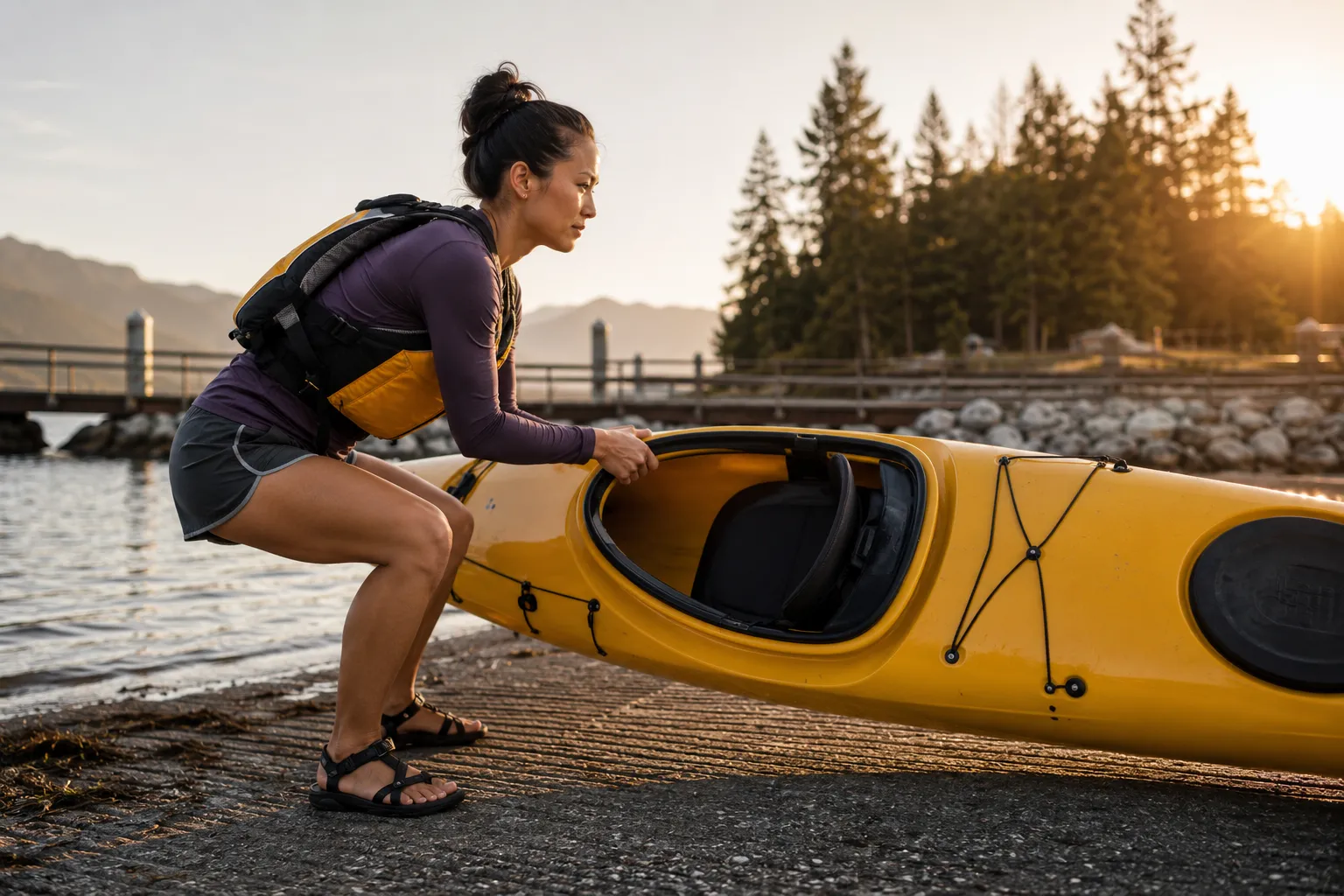
What Is the Easiest Way to Carry a Kayak by Yourself?
The easiest way to carry a kayak by yourself is using a wheeled kayak cart for any distance over 50-100 yards, and shoulder carrying with a padded strap for shorter distances. A kayak cart eliminates the need to support the full weight of your kayak, letting you simply pull or push it like a wheelbarrow. For quick launches where a cart isn’t practical, a padded shoulder strap or yoke distributes the kayak’s weight across your shoulders and upper back rather than concentrating pressure on a single point.
Choose a kayak cart if:
- You’re traveling more than 100 yards from vehicle to water
- The terrain includes sand, gravel, or uneven ground
- Your kayak weighs more than 50 pounds
- You have mobility limitations or previous back injuries
- You’re making multiple trips in one day
Choose shoulder carrying if:
- The distance is under 100 yards on smooth terrain
- You have good core strength and proper technique
- Your kayak weighs under 60 pounds
- You need to navigate stairs or obstacles where wheels won’t work
The absolute easiest method combines both: use a cart for the long haul from your vehicle, then shoulder-carry the final 20-30 feet through shallow water or over obstacles at the launch site.
How Much Does a Typical Kayak Weigh?
A typical recreational kayak weighs 35-50 pounds, while fishing kayaks range from 55-90 pounds depending on length, width, and features. Sit-on-top fishing kayaks with pedal drives, multiple rod holders, and storage compartments typically weigh 65-85 pounds. Lightweight touring kayaks can weigh as little as 30-40 pounds, while tandem kayaks often exceed 70-100 pounds.
Weight ranges by kayak type:
| Kayak Type | Typical Weight Range |
|---|---|
| Recreational sit-inside | 35-50 lbs |
| Recreational sit-on-top | 40-60 lbs |
| Fishing kayak (paddle) | 55-75 lbs |
| Fishing kayak (pedal drive) | 70-90 lbs |
| Touring/sea kayak | 40-65 lbs |
| Tandem kayak | 70-100+ lbs |
| Inflatable kayak | 25-40 lbs |
Weight factors that matter:
- Material: Rotomolded polyethylene kayaks weigh more than composite or thermoform models
- Length: Each additional foot typically adds 5-8 pounds
- Width: Wider, more stable fishing kayaks carry more material and weight
- Features: Pedal drives add 15-25 pounds; built-in rod holders, tackle storage, and fish finders add weight
If your kayak weighs more than 60 pounds, plan on using a cart or assistance for distances over 50 yards. Even fit paddlers find that carrying 70+ pounds solo for extended distances leads to fatigue and increases injury risk.
Kayak Cart vs Shoulder Carry: Which Is Better?
A kayak cart is better for distances over 100 yards, heavy kayaks (60+ pounds), and rough terrain, while shoulder carrying works best for short distances under 100 yards on smooth ground with lighter kayaks. The decision comes down to distance, terrain, kayak weight, and your physical capability. Most serious kayak anglers own a cart and use it for 80% of their launches, reserving shoulder carries for the final approach to the water.
Kayak cart advantages:
- Eliminates weight-bearing strain on your back and shoulders
- Handles any kayak weight without physical limitation
- Works on sand, gravel, grass, and pavement with the right wheels
- Lets you transport gear and kayak simultaneously
- Reduces fatigue, letting you fish longer
Kayak cart disadvantages:
- Requires storage space in your vehicle
- Costs $60-200 depending on quality
- Doesn’t work on stairs, steep banks, or through shallow water
- Adds setup time at the launch
Shoulder carry advantages:
- No equipment needed beyond optional padded strap ($15-40)
- Works on stairs, docks, and obstacles where wheels fail
- Faster for very short distances (under 50 yards)
- Develops core strength and balance
Shoulder carry disadvantages:
- Strains back, shoulders, and neck on longer carries
- Requires good technique to avoid injury
- Impractical for kayaks over 70 pounds
- Limits how much gear you can transport in one trip
The hybrid approach: Use a cart to get within 30-50 feet of the water, then shoulder-carry the final distance. This combines the efficiency of wheeled transport with the flexibility of carrying through shallow water or over the final obstacles at the launch site.
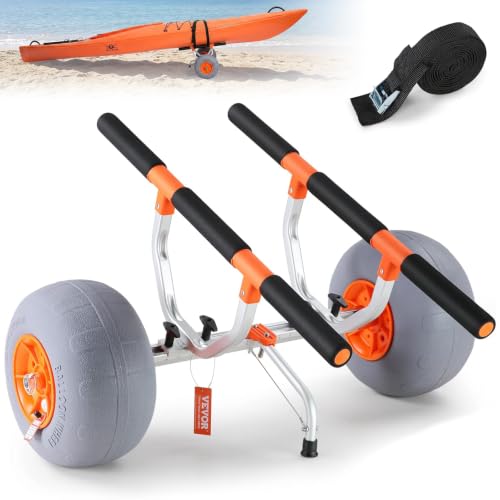
【Strong Weight Capacity】This compact kayak trailer is specially designed for transporting various kinds of kayaks. It adopts a 2mm thickened aluminum alloy frame for a larger load capacity. It can carry 350 lbs / 160 kg kayaks without breaking or deforming.
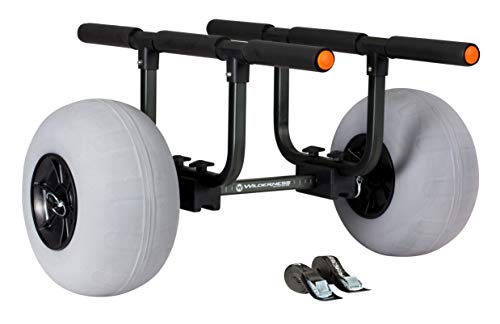
Paddling magazine's 2018 winner in the "best transport/storage/launching' category

Strong Weight Capacity: This universal kayak dolly adopts a 2mm thickened aluminum alloy frame to ensure a larger load capacity while also keeping the weight at a minimum (7lbs). It can carry 250 lbs / 113 kg kayaks without breaking or deforming.
Best Kayak Carrying Straps for One Person
The best kayak carrying straps for one person are padded shoulder yokes or single-strap systems that distribute weight across your shoulders and upper back. Quality straps feature dense foam padding at least 2 inches thick, adjustable length to fit different kayak sizes, and durable nylon webbing rated for 200+ pounds. A good carrying strap reduces pressure points and fatigue by spreading the kayak’s weight over a larger surface area compared to gripping the cockpit rim or carrying handles.
Top strap features to look for:
- Padding thickness: At least 2 inches of closed-cell foam that won’t compress over time
- Width: 4-6 inches wide at the shoulder contact point
- Adjustability: Straps that adjust from 8-14 feet to fit kayaks from 10-14 feet long
- Weight rating: Minimum 200-pound capacity for safety margin
- Quick-release buckles: For fast attachment and removal
Strap types:
Single shoulder strap ($15-35): Wraps around the kayak’s center of gravity and rests on one shoulder. Best for kayaks under 50 pounds and distances under 100 yards. Requires switching shoulders periodically to avoid fatigue.
Padded yoke/harness ($30-60): Distributes weight across both shoulders like a backpack. Best for kayaks 50-70 pounds and distances up to 200 yards. Provides the most balanced carry but costs more.
Webbing sling ($10-20): Simple nylon strap without padding. Works in a pinch but uncomfortable for kayaks over 40 pounds or distances over 50 yards.
Common mistake: Buying a strap that’s too short for your kayak length. Measure your kayak’s length and add 2 feet to ensure the strap can wrap around with enough slack to position properly on your shoulder.
If you’re carrying a kayak regularly, invest in a quality padded yoke. The $30-40 difference between a basic strap and a padded system pays for itself in comfort after just a few trips.

Fully adjustable: Fully adjustable length ensures a customized fit for users of all heights, making transportation effortless

EFFORTLESS BOARD CARRY - Engineered to make SUP paddle board carrying easier and more comfortable; It helps reduce shoulder strain, slipping, and shifting for more stable and hands-free way to transport paddleboard to the beach or lake
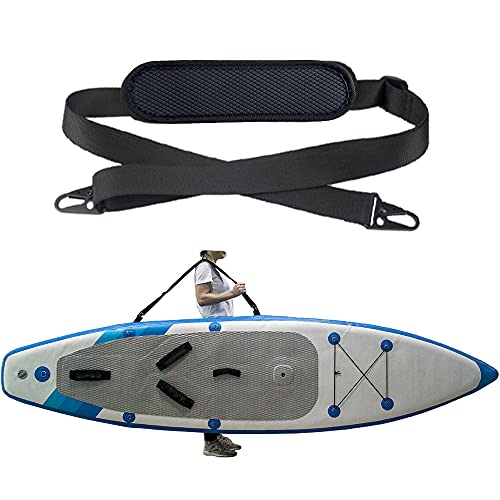
The SUP carrying strap with soft shoulder pad, which comfortable for carrying from your car to the beach
How to Lift a Heavy Kayak Onto Your Shoulder Without Hurting Your Back
To lift a heavy kayak onto your shoulder without hurting your back, start with the kayak on the ground beside you, squat down with a neutral spine, grip the cockpit rim with both hands, lift with your legs while rotating the kayak up and onto your shoulder in one smooth motion, then adjust the balance point. The key is using your leg muscles, the strongest in your body, rather than your back muscles to power the lift.
Step-by-step lifting technique:
Position the kayak: Place it on the ground parallel to your body, cockpit facing away, with the bow pointing in the direction you’ll walk.
Squat with proper form: Stand at the kayak’s center of gravity (usually just behind the cockpit). Bend your knees and drop into a squat, keeping your back straight and chest up. Your spine should maintain its natural curve, don’t round your lower back.
Grip the cockpit rim: Reach across and grab the far side of the cockpit rim with both hands, one hand near the front of the cockpit, one near the back. This gives you control and leverage.
Lift with your legs: Drive through your heels and extend your legs, lifting the kayak while keeping it close to your body. As you stand, begin rotating the kayak up toward your shoulder.
Roll onto your shoulder: As the kayak reaches chest height, duck your head slightly and let the kayak roll onto your shoulder. The cockpit rim should rest on your shoulder with the hull above your head.
Find the balance point: Adjust the kayak forward or backward on your shoulder until it balances. Most kayaks balance with the cockpit slightly behind your shoulder. You should be able to release one hand without the kayak tipping.
Walk with proper posture: Keep your core engaged, shoulders back, and take smooth steps. Look ahead, not down.
Common lifting mistakes:
- Bending at the waist instead of squatting (puts all strain on lower back)
- Lifting the kayak away from your body (increases leverage and back strain)
- Jerking or using momentum instead of controlled leg power
- Attempting to lift a kayak that’s too heavy for your strength level
When to skip the shoulder carry: If your kayak weighs more than 30% of your body weight, or if you have any history of back problems, use a cart instead. A 150-pound person should think twice before shoulder-carrying a 70-pound kayak more than 50 yards.

Ideal for carrying surfboards, longboards, SUP boards, wind surf board etc

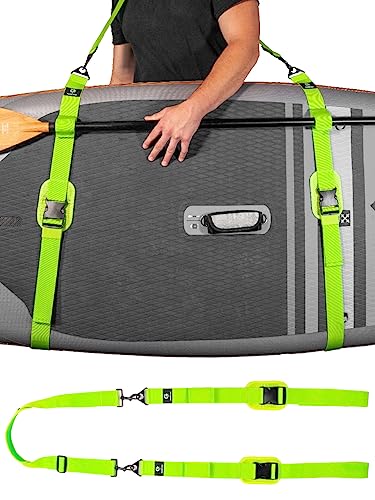
EFFORTLESS BOARD CARRY - Engineered to make SUP paddle board carrying easier and more comfortable; It helps reduce shoulder strain, slipping, and shifting for more stable and hands-free way to transport paddleboard to the beach or lake
Can a Small Person Carry a 60-Pound Kayak Alone?
Yes, a small person can carry a 60-pound kayak alone using proper technique, a padded carrying strap, and realistic distance expectations, or by using a wheeled cart, which eliminates the weight-bearing challenge entirely. Body size matters less than technique and equipment choice. A 120-pound paddler with good form and a quality shoulder yoke can comfortably carry a 60-pound kayak for 50-75 yards, while the same person can easily wheel an 80-pound kayak a quarter-mile using a cart.
Strategies for smaller paddlers:
Use a kayak cart as your primary method: This is the most practical solution. A cart eliminates the strength requirement entirely, you’re pulling or pushing, not lifting. Even a 100-pound paddler can easily move a 90-pound kayak with a cart.
Invest in a padded yoke, not a single strap: Distributing weight across both shoulders rather than one makes a significant difference. A yoke can make a 60-pound kayak feel like 40 pounds compared to a single-shoulder carry.
Perfect your lifting technique: Smaller paddlers have less margin for error. Focus on squatting deeply, keeping the kayak close to your body, and using leg drive. Consider practicing with an empty kayak first.
Shorten your carry distance: Park closer, choose launch sites with shorter walks, or make two trips (kayak first, then gear).
Consider a lighter kayak: If you’re buying a new kayak and know you’ll be launching solo frequently, weight should be a top consideration. A 45-pound kayak is significantly easier to manage than a 70-pound model, even if it means sacrificing some features.
Break the carry into stages: Carry the kayak 30-40 yards, set it down and rest for 30 seconds, then continue. This prevents fatigue and reduces injury risk.
Reality check: If you weigh 110 pounds and your kayak weighs 75 pounds, shoulder carrying more than 50 yards is impractical and potentially dangerous. Use a cart, ask for help, or choose a lighter kayak. There’s no shame in using equipment designed to make the task easier and safer.
Why Does My Shoulder Hurt After Carrying My Kayak?
Your shoulder hurts after carrying your kayak because the concentrated weight and pressure on your shoulder joint, rotator cuff muscles, and trapezius create strain and inflammation, especially if you’re using poor technique, carrying too far, or lacking adequate padding. Shoulder pain from kayak carrying typically results from overuse of the deltoid and rotator cuff muscles, pressure on the acromioclavicular (AC) joint, or muscle fatigue in the upper trapezius.
Common causes of shoulder pain:
Pressure point concentration: Carrying a kayak on bare shoulder or with thin padding concentrates 50-70 pounds of force on a small area, compressing soft tissue and irritating the AC joint.
Rotator cuff strain: The small rotator cuff muscles work overtime to stabilize your shoulder joint under the kayak’s weight, especially if the kayak isn’t balanced properly.
Muscle fatigue: Your trapezius and deltoid muscles fatigue from sustained load, leading to inflammation and soreness.
Poor posture during carry: Leaning to one side or hunching forward shifts weight distribution and strains muscles unnaturally.
Carrying too far or too often: Exceeding your shoulder’s load capacity or not allowing recovery time between trips causes cumulative strain.
Solutions to prevent shoulder pain:
- Use a padded yoke or strap: At least 2 inches of dense foam padding distributes pressure over a larger area
- Switch shoulders regularly: Alternate every 30-40 yards to distribute strain
- Improve your balance point: Adjust the kayak so it balances naturally without you having to muscle it
- Shorten carry distances: Use a cart for long hauls, shoulder-carry only the final approach
- Strengthen your shoulders: Exercises targeting rotator cuff and upper back muscles build carrying capacity
- Rest between trips: If you’re making multiple launches per week, allow 48 hours between heavy carries
When to see a doctor: If shoulder pain persists more than 3-4 days after carrying, worsens with overhead movements, or includes sharp pain rather than dull soreness, you may have a rotator cuff injury or AC joint inflammation that needs medical evaluation.
The simplest solution: use a cart for distances over 50 yards. Your shoulders will thank you.
Do I Need a Kayak Cart If I Have a Short Distance to the Water?
You need a kayak cart even for short distances if your kayak weighs over 60 pounds, the terrain is difficult (sand, gravel, or uphill), you have any back or shoulder issues, or you’re making frequent trips. While a 30-yard carry on flat pavement with a 45-pound kayak is manageable without a cart, that same distance through soft sand with a 70-pound fishing kayak becomes exhausting and risky. Distance is only one factor, weight, terrain, and frequency matter just as much.
Consider a cart even for short distances if:
- Your kayak weighs 60+ pounds (most fishing kayaks)
- The path includes soft sand, which dramatically increases effort
- You’re walking uphill or across uneven ground
- You’re over 50 or have any joint or back concerns
- You launch 2+ times per week (cumulative strain adds up)
- You’re transporting gear in addition to the kayak
You can probably skip the cart if:
- Distance is under 50 yards on flat, smooth ground
- Your kayak weighs under 50 pounds
- You’re young, fit, and have no injury history
- You launch infrequently (once or twice per month)
- You have help available if needed
The sand factor: Soft beach sand can triple the effort required compared to pavement. A 50-yard carry through sand feels like 150 yards on pavement. If you’re launching from beaches regularly, a cart with large balloon tires (8-12 inches diameter) is essential regardless of distance.
Cost-benefit reality: A basic kayak cart costs $60-80, a quality model $120-150. If it prevents one back injury that requires physical therapy or time off work, it pays for itself many times over. Think of a cart as injury insurance, not just a convenience item.
Many paddlers who initially skip buying a cart end up purchasing one after a few painful carries. Save yourself the learning curve and get the cart from the start if your kayak weighs over 55 pounds.
What Are the Alternatives to Carrying a Kayak Solo?
The main alternatives to carrying a kayak solo are using a wheeled cart, recruiting a partner for tandem carrying, installing a kayak trailer or dolly system, choosing launch sites with drive-up access, or switching to an inflatable kayak that packs into a backpack. Each alternative trades some aspect of convenience, cost, or flexibility to eliminate the physical challenge of solo carrying.
Practical alternatives:
Wheeled kayak cart ($60-200): The most popular alternative. Lets you transport any kayak solo without carrying. Choose balloon tires for sand, solid wheels for pavement.
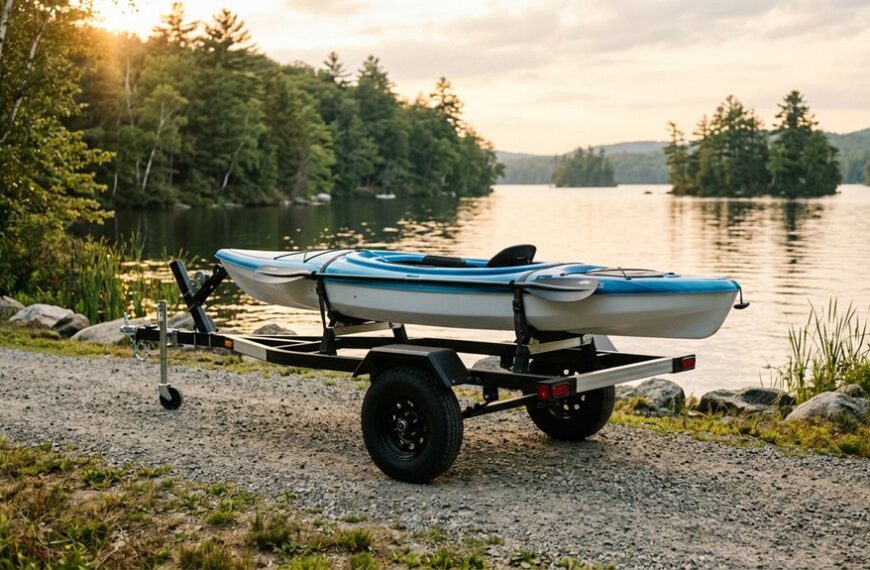
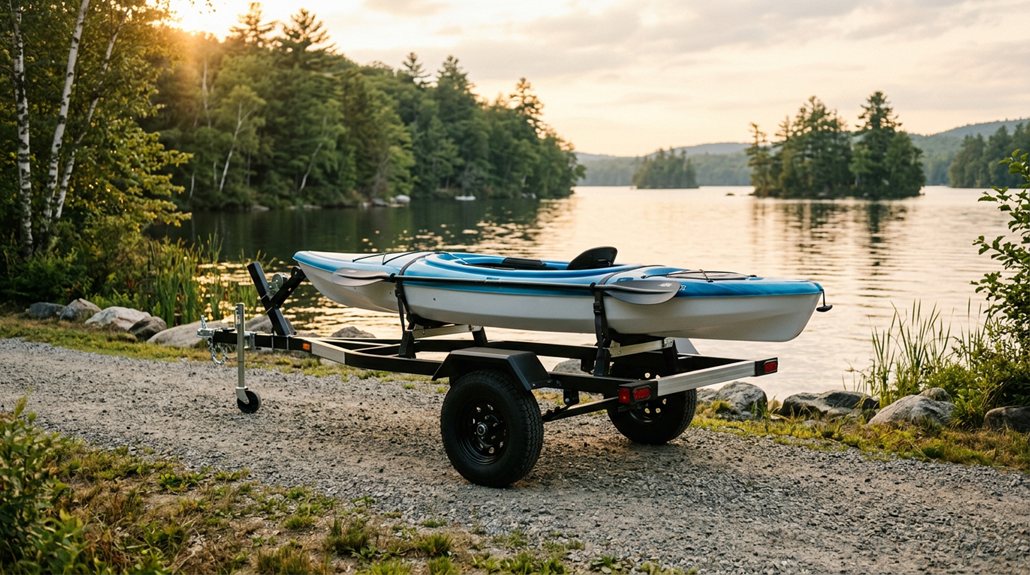
Kayak trailer ($200-600): Small utility trailer that attaches to your vehicle. Best for paddlers with multiple kayaks or those who launch from the same location repeatedly. Requires storage space and trailer registration in some states.
Partner carry: Two people can easily carry even a 90-pound tandem kayak. Coordinate with a fishing buddy or family member. Each person supports one end, eliminating shoulder strain.
Kayak slide/ramp: Permanent or semi-permanent slide installed at your regular launch site. Lets you slide the kayak down to the water rather than carrying. Only practical if you own waterfront property or have permission to install.
Drive-up launch sites: Choose boat ramps, beaches, or access points where you can park within 20-30 feet of the water. Eliminates long carries entirely.
Inflatable kayak: High-quality inflatable fishing kayaks weigh 25-40 pounds and pack into a backpack or rolling bag. Trade some performance and features for ultimate portability.
Kayak roof rack with rollers: Doesn’t eliminate the carry, but makes loading onto your vehicle easier. Some paddlers load the kayak on the roof rack, drive to the launch, and slide it off directly into the water if the ramp allows.
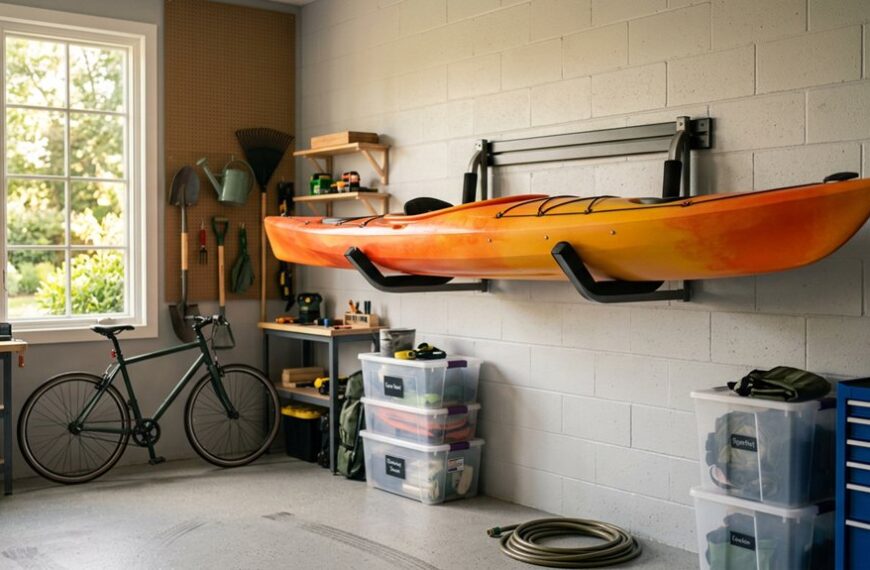
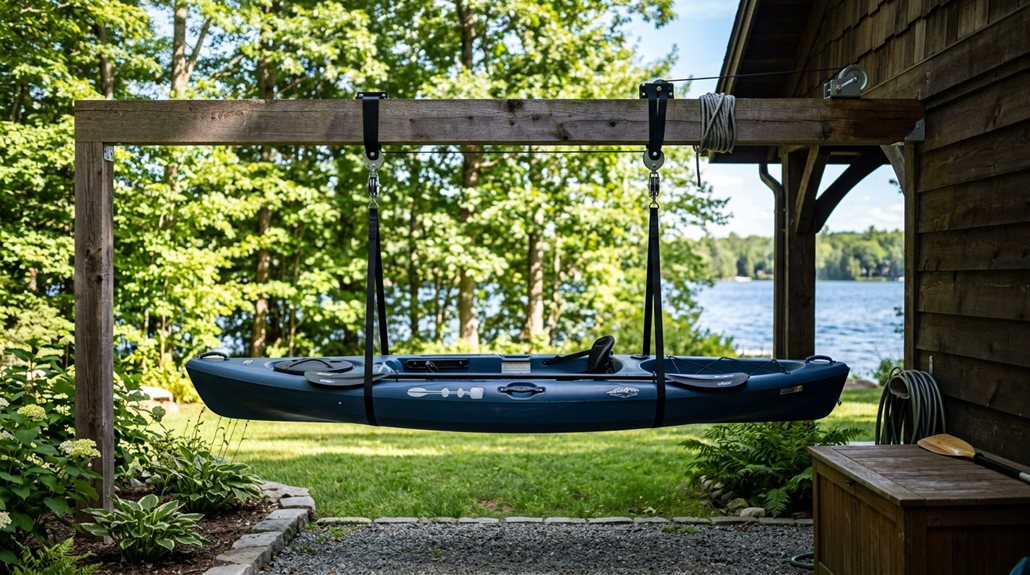
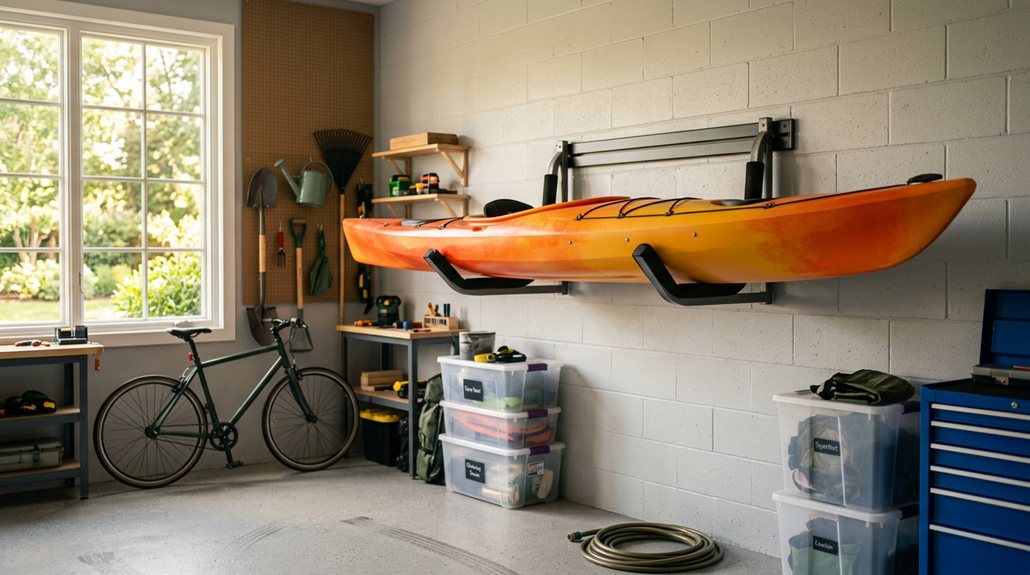
Overhead garage hoist: Stores your kayak overhead and lowers it directly onto your vehicle’s roof rack. Eliminates lifting the kayak from ground level.
The best alternative depends on your specific situation. Weekend warriors launching from different locations benefit most from a quality cart. Paddlers with a home lake or pond might invest in a trailer or slide system.
Is It Safe to Drag a Kayak on the Ground?
No, it is not safe to drag a kayak on the ground, dragging causes hull damage, scratches the gel coat, can puncture or crack the hull on rocks or debris, voids most manufacturer warranties, and reduces resale value. While dragging a kayak short distances on smooth grass occasionally won’t destroy it immediately, repeated dragging on pavement, gravel, sand with shells, or rocky terrain will cause permanent damage that compromises the hull’s integrity and waterproofness.
Damage caused by dragging:
Gel coat scratches: Even smooth surfaces create fine scratches that accumulate over time, making the hull look worn and reducing resale value.
Hull abrasion: Pavement and gravel wear through the outer layer of polyethylene or composite material, thinning the hull and creating weak points.
Punctures and cracks: Rocks, sticks, shells, and debris can puncture the hull or create stress cracks that leak.
Keel damage: The keel (bottom centerline) takes the most abuse during dragging and often develops grooves or flat spots that affect tracking.
Warranty void: Most kayak manufacturers explicitly state that dragging voids the warranty. If you develop a crack or leak, you’ll pay for repairs out of pocket.
When paddlers drag anyway (and why it’s still wrong):
Some paddlers drag kayaks short distances on smooth grass or sand, reasoning that soft surfaces cause minimal damage. While grass is less destructive than pavement, you’re still risking hidden debris (rocks, roots, glass) and creating wear patterns. Sand seems soft but often contains shells, rocks, and debris that scratch and gouge.
The cost of dragging: Hull repairs cost $100-400 depending on damage severity. A quality kayak cart costs $80-150. A carrying strap costs $20-40. The math is simple: spending $100 on a cart or strap now prevents $300 in repairs later.
Proper alternatives:
- Use a kayak cart with padded cradles
- Shoulder-carry using proper technique
- Get help from a partner for tandem carrying
- Choose launch sites with shorter carries
Emergency exception: If you’re injured, in danger, or facing an emergency, dragging your kayak to safety is acceptable. Your safety matters more than hull damage. But for routine launches, always lift or wheel your kayak.
Common Mistakes When Carrying a Kayak Alone
The most common mistakes when carrying a kayak alone are lifting with your back instead of your legs, carrying the kayak too far from your body, failing to find the balance point, skipping padded straps, and attempting to carry a kayak that’s too heavy for your strength level. These errors lead to back and shoulder injuries, dropped kayaks, and damaged equipment.
Top carrying mistakes and fixes:
Lifting with your back: Bending at the waist and using back muscles to lift puts enormous strain on your lumbar spine. Fix: Squat down, keep your back straight, and drive through your legs.
Holding the kayak away from your body: Extending your arms to grip carrying handles increases leverage and back strain exponentially. Fix: Keep the kayak close to your body throughout the lift and carry.
Wrong balance point: Carrying the kayak too far forward or back on your shoulder forces you to muscle it the entire distance. Fix: Adjust until the kayak balances naturally with minimal effort.
No padding: Carrying on bare shoulder concentrates pressure and causes pain and bruising. Fix: Use a padded strap or yoke, or at minimum fold a towel over your shoulder.
Looking down while walking: Staring at the ground throws off your balance and posture. Fix: Look ahead at your destination, not at your feet.
Ignoring wind: Carrying a kayak in strong wind turns it into a sail, throwing you off balance. Fix: Orient the kayak bow-first into the wind, or wait for calmer conditions.
Overestimating your strength: Attempting to carry a kayak that’s too heavy leads to dropped kayaks, injuries, and damaged equipment. Fix: Use a cart, get help, or choose a lighter kayak.
Rushing the carry: Hurrying increases injury risk and makes you more likely to trip or lose balance. Fix: Take your time, rest if needed, and prioritize safety over speed.
Carrying gear and kayak simultaneously: Trying to carry your kayak plus tackle box, rods, and cooler in one trip overloads you. Fix: Make two trips, or use a cart that can carry both kayak and gear.
Ignoring pain: Pushing through shoulder or back pain during a carry can turn minor strain into serious injury. Fix: Stop immediately if you feel sharp pain, set the kayak down, and rest or get help.
The biggest mistake is pride, refusing to use a cart or ask for help because you think you should be able to carry your kayak solo. Smart paddlers use the right tools for the job.
How to Carry a Tandem Kayak by Yourself
Carrying a tandem kayak by yourself requires a heavy-duty kayak cart rated for 150+ pounds, as tandem kayaks typically weigh 70-100+ pounds and measure 12-18 feet long, making shoulder carrying impractical and dangerous for solo transport. If you must shoulder-carry a tandem kayak solo for a very short distance (under 30 yards), use the same technique as a regular kayak but expect significantly more difficulty balancing the longer length and heavier weight.
Why tandem kayaks are difficult to carry solo:
Weight: Most tandem kayaks weigh 70-100 pounds, with fishing models reaching 110+ pounds. This exceeds safe shoulder-carrying weight for most people.
Length: At 12-18 feet long, tandem kayaks are unwieldy and difficult to balance on your shoulder. The long ends catch wind and obstacles.
Balance point: The center of gravity on a tandem kayak may not align well with your shoulder, forcing you to muscle the kayak the entire distance.
Practical solutions for solo tandem transport:
Heavy-duty kayak cart (best option): Invest in a cart rated for 150-200 pounds with wide-set wheels for stability. Position the cart at the tandem’s balance point (usually between the two cockpits) and secure with straps.
Tandem cart with two wheel sets: Some carts designed specifically for tandem kayaks feature two sets of wheels that support both the front and rear, eliminating balance issues.
Recruit help: The safest and easiest method is tandem carrying with a partner. Each person lifts one end using the grab handles. Communication is key, count “1, 2, 3, lift” together.
Temporary shoulder carry technique (emergency only, under 30 yards):
- Position the kayak on its side next to you
- Squat and grip the center cockpit rim
- Lift with your legs and roll onto your shoulder
- Expect the bow and stern to extend 4-6 feet on either side
- Walk slowly and watch for obstacles
- Set down every 20-30 feet to rest and adjust
Reality check: If you own a tandem kayak and regularly launch solo, a cart isn’t optional, it’s essential equipment. Attempting to shoulder-carry a 90-pound, 14-foot tandem kayak more than 50 yards is a recipe for injury.
Consider whether a tandem kayak makes sense for your situation. If you paddle solo frequently, a lighter solo kayak (45-65 pounds) is far more practical.
What If My Kayak Is Too Heavy to Lift Alone?
If your kayak is too heavy to lift alone, use a wheeled kayak cart for all transport, recruit a partner for tandem carrying, choose launch sites with drive-up access, consider trading for a lighter kayak model, or install assistive equipment like a roof rack with rollers or a garage hoist system. There’s no shame in acknowledging that a kayak exceeds your safe lifting capacity, using the right equipment prevents injuries and lets you focus on fishing rather than struggling with transport.
Immediate solutions:
Buy a quality kayak cart: This solves 90% of heavy kayak problems. A cart rated for 150-200 pounds handles even the heaviest fishing kayaks. Budget $100-150 for a reliable model with appropriate wheels for your terrain.
Find a kayak buddy: Partner with another angler who launches from the same locations. You help carry their kayak, they help carry yours. Many paddlers form informal launch partnerships.
Choose accessible launch sites: Research boat ramps and access points where you can park within 20-30 feet of the water. This eliminates long carries entirely.
Make multiple trips: If you can lift the kayak but not carry it far, move it in stages. Carry 30 feet, rest, carry another 30 feet. It takes longer but prevents injury.
Long-term solutions:
Trade for a lighter kayak: If your 85-pound pedal-drive fishing kayak is consistently too heavy, consider trading for a 55-pound paddle model. You’ll sacrifice some features but gain manageability.
Install a roof rack with rollers: Makes loading onto your vehicle easier. Some paddlers drive to the water’s edge (where permitted) and slide the kayak directly from the roof rack into the water.
Garage hoist system: If storage and loading are the main challenges, an overhead hoist ($50-150) lifts the kayak to ceiling storage and lowers it onto your roof rack without ground-level lifting.
Kayak trailer: A small utility trailer ($200-400) lets you wheel multiple kayaks to the launch without lifting them onto your vehicle at all.
When to admit a kayak is too heavy:
If your kayak weighs more than 35% of your body weight, shoulder carrying is impractical. A 150-pound person should think twice about shoulder-carrying anything over 50-55 pounds more than 50 yards. A 120-pound person’s practical limit is around 40-45 pounds.
Safety first: Dropping a kayak because it’s too heavy can damage the kayak, injure you, or hurt bystanders. If you can’t lift it safely, don’t. Use equipment designed for the task.
Frequently Asked Questions
How do you carry a kayak on your shoulder?
Position yourself at the kayak’s center of gravity, squat down with a straight back, grip the cockpit rim with both hands, lift with your legs while rotating the kayak onto your shoulder, then adjust until it balances naturally. Use a padded strap to distribute weight and reduce shoulder pressure.
What is the best kayak cart for sand?
The best kayak cart for sand features large balloon tires (10-12 inches diameter) with low pressure (8-10 PSI) that float on soft sand rather than sinking. Look for models with wide-set wheels for stability and rust-resistant materials for saltwater environments.
Can you carry a kayak alone if you’re not strong?
Yes, you can carry a kayak alone even without significant strength by using a wheeled cart (which eliminates the strength requirement) or by using proper lifting technique with a padded yoke for short distances. Technique and equipment matter more than raw strength.
How far can you carry a 70-pound kayak?
Most fit adults can carry a 70-pound kayak 50-100 yards using proper technique and a padded strap before fatigue becomes significant. Beyond 100 yards, a wheeled cart becomes essential to prevent exhaustion and injury.
Do kayak carrying straps really help?
Yes, kayak carrying straps with adequate padding (2+ inches thick) significantly reduce shoulder pressure and fatigue by distributing the kayak’s weight over a larger surface area. Quality straps can reduce perceived weight by 30-40% compared to bare-shoulder carrying.
Should you carry a kayak upside down or right-side up?
Carry a kayak right-side up (hull down) on your shoulder so the cockpit rim rests on your shoulder and the hull is above your head. This position provides better balance and protects the cockpit from damage if you need to set the kayak down.
How do you carry a kayak through shallow water?
Carry a kayak through shallow water (under knee-deep) on your shoulder using the same technique as land carrying, or drag it gently through soft-bottom areas if the water is too deep to walk comfortably. Once water reaches mid-thigh depth, you can float the kayak and walk alongside it.
What’s the best way to carry two kayaks at once?
The best way to carry two kayaks at once is using a tandem kayak cart that supports both kayaks stacked and strapped together, or by recruiting two people to each carry one kayak. Attempting to shoulder-carry two kayaks solo is impractical and dangerous.
How do you load a heavy kayak onto a roof rack alone?
Load a heavy kayak onto a roof rack alone by positioning the stern on the rear crossbar first, then lifting the bow and sliding the kayak forward onto both crossbars. Roof racks with rear rollers or load-assist systems make this significantly easier for kayaks over 60 pounds.
Can you use a hand truck as a kayak cart?
You can use a hand truck as a temporary kayak cart by strapping the kayak to the hand truck’s frame, but dedicated kayak carts work much better because they’re designed with wider wheel spacing for stability, appropriate cradles to protect the hull, and wheels suited for outdoor terrain.
Why is my back sore after carrying my kayak?
Your back is sore after carrying your kayak because you likely lifted with your back instead of your legs, carried the kayak too far from your body, or exceeded your safe carrying distance. Use proper squatting technique, keep the kayak close, and consider using a cart for distances over 50 yards.
How much does a kayak cart cost?
A basic kayak cart costs $60-100, while heavy-duty models with balloon tires and higher weight capacity cost $120-200. Specialty carts for tandem kayaks or extreme terrain can reach $250-300. Most paddlers find the $100-150 range offers the best balance of quality and value.
Conclusion
Learning how to carry a heavy kayak solo comes down to three key elements: proper lifting technique, the right equipment, and honest assessment of your capabilities. While shoulder carrying works for short distances with lighter kayaks, most paddlers benefit significantly from investing in a quality wheeled cart, especially for kayaks over 60 pounds or distances beyond 100 yards. The $100-150 you spend on a cart or padded carrying system prevents injuries, extends your paddling career, and makes every launch less stressful.
Your next steps:
Assess your situation: Weigh your kayak, measure typical carry distances, and evaluate the terrain at your regular launch sites.
Invest in the right equipment: If your kayak weighs over 55 pounds or you’re carrying more than 75 yards, buy a cart. If you’re shoulder-carrying regularly, get a padded yoke or strap.
Practice proper technique: Before your next launch, practice the squat-and-lift method with your kayak in a safe area like your driveway. Perfect your form before you’re tired at the water’s edge.
Know your limits: If a kayak is too heavy, use a cart or get help. Pushing through pain or fatigue leads to injuries that can end your season or worse.
Choose smart launch sites: Research access points with shorter carries or better terrain. Sometimes driving an extra 10 minutes to a more accessible launch saves 20 minutes of struggling with a heavy carry.
The goal isn’t to prove you can muscle a 75-pound kayak a quarter-mile through sand, it’s to get on the water safely, fish effectively, and return home without injury. Smart paddlers use the right tools for the job and save their energy for what matters: catching fish.