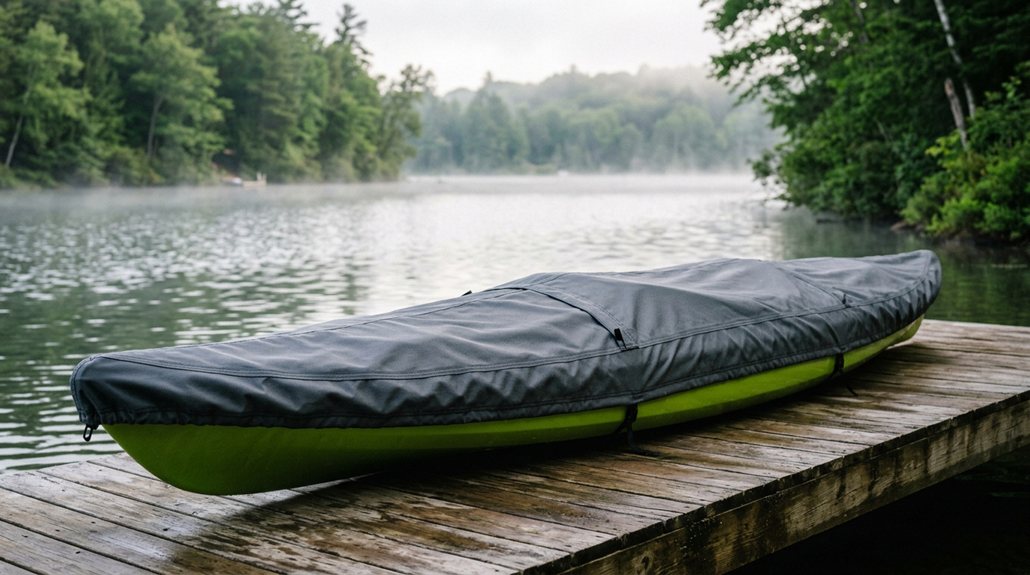
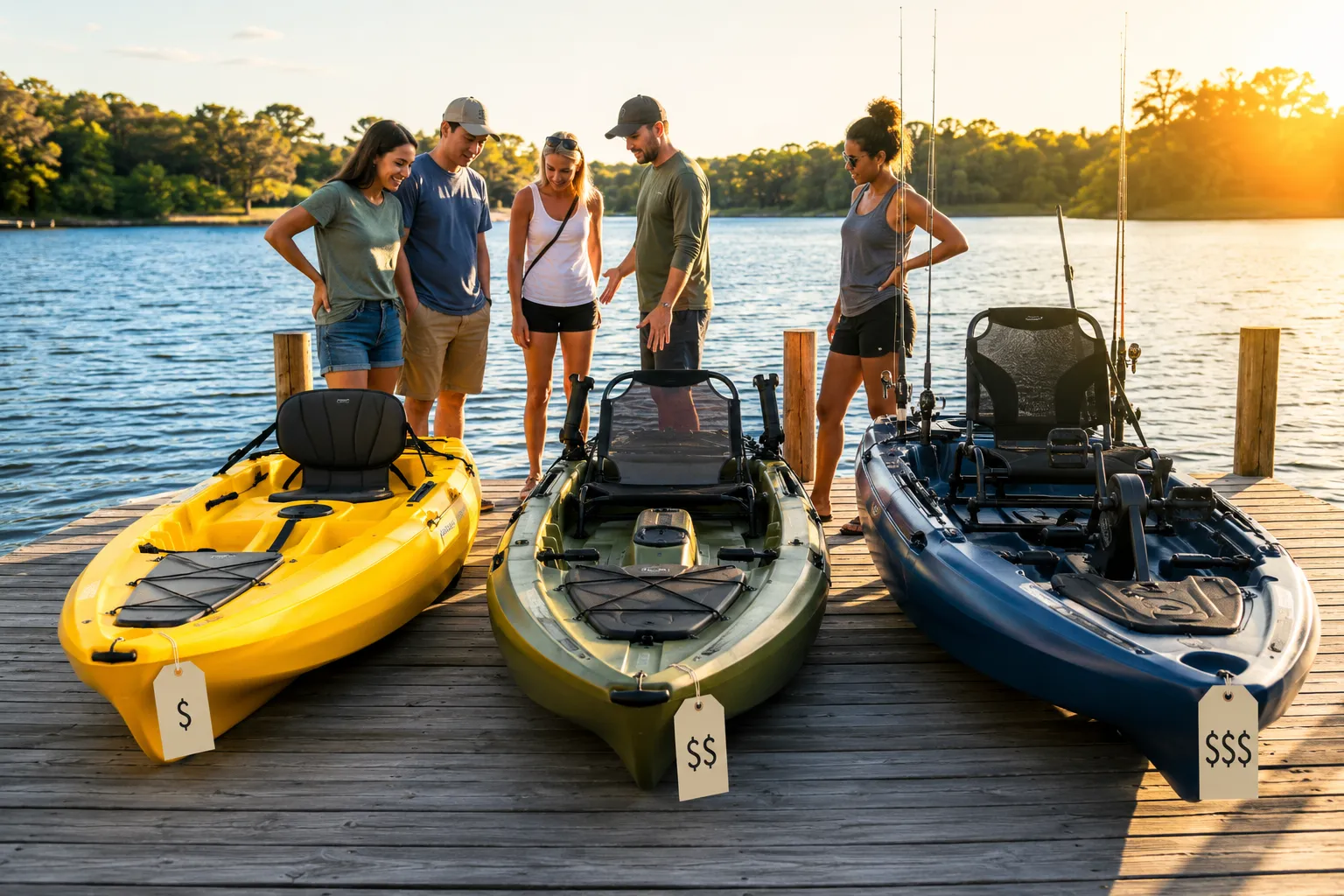
Most beginners should budget $500 to $900 for their first fishing kayak, which buys a reliable sit-on-top model with essential fishing features like rod holders, stable hull design, and adequate storage. Spending less than $400 often means compromising on stability and durability, while spending more than $1,200 as a complete beginner usually pays for advanced features you won’t use until you’ve logged dozens of hours on the water.
Key Takeaways
- Budget $500-$900 for a quality first fishing kayak that will last and keep you safe
- Kayaks under $300 typically lack the stability and features needed for comfortable fishing
- Used kayaks can save 30-40% but require careful inspection for hull damage and sun degradation
- Hidden costs add $300-$600: paddle ($80-$150), PFD ($50-$100), roof rack/transport ($100-$200), and accessories
- Sit-on-top kayaks ($400-$800) are more beginner-friendly than sit-inside models for fishing
- Pedal-drive kayaks ($2,000-$4,000) are unnecessary for beginners; standard paddle kayaks work great
- The $600-$800 range offers the best value with good stability, comfort, and essential fishing features
- Plan to keep your first kayak 2-3 seasons before deciding if you want to upgrade
- Inflatable fishing kayaks ($400-$900) are legitimate options if you lack storage space
- Avoid common mistakes: buying too narrow (under 30 inches), skipping test sits, or overspending on features you don’t understand yet
What Is a Good Budget for a Beginner Fishing Kayak?
A realistic budget for a beginner fishing kayak is $500 to $900 for the kayak itself, plus another $300 to $600 for essential gear and accessories. This range gets you a stable, durable fishing platform with the features you’ll actually use while learning the sport.
Here’s why this range makes sense:
Under $400: You’ll find recreational kayaks not designed for fishing, or fishing kayaks with compromised stability, uncomfortable seats, and minimal features. These often use thinner plastic that warps in sun and cracks more easily.
$500-$700: This sweet spot includes entry-level fishing kayaks from reputable brands like Perception, Lifetime, and Vibe. You get adequate width (32+ inches) for stability, molded-in rod holders, tank well storage, and comfortable seats. The hull plastic is thick enough to handle rocky launches and years of UV exposure.
$700-$900: Mid-range models from Bonafide, Vibe, and Old Town add better seat systems, more storage options, improved tracking, and often include an anchor trolley system. The quality jump is noticeable but not essential for beginners.
Over $1,200: You’re paying for premium features like advanced hull designs, integrated rudder systems, and extensive rigging options. Great kayaks, but the performance gains won’t matter much until you’ve developed skills and preferences.
Choose the $500-$700 range if: You’re testing whether kayak fishing is for you, fish calm lakes and slow rivers, or want to minimize initial investment.
Choose the $700-$900 range if: You’re committed to the sport, plan to fish diverse waters, or want a kayak that won’t feel limiting after your first season.
Common mistake: Buying the cheapest kayak available, then replacing it within a year because it’s uncomfortable or unstable. That $300 kayak becomes a $900 lesson when you buy the $600 kayak you should have started with.
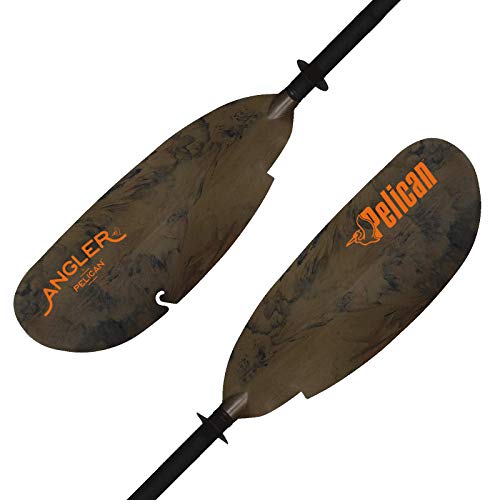
Longer reach:This high-quality paddle is extra long and sized to fit modern fishing kayaks over 34" wide.

How Much Do Fishing Kayaks Cost on Average?
Fishing kayaks range from $300 to $5,000+, with the average quality fishing kayak costing $800 to $1,200 in 2026. The price varies dramatically based on propulsion type, materials, brand, and features.
Price breakdown by category:
- Budget fishing kayaks: $300-$500 (basic features, recreational-grade plastic, limited stability)
- Entry-level fishing kayaks: $500-$800 (adequate stability, essential fishing features, decent durability)
- Mid-range fishing kayaks: $800-$1,500 (better hull designs, premium seats, more storage, quality components)
- Premium paddle fishing kayaks: $1,500-$2,500 (advanced materials, superior stability, extensive features)
- Pedal-drive fishing kayaks: $2,000-$4,000+ (hands-free propulsion, top-tier features, professional-grade)
What drives the price differences:
The hull material and construction method account for much of the cost variation. Rotomolded polyethylene (the most common) is affordable and durable. Thermoformed plastic costs more but offers lighter weight and stiffer hulls. Composite materials (fiberglass, carbon fiber) command premium prices for serious weight savings.
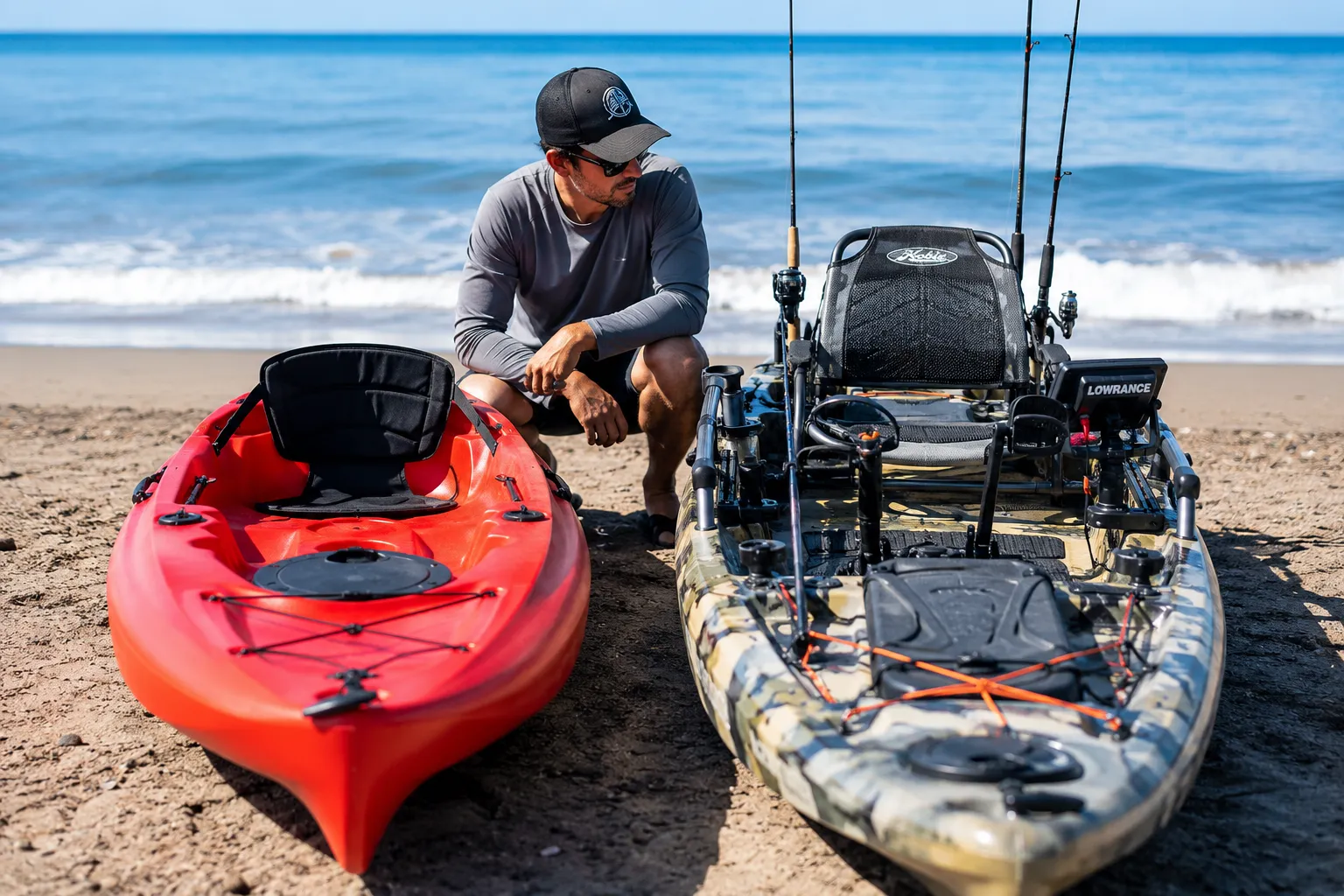
Propulsion systems create the biggest price jumps. A standard paddle kayak might cost $700, while the same hull with a pedal drive system costs $2,500. The pedal mechanism alone adds $1,000-$1,500 to the price.
Brand reputation matters too. Hobie, Native Watercraft, and Jackson Kayak command higher prices because of proven durability, better warranties, and strong resale value. Lesser-known brands may offer similar features for less, but with more risk.
For beginners: The $600-$900 range delivers the best cost-to-value ratio. You get a kayak that’s genuinely good at fishing without paying for features you can’t yet appreciate.
Cheap Fishing Kayak vs Expensive: Is It Worth It?
A $300 fishing kayak and a $1,500 fishing kayak will both float and let you catch fish, but the expensive kayak offers significantly better stability, comfort, durability, and fishing-specific features that directly impact your success and enjoyment on the water. For beginners, the question isn’t whether expensive is better (it usually is), but whether the improvements justify the cost at your skill level.
What you gain with more expensive kayaks:
Stability: Premium kayaks use wider, flatter hull designs with better secondary stability. This means you can lean to fight a fish, reach for gear, or even stand without tipping. Budget kayaks often feel tippy and limit your movement.
Comfort: Expensive kayaks include adjustable, well-padded seats with lumbar support. After three hours on the water, the difference between a $50 seat and a $200 seat is the difference between enjoying your day and counting the minutes until you can get off the water.
Durability: Thicker plastic, better UV protection, and quality hardware mean premium kayaks last 10-15 years with proper care. Budget kayaks often show significant wear after 2-3 seasons, with seats breaking, plastic warping, and fittings failing.
Fishing features: Higher-end kayaks include thoughtful details like flush-mount rod holders, integrated tackle storage, anchor trolley systems, and accessory tracks for mounting gear. Budget kayaks have basic molded-in rod holders and little else.
Tracking and speed: Better hull designs make expensive kayaks easier to paddle straight and faster to cover distance. Budget kayaks often wander and require constant correction, which is exhausting on longer trips.
What you DON’T necessarily get:
More fish caught. A skilled angler in a $400 kayak will out-fish a beginner in a $2,000 kayak every time. The kayak gets you to the fish; your skills catch them.
The verdict for beginners: A $600-$800 kayak offers about 80% of the performance of a $1,500 kayak at half the cost. The jump from $300 to $600 is dramatic and worthwhile. The jump from $800 to $1,500 is noticeable but not essential until you’ve developed preferences and skills.
Choose budget ($400-$600) if: You fish occasionally, stick to calm waters, and aren’t sure kayak fishing will become a regular hobby.
Choose mid-range ($700-$1,000) if: You plan to fish regularly, want comfort for 3-4 hour trips, and expect this hobby to stick.
Skip premium ($1,500+) if: You’re a beginner. You don’t yet know what features matter to you or what type of fishing you’ll focus on.

【Pioneering Stable Design】- PLUSINNO rod holders for fishing boat adopts innovative double V-shaped thread and anti-slip silicone design, providing a larger contact area. It generates 4 contact points at all times for higher stability. The silicone pad ensures a firm grip on boat without wobbling, and it won't cause any scratches to the boat. The brand new fishing pole holders secures your rod firmly, enabling you to focus entirely on battling the fish. Essential fishing gear for boat fishing.
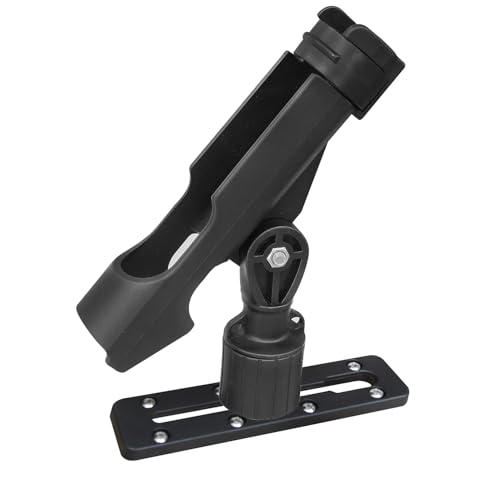
Made of UV stabilized fiberglass reinforced nylon.

HIGH QUALITY - The kayak fishing rod holder Made of High Quality Material PC+ABC, strong and durable, corrosion resistant, hard to damage.
What Hidden Costs Come With Owning a Fishing Kayak?
Beyond the kayak itself, expect to spend $300 to $800 on essential gear and accessories before your first trip, plus $100 to $300 annually for maintenance, registration, and tackle. Many beginners budget only for the kayak and are surprised when they can’t legally or safely get on the water without additional purchases.
Immediate essential costs (before first trip):
- Paddle: $80-$250 (don’t use the cheap paddle that comes with budget kayaks; a quality lightweight paddle prevents fatigue)
- Personal Flotation Device (PFD): $50-$150 (required by law in most states; fishing-specific PFDs have pockets and don’t restrict casting)
- Transportation: $100-$400 (roof rack, kayak cradles, or truck bed extender; you can’t get to the water without solving transport)
- Anchor system: $30-$80 (anchor, rope, and trolley to stay positioned while fishing)
- Safety kit: $40-$80 (whistle, light, first aid, knife, bilge pump)
Important but can wait accessories:
- Kayak cart: $60-$150 (makes launching solo much easier)
- Dry bags: $20-$60 (protect phone, keys, wallet)
- Rod holders (additional): $15-$40 each
- Fish finder: $150-$600 (not essential but popular)
- Milk crate or tackle storage: $20-$50
Ongoing costs:
- Registration/permits: $15-$50 annually (required in most states)
- Fishing licenses: $30-$100 annually (separate from kayak registration)
- Maintenance: $50-$100 annually (UV protectant, hardware replacement, seat repairs)
- Tackle and bait: $100-$500 annually (depends on how often you fish)
Total first-year cost example:
- Kayak: $700
- Paddle: $120
- PFD: $80
- Roof rack: $200
- Anchor system: $50
- Safety gear: $60
- Dry bag: $30
- Registration: $30
- Fishing license: $50
- Total: $1,320
Common mistake: Buying a $900 kayak with a $1,000 budget, then realizing you need another $400 minimum to actually use it safely and legally.
Money-saving tips: Buy a quality used paddle instead of new ($50 savings), use a milk crate instead of expensive tackle systems ($30 savings), and start with a basic anchor setup before adding a trolley system ($40 savings). These compromises work fine while you’re learning.
Do I Need a Pedal Drive Kayak or Is Paddle Fine for Starting Out?
A paddle kayak is completely fine for starting out and is actually the better choice for most beginners. Pedal-drive kayaks cost $1,500 to $2,500 more than comparable paddle kayaks, require more maintenance, and offer advantages that beginners won’t fully utilize until they’ve developed fishing skills and techniques.
Why paddle kayaks work great for beginners:
Lower cost: Quality paddle fishing kayaks start at $500-$800. Pedal kayaks start at $2,000 and quickly reach $3,500-$4,000. That’s a huge investment before you know if kayak fishing is your thing.
Simpler operation: Paddle kayaks have no moving parts to maintain, break, or malfunction. Pedal drives require regular maintenance, can jam with weeds, and need to be raised in shallow water.
Better for learning: Paddling teaches you water reading, boat control, and efficient movement. These skills make you a better kayak angler regardless of what you eventually upgrade to.
Versatile: Paddle kayaks work in shallow water, weedy areas, and tight spaces where pedal drives struggle. You won’t avoid good fishing spots because your drive system can’t handle the conditions.
Lighter weight: Without the pedal mechanism, paddle kayaks weigh 20-40 pounds less, making them easier to load, transport, and launch solo.
When pedal drives shine (and why beginners don’t need this yet):
Pedal drives let you keep both hands free for fishing, which is fantastic when you’re fighting a fish, working multiple rods, or need to make quick casts to moving targets. But beginners are still learning to cast from a sitting position, manage one rod, and handle basic boat control. The hands-free advantage doesn’t matter much when you’re focused on fundamentals.
Pedal drives also cover distance faster with less fatigue, which matters on big lakes or when you need to cover miles to reach fishing spots. But beginners should start on smaller, calmer waters where paddling distance isn’t an issue.
The smart progression: Start with a quality paddle kayak ($600-$900). After a season or two, you’ll know if you want to upgrade to pedal drive, and you’ll have developed the skills to actually benefit from it. Many experienced kayak anglers stick with paddle kayaks because they prefer the simplicity and versatility.
Choose pedal drive as a first kayak only if: You have physical limitations that make paddling difficult, you’re absolutely certain kayak fishing will be a long-term hobby, and you have the budget without compromising on other essential gear.
Is a Sit-On-Top or Sit-Inside Kayak Better for Fishing Beginners?
Sit-on-top kayaks are significantly better for fishing beginners because they offer easier entry and exit, better stability, self-draining decks, and more accessible gear storage. While sit-inside kayaks have advantages for touring and cold-water paddling, sit-on-top designs dominate the fishing kayak market for good reasons.
Why sit-on-top wins for fishing:
Stability: Sit-on-top kayaks are wider (typically 32-36 inches) with flatter hulls, making them more stable for casting, fighting fish, and moving around. Sit-inside kayaks are narrower and feel tippier, especially for beginners.
Easy entry/exit: You can slide on and off a sit-on-top from the water, which matters when you capsize (it happens) or want to swim. Sit-inside kayaks trap you in the cockpit, making re-entry after a capsize extremely difficult without training.
Self-draining: Sit-on-top kayaks have scupper holes that automatically drain water. Waves, rain, and splashes drain away instead of pooling around you. Sit-inside kayaks collect water in the cockpit, requiring a bilge pump or sponge.
Gear access: Fishing requires constant access to tackle, rods, and tools. Sit-on-top kayaks let you reach everything easily. Sit-inside kayaks hide most storage behind you in sealed hatches that you can’t access while fishing.
Standing capability: Many sit-on-top fishing kayaks are stable enough to stand in, which helps with sight fishing and casting distance. Standing in a sit-inside kayak is nearly impossible.
When sit-inside makes sense (rarely for fishing):
Sit-inside kayaks keep your lower body dry and protected from wind, which matters in cold weather or rough water. They’re also faster and more efficient for covering long distances. But these advantages rarely outweigh the fishing-specific benefits of sit-on-top designs.
For fishing in cold water: Wear a wetsuit or drysuit in a sit-on-top rather than choosing a sit-inside kayak. You get the fishing advantages while staying warm.
Price comparison: Both styles are available in the $500-$900 beginner range, so cost isn’t a deciding factor.
The verdict: Unless you’re specifically planning to fish in very cold water and already own cold-water paddling gear, choose a sit-on-top kayak for your first fishing kayak. It’s more forgiving, more practical, and more enjoyable for learning.
Should I Buy a Used Fishing Kayak as My First One?
Buying a used fishing kayak can save 30-50% off retail price and is a smart choice for beginners if you carefully inspect the kayak for hull damage, UV degradation, and functional issues. A well-maintained 2-3 year old kayak from a reputable brand offers nearly the same performance as new, while a neglected or damaged kayak becomes an expensive problem.
Advantages of buying used:
Lower cost: A $900 kayak often sells for $500-$600 after 2-3 years of light use. That’s $300-$400 you can spend on a quality paddle, PFD, and accessories instead.
Less depreciation: New kayaks lose 20-30% of their value immediately. Used kayaks have already taken that hit, so you can resell for close to what you paid if kayak fishing isn’t for you.
Proven durability: A 3-year-old kayak that looks good has proven it can handle sun, water, and use. You’re not gambling on quality.
Often includes accessories: Used kayaks frequently come with paddles, seats, rod holders, and other gear the seller added, giving you more value.
What to inspect before buying:
Hull integrity: Check for cracks, deep scratches, warping, or soft spots. Minor scratches are fine; cracks that go through the plastic are deal-breakers. Press on the hull, it should feel firm, not soft or oil-canned.
UV damage: Faded color is cosmetic, but chalky, brittle plastic that flakes when you scrape it with a fingernail indicates severe UV damage. This kayak is near the end of its life.
Seat condition: Sit in it. The seat should be comfortable and secure. Broken adjustment straps or torn padding are fixable but give you negotiating room.
Hardware and fittings: Check that rod holders, bungees, and hatches work properly. Broken plastic fittings are hard to replace.
Smell: A musty or moldy smell indicates water got into sealed compartments, suggesting leaks or poor maintenance.
Where to find used kayaks:
- Facebook Marketplace and Craigslist (best selection, requires careful inspection)
- Local kayak shops (often have trade-ins, more reliable but higher prices)
- Kayak fishing forums and groups (enthusiasts who maintained their gear well)
Red flags to avoid:
- Seller can’t or won’t let you inspect in person
- Price seems too good to be true (likely damaged or stolen)
- Multiple repairs visible
- Seller knows nothing about the kayak (might be stolen)
Fair pricing guide:
- 1 year old, excellent condition: 70-80% of new retail
- 2-3 years old, good condition: 50-65% of new retail
- 4-5 years old, decent condition: 40-50% of new retail
- Older than 5 years: depends heavily on condition and brand
When to buy new instead: If you can’t find used kayaks in your area, if available used options show significant wear, or if you want the latest features and full warranty protection. The peace of mind of new might be worth the extra $200-$300.
Is a $300 Fishing Kayak Good Enough for Beginners?
A $300 fishing kayak can work for beginners who fish calm, small waters occasionally, but most $300 kayaks compromise on stability, comfort, and durability in ways that make learning harder and less enjoyable. Spending an extra $200-$300 dramatically improves your experience and safety.
What $300 typically gets you:
At this price point, you’re looking at basic recreational kayaks with minimal fishing features, often from big-box stores. Common models include entry-level Lifetime, Sun Dolphin, or Pelican kayaks around 10 feet long.
Pros of $300 kayaks:
- Low financial risk if you’re unsure about the hobby
- Lightweight (often 40-50 pounds), easier to handle alone
- Available locally at Walmart, Dick’s, or Academy Sports
- Adequate for protected ponds and calm lakes
Significant limitations:
Narrow width: Most $300 kayaks are 28-30 inches wide, which feels unstable when you’re casting or fighting a fish. You’ll spend mental energy staying balanced instead of focusing on fishing.
Thin plastic: Budget kayaks use thinner rotomolded plastic that warps in heat, cracks more easily, and degrades faster in UV exposure. Expect 3-5 years of life instead of 10-15.
Uncomfortable seats: Basic foam pads or thin mesh seats become painful after 90 minutes. You’ll cut trips short because you’re uncomfortable, not because the fish stopped biting.
Minimal features: Usually just 1-2 molded-in rod holders and basic bungee storage. No anchor trolley, no accessory tracks, limited options for adding gear.
Poor tracking: Budget kayaks often lack keels or skegs, so they wander and require constant correction. Paddling becomes work instead of enjoyment.
Who can make a $300 kayak work:
- You fish small ponds within sight of shore
- Trips last 1-2 hours maximum
- You’re testing the hobby before committing
- You have a very limited budget and $300 is genuinely your maximum
Better alternatives at similar total cost:
Instead of a new $300 kayak, consider a used $600-$800 kayak for $350-$450. You’ll get significantly better quality for a similar price. Or save another month or two and buy a new $500-$600 kayak that won’t frustrate you.
The honest assessment: Most people who start with a $300 kayak either quit because the experience is uncomfortable and limiting, or upgrade within a year and essentially waste the $300. Starting at $500-$600 saves money long-term and makes learning more enjoyable.
What Features Do I Actually Need in a First Fishing Kayak?
A first fishing kayak needs stability (32+ inches wide), a comfortable adjustable seat, 2-4 rod holders, tank well storage, and scupper holes. Everything else, fish finders, anchor trolleys, standing capability, accessory tracks, is nice to have but not essential for beginners learning basic kayak fishing skills.
Essential features (don’t compromise):
Width and stability: Minimum 32 inches wide, preferably 33-36 inches. Wider kayaks are more stable for casting, landing fish, and moving around. Narrow kayaks (under 31 inches) are faster but too tippy for beginners.
Comfortable seat: An adjustable, padded seat with back support. You’ll spend hours sitting; a bad seat ruins the experience. Look for seats you can adjust while seated.
Rod holders: At least 2 flush-mount or molded-in rod holders. You need one for your active rod and one for a backup. More is better but not critical.
Tank well storage: An open storage area (usually behind the seat) with bungee cords to secure a cooler, tackle crate, or dry bag. This is where most of your gear rides.
Scupper holes: Self-draining holes in sit-on-top kayaks that let water escape. Without these, you’re sitting in a puddle.
Decent weight capacity: At least 300 pounds, preferably 350+. This covers you, gear, fish, and safety margin. Overloading a kayak makes it unstable and sit lower in the water.
Important but not essential features:
Anchor trolley system: Lets you adjust anchor position from the cockpit to control boat angle. Very useful but you can add this later for $30-$50.
Accessory tracks: Mounting rails for adding rod holders, fish finders, and other gear. Nice for customization but not needed initially.
Paddle holder: Clips or indents that secure your paddle when you’re fishing. Helpful but you can use a paddle leash instead.
Standing capability: Stable enough to stand for sight fishing or casting. Great for experienced anglers but beginners should master sitting first.
Rudder or skeg: Helps with tracking in wind and current. Useful but not critical on calm waters where beginners should start.
Features you DON’T need as a beginner:
Fish finder: Helpful for finding structure and fish, but beginners should learn to read water and fish visible structure first. Add this after a season or two when you understand what you’re looking at.
Pedal drive: Covered earlier, too expensive and complex for beginners.
Extensive rigging: Pre-rigged kayaks with complex rod holder systems, electronics, and accessories look impressive but overwhelm beginners. Start simple and add gear as you learn what you actually use.
Feature priority checklist:
- Stability (width 32″+)
- Comfortable seat
- Basic rod holders (2+)
- Tank well storage
- Adequate weight capacity
- Scupper holes (sit-on-top)
- Everything else is optional
Common mistake: Buying a kayak loaded with features you don’t understand, then never using half of them. Or worse, buying the cheapest kayak and missing essential features that make fishing practical.
Best Fishing Kayaks Under $500
The best fishing kayaks under $500 in 2026 include the Lifetime Tamarack Angler, Perception Pescador Pilot 12, and Sun Dolphin Boss SS, which offer adequate stability, basic fishing features, and acceptable durability for beginners fishing calm waters. At this price point, expect compromises in comfort and features compared to mid-range models, but these kayaks will get you on the water and catching fish.
What to expect under $500:
You’re shopping entry-level fishing kayaks, often 10-12 feet long, 30-32 inches wide, with basic features. These kayaks work fine for learning but have limitations you’ll notice as you gain experience.
Typical features in this range:
- 2-4 molded-in rod holders
- Basic padded seat (not premium adjustable)
- Tank well storage with bungees
- 275-350 pound weight capacity
- Rotomolded polyethylene construction
- Weight: 50-65 pounds
Recommended models under $500:
Lifetime Tamarack Angler 100 (~$400): 10 feet long, 31 inches wide, weighs 52 pounds. Good stability for the price, multiple rod holders, decent seat. Best for small lakes and ponds. Limitation: tracks poorly in wind.
Perception Pescador Pilot 12 (~$480): 12 feet long, 32.5 inches wide, weighs 64 pounds. Better tracking than shorter kayaks, comfortable seat, good storage. Limitation: heavier to transport.
Sun Dolphin Boss SS (~$450): 12.3 feet long, 33 inches wide, weighs 60 pounds. Wide and stable, swivel seat, multiple storage areas. Limitation: seat comfort decreases after 2 hours.
Vibe Yellowfin 100 (~$500): 10 feet long, 32 inches wide, weighs 57 pounds. Better quality than most at this price, includes paddle, good stability. Limitation: short length limits speed.
Shopping tips for this price range:
Buy on sale: These kayaks frequently go on sale for $50-$100 off, especially during spring and fall. Patience can upgrade you from a $400 kayak to a $500 kayak for the same money.
Check local shops: Local kayak shops sometimes have previous-year models at discount, and you get expert advice and the chance to sit in the kayak before buying.
Consider used mid-range instead: A used $800 kayak for $450 often beats a new $450 kayak in quality, features, and durability.
What you sacrifice under $500:
- Premium seat comfort (expect discomfort after 2-3 hours)
- Advanced hull designs (slower, less efficient)
- Quality hardware (bungees and fittings wear faster)
- Extensive features (no anchor trolley, limited accessory mounting)
- Longevity (5-7 years instead of 10-15)
Who should shop under $500: Beginners on tight budgets, occasional anglers, those testing the hobby, or anglers who fish small, protected waters exclusively.
Who should stretch to $600-$800: Anyone planning to fish regularly, wanting comfort for longer trips, or expecting this to become a serious hobby.

Quality Construction: Constructed of uv-protected high-density polyethylene. Multiple footrest positions for different size riders. Stable flat bottom


Two pieces aluminum anti-slip coating shaft. Enforced push-button connection with 0 or 65˚ angle adjustment
When Should I Upgrade From My First Fishing Kayak?
Upgrade from your first fishing kayak when you’ve outgrown its capabilities through regular use, typically after 1-3 seasons, when you clearly understand what features you need and what type of fishing you want to focus on. Signs you’re ready include feeling limited by stability, wanting to fish different waters, needing more speed or range, or finding your current kayak uncomfortable for the time you want to spend fishing.
Clear signs it’s time to upgrade:
You fish more than expected: If you’re on the water 2-3 times per week instead of once per month, investing in a better kayak makes sense. The comfort and features of a premium kayak matter more when you’re logging serious hours.
You’re limited by stability: You want to stand for sight fishing or better casting angles, but your kayak feels too tippy. Or you avoid certain techniques because you don’t trust your stability.
You’ve expanded to different waters: Your entry-level kayak works fine on ponds but feels inadequate on bigger lakes, rivers with current, or coastal waters. You need a kayak designed for the conditions you now fish.
Comfort is limiting trip length: You’d fish longer but your seat hurts or your kayak is exhausting to paddle. Upgrading to better ergonomics and hull design extends your effective fishing time.
You want hands-free fishing: You’ve mastered paddle kayak fishing and now want the efficiency of a pedal drive for covering water and fishing simultaneously.
You’ve added so many accessories that you need a better platform: You’ve outfitted your basic kayak with $300+ in accessories and modifications. A mid-range or premium kayak includes many of these features built-in and integrated better.
Your kayak shows significant wear: After 3-5 years of heavy use, your entry-level kayak is faded, cracked, or has failing components. Rather than repair, upgrade.
Signs you should NOT upgrade yet:
- You fish less than 10 times per season (your current kayak is fine)
- You’re chasing features you’ve seen online but don’t actually need
- Your kayak works well for your fishing style and waters
- You haven’t learned to use your current kayak’s capabilities fully
- You want an upgrade but can’t articulate what’s limiting you
Smart upgrade strategy:
Keep your first kayak for 2-3 seasons minimum. This gives you time to develop skills, preferences, and a clear understanding of what you need. You’ll make a much better second purchase when you know whether you want a pedal drive or paddle, what length and width suit your fishing, and which features you’ll actually use.
Sell your first kayak: Well-maintained entry-level kayaks sell quickly in the used market. You’ll recover 40-60% of what you paid, which funds part of your upgrade.
What to upgrade to: Most anglers upgrading from a $500-$700 first kayak move to either a $1,200-$1,800 premium paddle kayak or a $2,500-$3,500 pedal-drive kayak, depending on their fishing style and budget.
The upgrade timeline:
- After 1 season: Only if you’re fishing constantly and clearly outgrew your kayak
- After 2-3 seasons: Normal upgrade window for active anglers
- After 4+ seasons: Your first kayak is serving you well; upgrade when it wears out or your fishing changes significantly
Can You Fish From an Inflatable Kayak or Do You Need Hard Shell?
You can absolutely fish from an inflatable kayak, and modern fishing-specific inflatables offer legitimate stability, durability, and features comparable to entry-level hard-shell kayaks. Quality inflatable fishing kayaks cost $400-$900, pack into a car trunk or closet, and work well for anglers who lack storage space or vehicle capacity for hard-shell kayaks.
Modern inflatable fishing kayaks are not pool toys: High-pressure drop-stitch construction creates rigid floors and hulls that perform similarly to rotomolded plastic kayaks. Brands like Sea Eagle, Advanced Elements, and Aquaglide make inflatables specifically designed for fishing.
Advantages of inflatable fishing kayaks:
Storage: Deflates to fit in a large duffel bag, perfect for apartment dwellers or those without garage space.
Transport: Fits in any vehicle, no roof rack needed. Throw it in your trunk and go.
Lightweight: Most weigh 25-40 pounds, much lighter than 60-80 pound hard-shell kayaks. Easy to carry to remote launch sites.
Stable: Wide beam and flat bottom create excellent primary stability, often better than comparable hard-shell kayaks.
Durable: Modern materials resist punctures well. Multiple air chambers mean a puncture won’t sink you.
Disadvantages of inflatables:
Setup time: Takes 5-15 minutes to inflate and assemble. Hard-shells are ready immediately.
Speed and tracking: Generally slower and less efficient than hard-shells. The soft hull creates more drag.
Wind sensitivity: Sit higher on the water and catch more wind, making them harder to control in breezy conditions.
Longevity concerns: UV exposure and repeated inflation/deflation cycles wear materials faster than solid plastic. Expect 5-8 years instead of 10-15.
Limited customization: Harder to add accessories, fish finders, and custom rigging compared to hard-shells.
Best inflatable fishing kayaks ($400-$900):
- Sea Eagle 370 Pro (~$500): 12.5 feet, 350-pound capacity, includes accessories
- Advanced Elements StraitEdge Angler (~$700): Drop-stitch floor, rigid performance, fishing-specific features
- Aquaglide Chinook 100 (~$600): Stable, durable, good tracking for an inflatable
Who should choose inflatable:
- Apartment or condo dwellers with no storage
- Those without roof racks or truck beds
- Anglers who hike to remote waters
- People who travel and want to fish while away
- Anyone who needs to store their kayak indoors
Who should choose hard-shell:
- Those with storage space and transport capability
- Anglers who fish frequently (setup time adds up)
- Those wanting maximum speed and efficiency
- Anglers planning extensive customization and accessories
- Anyone fishing in areas with sharp rocks or oyster beds
The verdict: Inflatables are legitimate fishing kayaks, not compromises. If storage and transport are challenges, a quality inflatable fishing kayak solves those problems without significantly sacrificing fishing capability. But if you have space and transport for a hard-shell, you’ll get better performance and longevity for the same money.
Common Mistakes When Buying Your First Fishing Kayak
The most common mistakes when buying a first fishing kayak are buying too narrow for stability, choosing length over width, skipping the test sit, buying the cheapest option, and failing to budget for essential accessories. These errors lead to uncomfortable, unsafe, or impractical kayaks that discourage beginners from continuing the sport.
Mistake 1: Prioritizing speed over stability
Beginners often buy narrow kayaks (under 30 inches) because they’re faster and look sleeker. But narrow kayaks feel tippy and unstable when you’re casting, fighting fish, or reaching for gear. This instability makes fishing stressful instead of enjoyable.
Fix: Choose kayaks 32+ inches wide for your first boat. You’ll sacrifice a bit of speed but gain confidence and safety. Speed matters far less than stability when you’re learning.
Mistake 2: Buying without sitting in it
Ordering online based on reviews and specs seems convenient, but kayak fit is personal. A seat that’s comfortable for one person causes back pain for another. Width that feels stable to an experienced paddler feels tippy to a beginner.
Fix: Visit a local shop and sit in kayaks before buying. Spend 10 minutes in the seat. Can you reach the foot pegs comfortably? Does the seat support your back? Can you move around without feeling unstable?
Mistake 3: Buying the absolute cheapest option
A $250 kayak seems like a great deal until you’re uncomfortable after an hour, unstable when casting, and replacing it within a year. The cheapest option is rarely the best value.
Fix: Budget $500-$700 minimum for a kayak that won’t frustrate you. If that’s too much, buy used or save longer rather than buying a kayak that will disappoint.
Mistake 4: Forgetting about accessories and gear
Budgeting $600 for a kayak but forgetting you need a $120 paddle, $80 PFD, $200 roof rack, and $50 in safety gear means you can’t actually use your kayak.
Fix: Budget for the complete setup: kayak + $300-$500 in essential gear. Or buy a less expensive kayak and allocate more to accessories.
Mistake 5: Buying too much kayak
A $2,500 pedal-drive kayak with every feature seems like “buying once and buying right,” but beginners don’t yet know what features they’ll actually use. You might be paying for capabilities you’ll never need.
Fix: Start with a solid mid-range kayak ($600-$900). After a season or two, you’ll know exactly what you want in an upgrade. You can sell your first kayak and buy your “forever” kayak with confidence.
Mistake 6: Ignoring weight and transport
An 85-pound kayak might be perfect on the water, but if you can’t load it on your vehicle alone, it stays in the garage. Many beginners don’t consider the practical reality of getting their kayak to the water.
Fix: Be honest about your physical capability and transport setup. If you’re loading solo, look for kayaks under 65 pounds or invest in a kayak cart and loading system.
Mistake 7: Buying for the fishing you hope to do instead of the fishing you’ll actually do
Buying an ocean-capable kayak when you fish farm ponds, or a bass-fishing-specific kayak when you mostly catch panfish, means paying for features you don’t need.
Fix: Buy for the fishing you’ll do 80% of the time. You can always rent or borrow a specialized kayak for occasional different fishing.
Mistake 8: Skipping research on local regulations
Some states require registration, some don’t. Some waters ban certain kayak types or require specific safety equipment. Finding out after purchase that your kayak doesn’t meet local requirements is frustrating.
Fix: Check your state’s kayak registration requirements and local water regulations before buying. This takes 15 minutes and prevents problems.
Fishing Kayak vs Regular Kayak: Price Difference
Fishing kayaks cost $100 to $300 more than comparable recreational kayaks because they include fishing-specific features like rod holders, wider hulls for stability, tank well storage, and more durable construction. A basic recreational kayak might cost $350-$500, while an entry-level fishing kayak costs $500-$800 for similar length and quality.
What you get for the extra cost:
Fishing-specific features: Rod holders (flush-mount and molded-in), gear tracks for accessories, tank well storage with bungees, paddle holders, and often anchor trolley systems. These features cost $100-$200 to add aftermarket to a recreational kayak.
Wider, more stable hull: Fishing kayaks are typically 32-36 inches wide versus 26-30 inches for recreational kayaks. The extra width requires more material and creates a more complex mold, increasing manufacturing cost.
Higher weight capacity: Fishing kayaks are built to carry you plus 50-100 pounds of gear, fish, and equipment. This requires thicker plastic and reinforced construction.
More durable materials: Fishing kayaks use thicker rotomolded plastic and UV-resistant materials because they’re exposed to more sun (sitting still while fishing) and more abuse (dragging over rocks, oyster beds, and boat ramps).
Better seats: Fishing requires sitting for hours, so fishing kayaks include more supportive, adjustable seats. Recreational kayaks often have basic foam pads.
Can you fish from a recreational kayak?
Yes, and many people do successfully. A recreational kayak will float and get you to fish. But you’ll lack rod holders, struggle with stability when casting, and have limited gear storage. For occasional fishing, a recreational kayak works. For regular fishing, the extra cost of a fishing kayak is worthwhile.
Price comparison examples:
Recreational kayak: Pelican Argo 100X (~$400) – 10 feet, 28 inches wide, basic features
Fishing kayak: Lifetime Tamarack Angler 100 (~$450) – 10 feet, 31 inches wide, rod holders, fishing features
Difference: $50 for fishing-specific features
Recreational kayak: Perception Sound 10.5 (~$550) – 10.5 feet, 30 inches wide, comfortable seat
Fishing kayak: Perception Pescador Pilot 12 (~$700) – 12 feet, 32.5 inches wide, fishing features, better stability
Difference: $150 for fishing optimization
The verdict: If you’re buying a kayak primarily for fishing, spend the extra $100-$200 for a fishing-specific model. The features and stability make fishing more enjoyable and successful. If you want a kayak for general paddling that you might occasionally fish from, a recreational kayak can work with some added accessories.
Frequently Asked Questions
How much should a beginner spend on a fishing kayak?
Beginners should spend $500-$900 on their first fishing kayak to get adequate stability, comfort, and features without overpaying for advanced capabilities they won’t use yet. This range provides quality kayaks from reputable brands that will last several seasons and make learning enjoyable.
Is $600 enough for a good fishing kayak?
Yes, $600 buys a solid entry-level fishing kayak with good stability, basic fishing features, and decent durability. Brands like Lifetime, Perception, and Vibe offer quality options at this price point that work well for beginners fishing calm to moderate waters.
What’s the cheapest fishing kayak that’s actually good?
The cheapest genuinely good fishing kayaks start around $450-$500, including models like the Lifetime Tamarack Angler 100 and Vibe Yellowfin 100. Anything cheaper typically compromises too much on stability, comfort, or durability to provide a good fishing experience.
Should I buy a $300 kayak or save for a $700 one?
Save for the $700 kayak. The quality, stability, and comfort difference is dramatic, and most people who start with $300 kayaks either quit because the experience is poor or upgrade within a year, essentially wasting the $300. Saving longer or buying used at $500 is smarter than buying new at $300.
How long do fishing kayaks last?
Quality fishing kayaks last 10-15 years with proper care, including regular cleaning, UV protectant application, and proper storage. Budget kayaks ($300-$500) typically last 5-7 years before showing significant wear, while premium kayaks ($1,000+) can last 15-20 years.
Do I need to spend $2,000 on my first fishing kayak?
No. A $2,000+ kayak is unnecessary for beginners and usually includes advanced features like pedal drives that you won’t fully utilize while learning. Start with a $600-$900 kayak, develop your skills and preferences, then upgrade to a premium kayak if desired after 2-3 seasons.
What’s better: new cheap kayak or used quality kayak?
A used quality kayak is usually better if it’s in good condition. A well-maintained 2-3 year old $800 kayak selling for $500 offers better stability, comfort, and features than a new $500 kayak. Just inspect carefully for damage and excessive wear.
Can you negotiate kayak prices?
Yes, especially at local kayak shops for previous-year models or floor models. You can often negotiate 10-15% off, particularly during fall when shops are clearing inventory. Big-box stores rarely negotiate, but watch for seasonal sales offering similar discounts.
How much should I budget for kayak accessories?
Budget $300-$600 for essential accessories including paddle ($80-$150), PFD ($50-$100), transportation ($100-$200), anchor system ($30-$80), and safety gear ($40-$80). This is in addition to the kayak cost and is necessary before your first trip.
Is a 10-foot or 12-foot kayak better for beginners?
A 12-foot kayak is generally better for fishing because it tracks straighter, handles wind better, and provides more storage space. However, 10-foot kayaks are lighter and easier to transport. Choose 12 feet if you have transport capability; 10 feet if weight and storage are concerns.
Do expensive kayaks catch more fish?
No. Expensive kayaks provide better comfort, stability, and features that make fishing more enjoyable and let you fish longer or in more challenging conditions. But an experienced angler in a $500 kayak will out-fish a beginner in a $3,000 kayak every time. Skills matter more than gear.
Should I buy a kayak package or separate components?
Kayak packages (kayak + paddle + PFD) seem convenient but often include low-quality paddles and PFDs that you’ll want to replace. You’re usually better buying the kayak separately and choosing a quality paddle and properly-fitted PFD, even if the total cost is slightly higher.
Conclusion
Deciding how much to spend on your first fishing kayak comes down to balancing budget with the quality needed for safe, comfortable, and enjoyable fishing. The sweet spot for most beginners is $600-$900 for the kayak itself, which delivers solid stability, essential fishing features, and durability that will serve you well for several seasons.
Resist the temptation to buy the cheapest option available. A $300 kayak might seem like a low-risk way to test the waters, but poor stability and comfort often discourage beginners before they’ve given the sport a fair chance. Similarly, avoid overspending on premium features like pedal drives or extensive rigging systems that you won’t fully appreciate until you’ve developed skills and preferences.
Your action plan:
- Set a realistic total budget of $900-$1,500 including the kayak, paddle, PFD, transportation, and essential accessories
- Allocate $600-$900 for the kayak and $300-$600 for everything else
- Prioritize stability and comfort over speed and advanced features
- Choose sit-on-top over sit-inside for easier learning and better fishing access
- Test sit before buying whenever possible to ensure proper fit
- Consider quality used kayaks to get more value for your budget
- Start with a paddle kayak and upgrade to pedal drive later if desired
Remember that your first fishing kayak is a learning platform, not your forever boat. Choose something that will be comfortable and capable for 2-3 seasons while you develop skills and figure out what type of fishing you enjoy most. You can always upgrade later with a clear understanding of what features actually matter to you.
The best fishing kayak for you is the one that gets you on the water regularly, fits your budget without financial stress, and makes fishing enjoyable enough that you want to go back. Start with a solid mid-range option, spend time learning the sport, and let your experience guide any future upgrades.
Now stop researching and start fishing. The perfect kayak is the one you’re actually using.