Most fishing kayaks don’t require a rudder for calm, protected waters, but a rudder becomes valuable when you’re battling wind, current, or covering long distances. The decision depends on where you fish, how often you face challenging conditions, and whether you prefer hands-free directional control over traditional paddle steering.
Key Takeaways
- Rudders provide hands-free steering using foot pedals, keeping your paddle free for fishing or propulsion
- Wind and current conditions are the biggest factors in deciding if you need a rudder
- Skegs offer a simpler alternative for tracking without the steering capability of a rudder
- Installation costs range from $200-$600 depending on the kit and whether you DIY or hire help
- Pedal-drive kayaks often include rudders as part of the propulsion system
- Beginners can fish successfully without rudders in protected waters and calm conditions
- Rudders add maintenance requirements including cable adjustments and blade inspections
- Calm-water anglers rarely benefit from the added complexity and cost of rudder systems
What Does a Rudder Do on a Fishing Kayak?
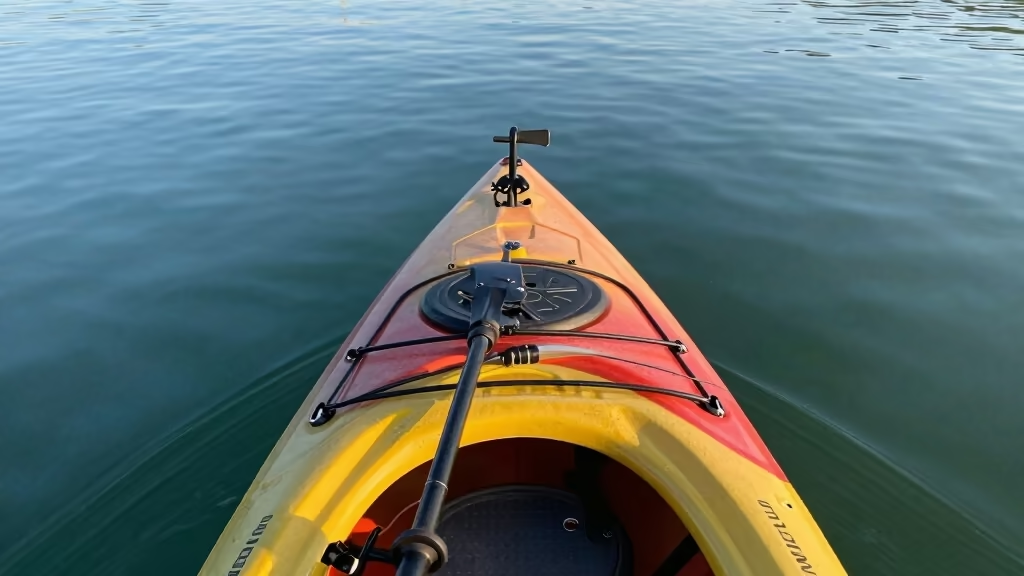
A rudder is a movable blade mounted at the stern of your kayak that pivots left or right to steer the boat, controlled by foot pedals in the cockpit. When you push the right pedal forward, the rudder blade angles right and the kayak turns right; push the left pedal and you turn left.
The primary function is maintaining course without constant paddle corrections. This matters most when:
- Wind pushes your kayak off course and you need to hold position while casting
- Current creates drift that requires continuous steering adjustments
- Long-distance paddling where small course corrections add up to significant energy savings
- Trolling or drifting when you want directional control without interrupting your fishing technique
Rudders work best at speed. When you’re moving through the water, the rudder blade has flow to push against, making steering responsive. At a standstill, rudders provide minimal directional control because there’s no water flowing past the blade.
Most rudder systems deploy and retract with a pull cord or lever, letting you raise the blade in shallow water or when launching and landing. This prevents damage to the rudder and gives you the option to paddle without it when conditions don’t warrant its use.
For anglers exploring ocean kayak fishing or river kayak fishing, understanding rudder function helps you decide if the investment matches your fishing environment.
Difference Between Rudder and Skeg on Kayak
A skeg is a fixed or retractable fin that drops straight down from the stern to improve tracking, but unlike a rudder, it doesn’t pivot or steer. Skegs simply help your kayak travel in a straight line by preventing the stern from being pushed sideways by wind or current.
Key differences:
| Feature | Rudder | Skeg |
|---|---|---|
| Steering | Yes, foot-pedal controlled | No, fixed position |
| Complexity | Higher (cables, pedals, pivot hardware) | Lower (simple drop-down mechanism) |
| Maintenance | More frequent (cables stretch, pivot points wear) | Minimal (occasional cleaning, cable check) |
| Cost | $200-$600 installed | $100-$300 installed |
| Weight | Heavier (3-5 lbs) | Lighter (1-2 lbs) |
| Best for | Active steering in variable conditions | Straight-line tracking in wind |
Skegs excel when you want to paddle in a straight line against crosswinds without the complexity of a rudder system. Many touring kayakers prefer skegs because they’re simpler and don’t require foot-pedal operation, leaving your feet free for bracing.
Rudders give you active directional control, which matters more for fishing because you’re constantly repositioning to cast different angles, follow structure, or adjust to changing wind. A skeg won’t help you turn or hold position the way a rudder will.
Common mistake: Installing a rudder when a skeg would suffice. If you fish protected lakes and ponds where wind rarely exceeds 10 mph, a skeg provides all the tracking help you need at half the cost and complexity.
Can You Fish Without a Rudder on a Kayak?
Yes, the majority of kayak anglers fish successfully without rudders by using paddle strokes, body positioning, and anchor systems to control their kayak. Rudders are a convenience feature, not a requirement for effective kayak fishing.
Traditional steering techniques include:
- Sweep strokes to turn the kayak in either direction
- Stern rudder strokes where you drag the paddle blade behind the kayak to steer
- Edging by shifting your weight to one side, which helps the kayak turn
- Anchor trolleys systems that let you position your anchor point to hold the kayak at specific angles to wind or current
Many beginner kayak fishing setups skip rudders entirely because learning basic paddle control builds better boat-handling skills. You develop a feel for how your kayak responds to wind, current, and weight shifts, which makes you a more capable paddler overall.
When rudderless fishing works best:
- Calm lakes and protected bays with minimal wind
- Short fishing sessions (under 3 hours) where fatigue isn’t a factor
- Fishing from anchor where you’re stationary most of the time
- Narrow rivers and creeks where maneuverability matters more than tracking
When you’ll miss having a rudder:
- Open water with sustained winds above 12 mph
- Long-distance paddles to reach fishing spots (over 2 miles one-way)
- Drift fishing where you need to control your drift angle
- Trolling where maintaining course is critical
The kayak’s hull design also matters. Longer, narrower kayaks (13+ feet) track straighter naturally but turn slower. Shorter, wider kayaks (10-11 feet) turn easily but require more effort to paddle straight. Check our fishing kayak length guide to understand how hull dimensions affect handling.
How Much Does It Cost to Add a Rudder to a Kayak?
Adding a rudder to an existing fishing kayak typically costs between $200 and $600, with the final price depending on the rudder kit quality, installation complexity, and whether you install it yourself or pay for professional installation.
Cost breakdown:
- Basic rudder kit: $150-$250 (includes rudder blade, mounting hardware, control lines, foot pedals)
- Premium rudder kit: $300-$450 (stainless hardware, reinforced blade, upgraded pedal system)
- Professional installation: $100-$200 labor (2-3 hours for experienced installer)
- DIY installation: $0 labor but 4-6 hours of your time plus basic tools
Additional costs to consider:
- Drill bits and marine sealant if not already owned ($20-$30)
- Replacement cables and hardware over time ($15-$40 every 2-3 years)
- Rudder blade replacements if damaged ($40-$80 per blade)
The installation requires drilling holes through your kayak’s hull for mounting brackets and routing control cables from the stern to the cockpit. This permanently modifies your kayak, which can affect resale value and warranty coverage.
Money-saving tip: Buy a kayak with a factory-installed rudder if you know you’ll want one. Factory rudders are better integrated, don’t void warranties, and cost less than retrofitting. Many manufacturers offer rudder-equipped versions of popular models for $100-$200 more than the base model.
Common mistake: Buying the cheapest rudder kit available. Budget kits often use plastic hardware that cracks in cold weather and thin cables that stretch quickly, requiring frequent adjustments. Spending an extra $50-$100 on a quality kit saves frustration and replacement costs.
For those comparing options, our fishing kayak buying guide covers factory rudder options across popular models.
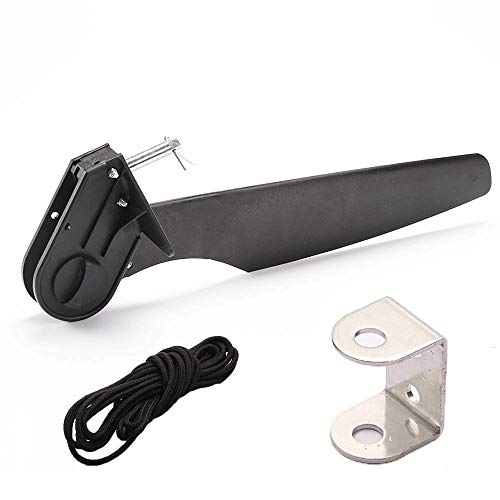
The Kayak Rudder Size - Size: Approx. 47 *15.5 * 14.2cm / 18.5 * 6.1 * 5.6 in (L * W * H); Rudder blade length: Approx. 45cm / 17.7in
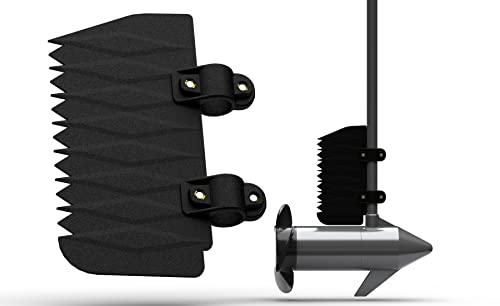
OBVIOUSLY IMPROVED-Adding the boat rudder to your boat trolling motor made the trolling motor more stable as trolling motors are known for lack of steering especially when the big wind picks up. With trolling motor stabilizer, even in the big wind, the direction is in your own hand, don't worry rudder out of control any more.

HIGH-QUALITY AND GOOD MATERIALS: Crafted with high-quality materials, the Fishing Boat Rudder is designed to withstand the harsh conditions of the water. Its robust construction ensures strength, while its wear-resistant and serviceable nature guarantees long-lasting performance. Feel confident in the reliability of this rudder as it withstands the rigors of your fishing adventures.
Best Fishing Kayaks With Rudders
Several fishing kayak models come with integrated rudder systems that are purpose-built for angling conditions. These factory installations offer better reliability and integration than aftermarket additions.
Top rudder-equipped fishing kayaks in 2026:
Hobie Pro Angler series – Includes the MirageDrive pedal system with integrated rudder control, allowing hands-free propulsion and steering simultaneously. The rudder deploys and retracts via a pull cord and handles rough water exceptionally well. Price range: $3,800-$5,200.
Old Town Predator PDL – Features a pedal-drive system with rudder control built into the drive mechanism. The rudder is robust enough for coastal fishing and provides excellent tracking in wind. Price range: $3,200-$3,800.
Wilderness Systems Radar series – Offers both paddle and pedal versions with optional rudder systems. The rudder integrates cleanly with the hull design and provides reliable performance in varied conditions. Price range: $2,400-$4,200.
Native Watercraft Slayer Propel – Combines propeller-drive propulsion with rudder steering, giving you precise control in current and wind. The system is particularly effective for drift fishing and trolling. Price range: $3,600-$4,000.
Jackson Kayak Coosa FD – Flex Drive pedal system includes rudder control with a unique cable-free design that reduces maintenance. Well-suited for river and coastal fishing. Price range: $3,400-$3,800.
What to look for in factory rudder systems:
- Stainless steel hardware that resists corrosion in saltwater
- Easy deployment mechanism you can operate without looking down
- Robust blade design that handles impacts with rocks or debris
- Accessible cable routing for maintenance and adjustments
- Integrated foot pedals that don’t interfere with standing or casting
Most pedal drive kayaks include rudders as standard equipment because the pedal system already occupies your feet, making paddle steering impractical. If you’re considering a pedal kayak, the rudder decision is essentially made for you.
For detailed comparisons of these models, visit our fishing kayak comparison resource.
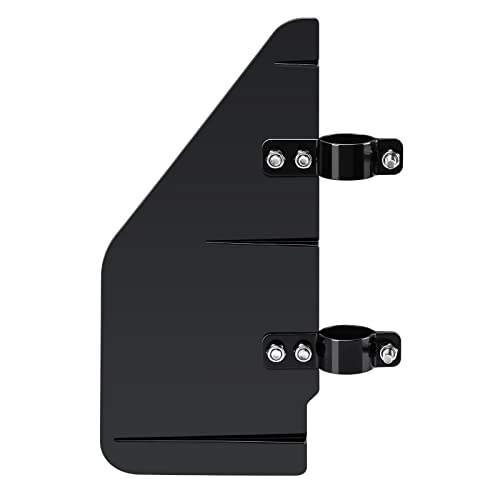
STURDY & DURABLE - The rudder is made of stainless steel material, and also equipped with stainless steel screws and jam nut to improve stability, rust and corrosion resistance. It is sturdy and durable to extend the service life and allowing you to focus more on fishing

【Steering Control】: Built as a steering control system for kayak handling, it helps you guide the boat more confidently and make direction changes smoother during trips on lakes, rivers, and calm coastal water.

PERFECT SOLUTION - Trolling motors are known for lack of steering especially when the wind picks up, the water is choppy or you want to track in a straight line. Simply add a Bullnose Rudder which is designed to give you better control of your watercraft in most windy conditions, help hold a true course at most trolling speeds, and prevent the boat from spinning as much when the motor is off. Patent no. D712,341S
Do Beginners Need a Rudder on Their Fishing Kayak?
Beginners typically don’t need a rudder on their first fishing kayak because learning basic paddle control and boat handling builds essential skills that serve you throughout your kayaking journey. Starting without a rudder forces you to understand how your kayak responds to paddle strokes, weight shifts, and environmental conditions.
Reasons to skip a rudder as a beginner:
- Lower initial cost lets you invest more in safety gear, quality paddle, and fishing equipment
- Simpler operation means fewer systems to learn and maintain
- Better skill development as you learn to read wind and current
- Easier troubleshooting with fewer mechanical components to diagnose
- More versatile paddling without depending on a single steering system
When beginners should consider a rudder:
- You’re starting with ocean kayak fishing where wind and current are constant factors
- Physical limitations make repeated corrective paddle strokes difficult
- You’re buying a pedal-drive kayak where rudders are standard
- Your primary fishing spots consistently have winds above 12 mph
- You plan to cover long distances (3+ miles) regularly
Most beginners overestimate how much they’ll fish in challenging conditions. Start with a simpler setup, fish for a season, and add a rudder later if you find yourself constantly fighting wind or wishing for hands-free steering.
Better beginner investments than a rudder:
- Quality paddle ($150-$250) that reduces fatigue
- Anchor system with trolley ($60-$100) for position control
- Personal flotation device ($80-$150) for safety
- Rod holders and storage ($50-$100) for fishing efficiency
Our beginner kayak fishing guide covers essential gear priorities for new anglers.
Rudder vs No Rudder for Kayak Fishing in Wind
Wind is the single biggest factor that makes rudders valuable for kayak fishing. In sustained winds above 12 mph, a rudder significantly reduces paddle fatigue and lets you maintain position and course with minimal effort compared to constant corrective strokes.
How wind affects rudderless kayaks:
- Weathercocking – The kayak’s bow or stern catches wind and turns the boat off course
- Constant corrections – You paddle on one side more than the other to compensate
- Fatigue accumulation – Small corrections add up over hours of fishing
- Casting difficulty – The kayak drifts and spins while you’re focused on fishing
- Limited trolling – Maintaining straight-line trolling paths becomes exhausting
How rudders help in wind:
- Hands-free course holding – Foot pedals maintain direction while you paddle or fish
- Reduced energy expenditure – The rudder does the steering work that would require paddle strokes
- Better drift control – You can angle your drift to follow structure or cover water effectively
- Consistent trolling – Maintain precise paths without constant paddle adjustments
- Position holding – Make small steering adjustments while casting without picking up your paddle
Wind speed guidelines:
- 0-8 mph: Rudder provides minimal benefit; paddle steering works fine
- 8-12 mph: Rudder starts becoming helpful but isn’t essential
- 12-18 mph: Rudder significantly reduces fatigue and improves control
- 18+ mph: Rudder becomes nearly essential for effective fishing; without one, you’ll spend more time fighting the kayak than fishing
Wind direction matters too:
- Headwind: Rudder helps maintain course but doesn’t reduce paddling effort
- Tailwind: Rudder prevents the stern from being pushed sideways (weathercocking)
- Crosswind: Rudder provides the most benefit, letting you hold course without constant corrections
- Variable wind: Rudder lets you adjust quickly as wind direction shifts
Common mistake: Assuming a rudder eliminates the need for good paddling technique in wind. Even with a rudder, you need to understand how to edge your kayak, use the wind to your advantage, and position yourself strategically. The rudder is a tool that enhances your skills, not a replacement for them.
For anglers who frequently fish exposed waters, check out our ocean kayak fishing resources for additional wind-management strategies.
How to Install a Rudder on Existing Fishing Kayak
Installing a rudder on your existing fishing kayak requires drilling mounting holes, routing control cables, and installing foot pedals in the cockpit. The process takes 4-6 hours for a first-time installation and requires basic tools plus marine-grade sealant.
Tools and materials needed:
- Rudder kit (blade, mounting hardware, cables, pedals)
- Drill with bits (typically 1/4″ and 3/8″)
- Marine sealant (silicone or polyurethane)
- Measuring tape and marker
- Screwdriver set
- Cable cutters or sharp scissors
- Sandpaper (120-grit)
- Masking tape
Step-by-step installation process:
Choose mounting location – Most rudders mount on the stern deck or through the hull at the very back. Check your kayak manufacturer’s recommendations for approved mounting points.
Mark drill holes – Use the rudder mounting plate as a template. Double-check measurements before drilling; mistakes are permanent.
Drill mounting holes – Start with a small pilot hole, then enlarge to final size. Drill slowly to prevent cracking the plastic.
Apply marine sealant – Coat each bolt and the mounting plate perimeter to prevent water intrusion.
Attach rudder assembly – Bolt the mounting bracket securely, ensuring it’s aligned straight with the kayak’s centerline.
Route control cables – Run cables along the kayak’s sides from stern to cockpit. Use existing channels if available, or attach cable guides with marine adhesive.
Install foot pedals – Mount pedal brackets in the cockpit where your feet rest naturally. Test the position before drilling.
Connect cables to pedals – Thread cables through the pedal mechanism and adjust tension so the rudder centers when pedals are neutral.
Test and adjust – Deploy the rudder, test pedal response, and fine-tune cable tension for smooth operation.
Seal all penetrations – Apply additional sealant to any holes or cable entry points.
Installation tips:
- Measure twice, drill once – Mistakes in hull drilling can’t be undone
- Use backing plates – Distribute stress across a larger area to prevent cracking
- Keep cables tight – Loose cables stretch further and require frequent adjustment
- Test before sealing – Make sure everything works before applying permanent sealant
- Document the process – Take photos at each step for future reference or repairs
When to hire a professional:
- You’re uncomfortable drilling holes in your kayak
- The kayak has complex hull geometry that makes mounting difficult
- You want to maintain warranty coverage (some manufacturers require professional installation)
- You lack the necessary tools or workspace
Professional installation typically costs $100-$200 and includes warranty on the installation work. Many kayak shops offer this service and can complete the job in 2-3 hours.
Common installation mistakes:
- Mounting the rudder off-center, causing the kayak to pull to one side
- Over-tightening bolts and cracking the plastic hull
- Routing cables where they interfere with rod holders or other gear
- Insufficient sealant leading to water intrusion and corrosion
- Pedal placement that interferes with standing or casting positions

【STRONG CABLE】 Marine Grade 316 Stainless Steel has the highest corrosion protection, strong, stable, anti-fatigue, weather resistance, heat resistance, corrosion resistance. Also, our 7 x 7 structure wire rope uses heavier gauge wire and offers better abrasion resistance.
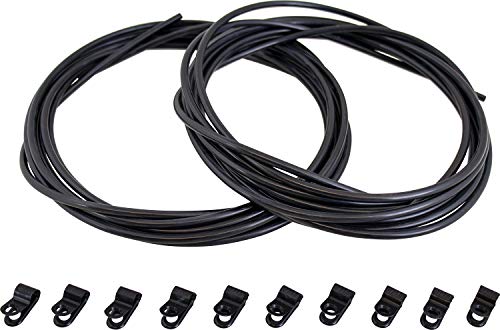
Use to either replace worn-out rudder cable tubing, or for installing a new rudder into your boat

Kayak trolling motor steering triangle for Newport NK-180S kayak and various marine trolling motor
When Should You Use a Rudder While Kayak Fishing?
Deploy your rudder whenever you’re paddling in wind, current, or covering distance, but retract it when fishing in shallow water, navigating tight spaces, or when you need maximum maneuverability for precise positioning.
Best times to use a rudder:
- Paddling to fishing spots – Especially on long transits where tracking efficiency matters
- Drift fishing – Control your drift angle to follow structure or cover water systematically
- Trolling – Maintain consistent speed and direction for effective lure presentation
- Windy conditions – Any time wind exceeds 10 mph and pushes you off course
- Current fishing – Hold position or control your downstream drift rate
- Open water crossings – Reduce fatigue on long paddles across bays or lakes
When to retract the rudder:
- Shallow water – Protect the rudder blade from rocks, stumps, and bottom contact
- Launching and landing – Prevent damage during beach or ramp transitions
- Tight maneuvering – Navigating through lily pads, docks, or narrow channels
- Anchored fishing – No need for steering when you’re stationary
- Calm conditions – Save wear on the system when it’s not providing benefit
- Reverse paddling – Rudders don’t work in reverse and can catch on obstacles
Rudder deployment tips:
Most rudder systems use a pull cord or lever to raise and lower the blade. Get in the habit of checking rudder position before entering shallow water. A bent or broken rudder blade can cost $40-$80 to replace and may leave you without steering for the rest of your trip.
Adjusting rudder use by environment:
- Lakes and ponds: Use primarily for long paddles; retract for fishing
- Rivers: Deploy in wide sections with current; retract in rapids or shallow riffles
- Coastal waters: Keep deployed most of the time due to wind and current
- Marshes and backwaters: Retract to avoid vegetation and shallow mud
Common mistake: Leaving the rudder deployed all the time and damaging it in shallow water. Develop the habit of retracting the rudder as you approach your fishing spot, then deploying it again when you move to the next location.
Are Rudders Worth It for Calm Water Fishing?
Rudders provide minimal benefit for calm water fishing in protected lakes, ponds, and slow rivers where wind and current are negligible. The added cost, weight, and maintenance requirements rarely justify the occasional convenience in these environments.
Why rudders aren’t necessary for calm water:
- Natural tracking – Most fishing kayaks track adequately in calm conditions without assistance
- Easy paddle steering – Corrective strokes require minimal effort when there’s no wind resistance
- Anchor fishing dominates – You’re stationary most of the time, making steering irrelevant
- Short distances – Calm water fishing spots are typically close to launch points
- Maneuverability matters more – Tight spaces and precise positioning benefit from paddle control
Calm water alternatives to rudders:
- Proper paddle technique – Learn sweep strokes and stern rudder strokes for efficient steering
- Anchor systems – Use an anchor trolley to position your kayak at any angle
- Hull selection – Choose a kayak with good natural tracking for your fishing style
- Drift socks – Slow your drift and improve tracking in light winds without mechanical systems
When a rudder might still make sense in calm water:
- You have physical limitations that make repeated paddle strokes difficult
- You fish long hours and want to minimize any fatigue
- You occasionally venture into windier waters and want the option
- Your kayak has poor natural tracking due to hull design
- You’re buying a pedal-drive system that includes a rudder anyway
Cost-benefit analysis for calm water:
- Rudder cost: $200-$600 installed
- Annual maintenance: $20-$50 in cable adjustments and hardware checks
- Time saved per trip: 5-10 minutes in reduced steering effort
- Payback period: Difficult to justify on efficiency alone
For most calm-water anglers, investing rudder money into better fishing gear, a quality paddle, or upgraded rod holders provides more tangible benefits. Save the rudder investment for when you expand into more challenging environments.
Common Problems With Kayak Rudders
Rudder systems require regular maintenance and occasionally develop issues that affect steering performance. Understanding common problems helps you troubleshoot quickly and keep your rudder functioning reliably.
Cable stretch and slack:
The most frequent rudder issue is control cables stretching over time, creating slack that makes steering mushy and imprecise. Cables stretch naturally with use, especially in the first few months after installation.
Fix: Adjust cable tension at the pedal end or rudder end (depending on your system design). Most systems have adjustment points where you can take up slack without tools. Check tension every 5-10 trips.
Rudder won’t stay down:
The deployment mechanism fails to hold the rudder blade in the down position, causing it to pop up while paddling.
Fix: Check the deployment cord for wear or stretching. Inspect the locking mechanism for debris or corrosion. Clean and lubricate pivot points with marine-grade grease. Replace worn deployment cords ($10-$15).
Rudder won’t center:
The rudder blade stays angled to one side even when foot pedals are in neutral position, causing the kayak to pull left or right.
Fix: Adjust cable tension so both sides are equal. Check for cable damage or fraying. Inspect the rudder pivot point for debris or damage preventing free movement.
Pedals stick or bind:
Foot pedals don’t move smoothly or get stuck in position, making steering difficult.
Fix: Clean the pedal mechanism and cable guides. Remove sand, salt, and debris that accumulate in moving parts. Lubricate pedal pivots with silicone spray. Check for cable kinks or routing problems.
Rudder blade damage:
The blade is bent, cracked, or broken from impact with rocks, docks, or other obstacles.
Fix: Minor bends in plastic blades can sometimes be heat-formed back to shape. Cracks require blade replacement ($40-$80). Always retract the rudder in shallow water to prevent damage.
Corrosion and rust:
Metal hardware corrodes, especially in saltwater environments, causing binding and eventual failure.
Fix: Rinse all rudder components with fresh water after every saltwater trip. Apply corrosion inhibitor to metal parts. Replace corroded hardware before it fails. Upgrade to stainless steel hardware if your kit uses cheaper metals.
Cable fraying:
Control cables develop frayed strands that can eventually break, leaving you without steering.
Fix: Inspect cables regularly for wear. Replace cables at the first sign of fraying ($15-$30 per cable). Don’t wait until they break mid-trip.
Maintenance schedule to prevent problems:
- After every trip: Rinse with fresh water, especially after saltwater use
- Monthly: Check cable tension and adjust as needed
- Every 3 months: Lubricate pivot points and pedal mechanisms
- Annually: Full inspection of all hardware, cables, and mounting points
- As needed: Replace worn cables, deployment cords, and damaged blades
Common mistake: Ignoring minor issues until they become major problems. A small cable adjustment takes 5 minutes; replacing a broken cable mid-season costs you fishing time and frustration.
Do Pedal Drive Kayaks Need Rudders?
Most pedal-drive kayaks include rudders as standard equipment because the pedal system occupies your feet, making traditional paddle steering impractical. The rudder integrates with the pedal mechanism to provide hands-free propulsion and steering simultaneously.
Why pedal kayaks typically include rudders:
- Feet are busy – Your feet operate the pedal drive, not steering pedals
- Hands-free operation – The rudder lets you steer while pedaling without picking up a paddle
- System integration – Many pedal drives incorporate rudder control into the drive mechanism
- Efficiency matters – Pedal kayaks are designed for covering distance, where rudder efficiency is most valuable
- Higher speeds – Pedal drives move faster than paddle kayaks, making rudder steering more effective
How rudder control works on pedal kayaks:
Different pedal-drive systems integrate rudder control in various ways:
- Hobie MirageDrive: Rudder controlled by rotating the drive handles left or right
- Native Watercraft Propel: Rudder controlled by twisting foot pedals while pedaling
- Old Town PDL: Rudder controlled by angling your feet on the pedal platform
- Jackson Coosa FD: Cable-free rudder system controlled by shifting the drive unit
Can you use a pedal kayak without the rudder?
Technically yes, but it’s impractical. Without the rudder, you’d need to stop pedaling and use a paddle for every directional change. This defeats the primary advantage of pedal drives: hands-free propulsion and steering.
Pedal kayak rudder considerations:
- More robust systems – Pedal kayak rudders are typically heavier-duty than paddle kayak rudders
- Higher replacement costs – Integrated rudder components cost more to replace ($100-$200)
- System-specific parts – You must use manufacturer-specific rudder components
- Maintenance is critical – Rudder failure on a pedal kayak is more disruptive than on a paddle kayak
If you’re considering a pedal kayak, factor the rudder into your decision as an integral part of the system, not an optional add-on.
Rudder Alternatives for Kayak Tracking
Several alternatives to rudders can improve your kayak’s tracking without the complexity and cost of a full rudder system. These options work well for anglers who want better straight-line performance without mechanical steering.
Skeg systems:
A retractable fin that drops from the stern to prevent weathercocking and improve tracking. Skegs don’t steer but help you paddle straight in wind.
- Cost: $100-$300 installed
- Best for: Paddlers who want tracking help without steering capability
- Maintenance: Minimal; occasional cable check and cleaning
Tracking fins:
Small fixed fins that mount to the stern, similar to a permanent skeg. These are the simplest tracking aid available.
- Cost: $20-$60
- Best for: Calm to moderate conditions where minimal tracking help is needed
- Maintenance: None; no moving parts
Hull design selection:
Choosing a kayak with inherently good tracking characteristics eliminates the need for add-on systems. Longer, narrower hulls with defined keels track better than short, wide hulls.
- Cost: Built into kayak purchase price
- Best for: Anglers who can match hull design to their fishing environment
- Maintenance: None
Proper loading and trim:
Distributing weight correctly in your kayak significantly affects tracking. Heavier weight in the stern improves tracking but reduces maneuverability.
- Cost: Free
- Best for: All kayakers; proper loading should be standard practice
- Maintenance: None; just load thoughtfully
Paddle technique:
Learning efficient forward stroke technique and corrective strokes reduces the need for mechanical tracking aids.
- Cost: Free (or cost of a paddling lesson: $50-$100)
- Best for: All skill levels; good technique benefits every aspect of kayaking
- Maintenance: Practice and skill development
Drift socks and sea anchors:
Deployed from the stern, these create drag that slows your kayak and improves tracking in wind. They’re particularly useful for drift fishing.
- Cost: $30-$80
- Best for: Drift fishing in wind; slowing your drift rate
- Maintenance: Rinse and dry after use; inspect for tears
Comparison: Rudder vs alternatives
| Solution | Steering | Tracking | Cost | Complexity |
|---|---|---|---|---|
| Rudder | Excellent | Excellent | $200-$600 | High |
| Skeg | None | Very Good | $100-$300 | Medium |
| Tracking fin | None | Good | $20-$60 | Low |
| Hull design | None | Varies | Included | None |
| Paddle technique | Good | Good | Free | Low |
| Drift sock | None | Good | $30-$80 | Low |
Choosing the right alternative:
- Budget-conscious: Start with paddle technique and a tracking fin
- Simplicity-focused: Use proper hull selection and loading
- Drift fishing: Add a drift sock for wind control
- Touring emphasis: Consider a skeg for long-distance efficiency
- Active steering needed: Only a rudder provides hands-free directional control
Mistakes People Make With Kayak Rudders
Understanding common rudder mistakes helps you avoid frustration and get the most value from your steering system. These errors range from installation problems to operational misuse.
Installing the rudder off-center:
Mounting the rudder even slightly off the kayak’s centerline causes constant pull to one side, requiring continuous pedal pressure to maintain straight tracking.
How to avoid: Measure carefully from both sides of the stern to ensure the rudder mounting plate is perfectly centered. Use the kayak’s molded centerline or seam as a reference.
Over-tightening mounting bolts:
Excessive bolt tension cracks the plastic hull around mounting holes, leading to water intrusion and structural weakness.
How to avoid: Tighten bolts until snug, then add just 1/4 turn more. Use backing plates to distribute pressure. If the plastic starts to deform, you’re too tight.
Neglecting cable maintenance:
Ignoring cable stretch and wear leads to sloppy steering, eventual cable failure, and potentially being stranded without directional control.
How to avoid: Check cable tension every few trips. Inspect for fraying monthly. Replace cables at the first sign of wear, not after they break.
Leaving the rudder deployed in shallow water:
The most common cause of rudder damage is hitting bottom, rocks, or debris because the angler forgot to retract the blade.
How to avoid: Develop a habit of retracting the rudder as you approach fishing spots. Set a mental trigger: “Approaching shore = retract rudder.”
Ignoring saltwater corrosion:
Saltwater accelerates corrosion of metal hardware, leading to seized pivot points, corroded cables, and eventual system failure.
How to avoid: Rinse all rudder components with fresh water after every saltwater trip. Apply corrosion inhibitor to metal parts. Upgrade to stainless steel hardware.
Using the rudder as a brake:
Attempting to slow or stop by angling the rudder sharply puts excessive stress on the mounting system and cables.
How to avoid: Use paddle strokes to slow down. The rudder is for steering, not speed control.
Poor cable routing:
Running cables where they interfere with rod holders, gear, or your feet creates frustration and limits the rudder’s usefulness.
How to avoid: Plan cable routing before drilling. Test pedal placement with your feet before finalizing the installation. Keep cables away from high-traffic areas.
Expecting the rudder to fix poor paddling technique:
A rudder enhances good paddling but doesn’t compensate for inefficient stroke mechanics or poor boat handling skills.
How to avoid: Learn proper paddling technique first. Use the rudder as a tool that enhances your skills, not a crutch that replaces them.
Not adjusting for different conditions:
Using the same rudder deployment and pedal pressure in all conditions wastes the system’s versatility.
How to avoid: Retract the rudder in calm conditions to reduce drag. Deploy it when wind or current appears. Adjust your technique to match the environment.
Buying cheap components:
Budget rudder kits with plastic hardware and thin cables require frequent replacement and provide poor performance.
How to avoid: Invest in quality components upfront. A $300 rudder kit that lasts five years costs less than a $150 kit that needs replacement parts every year.
Frequently Asked Questions
How long does a kayak rudder last?
A quality rudder system typically lasts 5-10 years with proper maintenance, though cables may need replacement every 2-3 years and the rudder blade every 3-5 years depending on use and conditions. Saltwater use accelerates wear and requires more frequent component replacement.
Can I add a rudder to any fishing kayak?
Most fishing kayaks can accommodate a rudder, but some hull designs lack adequate mounting points or have shapes that make installation difficult. Check with your kayak manufacturer for approved rudder kits and mounting locations before purchasing components.
Does a rudder slow down my kayak?
A deployed rudder creates minimal drag (typically less than 2% speed reduction) when aligned straight, which is offset by the efficiency gained from better tracking. The net effect is usually neutral or slightly positive for overall speed and efficiency.
How do I know if my kayak needs a rudder or skeg?
Choose a rudder if you need active steering control for fishing, trolling, or navigating variable conditions. Choose a skeg if you only need help tracking straight in wind and don’t require steering capability. Rudders cost more but provide more functionality.
Will a rudder help me paddle faster?
A rudder doesn’t increase your paddling power, but it can improve efficiency by reducing corrective strokes needed to maintain course. In windy conditions, this efficiency gain can translate to faster overall speeds and less fatigue.
Can I use a rudder in reverse?
Rudders are designed for forward motion and don’t function properly in reverse. When backing up, retract the rudder or accept that it won’t provide steering control. Some anglers damage rudders by forgetting this and hitting obstacles while reversing.
How much maintenance does a kayak rudder require?
Basic maintenance includes rinsing after each use (5 minutes), checking cable tension monthly (5 minutes), lubricating pivot points quarterly (10 minutes), and annual full inspection (30 minutes). Saltwater use doubles maintenance requirements.
Do I need special tools to adjust my rudder?
Most rudder adjustments require only basic tools: screwdriver, pliers, and possibly a wrench. Cable tension adjustments often need no tools at all. Keep a small tool kit in your kayak for on-water adjustments.
What’s the best rudder position for drift fishing?
For drift fishing, angle the rudder to control your drift direction relative to wind and current. Experiment with different angles to find what keeps you on productive structure or covers water systematically. Small adjustments make big differences in drift path.
Can I stand and fish with a rudder system?
Yes, rudder foot pedals don’t interfere with standing if properly positioned. Place pedals where your feet rest while seated, not where they’d be while standing. Some anglers prefer rudders because they can make steering adjustments while standing without sitting down to paddle.
How do I transport a kayak with a rudder?
Retract the rudder fully before loading your kayak on a vehicle. Secure the rudder blade to prevent it from deploying during transport. Some anglers remove the rudder blade entirely for long-distance transport to prevent damage.
Will a rudder help in strong current?
A rudder helps you maintain direction in current but doesn’t increase your power to paddle against it. In strong current, the rudder lets you angle across the flow more efficiently than constant paddle corrections, but you still need adequate paddling power to make progress.
Conclusion
Whether you need a rudder on your fishing kayak depends primarily on where and how you fish. For anglers who regularly face wind, current, or long-distance paddles, a rudder provides hands-free steering that reduces fatigue and improves fishing efficiency. The investment of $200-$600 pays off through better boat control and more time focused on fishing rather than fighting your kayak.
Conversely, if you fish protected waters, stay close to launch points, and rarely encounter challenging conditions, a rudder adds complexity and cost without proportional benefit. Many successful kayak anglers fish their entire lives without rudders, relying instead on good paddle technique, proper hull selection, and anchor systems for position control.
Action steps to decide if you need a rudder:
- Evaluate your fishing environment – Track wind conditions, distances paddled, and how often you struggle with boat control over several trips
- Try before you buy – Rent or demo a rudder-equipped kayak in conditions similar to where you fish
- Consider your physical capabilities – If fatigue or physical limitations make repeated corrective strokes difficult, a rudder provides significant benefit
- Calculate the cost-benefit – Compare rudder investment against other gear upgrades and fishing improvements
- Start simple – If uncertain, begin without a rudder and add one later if you find yourself consistently wishing for better directional control
For most anglers, the rudder decision becomes clear after a season of fishing. Pay attention to when you’re frustrated with boat control, when you’re exhausted from fighting wind, and when you wish you could steer without putting down your rod. Those moments tell you whether a rudder would genuinely improve your fishing experience.
If you decide a rudder is right for you, invest in quality components, learn proper maintenance, and develop good operational habits. A well-maintained rudder system will serve you reliably for years, becoming an integral part of your fishing kayak setup.
For more guidance on selecting and outfitting your fishing kayak, explore our fishing kayak buying guide and kayak fishing resources.