Quick Answer
Yes, you need a valid fishing license to fish from a kayak in nearly all U.S. states and Canadian provinces. The type of watercraft you use does not change fishing license requirements, if you’re fishing, you need a license regardless of whether you’re on shore, in a kayak, or on a powerboat. However, you typically do not need a separate boating license or vessel registration for non-motorized kayaks in most jurisdictions, though some states require registration for all watercraft.
Key Takeaways
- Fishing licenses are required for kayak fishing in all 50 states (with specific exemptions that vary by state)
- Kayak fishing is considered boat fishing for licensing purposes, not shore fishing, in most regulatory frameworks
- You do not need a boating license to operate a non-motorized fishing kayak in any U.S. state
- Children under a certain age (typically 12-16, depending on state) are often exempt from fishing license requirements
- Exemptions exist for seniors, disabled veterans, residents fishing on private property, and during free fishing days
- Penalties for fishing without a license range from $50-$500 fines plus court costs and potential confiscation of gear
- There is no separate “kayak fishing license”,standard fishing licenses cover all methods and locations
- Saltwater and freshwater licenses are often separate and depend on where you fish, not your watercraft type
- Online license purchases are available in all states through official wildlife agency websites
- Inflatable kayaks require the same fishing license as hard-shell kayaks, vessel type does not affect fishing regulations
What States Require a Fishing License for Kayak Fishing?
All 50 U.S. states require a valid fishing license to fish from a kayak, with exemptions based on age, residency status, disability, or specific fishing days rather than the type of watercraft. The requirement applies whether you’re fishing from a sit-on-top kayak, sit-inside kayak, inflatable kayak, or any other human-powered vessel.
Each state manages its own fishing regulations through its wildlife or natural resources agency. While the universal requirement exists, the specifics vary significantly:
- Resident vs. non-resident licenses: Non-resident licenses typically cost 2-5 times more than resident licenses
- Duration options: Daily, weekly, annual, and lifetime licenses are available in most states
- Age exemptions: Most states exempt children under 12-16 years old (the exact age varies)
- Senior exemptions: Many states offer free or reduced-cost licenses for residents over 65
- Military exemptions: Some states waive fees for active-duty military or disabled veterans
State-by-state variations to note:
- Florida requires separate freshwater and saltwater licenses; a kayak angler fishing both environments needs both
- Texas offers a combination license that covers both fresh and saltwater fishing
- California requires an additional Ocean Enhancement Validation for saltwater fishing beyond the base license
- Alaska has different license requirements for residents vs. non-residents, with significantly higher fees for visitors
The best practice is to check your specific state’s wildlife agency website before any fishing trip, as regulations change annually and special endorsements may be required for certain species (like trout stamps or salmon permits).

HIGH QUALITY - The kayak fishing rod holder Made of High Quality Material PC+ABC, strong and durable, corrosion resistant, hard to damage.
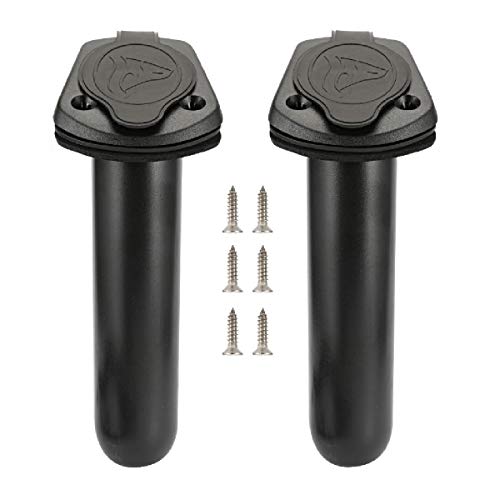
Made of High Quality Material PC+ABC , Which is Strong and Durable. for long life

【Well Made】The kayak rod holder is made of high-quality materials, ensuring durability and resistance to corrosion. It is constructed with heavy-duty ABS material that is highly resistant to impact, making it a reliable choice for fishing enthusiasts.
Is Kayak Fishing Considered Shore Fishing or Boat Fishing for License Purposes?
Kayak fishing is classified as boat fishing in virtually all state regulations, not shore fishing. This classification affects license types, catch limits, and fishing methods allowed, though it rarely changes whether you need a license at all.
The distinction matters in several contexts:
Regulatory differences:
- Fishing zones: Some waters restrict boat fishing to certain areas while allowing shore fishing everywhere
- Seasonal restrictions: Certain fisheries may close to boat anglers while remaining open to shore anglers (or vice versa)
- Method restrictions: Some states allow different tackle or bait types for shore vs. boat fishing
- Catch limits: A few jurisdictions set different bag limits for boat vs. shore anglers
Why kayaks are classified as boats:
- You’re fishing from a vessel on the water, not from land or a fixed structure
- You have mobility that shore anglers lack, allowing access to different fishing zones
- You can cover more water and potentially harvest more fish than a stationary shore angler
Common mistake: Assuming that because a kayak is human-powered and small, it falls under shore fishing rules. This can lead to unintentional violations, especially in areas with boat-specific closures or restrictions.
Practical example: In some Florida waters during red tide events or spawning closures, boat fishing may be prohibited while shore fishing remains legal. A kayak angler in these waters would be violating the closure, even though they’re not using a motor.
How Much Does a Kayak Fishing License Cost?
Fishing license costs for kayak anglers range from $15-$60 for resident annual licenses and $40-$200 for non-resident annual licenses, depending on the state. There is no separate “kayak fishing license”, you purchase the same fishing license as any other angler, and the cost is identical regardless of whether you fish from shore, kayak, or powerboat.
Typical pricing structure (2026 averages):
| License Type | Resident Cost | Non-Resident Cost |
|---|---|---|
| Annual freshwater | $20-$35 | $50-$100 |
| Annual saltwater | $15-$30 | $40-$80 |
| Combination (fresh + salt) | $35-$60 | $80-$200 |
| 1-day license | $8-$15 | $15-$25 |
| 7-day license | $15-$25 | $30-$50 |
| Lifetime license | $250-$1,000 | Not typically available |
Additional costs to consider:
- Species-specific stamps: Trout stamps ($5-$15), salmon stamps ($10-$25), or other special endorsements
- Habitat stamps: Some states include mandatory habitat conservation stamps ($5-$10)
- Second-rod endorsements: If you want to fish with multiple rods simultaneously ($10-$20 in states that allow it)
Money-saving options:
- Free fishing days: Most states offer 1-2 days per year when no license is required
- Military discounts: Active-duty service members often receive free or discounted licenses
- Senior licenses: Residents over 65 may qualify for free or reduced-cost lifetime licenses
- Combination licenses: Buying fresh and saltwater together usually saves $10-$20 vs. purchasing separately
The investment in an annual license is minimal compared to the cost of kayak fishing gear, and license fees directly fund fisheries management, habitat restoration, and public access improvements that benefit all anglers.


Comprehensive Fish Information: Includes size, weight, location, food quality, and coloring details for accurate species identification

【Durable materials】Our license plate frame is made of high-quality aluminum, wear-resistant, rust-resistant, anti-aging, long-lasting use; Even if it gets dirty in the rainy season, it is easy to clean, can be used for a long time, can withstand all kinds of bad weather, and is not easy to fade.
Can You Fish From a Kayak Without a Boating License?
Yes, you can fish from a kayak without a boating license in all U.S. states because non-motorized kayaks do not require operator licensing. Boating licenses (also called boater education certificates) are only mandatory for operating motorized vessels, and the requirements vary by state based on engine size, operator age, and vessel type.
Key distinctions:
- Fishing license: Required for the act of fishing, regardless of watercraft
- Boating license: Required for operating motorized vessels (in most states)
- Vessel registration: May be required for the kayak itself, depending on state law
When you might need a boating license for kayak fishing:
- Motorized kayaks: If you add a trolling motor or any engine to your kayak, some states require a boating license if the motor exceeds a certain horsepower (typically 10 HP) or if the operator is under a certain age
- Age-based requirements: Some states require boater education for anyone under 18 operating any vessel, including kayaks with motors
Vessel registration requirements for kayaks:
- States requiring registration for all kayaks: Ohio, Pennsylvania, and a few others require registration even for non-motorized kayaks
- States requiring registration only for motorized kayaks: Most states fall into this category
- States with no kayak registration: A handful of states don’t require registration for non-motorized, human-powered vessels
Common mistake: Confusing vessel registration with boating licenses. Registration is a one-time fee (renewed annually or biennially) that identifies your kayak, similar to a car registration. A boating license is an operator certification proving you understand navigation rules and safety procedures.
Bottom line: For a standard paddle or pedal kayak without a motor, you need only a fishing license to fish legally. If you add a motor, check your state’s specific requirements for both boating licenses and vessel registration.
Do Kids Need a Fishing License When Fishing From a Kayak?
Children under a certain age do not need a fishing license when fishing from a kayak in most states, though the age cutoff varies from 12 to 16 years old depending on the jurisdiction. The exemption applies regardless of whether the child is fishing from shore, a kayak, or any other watercraft.
Common age exemptions by state:
- Under 12: No license required in states like California, Oregon, and Washington
- Under 13: No license required in states like Georgia and North Carolina
- Under 15: No license required in states like Arizona and Nevada
- Under 16: No license required in states like Florida, Texas, and Michigan
- Under 18: No license required in Alaska for residents only
Important rules for fishing with children:
- Adult supervision: Some states require children to be accompanied by a licensed adult
- Catch limits: Children’s catches typically count toward the boat’s or family’s total bag limit, not as separate limits
- Shared licenses: A child cannot fish under an adult’s license, they either qualify for the age exemption or need their own license
- Resident vs. non-resident: Age exemptions usually apply to both residents and non-residents, but verify with your destination state
Teaching moment: Even when a license isn’t required, it’s valuable to involve children in the licensing process. Many states offer free or low-cost youth licenses that teach responsibility and conservation ethics. Some states even offer junior lifetime licenses at significantly reduced rates.
Example scenario: A 14-year-old fishing from a kayak in Florida doesn’t need a license. However, if that same child is fishing in Michigan, they would need a license because Michigan’s exemption ends at age 16. Always check the specific state’s regulations before your trip.
What Happens If You Get Caught Fishing From a Kayak Without a License?
Getting caught fishing from a kayak without a valid license results in fines ranging from $50 to $500 for a first offense, plus potential court costs, mandatory license purchase, and in severe cases, confiscation of fishing gear and the kayak itself. The penalty severity depends on the state, whether it’s a first or repeat offense, and the circumstances of the violation.
Typical penalties for first-time offenders:
- Base fine: $50-$150 in most states
- Court costs: Additional $50-$200 if the case goes to court
- Mandatory license purchase: You’ll be required to buy a valid license immediately
- Points or warnings: Some states use a point system that can lead to license suspension with multiple violations
Aggravating factors that increase penalties:
- Repeat offenses: Second violations often double or triple the fine
- Fishing in closed seasons: Combining no license with out-of-season fishing can result in $500+ fines
- Over-limit violations: Catching more than the legal limit without a license compounds the penalties
- Endangered species: Targeting protected species without a license can result in federal charges
Enforcement reality:
- Wildlife officers patrol popular kayak fishing areas regularly, especially during peak seasons
- Random checks are common at boat ramps, fishing tournaments, and public access points
- Officers can identify unlicensed anglers by checking state databases instantly via mobile devices
- “I didn’t know” is not a valid defense,ignorance of licensing requirements doesn’t prevent penalties
Gear confiscation:
Some states authorize conservation officers to confiscate fishing equipment, tackle, and even the kayak itself if used in the commission of serious violations. While rare for simple license violations, it’s a possibility in cases involving:
- Intentional poaching or commercial fishing without proper permits
- Repeat offenders with multiple prior violations
- Fishing in restricted or protected areas
Long-term consequences:
- Criminal record: In some states, fishing without a license is a misdemeanor that appears on background checks
- License suspension: Repeat violations can result in loss of fishing privileges for 1-3 years
- Increased future license costs: Some states impose surcharges on future licenses for violators
Best practice: Always carry your physical license or have digital proof accessible on your phone. Most states now offer mobile apps that display your valid license, which officers accept during inspections.
Do You Need Both a Fishing License and Boating License for a Kayak?
You need only a fishing license to fish from a non-motorized kayak in all U.S. states, no boating license is required for paddle or pedal kayaks. However, if you add a motor to your kayak, some states require a boating safety certificate depending on the motor size and your age, in addition to your fishing license.
License requirements breakdown:
For non-motorized kayaks (paddle or pedal):
- Fishing license: Required
- Boating license: Not required
- Vessel registration: Varies by state (required in some states like Ohio and Pennsylvania)
For motorized kayaks:
- Fishing license: Required
- Boating license: Required in some states if motor exceeds horsepower threshold or operator is under age limit
- Vessel registration: Required in most states
State-specific boating license requirements for motorized kayaks:
- Age-based: Many states require boater education for operators under 18-21, regardless of vessel type
- Horsepower-based: Some states require certification only for motors above 10-15 HP
- Universal requirements: A few states require boater education for all motorized vessel operators, regardless of age or motor size
Common scenario: A kayak angler adds a small electric trolling motor (typically 45-55 lbs thrust, equivalent to about 1-2 HP) to their fishing kayak. In most states, this setup requires:
- A valid fishing license (always required)
- Vessel registration (required in most states for any motorized vessel)
- Boating license (usually not required for such small motors, but check state-specific rules)
Where to get a boating license if needed:
Most states accept online boater education courses from approved providers. The course typically costs $20-$40, takes 2-4 hours to complete, and results in a certificate that’s valid for life. Popular providers include Boat-Ed.com and BoatUS Foundation.
Bottom line: The vast majority of kayak anglers using traditional paddle or pedal kayaks need only a fishing license. Boating licenses become relevant only when you add a motor, and even then, requirements vary significantly by state and motor size.
Are There Any Exemptions for Kayak Fishing Licenses?
Yes, fishing license exemptions exist in all states based on age, residency, disability status, military service, and designated free fishing days, but these exemptions apply to the act of fishing itself, not specifically to kayak fishing. The exemptions are identical whether you fish from shore, a kayak, or a powerboat.
Common exemptions across most states:
Age-based exemptions:
- Children: Under 12-16 years old (varies by state)
- Seniors: Residents over 65 often qualify for free or reduced-cost licenses
- Lifetime licenses: Some states offer free lifetime licenses to residents over 70
Military exemptions:
- Active duty: Free or discounted licenses for service members stationed in-state
- Disabled veterans: Free lifetime licenses in many states for veterans with service-connected disabilities
- Deployed personnel: Some states waive license requirements for military on leave
Disability exemptions:
- Permanent disability: Free or reduced-cost licenses for residents with qualifying disabilities
- Accessibility programs: Special permits for anglers who require assistive devices
Property-based exemptions:
- Private property: Some states don’t require licenses for residents fishing on their own land or with landowner permission
- Stocked private ponds: Exemptions may apply to fully enclosed private waters with no public access
Free fishing days:
- Annual events: Most states designate 1-2 days per year when no fishing license is required
- Promotional periods: Some states offer free fishing weekends to encourage participation
- Dates vary: Free fishing days typically fall in June (National Fishing and Boating Week) or around holidays
Exemptions that do NOT exist:
- Catch-and-release fishing: You need a license even if you release all fish
- Kayak-specific exemptions: No state exempts kayak anglers from licensing requirements based solely on watercraft type
- Guided trips: Clients on charter boats may be covered by the guide’s license, but this rarely applies to kayak fishing guides, check specific state rules
Important note on exemptions: Even if you qualify for an exemption, you must still follow all other fishing regulations including season dates, size limits, bag limits, and method restrictions. Exemptions waive the license fee and requirement, not the rules.
How to claim exemptions: Most exemptions require documentation. Seniors may need to show ID proving age, veterans need discharge papers or VA cards, and disabled anglers may need medical documentation. Some states issue free “exempt” licenses that serve as proof of eligibility.
Where Can You Buy a Fishing License for Kayak Fishing Online?
You can buy a fishing license for kayak fishing online through your state’s official wildlife agency website, which is the fastest and most reliable method available in all 50 states as of 2026. Most states also partner with third-party vendors and retail stores that offer online purchasing, though buying directly from the state agency ensures you avoid service fees and get immediate digital access.
Official state agency websites:
- Direct purchase: Visit your state’s Department of Fish and Wildlife, Natural Resources, or equivalent agency website
- Instant access: Digital licenses are available immediately after purchase
- Mobile apps: Most states offer official apps that store your license and allow quick renewal
- No service fees: Buying directly from the state typically avoids the $3-$5 convenience fees charged by third-party vendors
Third-party vendors:
- Outdoor retailers: Bass Pro Shops, Cabela’s, and Dick’s Sporting Goods offer online license sales for multiple states
- Convenience fees: Expect to pay $3-$5 extra when purchasing through third parties
- Limited states: Not all vendors sell licenses for all states
What you’ll need to purchase online:
- Personal information: Full name, date of birth, address, and Social Security number (in most states)
- Residency proof: Driver’s license or state ID number to verify residency status
- Payment method: Credit or debit card
- Hunter education number: If required in your state and you’re purchasing certain license types
Digital vs. physical licenses:
- Digital licenses: Accepted by enforcement officers in all states; display on your phone during inspections
- Physical licenses: Mailed within 7-14 days in most states; some anglers prefer having a waterproof physical copy
- Waterproof holders: If you prefer physical licenses, invest in a waterproof holder ($5-$10) to keep it protected on the kayak
State-specific online portals (examples):
- Florida: GoOutdoorsFlorida.com
- Texas: Texas Parks and Wildlife Department website
- California: California Department of Fish and Wildlife online license sales
- Michigan: Michigan DNR eLicense system
Multi-state fishing: If you plan to fish in multiple states from your kayak, you’ll need to purchase a separate license from each state. There is no universal or reciprocal fishing license agreement between states (unlike some hunting license reciprocity programs).
Renewal reminders: Most state systems send email reminders 30-60 days before your license expires. Set up these notifications when you first purchase to avoid accidentally fishing with an expired license.
Do You Need a License to Fish From a Kayak in Saltwater vs Freshwater?
License requirements for kayak fishing depend on whether you’re fishing in saltwater or freshwater, with many states requiring separate licenses for each environment. The distinction is based on the water body you’re fishing, not the type of kayak or your location on the coast versus inland.
Separate license states:
- Florida: Requires distinct freshwater and saltwater licenses; combination licenses are available
- North Carolina: Separate coastal recreational fishing license for saltwater
- Louisiana: Separate freshwater and saltwater licenses
- South Carolina: Separate saltwater fishing license
Combined license states:
- Texas: One license covers both fresh and saltwater fishing
- Alabama: Single license covers all fishing
- Georgia: One license covers both environments
- Mississippi: Combined license for all waters
How to determine which license you need:
- Tidal influence: In many states, tidal waters are considered saltwater even if they’re inland
- Species targeted: Some states classify waters by the species present rather than salinity
- Geographic boundaries: States publish maps showing freshwater vs. saltwater boundaries
- Brackish water: Transitional areas where fresh and salt water mix may require both licenses
Common scenarios for kayak anglers:
Scenario 1: Fishing a coastal estuary
- Water type: Saltwater (tidal influence)
- License needed: Saltwater license
- Species: Redfish, speckled trout, flounder
Scenario 2: Fishing a freshwater lake
- Water type: Freshwater (no tidal influence)
- License needed: Freshwater license
- Species: Bass, crappie, catfish
Scenario 3: Fishing where a river meets the ocean
- Water type: Brackish/transitional
- License needed: Both licenses or a combination license (depends on state)
- Species: Mix of fresh and saltwater species
Cost comparison:
- Separate licenses: Purchasing both typically costs $40-$70 for residents
- Combination licenses: Usually $35-$60, saving $10-$20 vs. buying separately
- Strategic purchasing: If you fish primarily one environment, buy only that license
Special saltwater requirements:
- Federal registry: Some states require saltwater anglers to register with the federal recreational fishing registry (usually free)
- Reef fish endorsements: Additional stamps may be required for certain saltwater species
- Spiny lobster permits: Separate permits often required for lobster harvesting
Best practice: If you plan to kayak fish in both environments, purchase a combination license at the start of the season. It’s more cost-effective than buying separate licenses and eliminates confusion about which waters require which license.
What’s the Difference Between a Kayak Fishing License and a Regular Fishing License?
There is no difference between a kayak fishing license and a regular fishing license because no state issues watercraft-specific fishing licenses. All anglers, regardless of whether they fish from shore, a kayak, a canoe, a powerboat, or a yacht, purchase the same standard fishing license with identical privileges and restrictions.
Why this confusion exists:
- Vessel registration confusion: Some anglers confuse fishing licenses with kayak registration requirements
- Marketing language: Outdoor retailers sometimes use phrases like “kayak fishing license” in advertising, but they’re referring to standard fishing licenses
- Boating license confusion: The distinction between fishing licenses and boating licenses leads some to assume there are watercraft-specific fishing licenses
What your fishing license covers:
- All legal fishing methods: Rod and reel, fly fishing, hand lines, cast nets (where legal)
- All legal locations: Public waters, private waters with permission, shore, boat, kayak, pier
- All watercraft types: Your license is valid whether you’re fishing from a kayak, canoe, paddleboard, powerboat, or shore
What your fishing license does NOT cover:
- Commercial fishing: Requires separate commercial licenses and permits
- Specific species endorsements: Trout stamps, salmon stamps, or other species-specific permits are additional
- Out-of-state fishing: Your home state license is not valid in other states
- Hunting or trapping: Requires separate licenses
Additional endorsements you might need:
- Second-rod permits: If you want to fish with multiple rods simultaneously (where allowed)
- Spearfishing endorsements: Some states require additional permits for spearfishing
- Shellfish licenses: Separate permits for clamming, crabbing, or lobstering
- Habitat stamps: Mandatory add-ons in some states that fund conservation
License types that DO vary:
- Resident vs. non-resident: Based on your legal residency, not where you fish
- Duration: Daily, weekly, annual, or lifetime options
- Age category: Youth, adult, or senior licenses with different pricing
- Water type: Freshwater, saltwater, or combination licenses in states that separate them
Bottom line: When someone asks about a “kayak fishing license,” they’re simply asking about a standard fishing license. The kayak is irrelevant to the licensing requirement, if you’re fishing, you need a fishing license, period.
Do Inflatable Kayaks Require a Fishing License?
Yes, fishing from an inflatable kayak requires the same fishing license as fishing from a hard-shell kayak, canoe, or any other watercraft. The material, construction, or portability of your kayak has no bearing on fishing license requirements, if you’re fishing, you need a valid license regardless of vessel type.
Why inflatable kayaks follow the same rules:
- Function, not form: Regulations focus on the activity (fishing) and location (public waters), not the equipment
- Equal access: Inflatable kayak anglers have the same mobility and fishing opportunities as hard-shell kayak users
- Enforcement practicality: Wildlife officers don’t differentiate between kayak types when checking licenses
Vessel registration for inflatable kayaks:
While fishing licenses are universal, vessel registration requirements for inflatable kayaks vary by state:
States that require registration for all kayaks (including inflatables):
- Ohio
- Pennsylvania
- Some counties in New York
States that exempt non-motorized kayaks from registration:
- Most states exempt paddle-powered vessels under a certain length (typically 10-16 feet)
- Inflatable kayaks usually fall into this exempt category
States that require registration only for motorized kayaks:
- If you add a trolling motor to your inflatable kayak, registration is typically required
- The motor size threshold varies (usually any motor or motors above 10 HP)
Common misconception: Some anglers believe that because inflatable kayaks are portable and can be deflated, they’re somehow exempt from regulations. This is false, all fishing regulations apply equally to inflatable kayaks.
Practical considerations for inflatable kayak anglers:
- License storage: Keep your fishing license in a waterproof case or use your state’s mobile app
- Accessibility during inspections: Wildlife officers may approach you on the water; have your license readily accessible
- Registration decals: If your state requires kayak registration, you must display registration numbers on your inflatable kayak just as you would on a hard-shell
Advantages of inflatable kayaks for licensed fishing:
- Access to remote waters: Portability allows you to reach waters that hard-shell kayak anglers can’t easily access
- Storage convenience: Easier to store in apartments or small spaces
- Travel flexibility: Can fly with an inflatable kayak to fish in other states (remember to buy that state’s fishing license)
Bottom line: The type of kayak you use, inflatable, hard-shell, sit-on-top, sit-inside, or pedal-driven, has zero impact on fishing license requirements. Focus on getting the right license for the waters and species you’re targeting, not on your kayak’s construction.
Common Mistakes People Make With Kayak Fishing Licenses
Kayak anglers frequently make preventable licensing mistakes that result in fines, confiscated gear, and ruined fishing trips. Understanding these common errors helps you stay compliant and avoid unnecessary penalties.
Mistake 1: Assuming kayaks are exempt from licensing
Many new kayak anglers believe that because kayaks are small, human-powered, and don’t require boat registration in some states, they also don’t need fishing licenses. This is false, fishing licenses are required for the act of fishing, not the type of watercraft.
Mistake 2: Fishing across state lines without proper licenses
Kayak anglers often paddle across state boundaries on border lakes or rivers without realizing they need a license from each state. A license from your home state is not valid in other states, even if you’re just a few hundred yards from the border.
Solution: Purchase non-resident licenses for any state where you plan to fish, or fish only on your side of the state boundary.
Mistake 3: Letting licenses expire mid-season
Most fishing licenses expire on a calendar or fiscal year basis (often December 31 or March 31), not one year from purchase date. Anglers who buy licenses mid-season sometimes assume they’re valid for 12 months, leading to expired license violations.
Solution: Note your license expiration date and set a phone reminder for 30 days before expiration.
Mistake 4: Not carrying physical or digital proof
Some anglers purchase licenses but leave them at home or in their vehicle while on the water. Wildlife officers can verify licenses electronically, but you’re still required to produce proof upon request, and failure to do so can result in citations.
Solution: Use your state’s mobile app to keep a digital copy on your phone, or keep a laminated physical license in a waterproof case attached to your kayak or PFD.
Mistake 5: Assuming free fishing days cover all waters
Free fishing days typically apply only to state-managed waters. Some waters (like tribal lands, private fee-fishing lakes, or certain federal waters) may still require permits or fees even during free fishing days.
Solution: Verify that your specific fishing location participates in free fishing day exemptions.
Mistake 6: Buying the wrong license type
Anglers sometimes purchase freshwater licenses when they plan to fish saltwater (or vice versa), or buy resident licenses when they don’t meet residency requirements. These mistakes aren’t usually intentional but still result in violations.
Solution: Read license descriptions carefully before purchasing, and verify residency requirements (usually 6-12 months of continuous residence).
Mistake 7: Thinking catch-and-release doesn’t require a license
A persistent myth suggests that if you release all your fish, you don’t need a license. This is completely false, licenses are required for the act of fishing, regardless of whether you keep or release your catch.
Mistake 8: Not understanding multi-rod or special endorsement requirements
Some states allow fishing with multiple rods but require a separate endorsement or permit. Anglers who set up multiple rods on their kayak without the proper endorsement can be cited for fishing with illegal gear.
Solution: Check whether your state allows multiple rods and whether an additional permit is required.
Mistake 9: Relying on outdated information
Fishing regulations change annually. Anglers who rely on information from previous years or outdated forum posts may unknowingly violate current regulations.
Solution: Download the current year’s fishing regulations from your state wildlife agency website at the start of each season.
Mistake 10: Not understanding tournament requirements
Some kayak fishing tournaments require participants to have specific license types or endorsements beyond standard fishing licenses. Anglers who register for tournaments without verifying license requirements may be disqualified.
Solution: Read tournament rules carefully and contact organizers if license requirements are unclear.
How to Stay Compliant: A Kayak Angler’s Licensing Checklist
Staying compliant with fishing license requirements is straightforward when you follow a systematic approach. Use this checklist before every fishing trip to ensure you’re legal and prepared.
Before the season:
- ☑️ Purchase your fishing license for the current year from your state wildlife agency
- ☑️ Verify expiration date and set a renewal reminder on your phone
- ☑️ Buy any required endorsements (trout stamps, second-rod permits, saltwater registry)
- ☑️ Download your state’s fishing regulations PDF or mobile app
- ☑️ Check for regulation changes from the previous year
- ☑️ Register your kayak if required in your state
Before each trip:
- ☑️ Confirm your license is current and hasn’t expired
- ☑️ Verify the water body is open to fishing (check for closures or special regulations)
- ☑️ Check species-specific seasons for your target fish
- ☑️ Review bag and size limits for the species you’re targeting
- ☑️ Pack your license (physical copy in waterproof case or digital copy on phone)
- ☑️ Bring a measuring device to verify legal-size fish
- ☑️ Pack a stringer or livewell if you plan to keep fish
On the water:
- ☑️ Keep your license accessible for inspection
- ☑️ Follow all fishing regulations including method restrictions and closed areas
- ☑️ Measure fish before keeping them to ensure they meet size requirements
- ☑️ Count your catch to stay within bag limits
- ☑️ Be courteous to enforcement officers if checked, they’re doing their job
Multi-state trips:
- ☑️ Purchase non-resident licenses for each state you’ll fish
- ☑️ Understand reciprocal agreements (rare for fishing, but some border waters have special rules)
- ☑️ Download regulations for each state
- ☑️ Know state boundaries on border waters to avoid accidental violations
Special situations:
- ☑️ Tournament fishing: Verify tournament-specific license requirements
- ☑️ Guided trips: Confirm whether you need your own license or are covered by the guide’s license
- ☑️ Private property: Even with landowner permission, most states still require a fishing license
- ☑️ Tribal lands: May require separate tribal permits in addition to state licenses
Record keeping:
- ☑️ Take photos of trophy fish with a measuring device before release
- ☑️ Log your catches (some states require harvest reporting for certain species)
- ☑️ Save license receipts as backup proof of purchase
- ☑️ Document any unusual enforcement interactions for your records
This checklist eliminates guesswork and ensures you’re always fishing legally from your kayak.
Frequently Asked Questions
Can I use my fishing license from one state in another state?
No, fishing licenses are not transferable between states. Each state requires its own fishing license, and you must purchase a non-resident license for any state where you don’t meet residency requirements. Some border waters have reciprocal agreements, but these are rare and specific.
Do I need a license to fish from a kayak on private property?
In most states, yes, you still need a fishing license even when fishing on private property with the landowner’s permission. A few states exempt residents fishing on their own land, but these exemptions are limited. Always check your specific state’s regulations.
What’s the penalty for fishing without a license from a kayak?
First-time offenses typically result in fines of $50-$150 plus court costs, mandatory license purchase, and potential points on your fishing record. Repeat offenses can result in fines up to $500, gear confiscation, and loss of fishing privileges for 1-3 years.
Do I need a license if I’m just practicing casting from my kayak?
If you’re using a rod with a hook attached, most states consider this fishing and require a license. If you’re practicing with a rod without a hook or lure, you generally don’t need a license, but enforcement officers may still check to verify you’re not actually fishing.
Can I fish under someone else’s license if we’re in the same kayak?
No, each person fishing must have their own valid license. Licenses are individual and non-transferable. If two people are fishing from a tandem kayak, both need licenses.
Do I need a license for catch-and-release kayak fishing?
Yes, fishing licenses are required regardless of whether you keep or release your catch. The license covers the act of fishing, not the harvest of fish.
Are there free fishing license options for low-income anglers?
Some states offer free or reduced-cost licenses for low-income residents, though these programs are not universal. Check with your state wildlife agency about assistance programs, or take advantage of free fishing days when no license is required.
Do I need a separate license for each type of fish I target?
Your base fishing license covers most species, but some states require additional stamps or endorsements for specific species like trout, salmon, or striped bass. These endorsements are purchased in addition to your base license.
How do wildlife officers check licenses on the water?
Officers patrol in boats and can approach kayak anglers on the water to check licenses, catch limits, and gear compliance. They use mobile devices to verify licenses electronically through state databases. Always stop and cooperate when approached by enforcement.
Can I buy a fishing license at a boat ramp before launching my kayak?
Some boat ramps have kiosks or nearby retailers that sell fishing licenses, but this is not universal. It’s best to purchase your license online before your trip to avoid delays or the risk of launching without a valid license.
Do kayak fishing guides need special licenses?
Yes, fishing guides typically need commercial guide licenses or permits in addition to their personal fishing licenses. Clients on guided trips may be covered by the guide’s license in some states, but this varies, verify with your guide before the trip.
What should I do if I lose my fishing license while kayak fishing?
Most states allow you to print a replacement license from their website immediately, or you can use your state’s mobile app to display your digital license. Keep a backup photo of your license on your phone as a precaution.
Conclusion
Fishing from a kayak requires a valid fishing license in all U.S. states, with no exemptions based on watercraft type. Whether you paddle a hard-shell sit-on-top, pedal a high-end fishing kayak, or inflate a budget-friendly model, the licensing requirements remain identical to any other fishing method. The key is understanding that fishing licenses regulate the activity of fishing, not the equipment you use.
The most important steps for kayak anglers are straightforward: purchase the appropriate license for your residency status and target waters (freshwater, saltwater, or combination), verify that any age or veteran exemptions apply to your situation, and keep your license accessible on every trip. Most violations occur not from intentional poaching but from simple oversights, expired licenses, fishing across state lines without proper permits, or assuming that catch-and-release doesn’t require licensing.
Take action today:
- Visit your state wildlife agency website and purchase or renew your fishing license
- Download your state’s fishing regulations and mobile app
- Set a calendar reminder for 30 days before your license expires
- Invest in a waterproof license holder or commit to using digital proof on your phone
- Review the specific regulations for the waters you plan to fish this season
Fishing licenses are affordable, easy to obtain, and directly fund the conservation programs that maintain healthy fisheries and public access for all anglers. By staying compliant, you protect not only yourself from penalties but also the future of the sport and the waters you love to explore from your kayak.