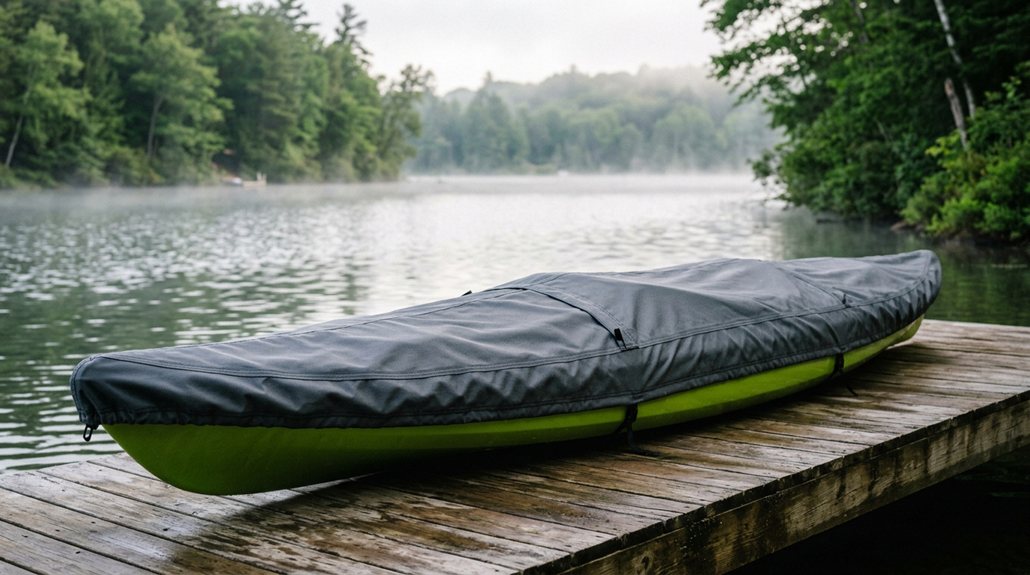
Choosing the right lightweight fishing kayak can make a big difference on the water. The best options balance easy paddling, portability, and practical features like storage and stability. Models like the Pelican Sentinel 100X Angler, with its flat bottom for stability, or the Sentinel with Ergoseat for comfort, stand out.
The Pelican Catch Mode 110 offers a tunnel hull for confidence and raised seating. But what else should you consider before making your choice?
Key Takeaways
- Lightweight kayaks around 44 pounds are easier to carry and transport solo, ideal for anglers needing portability.
- Flat bottom hulls and tunnel designs provide enhanced stability for standing and casting during fishing.
- Features like carry handles and manageable lengths (under 10.6 ft) facilitate easy lifting and stowing.
- Comfortable seating systems with cushioning support long fishing sessions without fatigue.
- Removable storage options and accessory mounts keep gear organized and accessible on the water.
| Pelican Sentinel 100X Angler Kayak (9.6 ft) |  | Most Stable | Length: 9.6 ft (96 in) | Weight: 44 lb | Material: Patented Ram-X | VIEW LATEST PRICE | Read Our Analysis |
| Pelican Sentinel 100X Angler Kayak with Ergoseat |  | Most Comfortable | Length: 10 ft | Weight: 44 lb | Material: High molecular weight polyethylene | VIEW LATEST PRICE | Read Our Analysis |
| Pelican Catch Mode 110 Fishing Kayak 10.5 Ft |  | Best Versatile | Length: 10 ft 8 in | Weight: 63 lb | Material: High molecular weight polyethylene | VIEW LATEST PRICE | Read Our Analysis |
More Details on Our Top Picks
Pelican Sentinel 100X Angler Kayak (9.6 ft)
The Pelican Sentinel 100X Angler Kayak stands out as one of the most stable lightweight fishing kayaks, making it ideal for anglers who prioritize balance and confidence on the water. Its multi-chine flat bottom hull improves stability, so even when casting or reeling, you stay steady. At just 44 pounds, it’s easy to transport and store, yet sturdy enough to hold up to 275 pounds. Constructed from durable patented Ram-X material, it offers long-term reliability and safety, meeting or exceeding ABYC standards.
PLUS, THE KAYAK FEATURES AN INNOVATIVE EXOPAK STORAGE COMPARTMENT THAT FITS INTO THE TANK WELL, KEEPING YOUR GEAR ORGANIZED AND ACCESSIBLE.
- Length:9.6 ft (96 in)
- Weight:44 lb
- Material:Patented Ram-X
- Capacity:275 lb
- Stability:Multi-chine flat bottom hull
- Portability:Built for easy transport and storage
- Additional Feature:Multi-chine flat bottom hull
- Additional Feature:Patented Ram-X materials
- Additional Feature:Removable ExoPak storage
Pelican Sentinel 100X Angler Kayak with Ergoseat
If you’re hunting for a fishing kayak that’s both lightweight and most comfortable during long days on the water, the Pelican Sentinel 100X Angler with Ergoseat stands out. This model combines a manageable 44-pound weight with a length of 10 feet, making it easy to carry and store.
ITS Ergolounge™ SEATING SYSTEM OFFERS EXTRA-THICK CUSHIONING AND A HIGH, WIDE PADDED BACKREST, ensuring support during extended trips. The kayak features a removable ExoPak storage compartment, perfect for pre-packed gear, plus four rod holders—two flush-mount and two vertical in the ExoPak. Molded-in handles make portaging straightforward, ideal for those who like to explore different waters.
- Length:10 ft
- Weight:44 lb
- Material:High molecular weight polyethylene
- Capacity:Not specified
- Stability:Hull with stability-enhancing design
- Portability:Molded-in side handles, manageable length
- Additional Feature:Ergolounge™ cushioned seating
- Additional Feature:Vertical rod holders in ExoPak
- Additional Feature:Molded-in side carrying handles
Pelican Catch Mode 110 Fishing Kayak 10.5 Ft
When durability and stability matter most in a lightweight fishing kayak, the Pelican Catch Mode 110 stands out as a solid choice for anglers who need versatility without sacrificing portability. This model measures 10.5 feet long, offering ample space for gear while remaining manageable to transport. Its tunnel hull design provides maximum stability, making it easier to stand safely while casting.
THE KAYAK WEIGHS JUST 63 POUNDS, SO LOADING AND UNLOADING ARE LESS OF A HASSLE. Features like adjustable ERGOBOOST seating for comfort, multiple storage options, and built-in rigging tracks make it a versatile platform for various fishing adventures. Reliable, stable, and easy to handle, this kayak is a smart pick.
- Length:10 ft 8 in
- Weight:63 lb
- Material:High molecular weight polyethylene
- Capacity:375 lb
- Stability:Tunnel hull for maximum stability
- Portability:Handles, manageable length, lighter for easier transport
- Additional Feature:Wide, flat deck platform
- Additional Feature:Adjustable ERGOBOOST seat
- Additional Feature:Multiple rigging tracks
Factors to Consider When Choosing Lightweight Fishing Kayaks
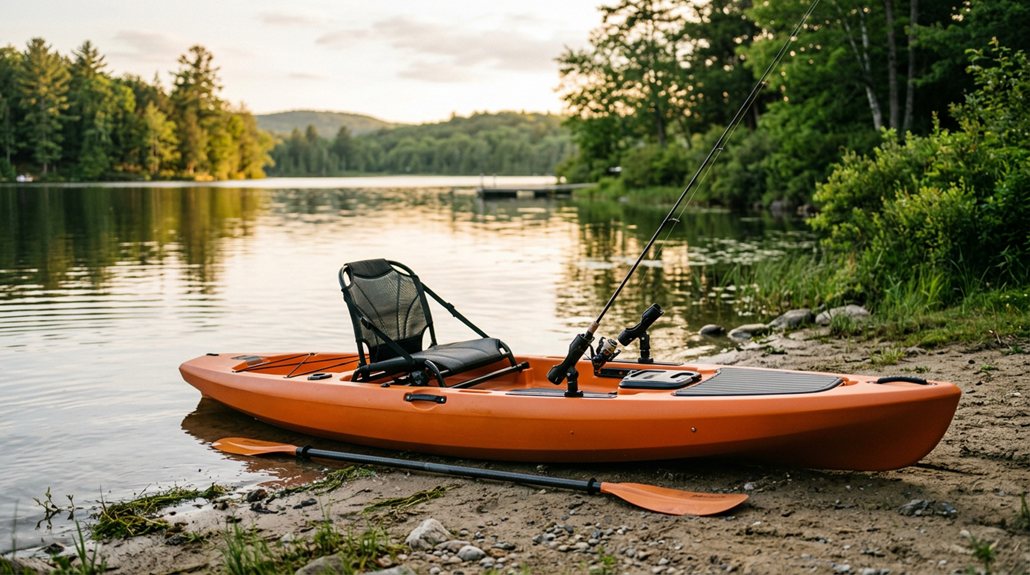
When choosing a lightweight fishing kayak, it’s important to assess how easily it can be transported and handled, especially if you plan to carry it solo or load it onto a vehicle.
YOU’LL ALSO WANT TO THINK ABOUT YOUR SPECIFIC NEEDS FOR STORAGE, INCLUDING SPACE FOR GEAR AND HOW THE HULL DESIGN CONTRIBUTES TO STABILITY ON THE WATER.
And don’t forget about comfort—seating options should support long hours on the water without causing fatigue.
Portability and Handling
Choosing a lightweight fishing kayak isn’t just about how easily it floats, it’s about how seamlessly you can get it from storage to the water without breaking a sweat. Length matters: aim for models between 96 inches and 10.5 feet. Shorter kayaks are easier to lift, maneuver, and stow, especially solo.
KEEP AN EYE ON THE HULL WEIGHT, WHICH RANGES FROM ABOUT 44 TO 63 POUNDS. THAT DIFFERENCE CAN TURN INTO A WORKOUT OR A BREEZE WHEN LOADING ONTO YOUR VEHICLE. Look for built-in side handles and carry-friendly features; these reduce awkward grip points and make transporting streamlined.
ALSO, CONSIDER THE KAYAK’S CENTER OF BALANCE. A predictable weight distribution makes lifting and loading more stable. Compact designs and sit-on-top layouts are great for frequent trips, making portability a real pleasure.
Weight Capacity Needs
Getting the weight capacity right is critical because it directly impacts your safety, stability, and overall fishing experience. When choosing a lightweight kayak, make sure the maximum weight capacity exceeds your total planned load, including your body weight, gear, tackle, and cooler.
For example, a kayak rated for 375 pounds gives more room for heavier anglers or a fuller fishing setup. It’s wise to leave some margin—exceeding the capacity can compromise stability and safety. If you plan to stand while casting, prioritize a capacity that supports both static weight and slight movement comfortably.
Buoyancy features, such as added flotation, are also important when fully loaded. Remember, a lightweight kayak with insufficient capacity isn’t truly lightweight if it can’t carry what you need safely.
Storage and Organization
Efficient storage and organization are key to a seamless day on the water, especially when paddling a lightweight fishing kayak that needs to stay nimble. Look for a dedicated removable storage compartment, like an ExoPak-style system, to pack gear at home and access it quickly. Multiple bait and gear spaces such as tank wells, front and rear storage areas, and under-seat compartments help prevent clutter from turning into a junk drawer.
CHECK FOR INTEGRATED ACCESSORY MOUNTS LIKE BOTTLE HOLDERS AND MULTIPLE ROD HOLDERS. THESE KEEP TACKLE SEPARATE FROM LINES AND KEEP YOUR GO-TO TOOLS WITHIN REACH. Prioritize modular features such as fit-for-tank-well inserts and deck-accessible compartments that won’t interfere with casting.
And always make sure storage openings are easy to reach while seated or entering and exiting. The last thing you want is fumbling for gear when you’re in a hurry!
Hull Design Stability
When it comes to lightweight fishing kayaks, stability is often the make-or-break factor that keeps your day on the water stable and enjoyable. Choosing a hull with a stability-focused design is key—think multi-chine flat bottoms or tunnel hulls that help keep you balanced when casting or reeling.
A wider, flatter deck platform also boosts your confidence, making it easier to shift your stance without tripping. Look for hulls that deliver a secure, steady ride even when loaded, since lightweight kayaks tend to be less forgiving.
Extra internal flotation in sit-on-top models can add stability and confidence on the move, but good balance and technique are always fundamental. And consider how the hull affects entry, exit, and deck movement. Some designs make getting on and off much easier!
Comfortable Seating Options
Comfortable seating options can make a big difference in how much you enjoy your time on the water, especially during long days of fishing. A purpose-built fishing seat with thick cushioning and a high, wide backrest helps reduce fatigue from hours of casting and reeling. Ergonomic seating systems that allow you to adjust your upright position improve both comfort and visibility, especially when casting frequently.
LOOK FOR DESIGNS WITH ADDED SUPPORT FEATURES LIKE EVA SEAT PADS OR UPGRADED COMFORT MECHANISMS TO EASE PRESSURE POINTS FROM SITTING ON THE WATER. STABLE, WELL-DESIGNED SEATING PLATFORMS PROMOTE BETTER POSTURE, WHICH CAN HELP REDUCE LOWER-BACK STRAIN.
ADDITIONALLY, CONVENIENT STORAGE BENEATH OR NEAR THE SEAT ALLOWS EASY ACCESS TO GEAR WITHOUT AWKWARD SHIFTING, KEEPING YOU COMFORTABLE AND FOCUSED ON THE CATCH.
Frequently Asked Questions
How Do Lightweight Kayaks Perform in Rough or Choppy Waters?
Lightweight kayaks generally perform well in rough waters if designed for stability and tracking. They tend to be easier to maneuver, but their lighter weight can make them more susceptible to being tossed by choppy waves.
TO HANDLE ROUGH CONDITIONS, look for models with a wider beam (width), a reinforced hull, and a keel for better control. Keep a firm grip on your paddle and stay alert to shifting water conditions for a safer experience.
Are Lightweight Fishing Kayaks Durable for Long-Term Use?
Lightweight fishing kayaks are like delicate flowers, they can be surprisingly durable if designed well. Most are made from sturdy materials like polyethylene or composite shells that resist scratches and impact. Proper maintenance, such as cleaning after use and avoiding rough handling, extends their lifespan.
WHILE THEY MAY NOT BE AS RUGGED AS HEAVY-DUTY MODELS, MANY ARE BUILT TO WITHSTAND LONG-TERM USE WITH PROPER CARE, MAKING THEM A RELIABLE CHOICE FOR ANGLERS SEEKING PORTABILITY.
What Maintenance Is Required for Lightweight Kayaks?
Maintenance for lightweight kayaks mainly involves regular cleaning, inspecting, and storage. Rinse after each use, especially in saltwater, to prevent corrosion and residue buildup. Check for cracks, leaks, or damage, and repair promptly if needed. STORE IN A DRY, SHaded AREA AWAY FROM DIRECT SUNLIGHT TO PREVENT MATERIAL DEGRADATION.
Periodically tighten fittings, lubricate moving parts, and apply UV protectant if recommended. WITH PROPER CARE, THESE KAYAKS STAY RELIABLE AND FUN FOR YEARS!
Can Lightweight Kayaks Handle Heavier Fishing Gear?
Lightweight kayaks can generally handle heavier fishing gear, but there are limits. THINK OF THEM AS A BALANCING ACT, ADDING TOO MUCH WEIGHT CAN COMPROMISE STABILITY AND PERFORMANCE. MOST ARE DESIGNED TO SUPPORT BETWEEN 250-350 POUNDS, INCLUDING GEAR AND PADDLE.
TO STAY SAFE, CHECK THE KAYAK’S MAXIMUM WEIGHT CAPACITY, DISTRIBUTE GEAR EVENLY, AND AVOID OVERLOADING. PROPERLY MANAGED, YOUR KAYAK CAN HANDLE HEAVIER GEAR WITHOUT SINKING INTO THE WATER OR TIPPING OVER.
How Easy Is It to Transport Kayaks Without a Trailer?
Transporting kayaks without a trailer is quite manageable with a few simple tips. Most lightweight kayaks, often weighing under 50 pounds, fit easily into the back of an SUV, truck bed, or even a large car trunk. Using foam blocks or roof racks can secure the kayak during transport.
And, with a little practice, loading and unloading becomes quick and easy, making spontaneous fishing trips a real possibility!