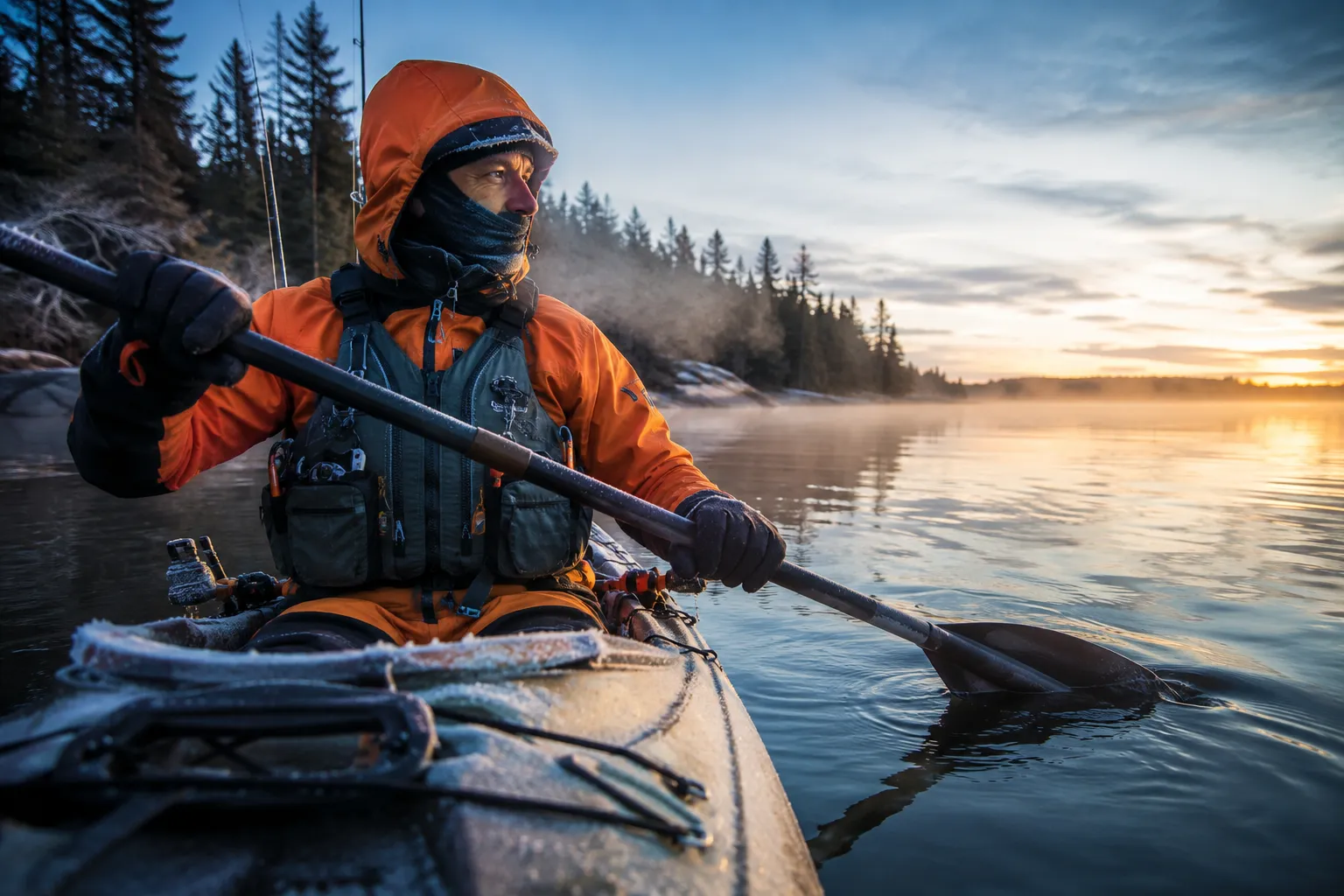
Quick Answer: Dressing for cold-water kayak fishing requires a layering system designed for immersion, not just air temperature. The safest approach uses a drysuit or wetsuit as your outer shell, with moisture-wicking base layers underneath, because falling into water below 60°F can cause cold shock and hypothermia within minutes. Regular winter clothes absorb water and lose all insulating value, making them dangerous for paddling.
Key Takeaways
- Water temperature below 60°F is considered cold water and requires immersion protection (drysuit or wetsuit)
- The 120 Rule (air temp + water temp = 120 or less) indicates you need specialized cold-water gear
- Drysuits keep you completely dry and work better in water below 50°F, while wetsuits allow water in but trap a warming layer
- A proper layering system includes moisture-wicking base layers, insulating mid-layers, and waterproof outer protection
- Regular winter clothes are dangerous for cold-water kayaking because they absorb water and provide zero thermal protection when wet
- Neoprene boots, pogies or gloves, and a skull cap are essential accessories that prevent heat loss from extremities
- Budget alternatives exist (splash pants with paddling jacket, farmer john wetsuits) but offer less protection than full drysuits
- Cold shock can occur in seconds when you hit water below 60°F, making immersion gear non-negotiable for safety
What Temperature Is Considered Cold Water for Kayak Fishing?
Water below 60°F is officially classified as cold water for paddling purposes, and water below 50°F is considered dangerously cold. At these temperatures, your body loses heat 25 times faster than in air of the same temperature, and cold shock response can occur within seconds of immersion.
The National Center for Cold Water Safety defines cold water as anything below 70°F, but most paddling organizations use 60°F as the threshold where specialized immersion gear becomes necessary. Here’s what happens at different water temperatures:
- 60-70°F: Cool water where hypothermia can set in after 2-7 hours of immersion
- 50-60°F: Cold water where loss of dexterity occurs in 10-15 minutes, exhaustion or unconsciousness in 1-2 hours
- 40-50°F: Very cold water where useful consciousness lasts 30-60 minutes
- Below 40°F: Extremely dangerous, with cold shock response immediate and survival time measured in minutes
Many anglers make the mistake of dressing for the air temperature on a sunny 50°F spring day, forgetting that the water might still be 42°F from winter. Always check water temperature before deciding what to wear.
What Is the 120 Rule in Kayaking?
The 120 Rule states that if the combined air and water temperature equals 120°F or less, you need to dress for immersion in cold water. This simple calculation helps you decide when a drysuit or wetsuit is necessary rather than just layering regular clothes.
For example, if the air temperature is 55°F and the water is 48°F, the total is 103°F, well below the 120°F threshold. Even though the air feels comfortable, falling into that 48°F water would be immediately dangerous without proper immersion protection.
The 120 Rule works because it accounts for the reality that you might capsize or fall overboard. Many kayak anglers fish in calm conditions and never expect to get wet, but boat wakes, sudden wind, or leaning too far while landing a fish can put you in the water without warning.
When the 120 Rule applies, you should wear:
- A drysuit or wetsuit as your primary protection
- Layers underneath designed to insulate even when damp
- Neoprene footwear and hand protection
- A properly fitted PFD over your immersion gear
Some experienced paddlers use a modified 100 Rule for extra safety, especially when fishing alone or in remote areas where rescue would take longer.
Best Base Layers for Cold-Water Kayaking
The best base layers for cold-water kayaking are made from merino wool or synthetic materials like polyester or polypropylene that wick moisture away from your skin and retain warmth even when damp. Cotton is dangerous because it absorbs water, loses all insulating value when wet, and pulls heat away from your body.
Your base layer sits directly against your skin under your drysuit or wetsuit. Its job is to manage the moisture from perspiration (you will sweat while paddling) and provide a first line of insulation. Choose base layers that fit snugly without restricting movement.
Top base layer options:
- Merino wool: Naturally odor-resistant, warm when wet, comfortable against skin, but more expensive and slower to dry
- Synthetic (polyester/polypropylene): Dries quickly, less expensive, excellent moisture wicking, but can retain odors
- Silk: Lightweight and warm for its thickness, but less durable and harder to find
- Avoid cotton entirely: Holds moisture, loses warmth when wet, takes forever to dry
For water temperatures below 50°F, choose midweight or heavyweight base layers. In the 50-60°F range, lightweight to midweight works well. You want full coverage with long sleeves and full-length pants, even if the air temperature feels warm.
Many kayak anglers prefer merino wool for all-day comfort and temperature regulation, while others choose synthetic base layers for their quick-drying properties and lower cost. Both work well as long as you avoid cotton.

Lightweight – Womens Merino Base Layer Available in Lightweight 165 g/m², Midweight 250 g/m², Heavyweight 320 g/m². Merino Wool Hiking Socks ($21 Value!); Package...
Drysuit vs Wetsuit for Cold-Water Kayaking: Which Is Better?
Drysuits are better for water temperatures below 50°F and provide superior protection because they keep you completely dry with waterproof seals at the neck, wrists, and ankles. Wetsuits work by allowing a thin layer of water to enter and warm against your skin, making them more suitable for water temperatures between 50-65°F or as a budget alternative.
Drysuit advantages:
- Keeps you completely dry, so your insulating layers underneath maintain full effectiveness
- Better for extended cold-water exposure and water below 50°F
- More comfortable for all-day fishing because you stay dry from spray and rain
- Allows you to layer underneath based on conditions
- Easier to use the bathroom (relief zippers available)
Drysuit disadvantages:
- Expensive ($400-$1,200 for quality models)
- Requires maintenance of gaskets and waterproof zippers
- Can feel bulky and restrict movement slightly
- Warmer in mild conditions, leading to overheating
Wetsuit advantages:
- Less expensive ($100-$400)
- More flexible and less restrictive for casting and moving
- Simpler to maintain with no gaskets or zippers to worry about
- Works well in 50-65°F water temperatures
Wetsuit disadvantages:
- You get wet, which feels uncomfortable initially
- Less effective in very cold water (below 50°F)
- Provides no protection from wind or spray when you’re in the kayak
- Difficult to layer underneath for added warmth
For serious cold-water kayak fishing in water below 50°F, a drysuit is the safer choice. For spring and fall fishing in the 50-60°F range, a farmer john wetsuit (sleeveless with long legs) paired with a paddling jacket offers good protection at lower cost.

Stay Dry and Warm in Cold Water: Stay dry and comfortable during cold-water activities with the PKEDW Men's Dry Suit. This waterproof dry suit features a three-layer fabric with breathable coatings, providing outstanding protection and insulation for extended use. The adjustable bungee drawcord at the waist ensures a secure fit, while the zippered chest pocket with a key lanyard keeps your essentials safe and dry. Ideal for individuals seeking dependable dry suits for cold-water sports

[Proprietary Laminate Materials]:3-layer waterproof breathable nylon shell with Menbrance finish for maximum durability and abrasion resistance,It is built tough with a well thought design, and yet very light.

Perfect for Water Sports: This dry suit is ideal for men who enjoy activities such as kayaking, providing essential protection against cold water
Layering System for Cold-Water Kayak Fishing
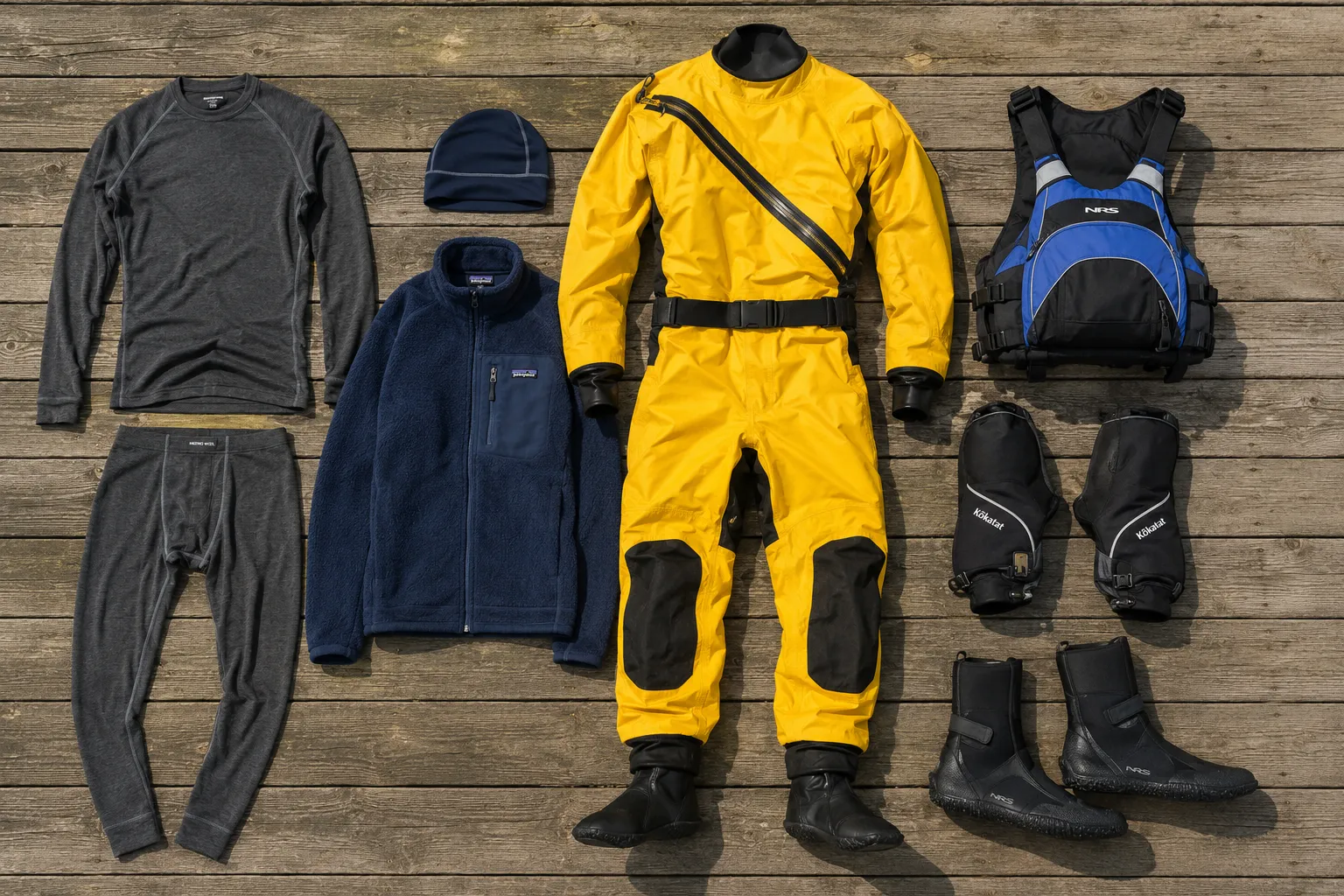
A proper cold-water layering system consists of three layers: a moisture-wicking base layer against your skin, an insulating mid-layer for warmth, and a waterproof outer layer (drysuit or wetsuit) for immersion protection. This system lets you adjust warmth by adding or removing the mid-layer based on conditions.
The three-layer system:
Layer 1 – Base Layer (moisture management):
- Merino wool or synthetic long underwear, top and bottom
- Fits snugly against skin
- Wicks sweat away from body
- Provides first level of insulation
Layer 2 – Mid-Layer (insulation):
- Fleece jacket or vest
- Synthetic insulated jacket (not down, which loses warmth when wet)
- Thickness depends on water and air temperature
- Optional in warmer conditions (above 55°F air temp)
Layer 3 – Outer Layer (immersion protection):
- Drysuit or wetsuit
- Waterproof paddling jacket with dryseal or wetsuit top
- This layer must protect you if you fall in
For water temperatures in the low 40s, you might wear heavyweight base layers, a fleece mid-layer, and a drysuit. For water in the upper 50s with 65°F air, you might skip the mid-layer and just wear a lightweight base layer under your drysuit.
The key is that each layer serves a specific purpose, and the system only works if your outer layer provides true immersion protection. Layering regular winter clothes under a rain jacket does not create a safe cold-water system.
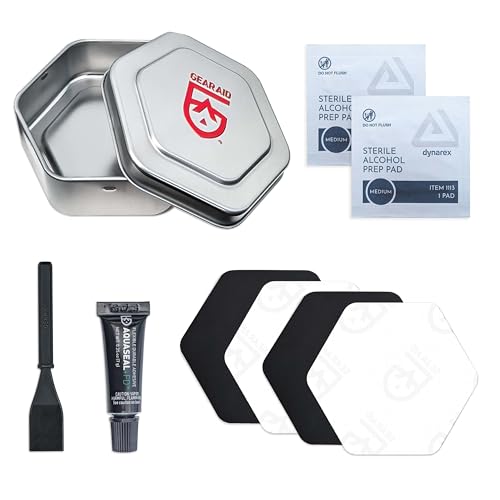
Durable Repairs – Includes Aquaseal FD (0.25 oz) adhesive and four 2.5” Tenacious Tape Hex Patches (two black, two clear) for permanent, flexible, and waterproof fixes to waders, drysuits, boots, and inflatables.

OUTTER LAYER - Teflon DWR coated polyester creates durable, breathable, lightweight, and abrasion-resistant shell, 15,000 water hold out/10,000 MVTR, fully seam taped and sealed in a supple, athletic cut to move with you
[Proprietary Laminate Materials]:3-layer waterproof breathable nylon shell with Menbrance finish for maximum durability and abrasion resistance,It is built tough with a well thought design, and yet very light.
What to Wear Kayak Fishing in 40-Degree Water
In 40°F water, you need a drysuit over insulating layers, neoprene boots, pogies or neoprene gloves, and a neoprene skull cap or beanie. Water this cold can cause cold shock within seconds of immersion and lead to unconsciousness in 30-60 minutes, making full immersion protection non-negotiable.
Complete 40°F water outfit:
- Base layer: Midweight or heavyweight merino wool or synthetic long underwear (top and bottom)
- Mid-layer: Fleece jacket or synthetic insulated jacket
- Outer layer: Drysuit with latex or neoprene gaskets at neck, wrists, and ankles
- Feet: Neoprene boots (3-5mm thickness) or waterproof boots with wool socks under drysuit socks
- Hands: Pogies (neoprene hand covers that attach to paddle) or 3mm neoprene gloves
- Head: Neoprene skull cap or fleece beanie (you lose significant heat through your head)
- PFD: Worn over everything, properly fitted
In water this cold, even a brief immersion is dangerous. Your outfit should assume you will end up in the water and need to survive long enough for self-rescue or help to arrive. Many kayak fishing fatalities occur in water between 40-50°F when anglers dressed for the comfortable air temperature instead of the water.
If the air temperature is also cold (below 45°F), you may need additional wind protection like a paddling jacket over your drysuit or a balaclava for your face.
Can I Just Wear Regular Winter Clothes for Cold-Water Kayaking?
No, regular winter clothes are dangerous for cold-water kayaking because materials like cotton, down, and most synthetic insulation absorb water and lose all thermal protection when wet. If you capsize wearing winter clothes, they become heavy, pull you down, and accelerate hypothermia rather than preventing it.
Regular winter gear is designed to insulate you from cold air, not cold water. The moment you hit the water, several things happen:
- Cotton absorbs water and loses 100% of its insulating value
- Down insulation collapses when wet and provides no warmth
- Heavy winter coats fill with water and make swimming nearly impossible
- Jeans and sweatpants become dead weight that pulls you under
- Winter boots fill with water and drag your feet down
Even “waterproof” winter jackets are only water-resistant against rain and spray. They are not designed for immersion and will leak at the seams, zippers, and cuffs when you’re underwater.
The only safe approach for cold-water kayaking is gear specifically designed for immersion: drysuits, wetsuits, or at minimum a farmer john wetsuit with a waterproof paddling jacket that has neoprene or latex cuffs.
Some anglers think they can get away with regular clothes because they’re experienced and won’t capsize. But accidents happen to everyone, and water temperature doesn’t care about your skill level. The time to have proper gear is before you need it.
Why Do I Get So Cold Even With Layers On While Kayak Fishing?
You get cold while kayak fishing despite wearing layers because you’re sitting still for long periods, which reduces your body’s heat production, and because wind, spray, and evaporating moisture pull heat away faster than you generate it. Additionally, if your layers include cotton or are damp from sweat, they lose insulating effectiveness.
Common reasons for getting cold:
- Sitting still: Paddling generates heat, but fishing involves long periods of minimal movement
- Wind chill: Wind pulls heat away from exposed skin and any gaps in your clothing
- Wet layers: Sweat or spray dampens your insulation, reducing its effectiveness
- Poor layering: Gaps at wrists, ankles, or neck let cold air and water in
- Inadequate insulation: Your mid-layer isn’t thick enough for the conditions
- Wet extremities: Cold hands, feet, or head drain heat from your core
- Dehydration: Being dehydrated reduces your body’s ability to regulate temperature
- Calorie deficit: Not eating enough means your body has less fuel to generate heat
To stay warmer, add a thicker mid-layer, ensure your drysuit gaskets seal properly, wear pogies or thicker gloves, add a skull cap, and bring hand warmers for your pockets. Also, eat calorie-dense snacks throughout the day and stay hydrated (warm drinks in a thermos help).
If you’re wearing a wetsuit, you’ll feel colder while sitting in the kayak because wetsuits are designed for immersion, not air exposure. A windproof paddling jacket over your wetsuit helps significantly.
What Happens If You Fall in Cold Water While Kayak Fishing?
If you fall into cold water, you experience cold shock response within the first 1-3 minutes (gasping, hyperventilation, increased heart rate), followed by loss of dexterity in your hands and arms within 10-15 minutes, and eventually hypothermia if you remain in the water for 30-60 minutes or longer. Proper immersion gear extends your survival time significantly.
The four stages of cold-water immersion:
Stage 1 – Cold Shock (0-3 minutes):
- Immediate gasping reflex (risk of drowning if your face is underwater)
- Hyperventilation and panic
- Increased heart rate and blood pressure
- Risk of cardiac arrest in people with heart conditions
Stage 2 – Cold Incapacitation (3-30 minutes):
- Loss of dexterity in hands and arms
- Inability to grip or perform fine motor tasks
- Difficulty swimming or climbing back onto kayak
- This is when self-rescue becomes difficult or impossible
Stage 3 – Hypothermia (30+ minutes):
- Core body temperature drops below 95°F
- Confusion, drowsiness, loss of coordination
- Eventually unconsciousness
- Can be fatal if not treated
Stage 4 – Post-Rescue Collapse:
- Can occur during or after rescue
- Caused by cold blood from extremities returning to core
- Risk of cardiac arrest even after getting out of water
Wearing a drysuit or wetsuit dramatically extends your survival time by slowing heat loss. A drysuit can keep you functional for hours in cold water, while regular clothes give you only minutes. This is why immersion gear is not optional for cold-water kayaking.
Always wear your PFD, carry a whistle, and let someone know your fishing plan and expected return time.
Do I Need Neoprene Boots for Winter Kayak Fishing?
Yes, neoprene boots are essential for winter kayak fishing because your feet are constantly exposed to cold water in the kayak, and regular boots or shoes become waterlogged and freeze your feet. Neoprene boots (3-5mm thickness) provide insulation even when wet and keep your feet functional throughout the day.
Your feet are particularly vulnerable in a kayak because:
- Water pools in the bottom of most kayaks
- Spray and waves constantly wet your feet
- Feet are far from your core and lose heat quickly
- Cold feet reduce your overall body temperature and comfort
Neoprene boot options:
- 3mm boots: Good for water temperatures 55-65°F
- 5mm boots: Better for water below 55°F
- 7mm boots: For extreme cold (below 40°F water)
- Drysuit boots: Built into some drysuits, worn with wool socks underneath
If you’re wearing a drysuit with built-in socks, you’ll wear neoprene boots or waterproof boots over the drysuit socks. If you’re wearing a wetsuit, neoprene boots go directly on your feet.
Some anglers try to get by with waterproof hiking boots and wool socks, but these don’t provide the same insulation when wet and are much less comfortable for all-day fishing in cold conditions. Neoprene boots are worth the $40-$80 investment.
For extra warmth, wear thin wool or synthetic liner socks under your neoprene boots.
How Much Does Cold-Water Kayak Fishing Gear Cost?
A complete cold-water kayak fishing outfit costs between $300-$1,500 depending on whether you choose budget alternatives or premium gear. A quality drysuit alone runs $600-$1,200, while a wetsuit-based system can be assembled for $300-$500.
Budget cold-water setup ($300-$500):
- Farmer john wetsuit (sleeveless, long legs): $100-$200
- Waterproof paddling jacket with neoprene cuffs: $80-$150
- Neoprene boots (5mm): $40-$70
- Neoprene gloves or pogies: $25-$50
- Base layers (if you already own synthetic or wool): $0-$60
- Skull cap: $15-$25
Mid-range setup ($600-$900):
- Entry-level drysuit: $400-$600
- Base layers (merino wool or synthetic): $60-$100
- Fleece mid-layer: $40-$80
- Neoprene boots: $50-$80
- Pogies: $40-$60
- Skull cap: $20-$30
Premium setup ($1,200-$1,500):
- High-quality drysuit with relief zipper: $800-$1,200
- Premium base layers: $100-$150
- Insulated mid-layer: $80-$120
- High-end neoprene boots: $80-$100
- Premium pogies or gloves: $60-$80
- Accessories (skull cap, hand warmers, etc.): $30-$50
These costs are in addition to your kayak, PFD, and fishing gear. While the investment seems high, proper cold-water gear can last 5-10 years with good care, and it’s the difference between safe fishing and life-threatening danger.
Many anglers start with a budget wetsuit system and upgrade to a drysuit after a season or two once they’re committed to cold-water fishing.
Cheaper Alternatives to Expensive Drysuits for Kayak Fishing
The most practical budget alternative to a drysuit is a farmer john wetsuit (sleeveless with long legs) paired with a waterproof paddling jacket that has neoprene or latex cuffs and a neoprene collar. This combination costs $200-$350 and provides reasonable immersion protection for water temperatures between 50-60°F.
Budget alternatives that work:
Option 1 – Farmer John + Paddling Jacket ($200-$350):
- 3-5mm farmer john wetsuit provides core and leg insulation
- Waterproof paddling jacket with sealed cuffs keeps upper body dry
- Allows arm movement for casting
- Works well in 50-60°F water
Option 2 – Full Wetsuit + Windproof Layer ($250-$400):
- 3-5mm full wetsuit (long arms and legs)
- Lightweight windproof jacket over top
- Better for active paddling, less comfortable for sitting
- Good for 50-65°F water
Option 3 – Semi-Dry Suit ($300-$500):
- Hybrid between wetsuit and drysuit
- Neoprene construction with better seals than standard wetsuit
- Allows minimal water entry
- Good middle ground for 45-55°F water
What doesn’t work:
- Rain gear over regular clothes (no immersion protection)
- Waders (fill with water and can drown you)
- “Waterproof” winter coats (not designed for immersion)
The farmer john + paddling jacket combination is the most popular budget option because it provides good protection, allows freedom of movement for fishing, and costs about one-third the price of a drysuit. It’s not as warm or dry as a drysuit, but it’s infinitely better than regular clothes.
If you fish frequently in water below 50°F, save up for a drysuit. If you fish occasionally in the 50-60°F range, the budget alternatives work reasonably well.
Cold-Water Kayaking Gear for Beginners vs Experienced Anglers
Beginners should prioritize safety over cost and start with at minimum a farmer john wetsuit and paddling jacket, while experienced anglers who fish frequently in cold water should invest in a quality drysuit for better protection and comfort. Both groups need proper base layers, neoprene boots, hand protection, and a well-fitted PFD.
Beginner priorities:
- Safety first: Get adequate immersion protection even if it’s budget gear
- Farmer john wetsuit + paddling jacket: Good starting point at reasonable cost
- Practice self-rescue: Learn to get back on your kayak before fishing in cold water
- Fish with others: Don’t go alone until you’re experienced
- Start in protected water: Avoid open water, strong current, or rough conditions
- Know your limits: Turn back if conditions deteriorate
Experienced angler upgrades:
- Drysuit: Worth the investment if you fish cold water regularly
- Relief zipper: Makes all-day fishing much more comfortable
- Quality base layers: Merino wool for temperature regulation
- Pogies over gloves: Better dexterity for fishing
- Backup safety gear: Spare paddle, communication device, first aid kit
- Cold-water training: Take a cold-water safety course
The main difference is that beginners can start with budget gear and upgrade as they gain experience and commit to the sport, while experienced anglers benefit from the comfort and safety of premium gear during long days on the water.
Regardless of experience level, never compromise on these essentials: immersion protection (wetsuit or drysuit), PFD, neoprene boots, and hand protection. These are non-negotiable for cold-water safety.
Common Mistakes Dressing for Cold-Water Kayak Fishing
The most common mistake is dressing for the air temperature instead of the water temperature, which leaves anglers dangerously unprepared if they capsize. Other frequent errors include wearing cotton, skipping hand and foot protection, and layering incorrectly under immersion gear.
Top mistakes to avoid:
1. Dressing for air temperature, not water temperature:
- A sunny 60°F day feels comfortable, but 45°F water is deadly
- Always check water temperature and use the 120 Rule
2. Wearing cotton anywhere in your layering system:
- Cotton kills in cold water by absorbing moisture and losing all insulation
- Choose synthetic or wool base layers only
3. Skipping neoprene boots:
- Cold feet drain your core temperature and make fishing miserable
- Regular boots get waterlogged and freeze your feet
4. Using regular gloves instead of pogies or neoprene gloves:
- Regular gloves lose dexterity when wet
- Neoprene gloves or pogies keep hands warm and functional
5. Wearing too many layers under a wetsuit:
- Wetsuits need to fit snugly against skin to work properly
- Only wear a thin base layer or nothing under a wetsuit
6. Not sealing gaps at wrists, ankles, and neck:
- Water entering through gaps defeats your immersion protection
- Ensure gaskets seal properly and cuffs are tight
7. Forgetting head protection:
- You lose significant heat through your head
- Always wear a skull cap or beanie in cold conditions
8. Overheating before launching:
- Getting sweaty before you start makes you colder later
- Layer so you’re slightly cool on land; you’ll warm up once paddling
9. Skipping the PFD or wearing it incorrectly:
- PFD must fit over your drysuit and be snug
- Loose PFDs can come off in the water
10. Not practicing self-rescue:
- Knowing how to get back on your kayak in full gear is critical
- Practice in controlled conditions before you need the skill
The single biggest mistake is thinking “I won’t fall in” and dressing inadequately. Accidents happen to everyone, and cold water doesn’t give second chances.
Conclusion
Learning how to dress for cold-water kayak fishing is about understanding that water temperature, not air temperature, determines your gear needs. When the combined air and water temperature falls below 120°F, immersion protection becomes essential for survival, not just comfort. A proper cold-water outfit centers on a drysuit or wetsuit as your outer layer, with moisture-wicking base layers and insulating mid-layers underneath, plus neoprene boots, hand protection, and a skull cap to prevent heat loss from extremities.
The investment in proper cold-water gear ranges from $300 for a budget wetsuit system to $1,500 for a premium drysuit setup, but this cost is small compared to the safety and comfort it provides. Regular winter clothes are dangerous for cold-water kayaking because they absorb water and lose all thermal protection when wet, leaving you vulnerable to cold shock and hypothermia within minutes of immersion.
Your next steps:
- Check the water temperature where you plan to fish and apply the 120 Rule
- Assess your current gear and identify gaps in your cold-water protection
- Start with at minimum a farmer john wetsuit and paddling jacket if budget is tight
- Invest in neoprene boots, pogies or gloves, and a skull cap
- Practice self-rescue in controlled conditions while wearing your full cold-water outfit
- Never fish alone in cold water until you’re experienced and properly equipped
- Consider taking a cold-water safety course through your local paddling organization
Cold-water kayak fishing opens up incredible opportunities during spring and fall when fish are active and other anglers stay home. With the right gear and knowledge, you can fish safely and comfortably in conditions that would otherwise be life-threatening. The key is respecting the water temperature and dressing for immersion, not for the comfortable air temperature that tempts you to leave your drysuit at home.