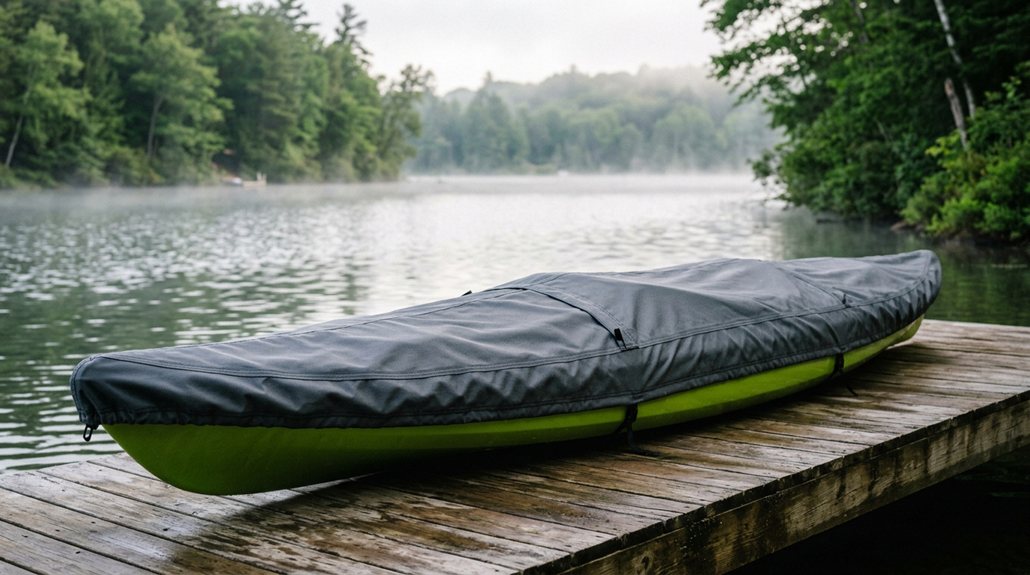
More than 13 million Americans paddled a kayak in 2025, but confusion about registration requirements keeps many new paddlers from launching with confidence. Do kayaks need a license plate or title? The answer depends on your state, the type of kayak you own, and how you use it, but most non-motorized recreational kayaks do not require registration or a physical license plate in the majority of states.
Key Takeaways
- Most non-motorized kayaks do not require registration in the majority of U.S. states, though about a dozen states do mandate it
- Motorized kayaks almost always require registration, regardless of motor size, in states that regulate watercraft
- Registration is not the same as titling,many states require registration but not a formal title document for kayaks
- Penalties for paddling an unregistered kayak range from warnings to fines of $50,$500 depending on state law
- Registration costs typically run $10,$50 for a multi-year period, with some states offering lifetime registration
- Inflatable kayaks follow the same rules as hard-shell kayaks in most jurisdictions, material doesn’t determine registration status
- Interstate paddling is generally allowed without re-registering if your home state requires registration and you display valid numbers
- Fishing kayaks have no special exemption,registration depends on propulsion type, not intended use
- Kayak size rarely determines registration,a 10-foot kayak follows the same rules as a 14-foot model in most states

Do I Need to Register My Kayak With the State?
You need to register your kayak only if your state specifically requires registration for non-motorized vessels or if you add any type of motor to your kayak. The majority of U.S. states exempt non-motorized kayaks from registration, treating them differently than motorboats and personal watercraft.
State registration requirements fall into three categories:
- No registration required: Most states (approximately 38) do not require registration for paddle-powered kayaks
- Mandatory registration: About 12 states require all kayaks to be registered regardless of propulsion
- Conditional registration: A few states require registration only for kayaks used in certain waters or with specific features
Common mistake: Assuming that because you need a fishing license, you also need kayak registration. These are separate requirements, a fishing license permits you to catch fish, while kayak registration (where required) is a vessel documentation requirement.
The distinction matters because registration comes with responsibilities: displaying numbers correctly, renewing on schedule, and updating your address when you move. If your state doesn’t require it, you save time and paperwork.
What’s the Difference Between Kayak Registration and Boat Registration?
Kayak registration and boat registration follow the same legal framework in states that require both, but kayaks typically have simpler requirements, lower fees, and smaller registration decals instead of metal license plates. The core difference lies in display method and vessel classification, not the registration process itself.
Key differences include:
| Aspect | Motorboat Registration | Kayak Registration |
|---|---|---|
| Display method | Metal or plastic license plate mounted on stern | Adhesive decal numbers on bow or hull |
| Number size | 3-inch tall characters, block style | Usually 3-inch characters, sometimes smaller allowed |
| Renewal period | 1-3 years typical | Often 2-5 years or lifetime |
| Cost | $25-$100+ annually | $10-$50 for multi-year period |
| Title requirement | Usually required for boats over 16 feet | Rarely required for kayaks |
| Safety inspection | Sometimes required | Almost never required |
Both registrations assign a unique hull identification number (HIN) or state registration number that helps law enforcement identify the vessel owner. The registration creates a public record linking you to the watercraft, which helps recover stolen vessels and enforce boating regulations.
Choose kayak-specific registration (where available) rather than trying to register your kayak as a “boat”, you’ll pay lower fees and face simpler requirements designed for human-powered craft.
What States Require Kayak Registration?
Approximately 12 states require registration for non-motorized kayaks as of 2026, including Alaska, Connecticut, Hawaii, Iowa, Minnesota, Missouri, Nebraska, New York, Ohio, Oklahoma, Pennsylvania, and Wisconsin. Several other states require registration only if you add a motor or use the kayak in specific waters.
Here’s the breakdown by registration requirement:
States requiring all kayak registration (non-motorized included):
- Alaska
- Connecticut
- Hawaii
- Iowa
- Minnesota
- Missouri
- Nebraska
- New York
- Ohio
- Oklahoma
- Pennsylvania
- Wisconsin
States requiring registration only for motorized kayaks:
- Most other states fall into this category, including California, Florida, Texas, Washington, and Oregon
States with conditional requirements:
- New Jersey: Registration required only for kayaks with motors
- Illinois: Registration required for kayaks used on specific state-managed waters
- Michigan: Registration required only if you add a motor
States with no kayak registration:
- The remaining states exempt paddle-powered kayaks entirely
Important consideration: State laws change periodically. Before your first launch in a new state, check the current requirements with that state’s Department of Natural Resources, Fish and Wildlife agency, or equivalent authority. Many states post registration requirements clearly on their official boating websites.
If you paddle in multiple states, register in your home state if required, most states honor out-of-state registrations through reciprocity agreements.
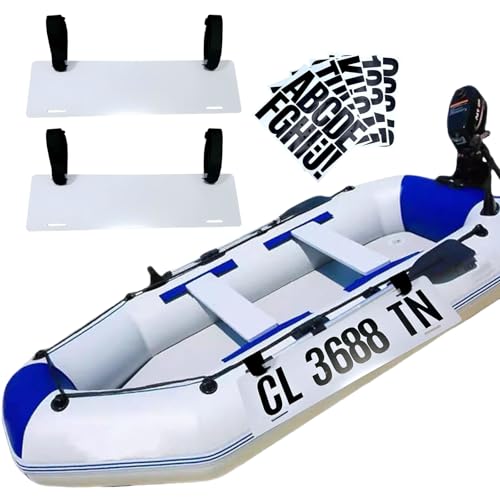
Weather Resistance: These Boat Registration Number Plate are Made of thicker plastic, letters / numbers are made of vinyl, which is waterproof, fade-resistant and UV...
How Much Does It Cost to Register a Kayak?
Kayak registration typically costs between $10 and $50 for a multi-year period, with many states offering registration terms of 2-5 years or even lifetime registration. This makes kayak registration significantly cheaper than motorboat registration, which often runs $50-$150 annually.
State-by-state registration costs (2026 rates):
- Alaska: $24 for 2 years
- Connecticut: $18 for 3 years
- Hawaii: $10 per year
- Iowa: $13 for 3 years
- Minnesota: $37.50 for 3 years
- Missouri: $8 per year
- Nebraska: $22 for 3 years
- New York: $22.50 for 3 years
- Ohio: $25 for 3 years
- Oklahoma: $12.50 per year
- Pennsylvania: $22 for 2 years
- Wisconsin: $9 per year
Many states also charge a one-time processing fee ($5-$10) for first-time registrations. Some offer lifetime registration options for an upfront fee of $50-$100, which makes sense if you plan to keep your kayak for many years.
Money-saving tip: If your state offers lifetime registration and you’re committed to kayaking long-term, the upfront cost usually pays for itself within 5-7 years compared to recurring registration fees.
Registration fees typically include the cost of registration decals (the numbers you affix to your kayak). Replacement decals if yours fade or peel usually cost $5-$10.

COMPLETE 146-PIECE VESSEL KIT: Includes 4 full sets of letters (A-Z) and 4 full sets of numbers (0-9). This single kit provides more than enough characters to mark both the Port and Starboard sides of your boat or PWC, with extras for tender vessels or mistakes.

Hight Tack "GRIP" adhesive is made to stick to surfaces that cause other vinyls to fail.

Includes two decals, one for each side
Do Inflatable Kayaks Need to Be Registered?
Inflatable kayaks follow the exact same registration requirements as hard-shell kayaks in every state, the hull material does not determine registration status. If your state requires non-motorized kayak registration, your inflatable must be registered. If your state exempts paddle-powered kayaks, your inflatable is also exempt.
The confusion often arises because some paddlers assume inflatable kayaks are “toys” rather than vessels. State law makes no such distinction. An inflatable kayak capable of carrying a person on navigable waters is legally a watercraft subject to the same rules as any other kayak.
Registration applies equally to:
- Hard-shell plastic kayaks (polyethylene)
- Composite kayaks (fiberglass, carbon fiber)
- Inflatable kayaks (PVC, Hypalon)
- Folding kayaks (fabric and frame)
- Sit-on-top kayaks
- Sit-inside kayaks
The only factor that changes registration requirements is propulsion method. If you add a trolling motor, electric motor, or any other motorized propulsion to your inflatable kayak, you’ll need to register it in virtually every state, even those that normally exempt paddle-powered craft.
Common scenario: You buy an inflatable fishing kayak in Florida (no registration required for non-motorized kayaks) and later add a small electric trolling motor. The moment you add that motor, registration becomes mandatory, even though the kayak itself hasn’t changed.
What Happens If I Get Caught With an Unregistered Kayak?
Paddling an unregistered kayak in a state that requires registration typically results in a citation with fines ranging from $50 to $500 for a first offense, though some officers issue warnings for first-time violations. Repeat offenses carry higher fines and can result in confiscation of your kayak in extreme cases.
Enforcement consequences vary by state and circumstance:
First offense penalties:
- Warning: Common for first-time violations if you can prove you recently purchased the kayak or recently moved to the state
- Citation with fine: $50-$150 typical range for first offense
- Grace period: Some states give you 30-60 days to register and show proof to dismiss the citation
Repeat offense penalties:
- Increased fines: $200-$500 for second and subsequent violations
- Court appearance: May be required for repeated violations
- Vessel impoundment: Rare but possible in cases of flagrant disregard
Aggravating factors that increase penalties:
- Operating an unregistered kayak while also violating other boating laws (no PFD, alcohol violation)
- Refusing to cooperate with law enforcement during a vessel check
- Multiple prior violations on record
Real-world enforcement reality: Many kayakers paddle for years in states requiring registration without being checked. However, enforcement has increased as kayak fishing has grown in popularity. State park rangers, conservation officers, and marine patrol units conduct random vessel checks at popular launches, especially during peak season and fishing tournaments.
Best practice: If you’re caught unregistered, be courteous and honest. Many officers will issue a warning if you commit to registering immediately and can show you were unaware of the requirement. Arguing or claiming ignorance of the law rarely helps, registration requirements are publicly posted and easily accessible online.
Do I Need a Title to Sell My Used Kayak?
Most states do not require a title document to sell a used kayak, even in states that require registration, a bill of sale is typically sufficient for private party transfers. Only a handful of states issue formal titles for kayaks, and even in those states, title transfer is often optional for vessels under a certain value.
The documentation you need to sell your kayak depends on whether your state requires registration:
In states that don’t require kayak registration:
- Bill of sale: Handwritten or printed document showing buyer, seller, date, price, and kayak description (make, model, color, HIN if present)
- No other documentation needed: The transaction is essentially the same as selling any personal property
In states that require kayak registration:
- Bill of sale: Still the primary transfer document
- Registration certificate: Provide the buyer with your current registration certificate or a signed statement releasing your interest
- Title (rare): Only required in states that issue kayak titles (Ohio, Missouri, and a few others)
States that issue kayak titles:
- Ohio: Issues titles for all registered watercraft including kayaks
- Missouri: Issues titles for kayaks over a certain value
- Oklahoma: Issues titles for registered vessels
Even in title states, the title requirement often applies only to kayaks above a certain purchase price ($500-$1,000 threshold is common). A $300 used kayak may not require title transfer even in a title state.
Selling across state lines: If you’re selling to a buyer in another state, provide a detailed bill of sale regardless of title requirements. The buyer will need it to register the kayak in their home state if required.
Protect yourself: Always create a bill of sale even when not legally required. It protects both parties by documenting the transaction, proves you no longer own the kayak (important if it’s later involved in an incident), and helps the buyer register if they move to a state requiring registration.
Do Kayaks Under 10 Feet Need Registration?
Kayak length does not determine registration requirements in the vast majority of states, a 10-foot kayak follows the same registration rules as a 14-foot kayak. The determining factors are propulsion type (motorized vs. non-motorized) and state law, not vessel dimensions.
This differs significantly from boat registration, where many states exempt vessels under a certain length (often 16 feet) from registration. Kayaks are classified separately from boats in most state regulations, so length-based exemptions don’t apply.
Why length doesn’t matter for kayaks:
- State laws define kayaks as a distinct vessel category separate from boats
- The distinction between registered and unregistered kayaks is based on propulsion, not size
- Even very short kayaks (8-9 feet) are considered navigable watercraft if they can carry a person
The only length-related consideration: Some states define “vessels” subject to registration as watercraft capable of being used for transportation on water. Extremely short kayaks designed for children (under 6 feet) might theoretically fall outside this definition, but no state explicitly exempts kayaks based on a minimum length threshold.
Motorized kayaks: If you add a motor to even a short kayak, registration becomes required in virtually all states. A 9-foot kayak with a trolling motor needs registration just like a 14-foot motorized kayak.
Common misconception: Some paddlers believe sit-on-top kayaks under 10 feet are “toys” exempt from registration. State law makes no such distinction, if the state requires kayak registration, it applies to all kayaks regardless of length or style.
How to Register a Kayak in My State
To register a kayak, visit your state’s Department of Natural Resources or equivalent agency website, complete the watercraft registration application (online or paper), pay the registration fee, and display the assigned registration numbers on your kayak’s bow according to state specifications. The entire process typically takes 15-30 minutes online or 2-4 weeks by mail.
Step-by-step registration process:
Gather required documents:
- Proof of ownership (bill of sale, receipt, or manufacturer’s certificate of origin)
- Driver’s license or state ID
- Hull identification number (HIN) if your kayak has one, usually stamped on the stern
- Payment method (credit card for online, check for mail)
Choose registration method:
- Online: Fastest option in states offering online registration (most do as of 2026)
- In-person: Visit a DNR office, license agent, or county clerk
- Mail: Download and print application, mail with payment
Complete the application:
- Owner information (name, address, contact)
- Kayak description (make, model, year, color, length)
- Hull identification number (if present)
- Propulsion type (paddle, motor, or both)
- Intended use (recreation, fishing, etc.)
Pay the registration fee:
- Fees range from $10-$50 depending on state
- Choose registration period if options are available (annual, multi-year, lifetime)
Receive registration materials:
- Registration certificate: Keep this with you when paddling or in your vehicle
- Registration decals: Adhesive numbers and letters to display on your kayak
- Validation stickers: Some states issue year stickers similar to license plate tags
Display registration numbers correctly:
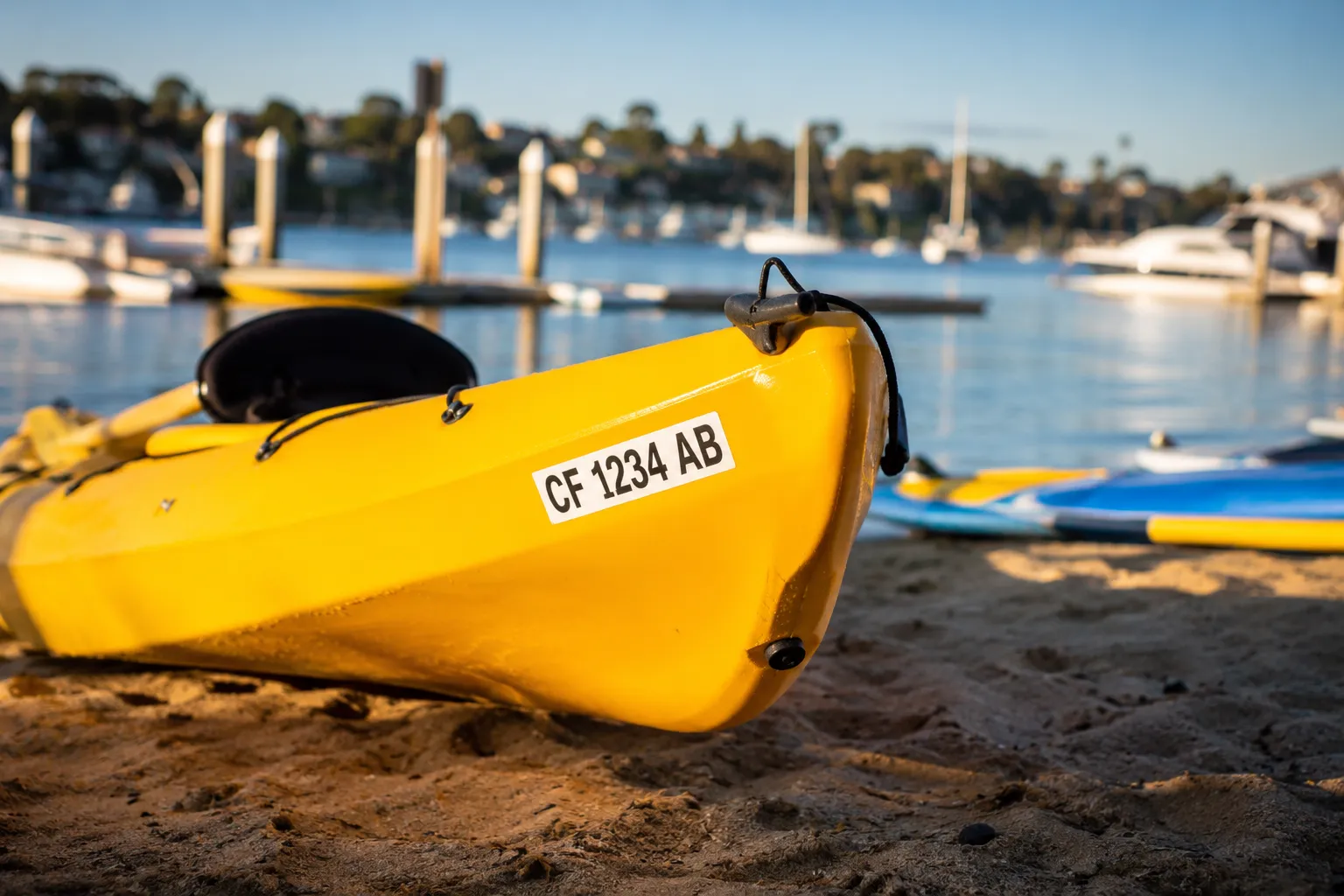
- Apply decals to both sides of the bow (front) of your kayak
- Numbers must read left-to-right
- Characters must be at least 3 inches tall (check your state’s specific requirement)
- Use contrasting color to hull (dark numbers on light hull, light numbers on dark hull)
- Place numbers at least 6 inches from the bow tip and above the waterline
- Format: XX-1234-XX (state abbreviation, number, validation letters, format varies by state)
Processing time:
- Online registration: Immediate confirmation, decals arrive by mail in 7-14 days
- In-person registration: Receive decals immediately in most cases
- Mail registration: 2-4 weeks for processing and decal delivery
Common mistake: Applying registration decals incorrectly. Numbers must be clearly visible, properly sized, and in the correct location. Improperly displayed numbers can result in a citation even if you’re properly registered.
Renewal: Most states send renewal notices 30-60 days before expiration. You can typically renew online even if you registered in person originally.

US COAST GUARD COMPLIANT: Meets all US Coast Guard and state specific requirements for size and visibility. Each character is exactly 3 inches high, ensuring your vessel-whether a pontoon, bass boat, PWC, or Center Console-is legally marked and clearly visible

USCG & STATE COMPLIANT: Meets all United States Coast Guard and state specific requirements for recreational vessel registration. Features a 3-inch block font with a contrasting black outline to ensure high visibility and legality on the water

USCG & STATE COMPLIANT: Meets all United States Coast Guard and state specific requirements for recreational vessel registration. Features a 3-inch block font with a contrasting black outline to ensure high visibility and legality on the water
Do Fishing Kayaks Have Different Registration Rules?
Fishing kayaks follow the exact same registration requirements as recreational kayaks, the intended use does not change registration status. Whether you use your kayak for fishing, touring, exercise, or photography, the registration requirement depends only on propulsion type and state law.
This surprises many anglers who assume fishing kayaks might have special rules similar to how fishing licenses work differently than general boating licenses. The distinction doesn’t exist in watercraft registration law.
Registration applies equally to:
- Recreational touring kayaks
- Fishing kayaks with rod holders and gear tracks
- Whitewater kayaks
- Racing kayaks
- Tandem (two-person) kayaks
What does affect registration:
- Adding a motor: Many fishing kayaks accommodate trolling motors. The moment you add any motor (electric, gas, or otherwise), registration becomes required in virtually all states
- Pedal drive systems: Kayaks with pedal drives (Hobie, Old Town, etc.) are still considered non-motorized in most states and follow the same rules as paddle kayaks
- State of use: Registration depends on where you paddle, not where you bought the kayak or what you use it for
Common fishing kayak scenario: You buy a fishing kayak in a state that doesn’t require registration (like Florida or Texas). You fish exclusively in that state for two years without registering. Then you take a fishing trip to Minnesota, which requires all kayak registration. Technically, you should register your kayak in Minnesota or ensure your home state registration (if you had one) is valid for reciprocity. In practice, many visiting anglers paddle unregistered on short trips, but you risk a citation if checked.
Best practice for serious kayak anglers: If you fish tournaments or travel to fish in multiple states, register your kayak even if your home state doesn’t require it. Having valid registration from any state typically satisfies reciprocity requirements in states that do require registration, and it demonstrates good-faith compliance if you’re ever checked.
Can I Use My Kayak in Other States Without Registration?
If your home state requires kayak registration and you’ve properly registered your kayak, you can legally paddle in other states through reciprocity agreements, most states honor out-of-state kayak registrations for visiting paddlers. If your home state doesn’t require registration, you can generally paddle in other non-registration states, but you may need to register if you paddle in a state that requires it.
Interstate paddling scenarios:
Scenario 1: Your state requires registration, you’re visiting another state
- Your kayak is registered: You can paddle in the visiting state under reciprocity
- Typical reciprocity period: 60-90 days of continuous use before you must register in the new state
- Display your home state numbers: Keep them visible and current
Scenario 2: Your state doesn’t require registration, you’re visiting a state that does
- Short visits (under 60 days): Most states don’t enforce registration for brief visits
- Extended stays: You may need to register in the visiting state
- Gray area: Enforcement varies, some states strictly enforce, others rarely check visiting kayakers
Scenario 3: You move to a new state
- Timeline: Most states give you 30-90 days to register your kayak after establishing residency
- Your old registration expires: Once you’re a resident of the new state, your previous state’s registration no longer provides reciprocity protection
States with strict enforcement: Minnesota, Wisconsin, and Ohio are known for checking kayak registration more frequently than other states. If you’re planning an extended paddling trip in these states, ensure you have valid registration from your home state or register as a non-resident.
Best practice: Carry your registration certificate (or a photo of it on your phone) whenever you paddle out of state. If checked, you can immediately prove your kayak is properly registered in your home state.
International travel: If you’re bringing your kayak to Canada or Mexico, check that country’s specific requirements. Canada generally requires registration for all watercraft, including kayaks, though enforcement for visiting paddlers varies by province.
What Documents Do I Need to Register a Kayak?
To register a kayak, you typically need proof of ownership (bill of sale or receipt), a valid driver’s license or state ID, the kayak’s hull identification number (HIN) if present, and payment for the registration fee. Some states require additional documentation for used kayaks or out-of-state purchases.
Required documents for new kayak registration:
Proof of ownership:
- Sales receipt from dealer or retailer
- Manufacturer’s certificate of origin (MCO) for new kayaks
- Bill of sale for private party purchases
- Invoice showing purchase price and date
Personal identification:
- Valid driver’s license from your state of residence
- State-issued ID card if you don’t have a driver’s license
- Proof of residency (utility bill, lease agreement) if your ID shows an old address
Kayak identification:
- Hull identification number (HIN), a 12-character code stamped on the stern of most kayaks manufactured after 1972
- Make and model information
- Year of manufacture
- Length and color
- Serial number (if no HIN is present)
Payment:
- Registration fee (varies by state, typically $10-$50)
- Processing fee if applicable ($5-$10 in some states)
- Credit card, check, or money order depending on registration method
Additional documents for specific situations:
Used kayak purchase:
- Previous owner’s registration certificate (if kayak was registered)
- Signed bill of sale from previous owner
- Release of interest or title transfer (in title states)
Out-of-state purchase:
- Proof of sales tax paid (or exemption certificate)
- Out-of-state dealer invoice
- Transport documentation if applicable
Homemade or custom kayak:
- Affidavit of construction (stating you built the kayak)
- Photos of the kayak
- Detailed description of materials and construction
- Estimated value
Kayak without a HIN:
- Detailed description and photos
- Affidavit explaining why no HIN is present (vintage kayak, homemade, etc.)
- The state may assign a new HIN during registration
Common documentation mistakes:
- Incomplete bill of sale: Must include buyer name, seller name, date, price, and kayak description
- Missing HIN: Check the stern (back) of your kayak carefully, the HIN is often stamped in an inconspicuous location
- Expired ID: Your driver’s license must be current
- Wrong state residency: You must register in your state of legal residence, not where you bought the kayak
Digital documentation: Most states now accept digital copies of documents for online registration. Take clear photos of your receipt, bill of sale, and HIN before starting the online registration process.
Frequently Asked Questions
Do sit-on-top kayaks need to be registered?
Sit-on-top kayaks follow the same registration requirements as sit-inside kayaks, the hull style doesn’t determine registration status. If your state requires non-motorized kayak registration, both styles must be registered. If your state exempts paddle-powered kayaks, both styles are exempt.
Do I need a boating license to operate a kayak?
Most states do not require a boating license or safety certificate to operate a non-motorized kayak. However, some states require boating safety education for anyone operating a motorized kayak or for young paddlers under a certain age (typically 12-16 years old).
Can I register my kayak online?
Most states offer online kayak registration as of 2026. Visit your state’s Department of Natural Resources or Fish and Wildlife website to check if online registration is available. Online registration is typically faster and more convenient than mail or in-person registration.
How long does kayak registration last?
Kayak registration periods vary by state, ranging from 1 year to lifetime registration. Common periods are 2-3 years. Some states offer lifetime registration for a higher upfront fee. Check your state’s specific registration term when you register.
What if my kayak doesn’t have a hull identification number?
Kayaks manufactured before 1972 and some homemade kayaks may not have a HIN. You can still register these kayaks by providing a detailed description, photos, and an affidavit explaining the absence of a HIN. The state may assign a new HIN during the registration process.
Do I need to register a kayak I only use on private property?
If you use your kayak exclusively on private ponds or lakes on your own property and never launch on public waters, registration is typically not required even in states that mandate kayak registration. However, if you ever launch on public waters, registration becomes required.
Do rental kayaks need to be registered?
Yes, commercial kayak rental operations must register their entire fleet in states that require kayak registration. The rental company handles registration, not the renter. When you rent a kayak, verify that it displays current registration numbers if you’re paddling in a state that requires registration.
Can I transfer my kayak registration if I sell my kayak?
Kayak registration is tied to the owner, not the vessel, in most states. When you sell your kayak, the buyer must register it in their own name. You should notify your state’s registration authority that you’ve sold the kayak to avoid liability for future violations.
What happens if my registration decals fade or peel off?
You’re required to maintain legible registration numbers at all times. If your decals fade, peel, or become unreadable, order replacement decals from your state’s registration authority. Replacement decals typically cost $5-$10. Operating with illegible numbers can result in a citation.
Do I need different registration for saltwater vs. freshwater?
No, kayak registration is not water-type specific. If your state requires registration, one registration covers your kayak for use in all waters within that state, lakes, rivers, coastal areas, and ocean waters. The registration requirement is based on the vessel, not where you paddle.
Are there age restrictions for operating a registered kayak?
Most states do not have minimum age requirements for operating non-motorized kayaks, even registered ones. However, some states require young paddlers (typically under 12-16) to wear a PFD at all times or to be accompanied by an adult. Age restrictions are more common for motorized kayaks.
Do I need insurance for a registered kayak?
Kayak insurance is not legally required in any state, even for registered kayaks. However, some paddlers choose to insure expensive kayaks ($2,000+) against theft, damage, or loss. Homeowners or renters insurance may cover kayaks, or you can purchase specialized paddlesports insurance.
Conclusion
Understanding whether kayaks need a license plate or title comes down to three key factors: your state’s specific regulations, whether your kayak has a motor, and how you plan to use it across state lines. Most recreational paddlers in non-registration states can launch immediately without paperwork, while those in the dozen states requiring registration face a simple, inexpensive process that takes less than 30 minutes online.
Take these action steps today:
- Check your state’s current requirements by visiting your Department of Natural Resources website, don’t rely on outdated information or assumptions
- Register your kayak if required to avoid citations and ensure you can paddle legally in other states through reciprocity
- Keep your registration certificate accessible when paddling, either in a dry bag or as a photo on your phone
- Create a bill of sale whenever buying or selling a used kayak, even if your state doesn’t require formal documentation
- Plan ahead for interstate trips by researching registration requirements in your destination state before you load your kayak
Whether you’re launching your first kayak or you’ve been paddling for years, staying compliant with registration requirements protects you from fines, supports waterway conservation funding, and ensures you can focus on what matters most, enjoying your time on the water.