
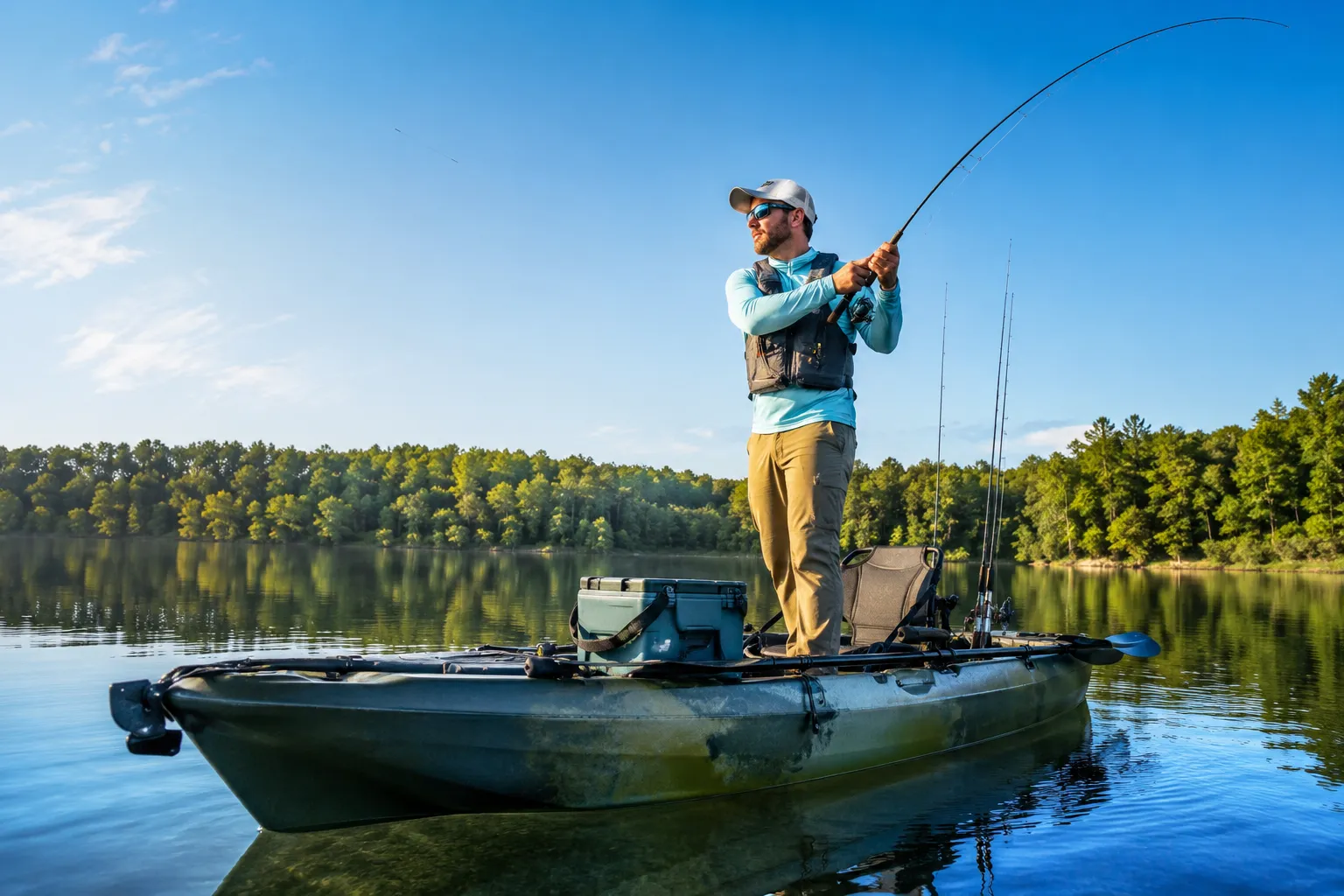
Fishing kayaks are significantly more stable than recreational kayaks and rarely flip under normal conditions. Most modern fishing kayaks feature wide hulls (32-36 inches), flat bottoms, and low centers of gravity that make them 3-4 times harder to capsize than traditional narrow kayaks. While any kayak can flip in extreme conditions or with improper technique, fishing kayaks are specifically engineered for stability, allowing anglers to stand, cast, and reel in fish without tipping over.
Key Takeaways
- Fishing kayaks are designed for stability, Most models are 32-36 inches wide with flat hulls, making them far more stable than recreational kayaks
- Standing is possible in fishing kayaks, Properly designed fishing kayaks allow anglers to stand and cast without tipping
- Sit-on-top designs are more stable, They have lower centers of gravity and are easier to remount if you do capsize
- Weight capacity matters, Heavier paddlers should choose kayaks with higher weight ratings and wider beams for optimal stability
- Flipping is uncommon, With proper technique, fishing kayaks rarely capsize; most incidents involve user error or extreme weather
- Recovery is straightforward, Sit-on-top fishing kayaks are easy to flip back over and remount in deep water
- Width trumps length, A wider kayak (34+ inches) provides more stability than a longer, narrower model
- Outriggers add extra security, Stabilizer arms can make any fishing kayak virtually tip-proof for standing anglers
What Makes a Fishing Kayak Stable?
Fishing kayaks achieve superior stability through three key design features: wide beams (typically 32-36 inches), flat or pontoon-style hulls, and low seating positions. The wider the kayak, the more initial stability it provides, which is why fishing kayaks are substantially wider than recreational models that prioritize speed over stability.
Primary stability factors include:
- Hull width, Fishing kayaks are 8-12 inches wider than recreational kayaks, dramatically increasing resistance to tipping
- Hull shape, Flat bottoms and pontoon designs create a stable platform, while rounded hulls (common in touring kayaks) are more tippy
- Center of gravity, Sit-on-top fishing kayaks keep your weight low and centered, reducing the likelihood of capsize
- Weight distribution, Built-in storage compartments and tank wells help distribute gear weight evenly across the kayak
- Chine design, Hard chines (sharp angles where the hull bottom meets the sides) provide secondary stability when the kayak tilts
The Brooklyn Kayak Company and other manufacturers design fishing kayaks with these stability features as standard, making them suitable for anglers who need to move around, cast, and fight fish without worrying about flipping. A single angler in a properly sized fishing kayak can shift weight side to side without creating enough tilt to capsize under normal conditions.
Do Fishing Kayaks Tip Easily Compared to Regular Kayaks?
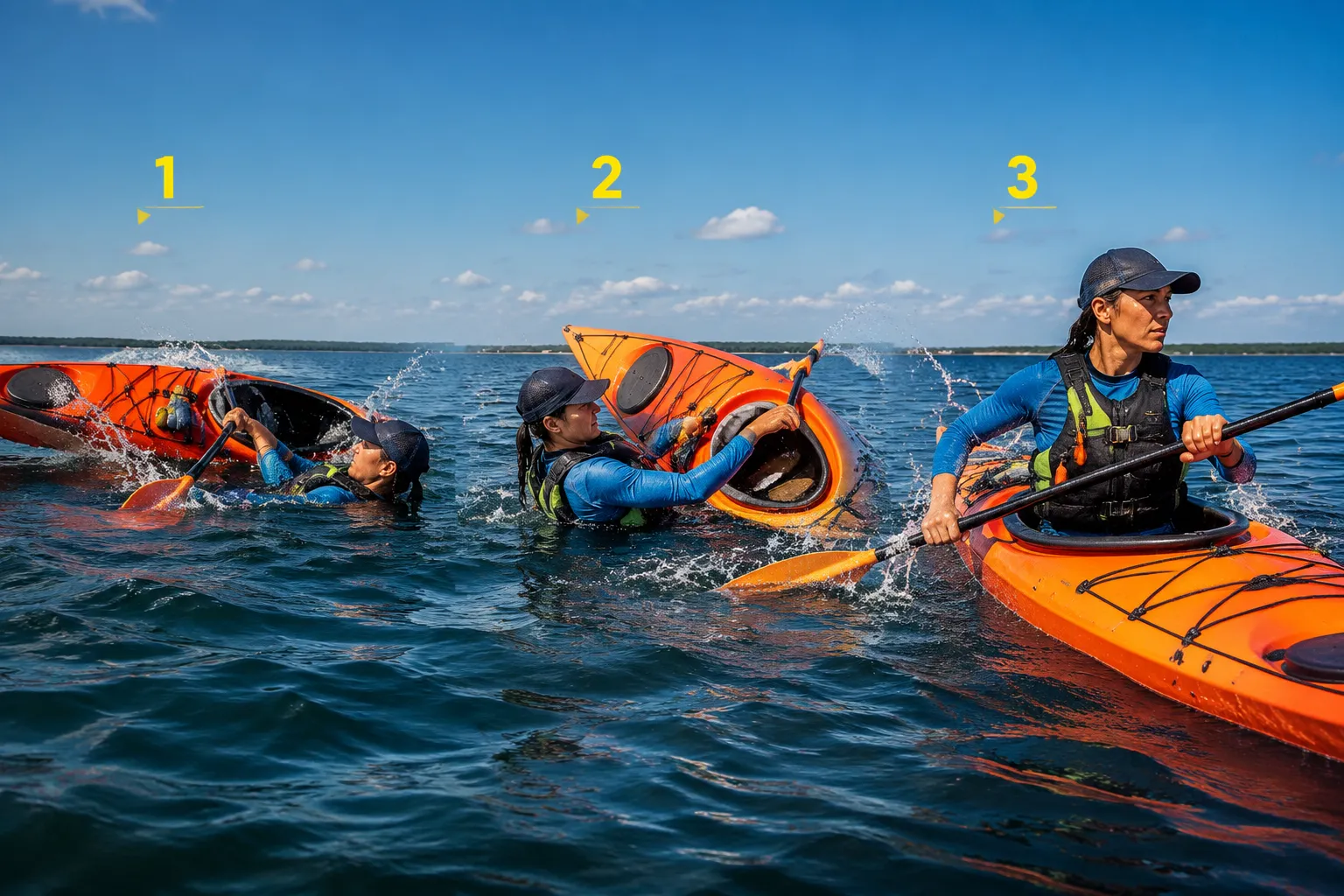
Fishing kayaks are far less likely to tip than regular kayaks due to their specialized design. A typical recreational kayak measures 24-28 inches wide, while fishing kayaks range from 32-40 inches, providing significantly more stability. This width difference makes fishing kayaks about 3-4 times more resistant to capsizing during normal use.
Key differences:
| Feature | Fishing Kayak | Recreational Kayak |
|---|---|---|
| Width | 32-40 inches | 24-28 inches |
| Hull shape | Flat or pontoon | Rounded or V-shaped |
| Stability rating | High initial stability | Moderate stability |
| Standing capability | Yes (most models) | No (too unstable) |
| Capsize risk | Low | Moderate to high |
Recreational kayaks prioritize speed and maneuverability, which requires a narrower, more streamlined hull that naturally tips more easily. Fishing kayaks sacrifice some speed for the stability needed to cast, reel, and land fish. The trade-off is worth it for anglers who need a stable platform that won’t flip when they lean to one side to net a fish or reach for gear.
Sit-On-Top vs Sit-Inside Kayak Stability
Sit-on-top kayaks are generally more stable than sit-inside models for fishing because they have a lower center of gravity and wider hull designs. Your weight sits closer to the waterline in a sit-on-top kayak, which makes the entire vessel more resistant to tipping. Additionally, sit-on-top kayaks are self-bailing and easier to remount if you do flip.
Sit-on-top advantages for stability:
- Lower center of gravity keeps weight closer to the water
- Wider deck platforms accommodate standing and movement
- No cockpit rim to catch waves or destabilize the kayak
- Easier to get back on after a capsize, just climb back up
- Self-draining scupper holes prevent water accumulation that could affect balance
Sit-inside considerations:
- Higher center of gravity (you sit above the waterline inside a cockpit)
- Narrower beam in many models, reducing initial stability
- More difficult to re-enter after flipping, especially in deep water
- Better for cold-weather fishing due to protection from elements
- Lower wind profile can actually improve stability in windy conditions
For most anglers, especially beginners, sit-on-top fishing kayaks offer the best combination of stability and ease of use. The Brooklyn Kayak Company offers both styles, but their sit-on-top models like tandem fishing kayaks are particularly popular for stability-conscious anglers.

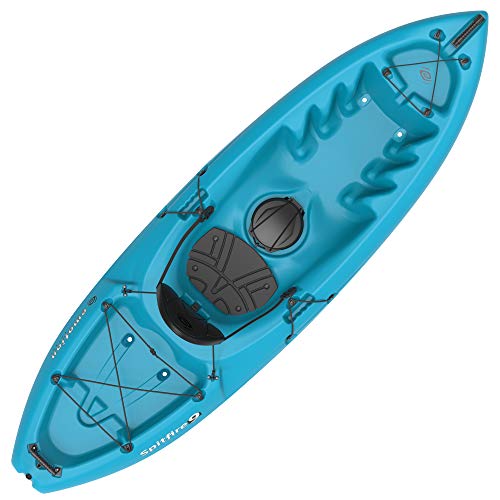
UV-Protected HDPE Construction for Durability: Built with high-density polyethylene (HDPE) plastic, this kayak is both lightweight and highly durable, offering long-lasting protection against UV rays for years of use in various conditions. Paddle included.

Kayak Includes Quick-Dry Foam-Back Mesh Seat | Water-Resistant Oval Storage Hatch | Comfort Seating Design Is Easy to Adjust | Ready to Fish – Triple Rod Holder Design
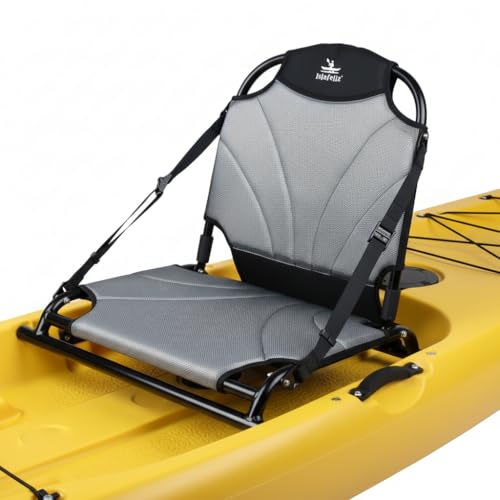
[CRITICAL FITMENT] MEASURE DECK WIDTH FIRST: STOP AND MEASURE: The base dimensions are 22.83'' (W) × 17.5'' (L). It is specifically engineered for wide Sit-On-Top kayaks and fishing boats with flat mounting decks or molded seat wells. Please verify your vessel has enough clearance before purchasing to ensure a perfect, hassle-free upgrade
How Wide Should a Fishing Kayak Be to Avoid Flipping?
A fishing kayak should be at least 32 inches wide for adequate stability, with 34-36 inches being ideal for most anglers who want to stand and fish. Kayaks narrower than 30 inches are generally too unstable for fishing activities that require movement, casting, or standing. Heavier paddlers or those who plan to stand frequently should consider models 36 inches or wider.
Width recommendations by use:
- 32-33 inches, Minimum for stable seated fishing; suitable for calm water and lighter paddlers
- 34-36 inches, Optimal for standing and casting; works for most anglers and conditions
- 37-40 inches, Maximum stability for heavier paddlers, rough water, or pedal-drive systems
- Over 40 inches, Typically tandem kayaks or specialized platforms; very stable but harder to paddle efficiently
Width isn’t the only factor, hull shape matters too. A 34-inch kayak with a flat bottom will be more stable than a 36-inch kayak with a rounded hull. When shopping at kayaks shop sellers, look for models that combine adequate width with flat or pontoon-style hull designs for the best stability.
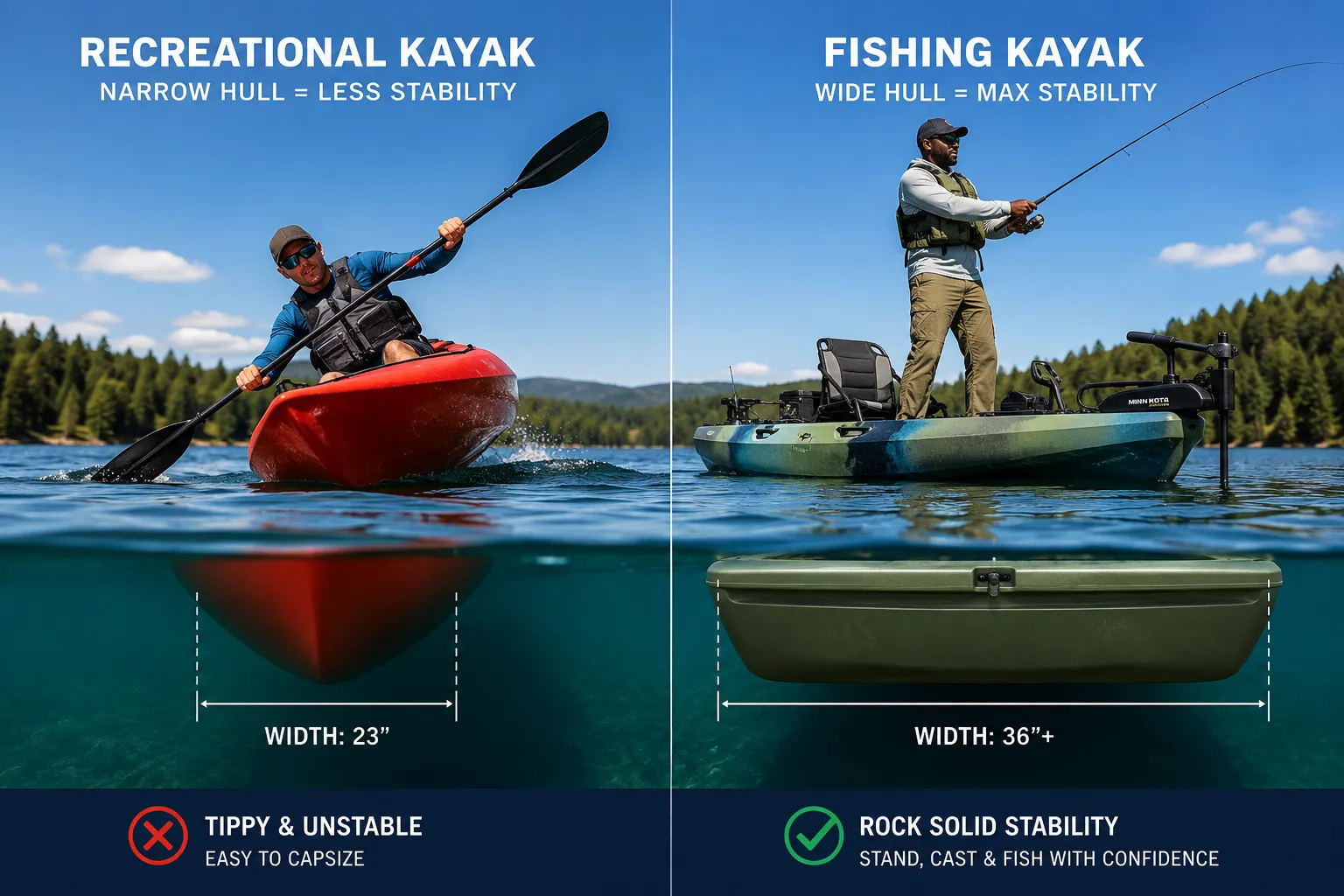
Can You Stand Up in a Fishing Kayak Without Tipping?
Yes, you can stand up in most fishing kayaks without tipping, provided the kayak is designed for standing and you use proper technique. Fishing kayaks with widths of 34 inches or more and flat-bottom hulls allow anglers to stand comfortably for casting and sight fishing. However, standing requires practice, good balance, and awareness of water conditions.
Tips for standing safely:
- Start in calm water, Practice standing in protected areas before trying it in open water or current
- Use a wide stance, Place your feet shoulder-width apart or wider for maximum stability
- Keep knees slightly bent, This lowers your center of gravity and helps you absorb wave motion
- Stand slowly, Quick movements shift weight suddenly and can cause the kayak to tip
- Face forward, Standing sideways reduces your stability and makes the kayak more likely to capsize
- Hold your paddle, Use it as a brace against the water if you start to lose balance
Many modern fishing kayaks from companies like Brooklyn Kayak Company include standing platforms, non-slip deck pads, and even standing straps to support anglers who want to fish vertically. Single and tandem paddle models both accommodate standing, though tandem fishing kayaks require coordination between paddlers to maintain stability.
Common mistake: Trying to stand in a kayak that’s too narrow (under 32 inches) or has a rounded hull. These kayaks simply aren’t designed for standing and will tip easily no matter your technique.
Most Stable Fishing Kayaks for Beginners
The most stable fishing kayaks for beginners are wide-beam sit-on-top models with flat hulls, typically 34-36 inches wide with weight capacities of 350-450 pounds. These kayaks provide maximum initial stability, making them forgiving for new paddlers who are still learning balance and weight distribution. Pedal-drive and motorized options can also enhance stability by eliminating the need to shift your paddle between hands.
Top features for beginner stability:
- Width of 34+ inches, Provides a stable platform that’s hard to tip
- Flat or pontoon hull, Maximizes initial stability for confidence on the water
- Sit-on-top design, Lower center of gravity and easier remounting if you flip
- High weight capacity, Extra capacity (100+ pounds over your loaded weight) adds stability
- Standing platform, Textured, flat deck area designed for standing
- Accessory compatibility, Ability to add outriggers or stabilizers if needed
The Brooklyn Kayak Company offers several beginner-friendly models that combine these features. Their single tandem paddle pedal motorized modular inflatable options cater to different preferences, but all prioritize stability for new anglers. Beginners should also consider tandem fishing kayaks, which are typically wider and more stable than single-person models.
Avoid these for your first kayak:
- Narrow touring kayaks (under 30 inches)
- Sit-inside models with high cockpit rims
- Racing or speed-oriented designs with V-shaped hulls
- Ultra-lightweight kayaks that feel “twitchy” on the water

Ergolounge seating system : Extra-thick cushioning and an extra high and wide padded backrest.
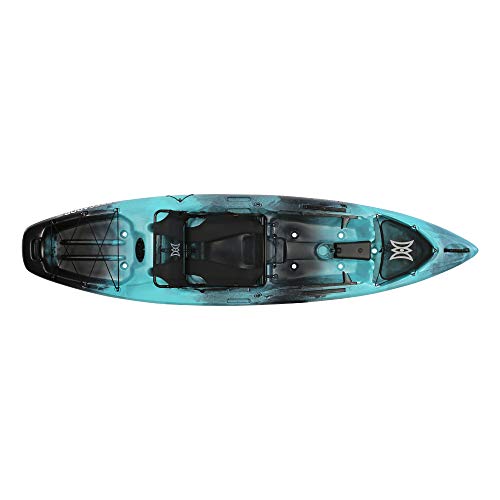
Premium Fishing Experience: The Perception Pescador Pro 10 is a sit-on-top kayak designed for the recreational angler. Equipped with a large front and rear storage area, it provides ample space for all your fishing gear and personal items.
Built in Padded CRS + UltraLite Seat. Rear Tankwell with Cargo Net Lacing for Storage. Storage Hatch for Added Storage Beneath the Deck
What to Do If Your Fishing Kayak Flips Over
If your fishing kayak flips over, stay calm, secure your paddle, and perform a self-rescue by flipping the kayak upright and climbing back on from the side. Most sit-on-top fishing kayaks are designed for easy re-entry in deep water. The entire process typically takes 2-3 minutes once you’ve practiced the technique.
Step-by-step recovery for a flipped kayak:
- Stay with your kayak, It’s your flotation device; don’t swim away from it
- Secure your paddle, Tuck it under the deck bungees or hold it while you work
- Flip the kayak upright, Reach across to the far side, grab the edge, and pull toward you while kicking
- Position yourself at the side, Move to the middle of the kayak, not the bow or stern
- Pull yourself up, Kick hard while pulling your chest onto the deck, then swing your legs up
- Get seated, Rotate into position and take a moment to catch your breath
- Retrieve gear, Collect any items that floated away (this is why you should secure gear)
Prevention tips:
- Always wear a properly fitted life jacket (PFD)
- Attach a paddle leash so you don’t lose your paddle
- Secure gear with bungees or in waterproof hatches
- Check weather conditions before heading out
- Practice self-rescue in shallow water before you need it in deep water
The user manuals from most kayak manufacturers include detailed self-rescue instructions. Take time to practice this technique in controlled conditions, knowing you can recover from a flip makes you a more confident, safer angler.
Are Fishing Kayaks Safer Than Regular Kayaks?
Fishing kayaks are generally safer than regular kayaks for on-water activities because of their superior stability, higher weight capacities, and self-bailing designs. The wider beam and flat hull of a fishing kayak make it much less likely to capsize in the first place, which is the primary safety advantage. Additionally, most fishing kayaks are sit-on-top models that are easier to remount after a capsize.
Safety advantages of fishing kayaks:
- Lower capsize risk, Width and hull design make flipping far less likely
- Easier recovery, Sit-on-top designs allow quick remounting without special skills
- Higher visibility, Wider profile and often brighter colors make you more visible to boaters
- Better stability in waves, Flat hulls handle chop better than narrow, rounded hulls
- More gear storage, Proper storage keeps weight low and centered, improving stability
- Standing capability, Ability to stand improves visibility and situational awareness
Safety considerations:
Both fishing kayaks and regular kayaks require proper safety equipment (PFD, whistle, light for low-visibility conditions) and knowledge of water conditions. A fishing kayak’s stability advantage can make paddlers overconfident, leading them to venture into conditions beyond their skill level. Always check weather, tell someone your plans, and paddle within your abilities regardless of kayak type.
The shipping and warranty information from reputable manufacturers like Brooklyn Kayak Company often includes safety guidelines specific to their models. Review these resources and consider taking a kayaking safety course, especially if you’re new to the sport.
Do Heavier People Need Wider Fishing Kayaks?
Yes, heavier paddlers generally need wider fishing kayaks with higher weight capacities to maintain optimal stability and performance. A kayak loaded close to its weight capacity sits lower in the water, has less freeboard, and becomes less stable. Heavier anglers should choose kayaks with weight capacities at least 100-125 pounds above their total loaded weight (body weight plus gear) and widths of 34-36 inches or more.
Weight and stability relationship:
- Under-capacity loading (50%+ margin), Kayak rides high, maximum stability, easy to paddle
- Near-capacity loading (within 25 pounds), Kayak sits low, reduced stability, harder to control
- Over-capacity loading, Dangerous; kayak may take on water, become unstable, or even sink
Recommendations by paddler weight:
- Under 200 lbs, 32-34 inch kayak with 350+ lb capacity works well
- 200-250 lbs, 34-36 inch kayak with 400-450 lb capacity recommended
- 250-300 lbs, 36-38 inch kayak with 500+ lb capacity for adequate stability
- Over 300 lbs, 38+ inch kayak or tandem model with 550-600+ lb capacity
Don’t forget to account for gear weight. A 225-pound angler with 50 pounds of fishing gear, cooler, and safety equipment needs a kayak rated for at least 375 pounds (275 + 100-pound safety margin). The contact team at Brooklyn Kayak Company can help you select the right model for your weight and fishing style.
Common Mistakes That Cause Kayak Flipping While Fishing
The most common mistakes that cause fishing kayaks to flip are standing up too quickly, leaning too far to one side while fighting a fish, and paddling in conditions beyond the kayak’s design limits. Most flips are preventable with proper technique and awareness. Even in stable fishing kayaks, sudden weight shifts or poor judgment about weather conditions can lead to a capsize.
Top mistakes to avoid:
- Standing without practice, Trying to stand for the first time in deep or moving water instead of practicing in calm, shallow areas
- Overloading one side, Placing all your gear on one side of the kayak, creating an imbalanced load
- Leaning too far out, Reaching over the side to land a fish or retrieve something without counterbalancing
- Ignoring weather, Paddling in high winds, thunderstorms, or rough water beyond your skill level
- Fighting big fish incorrectly, Pulling hard on a rod without bracing yourself or keeping your center of gravity low
- Sudden movements, Making quick, jerky motions that shift your weight unexpectedly
- Wrong kayak for conditions, Using a narrow recreational kayak for fishing or a fishing kayak in whitewater
- Not securing gear, Loose items shift during paddling, changing the kayak’s balance
- Standing in current or waves, Attempting to stand when water conditions make it unsafe
- Inadequate safety gear, Not wearing a PFD or having no way to signal for help
Pro tip: The “120 rule” in kayaking states that if the air temperature plus water temperature is less than 120°F, you risk hypothermia if you capsize. In cold conditions, wear appropriate thermal protection and be extra cautious about stability. The “50-90 rule” in sea kayaking (discussed below) provides additional cold-water safety guidance.
Fishing Kayak with Outriggers: Worth It for Stability?
Outriggers (stabilizers) are worth adding to a fishing kayak if you need maximum stability for standing, have balance concerns, or fish in rough water regularly. Outriggers attach to the sides of your kayak and extend floats outward, making the kayak virtually impossible to tip over. They’re especially valuable for anglers with mobility issues, those who want to stand in narrow kayaks, or anyone fishing in challenging conditions.
Benefits of outriggers:
- Near-zero capsize risk, Properly installed outriggers make flipping almost impossible
- Confidence for standing, Allows standing in kayaks that would otherwise be too narrow
- Rough water capability, Stabilizes the kayak in waves, wakes, and wind
- Accessibility, Enables anglers with balance or mobility issues to fish safely
- Photography platform, Creates a stable base for cameras and video equipment
Drawbacks to consider:
- Added weight, Outriggers add 10-20 pounds to your setup
- Reduced maneuverability, Wider footprint makes navigating tight spaces harder
- Storage and transport, Takes up more space in your vehicle and garage
- Cost, Quality outrigger systems run $150-300
- Paddling resistance, Creates more drag, requiring more effort to paddle
For most anglers in properly sized fishing kayaks (34+ inches wide), outriggers aren’t necessary. However, they’re an excellent option for specific situations. Many kayaks shop sellers offer outrigger kits that attach to standard kayak seats and support systems. The accessories shop at Brooklyn Kayak Company includes stabilizer options compatible with their models.

Float don't Sink: Get ready to set sail! Our kayak outrigger stabilizer provides more stability and makes you feel safe. Whether you're kayaking, canoeing, boating, or fishing, it is here to let you enjoy more stability and freedom during all water sports. Only for kayaks or boats with holes.

Stable and Safe: These outriggers with large buoyancy after inflation add stability to your kayak and make you feel safe.

1 . Versatile Use : This outrigger stabilizer is suitable for a variety of water activities including canoeing , kayaking , rowing , and fishing . It's also beginner friendly , making it ideal for those new to water sports .
How to Recover from a Kayak Flip in Deep Water
To recover from a kayak flip in deep water, flip the kayak upright, position yourself at the center side, kick hard while pulling your chest onto the deck, then swing your legs up and rotate into the seat. This “scramble” technique works well for sit-on-top fishing kayaks and requires no special equipment beyond a properly fitted PFD.
Detailed recovery steps:
- Take a breath and assess, Make sure you’re okay and locate your paddle
- Flip the kayak right-side up, Swim to one side, reach across to the far edge, and pull toward you while kicking
- Secure your paddle, Slide it under deck bungees or lay it across the kayak
- Position at the center, Move to the middle of the kayak where it’s most stable
- Get your chest on deck, Reach across to the far side, grip the edge, and kick powerfully while pulling
- Swing your legs up, Once your chest is on the deck, swing your legs up and onto the kayak
- Rotate to seated position, Turn your body and slide into the seat
- Bail water if needed, Sit-on-top kayaks self-drain, but you may need to scoop water from the seat area
- Rest and regroup, Catch your breath before paddling
- Retrieve floating gear, Collect any items that came loose (if safe to do so)
Practice makes perfect: This technique feels awkward the first few times. Practice in shallow water where you can stand if needed, then progress to deeper water once you’re comfortable. Most paddlers can master the scramble recovery in 2-3 practice sessions.
Alternative: paddle float method, If you struggle with the scramble technique, a paddle float (inflatable bag that attaches to your paddle blade) can provide extra support. Attach the float to one paddle blade, lay the paddle across the kayak perpendicular to the hull, and use it as an outrigger while you climb back on.
Are Inflatable Fishing Kayaks Stable Enough?
Modern inflatable fishing kayaks are stable enough for most fishing applications, with many models matching or exceeding the stability of hard-shell kayaks. High-quality inflatable fishing kayaks use multiple air chambers, drop-stitch construction, and wide beam designs (34-40 inches) that provide excellent stability. The key is choosing a fishing-specific inflatable model rather than a recreational inflatable kayak.
Stability advantages of inflatable fishing kayaks:
- Wide beam designs, Most inflatable fishing kayaks are 34-38 inches wide
- Low center of gravity, Inflatable floors sit close to the waterline
- Soft, grippy surfaces, Less slippery than hard-shell decks when wet
- Forgiving in waves, Flexible construction absorbs wave impact rather than fighting it
- Multiple chambers, If one chamber leaks, others keep you afloat and stable
Considerations:
- Pressure matters, Under-inflated kayaks lose rigidity and stability; always inflate to manufacturer specifications
- Quality varies widely, Cheap recreational inflatables are not suitable for fishing; invest in a fishing-specific model
- Wind resistance, Higher profile catches more wind, which can affect stability in breezy conditions
- Standing capability, Only high-end inflatable fishing kayaks with rigid floors support standing
The Brooklyn Kayak Company and other reputable manufacturers offer motorized modular inflatable fishing kayaks designed specifically for angling. These models include features like rigid drop-stitch floors, multiple air chambers, and accessory mounts that make them as functional as hard-shell kayaks. Check the kayak seats support documentation to ensure the inflatable model you’re considering is rated for standing if that’s important to you.
Fishing Kayak Stability in Rough Water or Waves
Fishing kayak stability in rough water depends on hull design, width, and the paddler’s skill level. Flat-bottom fishing kayaks excel in calm water but can feel “slappy” and less stable in waves, while kayaks with slight V-hulls or pontoon designs handle chop better. In waves over 2 feet, even stable fishing kayaks require active balance and proper technique to avoid capsizing.
How waves affect stability:
- Beam waves (side-on), Most dangerous for stability; can roll a kayak if you’re not prepared
- Bow waves (head-on), Easier to handle; kayak rides up and over
- Following waves (from behind), Can push the kayak around but generally manageable
- Confused seas (multiple directions), Most challenging; requires constant attention and adjustment
Techniques for rough water:
- Keep weight centered and low, Stay seated; don’t stand in waves
- Angle into waves, Take beam waves at a 30-45 degree angle rather than directly from the side
- Use active balance, Shift your hips and use your paddle as a brace
- Maintain momentum, A moving kayak is more stable than a stationary one
- Know your limits, If waves are too big for your skill level, head to shore
Hull types for rough water:
- Flat bottom, Maximum calm-water stability, but less comfortable in waves
- Slight V-hull, Good compromise; stable but cuts through chop better
- Pontoon/tunnel hull, Excellent rough-water stability; tracks well in wind
- Rounded hull, Poor choice for fishing; tips easily in any conditions
Most fishing kayaks are designed for protected waters, lakes, ponds, slow rivers, and calm coastal areas. If you plan to fish in open ocean, large lakes with fetch, or tidal areas with significant wave action, choose a kayak specifically rated for those conditions and practice in progressively rougher water to build your skills.
Weight Capacity vs Stability in Fishing Kayaks
Weight capacity and stability are directly related in fishing kayaks, the closer you load a kayak to its maximum capacity, the less stable it becomes. A kayak loaded to 80-90% of its rated capacity sits lower in the water, has reduced freeboard, and responds more sluggishly to weight shifts. For optimal stability, keep your total loaded weight (paddler plus gear) at 60-75% of the kayak’s rated capacity.
How weight affects stability:
- Light load (50-60% capacity), Maximum stability, high freeboard, responsive handling
- Moderate load (60-75% capacity), Good stability, adequate freeboard, normal handling
- Heavy load (75-90% capacity), Reduced stability, low freeboard, sluggish response
- Near/over capacity (90-100%+), Poor stability, water may come over sides, dangerous
Calculating your needs:
- Weigh yourself, Your actual weight, not your ideal weight
- Weigh your gear, Fishing tackle, cooler, safety equipment, paddle, anchor, etc. (typically 30-60 lbs)
- Add them together, Total loaded weight
- Multiply by 1.35, This gives you the minimum kayak capacity you should consider
- Round up, Choose a kayak with capacity at or above this number
Example: A 200-pound angler with 50 pounds of gear has a total loaded weight of 250 pounds. Multiply by 1.35 = 337.5 pounds minimum capacity. This angler should choose a kayak rated for at least 350-400 pounds for optimal stability and performance.
Heavier paddlers shouldn’t feel limited, many fishing kayaks offer 450-600+ pound capacities with excellent stability. The FAQ section on most manufacturer websites includes weight capacity guidelines for each model. Don’t hesitate to contact the company directly if you’re between sizes or have questions about which model suits your weight and fishing style.
Frequently Asked Questions
How hard is it to flip a fishing kayak?
It’s quite hard to flip a modern fishing kayak under normal conditions. Fishing kayaks with 34+ inch widths and flat hulls require significant force or extreme conditions to capsize. Most flips occur due to user error (standing without practice, sudden weight shifts, overreaching) rather than inherent instability. With proper technique and awareness, you can fish for years without ever flipping your kayak.
What is the 120 rule in kayaking?
The 120 rule states that if the combined air and water temperature is less than 120°F, you’re at risk of hypothermia if you capsize. For example, if the water is 50°F and the air is 60°F (total 110°F), you should wear thermal protection like a wetsuit or drysuit. This rule helps paddlers assess cold-water risk and dress appropriately for safety.
How common is it to flip a kayak?
Flipping a fishing kayak is uncommon for experienced paddlers using appropriate equipment. Studies of recreational kayaking incidents show that capsizes occur in less than 5% of outings, with most happening to beginners in narrow recreational kayaks or in rough conditions. Properly designed fishing kayaks flip even less frequently, many anglers go their entire fishing careers without capsizing. The risk increases significantly with poor technique, inadequate equipment, or paddling beyond your skill level.
What is the 50-90 rule in sea kayaking?
The 50-90 rule in sea kayaking states that if the water temperature is below 50°F, you have about 50 minutes before you lose dexterity, and if it’s below 40°F, you may have as little as 10 minutes before hypothermia sets in. This rule emphasizes the critical importance of wearing proper thermal protection (wetsuit or drysuit) when paddling in cold water, as even strong swimmers can quickly become incapacitated by cold shock and hypothermia.
Are tandem fishing kayaks more stable than single kayaks?
Yes, tandem fishing kayaks are generally more stable than single kayaks because they’re wider (typically 36-40 inches) and longer, which distributes weight over a larger surface area. The extra width and length make tandem kayaks harder to tip, even with two people moving around. However, tandem kayaks require coordination between paddlers to maintain balance, especially when one person stands or shifts weight suddenly.
Can you fish from a recreational kayak or do you need a fishing kayak?
You can fish from a recreational kayak, but fishing kayaks offer significant advantages in stability, gear storage, and comfort. Recreational kayaks are narrower (24-28 inches) and less stable, making them tippy when you’re casting, reeling, or reaching for gear. Fishing kayaks are specifically designed with wider hulls, rod holders, tackle storage, and standing platforms that make fishing safer and more enjoyable. For serious anglers, a fishing kayak is worth the investment.
Do sit-on-top kayaks flip easier than sit-inside kayaks?
No, sit-on-top kayaks generally flip less easily than sit-inside kayaks because they have lower centers of gravity and are typically wider. Your weight sits closer to the waterline in a sit-on-top design, which increases stability. Sit-on-top fishing kayaks are specifically engineered for stability and are the preferred choice for anglers who need to move around, stand, or handle fish without worrying about tipping over.
How do you get back in a kayak if you’re overweight?
Getting back in a kayak when you’re overweight uses the same scramble technique as anyone else, but may require more upper body strength and kicking power. Position yourself at the center of the kayak, grip the far edge, kick powerfully while pulling your chest onto the deck, then swing your legs up. If this is difficult, consider a kayak with lower sides, add paddle float outriggers for support during re-entry, or install re-entry stirrups that hang in the water and give you a step-up. Practice in shallow water until you find the technique that works for your body.
Conclusion
Fishing kayaks are designed specifically to resist flipping, with wide hulls, flat bottoms, and low centers of gravity that make them 3-4 times more stable than recreational kayaks. While any kayak can capsize in extreme conditions or with improper technique, modern fishing kayaks allow anglers to stand, cast, and fight fish with confidence. The key to staying upright is choosing a kayak with adequate width (34+ inches for most anglers), maintaining proper weight distribution, and using good technique when moving around or standing.
Your next steps:
- Assess your needs, Consider your weight, fishing style, and typical water conditions
- Choose the right width, Select a kayak 34-36 inches wide for all-around stability, wider if you’re heavier or plan to stand frequently
- Practice in calm water, Get comfortable with your kayak’s stability before venturing into challenging conditions
- Learn self-rescue, Practice flipping your kayak and getting back in before you need the skill in an emergency
- Invest in safety gear, Always wear a PFD, carry a whistle, and secure your paddle and gear
Whether you’re shopping for your first fishing kayak or upgrading from a recreational model, prioritize stability features like width, flat hull design, and sit-on-top configuration. Visit the Brooklyn Kayak Company to explore options from single and tandem paddle models to pedal and motorized systems. Check out their shop for kayaks, accessories, and everything you need to get on the water safely. Don’t forget to review the user manuals and FAQ for your specific model, and contact their support team if you have questions about which kayak is right for you.
With the right equipment and technique, you’ll spend your time focused on catching fish, not worrying about whether your kayak will tip over. Add your perfect fishing kayak to your cart today and join the thousands of anglers who’ve discovered that fishing kayaks offer the stability and confidence you need to make every fishing trip successful.


