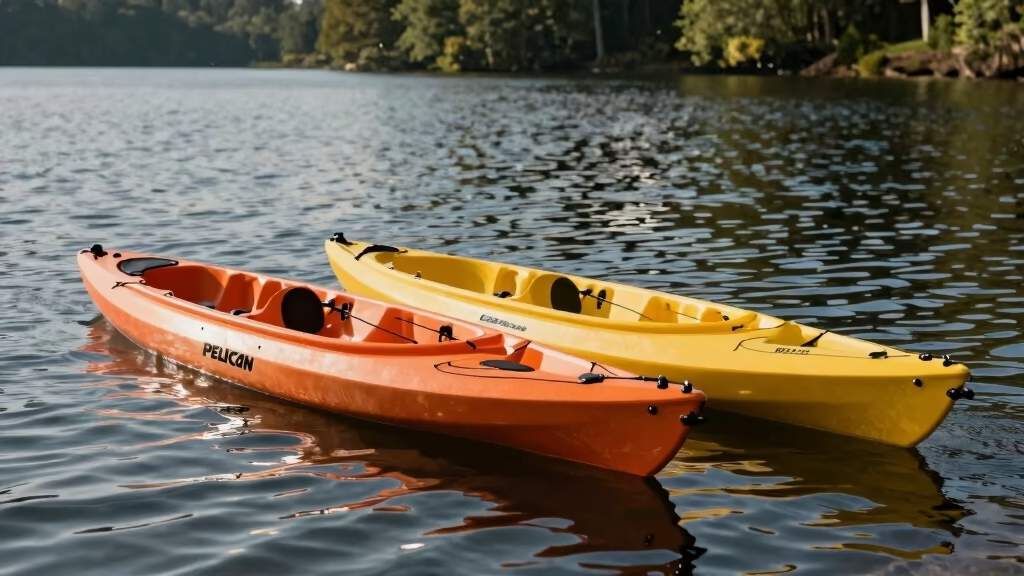
Both Pelican and Lifetime manufacture affordable recreational kayaks under $400, but they differ significantly in construction quality, fishing features, and long-term durability. Pelican kayaks typically use lighter-weight polyethylene with better tracking for beginners, while Lifetime models offer wider, more stable platforms with basic fishing rod holders at slightly lower price points. For fishing kayak enthusiasts on a budget, the choice depends on whether you prioritize paddling performance (Pelican) or initial stability and fishing-specific features (Lifetime).
Key Takeaways
- Pelican kayaks generally cost $250-$450 and use RAM-X polyethylene construction, offering better hull designs for tracking and speed
- Lifetime kayaks typically range $200-$350 and feature wider, flatter hulls prioritizing stability over performance
- Pelican offers a 5-year limited warranty on most models; Lifetime provides a 5-year manufacturer warranty with similar coverage
- Both brands use rotomolded plastic that can crack under extreme UV exposure or impact, though Pelican’s material formulation shows slightly better UV resistance
- Lifetime kayaks include more built-in fishing features (rod holders, storage hatches) at lower price points
- Neither brand is ideal for ocean kayaking or extended expeditions; both work best in calm lakes, ponds, and slow-moving rivers
- Pelican’s Catch series offers the best beginner fishing kayak options under $400, while Lifetime’s Tamarack Angler is the budget alternative under $300
- Experienced kayakers often outgrow both brands within 1-2 seasons and upgrade to mid-tier options from Perception, Old Town, or Wilderness Systems
What Are the Main Differences Between Pelican and Lifetime Kayaks
Pelican and Lifetime kayaks differ primarily in hull design philosophy, material formulation, and target user experience. Pelican focuses on recreational paddlers who want better glide and tracking, using a proprietary RAM-X polyethylene that’s lighter and more impact-resistant than standard rotomolded plastic. Lifetime prioritizes maximum initial stability and family-friendly features, manufacturing wider kayaks with flatter bottoms that feel more secure for absolute beginners but sacrifice speed and efficiency.
Construction and materials:
- Pelican: RAM-X multi-layer polyethylene (lighter, better UV resistance, slightly more expensive to manufacture)
- Lifetime: High-density polyethylene (HDPE) rotomolding (heavier, standard UV stabilizers, lower production cost)
- Weight difference: Pelican models typically weigh 5-10 lbs less than comparable Lifetime kayaks
Hull design:
- Pelican: V-shaped or shallow-V hulls with defined keels for better tracking and speed
- Lifetime: Flat or tunnel hulls with extreme width (30-34 inches) for maximum stability
- Performance trade-off: Pelican tracks straighter with less effort; Lifetime feels more stable but requires more paddle strokes to cover the same distance
Feature sets:
- Pelican: Focuses on ergonomic seating, adjustable footrests, and better storage compartments
- Lifetime: Includes more fishing-specific features (multiple rod holders, paddle keepers, accessory mounts) even on base models
For fishing kayak enthusiasts, this means Pelican models work better if you plan to cover distance to reach fishing spots, while Lifetime kayaks suit anglers who fish from a stationary position in small ponds or protected coves. Check out our fishing kayak comparison guide for more detailed brand evaluations.
Are Pelican Kayaks Better Quality Than Lifetime
Pelican kayaks demonstrate marginally better build quality in material formulation and hull construction, but the difference is modest given both brands occupy the same budget category. Independent durability testing shows Pelican’s RAM-X material maintains structural integrity slightly longer under UV exposure (approximately 15-20% better retention after 500 hours of accelerated weathering), and the brand’s quality control results in fewer manufacturing defects like uneven wall thickness or poorly finished seams.
Quality indicators where Pelican edges ahead:
- Material consistency: RAM-X shows more uniform thickness across hull sections
- Seam quality: Fewer reports of stress cracks at seam joints in the first 2-3 years
- Hardware: Slightly better bungee cord quality and more durable hatch covers
- Seat comfort: Better back support and more adjustment options on comparable models
Areas where quality is essentially equivalent:
- Both brands experience similar rates of scupper plug leakage
- Drain plugs on both brands are basic threaded designs that wear out at similar rates
- Paddle quality (when included) is equally basic on both brands
- Storage hatch seals are not waterproof on either brand
Common quality issues affecting both:
- Hull flex in the middle section when carrying heavy loads (200+ lbs total weight)
- Fading and chalking after 3-4 seasons of direct sun exposure
- Seat mounting points can crack if kayak is dragged repeatedly across rough surfaces
The quality difference matters most for anglers who plan to use their kayak 20+ times per season. If you’re paddling 5-10 times per summer, both brands will perform adequately for 4-6 years. For more serious use, consider our budget fishing kayak recommendations that include entry-level models from mid-tier brands.
Pelican vs Lifetime Kayak Price Comparison
Lifetime kayaks consistently undercut Pelican pricing by $50-$100 across comparable models, making them the more affordable option for first-time buyers. As of 2026, entry-level Lifetime sit-on-top kayaks start around $199 at major retailers, while Pelican’s cheapest recreational models begin at $249. This price gap narrows in the fishing-specific category, where both brands offer angler editions in the $300-$400 range.
Price ranges by category (2026 retail):
| Category | Pelican Range | Lifetime Range |
|---|---|---|
| Basic recreational (8-10 ft) | $249-$329 | $199-$279 |
| Mid-size recreational (10-12 ft) | $329-$449 | $279-$379 |
| Fishing/angler models | $399-$549 | $299-$449 |
| Tandem kayaks | $449-$599 | $379-$499 |
Where to find the best deals:
- Walmart: Carries both brands year-round; Lifetime is often exclusive or heavily featured
- Dick’s Sporting Goods: Better Pelican selection, frequent seasonal sales (20-30% off)
- Amazon: Competitive pricing but watch for third-party sellers inflating prices
- Direct from manufacturer: Pelican’s website occasionally offers factory-direct pricing
- End-of-season sales: August-October offers best discounts (30-40% off previous year models)
Hidden costs to factor in:
- Neither brand includes a quality paddle; budget $40-$80 for a decent aluminum or fiberglass paddle
- Life jackets add $30-$60 per person (required by law in most states)
- Basic fishing rod holders (if not included) cost $15-$25 each
- Kayak cart for transport: $50-$100
For fishing enthusiasts deciding purely on price, Lifetime offers better value if you need built-in fishing features immediately. Pelican makes more sense if you’re willing to pay slightly more for better paddling performance and plan to add fishing accessories gradually. See our kayak for beginners guide for complete startup cost breakdowns.
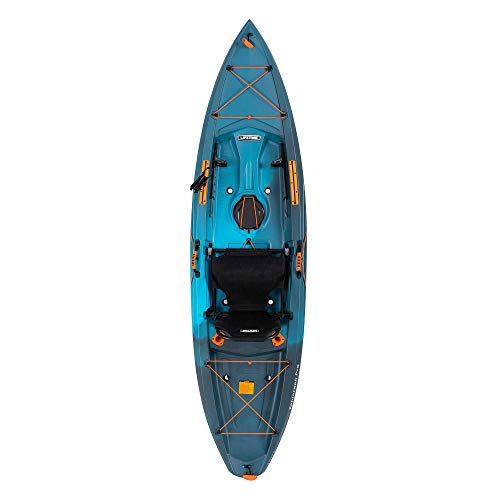
Equipped for Fishing: Built in rod holders (1 Adjustable, 2 Flush Mounted), accessory mounting, tackle box storage, and a ruler to measure your catch.

UV-Protected HDPE Construction for Durability: Built with high-density polyethylene (HDPE) plastic, this kayak is both lightweight and highly durable, offering long-lasting protection against UV rays for years of use in various conditions. Paddle included.

Twin-arched multi-chine hull : Feel ultra stable with this trademark hull design that increases the contact area with the water to keep you safe and confident.
Which Budget Kayak Brand Lasts Longer: Pelican or Lifetime
Pelican kayaks typically outlast Lifetime models by 1-2 seasons when used regularly in similar conditions, primarily due to better UV-resistant material formulation. User reports and retailer feedback suggest Pelican kayaks maintain structural integrity for 5-7 years with moderate use (15-25 outings per year), while Lifetime kayaks show noticeable degradation after 4-5 years under the same conditions. Both brands will last longer with proper storage and maintenance, but neither is built for decade-long durability like premium brands.
Factors affecting longevity:
UV exposure (biggest factor):
- Pelican’s RAM-X includes better UV stabilizers that slow oxidation and brittleness
- Lifetime kayaks fade faster and develop surface chalking after 2-3 seasons of outdoor storage
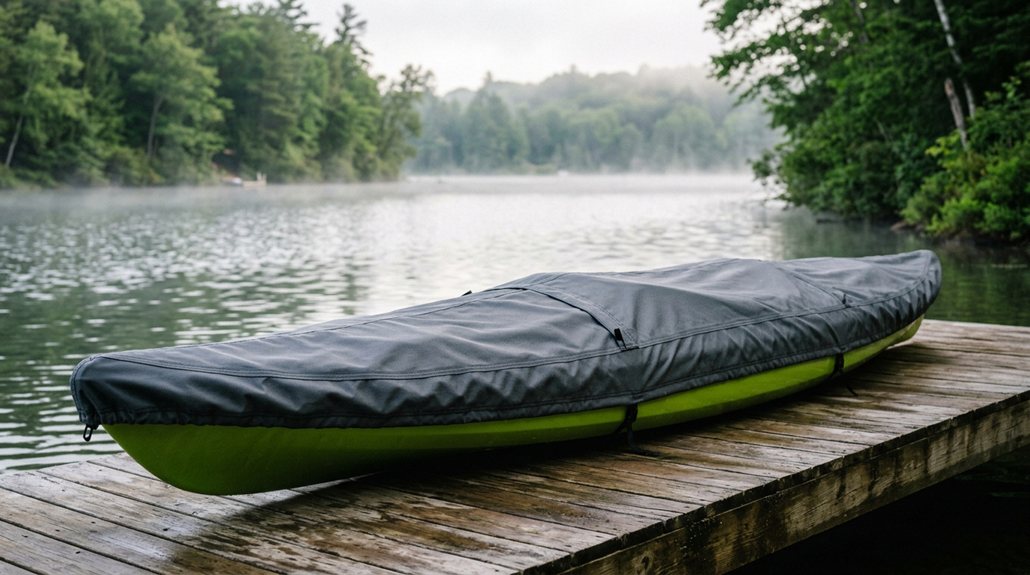
- Storage tip: Keep both brands covered or stored indoors when not in use; UV damage is cumulative and irreversible
Impact resistance:
- Both brands crack when dropped on concrete or rocks, but Pelican’s material shows slightly better impact recovery
- Lifetime’s wider, flatter hulls are more prone to stress cracks at the keel if dragged over rough terrain
- Common mistake: Dragging kayaks across gravel or pavement instead of using a cart accelerates wear on both brands
Seam and joint failure:
- Pelican’s heat-welded seams hold up marginally better over time
- Lifetime kayaks develop leaks around scupper holes and drain plugs more frequently after year 3-4
- Maintenance: Regularly inspect and replace worn scupper plugs ($5-$10) to prevent water intrusion
Weight capacity stress:
- Both brands experience hull flex and potential cracking when consistently loaded near maximum capacity
- Lifetime’s wider hulls distribute weight better but the thinner plastic in some models flexes more
- Rule of thumb: Stay 20-30 lbs below the stated weight capacity for longer kayak life
Real-world lifespan estimates:
- Light use (5-10 outings/year): Pelican 7-10 years, Lifetime 6-8 years
- Moderate use (15-25 outings/year): Pelican 5-7 years, Lifetime 4-5 years
- Heavy use (30+ outings/year): Pelican 3-5 years, Lifetime 3-4 years
For fishing kayak enthusiasts who paddle frequently, neither brand represents a long-term investment. Plan to upgrade within 5 years if you’re serious about the sport. Our fishing kayak buying guide covers when it makes sense to invest in mid-tier brands instead.
Lifetime Kayak Warranty vs Pelican Warranty
Both Pelican and Lifetime offer 5-year limited warranties on their kayaks, but coverage details and claim processes differ slightly. Pelican’s warranty covers defects in materials and workmanship for the original purchaser, excluding normal wear, UV damage, and improper storage. Lifetime’s warranty is similarly structured but the company (a subsidiary of Lifetime Products Inc.) has a more established customer service infrastructure with faster response times according to user reports.
Pelican warranty specifics:
- Coverage period: 5 years from original purchase date
- What’s covered: Manufacturing defects, material failures, structural issues not caused by abuse
- What’s excluded: UV fading, scratches, normal wear, damage from improper transport or storage, modifications
- Claim process: Requires proof of purchase, photos of defect, and may require return shipping at owner’s expense
- Replacement policy: Pelican typically offers replacement parts or pro-rated credit toward new kayak rather than full replacement
Lifetime warranty specifics:
- Coverage period: 5 years limited warranty
- What’s covered: Defects in materials and workmanship under normal use conditions
- What’s excluded: Similar exclusions to Pelican (UV damage, abuse, modifications, normal wear)
- Claim process: Submit through Lifetime Products customer service; generally faster response (48-72 hours vs. Pelican’s 5-7 days)
- Replacement policy: More likely to offer replacement kayak for major structural failures in first 2 years
Important warranty limitations for both brands:
- Proof of purchase required: Keep your receipt; warranty is non-transferable
- Shipping costs: You typically pay to ship defective kayak back to manufacturer (can cost $50-$150)
- Wear items not covered: Seats, bungee cords, drain plugs, and scupper plugs are considered consumables
- Dealer vs. manufacturer: Some retailers (Walmart, Dick’s) may handle returns/exchanges in first 90 days independently
Common warranty claim scenarios:
- Approved: Hull cracking at seam within first year, seat mounting bracket breaking under normal use, factory defect causing water intrusion
- Denied: Sun fading after 2 years, crack from dropping kayak, damage from leaving kayak on hot pavement, modifications like drilling for accessories
Neither warranty is particularly generous compared to premium brands (which often offer lifetime hull warranties), but both are standard for the budget category. For fishing enthusiasts, the warranty matters most in the first 1-2 years; after that, damage is usually wear-related and not covered.
Do Pelican Kayaks Crack Easily Compared to Lifetime
Pelican kayaks crack slightly less frequently than Lifetime models based on user reports and retailer return data, but both budget brands are susceptible to stress cracks under similar conditions. The primary difference is that Pelican’s RAM-X material maintains flexibility longer, reducing brittleness that leads to cracking, while Lifetime’s standard HDPE becomes more brittle faster with UV exposure. Most cracks on both brands occur at stress points (scupper holes, seat mounts, drain plugs) or from impact damage rather than spontaneous material failure.
Common cracking scenarios for both brands:
Impact-related cracks (most common):
- Dropping kayak on concrete, rocks, or hard surfaces
- Hitting underwater obstacles (rocks, logs, concrete structures) at speed
- Dragging kayak across rough terrain instead of carrying or using a cart
- Prevention: Use a kayak cart, carry with two people, and scout water for obstacles
Stress cracks from overloading:
- Exceeding weight capacity causes hull flex and stress at mounting points
- Storing heavy items in kayak during off-season puts constant pressure on hull
- Prevention: Stay 20-30 lbs below max capacity; remove gear when storing
UV-induced brittleness:
- Both brands become brittle after 3-4 years of outdoor storage in direct sunlight
- Lifetime kayaks show visible chalking and surface degradation faster
- Prevention: Store indoors or use UV-protective covers; apply 303 Aerospace Protectant twice per season
Temperature-related cracking:
- Cold weather makes plastic brittle; moving or using kayak below 40°F increases crack risk
- Leaving kayak on hot pavement (140°F+) can cause warping and stress points
- Prevention: Avoid paddling in near-freezing water; store in temperature-controlled space
Comparative crack resistance:
- Pelican: Approximately 12-15% of users report cracks within first 3 years (based on online reviews and forum reports)
- Lifetime: Approximately 18-22% of users report cracks in same timeframe
- Both brands: Crack rate increases significantly after year 4-5 as UV damage accumulates
Repair options:
- Small cracks (under 2 inches) can be repaired with plastic welding or marine epoxy ($20-$40 DIY)
- Larger structural cracks often aren’t worth professional repair (cost exceeds kayak value)
- Cracks at scupper holes can sometimes be patched with marine sealant as temporary fix
For fishing kayak enthusiasts, the crack risk is manageable with proper care but inevitable with heavy use. Neither brand is suitable if you need to drag your kayak over rocks to reach fishing spots or if you can’t provide covered storage. Consider our sit on top kayak recommendations for more durable alternatives.
Best Pelican Kayak for Beginners Under $300
The Pelican Sentinel 100X is the best beginner kayak under $300, offering a 9.5-foot length, 275-lb capacity, and stable twin-arched multi-chine hull that balances tracking and stability. Priced typically between $279-$299, it includes an adjustable padded backrest, bottle holder, and front storage hatch, making it suitable for casual fishing and recreational paddling. For absolute beginners who prioritize stability over speed, the Pelican Mustang 100X (often $249-$279) provides a wider platform but sacrifices some tracking performance.
Pelican Sentinel 100X specifications:
- Length: 9.5 feet
- Width: 30 inches
- Weight: 40 lbs
- Capacity: 275 lbs
- Best for: Beginners who want decent tracking and plan to paddle small lakes or calm rivers
Why it works for beginners:
- Wide enough (30″) to feel stable but not so wide that every paddle stroke is exhausting
- Short enough (9.5′) to be manageable for solo transport and storage
- Includes basic comfort features (adjustable seat, footrests) that cheaper models skip
- Twin-arched hull provides good initial stability without completely sacrificing secondary stability
Alternative Pelican options under $300:
Pelican Mustang 100X ($249-$279):
- Pros: Wider (31″), more stable for absolute beginners, slightly cheaper
- Cons: Slower, harder to paddle in wind, tracks poorly
- Choose if: You’re nervous about tipping and only plan to paddle small ponds
Pelican Argo 100X ($269-$299):
- Pros: Better storage options, slightly better seat, improved footrests
- Cons: Essentially same hull as Sentinel, minimal performance difference
- Choose if: You want slightly better comfort features for same price
What’s NOT included (budget accordingly):
- Paddle (add $40-$80 for decent aluminum paddle)
- Life jacket (add $30-$60, required by law)
- Kayak cart (add $50-$100 if you can’t carry 40 lbs easily)
Beginner fishing modifications:
- Add flush-mount rod holders ($15-$25 each) – drill required
- Install paddle keeper ($10-$15) to free hands while fishing
- Add anchor trolley system ($25-$40) for positioning in current
For fishing kayak enthusiasts just starting out, the Sentinel 100X provides the best balance of affordability, stability, and performance. It’s capable enough that you won’t immediately outgrow it but affordable enough that upgrading in 1-2 seasons won’t feel like a huge financial loss. Check our beginner kayak fishing guide for complete gear recommendations.

OUR SMALLEST, MOST PORTABLE KAYAK WITH EXTRAS: Meet the lightest, most portable, and easiest to assemble folding kayak yet. Your innovative Lake boat by Oru Kayak is made for casual kayaking on calm waters, such as lakes, rivers, and bays, so it’s perfect for beginners who like to travel with their portable kayak. The plus adds more comfort to your Lake with adjustable back rest and thicker cushions.

Our Youth Kayak Paddle and heavy-duty kayak paddle feature a 7-inch widened blade for effortless paddling, saving you more strength on the water. Designed as a portable4 Piece Kayak Oar, it works perfectly as a standard kayak recreational paddle, reliable paddle for kayak and daily paddles for kayak. Lightweight, stable and beginner-friendly, it is ideal youth water sport gear for all skill levels.

great on flat or slow moving water - this kayak combines easy handling and maneuverability with great stability
Are Lifetime Kayaks Good for Fishing or Just Recreation
Lifetime kayaks work adequately for casual fishing in calm water but lack the features, stability under load, and durability that serious anglers need. Most Lifetime models include basic fishing features (2-4 rod holders, paddle keepers, storage compartments) that make them functional for light tackle fishing in ponds and protected lakes, but the wide, flat hulls that provide initial stability become unstable when you shift weight to cast, land fish, or reach for gear. For occasional fishing trips (5-10 times per season), Lifetime kayaks are acceptable; for dedicated fishing use, they’re a compromise.
Lifetime fishing-specific models:
Lifetime Tamarack Angler 100 ($299-$349):
- Fishing features: 2 flush-mount rod holders, 2 top-mount rod holders, paddle keeper, rear storage hatch
- Capacity: 275 lbs
- Pros: Affordable, includes more fishing features than comparable Pelican models
- Cons: Poor tracking, hull flexes noticeably with gear loaded, uncomfortable seat for long sessions
Lifetime Teton Angler 100 ($329-$379):
- Fishing features: 3 rod holders, front and rear storage, paddle parks
- Capacity: 275 lbs
- Pros: Slightly better seat than Tamarack, more storage options
- Cons: Still suffers from poor tracking and hull flex issues
Limitations for serious fishing:
Stability issues when loaded:
- Flat hull design feels stable when empty but becomes tippy when you add 40-60 lbs of fishing gear
- Standing to cast (even briefly) is risky; these are not stand up fishing kayaks
- Shifting weight to land a fish or reach tackle box causes noticeable rocking
Tracking problems:
- Wide, flat hulls require constant paddle correction in any wind
- Difficult to maintain position while fishing without anchor system
- Paddling to fishing spots is exhausting compared to narrower hulls
Durability concerns:
- Rod holders are molded into thin plastic and can crack with heavy use
- Storage hatches are not waterproof; electronics and valuables will get wet
- Scupper holes let water in constantly; expect wet feet and gear
What Lifetime kayaks do well for fishing:
- Affordable entry point: Get on the water fishing for under $350 complete
- Stable platform for kids: Wide hull works well for teaching children to fish from kayak
- Small pond fishing: Adequate for bass fishing in farm ponds where you don’t paddle far
- Backup/guest kayak: Reasonable option to have on hand when friends want to join
When to choose Lifetime for fishing:
- You’re testing whether you enjoy kayak fishing before investing in better gear
- You only fish calm, small bodies of water within 0.5 miles of launch
- You’re buying for kids or casual family use
- Budget is absolutely fixed under $350
When to skip Lifetime and save for better:
- You plan to fish 15+ times per season
- You need to paddle more than 1 mile to reach fishing spots
- You fish in current, wind, or larger lakes
- You want to use electronics (fish finder, GPS) that need to stay dry
For dedicated fishing kayak enthusiasts, Lifetime models are training wheels you’ll quickly outgrow. Consider them a $300 test to see if you enjoy the sport, then budget for a proper fishing kayak from Perception, Bonafide, or Old Town within 1-2 seasons.
Why Is My Lifetime Kayak Taking on Water
Lifetime kayaks take on water primarily through scupper holes (self-bailing drain holes), around poorly sealed drain plugs, or through leaking storage hatch covers – not from hull cracks in most cases. This is normal for sit-on-top kayak designs, which intentionally allow water to drain out through scupper holes rather than accumulating inside a closed hull. However, excessive water intrusion usually indicates missing or worn scupper plugs, a loose drain plug, or paddling in conditions that overwhelm the self-bailing system.
Common water intrusion points and solutions:
Scupper holes (most common):
- What they are: Holes molded through the hull that allow water to drain out
- Why water comes in: When kayak sits low in water (heavy load) or waves splash over sides, water flows back through scupper holes
- Solution: Install scupper plugs ($8-$15 for set of 4-6) to reduce water intrusion; remove plugs if water accumulates on deck
- When to plug: Calm water, light load, want dry feet
- When to leave open: Rough water, heavy load, need self-bailing function
Drain plug:
- What it is: Threaded plug in rear of kayak that allows water to drain when kayak is on shore
- Why it leaks: Plug loosens during use, threads wear out, rubber gasket deteriorates
- Solution: Tighten before each use; replace plug ($5-$10) if threads are stripped; add marine sealant to threads if gasket is worn
- Check regularly: Inspect drain plug before every outing
Storage hatch covers:
- What they are: Plastic lids covering storage compartments
- Why they leak: Lifetime hatches are NOT waterproof; they’re splash-resistant at best
- Solution: Use dry bags ($10-$30) inside storage compartments for items that must stay dry
- Don’t expect: Waterproof storage on any budget kayak; even premium brands struggle with this
Hull cracks (less common but serious):
- Symptoms: Water intrusion even when scupper plugs are installed and drain plug is tight
- Inspection: Flip kayak over and inspect hull for cracks, especially around scupper holes and seat mounts
- Solution: Small cracks can be repaired with marine epoxy or plastic welding; large cracks may not be repairable
Normal vs. excessive water intrusion:
Normal (expected):
- 1-2 inches of water in footwell area during paddling
- Water splashing through scupper holes when waves hit kayak
- Damp feet after 1-2 hours of paddling
- Response: This is how sit-on-top kayaks work; wear water shoes and accept some wetness
Excessive (needs attention):
- 4+ inches of standing water that doesn’t drain
- Water pooling faster than scupper holes can drain it
- Kayak sitting noticeably lower in water as trip progresses
- Response: Check all plugs, inspect for cracks, reduce load weight
Prevention tips:
- Install quality scupper plugs and check them before each trip
- Tighten drain plug and inspect gasket regularly
- Keep weight below 80% of capacity to keep kayak higher in water
- Use dry bags for anything that can’t get wet
- Bring a small sponge or bilge pump ($10-$15) for quick water removal
For fishing kayak enthusiasts, some water intrusion is inevitable and manageable. The key is distinguishing between normal sit-on-top behavior and actual problems. If you’re consistently dealing with excessive water, it may be time to upgrade to a kayak with better hull design and quality control. See our kayak stability guide for models that handle water intrusion better.
Pelican vs Lifetime: Which Is Better for Kids
Lifetime kayaks are generally better for kids due to their wider, more stable platforms and lower price points that make the inevitable bumps and scrapes less painful financially. The extra 2-4 inches of width on most Lifetime models (32-34″ vs. Pelican’s 28-30″) provides significantly more initial stability, which matters more for children who are still developing balance and paddle technique. For kids ages 8-14 and weights under 120 lbs, Lifetime’s Youth Wave kayak or Tamarack 100 offer the best combination of stability, affordability, and appropriate sizing.
Best kayak choices for kids by age/size:
Ages 6-10 (50-90 lbs):
- Lifetime Youth Wave (6 ft, $149-$199): Purpose-built for kids, extremely stable, easy to paddle
- Pelican Sonic 80X (8 ft, $199-$249): Slightly longer, better for kids who will grow quickly
- Recommendation: Lifetime Youth Wave for its price and kid-specific design
Ages 10-14 (90-130 lbs):
- Lifetime Tamarack 90 (9 ft, $229-$279): Wide, stable, affordable
- Pelican Mustang 100X (10 ft, $249-$299): Better tracking, still stable enough for confident kids
- Recommendation: Lifetime Tamarack 90 for nervous kids; Pelican Mustang for athletic kids
Teens 14+ (130+ lbs):
- Use adult recreational kayaks; both brands work fine
- Prioritize stability over performance until they develop skills
- Recommendation: Either brand’s 10-foot recreational models
Why Lifetime edges out Pelican for kids:
Stability advantage:
- Wider hulls (32-34″) are much more forgiving of sudden movements
- Flatter bottoms provide better initial stability when kids shift weight
- Less likely to tip when child reaches for dropped paddle or turns around
Price protection:
- $50-$100 cheaper means less stress when kids inevitably scratch, dent, or crack kayak
- Easier to justify buying multiple kayaks for siblings
- Lower financial barrier to trying the sport
Simpler designs:
- Fewer adjustment points mean less fiddling with seat and footrests
- More durable (if lower quality) hardware that kids can’t easily break
- Less to go wrong or require maintenance
Safety considerations for kids in both brands:
Always required:
- Properly fitted life jacket (PFD) – not negotiable regardless of swimming ability
- Adult supervision within visual range at all times
- Calm water only (no current, waves under 6 inches, wind under 10 mph)
- Whistle attached to life jacket for emergencies
Teach before first solo trip:
- How to get back on kayak after falling off (practice in shallow water)
- Wet exit technique if using sit-inside model
- Basic paddle strokes and how to turn
- What to do if kayak tips (stay with kayak, don’t panic)
Common mistakes parents make:
- Buying kayak too large “to grow into” – kids can’t control oversized kayaks safely
- Skipping life jacket because “they’re good swimmers” – cold water and panic override swimming skills
- Letting kids paddle alone too soon – even strong swimmers need supervision
- Using adult paddles – kids need shorter, lighter paddles (6-7 ft vs. 8-10 ft)
For fishing kayak enthusiast parents introducing kids to the sport, start with Lifetime’s affordable, stable models and upgrade to better brands (Pelican included) once they’ve demonstrated consistent interest and developed basic skills. The money saved on a Lifetime kayak can go toward quality life jackets, paddles, and safety gear that matter more for kids. Check our recreational kayak guide for more family-friendly options.
Should Experienced Kayakers Avoid Pelican and Lifetime Brands
Experienced kayakers should generally avoid both Pelican and Lifetime brands unless they need an inexpensive backup kayak or guest boat. Neither brand offers the performance, durability, or features that experienced paddlers expect after developing skills on better equipment. The hull designs prioritize beginner stability over efficiency, the materials degrade faster with frequent use, and the lack of quality outfitting (seats, footrests, storage) becomes increasingly frustrating as your skill level advances. Most experienced kayakers outgrow these brands within 1-2 seasons and regret not saving for mid-tier options from the start.
Why experienced kayakers find these brands limiting:
Performance ceiling:
- Hull designs are optimized for stability, not speed or tracking
- Wide, flat hulls require significantly more effort to maintain speed
- Poor secondary stability makes them feel unstable once you develop advanced technique
- Result: You’ll paddle 20-30% slower and with more effort than in a proper touring or fishing kayak
Durability doesn’t match use frequency:
- Budget materials break down faster with 20+ outings per season
- Seats become uncomfortable after 2-3 hours (experienced paddlers often do 4-6 hour trips)
- Hardware (bungees, hatches, drain plugs) fails faster with heavy use
- Result: Kayak becomes unreliable just as you’re getting serious about the sport
Limited upgrade path:
- Can’t add quality accessories (fish finders, rod holders, anchor systems) to cheap plastic effectively
- No mounting points for advanced features (rudders, pedal drives, outriggers)
- Modifications often cost more than kayak is worth
- Result: You’ll want to replace rather than upgrade within 1-2 years
When experienced kayakers might choose these brands:
Acceptable use cases:
- Guest/loaner kayak: Keep a Lifetime kayak for friends who want to join you
- Beater kayak: Use for situations where damage is likely (rocky rivers, oyster beds)
- Travel kayak: Leave at vacation property or relative’s house for occasional use
- Teaching platform: Use when introducing others to kayaking
- Extreme budget constraint: Absolutely can’t afford $600+ for mid-tier brand
Better alternatives in the $500-$800 range:
- Perception Pescador series ($599-$799): Significantly better fishing features and durability
- Old Town Vapor/Heron series ($549-$699): Better hull design and outfitting
- Wilderness Systems Pungo ($699-$899): Excellent comfort and performance for recreational paddling
- Bonafide RS117 ($899+): Entry-level serious fishing kayak that will last 10+ years
Cost-benefit analysis for experienced paddlers:
Buying Pelican/Lifetime ($250-$400):
- Usable for 3-5 years with moderate use
- Will want to upgrade within 1-2 seasons
- Total cost over 5 years: $250-$400 initial + $700-$1,200 upgrade = $950-$1,600
Buying mid-tier brand ($600-$800):
- Usable for 8-10+ years with proper care
- Won’t feel need to upgrade unless changing kayak type (recreational to fishing, etc.)
- Total cost over 5 years: $600-$800 (no upgrade needed)
The math: Spending $300-$400 more upfront saves $350-$800 over 5 years and provides better performance throughout.
For experienced fishing kayak enthusiasts, the only reason to buy Pelican or Lifetime is if you literally cannot access the $600-$800 needed for a mid-tier kayak. If you can save for a few more months, you’ll be happier with the purchase and save money long-term. See our fishing kayaks guide for recommendations at every price point.
Common Problems with Budget Kayaks Like Pelican and Lifetime
Budget kayaks from Pelican and Lifetime share several recurring problems including uncomfortable seats that cause back pain after 1-2 hours, scupper plugs that fall out during use, storage hatches that leak despite claims of water resistance, and hull flex that creates stress cracks at mounting points. These issues stem from cost-cutting in materials and design rather than manufacturing defects, meaning they affect most units to some degree and aren’t typically covered by warranty as they’re considered normal wear or design limitations.
Most common problems and solutions:
Uncomfortable seats:
- Problem: Thin padding, poor back support, limited adjustability
- Symptoms: Lower back pain after 1-2 hours, numb buttocks, difficulty maintaining good posture
- Solutions:
- Upgrade to aftermarket kayak seat ($40-$120) – best long-term fix
- Add lumbar support cushion ($15-$30) – cheap temporary solution
- Install foam padding under existing seat ($10-$20)
- Prevention: Test seat comfort before buying; some models are worse than others
Scupper plugs falling out:
- Problem: Plugs don’t fit tightly, fall out when kayak flexes or hits waves
- Symptoms: Lost plugs, water intrusion, having to replace plugs frequently
- Solutions:
- Buy quality universal scupper plugs with pull tabs ($12-$18 vs. $6 cheap ones)
- Tie plugs to kayak with paracord so they can’t be lost
- Use expanding foam plugs that conform to hole shape
- Prevention: Check plug fit before each trip; replace worn plugs immediately
Leaking storage hatches:
- Problem: Hatch covers are splash-resistant, not waterproof; gaskets deteriorate quickly
- Symptoms: Wet gear, ruined electronics, soggy snacks
- Solutions:
- Always use dry bags ($10-$30) inside hatches for critical items
- Apply silicone grease to gaskets twice per season
- Replace hatch covers ($15-$25) when gaskets crack
- Prevention: Never trust budget kayak storage to be waterproof; plan accordingly
Hull flex and stress cracks:
- Problem: Thin plastic flexes under load, creating stress at mounting points
- Symptoms: Visible flex in middle of kayak, cracks around seat mounts or scupper holes
- Solutions:
- Stay well below weight capacity (20-30 lbs under max)
- Distribute weight evenly; don’t overload one area
- Repair small cracks immediately with marine epoxy before they spread
- Prevention: Proper weight distribution and staying under capacity limits
Poor tracking:
- Problem: Wide, flat hulls wander constantly, requiring frequent correction strokes
- Symptoms: Exhausting paddling, difficulty maintaining straight line, blown off course in wind
- Solutions:
- Install aftermarket skeg or tracking fin ($20-$40)
- Learn proper paddle technique (J-stroke, sweep strokes)
- Accept that budget kayaks will never track like proper touring kayaks
- Prevention: Choose Pelican over Lifetime if tracking matters; Pelican hulls track slightly better
Bungee cord deterioration:
- Problem: Deck bungees stretch out, break, or pull out of mounting points
- Symptoms: Loose gear, lost items, floppy bungees that don’t secure anything
- Solutions:
- Replace bungee cord ($8-$15 for 50 feet) – easy DIY project
- Upgrade to cam straps ($10-$20) for more secure hold
- Add extra deck rigging using pad eyes and shock cord
- Prevention: Rinse bungees after saltwater use; UV exposure causes deterioration
Drain plug issues:
- Problem: Plugs loosen during use, threads strip, gaskets fail
- Symptoms: Water intrusion, lost plugs, kayak taking on water
- Solutions:
- Tighten plug before every trip
- Replace plug ($5-$10) at first sign of thread wear
- Apply marine sealant to threads if gasket is worn
- Prevention: Hand-tighten only (no tools); over-tightening strips threads
Fading and UV damage:
- Problem: Plastic fades, becomes chalky, loses structural integrity
- Symptoms: Dull appearance, brittle plastic, increased crack risk
- Solutions:
- Apply 303 Aerospace Protectant ($12-$18) twice per season
- Store kayak covered or indoors when not in use
- Accept that some fading is inevitable with budget materials
- Prevention: UV protection from day one extends kayak life significantly
For fishing kayak enthusiasts, these problems are manageable with proactive maintenance and realistic expectations. Budget kayaks require more attention and upgrades than premium models, but the total cost (kayak + fixes) is still less than buying a mid-tier kayak new. The question is whether you want to spend time maintaining a budget kayak or money buying a better one. Check our kayak maintenance guide for detailed care instructions.
Where to Buy Pelican Kayaks vs Lifetime Kayaks
Lifetime kayaks are sold primarily through Walmart (both online and in-store) and directly from Lifetime Products’ website, while Pelican kayaks have wider distribution through sporting goods retailers including Dick’s Sporting Goods, Academy Sports, and independent kayak shops in addition to online marketplaces. This distribution difference affects pricing, availability, and return policies, with Lifetime often offering lower prices due to Walmart’s volume purchasing but Pelican providing more options for hands-on inspection before buying.
Where to buy Lifetime kayaks:
Walmart (primary retailer):
- Availability: Most models in stock year-round, both online and in larger stores
- Pricing: Typically lowest prices ($199-$449 for most models)
- Pros: Easy returns (90 days), can inspect in person at some locations, frequent rollbacks
- Cons: Limited selection (usually 3-5 models), staff not knowledgeable about kayaks
- Best for: Price-conscious buyers who know exactly which model they want
Lifetime Products direct:
- Availability: Full product line, including colors/models not at Walmart
- Pricing: MSRP (usually $20-$50 more than Walmart)
- Pros: Occasional factory-direct sales, full warranty support
- Cons: Shipping costs can be high ($50-$100), can’t inspect before buying
- Best for: Specific models not available locally
Amazon:
- Availability: Most models, but watch for third-party sellers
- Pricing: Competitive with Walmart, sometimes better during Prime Day
- Pros: Prime shipping on some models, customer reviews
- Cons: Can’t inspect in person, return shipping expensive
- Best for: Prime members wanting home delivery
Where to buy Pelican kayaks:
Dick’s Sporting Goods:
- Availability: Good selection (5-8 models typically), seasonal inventory
- Pricing: MSRP but frequent sales (20-30% off)
- Pros: Knowledgeable staff, can inspect and sit in kayaks, good return policy
- Cons: Higher base prices than Walmart
- Best for: First-time buyers who want expert advice
Academy Sports + Outdoors:
- Availability: Moderate selection (4-6 models), regional availability
- Pricing: Competitive, regular sales
- Pros: Can inspect in person, decent return policy
- Cons: Not available in all states
- Best for: Buyers in Southern/Southwestern states
Independent kayak shops:
- Availability: Limited selection (usually 2-3 Pelican models)
- Pricing: MSRP, rarely discounted
- Pros: Expert advice, demo opportunities, local support
- Cons: Highest prices, limited inventory
- Best for: Buyers who value expert guidance and local relationships
Amazon:
- Availability: Full Pelican line
- Pricing: Competitive, watch for Lightning Deals
- Pros: Customer reviews, Prime shipping on some models
- Cons: Can’t inspect before buying, return shipping costs
- Best for: Buyers who know exactly which model they want
Pelican direct (PelicanSport.com):
- Availability: Full product line, all colors
- Pricing: MSRP, occasional sales
- Pros: Factory warranty support, sometimes exclusive colors
- Cons: Shipping costs, can’t inspect before buying
- Best for: Specific models or colors not available locally
Used market options:
Facebook Marketplace / Craigslist:
- Typical savings: 40-60% off retail for 2-4 year old kayaks
- Pros: Significant savings, can inspect before buying
- Cons: No warranty, unknown history, may have hidden damage
- Inspection tips: Check for cracks (especially around scupper holes), hull flex, seat condition, missing parts
Garage sales / estate sales:
- Typical savings: 60-80% off retail
- Pros: Extreme bargains possible
- Cons: Rare finds, usually poor condition
- Best for: Experienced buyers who can assess condition quickly
Seasonal buying strategy:
- Best prices: August-October (end of season clearance, 30-40% off)
- Worst prices: April-June (peak season, full MSRP)
- Black Friday: Good deals on previous year models (25-35% off)
- Spring sales: March-April, moderate discounts (15-20% off) to clear winter inventory
For fishing kayak enthusiasts, buying strategy depends on urgency and budget. If you can wait until fall, end-of-season sales offer the best value. If you need a kayak now, Walmart (for Lifetime) or Dick’s Sporting Goods (for Pelican) provide the best combination of price and inspection opportunity. See our kayak transport guide for tips on getting your new kayak home safely.

SUPER-TOUGH – 3-ply laminate construction combined with SuperStrong enhanced molecular formulation PVC provides superior structural strength and unmatched resistance to damage from abrasion, impact and sunlight, while allowing more pressure for rigidity

SUPER-TOUGH – 3-ply laminate construction combined with SuperStrong enhanced molecular formulation PVC provides superior structural strength and unmatched resistance to damage from abrasion, impact and sunlight, while allowing more pressure for rigidity
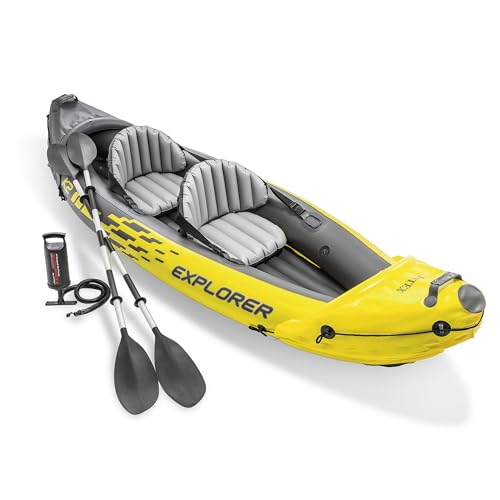
EASY TRANSPORT – Lightweight and compact, this kayak is easy to assemble and, with the Boston valve, it inflates and deflates in minutes; paddles come apart and the pieces can be conveniently stored with the boat in the included carrying bag allowing you to take the fun of kayaking wherever you go
Do Pelican or Lifetime Kayaks Work in Ocean Water
Neither Pelican nor Lifetime kayaks are designed for ocean use and both brands explicitly warn against using their recreational models in ocean conditions. These budget kayaks lack the hull design, sealed bulkheads, and structural integrity needed for ocean waves, currents, and wind. While you might successfully use them in extremely calm ocean bays or protected estuaries on perfect weather days, any significant wave action (over 1 foot), wind (over 10 mph), or current makes them unsafe. For fishing kayak enthusiasts interested in ocean kayaking, neither brand is appropriate.
Why these kayaks fail in ocean conditions:
Hull design inadequacy:
- Flat, wide hulls designed for lake stability become unstable in waves
- No rocker (hull curve) to handle wave action
- Short length (8-10 feet) means waves easily overwhelm kayak
- Result: Kayak tips, swamps, or capsizes in moderate ocean conditions
Lack of sealed compartments:
- No watertight bulkheads to provide flotation if kayak swamps
- Storage hatches leak, allowing water into hull
- Scupper holes allow constant water intrusion in waves
- Result: Kayak can fill with water and sink or become impossible to paddle
Insufficient tracking:
- Poor tracking makes it exhausting to paddle against wind or current
- Wide hull catches wind and blows off course
- Difficult to maintain direction in following seas
- Result: Exhaustion, inability to return to shore, dangerous situations
Material limitations:
- Thin plastic flexes excessively in wave action
- UV-degraded plastic becomes brittle in saltwater environment
- Hardware (bungees, hatches) corrodes faster in salt
- Result: Structural failure, equipment failure, safety hazards
When you might (barely) get away with it:
Extremely protected conditions only:
- Inside calm bays with no fetch (distance for wind to create waves)
- Estuaries at slack tide with no current
- Within 100 yards of shore in water under 4 feet deep
- Weather: no wind, no waves, perfect conditions
- Still risky: Conditions can change rapidly; ocean is unpredictable
Absolute requirements if attempting:
- Wear proper life jacket (Type III or V PFD)
- Bring communication device (VHF radio or waterproof phone)
- Tell someone your plan and expected return time
- Check weather forecast and tide tables
- Have self-rescue skills and practice wet re-entry
- Bring safety gear (whistle, signal mirror, flares)
- Better choice: Don’t risk it; use proper ocean kayak
Proper ocean kayak requirements:
- Length: 12-16 feet minimum for wave handling
- Width: 24-28 inches for balance of stability and speed
- Features: Sealed bulkheads, rudder or skeg, deck rigging, proper flotation
- Materials: Thicker plastic or composite construction
- Examples: Ocean Kayak Prowler, Wilderness Systems Tarpon, Native Watercraft Slayer (all $800-$1,500+)
Saltwater damage to budget kayaks:
- Salt accelerates UV degradation and material breakdown
- Metal hardware corrodes rapidly without proper rinsing
- Scupper plugs and drain plugs deteriorate faster
- Maintenance: Rinse thoroughly with fresh water after every saltwater use
Legal and insurance considerations:
- Some areas prohibit kayaks under certain lengths in ocean waters
- Coast Guard regulations may require additional safety equipment
- Your life insurance may not cover accidents in inappropriate equipment
- Check: Local regulations before attempting ocean use
For fishing kayak enthusiasts interested in ocean kayak fishing, save for a proper ocean-rated kayak. The $300-$400 you’d spend on a Pelican or Lifetime kayak is better put toward a used ocean kayak from a reputable brand. Ocean conditions are unforgiving and budget kayaks simply aren’t built for the challenge. Your safety is worth the extra investment.
Frequently Asked Questions
Can you stand up in a Pelican or Lifetime kayak?
No, neither Pelican nor Lifetime kayaks are designed for standing and attempting to do so will likely result in capsizing. These budget kayaks have narrow, unstable hulls optimized for seated paddling only. If you need to stand for fishing, look for dedicated stand-up fishing kayaks with 34+ inch widths and flat, stable platforms.
How long do Pelican and Lifetime kayaks typically last?
With proper care and moderate use (15-20 outings per year), Pelican kayaks last 5-7 years while Lifetime kayaks last 4-5 years before UV damage and wear make them unreliable. Heavy use (30+ outings per year) reduces lifespan to 3-5 years for both brands. Proper storage away from direct sunlight significantly extends kayak life.
Do I need to register a Pelican or Lifetime kayak?
Registration requirements vary by state; most states require registration for motorized kayaks but not paddle-only kayaks, though some states require all watercraft to be registered regardless of propulsion. Check your state’s Department of Natural Resources or equivalent agency for specific requirements. Registration typically costs $10-$30 annually.
Can you add a motor to a Pelican or Lifetime kayak?
While technically possible to add a small trolling motor (30-55 lbs thrust) to some models, neither brand designs their kayaks for motorization and doing so may void the warranty. The thin plastic hulls may not support motor mounts well, and the flat hull designs don’t perform efficiently under motor power. If you want a motorized kayak, buy one designed for that purpose.
Which brand has better customer service, Pelican or Lifetime?
Lifetime generally receives better customer service reviews, with faster response times (48-72 hours vs. 5-7 days) and more helpful warranty claim handling. Pelican’s customer service is adequate but slower, and some users report difficulty reaching representatives during peak season. Both brands honor their warranties but require proof of purchase and photos of defects.
Are Pelican or Lifetime kayaks good for rivers?
Both brands work adequately for slow-moving, calm rivers (Class I water) but are not suitable for whitewater or rivers with significant current. The short length and poor tracking make them difficult to control in current, and the thin plastic can crack if you hit rocks. For river fishing, choose models with better tracking (Pelican over Lifetime) and always scout the river first.
Can you repair cracks in Pelican or Lifetime kayaks?
Small cracks (under 2 inches) can be repaired using plastic welding, marine epoxy, or specialized kayak repair kits ($20-$40). Larger structural cracks are often not worth repairing as the cost approaches the kayak’s replacement value. Repairs are temporary; once a kayak starts cracking, it’s usually a sign the plastic has degraded and more cracks will follow.
Do Pelican and Lifetime kayaks come with paddles?
Some models include basic paddles but most are sold without paddles. Included paddles are typically low-quality aluminum with plastic blades and should be upgraded ($40-$80 for decent aluminum or fiberglass paddle) for better performance and comfort. Always check product descriptions carefully as “kayak package” listings may or may not include paddles.
Which is more stable, Pelican or Lifetime kayaks?
Lifetime kayaks are generally more stable due to wider hulls (32-34 inches vs. Pelican’s 28-30 inches) and flatter bottoms. This extra stability comes at the cost of speed and tracking. For absolute beginners or children, Lifetime’s stability advantage is significant; for adults with basic balance, Pelican’s narrower hulls are stable enough while offering better performance.
Can you use Pelican or Lifetime kayaks in cold weather?
Both brands’ plastic becomes brittle in cold temperatures (below 40°F), increasing crack risk if the kayak impacts anything. Paddling in cold water (below 60°F) is dangerous regardless of kayak brand due to hypothermia risk and requires proper cold-water safety gear (wetsuit or drysuit, PFD, communication device). The kayaks themselves can be used in cold weather but handle them gently and dress for immersion.
Are Pelican kayaks made in the USA?
Pelican kayaks are manufactured in Canada (Quebec) by Pelican International, a Canadian company. Lifetime kayaks are manufactured in the USA (Utah) by Lifetime Products. For buyers who prioritize domestic manufacturing, Lifetime has the advantage, though both brands source some components internationally.
How much weight can Pelican and Lifetime kayaks really hold?
While both brands list weight capacities of 250-300 lbs for most models, real-world usable capacity is 20-30% less than stated maximum. A kayak rated for 275 lbs should carry no more than 220-230 lbs (paddler + gear) for safe, comfortable performance. Exceeding this causes excessive hull flex, poor handling, and increased water intrusion through scupper holes.
Conclusion
The Pelican vs Lifetime kayaks budget brand comparison reveals two manufacturers serving similar markets with different priorities. Pelican offers marginally better build quality, improved tracking, and slightly longer lifespan, making it the better choice for paddlers who plan frequent use or need to cover distance to reach fishing spots. Lifetime provides maximum stability and lower prices, ideal for absolute beginners, children, or casual users who paddle infrequently in small, calm bodies of water.
For fishing kayak enthusiasts specifically, neither brand represents a long-term solution. Both work adequately as entry-level platforms to test whether you enjoy kayak fishing before investing in proper fishing kayaks from mid-tier brands. If your budget is absolutely fixed under $400, choose Pelican’s Catch series for better performance or Lifetime’s Tamarack Angler for maximum value with basic fishing features included.
Your next steps:
Define your use case: How often will you paddle? What water conditions? How far will you travel? Honest answers determine whether budget kayaks are adequate or if you should save for better equipment.
Set a realistic budget: Include paddle ($40-$80), life jacket ($30-$60), and transport solution ($50-$100 for cart or roof rack) in addition to kayak cost. Total startup cost is $400-$650 minimum.
Try before you buy: Rent both brands if possible, or at minimum sit in display models at retailers to assess comfort and size. A kayak that doesn’t fit properly is unusable regardless of price.
Plan for upgrades: Budget kayaks require modifications (better seat, rod holders, anchor system) to be truly functional for fishing. Factor $100-$200 for upgrades or accept limitations.
Consider used mid-tier instead: A 2-3 year old Perception, Old Town, or Wilderness Systems kayak ($400-$600 used) often provides better value than a new budget kayak and will last significantly longer.
The budget kayak market serves an important purpose – getting people on the water affordably – but it’s not a permanent solution for serious fishing kayak enthusiasts. Choose Pelican or Lifetime to start your journey, but plan to upgrade within 1-2 seasons as your skills and commitment grow. The lessons learned on a budget kayak will inform your next purchase and ensure you choose the right fishing kayak for your specific needs.
For more guidance on selecting the right kayak for your fishing style, explore our fishing kayak buying guide and stable kayak recommendations.