Quick Answer
To kayak fish at night legally and safely, you must display a white 360-degree navigation light visible for at least two miles (as required by U.S. Coast Guard regulations), wear a properly fitted PFD, carry backup lighting, and check your state’s specific fishing and boating regulations. Night fishing from a kayak requires additional safety gear including a headlamp with red-light mode, reflective clothing, a whistle, and a communication device. Most states allow night kayak fishing year-round, but some impose seasonal restrictions or require special permits for certain waters.
Key Takeaways
- U.S. Coast Guard regulations require all kayaks operating between sunset and sunrise to display a white light visible 360 degrees for at least two nautical miles
- A properly mounted navigation light on a pole (typically 3-4 feet high) is the only legal lighting solution; handheld flashlights do not satisfy federal requirements
- State fishing regulations vary significantly—some states restrict night fishing during spawning seasons or in specific protected waters
- Night kayak fishing suits intermediate to advanced anglers best; beginners should gain daytime experience first
- Essential safety gear includes a PFD with reflective strips, backup lighting, whistle, GPS or compass, and a waterproof communication device
- Many predatory fish species (bass, walleye, catfish, snook) feed more actively at night, making it highly productive for experienced anglers
- Navigation lights cost $25-$150 depending on quality; rechargeable LED models offer the best value and reliability
- Always file a float plan with someone onshore and carry multiple light sources in case your primary navigation light fails
What Lights Are Required for Kayak Fishing at Night
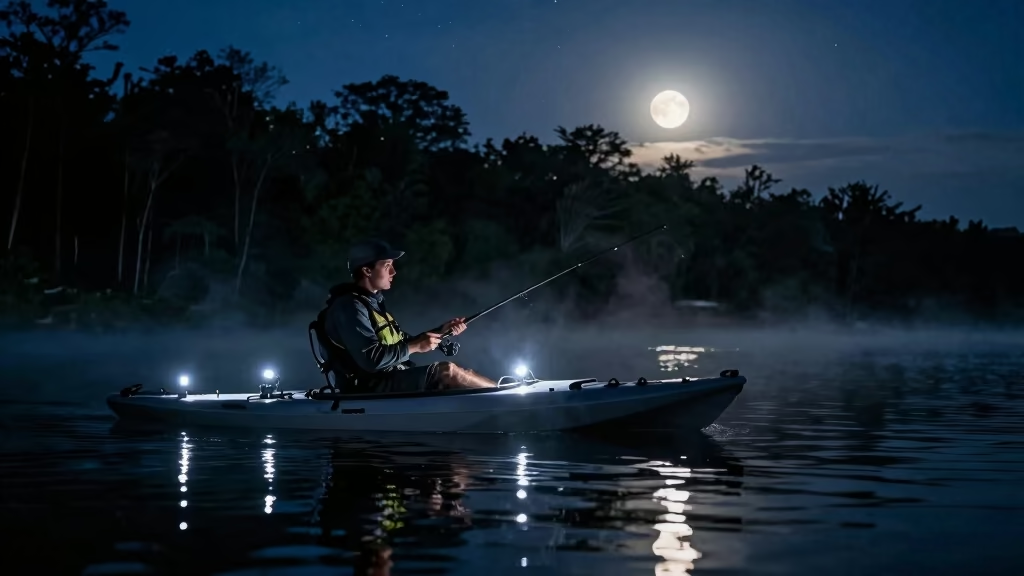
Federal law mandates that all non-motorized vessels, including kayaks, must display a white light visible from 360 degrees when operating between sunset and sunrise. This light must be visible for at least two nautical miles and should be shown in sufficient time to prevent collision. The U.S. Coast Guard Navigation Rules (specifically Rule 25) govern these requirements and apply to all U.S. waters, including inland lakes, rivers, and coastal areas.
The most practical solution is a white LED navigation light mounted on a pole that extends 3-4 feet above your kayak. This height ensures visibility from all directions and prevents your body or fishing rods from blocking the light. The pole should be securely mounted to your kayak’s stern or a dedicated light mount.
Key lighting requirements:
- Primary navigation light: White, 360-degree visibility, minimum 2-mile range
- Mounting height: 3-4 feet above the waterline for unobstructed visibility
- Backup light: Always carry a waterproof flashlight or secondary light source
- Battery life: Minimum 4-6 hours of continuous operation
- Visibility test: Your light should be clearly visible from shore before you launch
Some kayak anglers add red and green sidelights (port and starboard) for enhanced visibility, though these are not legally required for non-motorized vessels under 23 feet. However, they significantly improve your visibility to motorized boats and are highly recommended for safety, especially in areas with heavy boat traffic.
Common mistake: Using only a headlamp or handheld flashlight does not satisfy Coast Guard requirements. These lights are not continuously visible from all directions and do not provide adequate warning to other vessels. You must have a dedicated, mounted navigation light even if you’re also wearing a headlamp.
Is Night Fishing From a Kayak Legal in My State
Night kayak fishing is legal in most U.S. states, but specific regulations vary by state and sometimes by individual water bodies. The legality depends on three factors: boating regulations (which govern when and where you can operate a kayak at night), fishing regulations (which may restrict fishing hours for certain species), and local ordinances (which may close specific areas after dark).
Before planning a night fishing trip, check your state’s Department of Natural Resources or Fish and Wildlife website for current regulations. Most states publish their boating and fishing rules online with searchable databases by water body.
States with common night fishing restrictions:
- Florida: Generally permits night fishing but restricts it in some wildlife management areas during specific seasons
- Texas: Allows night fishing statewide but prohibits it in some state parks after hours
- California: Permits night fishing but requires additional lighting in some harbors and bays
- Michigan: Allows night fishing but restricts certain species during spawning seasons
What to verify before you launch:
- State boating laws: Confirm kayaks are permitted on your target water body after dark
- Fishing license requirements: Some states require separate night fishing endorsements
- Species-specific rules: Check if your target fish has time-of-day restrictions
- Local park hours: Many public launch sites close gates at sunset
- Special use permits: Some waters require advance permission for night access
Most coastal states follow federal navigation light requirements without additional restrictions. Inland states may have more specific rules about lighting, especially on smaller lakes and rivers. Some states require additional safety equipment like sound-producing devices (whistles or horns) or specific PFD types for night operations.
Decision rule: If you’re fishing in unfamiliar waters, call the local fish and wildlife office or visit the ranger station during business hours. Rangers can provide specific guidance about night access, launch site availability, and any recent regulation changes that may not yet appear online. For more information about kayak laws and kayak safety requirements, check your state’s specific regulations.

Light Up At Night: The Kayak Lights can illuminates your paddle board's rim, featuring a 32-key remote control or power switch to customize 16 vibrant RGB colors, 7 dynamic flashing modes, and 4/6/8-hour timer settings. With different color and different lighting modes, you can create stunning lighting effects for kayaks or paddle boards, enhancing nighttime fun and making your watercraft stand out

WHY CHOOSE OUR BATTERY NAVIGATION LIGHTS? Compare to others, our lights comes with 4Pcs extra batteries and 1Pcs safety whistle. What's more, our lights are more brighter, and our lighting times are more longer that other's.

【Bright & Safe】With 18pcs 3W powerful high intensity LED light chips. single-row 60° flood beam in reflective cups provide a brighter illumination, attracts fish better than white light, does not disturb the fish, and is more conducive to observing buoy, helpful for your night fishing or other night activities
What Are the Coast Guard Requirements for Kayak Lights at Night
The U.S. Coast Guard Navigation Rules require all vessels, including kayaks, to display proper navigation lights between sunset and sunrise and during periods of restricted visibility (fog, rain, or heavy overcast). For kayaks and other vessels under 23 feet propelled by oars or paddles, Rule 25(d)(ii) specifies that you must have “ready at hand” a white light that can be displayed in sufficient time to prevent collision.
In practice, this means your white navigation light must be immediately accessible and visible from all directions. The Coast Guard interprets “ready at hand” to mean mounted and operational, not stored in a hatch or dry bag. During inspections or enforcement actions, officers expect to see your light actively displayed, not just available.
Coast Guard compliance checklist:
- ✓ White light visible 360 degrees
- ✓ Minimum 2 nautical mile visibility range
- ✓ Mounted and operational (not stored)
- ✓ Sufficient battery life for your trip duration
- ✓ Backup light source readily accessible
- ✓ Light positioned to avoid obstruction by paddler or gear
Additional Coast Guard safety requirements for night operations:
- Personal Flotation Device (PFD): Must be worn at all times (not just carried) in most states after dark
- Sound-producing device: Whistle or horn capable of producing a 4-second blast
- Visual distress signals: Required for coastal waters beyond designated boundaries
- Fire extinguisher: Required only if you have a motor or enclosed fuel compartments
The Coast Guard can issue citations for operating without proper navigation lights, with fines typically ranging from $100 to $500 for first offenses. More importantly, inadequate lighting puts you at serious risk of collision with motorized vessels, which may be traveling at high speeds even at night.
Edge case: If you’re fishing in a designated no-wake zone or small pond with no motorized traffic, you’re still legally required to display navigation lights. The regulations apply to all navigable waters regardless of traffic levels. However, enforcement is more common in areas with active boat traffic or near marinas and harbors.
Do I Need a 360-Degree Light on My Kayak at Night
Yes, you need a 360-degree white light mounted on your kayak when operating between sunset and sunrise. A 360-degree light (also called an all-around light) is visible from every direction, which is essential for preventing collisions with other vessels. Directional lights, headlamps, or flashlights do not satisfy this requirement because they only illuminate in one direction at a time.
The 360-degree requirement exists because other boaters need to see your position regardless of which direction they’re approaching from. A kayak sits low in the water and presents a small profile, making it extremely difficult to spot at night without proper lighting. A properly mounted all-around white light makes you visible to boats approaching from ahead, behind, or either side.
Why 360-degree visibility matters:
- Motorized boats may approach from any direction, often at high speeds
- Your kayak’s low profile makes it nearly invisible without proper lighting
- Turning your head or kayak changes what a directional light illuminates
- Other vessels need continuous visual reference to track your position and movement
- In busy waters, multiple boats may be approaching from different directions simultaneously
Mounting best practices:
- Height: Mount the light 3-4 feet above the waterline on a pole or staff
- Position: Stern (rear) mounting is most common and keeps the light behind your field of vision
- Stability: Use a secure mount that won’t vibrate loose or tip over
- Accessibility: Position the on/off switch where you can reach it while seated
- Backup: Carry a spare pole-mounted light or a handheld light that can be temporarily mounted
Some kayak anglers use clip-on 360-degree lights that attach to a fishing rod holder or a short pole. While these are better than no light, they often sit too low to be visible from a distance, especially in choppy water. Invest in a proper pole mount for maximum visibility and safety.
Choose a 360-degree light if: You’re fishing in any waters where motorized boats operate, fishing near channels or marinas, or paddling more than a few hundred yards from shore. For more guidance on kayak fishing safety, consider taking a boating safety course that covers night operations.
How to Stay Safe While Kayak Fishing After Dark
Staying safe during night kayak fishing requires additional preparation, equipment, and awareness beyond what daytime fishing demands. The primary risks include reduced visibility (both seeing and being seen), disorientation, hypothermia in cooler months, and difficulty navigating back to your launch point. Address each of these risks with proper planning and gear.
Essential safety equipment for night kayak fishing:
- PFD with reflective strips: Wear it at all times, not just when paddling
- 360-degree navigation light: Mounted and operational throughout your trip
- Headlamp with red-light mode: Preserves night vision while allowing you to see your gear
- Backup lighting: Waterproof flashlight, glow sticks, or secondary headlamp
- Whistle or horn: For signaling in emergencies or alerting nearby boats
- Communication device: Waterproof VHF radio or cell phone in a waterproof case
- GPS or compass: For navigation if you become disoriented
- Reflective tape or markers: On paddle blades and kayak for additional visibility
- First aid kit: Waterproof container with basics plus any personal medications
- Knife or cutting tool: For emergency line cutting
Pre-trip safety checklist:
- File a float plan: Tell someone where you’re going, when you’ll return, and what to do if you don’t check in
- Check weather: Verify forecast for your entire trip window, not just launch time
- Scout in daylight: Visit your fishing spot during the day to identify hazards, landmarks, and navigation references
- Test all lights: Verify batteries and functionality before launching
- Dress appropriately: Layer for temperature drops after sunset; water is always colder than air
- Limit alcohol: Save the celebration for after you’re safely back on shore
On-water safety practices:
- Stay closer to shore than you would during daytime fishing
- Fish in areas you know well; night is not the time to explore new waters
- Avoid high-traffic channels and shipping lanes
- Keep your navigation light on continuously, even when anchored
- Use your headlamp’s red mode to preserve night vision while rigging or landing fish
- Monitor weather conditions and be prepared to head in if conditions deteriorate
- Stay aware of your position relative to landmarks and your launch point
Common mistake: Underestimating how disorienting darkness can be on the water. Familiar landmarks disappear, distances become difficult to judge, and even experienced paddlers can lose their bearings. Always carry a GPS device or use a smartphone app with offline maps as backup navigation. Mark your launch point as a waypoint before you leave shore.
Edge case: If you fish in areas with strong currents or tides, plan your trip around slack tide or incoming tide. Fighting an outgoing tide in darkness while tired from fishing is dangerous and exhausting. Check tide tables before you launch and set a firm return time that accounts for current direction and strength.
Best Headlamp for Night Kayak Fishing
The best headlamp for night kayak fishing offers multiple brightness levels, a red-light mode for preserving night vision, water resistance (IPX4 minimum, IPX7 preferred), and a comfortable fit that stays secure during casting and paddling. A good fishing headlamp should provide at least 200 lumens on high beam for navigation and rigging, with a lower setting (20-50 lumens) for routine tasks and a red LED mode for tying knots and handling fish without destroying your night vision.
Top features to prioritize:
- Red-light mode: Essential for preserving night vision; white light requires 20-30 minutes for your eyes to readjust
- Multiple brightness levels: High beam for navigation, low beam for routine tasks
- Battery life: Minimum 6-8 hours on medium setting
- Water resistance: IPX7 rating (submersible) is ideal; IPX4 (splash-proof) is minimum
- Comfortable headband: Adjustable, non-slip, and doesn’t cause pressure points during extended wear
- Tilting head: Allows you to aim the beam without moving your entire head
- Lightweight: Under 4 ounces to prevent neck fatigue
Recommended headlamp types:
- Rechargeable LED models ($30-$80): Best value for frequent use, no battery waste, consistent brightness
- Battery-powered models ($20-$60): Reliable backup option, easy to swap batteries in the field
- Hybrid models ($50-$100): Accept both rechargeable batteries and disposable batteries for maximum flexibility
How to use your headlamp effectively:
- Start with red-light mode and only switch to white light when absolutely necessary
- Aim the beam down at your gear, not out across the water (preserves night vision and avoids blinding other anglers)
- Keep a backup headlamp or flashlight in a waterproof bag
- Test your headlamp’s battery life before each trip
- Bring spare batteries even for rechargeable models
Decision rule: Choose a rechargeable model if you fish at night regularly (more than once per month). The upfront cost pays for itself within a season, and you’ll always have consistent brightness. Choose a battery-powered model if you fish at night occasionally or want a dedicated backup light. Either way, prioritize red-light mode over maximum brightness—preserving your night vision is more valuable than having a spotlight.
Avoid headlamps marketed primarily for running or hiking. These often lack red-light modes and prioritize maximum brightness over battery life. Look for models specifically designed for fishing, hunting, or tactical use, which typically include the features night anglers need. For more information on essential fishing gear, explore options designed specifically for kayak fishing conditions.
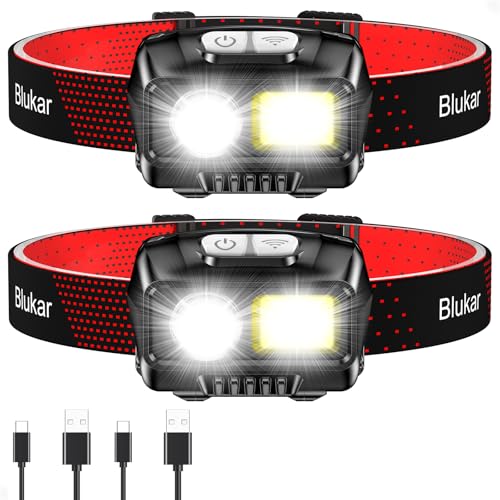
【Super Bright and Stepless Dimming】Adopts first-class LED chips, combined with advanced COB and XPG LED technology, the beam is brighter and more stable, and can easily illuminate everything around you. Long press the button to adjust the brightness from 100% to 30%, which can meet your different lighting needs.
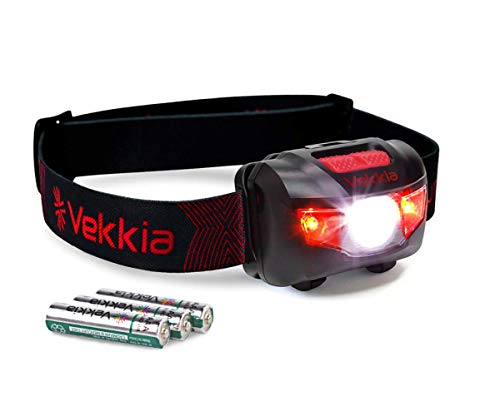
【Versatile Design & Super Lightweight】 Adjust the Beam Angle up to 45 degrees with an easy up or down movement. Light Up The Night - 262 FT Range. Lightweight design weighs just 2.6 oz with Batteries .

Super Bright & 5 Light Modes - 3 Levels of white light brightness (High/Low/Strobe) and two modes of red light (stay on/flash) illuminate up to 500ft away with the 300 lumen LEDs.
What Fish Are Most Active at Night for Kayak Fishing
Many predatory fish species feed more actively at night, taking advantage of reduced visibility to ambush prey. The most productive night fishing targets from a kayak include largemouth and smallmouth bass, walleye, catfish (channel, blue, and flathead), striped bass, snook, seatrout (speckled and spotted), tarpon, and various shark species in coastal waters. These fish rely on lateral line senses and low-light vision to hunt, making them highly effective nocturnal feeders.
Top night fishing targets by water type:
Freshwater:
- Largemouth bass: Hunt shallow flats and weed edges after dark, especially in summer
- Smallmouth bass: Move into shallows to feed on crayfish and baitfish at night
- Walleye: Peak feeding activity occurs in low light; excellent night bite year-round
- Catfish: All species feed actively at night; use cut bait or live bait on bottom
- Crappie: Suspend near lights and structure; fish with small jigs or minnows
Saltwater:
- Snook: Hunt shallow flats, mangrove edges, and around lighted docks and bridges
- Seatrout: Feed in grass flats and along channel edges; respond well to topwater lures
- Redfish: Cruise shallow flats at night, especially during warmer months
- Tarpon: Hunt around lighted areas where baitfish congregate
- Sharks: Various species feed actively in shallow water after dark
Why night fishing is often more productive:
- Reduced boat traffic and fishing pressure allow fish to move into shallow feeding areas
- Cooler water temperatures in summer bring fish into the shallows
- Predatory fish have a visual advantage over prey species in low light
- Baitfish congregate near lights and structure, attracting predators
- Less wary fish are easier to approach in darkness
Best techniques for night fishing:
- Slow down: Fish move more slowly in darkness; retrieve lures at half your daytime speed
- Use noise and vibration: Lures with rattles, spinners, or aggressive action help fish locate your offering
- Fish shallow: Many species move into 2-6 feet of water at night
- Target structure: Focus on points, drop-offs, weed edges, and docks
- Try topwater: Surface lures create vibration and silhouettes that trigger strikes
Common mistake: Fishing too fast. Night fishing requires patience and slower presentations. Fish rely more on vibration and sound to locate prey, so give them time to find and strike your lure. If you’re not getting bites, slow down before changing locations or lures.
Choose night fishing if: You’re targeting species that feed more actively after dark, fishing during hot summer months when daytime temperatures are uncomfortable, or looking to escape crowded daytime fishing pressure. Night fishing is especially productive during full moon periods when increased light penetration allows fish to feed more confidently in shallow water. For more kayak fishing techniques, consider how different species respond to various presentations after dark.
How Much Do Kayak Navigation Lights Cost
Kayak navigation lights range from $25 to $150 depending on quality, features, and mounting system. Basic clip-on LED lights start around $25-$40, mid-range pole-mounted lights with rechargeable batteries cost $50-$80, and premium models with extended battery life and robust construction run $90-$150. The investment in a quality navigation light is small compared to the safety benefits and legal compliance it provides.
Price ranges by light type:
- Basic clip-on lights ($25-$40): Simple LED lights that attach to existing poles or rod holders; adequate for occasional use
- Standard pole-mounted lights ($40-$70): Include mounting pole and basic LED light; suitable for regular night fishing
- Rechargeable LED systems ($60-$100): Built-in rechargeable batteries, brighter output, longer runtime
- Premium navigation lights ($90-$150): Military-grade construction, extended battery life (12+ hours), multiple mounting options
What affects the price:
- Battery type: Rechargeable lithium-ion batteries cost more upfront but save money long-term
- Brightness: Higher lumen output (brighter lights) typically costs more
- Construction quality: Waterproof ratings, impact resistance, and corrosion-resistant materials increase price
- Mounting system: Integrated pole mounts and adjustable brackets add to cost
- Brand reputation: Established marine brands charge premium prices for proven reliability
Total lighting setup cost estimate:
- Navigation light with pole mount: $50-$100
- Headlamp with red-light mode: $30-$60
- Backup flashlight (waterproof): $15-$30
- Reflective tape for paddle/kayak: $5-$10
- Total initial investment: $100-$200
Long-term cost considerations:
Rechargeable lights cost more initially but eliminate ongoing battery expenses. If you fish at night twice per month, a rechargeable light pays for itself within one season compared to replacing disposable batteries. Budget an additional $20-$40 per year for replacement batteries if you choose battery-powered lights.
Decision rule: Invest in a mid-range rechargeable light ($60-$100) if you plan to fish at night regularly. The combination of reliability, runtime, and long-term cost savings makes this the sweet spot for most kayak anglers. Choose a basic light ($25-$40) only if you fish at night rarely (less than 5 times per year) or need a dedicated backup light.
Where to buy: Marine supply stores, kayak fishing specialty retailers, and online marketplaces all carry navigation lights. Buy from retailers that specialize in marine equipment rather than general outdoor stores—they’re more likely to stock lights that meet Coast Guard requirements and understand the specific needs of kayak anglers.

【ADVANCED DESIGN】This Navigation Light is built with a 330mAh rechargeable lithium battery; you can charge it anywhere and anytime with a power bank or from your computer, AC/DC adapter, or any device with a USB port with the supplied cable.

【6PCS BRIGHT LED LIGHTS】, each LED light includes 5pcs SMD LED on the PCBA board, bright; 3 different colors for different purposes, 1pc red and 1pc green for 2 sides of boat bow, 2pcs extra for backup; 3 lighting Modes [Steady, Flash, and Strobe]

【4PCS BRIGHT LED LIGHTS】, each LED light includes 5pcs SMD LED on the PCBA board, bright; 3 different colors for different purposes, 1pc red and 1pc green for 2 sides of boat bow and 1pc white for boat stern, 1pc extra white for backup; 3 lighting Modes [Steady, Flash, and Strobe]
Can I Use a Flashlight Instead of Proper Kayak Lights at Night
No, a handheld flashlight does not satisfy U.S. Coast Guard navigation light requirements for kayaks operating at night. Coast Guard regulations require a white light that is visible 360 degrees and displayed continuously, not just when you remember to hold it up or wave it at approaching boats. A flashlight is directional (illuminates only where you point it) and requires a hand to operate, making it inadequate as your primary navigation light.
However, you should absolutely carry a waterproof flashlight as backup lighting and for specific tasks like reading maps, checking gear, or signaling in an emergency. The flashlight supplements but does not replace your mounted 360-degree navigation light.
Why flashlights don’t meet legal requirements:
- Directional beam: Only visible from the direction you’re pointing it
- Requires hand operation: You can’t paddle, fish, and hold a flashlight simultaneously
- Intermittent visibility: Other boaters can’t track your position if your light isn’t continuously visible
- Inadequate range: Most flashlights don’t project 2 nautical miles (the Coast Guard requirement)
- Not hands-free: Emergencies require both hands; a handheld light becomes useless when you need it most
Proper use of flashlights on night kayak trips:
- Emergency signaling: Wave a bright flashlight to alert nearby boats if your navigation light fails
- Task lighting: Illuminate specific areas when rigging, landing fish, or checking equipment
- Backup navigation: Temporary replacement if your primary light fails (head to shore immediately)
- Reading instruments: Check GPS, fish finder, or maps without using your headlamp
- Launch and recovery: Light your path when loading/unloading gear at the ramp
What you need instead:
A proper kayak navigation light consists of a white LED light mounted on a pole 3-4 feet tall, positioned to provide 360-degree visibility. The light should be mounted securely to your kayak (typically at the stern) and remain on continuously while you’re on the water between sunset and sunrise.
Common mistake: Thinking that because you’re fishing in a small lake or quiet area, you don’t need proper lighting. Coast Guard regulations apply to all navigable waters, and more importantly, proper lighting protects you from the unexpected—a late-returning bass boat, a nighttime patrol vessel, or a lost boater operating without lights. The one time you skip proper lighting could be the one time another vessel is in your area.
Edge case: If your navigation light fails while you’re on the water, you can temporarily use a bright flashlight held upright or secured to a paddle or rod as an emergency substitute. However, you should immediately return to shore. Operating with inadequate lighting puts you at risk and may result in a citation if you encounter law enforcement.
How to Navigate Back to Shore When Kayak Fishing in the Dark
Navigating back to shore at night requires pre-planning, reliable navigation tools, and identifiable landmarks or reference points. Before you launch, mark your put-in location as a waypoint on a GPS device or smartphone app, identify distinctive shoreline features (lights, structures, or natural landmarks), and note the compass bearing from your fishing area back to the launch. These preparations make returning in darkness straightforward rather than stressful.
Essential navigation tools:
- GPS device or smartphone app: Mark your launch point before you leave; use track-back feature
- Compass: Backup navigation if electronics fail; note bearing to shore before dark
- Waterproof map: Laminated or in waterproof case; mark your location and launch point
- Shoreline lights: Identify distinctive lights (towers, buildings, docks) visible from your fishing area
- Headlamp: For checking instruments and watching for obstacles
Step-by-step navigation process:
- Before launching: Mark your put-in as a GPS waypoint named “Launch” or “Home”
- As you paddle out: Periodically look back at shore and note distinctive features
- At your fishing spot: Verify you can still see your reference landmarks
- Before heading back: Check GPS bearing and distance to launch point
- During return: Follow GPS track or compass bearing, periodically verifying position
- Near shore: Use headlamp to identify obstacles (rocks, docks, other boats)
- At launch: Verify you’re at the correct location before attempting to land
Landmark identification tips:
- Lighted structures: Cell towers, water towers, tall buildings with distinctive lighting patterns
- Natural features: Distinctive tree lines, points of land, or gaps in the shoreline
- Man-made markers: Lighted docks, marina lights, bridge lights
- Sound references: Highway noise, waterfalls, or other consistent sounds
- Star navigation: Learn basic celestial navigation as ultimate backup
What to do if you become disoriented:
- Stop paddling: Don’t make your situation worse by paddling in the wrong direction
- Check GPS: Verify your position and bearing to your launch point
- Look for landmarks: Scan the shoreline for any recognizable features
- Listen: Sound travels well over water; listen for traffic, voices, or other indicators
- Call for help: Use your phone or VHF radio if you’re truly lost
- Head to any shore: If completely disoriented, paddle toward the nearest shore and walk to a road or building
Common mistake: Relying solely on memory or “feel” to navigate back. Darkness is extremely disorienting on water, and even experienced paddlers can misjudge direction and distance. Always use electronic navigation tools and verify your position regularly. Don’t assume you know where you are—check your GPS.
Decision rule: If you’re fishing more than a half-mile from shore or in unfamiliar waters, carry a dedicated GPS device rather than relying only on your smartphone. Phones can lose signal, run out of battery, or fail if they get wet despite waterproof cases. A marine GPS is more reliable and has better battery life. For those new to kayak fishing, practice navigation in familiar waters during daylight before attempting night trips.
Is Night Kayak Fishing Good for Beginners or Experienced Anglers Only
Night kayak fishing is best suited for intermediate to advanced kayak anglers who have solid daytime paddling skills, are comfortable with their kayak’s stability and handling, and have experience fishing from a kayak in various conditions. Beginners should gain substantial daytime experience before attempting night fishing—ideally at least 10-15 kayak fishing trips in conditions similar to where they plan to fish at night.
The additional challenges of night fishing (reduced visibility, navigation difficulty, equipment management in darkness, and increased risk if something goes wrong) require competence and confidence that only come with experience. A beginner struggling with basic kayak control, casting accuracy, or gear management during the day will find these challenges magnified at night.
Skills you should master before night fishing:
- Kayak stability and balance: Comfortable standing (if your kayak allows) and shifting weight while fighting fish
- Paddle control: Efficient paddling technique and ability to maneuver in wind or current
- Self-rescue: Can re-enter your kayak from the water if you capsize
- Gear management: Organized tackle system and muscle memory for finding equipment
- Fish handling: Confident unhooking and releasing fish without looking at your hands
- Weather awareness: Can read conditions and make good decisions about when to head in
Why beginners should wait:
- Reduced margin for error: Mistakes that are minor inconveniences during the day become serious problems at night
- Equipment familiarity: You need to operate all your gear by feel and memory
- Navigation challenges: Disorientation is common even for experienced paddlers
- Emergency response: Solving problems in darkness requires experience and calm decision-making
- Physical demands: Night fishing often involves longer trips and more challenging conditions
How beginners can prepare for night fishing:
- Build daytime experience: Complete at least 15-20 daytime kayak fishing trips
- Practice in twilight: Fish during the last hour of daylight to experience transitioning conditions
- Go with experienced anglers: Your first few night trips should be with someone who knows the water and has night fishing experience
- Start in familiar waters: Choose locations you know well from daytime fishing
- Pick calm conditions: First night trips should be in calm weather with minimal wind and current
- Stay close to shore: Fish within easy paddling distance of your launch point
Decision rule: If you can’t confidently answer “yes” to all these questions, you’re not ready for solo night fishing: Can you paddle your kayak efficiently for the distance you plan to cover? Can you re-enter your kayak from the water? Can you find and use all your gear without looking? Do you know the water body well from daytime experience? Can you navigate using GPS and compass?
Alternative for beginners: Join a guided night fishing trip or organized group paddle. Many kayak fishing clubs and guide services offer night fishing trips where experienced leaders handle navigation and safety while beginners learn the ropes. This provides valuable experience in a safer environment. For those just starting out, review our beginner kayak fishing resources to build foundational skills first.
Common Mistakes People Make When Kayak Fishing at Night
The most common mistakes night kayak anglers make include inadequate lighting (either no navigation light or improperly mounted lights), poor pre-trip planning, fishing too far from shore, neglecting to file a float plan, and underestimating how disorienting darkness becomes on the water. These mistakes range from minor inconveniences to potentially life-threatening situations, but all are preventable with proper preparation and awareness.
Top mistakes and how to avoid them:
1. Inadequate or improper lighting
- Mistake: Using only a headlamp or handheld flashlight instead of a mounted 360-degree navigation light
- Fix: Install a proper pole-mounted white light visible from all directions; carry backup lighting
2. No float plan
- Mistake: Not telling anyone where you’re going or when you’ll return
- Fix: Text or email someone your launch location, fishing area, and expected return time; check in when you’re off the water
3. Fishing unfamiliar waters
- Mistake: Exploring new locations at night without daytime reconnaissance
- Fix: Only fish waters you know well from daytime experience; scout new areas during daylight first
4. Inadequate battery backup
- Mistake: Launching with partially charged lights or no spare batteries
- Fix: Fully charge all lights before each trip; carry spare batteries even for rechargeable devices
5. Poor gear organization
- Mistake: Disorganized tackle that requires visual searching in darkness
- Fix: Organize gear in consistent locations; use tackle boxes with distinct textures or shapes you can identify by feel
6. Overdressing or underdressing
- Mistake: Not accounting for temperature drops after sunset or getting too warm in excessive layers
- Fix: Dress in layers; bring a waterproof jacket even if the evening feels warm
7. Fishing too far from shore
- Mistake: Paddling the same distances at night as during daytime trips
- Fix: Stay within half your normal daytime range; fish closer to shore where navigation is easier
8. Using white light constantly
- Mistake: Using bright white headlamp continuously, destroying night vision
- Fix: Use red-light mode for routine tasks; only use white light when absolutely necessary
9. Ignoring weather changes
- Mistake: Staying on the water when conditions deteriorate because “I’m already here”
- Fix: Set firm criteria for heading in (wind speed, wave height, lightning) and stick to them
10. Solo fishing without communication
- Mistake: Fishing alone at night without a phone, radio, or any way to call for help
- Fix: Always carry a waterproof communication device; consider a personal locator beacon for remote areas
11. Alcohol consumption
- Mistake: Drinking while night fishing, impairing judgment and coordination
- Fix: Save alcohol for after you’re safely back on shore; stay sharp while on the water
12. Inadequate PFD
- Mistake: Wearing a basic PFD without reflective strips or not wearing one at all
- Fix: Wear a PFD with reflective tape at all times; consider an inflatable PFD with integrated safety features
Edge case mistake: Assuming that because you’re an experienced daytime kayak angler, you’re automatically prepared for night fishing. Night fishing requires different skills, equipment, and mindset. Even experienced anglers should approach their first night trips conservatively, starting with short trips in familiar waters before gradually expanding their range and ambition.
What to Do If My Kayak Light Dies While Fishing at Night
If your primary navigation light fails while you’re on the water at night, immediately activate your backup lighting, assess your situation, and begin returning to shore using the safest route available. This is an emergency situation that requires prompt action—operating a kayak at night without proper lighting is both illegal and extremely dangerous.
Immediate actions when your light fails:
- Activate backup light: Deploy your spare navigation light, headlamp, or flashlight immediately
- Assess your position: Check GPS to determine distance and bearing to shore
- Alert nearby boats: If you see or hear other vessels, use your flashlight to signal your position
- Begin return: Start paddling toward shore using the most direct safe route
- Stay visible: Hold your flashlight upright or secure it to a paddle or rod to maximize visibility
- Avoid traffic areas: Steer clear of channels, marinas, and areas with boat traffic
If you have no backup lighting:
This is a serious emergency. Without any light, you’re nearly invisible to other boats and at high risk of collision.
- Make noise: Use your whistle continuously to alert nearby boats
- Call for help: Use your phone or VHF radio to contact the Coast Guard or local marine patrol
- Head to nearest shore: Paddle toward the closest shoreline, not necessarily your launch point
- Listen carefully: Stop paddling periodically to listen for approaching boats
- Stay calm: Panic makes the situation worse; focus on getting to shore safely
Temporary lighting solutions:
- Smartphone flashlight: Hold phone upright or secure it to a rod with the light pointing up
- Glow sticks: Crack and shake, then attach to a paddle or rod held upright
- Headlamp on paddle: Secure your headlamp to a paddle blade and hold it upright
- Flashlight on pole: Duct tape or bungee cord a flashlight to a fishing rod or paddle
Prevention strategies:
- Test before launch: Verify all lights work before leaving shore
- Carry multiple backup lights: At minimum, carry a spare headlamp and waterproof flashlight
- Check batteries: Replace or recharge batteries before each trip, even if they seem adequate
- Bring spare batteries: Carry extras even for rechargeable devices
- Inspect connections: Check mounting hardware and electrical connections regularly
- Quality equipment: Invest in reliable lights from reputable manufacturers
Common mistake: Continuing to fish after your light fails because “I’m almost done” or “I’ll just be a few more minutes.” The moment your navigation light fails, your trip is over. Head to shore immediately. The risk of collision increases dramatically every minute you remain on the water without proper lighting.
Decision rule: If your primary light fails and you have no adequate backup, call for assistance rather than attempting to paddle back in complete darkness. The Coast Guard, marine patrol, or local emergency services can provide escort or assistance. A rescue call is embarrassing; a collision with a motorboat is catastrophic. Choose the safer option.
Night Kayak Fishing vs Daytime Fishing: Which Is Better
Neither night nor daytime kayak fishing is objectively “better”—each offers distinct advantages and challenges that appeal to different anglers and situations. Night fishing excels for targeting species that feed more actively after dark, avoiding summer heat and daytime boat traffic, and experiencing unique fishing opportunities. Daytime fishing offers better visibility, easier navigation, safer conditions for beginners, and more comfortable temperatures in cooler months.
Advantages of night kayak fishing:
- More active fish: Many predatory species feed more aggressively at night
- Less competition: Fewer anglers on the water means less fishing pressure
- Cooler temperatures: Summer night fishing avoids oppressive daytime heat
- Reduced boat traffic: Quieter waters with fewer motorized vessels
- Unique experience: Different atmosphere and fishing techniques
- Shallow water access: Fish move into shallows they avoid during the day
- Better big fish opportunities: Trophy fish often feed more confidently at night
Advantages of daytime kayak fishing:
- Better visibility: Easier to see obstacles, other boats, and shoreline features
- Simpler navigation: Landmarks and reference points are clearly visible
- Safer conditions: Problems are easier to solve when you can see
- More comfortable for beginners: Less intimidating and easier to learn
- Wider species variety: Some species feed primarily or exclusively during daylight
- Better for sight fishing: Can target visible fish or structure
- Social opportunities: Easier to fish with friends and communicate
When to choose night fishing:
- You’re targeting species that feed more actively at night (bass, walleye, catfish, snook, seatrout)
- Daytime temperatures are uncomfortably hot
- Your target waters have heavy daytime boat traffic
- You want to fish popular areas without crowds
- You’re an experienced kayak angler comfortable with night operations
- You have proper equipment and safety gear for night fishing
When to choose daytime fishing:
- You’re new to kayak fishing and building skills
- You’re exploring unfamiliar waters
- You’re targeting species that feed primarily during daylight (many panfish, some bass patterns)
- Weather conditions are marginal (wind, approaching storms)
- You’re fishing with children or inexperienced anglers
- You want to practice new techniques or use new equipment
Hybrid approach: Many experienced kayak anglers fish the “twilight transition”—launching an hour before sunset and fishing through dusk into full darkness, or launching in darkness and fishing through sunrise. This approach captures both the productive low-light feeding periods and the safety advantages of partial daylight.
Decision rule: Choose night fishing if you’re an intermediate or advanced kayak angler with proper equipment, targeting night-feeding species in familiar waters. Choose daytime fishing if you’re building skills, exploring new areas, or prioritizing safety and comfort over the unique advantages of night fishing. There’s no need to choose exclusively—most serious kayak anglers do both, selecting the approach that best fits their target species, conditions, and experience level.
Frequently Asked Questions
Do I need a fishing license to kayak fish at night?
Yes, you need a valid fishing license for your state, and the same license that covers daytime fishing applies to night fishing. Some states require additional stamps or endorsements for certain species, but there’s typically no separate “night fishing license.” Check your state’s regulations for any time-of-day restrictions on specific species.
How far from shore should I stay when kayak fishing at night?
Stay within half the distance you’d comfortably paddle during the day, typically no more than a half-mile from shore for most anglers. Fish closer to shore where navigation is easier, help is more accessible if needed, and you can return quickly if conditions change. Experienced anglers in calm conditions may venture farther, but always prioritize safety over fishing opportunities.
Can I use a red or green light instead of a white navigation light?
No, Coast Guard regulations specifically require a white light for kayaks operating at night. Red and green lights are sidelights used by larger vessels to indicate port (left) and starboard (right) sides. While you can add red and green lights for extra visibility, they don’t replace the required white 360-degree light.
What’s the best moon phase for night kayak fishing?
Full moon periods often produce the best night fishing because increased light penetration allows predatory fish to feed more confidently in shallow water. However, some anglers prefer darker nights (new moon) when fish rely more on vibration and sound, making them more likely to strike lures. Experiment with both to see what works best for your target species and waters.
How do I keep my gear organized when I can’t see it?
Use tackle boxes with distinct textures or shapes you can identify by feel, organize gear in consistent locations so you develop muscle memory, and use a headlamp with red-light mode when you need to see. Many night anglers simplify their tackle selection, bringing only a few proven lures rather than their entire arsenal.
Is night kayak fishing more dangerous than daytime fishing?
Night fishing involves additional risks (reduced visibility, navigation challenges, and harder emergency response), but with proper preparation, equipment, and conservative decision-making, it’s not significantly more dangerous for experienced anglers. The key is treating night fishing as a different activity that requires different skills and equipment, not just daytime fishing in the dark.
What should I do if I see a boat coming toward me at night?
Ensure your navigation light is visible and pointed toward the approaching boat. If the boat doesn’t appear to see you, use your flashlight to signal your position by waving it back and forth. Make noise with your whistle if the boat gets close. Don’t assume other boaters see you—be prepared to take evasive action if necessary.
Can I fish from an inflatable kayak at night?
Yes, inflatable kayaks can be used for night fishing if they’re properly equipped with navigation lights and you follow all safety requirements. However, ensure your inflatable is designed for fishing (not just recreation), is fully inflated, and you carry a repair kit. Inflatable kayaks are more vulnerable to punctures, which become more serious problems at night. For more information, see our guide to inflatable fishing kayaks.
How long does a kayak navigation light battery typically last?
Battery life varies by model, but quality LED navigation lights typically run 6-12 hours on a full charge or fresh batteries. Rechargeable lithium-ion models often provide 8-10 hours, while disposable battery models vary based on battery quality and light brightness. Always check your specific light’s specifications and carry backup power.
Do I need different fishing techniques for night kayak fishing?
Yes, night fishing generally requires slower presentations, lures with more vibration or noise, and fishing shallower water than during the day. Focus on structure and edges where predators ambush prey, use darker-colored lures (which create better silhouettes), and give fish more time to locate and strike your offering.
What’s the minimum age for night kayak fishing?
There’s no universal minimum age, but children should be strong swimmers, comfortable in kayaks during daylight, able to follow safety instructions consistently, and mature enough to handle the additional challenges of night fishing. Most experts recommend waiting until at least age 12-14, and children should always fish with experienced adults who can provide close supervision.
Can I use a lantern instead of a navigation light?
A lantern can supplement your navigation light but doesn’t replace the requirement for a white 360-degree light mounted on a pole. Lanterns typically sit too low in the kayak to be visible from a distance and may not meet the 2-nautical-mile visibility requirement. Use a proper navigation light and add a lantern if you want additional lighting for your fishing area.
Conclusion
Learning how to kayak fish at night legally and safely opens up exciting fishing opportunities, less crowded waters, and the chance to target species that feed most actively after dark. Success requires proper equipment—especially a Coast Guard-compliant 360-degree white navigation light, quality headlamp with red-light mode, and backup lighting—combined with thorough preparation, conservative decision-making, and respect for the additional challenges darkness presents.
Start by building solid daytime kayak fishing skills, then transition gradually to night fishing by starting with twilight trips in familiar waters close to shore. Always file a float plan, check regulations for your specific waters, and carry proper safety equipment including a PFD with reflective strips, whistle, GPS, and communication device. Test all your lights before launching, organize your gear for access by feel, and set firm criteria for when to head back to shore.
The key to safe and successful night kayak fishing is treating it as a distinct activity that requires different skills, equipment, and mindset than daytime fishing. Don’t rush the learning process—each night trip builds experience and confidence that makes the next one safer and more enjoyable.
Your next steps:
- Invest in proper lighting equipment and test it thoroughly
- Review your state’s boating and fishing regulations for night operations
- Scout your intended fishing location during daylight
- Practice navigation with GPS and compass before your first night trip
- Start with short trips close to shore in familiar waters
- Join experienced night anglers or a guided trip to learn best practices
- Gradually expand your range and ambition as your skills and confidence grow
Night kayak fishing offers rewards that daytime fishing can’t match, but those rewards come to anglers who prepare properly, respect the additional risks, and prioritize safety over fishing success. With the right approach, you’ll discover why so many kayak anglers consider night fishing some of their most memorable and productive time on the water.