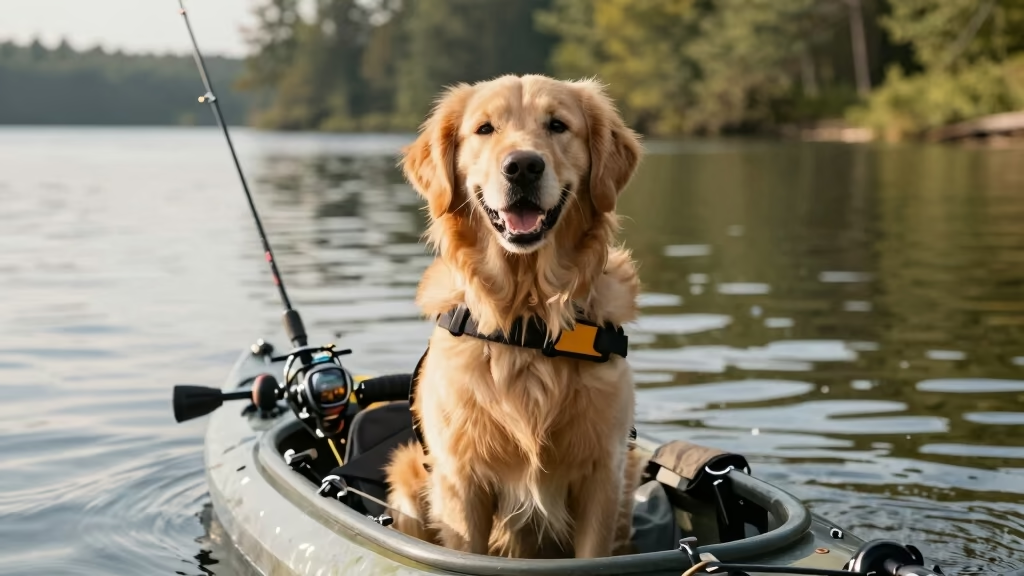
More than 60% of kayak anglers who own dogs have attempted to bring their furry companion on the water at least once. Yes, you can absolutely take a dog on a fishing kayak, but success depends on choosing the right kayak style, proper training, and safety gear designed specifically for canine passengers. Most dogs adapt well to kayaking when introduced gradually, though the experience works best with stable sit-on-top models and dogs under 70 pounds.
Key Takeaways
- Sit-on-top kayaks offer the safest platform for dogs, providing easy entry/exit and more deck space than sit-inside models
- Stability matters more than speed when fishing with a dog; choose kayaks with widths of 32+ inches for better balance
- Dog life jackets are mandatory, not optional, even for strong swimmers, and should include a top handle for emergency retrieval
- Training takes 3-5 sessions on land before attempting water trips; dogs need to learn “stay” and “settle” commands reliably
- Weight capacity must account for your weight + dog’s weight + gear + 100-pound safety margin for stability
- Breeds under 50 pounds adapt fastest, though larger dogs can kayak successfully in tandem or extra-wide models
- Deck protection prevents injuries; use foam pads or yoga mats to protect both the kayak surface and your dog’s paw pads
- Most first-time mistakes involve skipping land training, forgetting water/shade, or choosing unstable kayak designs
Is It Safe to Bring a Dog on a Fishing Kayak?
Bringing a dog on a fishing kayak is safe when you follow proper precautions, use appropriate safety gear, and match the kayak design to your dog’s size and temperament. The primary risks include capsizing from sudden movements, dogs jumping overboard unexpectedly, and heat exhaustion on long trips.
Safety depends on three core factors: kayak stability, dog training, and environmental conditions. Stable kayaks designed for fishing typically have wider beams (32-36 inches) that resist tipping when a dog shifts weight. Dogs that have completed basic obedience training and respond reliably to “stay” commands pose minimal capsizing risk.
Critical safety measures include:
- Always use a dog-specific life jacket with a top handle, even if your dog swims well
- Start in calm, shallow water (waist-deep) where you can stand if needed
- Avoid strong currents, cold water below 60°F, or choppy conditions for first trips
- Bring fresh water and shade options for trips longer than 30 minutes
- Check weather forecasts and avoid high winds or storms
Dogs can panic in unfamiliar situations, so gradual introduction is essential. Most kayaking accidents with dogs happen during the first three outings when the animal hasn’t yet learned kayak behavior. According to experienced kayak anglers, dogs that complete 3-5 practice sessions on land before launching have significantly fewer incidents on the water.
Common safety mistakes to avoid:
- Assuming your dog will naturally understand kayak balance
- Using human life jackets or no flotation device at all
- Bringing an untrained puppy or reactive dog on the first trip
- Fishing in areas with boat traffic before your dog is comfortable
For more guidance on kayak safety fundamentals, review proper protocols before adding a canine passenger.
What Size Kayak Do You Need for You and Your Dog?
You need a kayak with a weight capacity at least 100 pounds above the combined weight of you, your dog, and all gear. For a 180-pound angler with a 40-pound dog and 30 pounds of fishing gear, choose a kayak rated for at least 350 pounds to maintain stability and performance.
Kayak length and width matter as much as weight capacity. Dogs need physical space to sit, turn around, and lie down comfortably. A fishing kayak between 11-14 feet long with a beam width of 32+ inches provides adequate room for most dog-and-angler combinations.
Size recommendations by dog weight:
- Small dogs (under 25 lbs): 10-12 foot kayak, 30+ inch width, 300+ lb capacity
- Medium dogs (25-50 lbs): 12-13 foot kayak, 32+ inch width, 350+ lb capacity
- Large dogs (50-70 lbs): 13-14 foot kayak, 34+ inch width, 400+ lb capacity
- Extra-large dogs (70+ lbs): Tandem fishing kayak or specialized wide models, 36+ inch width, 500+ lb capacity
Width directly affects stability. Each additional inch of beam width significantly reduces tipping risk when your dog moves. Kayaks narrower than 30 inches work poorly with dogs because even small weight shifts cause noticeable rocking.
Choose a larger kayak if:
- Your dog is energetic or moves frequently
- You plan multi-hour trips requiring extra gear and water
- You fish in choppy water or mild currents
- Your dog hasn’t fully mastered “stay” commands yet
Tandem kayaks offer the most space, allowing your dog to occupy the rear seat area while you paddle and fish from the front. This configuration works especially well for dogs over 60 pounds that need more room to adjust position comfortably.
How to Train a Dog to Sit Still in a Kayak
Train your dog to sit still in a kayak through gradual desensitization, starting with 5-10 minute sessions on dry land where the dog learns to associate the kayak with positive rewards and calm behavior. Most dogs require 3-5 land sessions before they’re ready for water introduction.
Begin training in your backyard or driveway, not at the water. Place the kayak on grass or soft ground and let your dog investigate it freely. Reward any calm behavior near or in the kayak with high-value treats (small pieces of chicken, cheese, or commercial training treats).
Step-by-step training process:
- Day 1-2: Let your dog sniff and explore the kayak without pressure; reward calm investigation
- Day 3-4: Encourage your dog to step into the kayak using treats; practice “sit” and “down” commands inside
- Day 5-6: Sit in the kayak with your dog for 10-15 minutes; practice “stay” while you make small movements
- Day 7-8: Rock the kayak gently while your dog is inside; reward calm responses to motion
- Day 9-10: Move to shallow water (ankle-deep); let your dog experience the kayak floating while you stand beside it
The “settle” or “place” command is more useful than “sit” for kayaking. Teach your dog that “settle” means lie down in a specific spot and remain there until released. Practice this command for progressively longer periods, building from 2 minutes to 20+ minutes.
Training tips that accelerate progress:
- Train before meals when your dog is hungry and treat-motivated
- Keep sessions short (10-15 minutes) to prevent frustration
- Use a non-slip mat or towel to give your dog secure footing
- Practice in different locations to generalize the behavior
- Bring a favorite toy or blanket to create a “safe spot” in the kayak
Dogs with high prey drive or reactive tendencies need extra training. If your dog lunges at birds, other boats, or wildlife, work with a professional trainer on impulse control before attempting kayak trips. A dog that jumps unexpectedly can capsize even stable kayaks.
Common training mistakes:
- Rushing to the water before the dog is comfortable in the stationary kayak
- Punishing nervous behavior instead of rewarding calm responses
- Skipping the rocking/motion practice on land
- Attempting the first water trip in unfamiliar or busy locations
For dogs that struggle with the training process, consider shorter trips initially. A 15-minute paddle around a quiet cove builds confidence better than an ambitious 2-hour fishing expedition.

SHIPMENT CONTAINS: 2-pound bag (32 oz) of small bite-sized dog training treats in a resealable pouch

Natural dog treats made with added vitamins and minerals and no corn, wheat, or soy at only 2 calories per treat

Zuke’s Mini Naturals With Added Vitamins And Minerals Beef Recipe, Soft And Chewy Dog Treats Pouch, Natural Treats Bites For Training
Best Fishing Kayaks for Dogs With Extra Stability
The best fishing kayaks for dogs feature wide pontoon-style hulls, sit-on-top designs, and weight capacities exceeding 400 pounds. Models with 34+ inch beam widths and flat, open decks provide the stability and space dogs need to move safely without causing capsizing.
Pontoon-hull kayaks offer superior stability compared to traditional V-hull designs. The twin-hull configuration creates a stable platform that resists tipping even when a 60-pound dog shifts from one side to the other. These kayaks sacrifice some speed but gain significant safety for canine passengers.
Top kayak features for dogs:
- Sit-on-top design: Allows easy entry/exit and eliminates the confined feeling of cockpits
- Wide beam (34-36 inches): Provides stable platform for dog movement
- Flat, textured deck: Gives dogs secure footing and room to lie down
- High weight capacity (400+ lbs): Accommodates dog, angler, and gear without compromising performance
- Multiple footwells or tank wells: Creates natural “spots” where dogs can settle
- Integrated handles: Helps with launching and provides grab points if you need to steady the kayak
Look for kayaks marketed as “stable” or “beginner-friendly” rather than “fast” or “touring” models. Fishing kayak stability matters more than speed when you’re managing a dog and fishing gear simultaneously.
Kayak styles that work well with dogs:
- Recreational sit-on-top kayaks: Best for calm lakes and small dogs under 40 pounds
- Fishing-specific sit-on-top models: Ideal for medium dogs (40-60 lbs) with extra gear storage
- Tandem kayaks: Perfect for large dogs (60+ lbs) needing dedicated space
- Pontoon kayaks: Maximum stability for energetic or large dogs, though heavier to transport
Avoid narrow touring kayaks, sit-inside models with small cockpits, and high-performance fishing kayaks designed for standing. These designs prioritize speed and angler mobility over the stable platform dogs require.
Decision rule: Choose a sit-on-top kayak if your dog weighs under 50 pounds and you fish calm water. Choose a tandem or pontoon kayak if your dog exceeds 50 pounds or you need maximum stability for an active dog.
For more details on selecting the right model, check our fishing kayak buying guide.

Superior brightness: Each light is equipped with 6PCS high-intensity 2835 SMD LED, stable output of 120LM light for perfect marker light. Awesome Seal: Decently sealed at...
Sit-On-Top vs Sit-Inside Kayak for Dogs
Sit-on-top kayaks are significantly better for dogs than sit-inside models because they provide open deck space, easy water access, and eliminate the confined cockpit that makes dogs anxious. Sit-inside kayaks work only for very small dogs (under 20 pounds) that can fit comfortably in the cockpit with you.
The fundamental difference is space and accessibility. Sit-on-top kayaks feature a molded deck where both you and your dog sit on top of the hull. Sit-inside kayaks have an enclosed cockpit where you sit inside the hull with your legs under the deck. Dogs cannot fit in most sit-inside cockpits without sitting on your lap, which creates balance and comfort problems.
Sit-on-top advantages for dogs:
- Dogs can move, turn around, and change position freely
- Easy entry and exit if your dog needs to swim or relieve themselves
- No confined space that triggers anxiety in nervous dogs
- Self-bailing scupper holes drain water automatically if your dog gets wet
- More surface area for your dog to lie down comfortably
Sit-inside disadvantages for dogs:
- Cockpit space too small for dogs over 20 pounds
- Dogs must sit on your lap, creating balance issues
- Difficult for dogs to enter/exit without tipping the kayak
- Enclosed feeling increases anxiety in many dogs
- Water that enters the cockpit pools around you and your dog
Some experienced kayakers use tandem sit-inside kayaks, placing a small dog in the rear cockpit. This works only if the dog remains completely still and the rear cockpit is large enough for the dog to lie down. Even then, sit-on-top designs offer better safety and comfort.
Choose sit-on-top if:
- Your dog weighs more than 20 pounds
- You’re new to kayaking with dogs
- You fish in warm weather where your dog might want to swim
- Your dog has any anxiety or nervousness about confined spaces
Consider sit-inside only if:
- Your dog is under 15 pounds and comfortable on your lap
- You paddle in cold water where the enclosed cockpit provides warmth
- You’re an experienced kayaker who can manage the balance challenges
For most anglers wondering “Can you take a dog on a fishing kayak?”, the answer is yes, but specifically on a sit-on-top kayak designed for stability and open deck access.
Do You Need a Special Life Jacket for Your Dog in a Kayak?
Yes, you need a dog-specific life jacket (personal flotation device) for kayaking, even if your dog is a strong swimmer. Dog life jackets differ from human PFDs by providing proper buoyancy for canine body shapes, including a top handle for lifting your dog back into the kayak and bright colors for visibility.
Standard human life jackets don’t fit dogs properly and can slip off or restrict movement. Dog-specific PFDs are designed around a dog’s chest and torso proportions, with adjustable straps that secure without chafing or limiting leg movement.
Essential features of dog kayaking life jackets:
- Top handle: Sturdy grab handle on the back for lifting your dog from the water
- Bright colors: Neon orange, yellow, or red for visibility in emergencies
- Reflective strips: Improves visibility in low light conditions
- Adjustable straps: Multiple adjustment points for secure, comfortable fit
- Chin float: Extra buoyancy under the chin keeps your dog’s head above water
- D-ring attachment: Allows you to clip a leash if needed (never use while paddling)
Size your dog’s life jacket by weight and chest girth, not by breed. Measure around the widest part of your dog’s chest and follow the manufacturer’s sizing chart. A properly fitted life jacket should be snug but allow your dog to move, sit, and lie down comfortably.
Life jacket sizing by weight:
- Extra small: Dogs under 15 lbs (Chihuahuas, toy breeds)
- Small: 15-30 lbs (Terriers, Corgis, Beagles)
- Medium: 30-50 lbs (Cocker Spaniels, Border Collies)
- Large: 50-80 lbs (Labradors, Golden Retrievers)
- Extra large: 80+ lbs (German Shepherds, Rottweilers)
Test the life jacket before your kayaking trip. Put it on your dog and let them wear it around the house for 10-15 minutes. Check for rubbing, restricted movement, or signs of discomfort. Then test it in shallow water to ensure it provides adequate flotation and your dog can swim normally.
Never kayak with your dog without a life jacket because:
- Even strong swimmers tire quickly in cold or choppy water
- Dogs can panic and struggle if they fall in unexpectedly
- The life jacket handle is essential for pulling your dog back into the kayak
- Currents and waves affect dogs more than humans due to their lower swimming position
For comprehensive water safety information, review our guide on kayak safety essentials.
What Dog Breeds Are Too Big for Fishing Kayaks?
Dogs over 90 pounds are generally too large for standard fishing kayaks, though they can kayak successfully in specialized tandem models or pontoon kayaks with 500+ pound weight capacities. Breeds like Great Danes, Mastiffs, and Saint Bernards present challenges due to both weight and physical size that exceeds available deck space.
The limitation isn’t just weight but physical dimensions. A 100-pound Great Dane is taller and longer than a 100-pound Rottweiler, requiring more deck space to lie down comfortably. Kayaks have limited surface area, and dogs need enough room to shift position without hanging over the sides.
Breeds that commonly exceed kayak capacity:
- Giant breeds (100+ lbs): Great Danes, Mastiffs, Saint Bernards, Newfoundlands, Irish Wolfhounds
- Large working breeds (80-100 lbs): Rottweilers, German Shepherds, Dobermans, Akitas
- Large sporting breeds (70-90 lbs): Large Labrador Retrievers, Golden Retrievers, Weimaraners
Breeds that typically work well in kayaks:
- Medium breeds (30-60 lbs): Border Collies, Australian Shepherds, Springer Spaniels, Beagles, Bulldogs
- Small breeds (under 30 lbs): Terriers, Corgis, Dachshunds, Pugs, Shih Tzus
- Compact sporting breeds: Cocker Spaniels, Brittany Spaniels, smaller Labrador Retrievers
Body shape matters as much as weight. Long-bodied breeds like Greyhounds or Basset Hounds need more deck length than compact breeds of similar weight. Tall breeds like Great Danes have higher centers of gravity that affect kayak stability more than low-slung breeds like Corgis.
Solutions for large dogs:
- Use a tandem fishing kayak where your dog occupies the entire rear seat area
- Choose pontoon-style kayaks with extra-wide decks (36+ inches)
- Consider inflatable kayaks with flexible seating configurations
- Limit trips to short durations (under 1 hour) to reduce discomfort
Decision rule: If your dog’s weight plus your weight plus gear exceeds 75% of the kayak’s rated capacity, choose a larger kayak or a different watercraft. Overloading reduces stability, makes paddling difficult, and increases capsizing risk.
Some large-dog owners successfully kayak by using specialized models designed for heavy loads. These kayaks sacrifice speed and maneuverability but provide the platform stability necessary for 70-90 pound dogs. For more information on fishing kayak size considerations, explore our detailed guides.
How to Keep Your Dog From Jumping Out of the Kayak
Prevent your dog from jumping out of the kayak through solid “stay” command training, gradual desensitization to water distractions, and creating a comfortable designated spot where your dog learns to settle. Most jumping behavior stems from excitement, fear, or lack of understanding about kayak boundaries.
Dogs don’t naturally understand that jumping from a kayak differs from jumping from a dock or boat. They need explicit training that teaches them to remain in the kayak until you give a release command. This training should happen on land before you attempt water trips.
Training steps to prevent jumping:
- Establish a “place” command: Teach your dog that a specific mat or towel in the kayak is their spot
- Practice boundary training: Reward your dog for staying in the kayak while you create distractions around it
- Introduce water gradually: Start in ankle-deep water where jumping has no consequence, then progress to deeper water
- Use a short tether initially: A 2-3 foot leash attached to the kayak (never to you) prevents jumping during early training
- Reward calm behavior: Give treats every 2-3 minutes when your dog remains settled and ignores distractions
The tether is a training tool, not a permanent solution. Use it only during the first 3-5 water sessions to prevent jumping while your dog learns kayak behavior. A tethered dog can still move, lie down, and turn around but cannot leap overboard. Always remove the tether once your dog reliably responds to “stay” commands.
Common jumping triggers and solutions:
- Other boats or kayakers: Practice “watch me” command to redirect attention to you
- Wildlife (ducks, fish, turtles): Train impulse control using “leave it” command before kayaking
- Desire to swim: Schedule intentional swim breaks where you give permission to exit
- Fear or anxiety: Return to shore immediately; don’t force a scared dog to stay in the kayak
- Bathroom needs: Learn your dog’s signals and paddle to shore proactively
Some dogs jump because they’re uncomfortable or overheated. Ensure your dog has a padded spot to lie down, access to shade (use an umbrella or bimini top), and fresh water every 20-30 minutes. Comfortable dogs are less likely to seek escape.
Never:
- Punish your dog for jumping (this increases anxiety and makes the behavior worse)
- Use a leash attached to your body (creates entanglement risk if you capsize)
- Ignore signs of stress (panting, whining, pacing) that precede jumping
- Kayak in areas with strong currents where a jumping dog faces danger
For dogs with high prey drive, consider a basket muzzle during initial training. This prevents them from grabbing at fish or wildlife but allows panting and drinking. Remove the muzzle once impulse control improves.
Can Puppies Go on Kayaks or Are They Too Young?
Puppies under 6 months old are generally too young for kayaking because they lack the impulse control, attention span, and physical coordination needed for safe kayak behavior. Wait until your puppy completes basic obedience training and reliably responds to “stay” and “come” commands, typically around 8-12 months of age.
Young puppies have short attention spans (5-10 minutes) and struggle to remain calm in stimulating environments. A kayak on the water presents overwhelming sensory input: moving water, wildlife, unfamiliar sounds, and unstable footing. Most puppies react with excitement or fear, both of which create safety risks.
Age-based guidelines:
- Under 6 months: Too young; focus on basic obedience and socialization on land
- 6-8 months: Introduce the kayak on dry land only; practice sitting calmly inside
- 8-12 months: Begin short water sessions (10-15 minutes) in calm, shallow areas
- 12+ months: Ready for longer kayaking trips if training is solid
Puppies also lack the physical stamina for extended trips. A 4-month-old puppy tires quickly and may become stressed or uncomfortable after 20-30 minutes. Adult dogs can kayak for 2-3 hours comfortably once acclimated.
Prerequisites before taking a puppy kayaking:
- Completed basic obedience training (sit, stay, down, come)
- Comfortable wearing a life jacket for 30+ minutes
- Positive experiences with water (swimming, wading)
- Calm behavior around distractions (other dogs, wildlife, people)
- Able to settle and relax in new environments
Start puppy kayak training with very short sessions. Five minutes in a stationary kayak on land is enough for the first session. Gradually increase duration and complexity as your puppy matures and demonstrates calm behavior.
Signs your puppy isn’t ready:
- Constant movement and inability to settle for more than 2-3 minutes
- Fear responses to water, boats, or unfamiliar environments
- Jumping or lunging at distractions
- Incomplete house training (accidents in the kayak create problems)
- Excessive mouthing or chewing behavior
Some breeds mature faster than others. Working breeds like Border Collies and German Shepherds often demonstrate the focus needed for kayaking by 10-12 months. Toy breeds and some sporting breeds may need until 14-16 months to develop adequate impulse control.
Puppy-specific safety considerations:
- Use a properly fitted puppy life jacket (they outgrow sizes quickly)
- Limit first trips to 15-20 minutes maximum
- Choose warm, calm days (puppies regulate body temperature poorly)
- Bring extra towels for cleanup if your puppy gets anxious or sick
- Stay within 50 feet of shore so you can return quickly if needed
For puppies showing interest and aptitude, kayaking can become a lifelong activity. Patient, gradual introduction during the 8-12 month window creates confident adult kayaking dogs. Rushing the process with younger puppies often results in fear or negative associations that are difficult to reverse.
Dog Paw Pad Protectors for Kayak Decks
Dog paw pad protectors are optional for kayaking but recommended for long trips or kayaks with textured decks that can abrade paw pads. Most dogs don’t need booties for typical 1-2 hour kayak fishing trips, but protection becomes important on hot decks, rough surfaces, or all-day excursions.
Kayak decks pose two main paw pad risks: heat and abrasion. Dark-colored kayaks absorb heat and can reach temperatures that burn paw pads on sunny days. Heavily textured non-slip surfaces can wear down paw pads during extended trips, especially if your dog shifts position frequently.
When to use paw protection:
- Hot weather: Deck temperatures exceed 85°F (test with your hand for 5 seconds)
- Rough deck texture: Aggressive diamond-plate or sandpaper-like surfaces
- Long trips: Kayaking sessions over 3 hours
- Sensitive dogs: Dogs with soft paw pads or previous pad injuries
- Rocky launches: Areas where your dog must walk over sharp rocks to reach the kayak
Paw protection options:
- Dog booties: Neoprene or rubber boots that cover the entire paw; most secure but some dogs resist wearing them
- Foam deck pads: Stick-on EVA foam sheets (like SUP deck pads) that cover the kayak surface; comfortable and effective
- Yoga mats or towels: Simple, inexpensive option that provides cushioning and heat protection
- Paw wax: Protective balm applied to paw pads; works for mild protection but not rough surfaces
Most kayak anglers find that foam deck pads or yoga mats work better than dog booties. Dogs accept these passive solutions immediately, while booties require training and many dogs try to remove them. EVA foam deck pads designed for stand-up paddleboards adhere to kayak decks and provide excellent traction and cushioning.
Foam deck pad installation:
- Clean the kayak deck area where your dog sits with rubbing alcohol
- Cut the foam pad to fit the space (typically 24″ x 36″ for medium dogs)
- Peel the adhesive backing and press firmly onto the deck
- Allow 24 hours for the adhesive to cure before use
Yoga mats work as a temporary or budget solution. Use a non-slip yoga mat cut to size and secure it with bungee cords or Velcro straps. This provides cushioning and heat protection without permanent modification to your kayak.
Signs your dog needs paw protection:
- Lifting paws or refusing to sit on the deck
- Licking or chewing paws after kayaking
- Visible redness or abrasion on paw pads
- Reluctance to enter the kayak on subsequent trips
Check your dog’s paw pads after each kayaking trip, especially during the first few outings. Look for redness, cracks, or worn areas. Healthy paw pads should appear smooth and consistent in color. If you notice damage, add protection before the next trip.
Paw pad care for kayaking dogs:
- Trim fur between paw pads to prevent matting and improve traction
- Apply paw balm after trips to moisturize and heal minor wear
- Gradually build paw pad toughness through regular walking on varied surfaces
- Rinse paws with fresh water after kayaking in salt water
For most dogs on recreational fishing trips, a simple foam pad or towel provides adequate protection. Reserve dog booties for extreme conditions or dogs with known paw sensitivity.
My Dog Is Scared of Water: Will Kayaking Work?
Dogs that are scared of water can learn to kayak successfully, but they require extra training time and should never be forced into situations that increase their fear. Start with land-based kayak training and gradually introduce water exposure separately before combining the two activities.
Not all dogs are natural swimmers or water lovers. Some breeds (Bulldogs, Pugs, Dachshunds) have body proportions that make swimming difficult. Other dogs had negative early experiences with water. These dogs can still enjoy kayaking if the introduction is patient and positive.
Modified training approach for water-fearful dogs:
- Complete all kayak training on dry land first (2-3 weeks of practice)
- Introduce water separately through shallow wading, sprinklers, or kiddie pools
- Combine kayak and water only after your dog shows comfort with both individually
- Start in extremely shallow water (ankle-deep) where your dog can touch bottom
- Keep first water sessions very short (5-10 minutes maximum)
The key is separating the two challenges. A dog scared of water who is also unfamiliar with kayaks faces two fears simultaneously. Address each fear independently before combining them.
Signs your dog is too fearful to continue:
- Trembling, excessive panting, or drooling
- Attempts to escape or jump from the kayak
- Freezing in place and refusing to move
- Aggressive behavior (growling, snapping) from fear
- Regression in previously learned commands
Never force a fearful dog into a kayak or onto the water. Forced exposure increases fear and can create lasting negative associations. If your dog shows extreme fear after 3-4 patient training sessions, kayaking may not be the right activity for that individual dog.
Alternative approaches:
- Use a tandem kayak where your dog can sit close to you for security
- Try an inflatable kayak that feels more stable and less “tippy” to nervous dogs
- Consider a kayak with a higher freeboard (sides) that feels more enclosed
- Work with a professional dog trainer who specializes in fear-based behaviors
Some water-fearful dogs become confident kayakers over time. The kayak provides a stable platform that allows them to be near water without swimming. These dogs often enjoy kayaking more than swimming because they remain dry and in control.
Success indicators:
- Your dog voluntarily enters the kayak without coaxing
- Relaxed body language (soft eyes, normal breathing, loose posture)
- Willingness to lie down and settle during trips
- Interest in surroundings rather than fixation on escape
For dogs with mild water nervousness rather than true fear, kayaking can actually build confidence. The positive experience of being on the water safely may reduce their overall water anxiety. Progress slowly and celebrate small victories.
Mistakes People Make Bringing Dogs on Kayaks the First Time
The most common mistake when bringing dogs on kayaks for the first time is skipping land-based training and attempting water trips before the dog understands kayak behavior. This leads to panicked dogs, capsized kayaks, and negative experiences that make future training much harder.
First-time kayakers with dogs also frequently underestimate the importance of proper safety gear, environmental conditions, and trip duration. A 2-hour trip in choppy water with no dog life jacket represents multiple mistakes that compound risk.
Top mistakes and how to avoid them:
1. No land training
- Mistake: Taking your dog directly to the water without practice
- Solution: Complete 3-5 land training sessions before launching
2. Wrong kayak choice
- Mistake: Using a narrow sit-inside kayak or unstable touring model
- Solution: Choose a stable sit-on-top kayak with 32+ inch width
3. Skipping the life jacket
- Mistake: Assuming your dog doesn’t need flotation because they swim well
- Solution: Always use a dog-specific PFD with a top handle
4. Challenging conditions
- Mistake: First trip in windy, choppy, or cold water
- Solution: Choose calm, warm, shallow water for initial outings
5. Trip too long
- Mistake: Planning a 3-hour fishing trip for your dog’s first kayak experience
- Solution: Limit first trips to 15-20 minutes, gradually increasing duration
6. No water or shade
- Mistake: Forgetting that dogs overheat quickly on kayaks
- Solution: Bring collapsible water bowl, fresh water, and shade options
7. Busy locations
- Mistake: Launching at crowded boat ramps with heavy traffic
- Solution: Choose quiet, isolated spots for first trips
8. Ignoring stress signals
- Mistake: Continuing the trip when your dog shows fear or discomfort
- Solution: Return to shore immediately if your dog is stressed
9. No deck protection
- Mistake: Letting your dog sit on hot or rough kayak surfaces
- Solution: Use foam pads, yoga mats, or towels for comfort
10. Unrealistic expectations
- Mistake: Expecting your dog to naturally understand kayaking
- Solution: Accept that training takes time; some dogs need weeks to feel comfortable
The single biggest predictor of success is patience. Dogs that receive gradual, positive introduction to kayaking become confident paddling companions. Dogs that are rushed or forced often develop lasting fear of kayaks and water.
Pre-trip checklist for first-time kayaking with dogs:
- ✅ Completed 3+ land training sessions
- ✅ Dog responds reliably to “stay” and “settle” commands
- ✅ Properly fitted dog life jacket
- ✅ Calm weather and water conditions
- ✅ Shallow launch area where you can stand
- ✅ Fresh water and collapsible bowl
- ✅ Deck padding for paw protection
- ✅ Towels for drying
- ✅ High-value treats for positive reinforcement
- ✅ Plan for short trip (15-30 minutes maximum)
For comprehensive guidance on getting started, review our beginner kayak fishing resources.
Where Should My Dog Sit in a Tandem Fishing Kayak?
Your dog should sit in the rear seat area of a tandem fishing kayak, allowing you to paddle and fish from the front position where you maintain better control and visibility. The rear position provides your dog with a dedicated space, reduces their impact on steering, and keeps them behind you where you can monitor their behavior.
Tandem kayaks offer the most space for dogs, especially larger breeds that need room to move. The rear seat area typically provides 3-4 feet of deck space where a medium to large dog can lie down comfortably. This configuration separates your fishing activity from your dog’s space, reducing tangling and interference.
Rear position advantages:
- More deck space for your dog to lie down and turn around
- Your dog’s weight in the rear improves kayak trim and tracking
- You can monitor your dog’s behavior without turning around constantly
- Fishing gear and rods stay in front, away from your dog
- Easier to reach back and reassure or reward your dog
Front position disadvantages:
- Limited space restricts your dog’s movement
- Your dog blocks your view and paddle strokes
- Difficult to monitor your dog’s behavior
- Fishing lines and gear create entanglement risks
- Your dog may interfere with paddle strokes
Some anglers remove the rear seat entirely and create a large open platform for their dog. This works well for dogs over 60 pounds that need maximum space. Add a foam pad or outdoor cushion to create a comfortable spot.
Setup tips for dogs in tandem kayaks:
- Remove or fold down the rear seat to create more deck space
- Install a foam pad or outdoor cushion for comfort
- Use bungee cords to secure a towel or mat that defines your dog’s space
- Position water bowl and treats within reach of the rear area
- Keep fishing gear organized in the front to avoid clutter near your dog
Alternative configuration for small dogs:
Small dogs under 25 pounds can sit in the center tank well (the storage area between seats) if you’re paddling solo in a tandem kayak. This low, enclosed position provides security for nervous small dogs. Line the tank well with a towel or foam pad for comfort.
Decision rule: Place your dog in the rear seat area of a tandem kayak unless they’re under 20 pounds and prefer the enclosed feeling of the center tank well. Never place your dog in the front position where they interfere with paddling and fishing.
For more information on tandem fishing kayaks and their configurations, explore our detailed guides.
Do Dogs Get Seasick on Kayaks?
Dogs can experience motion sickness on kayaks, though it’s less common than in cars or boats because kayak motion is gentler and dogs remain in fresh air. Puppies and dogs with a history of car sickness are most susceptible, with symptoms including drooling, whining, vomiting, and lethargy.
Motion sickness occurs when the inner ear (which controls balance) sends signals that conflict with what the eyes see. The gentle rocking of a kayak rarely causes this in adult dogs, but choppy water or long trips can trigger symptoms in sensitive individuals.
Signs of motion sickness in dogs:
- Excessive drooling or lip licking
- Whining or anxious vocalizations
- Yawning repeatedly
- Restlessness or inability to settle
- Vomiting or dry heaving
- Lethargy or unwillingness to move
Most dogs that experience kayak motion sickness are actually experiencing anxiety rather than true vestibular motion sickness. The symptoms overlap, but the cause differs. An anxious dog may drool and whine from stress, not from inner ear disturbance.
Prevention strategies:
- Gradual exposure: Start with short trips (10-15 minutes) and slowly increase duration
- Calm water: Choose flat, protected water for first trips; avoid choppy conditions
- Empty stomach: Don’t feed your dog for 2-3 hours before kayaking
- Fresh air: Ensure good air circulation; avoid enclosed areas
- Frequent breaks: Stop every 30 minutes to let your dog stand on shore
- Ginger treats: Natural ginger can reduce nausea (consult your vet for dosage)
Medication options:
For dogs with confirmed motion sickness, your veterinarian can prescribe anti-nausea medication. Common options include:
- Cerenia (maropitant): Prescription anti-nausea medication, very effective
- Dramamine (dimenhydrinate): Over-the-counter option, consult vet for proper dosage
- Bonine (meclizine): Another OTC option, less sedating than Dramamine
Never give your dog human medication without veterinary guidance. Dosages differ significantly from human doses, and some formulations contain ingredients toxic to dogs.
Distinguishing motion sickness from anxiety:
- Motion sickness: Symptoms worsen with movement, improve when stationary
- Anxiety: Symptoms present before movement begins, related to environment
- Motion sickness: Dog appears physically ill (pale gums, excessive swallowing)
- Anxiety: Dog appears stressed (panting, wide eyes, escape attempts)
Most dogs that show symptoms on their first kayak trip are experiencing anxiety, not motion sickness. Continue gradual training and positive reinforcement. True motion sickness typically improves as dogs gain experience and their vestibular system adapts.
When to avoid kayaking:
- Your dog vomits on every trip despite gradual training
- Symptoms are severe (continuous vomiting, extreme lethargy)
- Your dog shows fear or stress in addition to physical symptoms
- Your veterinarian advises against it due to underlying health conditions
The good news is that most dogs never experience motion sickness on kayaks. The stable platform and fresh air environment work in your favor. For the small percentage of dogs that do get sick, medication and gradual exposure usually resolve the issue within 3-5 trips.
Frequently Asked Questions
Can any dog breed go on a fishing kayak?
Most dog breeds can kayak successfully if they’re under 70 pounds and have basic obedience training. Breeds with calm temperaments like Labradors, Golden Retrievers, and Spaniels adapt quickest. Avoid kayaking with giant breeds over 90 pounds or dogs with severe anxiety issues.
How long does it take to train a dog for kayaking?
Training a dog for kayaking typically takes 2-3 weeks with 3-5 practice sessions per week. Dogs with solid obedience training may be ready in 1-2 weeks, while anxious or energetic dogs may need 4-6 weeks of gradual introduction before they’re comfortable on the water.
What’s the best age to start kayaking with a dog?
The best age to start kayaking with a dog is 8-12 months after they’ve completed basic obedience training and developed adequate impulse control. Puppies under 6 months lack the focus needed for safe kayaking, while older dogs can learn at any age if introduced gradually.
Do I need a special kayak to take my dog fishing?
You don’t need a special kayak, but you need the right type: a stable sit-on-top model with a 32+ inch width and weight capacity 100+ pounds above your combined weight. Standard fishing kayaks work well if they meet these stability and capacity requirements.
Can my dog swim while we’re kayaking?
Yes, dogs can swim during kayaking trips if you plan intentional swim breaks in safe areas. Always keep your dog’s life jacket on while swimming, choose calm water without currents, and practice helping your dog climb back into the kayak before allowing unsupervised swimming.
What if my dog needs to go to the bathroom while kayaking?
Paddle to shore when your dog shows bathroom signals (sniffing, circling, whining). Most dogs can hold their bladder for 2-3 hours, but plan bathroom breaks every 60-90 minutes on longer trips. Some dogs learn to eliminate off the side of the kayak, though this requires specific training.
Is it safe to kayak with a dog in cold weather?
Kayaking with dogs in cold weather (water below 60°F) requires extra precautions including a dog wetsuit or coat, limiting trip duration to 30-45 minutes, and monitoring for signs of hypothermia (shivering, lethargy). Avoid cold-water kayaking with short-haired breeds or small dogs that lose body heat quickly.
Can I use a regular leash to secure my dog in the kayak?
Never use a regular leash to secure your dog to yourself or the kayak during paddling. If you capsize, a leash creates entanglement risk. Use a short 2-3 foot tether attached to the kayak only during initial training, and remove it once your dog learns to stay reliably.
What should I do if my dog falls out of the kayak?
If your dog falls out, remain calm and use the life jacket handle to pull them back in. Practice this rescue technique in shallow water before attempting longer trips. Most dogs can be lifted back into sit-on-top kayaks by grabbing the life jacket handle and pulling them onto the deck.
How much water should I bring for my dog while kayaking?
Bring at least 8-16 ounces of fresh water per hour of kayaking for medium-sized dogs, more for larger dogs or hot weather. Offer water every 20-30 minutes using a collapsible bowl. Dogs dehydrate quickly on kayaks due to sun exposure and limited movement.
Can I take my dog kayak fishing in saltwater?
Yes, dogs can kayak in saltwater, but rinse their paws and coat with fresh water after each trip to prevent skin irritation. Saltwater is safe for dogs to be around, though discourage drinking it. Use the same safety precautions as freshwater kayaking, with extra attention to sun protection.
What’s the maximum weight for a dog on a fishing kayak?
The maximum dog weight depends on kayak capacity and your weight, but most standard fishing kayaks accommodate dogs up to 70 pounds safely. For dogs 70-90 pounds, use tandem kayaks or specialized wide models. Dogs over 90 pounds require pontoon kayaks or other high-capacity designs.
Conclusion
Taking a dog on a fishing kayak is absolutely possible and can become one of the most rewarding outdoor activities you share with your canine companion. Success depends on three critical factors: choosing a stable sit-on-top kayak with adequate weight capacity, investing time in proper training before attempting water trips, and prioritizing safety through dog-specific life jackets and appropriate conditions.
Start your journey by assessing whether your dog is a good candidate for kayaking. Dogs under 70 pounds with basic obedience training and calm temperaments adapt most easily. Complete 3-5 land-based training sessions where your dog learns to settle in the kayak before introducing water. Choose calm, shallow locations for first trips and keep them short (15-20 minutes) to build positive associations.
Your next steps:
- Evaluate your current kayak or research stable fishing kayak options that meet the width and capacity requirements for your dog’s size
- Purchase a properly fitted dog life jacket with a top handle before attempting any water trips
- Begin land training this week by placing your kayak in the backyard and practicing “settle” commands
- Plan your first water outing at a quiet, shallow location where you can stand if needed
- Join online communities of kayak anglers who paddle with dogs to learn from experienced handlers
Remember that every dog learns at their own pace. Some dogs take to kayaking immediately, while others need weeks of patient training. Don’t compare your dog’s progress to others, and never force a fearful dog into situations that increase their anxiety. The goal is creating a positive experience that both you and your dog enjoy for years to come.
For dogs that successfully complete training, kayak fishing offers unique bonding opportunities and outdoor adventures. Your dog gets to accompany you on fishing trips, experience new environments, and enjoy quality time on the water. With proper preparation and safety measures, the answer to “Can you take a dog on a fishing kayak?” is a confident yes.
Start small, train consistently, and prioritize safety. Before long, you’ll have a reliable kayaking companion who’s as excited about fishing trips as you are.