Quick Answer
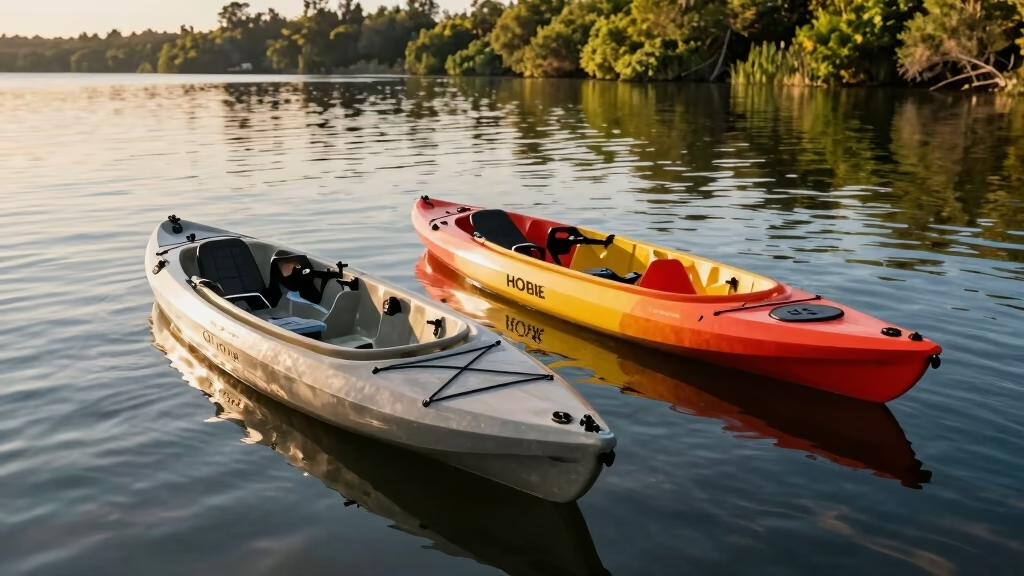
Old Town and Hobie represent the two dominant approaches to pedal-driven fishing kayaks in 2026. Old Town’s PDL (Pedal Drive with Locking) system uses a propeller-based drive that excels in reverse capability and shallow water, while Hobie’s legendary Mirage Drive employs twin fins that deliver superior forward speed and efficiency. Old Town typically costs $1,000-$2,000 less than comparable Hobie models, making the choice largely dependent on your budget, fishing environment, and whether you prioritize reverse maneuverability or forward speed.
Key Takeaways
- Drive systems differ fundamentally: Old Town uses propeller drives, Hobie uses fin-based Mirage Drives
- Price gap is significant: Old Town pedal kayaks typically run $3,500-$5,000, while Hobie models range $5,000-$8,500
- Reverse capability: Old Town PDL offers instant forward-reverse switching; Hobie requires the Mirage Drive 180 upgrade for reverse
- Shallow water performance: Old Town’s kick-up propeller handles depths under 12 inches better than Hobie’s fins
- Speed advantage: Hobie Mirage Drives generally provide 10-15% faster cruising speeds in open water
- Standing stability: Both brands offer excellent stand-up fishing platforms, with Old Town Sportsman and Hobie Pro Angler leading their lineups
- Maintenance requirements: Old Town propellers need more frequent cleaning; Hobie fin cables require periodic inspection and replacement
- Beginner-friendly edge: Old Town’s simpler drive system and lower price point make it more accessible for new pedal kayak users
What Is the Difference Between Old Town and Hobie Pedal Kayaks
The core difference between Old Town and Hobie pedal kayaks lies in their propulsion technology. Old Town’s PDL system uses a rotating propeller mounted below the hull that pushes water backward to create thrust, similar to an outboard motor. Hobie’s Mirage Drive system uses two underwater fins that flap up and down like penguin flippers, creating forward motion through biomimetic propulsion.
Beyond the drive mechanism, these brands diverge in several key areas:
Hull design philosophy: Old Town builds wider, more stable platforms optimized for stand-up fishing and gear capacity. Their Sportsman series typically measures 34-36 inches wide. Hobie focuses on speed and tracking, with narrower hulls (32-34 inches) that cut through water more efficiently.
Control systems: Old Town’s PDL drive features a simple forward-reverse lever accessible while pedaling, letting you switch direction instantly. Hobie’s standard Mirage Drive only goes forward unless you upgrade to the 180 model, which adds reverse capability through a handlebar control.
Price positioning: Old Town positions itself as the value leader in premium pedal kayaks, offering professional-grade features at mid-range prices. Hobie commands premium pricing based on its patented technology and established reputation in the pedal kayak market since 1997.
Accessory ecosystems: Hobie offers a more extensive catalog of proprietary accessories and upgrades, from H-Rail mounting systems to power poles. Old Town uses more universal mounting standards, making third-party gear integration easier and often cheaper.
Which Pedal Kayak Is Better for Fishing: Old Town or Hobie
For most fishing scenarios, Old Town pedal kayaks offer better value and versatility, while Hobie excels in specific high-performance applications. Old Town’s instant reverse capability gives you precise boat positioning when working structure, docks, or shoreline cover without touching a paddle. This hands-free maneuverability lets you keep your rod ready while adjusting position, a critical advantage when fish are actively feeding.
Choose Old Town if you:
- Fish rivers, creeks, or shallow flats regularly (under 3 feet deep)
- Need to navigate tight spaces, docks, or heavy vegetation
- Want to save $1,500-$3,000 for electronics and fishing gear
- Prefer simpler maintenance and more DIY-friendly repairs
- Fish from a standing position frequently and prioritize stability
Choose Hobie if you:
- Cover long distances to reach fishing spots (3+ miles)
- Fish primarily in open water, bays, or offshore environments
- Value maximum speed for tournament fishing or tidal current navigation
- Already own Hobie accessories or want the largest aftermarket ecosystem
- Don’t mind the higher upfront investment for proven technology
The Old Town Sportsman PDL 120 and Hobie Pro Angler 12 represent the flagship models for each brand. The Sportsman PDL 120 weighs 106 pounds, measures 12 feet long, and retails around $4,200. The Pro Angler 12 weighs 138 pounds, measures 12 feet, and costs approximately $7,500. Both offer exceptional fishing kayak platforms, but the $3,300 price difference buys you a premium fish finder, quality rods, or a full season of tournament entry fees.

HANDS-FREE PEDAL POWER: Cover more water with a responsive propeller drive system that delivers instant forward and reverse control for precise maneuvering. This pedal kayak gives you the agility needed for kayak fishing in tight spots, open water, and changing conditions.

Powerful & Responsive Propeller Drive System: Take control with our smooth kayak propeller drive system, offering hands-free power, quiet acceleration, and easy reverse maneuvering. Perfect for tight spaces, docks, or mangrove fishing

Effortless Fins Drive: Glide quietly with our 11lbs kayak pedal fin system, featuring spare fins. Knee-friendly, weed-resistant, and smooth, hands-free propulsion in shallow waters. Ideal for anglers seeking a stealthy, efficient fishing experience
How Much Does a Hobie Mirage Drive Kayak Cost Compared to Old Town
Hobie Mirage Drive kayaks cost 30-60% more than comparable Old Town PDL models across all size categories. Entry-level Hobie Mirage kayaks like the Compass start around $3,800, while Old Town’s entry pedal model, the Sportsman AutoPilot 120, begins at $2,800. At the premium end, the Hobie Pro Angler 14 360 reaches $8,500-$9,000, while Old Town’s top-tier Sportsman PDL 136 tops out around $5,500.
Price comparison by category (2026 retail):
- Entry pedal kayaks: Old Town $2,800-$3,500 vs. Hobie $3,800-$4,500
- Mid-range fishing models: Old Town $3,800-$4,500 vs. Hobie $5,500-$6,500
- Premium fishing platforms: Old Town $4,800-$5,500 vs. Hobie $7,000-$9,000
The price premium for Hobie reflects several factors: patented Mirage Drive technology with licensing costs, more extensive R&D investment over 25+ years, premium component selection, and brand positioning. Hobie kayaks also hold resale value better, typically retaining 60-70% of original price after three years versus 50-60% for Old Town models.
Hidden costs to consider: Hobie’s proprietary parts mean replacement Mirage Drive units cost $800-$1,200, while Old Town PDL drives run $600-$900. Hobie fin replacement kits cost $150-$200 every 2-3 years with heavy use, while Old Town propellers need replacement less frequently at $80-$120 each.
For budget-conscious anglers, Old Town delivers 85-90% of Hobie’s fishing performance at 60-70% of the cost. That savings can fund essential fishing electronics, a quality anchor system, or upgraded rod holders that directly improve your catch rate.

Optimized Pedal Drive design: Perfect for all-day cruising and hands-free performance

HANDS-FREE PEDAL POWER: Cover more water with a responsive propeller drive system that delivers instant forward and reverse control for precise maneuvering. This pedal kayak gives you the agility needed for kayak fishing in tight spots, open water, and changing conditions.

【POWERFUL LABOR-SAVING PROPULSION & LARGE LOAD CAPACITY】 Built with an efficient lever transmission mechanism, this foot pedal eliminates arm soreness from traditional hand paddling. It offers a stable cruising speed of 5–8km/h and a max load of 200kg, enabling smooth, jitter-free long-distance cruising on lakes and offshore waters for upgraded water sports endurance.
Old Town PDL Drive vs Hobie Mirage Drive: Which Is More Efficient
Hobie’s Mirage Drive delivers superior forward speed efficiency, typically generating 10-15% faster cruising speeds than Old Town’s PDL propeller system in open water conditions. The fin-based biomimetic design creates less turbulence and drag, translating pedaling effort into forward motion more effectively. Experienced paddlers report sustained speeds of 4-5 mph with the Mirage Drive versus 3.5-4 mph with the PDL system under similar conditions.
However, efficiency depends heavily on your fishing style and environment:
Mirage Drive advantages:
- Better glide between pedal strokes maintains momentum
- Less physical effort required for long-distance cruising
- Quieter operation with minimal water disturbance
- More efficient in depths over 3 feet with clear water
PDL Drive advantages:
- More efficient in reverse (Mirage 180 loses 30-40% efficiency in reverse)
- Better power delivery in shallow water and vegetation
- Maintains thrust in tight maneuvering situations
- Less efficiency loss when transitioning between forward and reverse
The efficiency gap narrows significantly in real-world fishing scenarios. When you’re constantly adjusting position, working shorelines, or navigating structure, Old Town’s instant reverse and better shallow-water performance often result in less total pedaling time. You spend more energy per mile with the PDL, but you cover fewer unnecessary miles because you can position precisely without overshooting your target.
For tournament anglers covering 5-10 miles per day in open water, Hobie’s efficiency advantage compounds into meaningful fatigue reduction. For recreational anglers fishing local lakes and rivers, Old Town’s versatility often proves more valuable than raw speed.

【Product Identity】: This water sports gear hands pedal drive unit designed to add foot-powered propulsion to compatible boards and small craft, giving riders more efficient way to move the water.

✡️【EFFICIENT PEDAL DRIVE KAYAK SYSTEM】Upgrade your kayak with this pedal drive kit that delivers smooth forward motion, great for anglers using fishing kayaks with pedals or modular pedal systems
【User Value】: Built for riders who effortless arm fatigue and more continuous movement, this tandem foot pedal drive can make longer outings feel easier and more comfortable from launch to return.
Can You Go in Reverse With Old Town Pedal Kayaks Like Hobie
Yes, Old Town PDL kayaks offer superior reverse capability compared to standard Hobie models. Every Old Town PDL system includes instant forward-reverse switching via a lever located within easy reach while pedaling. You simply flip the lever and continue pedaling to immediately reverse direction with full power. This takes less than one second and requires no hand repositioning or interruption to your pedaling rhythm.
Standard Hobie Mirage Drives only pedal forward. To go backward, you must stop pedaling and use a paddle. Hobie’s Mirage Drive 180 upgrade adds reverse capability through a handlebar-mounted shifter, but it requires stopping your pedal stroke, pulling the handle to rotate the fins 180 degrees, then resuming pedaling. The transition takes 2-3 seconds, and reverse power is noticeably weaker than forward thrust.
Practical fishing implications:
When you’re working a dock or laydown and need to back away from structure, Old Town lets you maintain rod control and make micro-adjustments without touching a paddle. With a standard Hobie, you must set down your rod, grab the paddle, and manually back away. Even with the Mirage 180 upgrade, the slower transition and reduced reverse power make precise positioning more challenging.
This reverse advantage matters most in:
- Tight quarters navigation around docks, bridges, and marinas
- Working shallow flats where you need to back off structure quickly
- Fishing current seams where you need constant position adjustment
- Launching and landing in crowded areas
If you primarily fish open water and rarely need reverse, Hobie’s forward-only drive isn’t a significant limitation. But for anglers who fish structure-heavy environments or need hands-free boat control, Old Town’s reverse capability is a game-changing feature worth serious consideration.
Are Hobie Kayaks Worth the Extra Money Over Old Town
Hobie kayaks justify their premium price for anglers who prioritize long-distance efficiency, proven durability, and extensive accessory integration. The Mirage Drive’s 25+ year track record demonstrates exceptional reliability, with many original drives still functioning after thousands of miles. Hobie’s extensive dealer network and parts availability mean you can get service and repairs almost anywhere, a valuable consideration for serious anglers who depend on their kayak.
However, most recreational and intermediate anglers will find better value in Old Town’s offerings. The $2,000-$3,500 you save buying an Old Town Sportsman PDL instead of a comparable Hobie Pro Angler can fund:
- A premium fish finder with side imaging ($800-$1,500)
- Quality anchor system and power pole ($400-$800)
- Rod holders, gear tracks, and storage upgrades ($300-$500)
- Two seasons of fishing licenses and tournament fees ($500+)
Hobie makes sense when:
- You fish 50+ days per year and need maximum durability
- You regularly cover 5+ miles per trip and value efficiency
- You already own Hobie accessories from a previous kayak
- You fish competitively and need every speed advantage
- Resale value matters because you upgrade frequently
Old Town makes sense when:
- You fish 20-40 days per year recreationally
- Your fishing spots are within 2 miles of launch
- You fish varied environments including shallow water
- You’re entering the pedal kayak market for the first time
- You prefer spending saved money on fishing gear over kayak premium
The quality gap between these brands is smaller than the price gap suggests. Both build fishing kayaks that will last 10+ years with proper care. Your decision should focus on which drive system better matches your fishing style and whether Hobie’s specific advantages justify the premium in your situation.
Best Pedal Kayak for Beginners: Old Town or Hobie
Old Town pedal kayaks are better suited for beginners due to their simpler operation, lower cost, and more forgiving learning curve. The PDL drive system is intuitive—you pedal forward, flip a lever, pedal backward. There’s no complex shifting mechanism to learn, no technique required to maximize efficiency, and no proprietary maintenance procedures that require dealer service.
Why Old Town wins for beginners:
The $1,500-$3,000 lower entry price reduces the financial risk of discovering pedal kayaking isn’t for you. Many beginners underestimate the physical demands of pedal kayaking or find they prefer traditional paddling after trying both. Starting with Old Town means less money lost if you decide to sell and switch directions.
The wider, more stable hull designs in Old Town’s Sportsman series provide confidence for new kayakers still developing balance and boat control. The 34-36 inch beam width forgives weight shifts and sudden movements that might feel tippy in narrower Hobie hulls. This extra stability lets beginners focus on fishing rather than worrying about capsizing.
Old Town’s instant reverse capability compensates for beginner mistakes. When you overshoot your fishing spot or need to back away from an obstacle, you can correct immediately without paddle skills. New kayakers often struggle with paddle strokes and boat control, making hands-free reverse a significant safety and convenience feature.
When beginners should consider Hobie:
If you’re transitioning from paddle kayaking with significant experience, Hobie’s efficiency advantage helps you cover familiar distances with less fatigue. Experienced kayakers already have the balance and boat control skills to handle Hobie’s narrower hulls, and they can appreciate the Mirage Drive’s refined performance from day one.
Beginners who know they’ll fish primarily open water, bays, or offshore environments should consider Hobie despite the higher cost. The Mirage Drive’s efficiency advantage compounds over long distances, and if you’re certain about your fishing style, investing in the right tool from the start avoids costly upgrades later.
For most beginner kayak fishing enthusiasts, Old Town offers the best combination of affordability, ease of use, and versatility while you develop your skills and preferences.
Common Problems With Old Town PDL System
The Old Town PDL system experiences three primary issues that owners should monitor: propeller fouling, drive pin wear, and cable stretch. Propeller fouling occurs when fishing line, vegetation, or debris wraps around the prop shaft, stopping the drive or reducing efficiency. This happens more frequently than with Hobie’s fin system because the spinning propeller actively catches material. Most anglers carry a small knife or line cutters to clear fouling on the water, a 2-3 minute fix in most cases.
Drive pin wear and failure:
The PDL system uses a shear pin designed to break if the propeller hits a hard obstacle, protecting the more expensive drive components. This safety feature works as intended, but pins can wear gradually and fail unexpectedly, leaving you without propulsion. Experienced Old Town owners carry 2-3 spare pins ($8-$12 each) and learn to replace them on the water, a 10-minute repair with basic tools.
Cable stretch and adjustment:
The PDL drive uses cables to transfer pedaling motion to the propeller. Over time, these cables stretch, creating slack that reduces efficiency and causes a “mushy” pedal feel. Cable adjustment requires removing the drive unit and adjusting tension screws, a maintenance task most owners can learn but some find intimidating. Cables typically need adjustment every 30-40 hours of use, more frequently in the first season as new cables settle.
Propeller blade damage:
The kick-up propeller design protects against major impacts, but blades can chip or crack when hitting rocks, stumps, or concrete ramps. Damaged blades create vibration and reduce efficiency. Replacement propellers cost $80-$120 and require no special tools to install, but the expense adds up if you frequently fish rocky areas.
Maintenance tips to prevent problems:
- Rinse the drive with fresh water after every saltwater use
- Inspect propeller and drive pin before each trip
- Adjust cables at first sign of slack or reduced efficiency
- Store the kayak with drive unit removed to prevent cable tension damage
- Apply marine grease to drive shaft and moving parts every 20 hours
Most PDL problems are minor and field-repairable, but they occur more frequently than Hobie Mirage Drive issues. Budget 2-3 hours per season for preventive maintenance and expect occasional on-water repairs.
Hobie Pedal Kayak Maintenance Issues and Repairs
Hobie Mirage Drive systems require less frequent maintenance than Old Town PDL drives, but repairs are more complex and expensive when problems occur. The most common issue is fin cable wear and eventual failure. The cables that control fin movement experience constant tension and flexing, gradually fraying inside their protective housings. Cable failure typically happens gradually, with increasing resistance and reduced efficiency before complete failure.
Cable replacement costs and complexity:
Replacing Mirage Drive cables requires partial drive disassembly and cable routing through the mast assembly, a task most owners send to dealers. Professional cable replacement costs $150-$250 including parts and labor. DIY cable replacement is possible but requires mechanical aptitude and specific tools. Cables typically last 2-4 years depending on usage intensity, meaning heavy users face this expense regularly.
Fin wear and damage:
Mirage Drive fins are durable but not indestructible. Dragging the kayak over concrete, hitting underwater obstacles, or beaching in rocky areas can crack or break fins. Replacement fin sets cost $150-$200, and while installation is straightforward, the expense is significant. Fins also develop stress cracks over time, especially in older drives, requiring inspection before each season.
Mast seal leaks:
The Mirage Drive mast penetrates the hull through a sealed opening. Over time, this seal can degrade, allowing water to enter the hull. Seal replacement requires removing the drive and installing a new gasket, a moderately complex repair. Leaking mast seals often go unnoticed until significant water accumulates in the hull, potentially affecting stability and adding weight.
Corrosion in saltwater environments:
Hobie drives contain more metal components than Old Town’s largely plastic PDL system. Saltwater anglers must be diligent about rinsing and applying corrosion inhibitors to prevent galvanic corrosion, especially where aluminum and stainless steel components meet. Corroded parts can seize, making drive removal difficult and potentially damaging the kayak hull.
Advantages of Hobie’s maintenance profile:
Despite these issues, Hobie drives require maintenance less frequently than PDL systems. Many owners report 50-100 hours between service needs versus 20-30 hours for Old Town. The sealed design keeps debris out better, and the lack of a propeller eliminates the most common Old Town failure point.
Hobie’s extensive dealer network means professional service is widely available, but it also means more owners rely on dealers rather than DIY repairs, increasing lifetime maintenance costs.
Old Town Sportsman vs Hobie Pro Angler Comparison
The Old Town Sportsman PDL 120 and Hobie Pro Angler 12 represent the flagship fishing platforms for each brand, offering the most direct comparison for serious anglers. The Sportsman PDL 120 measures 12 feet long, 34 inches wide, weighs 106 pounds, and has a 500-pound capacity. The Pro Angler 12 measures 12 feet long, 33.75 inches wide, weighs 138 pounds, and has a 500-pound capacity.
Standing stability and fishing platform:
Both kayaks excel at stand-up fishing, with wide, flat decks and excellent primary stability. The Sportsman’s slightly wider beam (0.25 inches) provides marginally better stability for larger anglers or rough conditions. The Pro Angler’s Vantage CT seat sits higher, offering better sight-fishing visibility but slightly higher center of gravity. In practice, both platforms let you fish standing all day with confidence.
Storage and gear capacity:
The Pro Angler offers more built-in storage options, with a large bow hatch, center console storage, and extensive H-Rail mounting tracks. The Sportsman provides adequate storage but relies more on aftermarket accessories for customization. Both kayaks handle a full day’s fishing gear plus electronics without feeling cramped.
Speed and efficiency:
The Pro Angler’s Mirage Drive delivers noticeably faster cruising speeds, typically 0.5-1 mph faster than the Sportsman in open water. Over a 5-mile trip, this translates to 15-20 minutes saved. The Sportsman’s PDL drive provides better acceleration and more responsive maneuvering in tight spaces.
Price and value:
The Sportsman PDL 120 retails around $4,200, while the Pro Angler 12 costs approximately $7,500—a $3,300 difference. Both kayaks will last 10+ years with proper care, but the Sportsman delivers better value for most anglers. The Pro Angler justifies its premium for tournament anglers, guides, or enthusiasts who fish 50+ days annually and need maximum performance.
Best for different anglers:
Choose the Sportsman PDL 120 if you fish varied environments, want instant reverse capability, prefer DIY maintenance, or value saving $3,000+ for fishing gear. Choose the Pro Angler 12 if you cover long distances regularly, fish primarily open water, want the most refined pedal kayak available, or already own Hobie accessories.
Both are exceptional fishing kayak comparison options that will serve you well for years. Your decision should focus on drive system preference and budget rather than overall quality, as both brands deliver professional-grade fishing platforms.
Which Pedal Kayak Is Better in Shallow Water: Old Town or Hobie
Old Town pedal kayaks perform significantly better in shallow water, handling depths down to 10-12 inches where Hobie Mirage Drives struggle or become unusable. The PDL propeller sits in a recessed channel and kicks up when it contacts bottom, allowing you to pedal through skinny water without damaging the drive or getting stuck. This shallow-water capability opens up flats, creek mouths, and backwater areas that Hobie owners must paddle through or avoid entirely.
Minimum operating depths:
- Old Town PDL: 10-12 inches with full power, 8-10 inches with reduced efficiency
- Hobie Mirage Drive: 18-24 inches for reliable operation, 14-16 inches minimum with frequent fin strikes
The difference stems from drive geometry. Hobie’s fins extend below the hull and require clearance to complete their full stroke. When fins hit bottom repeatedly, they lose efficiency and risk damage. Old Town’s propeller sits higher in the water column and the kick-up mechanism protects against hard strikes.
Vegetation and structure navigation:
Old Town’s propeller cuts through light vegetation more effectively than Hobie’s fins, which tend to collect grass and weeds between the fin blades. In heavy vegetation, both systems struggle, but Old Town’s instant reverse lets you back out of trouble more easily. Hobie owners often find themselves stuck in grass beds, forced to paddle or manually pull the kayak backward.
Shallow water fishing advantages:
Anglers who target redfish, speckled trout, or bass in shallow flats gain significant advantages with Old Town’s shallow-water capability. You can follow fish into skinny water, work shoreline structure closely, and access areas other kayakers can’t reach. This access often translates directly to better fishing, especially in pressured waters where fish retreat to shallow sanctuaries.
When Hobie’s depth requirement isn’t a limitation:
If you fish primarily bays, lakes, or offshore environments where depth exceeds 3 feet, Hobie’s minimum depth requirement rarely matters. The Mirage Drive’s efficiency advantages outweigh shallow-water limitations in these environments. Anglers who occasionally encounter shallow water can simply paddle through brief sections without significant inconvenience.
For shallow water kayaking enthusiasts and anglers who regularly fish depths under 2 feet, Old Town’s PDL system is clearly superior and often the deciding factor in the Old Town vs Hobie decision.
Are Old Town Pedal Kayaks Good for Ocean Fishing
Old Town pedal kayaks perform well in ocean fishing applications, though they require more attention to maintenance and are better suited for inshore and nearshore environments than offshore expeditions. The PDL drive system handles saltwater conditions effectively when properly rinsed and maintained, and the wider, more stable hull designs in the Sportsman series provide confidence in choppy conditions and swells.
Inshore and nearshore performance:
For fishing bays, estuaries, jetties, and nearshore reefs within 1-2 miles of shore, Old Town pedal kayaks excel. The instant reverse capability helps navigate around structure, pilings, and rock formations common in these environments. The stable platform lets you fish standing even in moderate chop, and the hands-free propulsion keeps you positioned in current and wind.
Saltwater maintenance requirements:
Ocean fishing demands rigorous maintenance regardless of brand. After every saltwater trip, you must:
- Rinse the entire drive system with fresh water for 5-10 minutes
- Remove the drive unit and rinse the hull cavity
- Inspect the propeller and drive pin for corrosion or damage
- Apply marine-grade corrosion inhibitor to metal components monthly
- Check cable tension and adjust as needed
Neglecting saltwater maintenance will destroy any pedal drive system within a season. Old Town’s largely plastic construction resists corrosion better than Hobie’s metal-heavy Mirage Drive, giving it a slight durability advantage in harsh saltwater environments.
Offshore limitations:
For offshore fishing beyond 2-3 miles or in open ocean conditions, both Old Town and Hobie have limitations. The primary concerns are:
- Distance from shore in case of equipment failure
- Larger swells and waves that challenge stability
- Stronger currents that demand maximum efficiency
- Safety considerations for solo ocean kayaking
Serious offshore kayak anglers typically prefer Hobie’s speed and efficiency advantages for covering distance and fighting current. However, many experienced ocean kayakers successfully fish Old Town pedal kayaks offshore by choosing conditions carefully and maintaining conservative safety margins.
Best Old Town models for ocean fishing:
The Sportsman PDL 120 and PDL 136 are the best Old Town choices for ocean kayak fishing. The longer 136 model provides better tracking and speed for covering distance, while the 120 offers more maneuverability around structure. Both have sufficient stability for ocean conditions and adequate storage for safety gear, electronics, and tackle.
Old Town pedal kayaks are excellent choices for inshore saltwater fishing and acceptable for nearshore applications. For serious offshore fishing, Hobie’s efficiency advantages become more significant, though experienced anglers successfully use both brands in ocean environments.
Why Are Hobie Kayaks So Expensive Compared to Competitors
Hobie kayaks command premium pricing due to patented technology, extensive R&D investment, premium component selection, and brand positioning built over 25+ years in the pedal kayak market. The Mirage Drive system is protected by multiple patents, meaning competitors cannot copy the design and must develop alternative propulsion methods. This patent protection allows Hobie to maintain higher margins without direct competition on their specific technology.
Manufacturing and component costs:
Hobie uses higher-grade materials and components throughout their kayaks. Hulls are constructed with more expensive polyethylene formulations that offer better UV resistance and impact strength. Hardware, mounting systems, and accessories use marine-grade stainless steel and anodized aluminum rather than plastic alternatives. These material choices increase production costs but deliver better long-term durability.
The Mirage Drive itself is mechanically complex, with precision-machined components, sealed bearings, and carefully engineered cable systems. Manufacturing costs for the Mirage Drive significantly exceed Old Town’s simpler propeller-based PDL system. Hobie’s quality control standards also add cost, with more extensive testing and higher rejection rates for defective components.
R&D and innovation investment:
Hobie has invested millions in pedal kayak development since introducing the first Mirage Drive in 1997. This R&D investment includes hydrodynamic testing, materials research, patent development, and continuous refinement across multiple drive generations. These costs are amortized across kayak sales, contributing to higher retail prices.
Brand positioning and market perception:
Hobie has successfully positioned itself as the premium choice in pedal kayaks, similar to how Yeti commands premium pricing in coolers. This brand equity allows higher pricing because customers perceive Hobie as the “best” option and are willing to pay more for that perceived quality and status. The extensive dealer network, professional sponsorships, and tournament presence reinforce this premium positioning.
Resale value justification:
Hobie’s higher prices are partially offset by better resale value. Three-year-old Hobie kayaks typically sell for 60-70% of original price, while Old Town models fetch 50-60%. Over a 5-year ownership period, the total cost difference narrows when accounting for resale value, though Hobie still costs more overall.
Are the higher prices justified?
For anglers who fish frequently, cover long distances, and value maximum efficiency, Hobie’s premium is justified by measurable performance advantages and proven durability. For recreational anglers fishing 20-40 days per year in varied environments, Old Town delivers 85-90% of Hobie’s performance at 60-70% of the cost, making it the better value proposition.
The “expensive” perception is relative to alternatives, not absolute quality. Hobie kayaks are well-built and fairly priced for what they deliver, but Old Town has successfully created a value alternative that meets most anglers’ needs at a lower price point.
Can You Stand Up and Fish on Old Town Pedal Kayaks
Yes, Old Town pedal kayaks are specifically designed for stand-up fishing, with wide, stable platforms that accommodate anglers of all sizes fishing in standing positions. The Sportsman series features 34-36 inch beam widths, flat deck designs, and low centers of gravity that provide excellent primary stability for standing. Most anglers can stand, cast, fight fish, and land catches without sitting down, even in moderate wind and chop.
Standing stability features:
Old Town incorporates several design elements that enhance standing stability:
- Wide beam: 34-36 inches provides stable platform width
- Flat deck: Minimal rocker and flat bottom sections create stable standing area
- Tri-hull design: Multiple chines and hull channels improve secondary stability
- Low seat position: Keeps center of gravity low when seated, allowing higher standing position
- Textured deck: Non-slip surfaces provide secure footing when wet
Weight and height considerations:
Anglers up to 250 pounds can stand and fish comfortably on Old Town Sportsman models in calm to moderate conditions. Heavier anglers (250-300 pounds) can stand but may feel less stable in wind or waves. Taller anglers (over 6’2″) benefit from the higher vantage point for sight-fishing but should practice standing technique in calm water before fishing in challenging conditions.
Comparison to Hobie standing stability:
Both Old Town and Hobie offer excellent standing stability in their fishing models. Hobie Pro Angler kayaks feature slightly narrower beams (33-34 inches) but compensate with pontoon-style hull designs that provide comparable stability. In practice, most anglers cannot detect significant stability differences between comparable Old Town and Hobie models when standing.
Standing fishing techniques:
To maximize stability when standing in any pedal kayak:
- Position feet shoulder-width apart, slightly staggered
- Keep knees slightly bent to absorb wave motion
- Maintain weight centered over the kayak’s midline
- Use the seat back or console for balance when casting
- Sit down before landing large fish or in rough conditions
Models best for standing:
The Old Town Sportsman PDL 120 and PDL 136 are the best Old Town models for standing fishing. The PDL 106 is narrower (32 inches) and less stable for standing, better suited for seated fishing. The larger Sportsman models provide the platform size and stability that serious stand-up anglers need.
Old Town’s stand up kayak fishing capabilities match or exceed Hobie’s in comparable models, making standing stability a non-factor in the Old Town vs Hobie decision for most anglers.
Frequently Asked Questions
How long do Old Town and Hobie pedal drives last?
Old Town PDL drives typically last 5-7 years with regular maintenance, while Hobie Mirage Drives often exceed 10 years. Lifespan depends heavily on usage frequency, maintenance quality, and fishing environment. Saltwater use reduces lifespan for both systems by 30-40% compared to freshwater. Expect to replace cables, propellers, or fins during the drive’s lifetime, but the main drive units rarely need complete replacement.
Can you convert a paddle kayak to a pedal drive?
Old Town offers retrofit PDL kits for some Sportsman paddle models, allowing conversion for $1,800-$2,200 plus installation. Hobie does not offer retrofit kits for non-Hobie kayaks. Converting a paddle kayak to pedal drive requires hull modifications and is only possible with kayaks specifically designed to accept drive systems. Most anglers find buying a purpose-built pedal kayak more cost-effective than converting.
Which pedal kayak is faster: Old Town or Hobie?
Hobie Mirage Drive kayaks are 10-15% faster in forward cruising speed, typically achieving 4-5 mph versus Old Town’s 3.5-4 mph under similar conditions. However, Old Town’s instant reverse and better maneuverability often result in less total distance traveled to reach fishing spots, partially offsetting the speed disadvantage in real-world fishing scenarios.
Do pedal kayaks require more maintenance than paddle kayaks?
Yes, pedal kayaks require significantly more maintenance than paddle kayaks. Expect to spend 2-4 hours per season on preventive maintenance, plus occasional on-water repairs. Saltwater use doubles maintenance requirements. However, most anglers find the hands-free fishing advantages worth the additional maintenance time and cost.
Can you use Old Town or Hobie pedal kayaks in rivers with current?
Both brands handle river current well, with Old Town having a slight advantage due to instant reverse capability. In strong current (over 3 mph), positioning becomes challenging with either system. Both kayaks work best in rivers with moderate current (1-2 mph) where pedal power can overcome flow and maintain position. For serious river kayak fishing, consider current speed and your physical fitness when choosing locations.
What is the weight limit for Old Town and Hobie pedal kayaks?
Most Old Town and Hobie fishing pedal kayaks have 450-550 pound weight capacities. However, practical fishing capacity is 60-70% of rated capacity to maintain performance and stability. For a 500-pound rated kayak, plan for 300-350 pounds of angler, gear, and fish to maintain optimal handling and stability.
Are pedal kayaks good for beginners?
Pedal kayaks are excellent for beginners who can afford the higher initial investment. The hands-free propulsion makes boat control easier while learning to fish, and the stable platforms build confidence. However, the higher cost and maintenance requirements make traditional paddle kayaks better starter options for anglers unsure about their commitment to kayak fishing.
How do you transport Old Town and Hobie pedal kayaks?
Both brands require similar transport methods: roof racks, truck beds, or trailers. The drive units should be removed for transport to prevent damage and reduce weight. Old Town kayaks weigh 85-110 pounds, while Hobie models range 100-140 pounds, requiring two people or mechanical assistance for roof loading. Consider kayak transport solutions before purchasing.
Can you fish in saltwater with Old Town pedal kayaks?
Yes, Old Town pedal kayaks work well in saltwater with proper maintenance. Rinse the drive system thoroughly with fresh water after every saltwater use, remove the drive unit to rinse the hull cavity, and apply corrosion inhibitors monthly. Neglecting saltwater maintenance will destroy any pedal drive system within one season regardless of brand.
Which pedal kayak holds value better for resale?
Hobie kayaks retain 60-70% of original value after three years, while Old Town models hold 50-60%. The better resale value partially offsets Hobie’s higher initial cost but doesn’t eliminate the price gap. Both brands hold value better than budget pedal kayak alternatives.
Do Old Town and Hobie pedal kayaks come with warranties?
Old Town offers a limited lifetime hull warranty and one-year warranty on the PDL drive system. Hobie provides a limited lifetime hull warranty and two-year warranty on Mirage Drive components. Both warranties cover manufacturing defects but exclude damage from misuse, accidents, or inadequate maintenance. Extended warranties are available through dealers for additional cost.
Can you add a motor to Old Town or Hobie pedal kayaks?
Yes, both brands accept aftermarket trolling motors, though adding a motor to a pedal kayak is uncommon. Most anglers choose either pedal or motor propulsion, not both. If you want motor power, consider dedicated motor-ready kayaks rather than adding motors to pedal kayaks, as the combined weight and complexity create handling challenges.
Conclusion
The Old Town vs Hobie premium pedal kayak comparison ultimately comes down to matching drive system characteristics to your specific fishing style, budget, and environment. Hobie’s Mirage Drive delivers superior forward speed and efficiency for anglers who cover long distances in open water, while Old Town’s PDL system provides better value, instant reverse capability, and superior shallow-water performance for structure-oriented fishing.
For most recreational and intermediate anglers, Old Town offers the better value proposition, delivering 85-90% of Hobie’s performance at 60-70% of the cost. The $2,000-$3,500 savings can fund essential fishing electronics, quality tackle, or multiple seasons of fishing expenses. Old Town’s simpler maintenance requirements and DIY-friendly repairs also reduce long-term ownership costs.
Hobie justifies its premium pricing for serious anglers who fish 50+ days annually, cover significant distances regularly, or compete in tournaments where speed advantages matter. The Mirage Drive’s proven 25+ year track record and extensive dealer network provide peace of mind for anglers who depend on their kayak for professional or semi-professional fishing.
Take action on your pedal kayak decision:
- Test both systems: Visit dealers and demo both Old Town and Hobie kayaks in your typical fishing environment before buying
- Calculate total cost: Factor in accessories, electronics, maintenance, and potential resale value, not just initial purchase price
- Match drive to environment: Choose Old Town for shallow water, structure fishing, and varied environments; choose Hobie for open water, long distances, and maximum speed
- Consider your experience level: Beginners benefit from Old Town’s lower cost and simpler operation; experienced kayakers can leverage Hobie’s refined performance
- Budget for accessories: Reserve 20-30% of your kayak budget for essential accessories like anchors, rod holders, and fish finders
Both Old Town and Hobie build exceptional pedal kayaks that will serve you well for years. Your decision should focus on which drive system better matches your fishing style and whether Hobie’s specific advantages justify the premium in your situation. Either choice will transform your kayak fishing experience and open new waters you couldn’t effectively fish from a paddle kayak.