Quick Answer
Most fishing kayaks last 7-15 years with proper care and maintenance. Rotomolded plastic kayaks typically last 10-15 years, while inflatable fishing kayaks last 5-10 years depending on material quality and storage conditions. The actual lifespan depends heavily on usage frequency, storage practices, UV exposure, and whether the kayak is used in saltwater or freshwater environments.
Key Takeaways
- Average lifespan: Rotomolded plastic fishing kayaks last 10-15 years, inflatables 5-10 years, and composite models 15-20+ years with proper care
- Material matters: High-density polyethylene (HDPE) and thermoformed ABS kayaks outlast budget PVC inflatables by 5-10 years
- Storage is critical: UV exposure and improper storage can cut kayak lifespan in half, reducing a 15-year kayak to 7-8 years
- Saltwater accelerates wear: Saltwater fishing kayaks require more frequent maintenance and typically show wear 30-40% faster than freshwater models
- Price correlates with durability: Premium kayaks ($1,500+) use thicker materials and better UV protection, often lasting twice as long as budget models under $500
- Warning signs: Visible cracks, soft spots, persistent leaks, or structural flex indicate it’s time to replace rather than repair
- Maintenance extends life: Regular cleaning, UV protectant application, and proper storage can add 3-5 years to any fishing kayak’s lifespan
- Replacement cost: Budget for $600-$3,500 depending on kayak type and features when planning replacement
What Is the Average Lifespan of a Fishing Kayak?
The average fishing kayak lasts 10-12 years when used regularly (20-40 trips per year) and stored properly. This baseline assumes a mid-range rotomolded polyethylene kayak stored indoors or under cover, cleaned after each use, and protected from prolonged UV exposure.
Lifespan by kayak type:
- Rotomolded polyethylene: 10-15 years (most common fishing kayak material)
- Thermoformed ABS plastic: 12-18 years (lighter, more rigid than rotomolded)
- Composite (fiberglass/carbon): 15-20+ years (premium materials, requires careful handling)
- Inflatable (PVC): 5-8 years (budget models with basic materials)
- Inflatable (Hypalon/CSM): 8-12 years (military-grade materials, significantly more durable)
Usage frequency dramatically impacts these numbers. A kayak used 10 times per year will last considerably longer than one used 100 times annually. Similarly, a fishing kayak stored outdoors in direct sunlight may only last 6-8 years before UV damage causes brittleness and cracking.
Common mistake: Many anglers assume all plastic kayaks have the same lifespan. Single-layer rotomolded kayaks from budget brands often use thinner plastic (3-5mm) compared to premium brands (6-8mm), which can reduce lifespan by 3-5 years even with identical care.
Do Plastic Kayaks Last Longer Than Inflatable Fishing Kayaks?
Yes, rotomolded plastic kayaks typically outlast inflatable fishing kayaks by 3-7 years on average. A quality plastic fishing kayak will last 10-15 years, while most inflatable models last 5-10 years before material degradation, seam failure, or valve issues require replacement.
The durability advantage comes from plastic’s resistance to punctures, abrasion, and UV damage. Rotomolded polyethylene is a single-piece construction with no seams to fail, while inflatables rely on glued or welded seams that can separate over time, especially when exposed to temperature extremes.
Plastic kayak advantages:
- No seams to fail or separate
- Better abrasion resistance when dragging over rocks or oyster beds
- UV-stabilized materials resist sun damage longer
- Simpler maintenance with fewer failure points
Inflatable kayak advantages:
- Easier storage and transport (can extend overall lifespan by reducing handling damage)
- Less prone to catastrophic hull damage from impacts
- Repairable punctures versus permanent cracks in plastic
Choose plastic if you fish rocky shorelines, oyster bars, or frequently drag your kayak across rough terrain. Choose an inflatable fishing kayak if storage space is limited and you primarily fish calm waters where puncture risk is low.
Edge case: High-end inflatable kayaks using Hypalon or CSM materials with reinforced drop-stitch construction can match or exceed budget plastic kayaks in longevity, but they cost $1,200-$2,500 compared to $400-$800 for entry-level plastic models.
How Much Does It Cost to Replace a Fishing Kayak?
Replacing a fishing kayak costs between $600 and $3,500 depending on the type, features, and brand. Budget sit-on-top kayaks start around $600-$900, mid-range models with better features run $1,200-$2,000, and premium pedal-drive or feature-loaded kayaks cost $2,500-$3,500 or more.
Replacement cost breakdown by category:
| Kayak Type | Price Range | Expected Lifespan | Cost Per Year |
|---|---|---|---|
| Budget plastic | $600-$900 | 7-10 years | $60-$130 |
| Mid-range plastic | $1,200-$2,000 | 10-15 years | $80-$200 |
| Premium plastic/thermoformed | $2,000-$2,800 | 12-18 years | $110-$235 |
| Pedal-drive models | $2,500-$3,500 | 10-15 years | $165-$350 |
| High-end inflatables | $1,200-$2,500 | 8-12 years | $100-$310 |
When calculating replacement cost, factor in accessories that may not transfer to a new kayak: rod holders, fish finders, anchor systems, and seat upgrades can add $300-$800 to the total replacement expense.
Decision rule: If repair costs exceed 40-50% of a comparable new kayak’s price, replacement is usually more economical. A $400 repair on a 12-year-old kayak worth $800 new makes less financial sense than buying a $1,200 newer model with updated features and a fresh warranty.
For those just starting out, our fishing kayak buying guide can help you choose a model that balances initial cost with long-term durability.

Clear Vu scanning Sonar shows you more of what is in the water around your boat; This high frequency sonar gives near photographic images with detailed representations of objects, structure and fish

PLEASE NOTE - Before installing the side panels, be sure to remove the rubber feet first. Reattach them only after the main body is fully assembled. Skipping this step may result in poor alignment between the side and bottom panels.
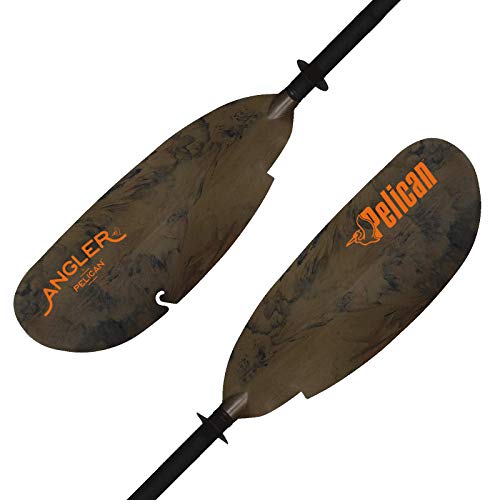
Longer reach:This high-quality paddle is extra long and sized to fit modern fishing kayaks over 34" wide.
Why Is My Fishing Kayak Cracking After Only 2 Years?
A fishing kayak cracking after just 2 years typically results from excessive UV exposure, improper storage, or manufacturing defects in the plastic. UV radiation breaks down polyethylene’s molecular structure, causing brittleness and stress cracks, especially when combined with storage on hard surfaces without proper support.
Most common causes of premature cracking:
- UV damage: Storing outdoors without a cover in direct sunlight accelerates plastic degradation by 300-400%
- Improper storage: Storing on sawhorses or racks that create pressure points causes stress cracks at support locations
- Temperature extremes: Repeated freeze-thaw cycles in cold climates can cause micro-cracks that expand over time
- Manufacturing defects: Thin spots in rotomolding, contaminated plastic, or inadequate UV stabilizers
- Over-tightening accessories: Excessive torque on screw-in rod holders or track systems creates stress concentration points
Immediate actions to take:
- Move the kayak to covered storage immediately to prevent further UV damage
- Apply marine-grade UV protectant (303 Aerospace Protectant or similar) every 3-4 months
- Store on padded cradles or suspension straps that distribute weight evenly
- Check warranty coverage—many manufacturers warranty against defects for 3-5 years
If cracks appeared within the warranty period and you’ve followed care instructions, contact the manufacturer. Many honor warranties for premature cracking caused by material defects rather than user negligence.
Prevention tip: Even budget kayaks benefit from a $30-$50 kayak cover and quarterly UV protectant application, which can extend lifespan by 3-5 years for minimal investment.
Best Fishing Kayak Brands That Last the Longest
Hobie, Native Watercraft, and Old Town consistently produce fishing kayaks that last 12-18 years with proper maintenance, thanks to premium materials, thicker hull construction, and superior UV stabilization. These brands use 6-8mm thick rotomolded polyethylene or thermoformed ABS compared to 3-5mm in budget brands.
Top durability brands and their advantages:
Hobie (15-20 year lifespan)
- Rotomolded polyethylene with extensive UV stabilizers
- MirageDrive pedal systems are rebuildable rather than replaceable
- Lifetime hull warranty on many models (conditions apply)
Native Watercraft (12-18 years)
- Roto-molded HDPE with extra thickness in high-wear areas
- First Lite material on premium models reduces weight without sacrificing durability
- Strong warranty support and readily available replacement parts
Old Town (12-16 years)
- Three-layer polyethylene construction on premium models
- Proven track record with models like the Predator series lasting 15+ years
- Good parts availability for older models
Jackson Kayak (10-15 years)
- Rotomolded polyethylene with reinforced standing areas
- Excellent customer service and repair support
- Strong resale value indicates long-term durability
Wilderness Systems (12-16 years)
- SlideTrax system allows accessory changes without drilling new holes
- AirPro MAX seating systems remain comfortable after years of use
- Thermoformed models (Radar series) offer exceptional longevity
Budget brands that punch above their weight:
- Perception: 8-12 years, good value for recreational anglers
- Lifetime: 7-10 years, basic but serviceable for casual use
- Vibe: 8-12 years, growing reputation for durability at mid-range prices
When comparing brands, check hull thickness specifications (6mm+ is ideal), warranty length (5+ years suggests manufacturer confidence), and owner reviews mentioning kayaks 10+ years old still in service.

Powerful & Responsive Propeller Drive System: Take control with our smooth kayak propeller drive system, offering hands-free power, quiet acceleration, and easy reverse maneuvering. Perfect for tight spaces, docks, or mangrove fishing
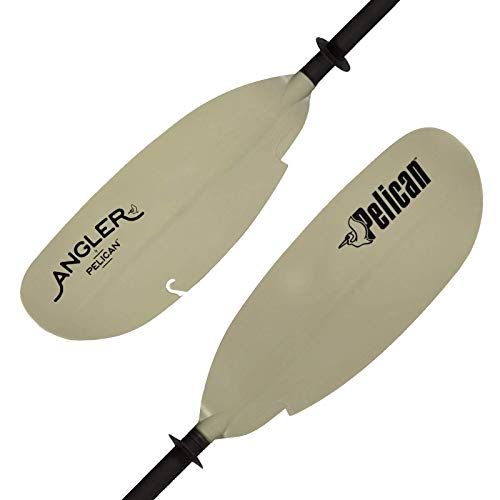
The Poseidon Angler Kayak Paddle is ideal for angler paddlers taller than 5'5". Measuring 98.5” (250cm) long, this paddle is the perfect match for wider fishing kayaks

UV-Protected HDPE Construction for Durability: Built with high-density polyethylene (HDPE) plastic, this kayak is both lightweight and highly durable, offering long-lasting protection against UV rays for years of use in various conditions. Paddle included.
How to Make Your Fishing Kayak Last Longer
Proper storage, regular cleaning, and UV protection can extend your fishing kayak’s lifespan by 3-5 years beyond the average. The three most impactful maintenance practices are storing out of direct sunlight, rinsing after every use (especially in saltwater), and applying UV protectant every 3-4 months.
Essential maintenance practices:
Storage (biggest impact on longevity):
- Store indoors, in a garage, or under a covered area whenever possible
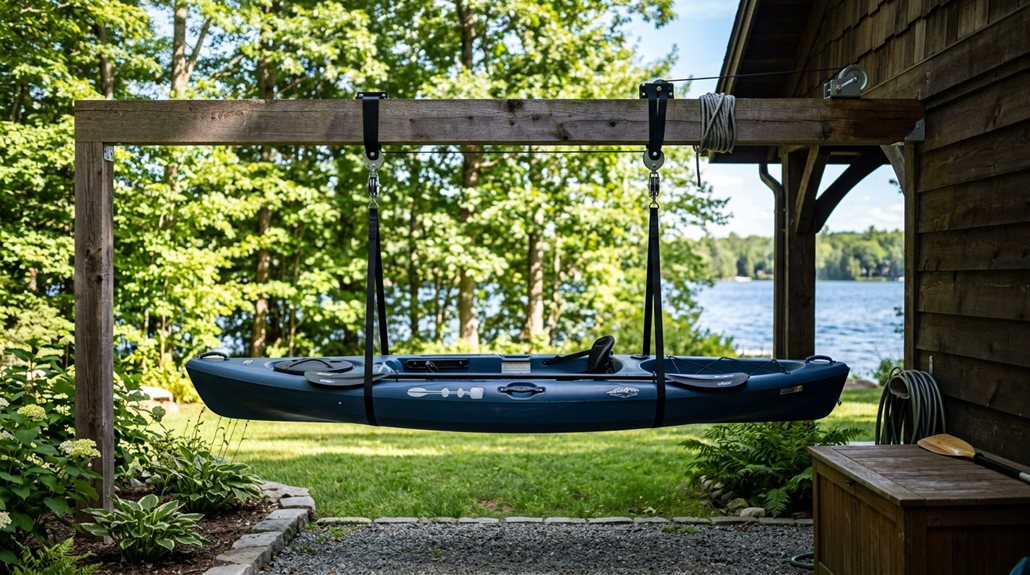
- Use padded wall racks, ceiling hoists, or suspension straps—never store flat on the ground
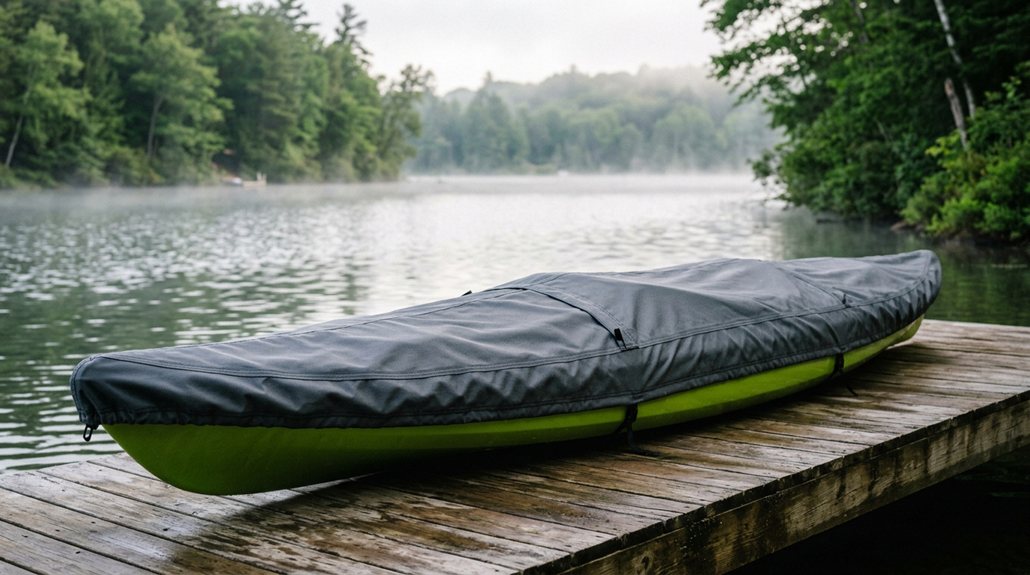
- If outdoor storage is unavoidable, use a UV-resistant kayak cover ($40-$80)
- Store in a cool, dry location away from heat sources and chemicals
Cleaning routine:
- Rinse with fresh water after every use, especially after saltwater fishing
- Use mild soap and soft brush for stubborn dirt or fish slime
- Clean scupper holes and drain plugs to prevent mold and mildew
- Dry completely before storage to prevent mildew in enclosed areas
UV protection:
- Apply 303 Aerospace Protectant or similar marine UV protectant every 3-4 months
- Focus on areas with most sun exposure: deck, hull sides, and seat areas
- Reapply after 5-6 uses or heavy rain
- Cost: $15-$20 per bottle, lasts 6-8 applications
Hardware maintenance:
- Lubricate moving parts (rudder systems, pedal drives) with marine grease annually
- Check and tighten all bolts and screws every 6 months
- Replace worn bungee cords before they snap and damage deck rigging
- Inspect scupper plugs for cracks and replace as needed ($5-$10 each)
Transport care:
- Use proper kayak straps and avoid over-tightening (causes hull deformation)
- Support kayak at multiple points during transport
- Avoid dragging kayak across pavement or gravel when possible
- Use bow and stern tie-downs for highway speeds
Common mistake: Many anglers store their kayak directly on concrete or asphalt, which absorbs and radiates heat, accelerating UV damage and causing warping. A simple $20 set of foam blocks or pool noodles under the hull prevents this issue.
Quick maintenance checklist (5 minutes after each trip):
- Rinse entire kayak with fresh water
- Open all hatches to air dry
- Remove and rinse seat and accessories
- Check for new scratches or damage
- Store in designated location out of sun
Ultimate Protection – Superior protection against UV rays, dust, dirt, salt water, and staining keeps your products looking like new by preventing fading and cracking
Ultimate Protection – 303 Marine Aerospace Protectant Provides Superior Protection Against The Sun'S Damaging Uv Rays. This Protector Spray Repels Dust, Dirt, And Staining While Also Helping To Prevent Fading And Cracking, To Keep Marine Surfaces Looking Newer, Longer.Fit Type: Universal Fit
ULTIMATE PROTECTION: Shield your outdoor products from harmful UV rays, dust, dirt, salt water, & staining with this 303 protectant. Prevents fading & cracking for long-term care.
Are Expensive Fishing Kayaks More Durable Than Cheap Ones?
Yes, expensive fishing kayaks ($1,500+) are generally more durable than budget models ($400-$800), lasting 3-7 years longer on average due to thicker materials, better UV stabilization, and superior construction quality. Premium kayaks use 6-8mm thick polyethylene versus 3-5mm in budget models, and include better hardware that resists corrosion and wear.
Durability differences between price tiers:
Budget kayaks ($400-$800):
- 3-5mm hull thickness
- Basic UV stabilizers (fade and become brittle faster)
- Lower-grade hardware prone to rust and corrosion
- Simpler seat systems that compress and fail sooner
- Expected lifespan: 7-10 years with good care
Mid-range kayaks ($1,200-$2,000):
- 5-6mm hull thickness
- Enhanced UV protection and color stability
- Stainless steel or marine-grade aluminum hardware
- Adjustable, more comfortable seating systems
- Expected lifespan: 10-15 years with good care
Premium kayaks ($2,500+):
- 6-8mm hull thickness or thermoformed construction
- Maximum UV stabilization and fade resistance
- All stainless or anodized aluminum components
- Premium seats with replaceable parts
- Expected lifespan: 12-18+ years with good care
When budget kayaks make sense:
- You fish fewer than 10 times per year
- You’re new to kayak fishing and want to test the hobby
- You have excellent storage conditions (indoor, climate-controlled)
- You plan to upgrade within 5 years anyway
When premium kayaks justify the cost:
- You fish 30+ times per year
- You fish saltwater or rough conditions regularly
- You lack ideal storage and need maximum UV resistance
- You want features like pedal drives that require durable platforms
- You plan to keep the kayak 10+ years
Cost-per-year calculation example:
- Budget kayak: $700 ÷ 8 years = $87.50/year
- Premium kayak: $2,500 ÷ 15 years = $166.67/year
The premium kayak costs roughly twice as much per year but offers significantly better performance, comfort, and features. For serious anglers, the extra $80/year is often worthwhile.
Is a Fishing Kayak Worth It If I Only Fish a Few Times a Year?
A fishing kayak is worth the investment even for occasional anglers (5-10 trips per year) because low usage frequency dramatically extends lifespan to 15-20+ years, making the cost-per-use very reasonable. A $1,000 kayak used 10 times per year for 15 years costs just $6.67 per fishing trip, less than most boat ramp fees or guide services.
Break-even analysis for occasional use:
For anglers fishing 5-10 times annually, a mid-range kayak ($1,000-$1,500) reaches cost parity with alternative fishing methods within 2-3 years:
- Kayak rental: $50-$80 per day × 10 trips = $500-$800/year
- Boat ramp + fuel (small boat): $10 ramp + $30 fuel × 10 trips = $400/year
- Kayak ownership: $1,200 initial + $50/year maintenance = $1,250 first year, $50/year after
After year three, the kayak owner has spent roughly the same as the renter but now owns an asset with 12-17 years of remaining life.
Additional benefits for occasional anglers:
- Access to fishing spots unreachable by bank or boat (shallow flats, small ponds, narrow creeks)
- No trailer, registration, or insurance costs like motorized boats
- Minimal maintenance compared to boats with engines
- Exercise and outdoor recreation beyond just fishing
- Can be shared with family members for recreational paddling
Choose a budget kayak ($600-$900) if:
- You fish fewer than 5 times per year
- You’re uncertain about long-term commitment to kayak fishing
- You have excellent storage to maximize budget kayak lifespan
- You primarily fish calm, protected waters
Choose mid-range ($1,200-$1,800) if:
- You fish 8-15 times per year
- You want comfort features for longer trips
- You may increase fishing frequency in the future
- You fish varied conditions (rivers, lakes, light saltwater)
For beginners exploring the sport, our beginner kayak fishing resources can help you get started without overspending on features you may not need yet.
Common Mistakes That Shorten Fishing Kayak Lifespan
The three most damaging mistakes that shorten fishing kayak lifespan are storing in direct sunlight without protection, dragging the kayak across abrasive surfaces, and failing to rinse after saltwater use. These practices can reduce a 15-year kayak’s life to 7-8 years.
Top lifespan-shortening mistakes:
1. Outdoor storage without UV protection
- Impact: Reduces lifespan by 40-50%
- Why it matters: UV radiation breaks down polyethylene at the molecular level, causing brittleness, fading, and cracking
- Fix: Use a UV-resistant cover ($40-$80) or store under a roof or tarp
2. Improper storage support
- Impact: Causes warping and stress cracks within 2-3 years
- Why it matters: Storing on flat ground or narrow supports creates pressure points that deform the hull
- Fix: Use padded wall racks, ceiling hoists, or wide cradles that support the hull’s natural curve
3. Skipping post-saltwater rinse
- Impact: Accelerates hardware corrosion and material degradation by 30-40%
- Why it matters: Salt crystals continue corroding metal and degrading plastic long after the trip ends
- Fix: Rinse thoroughly with fresh water within 2-3 hours of leaving saltwater
4. Over-tightening accessory mounting hardware
- Impact: Creates stress concentration points that crack over time
- Why it matters: Plastic expands and contracts with temperature; rigid mounting points can’t flex
- Fix: Tighten hardware snug but not torqued; use backing plates to distribute pressure
5. Dragging across concrete, asphalt, or gravel
- Impact: Wears through gel coat and creates scratches that become crack initiation points
- Why it matters: Deep scratches reduce hull thickness and create stress risers
- Fix: Use a kayak cart ($50-$150) or carry with a partner
6. Leaving in hot vehicles or direct sun before/after use
- Impact: Accelerates UV damage and can cause warping in extreme heat
- Why it matters: Interior vehicle temperatures can exceed 140°F, making plastic pliable and prone to deformation
- Fix: Unload kayak promptly; use reflective covers if temporary storage in sun is unavoidable
7. Neglecting small damage
- Impact: Small cracks propagate into major structural failures
- Why it matters: Stress concentrates at crack tips, causing them to grow with each use
- Fix: Repair small cracks immediately with plastic welding or marine epoxy
8. Using harsh chemicals for cleaning
- Impact: Degrades plastic surface and removes UV protection
- Why it matters: Solvents and strong detergents strip protective additives from polyethylene
- Fix: Use only mild soap and water; avoid petroleum-based cleaners
Quick prevention checklist:
- ✓ Store under cover or with UV-resistant kayak cover
- ✓ Rinse with fresh water after every use
- ✓ Apply UV protectant every 3-4 months
- ✓ Use proper storage racks or suspension system
- ✓ Transport with kayak cart when possible
- ✓ Inspect for damage after each trip
- ✓ Repair small issues immediately
Do Saltwater Fishing Kayaks Wear Out Faster Than Freshwater?
Yes, saltwater fishing kayaks typically show wear 30-40% faster than freshwater kayaks due to salt’s corrosive effects on hardware, accelerated UV damage from reflected sunlight, and harsher environmental conditions. A kayak used exclusively in saltwater may last 8-12 years versus 12-15 years for the same model used in freshwater.
Saltwater-specific wear factors:
Hardware corrosion:
- Salt accelerates oxidation of metal components (screws, tracks, hinges)
- Even stainless steel shows corrosion in saltwater environments
- Aluminum components develop galvanic corrosion when in contact with dissimilar metals
Accelerated UV exposure:
- Water reflection increases UV radiation exposure by 25-30%
- Coastal environments often have less shade than inland lakes
- Salt residue on the hull surface amplifies UV damage
Harsher conditions:
- Waves and chop create more hull flex and stress
- Oyster bars, barnacles, and sharp rocks cause more abrasion
- Tidal currents and wind increase wear on rudder and drive systems
Material degradation:
- Salt draws moisture into plastic, accelerating breakdown
- Brine can penetrate scratches and accelerate crack propagation
- Saltwater fishing often involves longer trips, increasing total exposure time
Extending saltwater kayak lifespan:
- Rinse immediately and thoroughly after every saltwater trip (most important step)
- Use marine-grade hardware when replacing components (316 stainless steel minimum)
- Apply UV protectant more frequently (every 6-8 weeks instead of quarterly)
- Inspect and lubricate moving parts monthly with marine grease
- Store indoors or under cover whenever possible
- Consider sacrificial anodes on metal components for serious saltwater use
- Flush scupper holes to remove salt buildup
- Check and replace bungee cords more frequently (salt degrades elastic)
Material choices for saltwater:
- Choose kayaks with maximum UV stabilization
- Prefer thermoformed ABS over rotomolded polyethylene for saltwater (better UV resistance)
- Avoid kayaks with exposed metal unless it’s marine-grade stainless or anodized aluminum
- Look for sealed hatches to keep salt out of storage areas
For those fishing coastal waters regularly, our ocean kayak fishing guide provides additional tips for managing saltwater-specific challenges.
Decision rule: If you fish saltwater more than 60% of the time, budget for replacement 3-4 years earlier than freshwater-only kayaks, or invest in premium materials and commit to rigorous maintenance to achieve normal lifespan.
When Should I Replace My Fishing Kayak Instead of Repairing It?
Replace your fishing kayak instead of repairing it when repair costs exceed 40-50% of a comparable new kayak’s price, when multiple structural cracks appear, or when the kayak is 12+ years old with significant wear. Safety concerns like soft spots, persistent leaks, or structural flex during use always warrant immediate replacement.
Clear replacement indicators:
Structural issues (replace immediately):
- Multiple cracks longer than 6 inches, especially in high-stress areas
- Soft spots in the hull indicating delamination or material breakdown
- Visible hull flex or oil-canning during normal use
- Persistent leaks that return after multiple repair attempts
- Warping that affects stability or tracking
Economic factors (calculate cost-benefit):
- Repair quote exceeds 40-50% of comparable new kayak price
- Multiple systems need replacement (seat, rudder, hatches) totaling $400+
- Kayak is 12+ years old and showing wear in multiple areas
- Replacement parts no longer available for discontinued models
Safety and performance concerns:
- Kayak feels unstable or handles unpredictably
- Seat mounting points are cracked or loose
- Scupper plugs no longer seal properly and can’t be replaced
- Rod holder mounts are pulling out or cracking surrounding material
- You’ve outgrown the kayak’s weight capacity or feature set
Repair vs. replace decision matrix:
Repair makes sense when:
- Single isolated crack or puncture in non-structural area
- Kayak is less than 8 years old with otherwise good condition
- Repair cost is under $200 and kayak is worth $1,000+
- Replacement parts are readily available
- Rest of kayak shows minimal wear
Replace makes sense when:
- Multiple repair issues totaling $400+
- Kayak is 12+ years old regardless of condition
- Safety concerns exist (structural integrity, stability)
- Newer models offer significant feature improvements you need
- Your fishing style has changed (need more stability, speed, or capacity)
Example scenarios:
Scenario 1: 6-year-old kayak worth $1,200 new has a 4-inch crack in the hull. Repair cost: $150. Decision: Repair. The kayak has 6-9 years of life remaining and repair cost is only 12.5% of replacement cost.
Scenario 2: 13-year-old kayak worth $800 new needs seat replacement ($180), has multiple small cracks ($200 to repair), and faded hull. Total: $380. Decision: Replace. Kayak is near end of expected lifespan, repairs cost 48% of replacement, and other issues will likely appear soon.
Scenario 3: 4-year-old premium kayak worth $2,500 has soft spot in hull. Repair quote: $600. Decision: Replace or warranty claim. Soft spots indicate material failure; check warranty first, but this is a safety issue that may recur.
When to consult a professional:
- Any structural damage you’re unsure about
- Cracks near high-stress areas (seat mounts, scupper holes)
- Damage to pedal drive or rudder mounting systems
- Suspected manufacturing defects within warranty period
If you’re approaching replacement time, reviewing a fishing kayak comparison can help you understand what features and improvements are available in current models.
How Long Do Sit-On-Top Fishing Kayaks Last vs Sit-Inside?
Sit-on-top fishing kayaks and sit-inside kayaks have similar lifespans of 10-15 years when made from comparable materials, but sit-on-top models often last longer in practice because their open design drains water automatically, preventing moisture-related damage that can affect sit-inside kayaks with enclosed cockpits.
Durability comparison:
Sit-on-top advantages:
- Self-draining design prevents water accumulation and mold
- Simpler construction with fewer sealed seams to fail
- Easier to inspect entire hull for damage
- UV exposure is more uniform (less hidden damage)
- Scupper holes allow drainage but can be plugged when needed
Sit-inside advantages:
- Protected cockpit area shields gear and lower body from UV
- Less plastic surface area exposed to sun
- Hatches protect storage compartments from water intrusion
- Lower center of gravity can reduce hull stress in rough water
Practical lifespan factors:
Most fishing kayaks are sit-on-top designs because they’re more practical for fishing applications. The open deck allows easier fish handling, gear access, and re-entry after capsizing. This design inherently resists one of the main failure modes of sit-inside kayaks: water intrusion into sealed compartments causing hidden damage.
Sit-inside kayak vulnerabilities:
- Hatch seals degrade over time, allowing water into storage areas
- Water trapped in hull can freeze in cold climates, causing cracks
- Mold and mildew in enclosed spaces if not dried properly
- Harder to detect internal damage or cracks
- Cockpit rim is a stress concentration point prone to cracking
Sit-on-top kayak vulnerabilities:
- More hull surface exposed to UV (requires more frequent protectant application)
- Scupper holes can become enlarged over time
- Seat mounting points on deck surface are exposed to more stress
- Tank wells and open storage expose gear to elements
Maintenance differences:
Sit-on-top kayaks require less maintenance because there are no hatch seals to replace, no enclosed spaces to dry, and all surfaces are easily accessible for cleaning and inspection. This simpler maintenance often translates to longer practical lifespan because owners are more likely to perform regular care.
Decision rule: For fishing applications, choose sit-on-top designs for maximum longevity and ease of maintenance. Choose sit-inside only if you fish cold water where the enclosed cockpit provides necessary warmth, and commit to thorough drying after each use.
For more details on the benefits of open-deck designs, see our guide to sit-on-top kayaks.
What Are Signs My Fishing Kayak Is Too Old to Use Safely?
A fishing kayak is too old to use safely when it shows visible cracks longer than 4-6 inches in structural areas, soft spots that flex under pressure, persistent leaks that return after repair, or significant warping that affects stability. Any of these conditions compromise structural integrity and create capsize or sinking risk.
Critical safety warning signs:
Immediate replacement required:
- Soft spots in hull: Press firmly on hull bottom and sides; any area that flexes inward or feels spongy indicates material breakdown
- Multiple structural cracks: Cracks near seat mounts, scupper holes, or along keel line
- Persistent leaking: Water intrusion that continues after multiple repair attempts
- Severe warping: Kayak rocks side-to-side on flat ground or tracks poorly in calm water
- Delamination: Visible separation of layers in multi-layer construction
- Broken or cracked seat mounts: Seat feels loose or mounting points show cracks in surrounding material
Concerning signs (inspect and monitor closely):
- Surface crazing: Fine spider-web cracks across large areas (indicates UV damage)
- Fading and chalking: Severe color loss and powdery surface (advanced UV degradation)
- Loose or missing hardware: Multiple screws, bolts, or fittings that won’t tighten properly
- Enlarged scupper holes: Holes that have stretched or cracked, allowing excessive water entry
- Cracked or brittle bungee mounts: Deck rigging attachment points breaking or pulling out
Safety inspection checklist (perform annually):
Hull integrity test:
- Inspect entire hull in bright light for cracks
- Press firmly on all surfaces checking for soft spots
- Look for stress whitening around high-load areas
- Check keel line for cracks or deformation
Structural mounting points:
- Test seat security by applying firm pressure
- Check all through-hull fittings for cracks
- Inspect rod holder mounts for movement or cracking
- Verify rudder or skeg mounting is solid
Water test:
- Launch in calm, shallow water near shore
- Check for unusual water intrusion
- Test stability compared to when kayak was newer
- Listen for unusual creaking or flexing sounds
Age and usage assessment:
- Kayak is 15+ years old regardless of condition
- Has been used 500+ times (heavy use)
- Has been stored outdoors without protection for multiple years
- Has been in multiple collisions or impacts
When to get professional assessment:
- You’re unsure about crack severity or location
- Kayak has been in storage for 3+ years unused
- You purchased a used kayak with unknown history
- Kayak is 12+ years old and you fish alone or in remote areas
Risk factors that accelerate aging:
- Fishing alone in remote locations (safety margin is critical)
- Fishing in cold water (hypothermia risk if kayak fails)
- Fishing offshore or in rough conditions
- Exceeding weight capacity regularly
- Previous repairs to structural areas
Common mistake: Many anglers continue using kayaks with “minor” cracks because they haven’t failed yet. Cracks propagate suddenly under load, and catastrophic failure often occurs during the worst possible conditions (rough water, far from shore, cold weather).
Decision rule: If you have any doubt about your kayak’s structural integrity, replace it. A new kayak costs $600-$2,500; the cost of a water rescue, hypothermia treatment, or worse is immeasurably higher. When it comes to kayak safety, err on the side of caution.
Frequently Asked Questions
How can I tell if my kayak’s plastic is getting brittle?
Press firmly on the hull with your thumb. Fresh plastic will flex slightly and return to shape. Brittle plastic will feel rigid, may show stress whitening around the pressure point, or in severe cases will crack under firm pressure. Chalky surface texture and severe fading also indicate brittleness from UV damage.
Do fishing kayaks with pedal drives last as long as paddle kayaks?
Pedal-drive kayaks have similar hull lifespans (10-15 years) but the drive mechanisms typically need rebuilding or replacement every 5-8 years depending on usage. Factor an additional $300-$800 for drive system maintenance over the kayak’s lifetime. The hull itself lasts just as long as paddle models.
Can I extend my kayak’s life by painting it?
Marine paint can add 2-3 years to a kayak’s lifespan by providing additional UV protection, but only if applied to a hull that’s still in good condition. Paint won’t repair structural damage or reverse existing UV degradation. Use marine-grade polyethylene paint and proper surface prep for best results.
How long do kayak seats last before needing replacement?
Kayak seats typically last 5-8 years before foam compression, fabric wear, or frame damage requires replacement. High-end seats with replaceable cushions can last 10+ years. Replacement seats cost $80-$300 depending on features and adjustability.
Is it worth buying a used fishing kayak that’s 8 years old?
An 8-year-old kayak can be a good value if it’s been stored indoors, shows minimal UV damage, has no cracks, and is priced at 40-50% of current new price. Inspect carefully for hidden damage and factor in that you’re buying a kayak with roughly half its lifespan remaining.
Do kayaks last longer in cold climates or warm climates?
Kayaks in moderate climates (50-80°F average) last longest. Cold climates with freeze-thaw cycles can cause cracking, while hot climates with intense sun accelerate UV damage. Proper storage matters more than climate—a well-stored kayak in Arizona can outlast a poorly stored one in Maine.
How often should I replace my kayak’s bungee cords?
Replace bungee cords every 2-4 years depending on UV exposure and usage. Cords that have lost elasticity, show fraying, or have become brittle should be replaced immediately. Replacement costs $10-$30 for materials and takes 30-60 minutes.
Can I repair a crack in my kayak myself?
Small cracks (under 3 inches) in non-structural areas can be DIY repaired using plastic welding or marine-grade epoxy. Larger cracks or those in structural areas (near seat mounts, along keel) should be professionally repaired. Improper repairs can make cracks worse and compromise safety.
Do inflatable kayaks need special storage to last longer?
Yes, inflatable kayaks should be stored partially inflated or loosely rolled (never tightly folded) in a cool, dry location away from rodents. Avoid storing in hot attics or garages where temperatures exceed 100°F. Clean and dry thoroughly before storage to prevent mold and material degradation.
How much does professional kayak repair typically cost?
Professional kayak repairs range from $100-$150 for small crack repairs to $300-$600 for major structural repairs or hull welding. Seat replacements run $150-$250 including labor. Get quotes from multiple shops and compare to replacement cost before proceeding.
What’s the best way to store a kayak for winter?
Store indoors or under cover, suspended from ceiling straps or on padded wall racks. Clean thoroughly, dry completely, and apply UV protectant before storage. Remove batteries from electronics and store seat cushions indoors. Check monthly for rodent damage if stored in garage or shed.
Are thermoformed kayaks more durable than rotomolded?
Thermoformed ABS kayaks are lighter and more rigid than rotomolded polyethylene but can be more brittle on impact. They typically last 12-18 years versus 10-15 for rotomolded, primarily due to better UV resistance. However, rotomolded kayaks handle impacts and abrasion better, making them more forgiving for rough use.
Conclusion
Understanding how long fishing kayaks last helps you make informed purchasing decisions and maximize your investment through proper care. Most quality fishing kayaks deliver 10-15 years of reliable service when stored properly, cleaned regularly, and protected from UV damage. The key factors affecting longevity are material quality, storage conditions, maintenance consistency, and usage environment.
Take these actions today to extend your kayak’s lifespan:
- Assess your current storage situation and move your kayak under cover or invest in a UV-resistant cover if stored outdoors
- Establish a post-trip routine that includes rinsing with fresh water and checking for new damage
- Purchase marine UV protectant and apply it every 3-4 months to prevent premature aging
- Inspect your kayak using the safety checklist above if it’s 8+ years old or showing signs of wear
- Budget for eventual replacement by setting aside $10-20 per month so you’re prepared when the time comes
Whether you’re shopping for your first kayak or evaluating whether your current one has more seasons ahead, remember that proper care matters more than initial price. A well-maintained budget kayak can outlast a neglected premium model. Invest time in maintenance, store your kayak properly, and you’ll enjoy many years of productive fishing from the same reliable platform.
For those ready to purchase a new kayak or upgrade from an aging model, explore our comprehensive fishing kayaks resources to find the perfect match for your fishing style and budget.