Quick Answer: Paddling with a rod in your lap requires positioning the rod horizontally across your thighs with the reel facing up, tip pointing forward over the bow, while gripping your paddle normally above the rod. This technique works best in calm water for short distances and allows instant casting access, but demands careful balance and line management to prevent tangling or rod loss.
Key Takeaways
- Position your rod horizontally across your lap with the tip forward and reel up to minimize interference with paddle strokes
- Use shorter rods (6.5-7 feet) and avoid rods with large guides that catch on clothing or paddle shaft
- Keep your paddle grip normal and stroke above the rod rather than adjusting your paddling technique
- Lap paddling works best for calm water, short distances, and situations requiring quick casting transitions
- Rod holders provide better security in rough water, during long paddles, or when you need both hands free
- Prevent line tangles by keeping your bail closed and line tight, or tucking the lure into a rod keeper
- Most experienced kayak anglers use lap carry only when actively sight-fishing or moving between nearby spots
- Check local regulations, as some jurisdictions require rods to be secured during transport
What Is the Best Way to Hold a Fishing Rod While Paddling a Kayak?
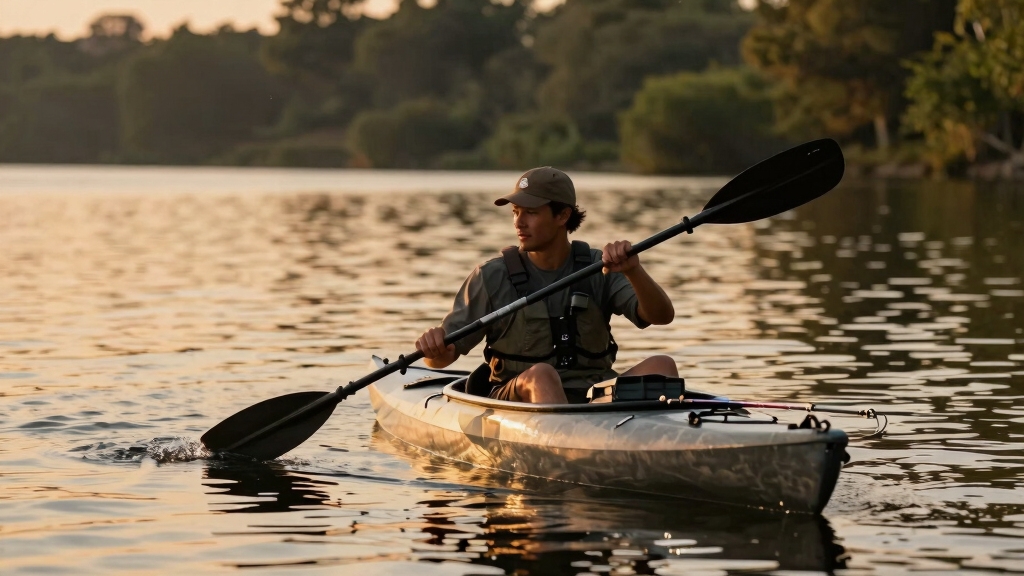
The most effective method for holding a fishing rod while paddling is to rest it horizontally across your thighs with the reel facing upward and the rod tip extending forward over the kayak’s bow. Your paddle shaft passes above the rod during each stroke, requiring no modification to your normal paddling form.
Position the rod so the butt end sits near your hip on your dominant side, with the rod angled slightly across your body. The reel should rest comfortably on your lap without digging into your legs. This orientation keeps the rod secure through friction and body contact while leaving both hands completely free for paddling.
Key positioning tips:
- Keep the rod tip pointed forward, never to the side where it can catch water or snag obstacles
- Let the rod rest in the natural valley created by your thighs when seated
- Maintain slight downward pressure with your core to prevent the rod from bouncing during strokes
- Adjust the angle so your paddle blade clears the rod tip by at least 6 inches on each stroke
Common mistake: Many beginners try to hold the rod with one hand while paddling with the other, which creates an exhausting, inefficient stroke pattern and reduces boat control. The lap-rest method keeps both hands on the paddle for proper technique.
For more foundational techniques, explore our guide to paddling skills.
How Do You Keep Your Fishing Rod Secure When Paddling Solo?
When paddling solo with a rod in your lap, security comes from proper positioning, body contact, and awareness rather than physical restraints. Wedge the rod butt against your hip or the side of the seat, press your thighs together slightly to create a cradle, and maintain consistent body posture to prevent the rod from shifting.
The rod stays in place through continuous contact with your legs and torso. Any time you lean forward, backward, or to the side, the rod can slide. Develop a habit of checking rod position every few strokes, especially when turning or adjusting your seating position.
Security techniques that work:
- Thigh squeeze method: Keep your knees slightly together to create a V-shaped channel that holds the rod in place
- Hip wedge: Tuck the rod butt firmly against your hip bone or the raised edge of your seat
- Clothing friction: Wear textured or grippy pants (not slick nylon) that increase friction with the rod blank
- Rod keeper loop: Use a small elastic loop on your deck rigging to secure the lure and keep line tension
For rough conditions: If you’re paddling through choppy water or navigating obstacles, even the best lap technique becomes risky. Switch to a rod holder or lay the rod flat on the deck and secure it with a bungee. Solo paddlers can’t afford to chase a floating rod while managing boat control.
Choose the right kayak setup for your fishing style by reviewing options for paddle kayaks versus other propulsion systems.
Paddle With Rod in Lap vs Rod Holder: Which Is Better?
Rod holders provide superior security, free up mental bandwidth, and work better for long-distance paddling or rough water, while lap carry offers faster casting transitions and better rod awareness for active sight-fishing. The best choice depends on your fishing style, water conditions, and paddling distance.
Choose lap carry when:
- You’re sight-fishing and need to cast within seconds of spotting a target
- Paddling short distances between fishing spots (under 200 yards)
- Working calm, protected water with minimal waves or current
- Using techniques that require constant rod adjustments (like twitching topwater lures)
- You want continuous tactile feedback if a fish strikes while moving
Choose a rod holder when:
- Paddling more than a quarter-mile between spots
- Navigating rough water, strong current, or boat wakes
- You need both hands free for safety, navigation, or eating/drinking
- Trolling while paddling (rod holder is essential)
- Carrying multiple rods and need organized storage
- Launching or landing through surf or rocky areas
| Factor | Rod in Lap | Rod Holder |
|---|---|---|
| Casting Speed | Instant (1-2 seconds) | Moderate (3-5 seconds) |
| Security | Moderate (requires attention) | High (locked in place) |
| Rough Water | Poor (rod can slide or fall) | Excellent (stays secure) |
| Long Paddles | Tiring (constant awareness) | Ideal (hands-free) |
| Rod Awareness | High (feel every bump) | Low (must watch rod tip) |
Hybrid approach: Many experienced kayak anglers use both methods in a single outing. They’ll paddle to a fishing area with rods in holders, then switch to lap carry once they start actively working a shoreline or flat where targets appear suddenly.
Learn more about different kayak propulsion options in our comparison of pedal vs paddle kayaks.


HIGH QUALITY - The kayak fishing rod holder Made of High Quality Material PC+ABC, strong and durable, corrosion resistant, hard to damage.
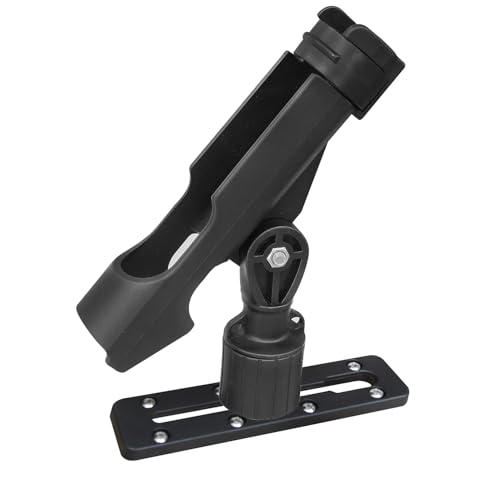
Made of UV stabilized fiberglass reinforced nylon.
Can You Paddle a Canoe With a Fishing Rod Across Your Lap Safely?
Yes, you can safely paddle a canoe with a fishing rod across your lap using the same horizontal positioning technique that works in kayaks, though canoes present unique challenges due to their higher seating position, wider beam, and different paddling stroke. The rod should rest across your thighs or the gunwales, depending on whether you’re kneeling or sitting on a seat.
Canoe paddlers typically sit higher and use a more vertical paddle stroke than kayakers, which means the paddle shaft passes closer to the rod during each stroke. Position the rod so it rests in the bottom of the canoe or across your lap with the tip angled toward the bow on the opposite side from your paddling side.
Canoe-specific considerations:
- Kneeling position: If you’re kneeling, rest the rod across the gunwales or lay it flat in the bottom of the canoe rather than across your thighs
- Seat height: Seated canoe paddlers have more lap space but less stability, making rod security more challenging in waves
- Stroke clearance: The J-stroke and other canoe-specific strokes require more paddle movement near the gunwale, increasing snag risk
- Tandem paddling: If you’re paddling with a partner, the bow paddler can safely carry a rod in lap while the stern paddler steers
Safety note: Canoes are generally less stable than fishing kayaks, so any distraction (including managing a rod in your lap) increases capsize risk. Only use lap carry in calm conditions when you’re confident in your boat control.
Why Does My Fishing Rod Keep Sliding Off My Lap When Paddling?
Rods slide off your lap primarily due to smooth clothing materials, improper rod angle, body movement during paddle strokes, and insufficient thigh contact. Slick nylon or polyester fishing pants create almost no friction with rod blanks, allowing even slight body shifts to send the rod sliding toward the water.
The rod angle matters more than most anglers realize. If the rod tip points too far to either side rather than straight forward, the rod’s natural balance point shifts and gravity pulls it toward the water. Similarly, if the butt end isn’t wedged against something solid (your hip, the seat edge, or a raised cockpit rim), there’s nothing to prevent backward slide.
Solutions that stop rod sliding:
- Wear grippy clothing: Cotton or textured synthetic pants provide much better friction than slick rain gear
- Add a foam pad: Place a thin foam pad or towel across your lap to increase friction and cushion the rod
- Check your posture: Slouching or leaning creates angles that encourage sliding; sit upright with engaged core
- Use a rod leash: Attach a coiled rod leash from the rod to a deck fitting as backup security (not primary support)
- Adjust rod length: Longer rods (over 7.5 feet) have more weight forward and slide more easily; switch to a shorter rod
Body mechanics matter: Every paddle stroke involves subtle torso rotation. If you’re rotating aggressively or reaching too far forward on each stroke, you’re constantly shifting the rod’s position. Smooth, controlled strokes with minimal upper-body twist keep the rod more stable.
Edge case: Some kayak seats have a pronounced bucket shape that tilts your pelvis backward, creating a downward slope from your hips to your knees. In these seats, lap carry is nearly impossible without constant adjustment. Consider adding a seat wedge to level your thighs or simply use a rod holder instead.
Best Kayak Setup for Paddling With Rod in Hand
The ideal kayak setup for lap paddling combines a stable platform, proper seat positioning, minimal deck clutter, and strategic rod storage options that let you switch between lap carry and secured storage instantly. A wider kayak (30+ inches) provides better initial stability for the slight weight shifts that occur when managing a rod while paddling.
Essential setup elements:
- Adjustable seat: Position your seat so your thighs are level or angled slightly upward, creating a natural cradle for the rod
- Clear deck space: Remove or relocate any deck rigging, bungees, or accessories between your lap and the bow that could snag line or guides
- Flush-mount rod holders: Install at least one rod holder within easy reach so you can quickly secure the rod when conditions change
- Rod keeper clips: Add small elastic loops or clips on your deck rigging to hold lures and keep line tension
- Textured seat pad: Use a seat cushion with grippy fabric rather than slick neoprene
Kayak characteristics that help:
- Wider beam (30-34 inches): Provides more stability when you shift weight to grab or reposition the rod
- Higher seat position: Gives you better sightlines and more natural lap space, though it reduces stability slightly
- Flat deck design: Rounded or heavily contoured decks create awkward rod angles; flat decks work better
- Recessed cockpit: A slightly lowered seating area with raised sides helps contain the rod if it starts to slide
For more on choosing the right platform, see our guide to kayak stability and kayak width considerations.

【Strong Alumium Rod Holder】- HiUmi Rod holder is constructed from PVC coated aluminum.
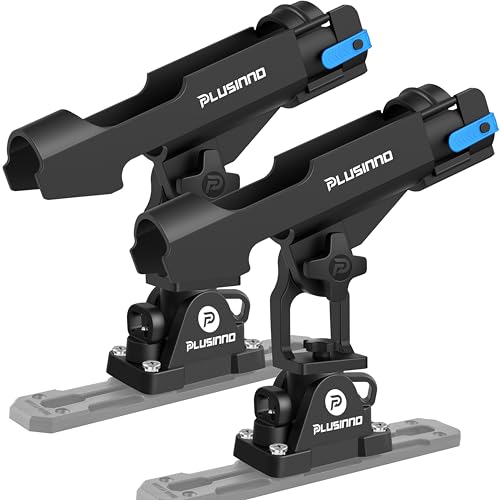
Innovative Stable Fishing Rod Holders: The rod holders for fishing boat features silicone gaskets that designed for optimal stability, maximize contact area and enhance friction, ensuring a secure and stable grip without leaving any scratches on your boat, which allows anglers to focus entirely on the thrill of the catch. A must-have boat pole holders fishing accessories for kayak fishing enthusiasts, this kayak rod holder enhances both convenience and performance on the water.

【Well Made】The kayak rod holder is made of high-quality materials, ensuring durability and resistance to corrosion. It is constructed with heavy-duty ABS material that is highly resistant to impact, making it a reliable choice for fishing enthusiasts.
Is It Safe to Paddle With a Rod in Your Lap in Rough Water?
Paddling with a rod in your lap in rough water is generally unsafe and not recommended, as waves, boat wakes, and sudden movements can easily dislodge the rod, force you to choose between boat control and rod security, and create dangerous distractions when you need full attention on navigation. In conditions with waves over 1 foot or strong current, always secure rods in holders.
Rough water demands both hands on the paddle and complete focus on boat control. The moment you reach down to adjust a sliding rod or grab it before it falls, you’ve compromised your stability and stroke power. In kayaking, most capsizes happen during transitions or distractions, not during steady paddling.
Risk factors in rough conditions:
- Wave impact: Even moderate waves create sudden vertical movements that can launch a rod off your lap
- Brace strokes: When you need to execute a quick brace to prevent capsize, the paddle movement can knock the rod loose
- Body tension: Rough water paddling requires constant core engagement and weight shifts that disrupt rod position
- Reduced visibility: In choppy conditions, you can’t safely look down to check rod position without losing awareness of incoming waves
When lap carry might work in moderate conditions:
- You’re paddling parallel to small waves (under 1 foot) rather than through them
- The rough section is very short (under 50 yards) and you can see clear water ahead
- You’re in a very wide, stable kayak (34+ inches) designed for standing
- You have extensive experience and can maintain boat control with minimal attention
Better approach: If you’re planning to paddle through or across rough water, take 30 seconds to secure your rod in a holder before entering the rough section. The time saved by lap carry is meaningless if you lose the rod or capsize trying to save it.
For more safety guidance, review our resources on paddling safety and offshore fishing safety.
How to Avoid Tangling Line When Paddling With Rod on Lap
Prevent line tangles by keeping your bail closed with the lure secured in a rod keeper or hook keeper, maintaining slight line tension, and positioning the rod so the tip stays well above any deck rigging or paddle blade path. Most tangles occur when loose line wraps around paddle shaft, rod guides, or deck bungees during the paddling motion.
The single most effective tangle prevention technique is securing your lure. Most modern rods have a small hook keeper near the reel seat. Hook your lure there, then reel down until the line is snug. This keeps the lure from swinging and prevents loose line from creating loops that catch on everything.
Tangle prevention checklist:
- ✅ Close the bail: Never paddle with an open bail unless you’re actively trolling
- ✅ Secure the lure: Use the rod’s hook keeper or a small clip on your deck rigging
- ✅ Reel tight: Take up all slack so there’s slight tension on the line
- ✅ Check guide alignment: Make sure line runs straight through all guides without wraps or twists
- ✅ Clear the deck: Remove or relocate any bungees, clips, or rigging in the paddle stroke path
- ✅ Rod tip up: Keep the tip angled upward so line stays above deck level
For lures without treble hooks: If you’re using a soft plastic or single-hook lure, you can hook it onto the rod blank itself just above the handle. This works well for quick access and keeps the lure visible so you remember what you have rigged.
Common tangle scenarios and fixes:
- Paddle shaft snag: Happens when rod tip points too far to the side; adjust angle forward
- Guide wrap: Occurs when loose line wraps around the rod during transport; always reel tight before moving
- Bungee catch: Deck bungees are tangle magnets; route them away from your paddle stroke area or remove them
Edge case for fly fishing: Fly rods present unique challenges because you can’t simply reel the fly to the rod tip. Use a stripping basket or fly fishing specific techniques to manage loose line, or switch to a rod holder for any paddle longer than a few minutes.
Do Experienced Kayak Fishermen Paddle With Rods in Their Lap?
Yes, experienced kayak anglers frequently paddle with rods in their lap, but they do so selectively in specific situations rather than as a default method. Most veteran kayak fishermen use lap carry primarily when sight-fishing, working shorelines, or making short moves between visible targets where casting speed matters more than paddling efficiency.
The key difference between experienced and novice anglers is situational awareness. Veterans assess water conditions, paddling distance, and fishing strategy before deciding whether to use lap carry or rod holders. They’re also more skilled at maintaining rod position through body awareness and can paddle effectively with a rod in lap without conscious attention.
When experienced anglers use lap carry:
- Sight-fishing for cruising fish: Redfish, carp, or bass that appear suddenly and require instant casts
- Working structure: Paddling along docks, mangroves, or weed edges where targets are visible and close
- Short hops: Moving 50-100 yards between spots in calm water
- Active jigging: Techniques that require constant rod manipulation between short paddles
- Topwater fishing: Early morning or evening sessions where explosive strikes can happen during the paddle
When they switch to rod holders:
- Any paddle over a quarter-mile
- Crossing open water or navigating channels
- Rough conditions or strong wind
- When they need to eat, drink, or adjust gear
- Launching or landing
- Any time safety or efficiency outweighs casting speed
Skill development: New kayak anglers often struggle with lap carry because they haven’t developed the core stability and paddle efficiency that makes it practical. As paddling becomes automatic, managing a rod in lap requires less conscious effort. But even experts acknowledge that rod holders are often the smarter choice.
For more advanced techniques, explore our collection of kayak fishing techniques and fishing kayak techniques.
Common Mistakes When Holding Fishing Rod While Paddling
The most frequent mistakes include using rods that are too long for lap carry, positioning the rod at awkward angles that interfere with paddle strokes, failing to secure the lure which creates tangles, and attempting lap carry in conditions that demand rod holders. These errors reduce paddling efficiency, increase rod loss risk, and create frustration that undermines the fishing experience.
Top mistakes and corrections:
1. Rod too long (over 7.5 feet)
- Problem: Long rods extend too far forward, hit obstacles, and have poor balance in your lap
- Fix: Use 6.5-7 foot rods for lap paddling; save longer rods for holder-based fishing
2. Rod angled to the side
- Problem: Creates imbalance, catches water, and interferes with paddle stroke on that side
- Fix: Always point rod tip straight forward over the bow, centered or slightly offset
3. Loose lure swinging
- Problem: Creates tangles, can hook clothing or paddle, and adds weight that destabilizes the rod
- Fix: Secure lure in hook keeper and reel tight before every paddle
4. Looking down constantly
- Problem: Checking rod position repeatedly ruins posture, slows paddling, and reduces situational awareness
- Fix: Develop tactile awareness through practice; trust body contact to hold the rod
5. Gripping the rod while paddling
- Problem: Holding rod with one hand and paddling with the other creates weak, inefficient strokes
- Fix: Rest the rod completely in your lap; use both hands on paddle for proper technique
6. Wrong clothing
- Problem: Slick rain pants or nylon shorts provide zero friction; rod slides constantly
- Fix: Wear textured or cotton-blend pants, or add a foam pad across your lap
7. Ignoring conditions
- Problem: Stubbornly using lap carry when wind, waves, or distance make it impractical
- Fix: Be honest about conditions; switch to rod holder when lap carry becomes a liability
8. No backup security
- Problem: Relying entirely on lap friction with no leash or holder backup
- Fix: At minimum, attach a rod leash to a deck fitting as insurance
What Type of Rod Works Best for Lap Paddling Technique?
Medium to medium-light action rods in the 6.5-7 foot range with moderate guide sizes and comfortable cork or EVA handles work best for lap paddling. These rods balance easily across your thighs, don’t extend too far forward to hit obstacles, and have enough flexibility to absorb the small bumps and movements that occur during paddling without feeling rigid or uncomfortable.
Ideal rod specifications:
- Length: 6.5-7 feet (7-7.5 feet maximum)
- Action: Medium or medium-light (more forgiving than fast-action)
- Power: Light to medium (matches most kayak fishing applications)
- Handle length: 18-24 inches (provides good balance point)
- Guide size: Standard or slightly smaller (large guides catch on clothing and paddle)
- Material: Graphite or composite (lighter weight reduces lap fatigue)
Why these specs matter:
Length: Rods over 7.5 feet extend too far forward, making them prone to hitting structure, catching wind, and having poor balance. Rods under 6 feet can work but sacrifice casting distance and fish-fighting leverage.
Action: Fast-action rods are tip-heavy and tend to tip forward off your lap. Medium action distributes weight more evenly along the blank, creating better balance.
Guide size: Oversized guides (common on surf rods or heavy casting rods) catch on paddle shaft, clothing, and deck rigging. Standard guides provide enough line flow for kayak fishing distances without creating snag points.
Handle design: Split-grip handles (with a gap in the middle) are lighter and provide better balance than full-length handles. The rear grip should be long enough to wedge against your hip but not so long it extends past your body.
Rods to avoid for lap paddling:
- Surf rods (9+ feet): Way too long; impossible to manage in a kayak
- Heavy flipping sticks: Tip-heavy and uncomfortable across your lap
- Ultra-light rods: Too flexible; can’t maintain position under paddle vibration
- Rods with oversized guides: Constant snag hazards
- Two-piece rods: The ferrule joint creates an awkward balance point
Best rod types for lap carry:
- Spinning rods: 6.5-7 foot medium-light for inshore species, bass, trout
- Casting rods: 7 foot medium for bass, redfish, snook
- Light conventional: 6.5-7 foot for bottom fishing or light trolling
For specific fishing applications, see our guides to inshore fishing and bass fishing from kayaks.


Beauty & Performance Rod:The contrast between the black finish and the custom shark graphics skin decorative wrap and silver features that perfectly into the blue camouflage handles.Designed with an ergonomic camouflage handle that provides a comfortable grip, reducing fatigue during long fishing sessions

Durable Construction: The Hotcast casting rod is a 6-foot 6-inch 2-piece fiberglass fishing rod designed for durability and long-lasting use.
How to Quickly Transition From Paddling to Casting With Rod in Lap
The fastest transition from paddling to casting involves a three-step sequence: stop forward momentum with a reverse stroke, set your paddle across the kayak in front of you or in paddle clips, then grip the rod and cast in one smooth motion. With practice, this transition takes 2-3 seconds from final paddle stroke to lure in the water.
Step-by-step transition technique:
- Spot your target while still paddling (don’t wait until you stop)
- Execute one reverse stroke to kill forward momentum and stabilize the kayak
- Place paddle across your lap in front of the rod, or secure it in paddle clips if your kayak has them
- Grip the rod handle with your dominant hand while your other hand steadies the paddle
- Stand or position for the cast (if your kayak allows standing)
- Cast immediately while the kayak is stable and positioned
Pro tips for faster transitions:
- Pre-position your body: As you approach a target, shift your weight and rotate your torso toward the casting direction during the last few paddle strokes
- Use paddle clips: Deck-mounted paddle clips let you secure the paddle instantly without looking down
- Practice the motion: Rehearse the transition on land or in calm water until it becomes automatic
- Keep lure ready: Always have your lure secured but ready to cast (not buried in a tackle box)
- Choose your angle: Approach targets so your casting side faces the fish, minimizing body rotation needed
Common transition mistakes:
- Dropping the paddle: Letting the paddle fall into the water creates noise and wastes time retrieving it
- Rushing the cast: Casting before the kayak stabilizes leads to poor accuracy and balance issues
- Wrong approach angle: Approaching with your off-side toward the target forces awkward cross-body casts
- Forgetting to stop: Trying to cast while still gliding forward ruins accuracy and can create tangles
Alternative for very quick casts: Some experienced anglers develop a one-handed cast technique where they briefly hold both paddle and rod in their hands simultaneously, make a short flip cast, then immediately return to paddling. This works only for short-distance pitches (under 20 feet) and requires significant practice.
After the cast: Once you’ve cast, decide immediately whether to set the paddle down completely and fish, or make a quick retrieve and return to paddling. Avoid the inefficient middle ground of holding both paddle and rod awkwardly while trying to do both tasks poorly.
Are There Laws About Paddling With Unsecured Fishing Rods?
Most jurisdictions do not have specific laws prohibiting paddling with unsecured fishing rods in your lap, but some states and local authorities include fishing rods under general “secured load” or “safety equipment” regulations that require all gear to be properly stowed during transport. Additionally, some areas restrict the number of rods you can have “in use” simultaneously, which may affect how you carry multiple rods.
Regulatory considerations:
Federal waters: No specific federal regulations address rod security in kayaks, though Coast Guard safety equipment requirements apply to all vessels including kayaks.
State regulations: A few states include language in their boating codes about securing equipment to prevent it from becoming a hazard or falling overboard. These rules rarely specify rods explicitly but could theoretically apply.
Local ordinances: Some heavily-trafficked waterways, urban areas, or wildlife refuges have local rules about fishing methods, equipment, and safety that may include rod storage requirements.
Fishing license rules: Most states limit the number of rods you can actively fish with (typically 1-3 rods per angler). A rod in your lap with a lure attached generally counts as “in use,” so carrying multiple rods this way could violate rod limits.
Practical legal concerns:
- Liability: If your unsecured rod falls overboard and creates a hazard (hooks another boater, for example), you could face liability even without a specific rod-security law
- Marine patrol discretion: Conservation officers and marine patrol can cite kayakers for “unsafe operation” if they determine your gear setup creates a hazard
- Protected areas: National parks, wildlife refuges, and marine sanctuaries often have stricter rules about fishing methods and equipment
Best practice: Even where no specific law requires it, using rod holders or leashes for expensive rods is smart risk management. A $300 rod isn’t worth losing over a 30-second paddle through rough water.
Check before you go: Review your state’s boating and fishing regulations, particularly sections on:
- Number of rods allowed per angler
- Required safety equipment for kayaks
- Specific rules for the water body you’re fishing
For more on fishing regulations, see our guide to fishing without a license (where it’s legal) and kayak laws by state.
FAQ
Can you paddle a kayak with one hand while holding a rod?
You can paddle briefly with one hand while holding a rod, but it’s inefficient, tiring, and reduces boat control significantly. This technique works only for very short distances (under 50 feet) in calm water. For any real paddling distance, rest the rod in your lap and use both hands on the paddle for proper stroke mechanics and boat control.
What happens if your rod falls in the water while paddling?
If your rod falls overboard, stop paddling immediately and assess whether you can safely retrieve it. Floating rods (with foam grips or attached floats) will stay on the surface briefly. Use your paddle to pull it closer, then carefully lean and grab it while maintaining three points of contact with the kayak. If the rod sinks or drifts out of reach, let it go rather than risking a capsize.
Should you use a rod leash when paddling with rod in lap?
A rod leash provides valuable backup security and is recommended for expensive rods, rough conditions, or any time you’re paddling in deep water where a dropped rod would be unrecoverable. However, leashes can create tangles and snag hazards, so use a short (3-4 foot) coiled leash attached to a secure deck fitting, not to your body or PFD.
How do you paddle with two rods in your lap?
Paddling with two rods in your lap is impractical and not recommended. If you need to carry multiple rods while paddling, secure one or more in rod holders and keep only your primary rod in your lap. Attempting to balance two rods across your thighs creates constant shifting, increases tangle risk, and makes effective paddling nearly impossible.
Does rod weight matter for lap paddling?
Yes, rod weight matters significantly for lap paddling comfort and security. Lighter rods (under 5 ounces) stay in position more easily and cause less fatigue during long sessions. Heavy rods (over 7 ounces) tend to slide more easily and can become uncomfortable pressing against your thighs. Choose the lightest rod that still provides adequate power for your target species.
Can you stand up to cast with a rod that was in your lap?
Yes, if your kayak is designed for standing, you can transition from lap carry to standing and casting. Set your paddle down first, ensure the kayak is stable, then grip the rod and stand using your normal stand-up technique. The lap carry position actually facilitates faster stand-and-cast transitions than retrieving a rod from a holder because the rod is already in your hands.
What’s the best way to practice lap paddling with a rod?
Practice lap paddling in calm, shallow water close to shore using an inexpensive rod or a rod without hooks attached. Focus on maintaining rod position through body awareness rather than constantly looking down. Paddle straight lines, practice turns, and simulate quick stops and starts. Gradually increase difficulty by adding light chop or longer distances once you’re comfortable with the basics.
Should beginners start with lap carry or rod holders?
Beginners should start with rod holders until they develop solid paddling skills and boat control. Lap carry adds complexity and distraction that can interfere with learning proper paddle technique and kayak handling. Once you’re comfortable paddling, maneuvering, and managing your kayak in various conditions, then experiment with lap carry in easy situations.
How do you prevent rod tip damage when paddling with rod in lap?
Prevent tip damage by keeping the rod tip elevated above deck level, avoiding overhanging branches or structure, and never letting the tip drag in the water. The rod should angle upward slightly from your lap so the tip is at least 2-3 feet above the water surface. When approaching docks, bridges, or tight spaces, either secure the rod in a holder or hold it vertically until you’re clear.
Can you paddle with a rod in your lap while wearing a PFD?
Yes, wearing a PFD (which you should always do) doesn’t significantly interfere with lap paddling. The PFD sits on your torso above your lap, so it doesn’t affect rod position. However, bulky PFDs can make it slightly harder to look down and see the rod, so you’ll rely more on tactile awareness to monitor rod position.
What’s the maximum wind speed for safe lap paddling?
Lap paddling becomes impractical and potentially unsafe in winds above 10-12 mph, especially if wind creates waves or chop. Strong wind can catch the rod tip like a sail, making it difficult to keep the rod in position and affecting your paddle strokes. In winds above 15 mph, always secure rods in holders and focus entirely on boat control and safety.
How do you manage a fish strike while paddling with rod in lap?
When a fish strikes while you’re paddling with a rod in your lap, immediately stop paddling, set your paddle down or secure it in clips, grip the rod firmly, and set the hook. The advantage of lap carry is that you feel the strike instantly through the rod in contact with your body. React quickly but don’t rush, as hurried hook sets often fail or pull the hook free.
Conclusion
Paddling with a rod in your lap is a practical technique that offers instant casting access and enhanced rod awareness, but it works best in specific situations: calm water, short distances, and active sight-fishing scenarios where speed matters more than paddling efficiency. The key to success lies in proper rod positioning (horizontal across your thighs, tip forward), appropriate gear selection (6.5-7 foot rods with balanced action), and honest assessment of conditions.
Your next steps:
- Assess your fishing style: If you primarily paddle long distances to reach fishing spots, invest in quality rod holders rather than relying on lap carry
- Practice in safe conditions: Before attempting lap carry in real fishing situations, practice in calm, shallow water close to shore
- Choose the right rod: If you plan to use lap carry regularly, select a 6.5-7 foot rod with medium action that balances well
- Develop situational awareness: Learn to recognize when conditions (wind, waves, distance) make rod holders the smarter choice
- Add backup security: Install at least one rod holder and consider using rod leashes for expensive rods
Remember that even experienced kayak anglers use lap carry selectively, not as a default method. The goal isn’t to paddle with a rod in your lap all the time, but to have the skill available when the situation calls for it. Master both lap carry and rod holder techniques, then choose the right tool for each fishing scenario you encounter.
Start with short practice sessions, gradually build your skills and confidence, and always prioritize safety and boat control over casting convenience. With experience, you’ll develop the body awareness and judgment to know exactly when lap paddling makes sense and when it’s time to secure that rod and focus on getting where you’re going.