Water reflects up to 80% of UV radiation back onto your skin, doubling your sun exposure compared to land-based activities. For kayak anglers spending hours on open water, understanding how to avoid sunburn on the water isn’t just about comfort—it’s about preventing skin damage that accumulates with every fishing trip. The combination of direct overhead sun and reflected rays from the water surface creates a uniquely harsh environment that demands specific protection strategies.
Key Takeaways
- Water reflects 10-80% of UV rays depending on conditions, significantly increasing sun exposure compared to land
- SPF 50+ broad-spectrum, water-resistant sunscreen should be reapplied every 80 minutes when actively fishing
- UPF-rated fishing shirts (UPF 50+) provide more reliable protection than sunscreen alone for extended trips
- Cloudy days still transmit 80% of UV radiation, making sun protection necessary regardless of weather
- Zinc oxide physical sunscreens stay effective longer in water than chemical formulas
- Wet clothing loses most of its sun protection ability, dropping to as low as UPF 3-7
- Face shields, buffs, and wide-brimmed hats protect areas commonly missed by sunscreen application
- The first 15 minutes after a sunburn starts, cooling measures can reduce inflammation severity
Why Do You Burn Faster on the Water Than on Land?
You burn faster on water because the surface acts as a mirror, reflecting 10-80% of UV radiation back onto your skin while you simultaneously receive direct rays from above. This double exposure means you’re getting hit from two angles—the sun overhead and the reflection below—effectively doubling your UV dose compared to standing on grass or pavement, which reflects only 2-5% of UV rays.
The reflection intensity varies with water conditions. Calm, glassy water on a bright day reflects the most UV radiation, while choppy water scatters rays in multiple directions but still bounces significant amounts back at you. The angle of the sun also matters: midday sun (10 a.m. to 4 p.m.) creates the strongest reflection because rays hit the water at a steeper angle.
Additional factors that increase burn risk on water:
- Evaporative cooling – The breeze and water spray make you feel cooler than you actually are, masking the heat warning signs that would normally prompt you to seek shade
- Extended exposure time – Kayak fishing trips often last 4-8 hours with minimal shade breaks
- Altitude on elevated lakes – UV exposure increases 8-10% for every 1,000 feet of elevation
- Proximity to the equator – Southern waters receive more intense UV radiation year-round
For those interested in water safety beyond sun protection, understanding environmental factors helps you prepare for full-day fishing trips.
What SPF Should I Use for Boating and Kayak Fishing?
Use SPF 50+ broad-spectrum sunscreen for kayak fishing and boating activities. SPF 50 blocks approximately 98% of UVB rays, while SPF 30 blocks about 97%—the difference seems small, but that extra 1% matters during 6-8 hour fishing sessions with reflected UV exposure. Broad-spectrum coverage protects against both UVB rays (which cause burning) and UVA rays (which cause aging and deeper skin damage).
SPF 30 is the minimum acceptable level for any water activity, but it requires more frequent reapplication and offers less margin for error if you miss spots or apply too thinly. Most people apply only 25-50% of the recommended amount, which effectively cuts the SPF rating in half.
SPF selection guide for different conditions:
- Full-day offshore fishing (8+ hours): SPF 70-100 for maximum protection
- Morning or evening sessions (2-4 hours): SPF 50 minimum
- Overcast days: SPF 30-50 (UV penetrates clouds)
- Shaded areas of boat/kayak: SPF 30 minimum (reflected rays still reach you)
Choose “water-resistant” formulas rated for 80 minutes rather than 40 minutes. The 80-minute rating means the sunscreen maintains its SPF level for that duration during water exposure, though you should still reapply every 80 minutes or after toweling off.

ORIGINAL SPF 50 SUNSCREEN LOTION . This is the stuff we use every day. It's the formula that started it all. People say it smells like summer. We like that. Whether we're spending a lazy day at the beach or just hangin' out, our Original formula is definitely our fav.

SWEAT & WATER READY — Designed to stay on so you can play on, this effective SPF 50 sunscreen is water, sweat, and heat resistant

SPF sun protection: Oil-free broad spectrum SPF 50 sunscreen spray with Helioplex technology that delivers UVA/UVB protection from sunburn and harsh summer elements
Waterproof vs Water-Resistant Sunscreen: Which Is Better for Kayaking?
Water-resistant sunscreen is the correct choice for kayaking because “waterproof” sunscreen doesn’t actually exist—the FDA banned that term in 2011 since no sunscreen stays fully effective indefinitely in water. Water-resistant formulas are rated for either 40 or 80 minutes of water exposure, with the 80-minute version being far superior for kayak fishing.
An 80-minute water-resistant sunscreen maintains its labeled SPF protection for that duration while you’re sweating or exposed to water spray. After 80 minutes, the protection level drops significantly, requiring reapplication. The 40-minute version loses effectiveness twice as fast, making it impractical for serious fishing sessions.
What makes a sunscreen water-resistant:
- Film-forming polymers that create a water-repellent barrier on skin
- Oil-based carriers that don’t wash off as easily as water-based lotions
- Thicker consistency that adheres better during activity
- Silicone compounds that provide a protective layer
Common mistake: Assuming water-resistant means you can skip reapplication. Even 80-minute formulas need refreshing after the rated time, after toweling your face, or if you capsize and get fully submerged. For tips on staying upright, check out guidance on kayak balance.
The water-resistant rating only applies if you apply the proper amount: 1 ounce (a shot glass full) for your entire body, or about a nickel-sized dollop for your face alone.

SPF sun protection: Broad spectrum SPF 70 sunscreen lotion with Helioplex technology that delivers UVA/UVB protection from sunburn and harsh summer elements
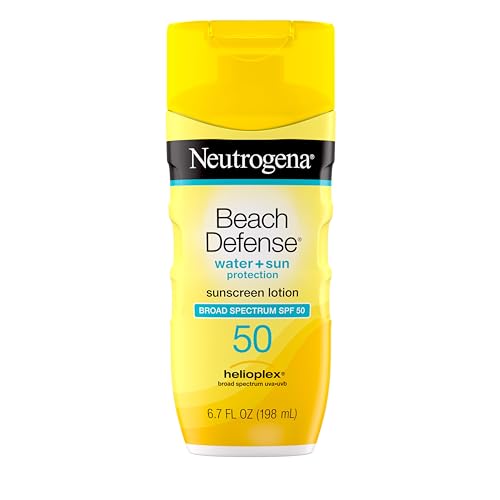
One, 6.7 fl oz bottle of Neutrogena Beach Defense Face & Body Sunscreen Lotion with SPF 50. Get ready for fun in the sun with this lightweight and PABA-free sunscreen, great for extended sun exposure and a beach vacation essential

SAFE, NATURAL PROTECTION: Thinksport sunscreen provides effective sun protection for athletes, sports and active use. The broad spectrum UVA & UVB sport sunscreen is suitable for sensitive skin
How Often to Reapply Sunscreen When Swimming and Fishing
Reapply sunscreen every 80 minutes during active kayak fishing, or immediately after any full-body water immersion, heavy sweating, or toweling off your face and arms. The 80-minute guideline assumes you’re using an 80-minute water-resistant formula and haven’t physically removed it through friction or submersion.
In practice, most kayak anglers should reapply every 60-90 minutes to account for real-world conditions. When you’re casting, paddling, and handling fish, you’re constantly touching your face, wiping sweat, and creating friction that degrades the sunscreen barrier faster than laboratory testing conditions.
Reapplication triggers beyond time:
- After capsizing or swimming (immediate reapplication needed)
- After wiping your face with a towel or buff
- After noticing your skin feels hot or looks pink
- When transitioning from shaded to open water
- After eating or drinking (reapply around mouth and chin)
Quick reapplication technique for kayak fishing:
- Secure your paddle and stabilize your kayak
- Apply sunscreen to one arm, then switch hands
- Do your face, neck, and ears
- Apply to legs if wearing shorts
- Don’t forget the tops of your feet and hands
- Wait 15 minutes before the next water exposure for best absorption
Keep your sunscreen in a waterproof dry bag or cooler, as heat above 85°F can degrade the active ingredients. A small 3-ounce travel bottle in your PFD pocket makes reapplication more convenient than digging through your kayak fishing gear.
Best Sunscreen for Fishing All Day
The best sunscreen for all-day fishing is a zinc oxide or titanium dioxide mineral formula with SPF 50+, 80-minute water resistance, and a sport or stick formulation that won’t run into your eyes when you sweat. Mineral (physical) sunscreens sit on top of your skin and reflect UV rays rather than absorbing them, making them more stable during extended sun exposure and less likely to break down over time.
Zinc oxide provides the broadest spectrum protection of any single active ingredient, blocking both UVA and UVB rays effectively. It also stays active longer in direct sunlight compared to chemical sunscreens, which can degrade after 2-3 hours of intense UV exposure even if they haven’t washed off.
Top features for all-day fishing sunscreen:
- Stick or thick lotion format – Won’t drip into eyes during activity
- Tinted formulas – Reduce the white cast of zinc oxide while adding a visual indicator of coverage
- Fragrance-free – Scented sunscreens can spook fish and attract insects
- Non-greasy finish – Prevents slippery hands when handling rods and fish
- Reef-safe ingredients – Important for saltwater kayak fishing in protected areas
Application strategy for 8+ hour trips:
Apply a base layer 15-30 minutes before launching, then reapply high-wear areas (face, neck, ears, hands) every 80 minutes. For body areas covered by UPF clothing, you can skip reapplication entirely, which is why serious anglers combine sunscreen with sun-protective clothing rather than relying on sunscreen alone.
Sunscreen sticks work exceptionally well for facial reapplication because you can apply them with one hand while keeping the other on your paddle, and they won’t contaminate your fishing line or lures with lotion residue.

POWERFUL MINERAL SUN PROTECTION - Protect sensitive skin from the sun's harmful rays with Blue Lizard Sensitive Mineral SPF 50 Sunscreen for sensitive skin. It contains no harsh chemical active ingredients that might irritate sensitive skin

100% MINERAL SUN PROTECTION: Get broad spectrum SPF 30 coverage powered by a Zinc Oxide formula. This mineral-active sunscreen provides effective protection from UVA and UVB rays without the use of chemical UV filters like oxybenzone or octinoxate.

ZINC OXIDE-ONLY SUNSCREEN - Protect sensitive skin with Blue Lizard Sensitive Mineral Sunscreen Stick SPF 50. Formulated with Zinc Oxide, this face sunscreen stick contains no harsh chemical active ingredients that might irritate sensitive skin
Is Zinc Oxide Better Than Chemical Sunscreen for Water Sports?
Zinc oxide is generally better than chemical sunscreen for water sports because it provides immediate protection upon application, remains photostable (doesn’t break down in sunlight), and adheres to wet skin more effectively. Chemical sunscreens require 15-20 minutes to absorb and activate, and many formulations degrade after 2-3 hours of intense UV exposure, requiring reapplication based on time in sun rather than just water exposure.
Physical blockers like zinc oxide and titanium dioxide create a reflective barrier on your skin surface that bounces UV rays away. This barrier works immediately and doesn’t depend on chemical reactions that can be disrupted by heat, sweat, or water. For kayak anglers who might forget to apply sunscreen early enough before launching, this immediate protection is a significant advantage.
Zinc oxide advantages for kayaking:
- Works instantly (no waiting period)
- Doesn’t sting if it gets in your eyes
- Less likely to cause skin irritation or allergic reactions
- Remains effective longer in direct sunlight
- Visible on skin, so you can see where you’ve applied it
- Doesn’t wash off as easily in water
Chemical sunscreen advantages:
- Lighter, less visible on skin (no white cast)
- Easier to spread and more cosmetically elegant
- Often less expensive
- Better for very dark skin tones where white cast is noticeable
Common mistake: Assuming all mineral sunscreens are created equal. Look for formulas with at least 20% zinc oxide concentration for adequate protection. Lower concentrations may not provide the full SPF rating claimed on the bottle.
For maximum protection during serious fishing sessions, many anglers use a zinc oxide stick on their face (where sun exposure is most intense and reapplication is most frequent) and a chemical sunscreen on their body (where the white cast would be more noticeable and coverage is often supplemented by clothing).
Do You Still Need Sunscreen on a Cloudy Day on the Boat?
Yes, you absolutely need sunscreen on cloudy days because clouds block only 20-30% of UV radiation, allowing 70-80% to reach your skin. Overcast conditions create a false sense of security since you don’t feel the heat of direct sunlight, but UVA rays (which cause long-term skin damage and aging) penetrate clouds almost completely.
Cloudy-day sunburns are particularly common among kayak anglers because the cooler temperatures and lack of visible sun make it easy to forget protection. The water reflection effect still occurs on overcast days, meaning you’re still getting hit with reflected UV rays from below even when the sky is gray.
UV transmission by cloud cover:
- Thin, scattered clouds: 80-90% UV transmission (minimal protection)
- Overcast with visible sun position: 60-80% UV transmission
- Heavy, dark storm clouds: 40-60% UV transmission
- Dense fog: 30-50% UV transmission
You can still get a significant sunburn during a 6-hour fishing trip under heavy clouds, especially on the water where reflection adds to your exposure. The UV Index (available in most weather apps) provides a better guide than visual cloud cover—any reading above 3 requires sun protection.
Cloudy-day protection strategy:
Apply SPF 30-50 sunscreen even on overcast days, focusing on areas that receive the most exposure: face, neck, ears, and the backs of your hands. You might reduce reapplication frequency slightly (every 2 hours instead of 80 minutes) if you’re not sweating heavily, but don’t skip it entirely.
For anglers who fish in variable conditions, understanding water sports safety includes recognizing that UV protection is necessary regardless of temperature or cloud cover.
Can You Get Sunburned Through a Wet Shirt?
Yes, you can definitely get sunburned through a wet shirt because water dramatically reduces fabric’s UV protection. A regular cotton t-shirt that provides UPF 5-7 when dry drops to UPF 3 or lower when wet, blocking less than 70% of UV rays and allowing significant radiation to reach your skin.
The water fills the spaces between fabric fibers, allowing UV rays to pass through more easily. Dark colors and tighter weaves offer slightly more protection when wet than light colors and loose weaves, but even a wet black t-shirt provides inadequate protection for extended sun exposure.
UV protection of common wet fabrics:
- Wet cotton t-shirt: UPF 3-4 (blocks ~70-75% of UV)
- Wet polyester shirt: UPF 4-6 (blocks ~75-83% of UV)
- Wet UPF-rated fishing shirt: UPF 30-50 (blocks 96-98% of UV)
- Dry cotton t-shirt: UPF 5-7 (blocks ~83-86% of UV)
This is why serious kayak anglers invest in UPF-rated fishing shirts made from synthetic fabrics specifically engineered to maintain their sun protection when wet. These shirts use tightly woven fibers and UV-absorbing treatments that remain effective even when soaked.
Common mistake: Thinking that staying wet will keep you cool and protected. While evaporative cooling does help with heat, wet regular clothing actually increases your sunburn risk. If you’re wearing standard clothing and get wet, either change into dry clothes or apply sunscreen directly to the skin under the wet fabric.
For those who fish in conditions where getting wet is inevitable, proper cold water clothing and sun-protective layers become essential parts of your safety gear.
Do I Need Sunscreen If I’m Mostly in the Shade on the Boat?
Yes, you still need sunscreen in shaded areas of your boat or kayak because UV rays reflect off the water surface and reach you from below and from the sides. Shade blocks direct overhead sun but doesn’t eliminate the 10-80% of UV radiation bouncing off the water around you. You might reduce your burn risk by 50-60% in shade compared to direct sun, but that still leaves substantial exposure during a full-day trip.
The amount of UV exposure you receive in shade depends on several factors: the size of the shaded area, the reflectivity of surrounding surfaces, and the time of day. A small bimini top on a boat surrounded by open water provides less protection than a large canopy, and midday sun creates more intense reflections than early morning or late afternoon angles.
Shade protection reality:
- Under a bimini or canopy: Still receiving 30-50% of full UV exposure from reflection
- Under trees near shore: Receiving 10-20% of full UV exposure (much better protection)
- Inside a cabin with windows: Receiving 5-15% of UV exposure (UVA penetrates glass)
- Completely enclosed space: Near-zero UV exposure
Adjusted protection strategy for shade:
Apply SPF 30 sunscreen to exposed skin even in shaded areas, focusing on your face, neck, and arms. You can extend reapplication intervals to every 2-3 hours instead of 80 minutes, but don’t skip it entirely. Many anglers get asymmetrical sunburns—one side of their face or one arm—from reflected rays hitting them while they thought they were protected by shade.
The backs of your legs, if you’re sitting, often receive significant reflected UV even under a canopy because they’re angled toward the water surface. This is a commonly overlooked area that results in painful burns.
Common Mistakes People Make With Sunscreen on Boats
The most common sunscreen mistake on boats is applying too little product—most people use only 25-50% of the recommended amount, which cuts the effective SPF in half. You need one full ounce (about a shot glass full) to cover your entire body, or approximately a nickel-sized dollop just for your face. Skimping on application creates thin, uneven coverage with gaps that allow UV rays through.
Top sunscreen mistakes kayak anglers make:
- Forgetting ears, neck, and feet – These areas burn easily and are frequently missed during application
- Applying sunscreen after launching – You’re already getting UV exposure during rigging and loading
- Not waiting for absorption – Chemical sunscreens need 15-20 minutes to become effective
- Storing sunscreen in hot areas – Heat above 85°F degrades active ingredients
- Using expired sunscreen – Most formulas lose effectiveness after 2-3 years
- Applying over insect repellent – Sunscreen should go on first, then bug spray after 10-15 minutes
- Skipping reapplication – Assuming one morning application lasts all day
- Missing the hairline and part – Scalp burns are extremely painful
The “missed spots” problem:
The backs of your hands, the rims of your ears, your eyelids, the back of your neck under your collar, and the tops of your feet (if wearing sandals) are the most commonly missed areas. These spots often burn severely because they receive both direct and reflected UV exposure.
Better application technique:
Apply sunscreen in a well-lit area before you leave home, using a mirror to check coverage on your face and neck. Have a fishing partner check your back and shoulders if you’re wearing a tank top. Keep a small stick sunscreen in your PFD pocket specifically for quick touch-ups on commonly missed areas.
For comprehensive preparation, review your fishing kayak safety gear checklist to ensure sun protection is integrated with your other safety equipment.
Best Clothing for Sun Protection While Kayaking
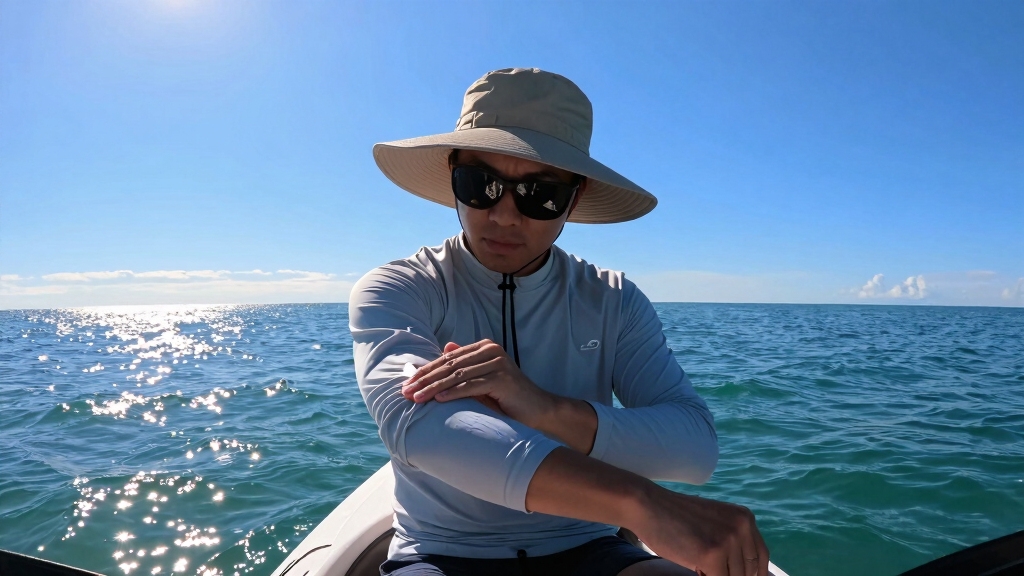
The best clothing for sun protection while kayaking includes UPF 50+ rated long-sleeve fishing shirts, lightweight pants or leggings, a wide-brimmed hat with neck flap, and a face shield or buff. UPF (Ultraviolet Protection Factor) clothing provides more reliable, longer-lasting protection than sunscreen because it doesn’t wash off, doesn’t require reapplication, and covers large areas of skin consistently.
UPF 50+ fabric blocks 98% of UV radiation, equivalent to SPF 50+ sunscreen but without the hassle of reapplication. Quality fishing shirts use synthetic fabrics (polyester, nylon, or specialized blends) that wick moisture, dry quickly, and maintain their UV protection even when wet—unlike regular cotton clothing.
Essential sun-protective clothing for kayak fishing:
- Long-sleeve UPF 50+ fishing shirt – Protects arms, shoulders, and upper back; choose light colors to reflect heat
- Lightweight UPF pants or leggings – Protects legs from both sun and hook accidents
- Wide-brimmed hat (3-4 inch brim) – Shades face, ears, and neck; choose one with a chin strap so it won’t blow off
- Neck gaiter or buff with UPF rating – Protects neck, can be pulled up over nose and lower face
- Fingerless sun gloves – Protects backs of hands while maintaining dexterity for fishing
- Polarized sunglasses with UV400 rating – Protects eyes and surrounding skin; reduces glare for better fish spotting
Fabric features to look for:
- Moisture-wicking – Pulls sweat away from skin for evaporative cooling
- Ventilated panels – Mesh sections under arms and on back for airflow
- Antimicrobial treatment – Reduces odor during long trips
- Quick-dry – Returns to dry state within 30-60 minutes after getting wet
Common mistake: Wearing dark-colored UPF clothing in hot weather. While dark fabrics do block UV slightly better than light colors, the heat absorption makes them uncomfortable. Light-colored UPF 50+ clothing provides excellent protection while reflecting heat, keeping you cooler during summer fishing.
The combination of UPF clothing and strategic sunscreen application (face, ears, hands) provides better protection with less hassle than trying to cover your entire body with sunscreen every 80 minutes. For anglers who fish inshore saltwater or other high-exposure environments, this clothing-first approach is essential.
How to Protect Your Face From Sun Reflection Off Water
Protect your face from water reflection by combining a wide-brimmed hat, zinc oxide sunscreen on high-exposure areas (nose, cheeks, ears), polarized sunglasses, and a face shield or buff that covers your lower face and neck. The face receives UV radiation from three angles—direct overhead sun, reflection from the water, and scatter from the sky—making it the most vulnerable area for sunburn.
A wide-brimmed hat (3-4 inches all around) blocks direct overhead rays but doesn’t stop reflection from below. That’s why you need the layered approach: the hat reduces direct exposure by 70-80%, sunscreen blocks what gets through, and polarized glasses protect the delicate skin around your eyes while reducing glare.
Face protection strategy:
- Start with a base layer – Apply zinc oxide stick sunscreen to nose, cheekbones, ears, and forehead
- Add a wide-brimmed hat – Choose one with a dark underside to reduce reflection from below
- Use polarized UV400 sunglasses – Protects eyes and reduces squinting (which causes wrinkles)
- Add a face shield or buff – Covers lower face, neck, and can be pulled up over nose
- Reapply sunscreen to exposed areas – Every 80 minutes, focus on nose and cheekbones
Hat selection for maximum protection:
Choose a hat with at least a 3-inch brim all the way around (not just a front bill like a baseball cap). A neck flap or cape that drapes over your neck and ears provides additional coverage. Light-colored hats reflect heat but dark undersides on the brim reduce glare bouncing up into your face from the water.
The “nose and ears” problem:
Your nose sticks out and catches both direct and reflected rays, making it the most burn-prone area on your face. Your ears, especially the tops and backs, receive intense exposure and are often forgotten during sunscreen application. Use a zinc oxide stick to create a thick, visible barrier on these high-risk areas, and reapply every time you wipe your face.
Face shields and buffs:
Modern face shields made from UPF 50+ fabric can be worn multiple ways: as a neck gaiter, pulled up over your nose and mouth like a mask, or draped over your head under your hat for full face coverage. They’re particularly useful during midday when sun angles create the most intense reflection. Choose moisture-wicking fabrics that won’t feel suffocating in hot weather.
For anglers who practice stand-up kayak fishing, face protection becomes even more critical since standing elevates you closer to the direct sun and changes the angle of water reflection hitting your face.
What to Do If You Get Sunburned While Out on the Water
If you get sunburned while still on the water, immediately cover the affected area with clothing or a towel, apply cool water (not ice) to reduce inflammation, take an anti-inflammatory medication like ibuprofen if available, and seek shade or head back to shore. The first 15-30 minutes after a burn begins are critical for minimizing damage—early intervention can reduce the severity of inflammation and blistering.
Sunburn damage continues to develop for 12-24 hours after initial exposure, so stopping further UV exposure as soon as you notice redness is essential. Even if you’re in the middle of a great fishing session, protecting burned skin from additional exposure will prevent a minor burn from becoming a severe one.
Immediate on-water treatment:
- Cover the burned area – Use a long-sleeve shirt, towel, or any fabric to block further UV exposure
- Apply cool water – Splash or soak the area with water from your cooler or the lake (if freshwater)
- Take ibuprofen or aspirin – Reduces inflammation if taken within the first few hours
- Drink extra water – Sunburn draws fluid to the skin surface, increasing dehydration risk
- Head for shade or shore – Don’t try to tough it out for several more hours
What NOT to do:
- Don’t apply ice directly to sunburned skin (can cause additional damage)
- Don’t apply petroleum jelly, butter, or oil-based products (traps heat)
- Don’t pop blisters if they form (increases infection risk)
- Don’t apply more sunscreen to already-burned skin (can cause irritation)
After returning to shore:
Take a cool shower or bath, apply aloe vera gel or a moisturizer with aloe, continue taking anti-inflammatory medication for 24-48 hours, and stay out of the sun completely for at least 2-3 days. Severe burns with blistering, fever, or chills require medical attention.
Prevention after a burn:
Once you’ve been sunburned, that skin is more vulnerable to future burns for several weeks. When you return to fishing, use extra protection on previously burned areas: higher SPF sunscreen, more frequent reapplication, and clothing coverage whenever possible.
Many kayak anglers keep a basic first-aid kit that includes aloe vera gel, ibuprofen, and extra clothing for sun emergencies. For comprehensive safety planning, review kayak fishing safety guidelines that address multiple risk factors beyond sun exposure.
Does Being in the Water Cool You Down Enough to Skip Sunscreen?
No, being in the water does not reduce your need for sunscreen—it actually increases your burn risk because water removes sunscreen from your skin while the cooling effect masks the warning signs of overexposure. The evaporative cooling from wet skin makes you feel comfortable even as UV radiation continues damaging your skin, leading to severe burns that you don’t notice until hours later.
Water temperature has no effect on UV radiation intensity. You can get a severe sunburn while swimming in cold water because UV rays penetrate water and continue hitting your skin even when you’re submerged. In fact, UV rays can penetrate up to 3 feet below the water surface, meaning snorkeling or swimming just below the surface still exposes you to significant radiation.
Why the cooling effect is dangerous:
Your body’s natural warning system for sun overexposure is heat sensation. When you feel hot, you naturally seek shade or cover up. But when you’re wet and cool from evaporation or water immersion, you don’t feel that heat warning, so you stay exposed much longer than you would if you were dry and uncomfortable.
The wet skin problem:
Wet skin is actually more susceptible to UV damage than dry skin. Water droplets on your skin can act as tiny magnifying glasses, focusing UV rays and intensifying exposure in small spots. This is why you sometimes see unusual burn patterns after a day on the water—small, intense spots where water droplets concentrated the radiation.
Protection strategy for in-and-out water activities:
Apply water-resistant SPF 50+ sunscreen before entering the water, reapply immediately after exiting and toweling off, and wear a UPF-rated rash guard or swim shirt for extended water time. If you’re frequently in and out of the water (like when wade fishing or swimming between fishing spots), plan to reapply sunscreen every 40-80 minutes depending on your formula’s water-resistance rating.
For anglers who combine kayaking with swimming or wade fishing, understanding the interaction between water exposure and sun protection is crucial. Those interested in shallow water kayaking often encounter situations where they’re partially submerged while fishing, requiring extra attention to sun protection.
FAQ
How long does it take to get sunburned on the water?
You can start getting sunburned on the water in as little as 10-15 minutes during peak sun hours (10 a.m. to 4 p.m.) if you have fair skin and no protection. The water’s reflection doubles UV exposure compared to land, significantly reducing the time to burn. Darker skin types have more natural protection but can still burn within 30-60 minutes without sunscreen.
Can you get sunburned through your kayak?
No, you cannot get sunburned through the solid material of your kayak, but you can get burned from UV rays reflecting off the water around your kayak and bouncing up under any shade structures. The kayak itself blocks direct rays from below, but reflected rays from the surrounding water surface still reach your skin from the sides and front.
What SPF do dermatologists recommend for water activities?
Dermatologists recommend SPF 50+ broad-spectrum, water-resistant sunscreen for water activities. The American Academy of Dermatology specifically advises choosing formulas rated for 80 minutes of water resistance and reapplying every 80 minutes or immediately after swimming, toweling off, or heavy sweating.
Is spray sunscreen effective for kayak fishing?
Spray sunscreen can be effective for kayak fishing if applied correctly, but most people don’t use enough product. You must spray until the skin appears wet, then rub it in thoroughly to ensure even coverage. Spray sunscreens are convenient for reapplication but often provide thinner, less consistent coverage than lotions or sticks. Wind can also blow away product before it reaches your skin.
Do you need to reapply sunscreen if you don’t get wet?
Yes, you should reapply sunscreen every 2 hours even if you don’t get wet, because UV exposure gradually breaks down the active ingredients in chemical sunscreens. Mineral sunscreens (zinc oxide, titanium dioxide) are more photostable but still need reapplication due to sweat, touching your face, and friction from clothing or gear.
Can you get vitamin D while wearing sunscreen?
Yes, you can still produce vitamin D while wearing sunscreen, though at a reduced rate. SPF 30 sunscreen blocks about 97% of UVB rays but allows 3% through, which is enough for vitamin D synthesis during extended outdoor exposure. Most dermatologists recommend getting vitamin D from diet or supplements rather than intentional sun exposure without protection.
What’s the best sunscreen for sensitive skin while fishing?
The best sunscreen for sensitive skin is a mineral formula with zinc oxide or titanium dioxide as the only active ingredients, fragrance-free, and free of chemical UV filters like oxybenzone or avobenzone. Zinc oxide is less likely to cause irritation or allergic reactions and works immediately upon application without requiring absorption into the skin.
How do you remove waterproof sunscreen after fishing?
Remove waterproof sunscreen by washing with a gentle oil-based cleanser or micellar water first to break down the water-resistant barrier, then following with regular soap and water. A double-cleanse method ensures complete removal, which is important because leaving sunscreen on overnight can clog pores and cause breakouts.
Can sunscreen contaminate fishing water or harm fish?
Some sunscreen ingredients, particularly oxybenzone and octinoxate, can harm aquatic ecosystems and coral reefs. Choose reef-safe, biodegradable sunscreens with mineral active ingredients (zinc oxide or titanium dioxide) when fishing in sensitive waters. Many coastal areas now ban certain sunscreen chemicals to protect marine life.
What should you do if sunscreen gets in your eyes while fishing?
If sunscreen gets in your eyes, rinse immediately with clean fresh water for several minutes, blinking frequently to flush out the product. Don’t rub your eyes, as this can spread the sunscreen and cause more irritation. Use artificial tears or saline solution if available. Mineral sunscreens typically cause less eye irritation than chemical formulas.
Is there sunscreen that won’t make your hands slippery for fishing?
Yes, look for sport or “dry-touch” formulas specifically designed for athletes, or use a sunscreen stick on your hands instead of lotion. Some anglers apply sunscreen to the backs of their hands only, leaving palms bare for better grip, or wear fingerless UPF gloves that eliminate the need for hand sunscreen entirely.
How much sunscreen should you bring for a full day of kayak fishing?
Bring at least 3-4 ounces of sunscreen for a full day of kayak fishing if you’re relying primarily on sunscreen for protection. You need approximately 1 ounce per application for full body coverage, and you should reapply 3-4 times during an 8-hour trip. Bringing extra ensures you won’t run out and can share with fishing partners if needed.
Conclusion
Learning how to avoid sunburn on the water requires a multi-layered approach that combines proper sunscreen selection and application with UPF-rated clothing, strategic shade use, and awareness of how water reflection intensifies UV exposure. The key is understanding that water-based activities create a uniquely challenging sun environment where you’re receiving radiation from multiple angles—direct overhead sun, reflection from the water surface, and scatter from the sky.
Your action plan for sun-safe kayak fishing:
- Invest in UPF 50+ clothing – A long-sleeve fishing shirt, pants, wide-brimmed hat, and face shield provide reliable protection that doesn’t wash off or require reapplication
- Choose the right sunscreen – SPF 50+ mineral formula with 80-minute water resistance for exposed skin areas
- Apply generously and early – One ounce for full body coverage, applied 15-30 minutes before launching
- Set a reapplication schedule – Every 80 minutes or after any water immersion, focusing on face, neck, ears, and hands
- Don’t trust your comfort level – The cooling effect of water and breeze masks overexposure; protect yourself even when you feel comfortable
- Prepare for cloudy days – UV radiation penetrates clouds; maintain protection regardless of weather
The most successful approach combines clothing as your primary defense with sunscreen as backup for areas that can’t be covered. This strategy reduces the amount of sunscreen you need, decreases reapplication frequency, and provides more consistent protection throughout your fishing day.
Start implementing these sun protection strategies on your next kayak fishing trip. Your skin will thank you not just tomorrow, but decades from now when you’ve avoided the cumulative damage that leads to premature aging and skin cancer. Sun protection isn’t just about preventing painful burns—it’s about preserving your ability to enjoy fishing for years to come.