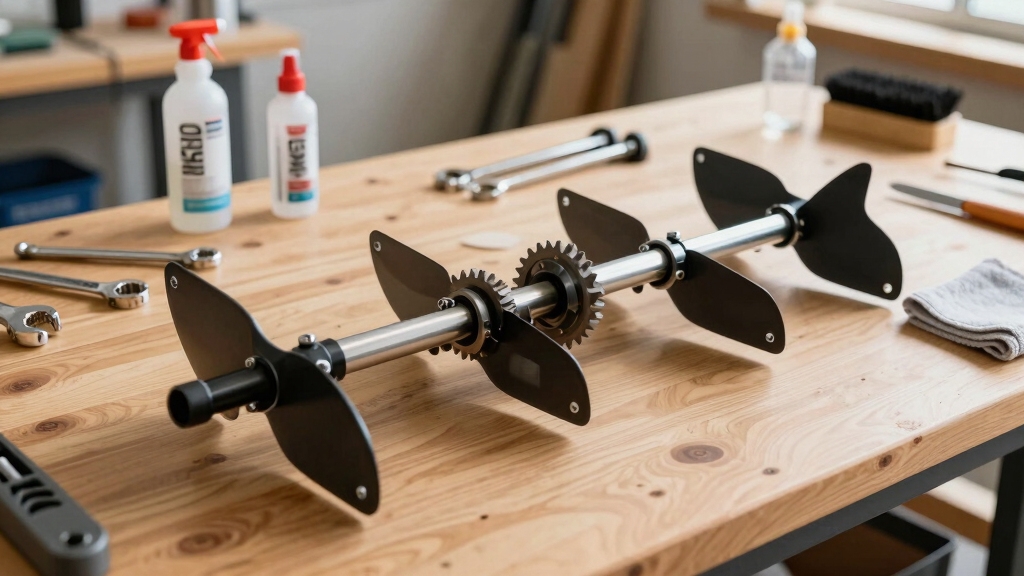
A well-maintained pedal drive system can last 10-15 years, but neglecting routine care can reduce that lifespan by half and leave you stranded mid-trip. A proper pedal drive maintenance schedule includes post-trip rinses, monthly lubrication, seasonal deep cleans, and annual inspections of critical wear components like fins, gears, and seals.
Key Takeaways
- Rinse after every trip to prevent saltwater corrosion and debris buildup, especially in saltwater environments
- Monthly lubrication of moving parts extends component life and maintains smooth pedaling action
- Seasonal deep cleaning (every 3-4 months) prevents hidden damage and catches wear before failure
- Annual professional inspection recommended for complex systems or heavy users (100+ trips/year)
- Saltwater requires 2-3x more frequent maintenance than freshwater due to corrosion and marine growth
- DIY maintenance saves $150-300 annually compared to professional service for routine tasks
- Skipping maintenance voids most manufacturer warranties and can lead to $400-800 repair bills
- Replacement parts typically needed every 2-5 years depending on usage intensity and environment
- Beginners can handle 80% of maintenance tasks with basic tools and manufacturer guides
- Common mistakes include over-greasing, using wrong lubricants, and ignoring unusual sounds
What Is a Pedal Drive Kayak Maintenance Schedule
A pedal drive kayak maintenance schedule is a structured timeline of cleaning, inspection, and servicing tasks designed to keep your pedal drive system functioning reliably and extend its operational lifespan. The schedule typically divides tasks into four categories: after-trip care (rinse and visual check), monthly maintenance (lubrication and detailed inspection), seasonal deep cleaning (disassembly and thorough servicing), and annual professional evaluation.
Most manufacturers provide baseline schedules, but your actual maintenance frequency depends on three primary factors: water type (saltwater accelerates corrosion 3-5 times faster than freshwater), usage intensity (weekly anglers need more frequent service than occasional paddlers), and environmental conditions (sandy, weedy, or debris-filled waters increase wear).
A typical schedule for moderate freshwater use looks like this:
- After every trip: Fresh water rinse, wipe down, visual inspection (5-10 minutes)
- Every 4-6 trips or monthly: Lubricate pivot points, check cable tension, inspect fins (20-30 minutes)
- Every 3-4 months or 30-40 trips: Partial disassembly, deep clean, replace worn seals (1-2 hours)
- Annually or every 80-100 trips: Full inspection, professional service if needed, replace consumable parts
Saltwater users should double the frequency of lubrication and deep cleaning tasks. If you fish in areas with heavy vegetation or sand, add mid-trip checks to remove debris before it damages internal components.
How Often Should I Service My Pedal Drive System
Service frequency for your pedal drive kayak depends primarily on how often you use it and where you paddle. For freshwater anglers who fish 2-3 times per month, a thorough monthly service combined with post-trip rinses covers most needs, while saltwater enthusiasts should service their drives every 2-3 weeks regardless of trip frequency.
Freshwater maintenance timeline:
- Light use (1-2 trips/month): Service every 6-8 weeks
- Moderate use (3-5 trips/month): Service every 3-4 weeks
- Heavy use (8+ trips/month): Service every 2 weeks
Saltwater maintenance timeline:
- Light use (1-2 trips/month): Service every 3-4 weeks
- Moderate use (3-5 trips/month): Service every 2 weeks
- Heavy use (8+ trips/month): Service weekly
Beyond these baseline schedules, certain conditions trigger immediate service needs. If you notice resistance when pedaling, hear grinding or clicking sounds, experience reduced speed, or see visible corrosion or damage, service your drive immediately regardless of your last maintenance date.
Choose weekly service if:
- You fish exclusively in saltwater
- You regularly encounter heavy vegetation or sand
- You notice any performance changes
- You’re preparing for a multi-day fishing trip
Stick with monthly service if:
- You paddle primarily in clean freshwater
- You use your kayak recreationally (under 10 trips/month)
- Your drive shows no signs of wear or performance issues
The most common mistake is waiting for problems to appear before servicing. Preventive maintenance costs 10-15 minutes every few weeks, while reactive repairs can sideline your kayak for days and cost hundreds of dollars.
Pedal Drive vs Mirage Drive Maintenance Differences
Pedal drive systems and Hobie MirageDrive systems share similar maintenance principles but differ in component complexity and service procedures. MirageDrive systems use a unique fin-based propulsion with fewer moving parts exposed to water, while traditional pedal drives typically feature propeller or paddle-wheel designs with more external components vulnerable to damage and fouling.
MirageDrive-specific maintenance:
- Fins require inspection for cracks and stress points every 10-15 trips
- Mast and spring assemblies need annual replacement or professional inspection
- The drive unit pops out easily for quick cleaning without tools
- Fewer lubrication points (mainly the pedal pivot and drive shaft)
- Less vulnerable to fishing line tangles but more sensitive to impact damage
Traditional pedal drive maintenance:
- Propellers or paddle wheels need frequent debris removal
- More lubrication points including gears, cables, and pivot assemblies
- Often requires tools for removal and disassembly
- More susceptible to line wraps and vegetation tangles
- Typically more robust against impact but requires more frequent cleaning
Both systems benefit from the same core maintenance schedule, but MirageDrive users can often extend time between deep cleans by 30-40% in freshwater environments due to the enclosed design. However, MirageDrive replacement parts (especially fins and mast assemblies) typically cost 20-30% more than comparable propeller-based system components.
If you’re deciding between systems, consider that MirageDrive requires less frequent hands-on maintenance but demands more careful handling to avoid fin damage, while traditional pedal drives need more regular attention but tolerate rougher conditions better.

Check Compatibility Before Buying – Designed for Hobie Mirage Drive GT and V2 standard non-Kick-Up drive systems only. NOT compatible with MD180, 180, Kick-Up, 360, Pro Angler 360, or systems requiring full-length turbo mast rods. Verify your drive model before ordering.

【Fully Rubber-Encased Fins for Enhanced Durability】 Constructed with a solid rubber exterior, our upgraded turbo fins are engineered for superior strength and longevity. Unlike standard plastic-and-rubber designs, these fins are compatible with Hobie kayaks' Classic & GT Drives, they offer full rubber encapsulation for better resistance to wear, cracks, and deformation.

🛶 Heavy-Duty Third-Party Fins for Hobie Classic & GT Drives 🛶 (Not compatible with Kick-Up Drives) Upgrade your Hobie experience without breaking the bank. These third-party fins are built for serious use—battle-tested on our Fishing Tours with over a year of near-daily abuse and still going strong.
How Much Does Pedal Drive Maintenance Cost
DIY pedal drive maintenance costs $50-150 annually for supplies and replacement parts, while professional service runs $150-400 per year depending on service frequency and system complexity. The biggest cost difference comes from whether you handle routine maintenance yourself or pay a shop for every service interval.
Annual DIY maintenance budget:
- Marine-grade grease and lubricants: $15-25
- Cleaning supplies (brushes, degreasers): $10-20
- Replacement seals and O-rings: $15-30
- Consumable parts (pins, clips, small hardware): $10-25
- Optional: replacement fins or propeller blades: $40-120 (every 2-3 years)
Professional service costs:
- Basic cleaning and inspection: $50-80 per visit
- Full service with lubrication: $80-120 per visit
- Seasonal deep clean and adjustment: $120-180
- Parts replacement (labor): $40-80 plus parts cost
- Emergency repairs: $150-300+ depending on damage
Most fishing kayak enthusiasts find that learning basic maintenance saves $200-350 annually compared to professional service for routine tasks. However, annual professional inspection remains worthwhile even for DIY maintainers, as technicians can spot wear patterns and potential failures that casual users might miss.
Budget for professional service if:
- You lack mechanical aptitude or confidence
- Your warranty requires documented professional maintenance
- You own a complex or high-end system (over $1,500)
- You fish commercially or depend on your kayak for income
DIY maintenance makes sense if:
- You’re comfortable with basic mechanical tasks
- You want to understand your equipment thoroughly
- You fish frequently and need immediate service capability
- You enjoy hands-on gear care
The break-even point typically occurs around 3-4 professional service visits per year. If your schedule requires more frequent service, DIY maintenance becomes significantly more cost-effective.
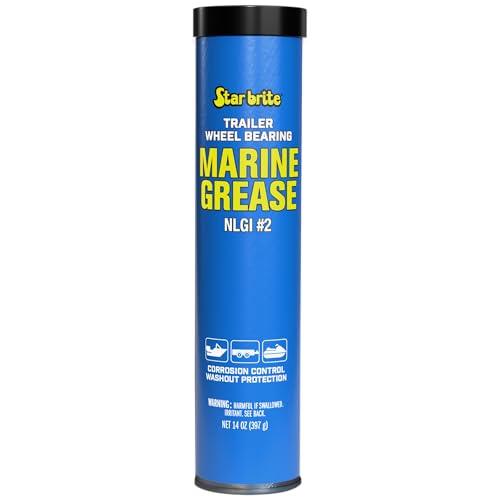
MARINE-GRADE PROTECTION: Specifically formulated to protect trailer wheel bearings from marine corrosion, salt water, and atmospheric chemicals

Food grade silicone grease,odorless and colorless,no chemical contamination to drinking water.Retains its consistency in temperatures from -40° to 400° f,no pigment for clean use

UNIVERSAL APPLICATION: Simplify maintenance with a versatile grease tube in both a 14oz or 3oz size that excels in protecting trailers, wheel bearings, hitch ball and marine machinery. The ultimate high temp marine bearing grease cartridge solution
Pedal Drive Not Working Smoothly: What to Check
When your pedal drive feels stiff, makes unusual noises, or loses power, start with the three most common culprits: debris in the propulsion system, insufficient lubrication, or cable tension issues. These account for roughly 80% of performance problems and can usually be diagnosed and fixed in 15-30 minutes.
Immediate troubleshooting checklist:
Check for debris – Remove the drive unit and inspect propeller/fins for fishing line, vegetation, or sand. Even small amounts of line wrapped around the shaft can cause significant resistance.
Inspect lubrication points – Dry or sticky pivot points create friction. Apply marine grease to pedal pivots, drive shaft connections, and any visible moving parts.
Test cable tension – Loose or overly tight cables cause uneven pedaling. Most systems have adjustment points near the pedal assembly or drive mount.
Look for visible damage – Cracked fins, bent propeller blades, or damaged gears require replacement before continued use.
Listen for specific sounds – Grinding indicates gear damage, clicking suggests loose hardware, and squeaking points to dry bearings or pivots.
Common issues and quick fixes:
- Stiff pedaling in one direction: Usually indicates debris wrap or cable imbalance. Remove drive and check both directions of rotation.
- Intermittent resistance: Often caused by sand or grit in bearings. Requires disassembly and thorough flushing.
- Reduced speed despite normal effort: Check for damaged or worn propeller/fins, or inspect for partial debris blockage.
- Pedals feel loose or sloppy: Tighten cable tension or check for worn pivot bushings that need replacement.
If basic troubleshooting doesn’t resolve the issue, avoid forcing the system. Continued use with mechanical problems can transform a $20 fix into a $300 repair. When in doubt, remove the drive unit and paddle back, then diagnose thoroughly on shore.
For persistent problems after cleaning and lubrication, the issue likely involves internal components (gears, bearings, or seals) that require partial disassembly or professional service.
Best Alternative to Pedal Drive Kayaks for Low Maintenance
Traditional paddle kayaks remain the lowest-maintenance option for anglers who prioritize simplicity, requiring only basic hull care and paddle maintenance with virtually no mechanical components to service. For those who want propulsion assistance without pedal drive complexity, electric trolling motors offer a middle ground with minimal maintenance beyond battery care and occasional propeller cleaning.
Maintenance comparison by propulsion type:
Paddle kayaks:
- Maintenance time: 5-10 minutes per trip (rinse and dry)
- Annual costs: Under $30 (hull cleaner, paddle care)
- Complexity: Minimal, no mechanical skills required
- Downside: Requires constant physical effort, limits hands-free fishing
Electric trolling motors:
- Maintenance time: 10-15 minutes per trip (rinse, battery check)
- Annual costs: $50-100 (battery maintenance, occasional propeller replacement)
- Complexity: Low, basic electrical knowledge helpful
- Downside: Battery weight, limited runtime, recharging required
Pedal drives:
- Maintenance time: 20-40 minutes monthly plus post-trip care
- Annual costs: $50-150 DIY, $150-400 professional
- Complexity: Moderate mechanical skills beneficial
- Downside: Most maintenance-intensive, highest initial cost
Choose paddle kayaks if you fish short sessions (under 3 hours), prioritize gear simplicity, or paddle primarily in shallow or heavily vegetated waters where pedal drives struggle. Electric motors work well for anglers who want hands-free positioning without mechanical complexity, especially in calm waters where battery life isn’t limiting.
However, for serious fishing kayak enthusiasts who spend 4+ hours on the water regularly, pedal drives still offer the best combination of hands-free operation, extended range, and speed despite higher maintenance demands. The key is matching your propulsion choice to your fishing style, mechanical comfort level, and willingness to perform regular upkeep.
Is Pedal Drive Maintenance Good for Beginners or Experienced Kayakers
Pedal drive maintenance is accessible to beginners willing to follow manufacturer instructions and invest 30-60 minutes learning basic procedures, though experienced kayakers typically complete tasks faster and catch potential problems earlier. Roughly 80% of routine maintenance requires no specialized skills beyond the ability to follow step-by-step guides, use basic hand tools, and recognize when professional help is needed.
Beginner-friendly maintenance tasks:
- Post-trip rinsing and wiping (anyone can do this)
- Visual inspections for obvious damage or debris
- Basic lubrication of accessible pivot points
- Simple debris removal from propellers or fins
- Tightening loose hardware with provided tools
Tasks that benefit from experience:
- Diagnosing unusual sounds or performance changes
- Adjusting cable tension for optimal performance
- Partial disassembly for deep cleaning
- Identifying wear patterns that predict future failures
- Knowing when to replace parts versus continuing use
The learning curve for pedal drive maintenance is gentler than many beginners expect. Most manufacturers provide detailed video tutorials and illustrated guides that walk through every maintenance step. After 3-4 complete maintenance cycles, most users feel confident handling routine care independently.
Beginners should:
- Start with manufacturer-provided maintenance videos
- Take photos during first disassembly to aid reassembly
- Join online forums or local kayak fishing groups for advice
- Schedule first annual service with a professional to learn proper techniques
- Keep a simple maintenance log to track service dates and observations
Experienced kayakers gain advantages through:
- Faster problem diagnosis from pattern recognition
- Confidence to tackle more complex repairs
- Better understanding of how usage affects wear
- Ability to perform field repairs during trips
- Knowledge of when to push equipment versus when to replace parts
The most important factor isn’t experience level but rather willingness to learn and follow procedures carefully. A methodical beginner who reads instructions thoroughly often achieves better maintenance outcomes than a careless experienced user who skips steps or rushes through service.
Do I Need Professional Service or Can I Maintain Pedal Drive Myself
Most fishing kayak owners can handle 70-80% of pedal drive maintenance themselves with basic tools and manufacturer guides, but annual professional inspection remains valuable for catching hidden wear and validating your DIY maintenance quality. The decision between DIY and professional service depends on your mechanical confidence, available time, warranty requirements, and system complexity.
You can confidently DIY if:
- You’re comfortable following detailed instructions
- You own basic hand tools (screwdrivers, pliers, Allen keys)
- You have a clean workspace for disassembly
- Your system is relatively simple (single-speed, basic design)
- You fish frequently enough to justify learning the skills
Consider professional service if:
- Your warranty requires documented professional maintenance
- You own a complex or high-end system (over $2,000)
- You lack mechanical aptitude or interest
- You have limited time for maintenance
- You’ve experienced repeated problems despite DIY efforts
A hybrid approach works well for many anglers: handle routine cleaning, lubrication, and simple inspections yourself, but schedule annual professional service for thorough evaluation and complex adjustments. This strategy saves money on frequent routine tasks while ensuring expert eyes review your system periodically.
Essential tools for DIY maintenance:
- Marine-grade grease and lubricant spray
- Soft-bristle brushes (old toothbrushes work well)
- Bucket or tub for soaking components
- Basic hand tool set (screwdrivers, Allen keys, pliers)
- Clean rags or microfiber towels
- Optional: pressure washer with low-pressure nozzle
- Optional: work stand to hold kayak at comfortable height
Most manufacturers design modern pedal drives with user maintenance in mind, providing tool-free or simple-tool removal systems and clear service documentation. If you’re unsure about your abilities, start with basic post-trip cleaning and gradually expand your skills as confidence grows.
The break-even point for learning DIY maintenance typically occurs after 2-3 professional service visits. Once you’ve invested time learning the procedures, you’ll save both money and the inconvenience of scheduling and transporting your kayak for routine service.


Handy, portable grease gun for use with 8 oz. tubes of 2-4-C or Extreme Grease

PREMIUM FORMULA: Made with mineral base oils and advanced additives for superior lubrication and long-lasting protection.
Common Mistakes When Maintaining Pedal Drive Systems
The most frequent pedal drive maintenance mistake is over-lubricating moving parts, which attracts sand and debris that accelerate wear rather than prevent it. Apply grease sparingly to pivot points and wipe away excess, using only marine-grade lubricants specifically designed for underwater applications.
Top maintenance mistakes to avoid:
1. Using automotive grease instead of marine-grade lubricant
Automotive products wash away quickly in water and don’t protect against saltwater corrosion. Always use lubricants labeled for marine or underwater use.
2. Pressure washing at high settings
High-pressure water forces debris deeper into bearings and seals, causing more damage than it prevents. Use low pressure (under 1,500 PSI) or hand-rinse with a hose.
3. Ignoring unusual sounds or resistance
Small problems become expensive repairs when ignored. Address performance changes immediately rather than hoping they’ll resolve themselves.
4. Storing drives wet or in enclosed spaces
Trapped moisture promotes corrosion and mold growth. Always dry components thoroughly and store in ventilated areas.
5. Skipping post-trip rinses after saltwater use
Salt crystals continue corroding metal components for days after exposure. Rinse within 2-3 hours of leaving saltwater, or sooner in hot weather.
6. Over-tightening hardware during reassembly
Excessive torque strips threads and cracks plastic components. Tighten until snug, then add a quarter turn—if it feels tight, it probably is.
7. Using the wrong cleaning chemicals
Harsh degreasers and solvents damage seals, O-rings, and plastic components. Stick to mild dish soap or marine-specific cleaners.
8. Neglecting cable inspection and adjustment
Cables stretch and fray over time. Check for fraying, corrosion, and proper tension every 10-15 trips.
9. Forcing stuck components during disassembly
Corrosion and debris can seize parts together. Soak stuck components in penetrating oil for 15-30 minutes rather than forcing them and causing damage.
10. Failing to document maintenance dates and observations
Without records, you can’t track wear patterns or remember when parts were last replaced. Keep a simple log in your phone or kayak storage area.
The single best habit for avoiding mistakes is slowing down and following manufacturer procedures exactly, especially during your first few maintenance cycles. Rushing through service or improvising steps leads to missed problems and incorrect reassembly.
How to Maintain Pedal Drive in Saltwater vs Freshwater
Saltwater pedal drive maintenance requires 2-3 times more frequent attention than freshwater care, with immediate post-trip rinsing being absolutely critical to prevent accelerated corrosion that can damage components within days. The primary difference lies in the aggressiveness of salt, which attacks metal components, degrades seals faster, and promotes marine growth that freshwater environments don’t produce.
Saltwater-specific maintenance requirements:
Immediate post-trip (within 2-3 hours):
- Thorough freshwater rinse of entire drive assembly
- Soak removable components in fresh water for 10-15 minutes
- Flush internal passages with fresh water if system allows
- Wipe down all metal surfaces to remove salt film
- Apply light corrosion inhibitor spray to exposed metal
Weekly (regardless of trip frequency):
- Detailed inspection for corrosion spots or pitting
- Lubricate all pivot points and moving parts
- Check seals and O-rings for salt damage or brittleness
- Remove any barnacle or marine growth starting to form
Monthly:
- Partial disassembly for deep cleaning
- Replace any seals showing wear or hardening
- Apply fresh marine grease to all lubrication points
- Inspect sacrificial anodes if your system includes them
Freshwater maintenance schedule:
After every trip:
- Quick rinse to remove debris and dirt
- Wipe down visible components
- Visual check for obvious damage
Monthly or every 4-6 trips:
- Lubricate pivot points and moving parts
- Inspect for wear or damage
- Clean accumulated debris from propeller/fins
Quarterly:
- Deep clean with partial disassembly
- Replace worn seals or O-rings
- Thorough inspection of all components
Key differences in approach:
Saltwater demands preventive maintenance—you service frequently to prevent damage before it starts. Freshwater allows reactive maintenance—you can wait until you notice minor issues before addressing them.
Saltwater users should budget 50-100% more for replacement parts annually, as seals, bearings, and metal components wear faster despite proper maintenance. Consider upgrading to stainless steel or titanium hardware for frequently replaced components if your system allows it.
The most critical saltwater habit is the immediate post-trip rinse. Salt crystals continue corroding metal even after the kayak is stored, and waiting until the next day to rinse can cause permanent damage to sensitive components. Keep a 5-gallon bucket and fresh water in your vehicle for immediate rinsing if you can’t access a hose at your launch site.
What Happens If I Skip Pedal Drive Maintenance
Skipping pedal drive maintenance leads to progressive performance degradation, unexpected mechanical failures during trips, and repair costs that typically run 5-10 times higher than preventive maintenance expenses. The damage accumulates gradually—you might not notice problems for weeks or months, but once symptoms appear, significant wear has already occurred.
Timeline of neglect consequences:
After 2-3 skipped maintenance cycles (1-2 months):
- Increased pedaling resistance from dried lubricants
- Minor corrosion beginning on metal components
- Debris accumulation in propeller or fin assemblies
- Reduced speed and efficiency (10-15% performance loss)
After 6-12 months of no maintenance:
- Significant corrosion on exposed metal parts
- Seized or extremely stiff pivot points
- Damaged seals allowing water into sealed compartments
- Worn gears or bearings causing grinding sounds
- 30-40% reduction in propulsion efficiency
After 12+ months of complete neglect:
- Potential catastrophic failure of major components
- Corroded parts requiring complete replacement
- Possible damage to kayak hull from failed drive components
- Repair costs often exceeding 50% of new drive system cost
- Voided manufacturer warranty in most cases
Specific failure modes from neglected maintenance:
Saltwater corrosion: Attacks aluminum and steel components, causing pitting, weakening, and eventual structural failure. Corroded parts often cannot be salvaged and require complete replacement.
Seal failure: Dried or damaged seals allow water into gear housings and bearing assemblies, leading to rapid internal corrosion and gear damage that’s invisible until catastrophic failure occurs.
Bearing seizure: Lack of lubrication causes bearings to bind, creating excessive heat and friction that damages surrounding components and can crack housings.
Cable failure: Unlubricated cables fray and corrode, eventually snapping during use and potentially causing injury or leaving you stranded.
Debris damage: Accumulated fishing line, vegetation, or sand acts like grinding compound, wearing down propeller shafts, gears, and seals much faster than normal use.
Beyond mechanical damage, neglected maintenance voids most manufacturer warranties, meaning you’ll pay full price for repairs that would have been covered under warranty with documented maintenance. Most warranties explicitly require regular service at specified intervals.
The financial impact is significant: preventive maintenance costs $50-150 annually, while major repairs from neglect typically run $400-800, and complete drive replacement can exceed $1,500-2,500 depending on your system.
How Long Does Pedal Drive Last With Proper Maintenance
A properly maintained pedal drive system typically lasts 10-15 years or 800-1,200 trips before requiring major component replacement or complete system upgrade, though usage intensity and environment significantly impact longevity. Saltwater users generally see 30-40% shorter lifespans than freshwater anglers due to accelerated corrosion, while heavy users (100+ trips annually) may need major service or replacement around the 8-10 year mark.
Lifespan by component:
Consumable parts (regular replacement):
- Seals and O-rings: 2-3 years
- Propeller or fin blades: 3-5 years
- Cables and lines: 4-6 years
- Bearings: 5-7 years with proper lubrication
Durable components (long-term):
- Drive housing and frame: 10-15+ years
- Gear assemblies: 8-12 years
- Pedal assemblies: 10-15 years
- Mounting hardware: 10-15 years
Factors that extend lifespan:
- Consistent maintenance following manufacturer schedules
- Immediate post-trip rinsing, especially after saltwater use
- Proper storage in dry, ventilated areas
- Using marine-grade lubricants and replacement parts
- Addressing problems immediately rather than continuing use
- Avoiding impacts with rocks, logs, or bottom obstacles
Factors that reduce lifespan:
- Exclusive saltwater use without increased maintenance
- Storing drives wet or in humid environments
- Using automotive lubricants or non-marine parts
- Continuing to use drives with known problems
- Frequent impacts or rough handling
- Skipping seasonal deep cleaning and inspection
Realistic expectations by usage pattern:
Casual freshwater angler (20-30 trips/year): Expect 12-15 years with minimal major repairs beyond consumable parts.
Serious freshwater angler (50-80 trips/year): Expect 10-12 years with one or two major service intervals requiring significant parts replacement.
Saltwater angler (30-50 trips/year): Expect 8-10 years with more frequent parts replacement and potentially one major overhaul around year 5-6.
Professional or extreme user (100+ trips/year, any water): Expect 6-8 years before economic replacement makes more sense than continued repair.
The good news is that pedal drives are modular systems—you rarely need to replace everything at once. Most users replace consumable parts regularly, upgrade one or two major components mid-life, and eventually replace the entire system when accumulated wear makes continued repair uneconomical.
For reference, a well-maintained pedal drive that costs $1,500-2,000 new and lasts 12 years represents a cost of $125-165 per year, or roughly $2-3 per fishing trip for a moderate user. This compares favorably to the physical effort saved and fishing productivity gained from hands-free propulsion.
When to Replace Pedal Drive Parts Instead of Cleaning Them
Replace pedal drive parts when you observe structural damage, significant wear that affects performance, or when cleaning no longer restores proper function. The decision between cleaning and replacing depends on the component type, severity of wear, and whether continued use risks damaging other parts of the system.
Replace immediately (safety and function critical):
Cracked or damaged fins/propeller blades: Even small cracks propagate quickly under load and can cause sudden failure. Damaged blades also create vibration that wears bearings and seals prematurely.
Frayed or corroded cables: Cables under tension can snap suddenly, potentially causing injury. Replace when you see individual wire strands broken or significant corrosion.
Worn or torn seals: Damaged seals allow water into gear housings, causing rapid internal damage. Replace any seal that shows tears, permanent compression, or hardening.
Bent or damaged drive shafts: Bent shafts create vibration and uneven wear. Straightening rarely works long-term; replacement is the only reliable solution.
Stripped or damaged gears: Worn gear teeth cause slipping and grinding. Continued use damages mating gears and housings, multiplying repair costs.
Clean and reuse when:
Surface corrosion on metal parts: Light surface rust or corrosion can be cleaned with appropriate products. If corrosion has created pits or rough surfaces, replacement is needed.
Debris accumulation: Fishing line, vegetation, sand, and mud should always be cleaned rather than prompting replacement unless they’ve caused secondary damage.
Dirty or dried lubricant: Old grease and lubricant buildup cleans off easily and doesn’t require part replacement.
Minor scratches or scuffs: Cosmetic damage to housings and non-critical surfaces doesn’t affect function and doesn’t require replacement.
Decision criteria for borderline cases:
Ask yourself three questions:
- Does this wear affect performance or safety? If yes, replace.
- Will continued use damage other components? If yes, replace.
- Is the part approaching its expected service life anyway? If yes, replace now rather than mid-season.
Cost-benefit analysis:
Small consumable parts (seals, O-rings, pins) cost $5-20 and should be replaced at first sign of wear—the part cost is negligible compared to the damage they prevent.
Mid-range components (cables, bearings, small gears) cost $20-80. Replace when wear is obvious or performance degrades, but thorough cleaning and inspection may extend life if wear is minimal.
Major components (drive housings, main gears, complete assemblies) cost $100-500+. These warrant careful evaluation and potentially professional assessment before replacement, as cleaning and minor repairs may restore function at much lower cost.
The most expensive mistake is continuing to use worn parts that damage other components. A $30 seal replacement becomes a $400 gear housing replacement if the failed seal allows water to corrode internal gears. When in doubt, replace—the part cost is almost always less than the secondary damage from failure.
Frequently Asked Questions
How long does pedal drive maintenance take?
Post-trip rinsing takes 5-10 minutes, monthly maintenance requires 20-30 minutes, and seasonal deep cleaning takes 1-2 hours. Most anglers spend 30-45 minutes monthly on routine care when combining all tasks.
Can I use WD-40 on my pedal drive?
No, WD-40 is not a lubricant and washes away quickly underwater. Use marine-grade grease or lubricants specifically designed for underwater applications. WD-40 can be used as a penetrating oil for stuck parts but must be followed with proper marine lubricant.
Do I need to remove my pedal drive after every trip?
Not necessarily for freshwater use, but highly recommended for saltwater. At minimum, rinse thoroughly while installed. Removal allows more thorough cleaning and inspection, especially for monthly maintenance cycles.
What’s the most important maintenance task I shouldn’t skip?
Post-trip rinsing, especially after saltwater use. This single task prevents 70-80% of corrosion-related damage and takes only 5-10 minutes. Skipping rinses causes more long-term damage than any other maintenance oversight.
How do I know if my pedal drive needs professional service?
Seek professional help if you hear grinding noises, experience sudden performance loss, see significant corrosion or damage, or if DIY troubleshooting doesn’t resolve problems. Also consider professional service for annual inspections even if everything seems fine.
Can I store my kayak with the pedal drive installed?
Yes, but ensure both are completely dry first and store in a ventilated area. For long-term storage (over 1 month), removing the drive and storing separately is better for preventing corrosion and allowing thorough drying.
What causes pedal drives to fail most often?
Saltwater corrosion from inadequate rinsing accounts for roughly 40% of failures, followed by debris damage (25%), lack of lubrication (20%), and impact damage (15%). Nearly all failures are preventable with proper maintenance.
Should I lubricate my pedal drive before or after rinsing?
Always rinse first, allow components to dry completely, then lubricate. Applying lubricant to wet or dirty parts traps moisture and debris, accelerating wear rather than preventing it.
How much does it cost to replace a complete pedal drive system?
Complete replacement systems range from $1,200-2,500 depending on brand and model. However, most issues can be resolved with component replacement costing $50-400, making complete replacement rarely necessary with proper maintenance.
Is pedal drive maintenance harder than outboard motor maintenance?
No, pedal drives are generally simpler with fewer components and no fuel system, electrical system, or internal combustion engine. Most kayak anglers find pedal drive maintenance easier and less intimidating than outboard motor care.
Can I use my pedal drive in sandy or muddy conditions?
Yes, but these conditions require more frequent cleaning and inspection. Remove debris immediately after trips in sandy or muddy water, as abrasive particles accelerate wear on bearings, seals, and moving parts.
What’s the best way to learn pedal drive maintenance?
Start with manufacturer video tutorials, join online kayak fishing forums, and consider attending a maintenance workshop if available. Hands-on learning with your first few maintenance cycles builds confidence quickly, and most manufacturers offer excellent support resources.
Conclusion
A consistent pedal drive maintenance schedule protects your investment, prevents mid-trip failures, and extends your system’s lifespan by 5-10 years compared to neglected drives. The core routine is straightforward: rinse after every trip, lubricate monthly, deep clean seasonally, and inspect annually. Saltwater users should double the frequency of most tasks, while freshwater anglers can follow baseline schedules with confidence.
The difference between a pedal drive that lasts 6 years and one that serves reliably for 15 years comes down to consistent attention to simple tasks. Post-trip rinsing takes 10 minutes but prevents hundreds of dollars in corrosion damage. Monthly lubrication takes 30 minutes but keeps your drive running smoothly and catches problems before they become expensive repairs.
Take action today:
- Create your maintenance schedule based on your water type and usage frequency using the guidelines in this article
- Gather essential supplies including marine-grade grease, cleaning brushes, and basic tools
- Perform a baseline inspection of your current drive condition and address any existing issues
- Set calendar reminders for monthly and seasonal maintenance to build consistent habits
- Join online communities for ongoing support and advice from experienced pedal kayak anglers
Whether you’re new to pedal drive kayaks or a seasoned angler, proper maintenance ensures your drive performs reliably when you need it most. The time invested in routine care pays dividends in trouble-free fishing trips, lower long-term costs, and the confidence that your equipment won’t let you down miles from shore. Start with the basics, build your skills gradually, and your pedal drive will provide years of dependable service on the water.
For more guidance on choosing and using fishing kayaks, explore our resources on kayak maintenance and kayaking tips.