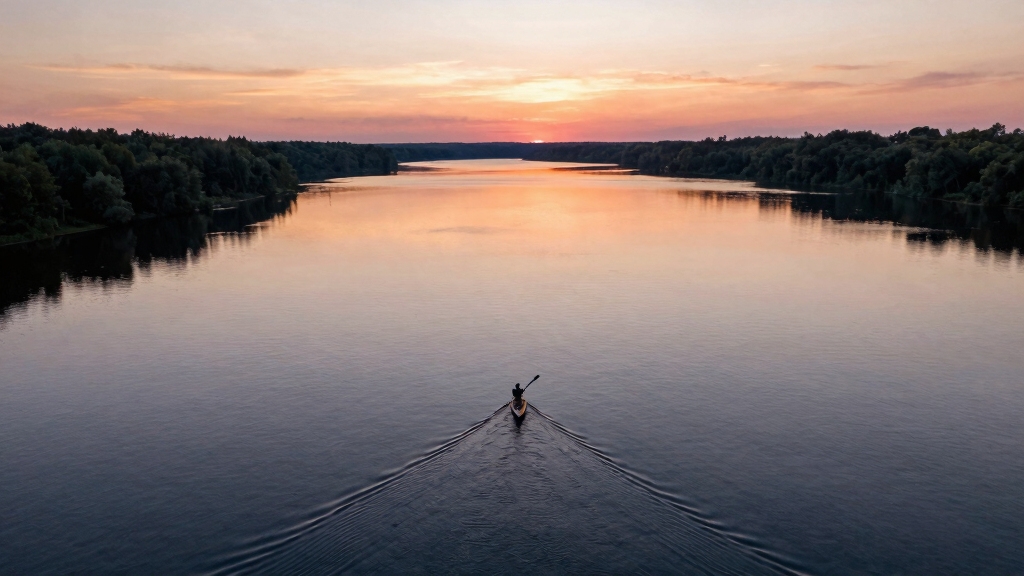
Most kayakers can paddle between 8 and 15 miles in a day, with beginners typically covering 5-10 miles and experienced paddlers reaching 20-30 miles under favorable conditions. Your actual distance depends on fitness level, kayak type, water conditions, wind speed, and how much time you spend fishing or taking breaks rather than actively paddling.
Key Takeaways
- Beginners should plan for 5-10 miles per day with frequent rest stops and calm conditions
- Intermediate paddlers typically cover 10-15 miles comfortably in a full day of paddling
- Experienced kayakers can reach 20-30 miles in ideal conditions with minimal breaks
- Paddling speed averages 2-3 mph for recreational kayakers and 3-4 mph for experienced paddlers
- Wind is the biggest variable and can cut your distance in half or add hours to your trip
- Fishing time significantly reduces daily mileage since you’re stationary while casting and landing fish
- Trip planning should account for 50-60% of theoretical maximum distance to stay safe and comfortable
- Gear weight and kayak design affect speed more than most paddlers realize
- Training beforehand makes a measurable difference for trips over 10 miles
What Affects How Far You Can Paddle in a Day?
Your daily paddling distance depends on six primary factors: your fitness and skill level, kayak design and weight, water conditions, wind speed and direction, the amount of gear you’re carrying, and how much time you spend actually paddling versus fishing or resting.
Fitness and experience matter more than most beginners expect. A conditioned paddler with proper technique can maintain 3-4 mph for hours, while someone new to kayaking might struggle to sustain 2 mph and need frequent breaks. Core strength, shoulder endurance, and paddle efficiency all compound over a long day.
Kayak type creates significant differences. A sleek touring kayak or pedal kayak cuts through water faster than a wide, stable fishing platform. Recreational fishing kayaks typically max out around 3 mph even with strong paddling, while touring models can cruise at 4-5 mph. If you’re comparing pedal vs paddle kayak options, pedal drives often add 0.5-1 mph to your average speed and reduce upper body fatigue.
Environmental conditions can double or halve your range:
- Current: 1-2 mph current adds or subtracts directly from your speed
- Wind: 10-15 mph headwind can cut your speed by 40-50%
- Waves: Choppy water adds resistance and forces slower, more careful paddling
- Temperature: Heat exhaustion and cold weather both reduce endurance
Gear weight slows you down more than you’d think. Every 50 pounds of fishing gear, coolers, and camping equipment can reduce your cruising speed by 0.3-0.5 mph. Heavy paddler kayaks are designed to handle the load better, but physics still applies.
Common mistake: Paddlers often calculate distance based on continuous paddling but forget to account for fishing stops, lunch breaks, photo opportunities, and rest periods. A realistic trip plan assumes you’ll spend only 60-70% of your time actually paddling.
Average Distance Kayaking in One Day for Beginners
Beginners should plan for 5-10 miles maximum in a full day, with 6-8 miles being a comfortable target that leaves energy for fishing and doesn’t risk exhaustion or injury.
New kayakers typically paddle at 1.5-2.5 mph and need rest breaks every 30-45 minutes. Over an 8-hour day with breaks, that translates to 4-6 hours of actual paddling time. At 2 mph average speed, that’s 8-12 miles of theoretical range, but beginners should plan for the lower end to account for inefficient technique, sore muscles, and learning curve.
Choose a shorter distance if you’re:
- Paddling your first few times or returning after a long break
- Dealing with wind over 10 mph or any current
- Carrying fishing gear and planning to stop frequently
- Paddling in saltwater kayaking conditions with waves and tides
- Using a wide, stable recreational kayak rather than a touring model
You can push toward 10 miles if:
- You have good general fitness and upper body strength
- Water conditions are calm with minimal wind
- You’re paddling a relatively efficient kayak design
- The route allows you to turn back early if needed
For your first fishing kayak trip, consider a 4-6 mile out-and-back route that keeps you within 2-3 miles of your launch point. This gives you flexibility to extend or shorten based on how you feel. Check out our kayak for beginners guide for more first-trip planning tips.
How Far Can You Canoe in 8 Hours?
In 8 hours of paddling, recreational canoeists typically cover 12-20 miles, with experienced paddlers reaching 25-30 miles in favorable conditions and beginners managing 8-12 miles with breaks.
Canoes generally move slightly slower than kayaks due to higher profile catching wind and less efficient paddle strokes, but tandem paddling can offset this disadvantage. A solo canoeist averages 2-3 mph, while a coordinated tandem team can maintain 3-4 mph. Over 8 hours with realistic breaks (lunch, rest stops, fishing), expect 5-6 hours of actual paddling.
Distance calculation for 8-hour canoe trip:
- Beginner solo: 1.5-2 mph × 5 hours = 8-10 miles
- Intermediate solo: 2-3 mph × 6 hours = 12-18 miles
- Experienced tandem: 3-4 mph × 6 hours = 18-24 miles
- Racing pace (unsustainable): 4-5 mph × 7 hours = 28-35 miles
Wind affects canoes more dramatically than kayaks because of the higher profile above water. A 15 mph headwind can reduce your speed by 50% or more, turning a planned 20-mile day into a grueling 10-mile slog.
Edge case: Downstream river paddling with 2-3 mph current can add significantly to your range. A moderate paddler maintaining 3 mph in still water will cover 5-6 mph downstream, potentially reaching 30-35 miles in 8 hours. Always plan return trips carefully or arrange shuttle transportation.
Paddling Distance Per Hour: Kayak vs Canoe
Kayaks average 2-4 mph for recreational paddlers and 4-5 mph for experienced touring kayakers, while canoes typically move at 2-3 mph solo and 3-4 mph with two paddlers, making kayaks 10-25% faster in similar conditions.
The speed difference comes down to design and paddle efficiency. Kayaks sit lower in the water with less wind resistance, use double-bladed paddles that provide continuous forward thrust, and typically have narrower hulls that slice through water more efficiently. Canoes catch more wind, use single-blade paddles that require correction strokes, and often have wider, more stable hull designs that create more drag.
Hourly distance comparison:
| Paddler Level | Kayak (mph) | Kayak (miles/hour) | Canoe Solo (mph) | Canoe Tandem (mph) |
|---|---|---|---|---|
| Beginner | 1.5-2.5 | 1.5-2.5 | 1.5-2 | 2-2.5 |
| Intermediate | 2.5-3.5 | 2.5-3.5 | 2-3 | 2.5-3.5 |
| Experienced | 3.5-5 | 3.5-5 | 2.5-3.5 | 3-4 |
Choose kayak for:
- Longer distances and touring trips
- Windy conditions and open water
- Solo paddling efficiency
- Fishing while covering ground between spots
Choose canoe for:
- Carrying heavy gear and camping equipment
- Tandem paddling with a partner
- Shallow rivers and technical water
- Fishing from a stable platform with more interior space
For fishing specifically, the speed difference matters less than you’d think. Most fishing kayakers spend 70-80% of their time stationary or drifting, making kayak choice and stability more important than raw speed. See our fishing kayak guide for more on choosing the right platform.

✎【Reinforced PVC Bladder + Drop-Stitch Floor for Stability】 Our inflatable kayak uses a puncture-resistant PVC bladder wrapped in a 600D waterproof polyester cover with a high-elastic PVC backing and a 4-inch drop-stitch floor, offering superior rigidity, impact resistance, and enhanced stability on the water.

Used Book in Good Condition
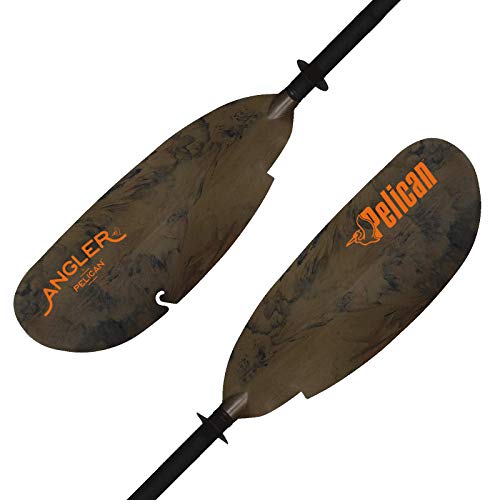
Longer reach:This high-quality paddle is extra long and sized to fit modern fishing kayaks over 34" wide.
Is 20 Miles Too Far to Kayak in One Day?
Twenty miles is an ambitious but achievable distance for experienced kayakers in good conditions, but it’s too far for beginners and risky for anyone facing headwinds, rough water, or unfamiliar routes without bailout options.
Covering 20 miles requires 5-7 hours of actual paddling time at 3-4 mph, which translates to an 8-10 hour day when you include breaks, lunch, and any fishing or sightseeing. That’s a full athletic day that will leave most paddlers tired and sore, even with good technique.
You can handle 20 miles if:
- You regularly paddle 10-15 miles and want to push your range
- Weather forecast shows wind under 10 mph and calm water
- You’re paddling a touring kayak or efficient pedal drive kayak
- The route has multiple exit points or follows shoreline
- You start early and have 10+ hours of daylight
- You’re carrying minimal gear and not planning extensive fishing stops
Twenty miles is too far if:
- You’re new to kayaking or haven’t trained for distance
- Wind forecast exceeds 15 mph or conditions look questionable
- You’re paddling a wide, stable fishing platform rather than a touring design
- The route crosses open water without bailout options
- You’re carrying heavy camping gear or fishing equipment
- You plan to spend significant time fishing rather than covering distance
Common mistake: Paddlers calculate 20 miles based on their fresh, morning pace (say 4 mph = 5 hours) but don’t account for fatigue, afternoon wind, and the reality that hour 6 feels very different than hour 2. Build in a 30-40% buffer for realistic trip planning.
For most fishing kayakers, 12-15 miles is a better target that leaves energy for actually fishing and doesn’t turn the trip into a forced march. Save the 20+ mile days for dedicated touring trips with minimal gear.
How to Calculate Paddling Distance for Trip Planning
Calculate realistic paddling distance by multiplying your sustained cruising speed (typically 2-3 mph for recreational paddlers) by 60% of your available time, then reducing by 20-30% if conditions include wind over 10 mph, current, or heavy gear.
Step-by-step calculation:
Determine your cruising speed: Paddle a measured mile at comfortable pace and time yourself. Most recreational kayakers average 2.5-3 mph, beginners 2-2.5 mph, experienced paddlers 3.5-4 mph.
Calculate available paddling time: Take total trip time and subtract breaks. For an 8-hour day, assume 5-6 hours of actual paddling (60-75% of total time).
Multiply for base distance: 3 mph × 5 hours = 15 miles theoretical maximum.
Apply condition modifiers:
- Headwind 10-15 mph: Reduce by 25-30%
- Headwind 15-20 mph: Reduce by 40-50%
- Current against you: Subtract current speed directly
- Heavy gear (50+ lbs): Reduce by 10-15%
- Fishing stops: Reduce by 20-30%
- Beginner technique: Reduce by 20-25%
Build in safety margin: Take your adjusted distance and plan for 80% of it. This accounts for unexpected conditions, fatigue, and navigation errors.
Example calculation:
- Intermediate paddler, 3 mph cruising speed
- 8-hour trip, 5 hours actual paddling
- 10 mph headwind expected
- Carrying fishing gear, planning several stops
- Calculation: 3 mph × 5 hours = 15 miles base
- Wind reduction: 15 × 0.75 = 11.25 miles
- Fishing stops: 11.25 × 0.75 = 8.4 miles
- Safety margin: 8.4 × 0.8 = 6.7 miles planned distance
This conservative approach keeps you safe and makes the trip enjoyable rather than a survival test. For multi-day trips, see our section on realistic daily mileage below.

Two pieces aluminum anti-slip coating shaft. Enforced push-button connection with 0 or 65˚ angle adjustment
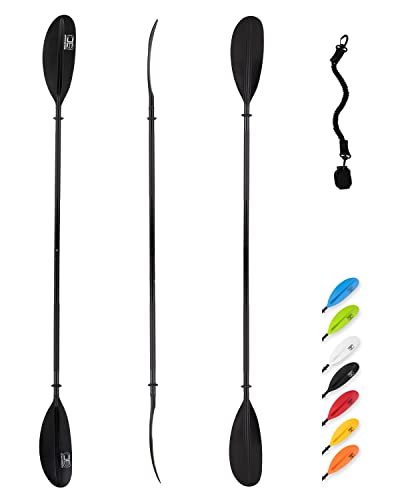
MADE TO LAST: This kayak paddle is with high-quality aluminum alloy shaft (1.1mm shell thickness) and fiberglass reinforced PP blade. The material combination ensures a stiff and made to last kayak paddle at a better price. It’s a perfect choice for starters and intermediate kayakers.

Efficient, Lightweight, Durable: A fiberglass filled nylon blade makes the X-2 paddle lightweight and durable, helping you to elevate your paddling performance
Can Beginners Paddle 10 Miles in a Day?
Yes, most beginners can paddle 10 miles in a day if they’re in reasonable physical condition, have calm water with minimal wind, take adequate breaks, and spread the distance over 6-8 hours of paddling time.
Ten miles represents a solid full-day beginner trip that’s challenging but achievable. At 2 mph average speed (realistic for new paddlers), 10 miles requires 5 hours of actual paddling. Add in breaks every 45-60 minutes, lunch, and time to fish or explore, and you’re looking at an 8-10 hour day.
Beginners can handle 10 miles when:
- They have general fitness and some upper body strength
- Water conditions are calm (wind under 10 mph, minimal waves)
- The route follows protected shoreline with rest stop options
- They’re using a comfortable, stable kayak that fits properly
- They’ve practiced basic paddle technique and can maintain rhythm
- Weather is moderate (not extreme heat or cold)
Ten miles is too ambitious for beginners if:
- It’s their first or second time in a kayak
- Wind forecast exceeds 10-12 mph
- The route crosses open water without bailout points
- They’re paddling in ocean fishing kayak conditions with waves and tide
- They have shoulder, back, or wrist issues
- They’re paddling solo without support nearby
Training tip: Build up to 10 miles over 3-4 shorter trips. Start with 3-4 miles, then 5-6, then 7-8, before attempting the full 10. This lets your body adapt and helps you dial in pacing, break frequency, and gear setup. Check our kayaking safety guide before your first long trip.
Mistakes People Make Estimating Kayaking Distance
The most common mistake is calculating distance based on ideal conditions and fresh-start pace without accounting for fatigue, wind changes, fishing time, and the reality that your speed drops 20-30% after the first few hours.
Top distance estimation errors:
1. Ignoring wind completely: Many paddlers check the morning forecast (calm) but don’t realize afternoon winds typically pick up by 2-3 PM. A trip that starts easy can turn into a headwind slog on the return. Always check hourly wind forecasts and plan for the worst period.
2. Using maximum speed instead of cruising speed: If you can hit 4 mph in a sprint, your sustainable cruising speed is probably 2.5-3 mph. Plan trips based on the pace you can hold for hours, not minutes.
3. Forgetting about fishing time: Fishing kayakers often plan “10-mile trips” but spend 4 hours fishing and only 3 hours paddling, covering maybe 6-7 miles total. If fishing is the priority, cut your distance estimate in half.
4. Not accounting for current: River and tidal paddlers sometimes forget that downstream speed doesn’t equal upstream speed. A 2 mph current means your 4 mph downstream becomes 2 mph upstream—plan accordingly or arrange shuttle.
5. Overestimating fitness and technique: Beginners often assume they’ll maintain their fresh, first-mile pace all day. In reality, inefficient technique, poor conditioning, and accumulated fatigue slow you down significantly by hour 3-4.
6. Skipping the safety margin: Planning a trip that uses 100% of your estimated range leaves no buffer for navigation errors, equipment issues, injury, or worsening conditions. Always plan for 70-80% of your calculated maximum.
7. Ignoring gear weight: That extra cooler, tackle boxes, and camping gear add up. Fifty pounds of equipment can reduce your speed by 0.5 mph, turning a 12-mile day into a 10-mile day.
Better approach: Calculate your theoretical maximum distance, then multiply by 0.6-0.7 for a realistic, comfortable trip that leaves energy for fishing and doesn’t risk exhaustion or getting caught out after dark.
How Far Can Experienced Paddlers Go in a Day?
Experienced kayakers can cover 20-30 miles in a full day under favorable conditions, with elite paddlers and racers reaching 40-50 miles in marathon efforts, though these distances require excellent fitness, efficient technique, and ideal weather.
The difference between experienced and beginner paddlers isn’t just speed—it’s sustained efficiency. A skilled paddler maintains 3.5-4.5 mph for hours with minimal wasted motion, takes shorter breaks, and knows how to read water and use current and wind to their advantage.
Experienced paddler capabilities:
- Cruising speed: 3.5-4.5 mph sustained for 6-8 hours
- Daily range (touring): 20-30 miles with breaks
- Daily range (racing pace): 35-50 miles in competitive events
- Multi-day touring: 15-25 miles per day with camping gear
What makes experienced paddlers faster:
- Efficient paddle technique with minimal wasted energy
- Strong core and shoulder endurance from regular training
- Better route planning and ability to read water conditions
- More efficient kayak designs (touring models, not fishing platforms)
- Knowledge of when to push and when to rest
- Proper nutrition and hydration strategy for long days
Edge case: Ultra-distance paddlers and racers can cover 100+ miles in 24 hours, but this requires specialized training, support crews, and isn’t relevant for recreational fishing kayakers. These efforts are athletic events, not fishing trips.
For fishing kayakers specifically, even experienced paddlers rarely exceed 15-20 miles because the goal is fishing, not distance. Wide, stable fishing platforms are slower than touring kayaks, and time spent fishing reduces paddling time. If you’re primarily fishing, focus on finding productive water within 5-10 miles rather than maximizing distance.
Paddling Distance with Kids and Gear
When paddling with kids or heavy gear, plan for 40-60% of your normal distance—typically 3-8 miles for a full day depending on children’s ages, with frequent breaks and flexible turnaround options.
Kids change the entire trip dynamic. Young children (under 8) have limited attention spans and tire quickly, even as passengers. Older kids (8-12) can paddle their own kayaks but at slower speeds with more breaks. Teenagers can often match adult pace but may lack endurance for long days.
Distance guidelines with kids:
- Ages 3-6 (as passenger): 2-4 miles maximum, 1-2 hours on water
- Ages 7-10 (own kayak): 4-6 miles, frequent breaks every 30 minutes
- Ages 11-14 (own kayak): 6-10 miles with regular breaks
- Teens (15+): 10-15 miles if fit and interested
Gear weight impact:
- Light fishing gear (20-30 lbs): Reduce distance by 10%
- Full fishing setup (40-60 lbs): Reduce distance by 20-25%
- Camping gear (60-100 lbs): Reduce distance by 30-40%
- Tandem with two adults + gear: Reduce by 15-20%
Planning tips for family trips:
- Choose routes with multiple exit points and beaches for breaks
- Bring extra snacks, drinks, and entertainment for kids
- Plan for twice as many breaks as an adult-only trip
- Have a flexible turnaround time, not a fixed distance goal
- Consider a tandem fishing kayak for younger kids
- Pack sun protection, extra layers, and first aid supplies
Common mistake: Parents plan trips based on their own capabilities and forget that kids need bathroom breaks, snack breaks, “I’m bored” breaks, and “can we stop and look at that?” breaks. What takes you 2 hours might take 4 hours with children.
The best family kayak trips prioritize fun and exploration over distance. A 3-mile trip with swimming, beach time, and wildlife watching beats a forced 8-mile march that leaves everyone tired and cranky.
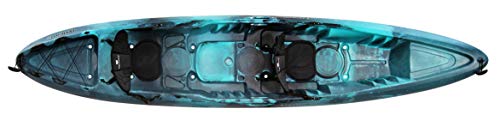
Versatile, stable and fun tandem kayak - Made in USA
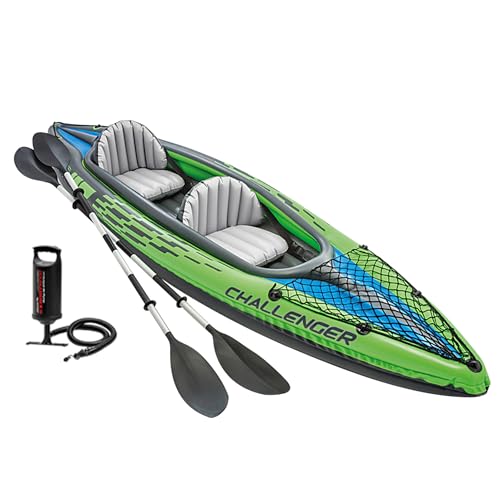
✔ SUPER-STRONG – SuperStrong enhanced molecular formulation PVC provides superior strength and durability, ensuring high impact and abrasion resistance

UPGRADED 800 LB CAPACITY: Reinforced hull supports two adults and a child plus gear, ideal for fishing trips, family lake days, and long adventures with confidence and stability
Do I Need to Train Before a Long Paddling Trip?
Yes, you should train for any trip over 10 miles or 4 hours of paddling time, focusing on building shoulder and core endurance, practicing efficient technique, and gradually increasing distance over 3-4 weeks before your planned trip.
Training makes the difference between an enjoyable adventure and a painful ordeal. Untrained paddlers develop shoulder pain, blisters, and exhaustion within 2-3 hours. Conditioned paddlers can maintain pace all day and still have energy for fishing and camp setup.
Training plan for long trips (4-6 weeks):
Weeks 1-2: Base building
- Paddle 3-5 miles, 2-3 times per week
- Focus on technique: proper paddle grip, torso rotation, efficient stroke
- Add basic strength training: planks, rows, shoulder exercises
Weeks 3-4: Distance building
- Increase to 6-10 miles per session
- Practice with loaded kayak (add gear weight)
- One longer session per week, shorter recovery paddles between
Weeks 5-6: Specificity
- One trip at 75-80% of planned distance
- Practice in similar conditions (wind, current, water type)
- Dial in nutrition, hydration, and break schedule
Complementary training:
- Swimming: Builds shoulder endurance with low impact
- Rowing machine: Mimics paddling motion, builds cardio
- Core work: Planks, Russian twists, dead bugs
- Yoga: Improves flexibility and prevents injury
Minimum preparation: If you can’t do a full training cycle, at least complete 2-3 paddles of 5-8 miles in the two weeks before your trip. This gives your body some adaptation and helps you identify equipment issues before you’re committed to a long day.
Edge case: If you’re already fit from other sports (cycling, running, swimming), you’ll adapt faster, but you still need kayak-specific conditioning. Paddling uses muscles and movement patterns that don’t fully transfer from other activities.
How Much Does Wind Affect Daily Paddling Distance?
Wind is the single biggest variable affecting paddling distance, with a 15 mph headwind reducing your speed by 40-50% and potentially cutting your daily range in half, while a tailwind can increase distance by 20-30%.
Most paddlers underestimate wind impact until they experience it firsthand. What feels like “a little breeze” on shore becomes a relentless force on the water that turns a 4-hour paddle into a 7-hour grind.
Wind speed impact on paddling:
- 0-5 mph: Minimal impact, 0-5% speed reduction
- 5-10 mph: Noticeable, 10-15% speed reduction into wind
- 10-15 mph: Significant, 25-35% speed reduction, tiring
- 15-20 mph: Major impact, 40-50% speed reduction, potentially unsafe
- 20+ mph: Dangerous for most kayakers, consider canceling trip
Wind direction matters as much as speed:
- Headwind: Direct speed reduction, most tiring
- Tailwind: Speed boost, easier paddling, but can make steering difficult
- Crosswind: Requires constant correction, tiring over time, can push you off course
- Variable wind: Most frustrating, constantly changing paddling strategy
Real-world example: A paddler who maintains 3.5 mph in calm conditions will drop to 2-2.5 mph in a 15 mph headwind. Over a planned 6-hour paddle, that’s the difference between 21 miles and 12-15 miles—a 30-40% reduction.
Wind planning strategies:
- Check hourly wind forecasts, not just daily averages
- Plan routes that put wind at your back for the return (paddle into wind when fresh)
- Stay close to shore where terrain blocks some wind
- Start early before afternoon winds pick up
- Have bailout points and be willing to cut trips short
- Learn to read water surface for wind patterns
Wind above 15 mph makes kayaking genuinely difficult and potentially dangerous, especially in open water. If the forecast shows sustained winds over 15 mph or gusts over 20 mph, consider rescheduling. No fishing spot is worth getting caught in conditions beyond your skill level.
Realistic Daily Mileage for Multi-Day Canoe Trip
For multi-day canoe trips with camping gear, plan for 10-15 miles per day for recreational paddlers, with experienced groups covering 15-20 miles and beginners staying in the 8-12 mile range to allow time for camp setup, cooking, and rest.
Multi-day trips require different planning than single-day pushes. You’re carrying 40-80 pounds of camping gear, you need energy for multiple days, and you want time to enjoy camp, cook meals, and actually relax. Pushing for maximum daily distance defeats the purpose of a multi-day adventure.
Multi-day distance guidelines:
- Beginner groups: 8-12 miles per day, 4-5 hours paddling
- Intermediate groups: 12-16 miles per day, 5-6 hours paddling
- Experienced groups: 16-22 miles per day, 6-7 hours paddling
- Expedition pace: 20-30 miles per day, 8+ hours paddling
Factors specific to multi-day trips:
- Cumulative fatigue: Day 3 feels harder than day 1, even at the same distance
- Gear weight: Full camping setup adds 50-100 lbs, reducing speed by 20-30%
- Camp time: Setup, cooking, and breakdown take 2-3 hours daily
- Weather variability: Multi-day trips face changing conditions, need flexible plans
- Injury risk: Overuse injuries develop over days, not hours
Sample 5-day trip plan:
- Day 1: 10 miles (shorter to allow for late start, gear shakedown)
- Day 2: 15 miles (full day, everyone fresh)
- Day 3: 12 miles (moderate day, rest/explore afternoon)
- Day 4: 15 miles (push day while still strong)
- Day 5: 8 miles (short day allows early finish, accounts for fatigue)
- Total: 60 miles over 5 days, 12-mile average
Common mistake: Planning the same distance every day. Better to vary daily mileage based on campsites, conditions, and cumulative fatigue. Build in one shorter “rest day” every 3-4 days on longer trips.
For fishing-focused multi-day trips, cut these distances by 30-40% to allow actual fishing time. A 10-mile day with 4 hours of fishing is more enjoyable than a 20-mile forced march with no time to wet a line.
Frequently Asked Questions
How long does it take to kayak 5 miles?
Five miles takes 1.5-2.5 hours for most recreational kayakers, with beginners needing 2-3 hours and experienced paddlers completing it in 1-1.5 hours, depending on conditions and kayak type.
What is a good distance for a beginner kayaker?
Beginners should start with 2-4 miles for their first trips, building up to 6-8 miles as they develop technique and endurance. Ten miles represents a full-day challenge for fit beginners in good conditions.
Can you kayak 30 miles in a day?
Yes, experienced kayakers in good physical condition can paddle 30 miles in a day with favorable conditions, efficient kayak design, and 8-10 hours of paddling time, but this is an athletic effort beyond most recreational paddlers.
How fast do most people kayak?
Most recreational kayakers average 2-3 mph, with beginners at 1.5-2.5 mph and experienced paddlers reaching 3.5-4.5 mph in touring kayaks. Fishing kayaks are typically slower due to wider, more stable designs.
Is kayaking good exercise for weight loss?
Yes, kayaking burns 300-500 calories per hour depending on intensity and body weight, provides excellent upper body and core workout, and is low-impact, making it sustainable for regular exercise and weight management.
How do you train for a long kayak trip?
Train by gradually increasing paddling distance over 4-6 weeks, building from 3-5 miles to 75-80% of your target distance, while adding complementary strength training for core and shoulders and practicing with loaded gear.
What should I bring on a 10-mile kayak trip?
Bring water (2-3 liters), snacks, sun protection, first aid kit, phone in waterproof case, whistle, extra paddle, PFD, weather-appropriate clothing, and navigation tools. For fishing trips, add tackle, fishing license, and fish storage.
How much water should you drink while kayaking?
Drink 16-24 ounces of water per hour of paddling, more in hot weather or high exertion. For a full-day trip, carry 2-4 liters minimum and plan water refill points for trips over 6 hours.
Can you kayak if you can’t swim?
Yes, non-swimmers can kayak safely by wearing a properly fitted PFD at all times, staying close to shore, paddling in calm conditions, and ideally going with experienced paddlers, but learning to swim significantly improves safety.
What is the best time of day to kayak?
Early morning (6-10 AM) offers the calmest conditions with minimal wind, cooler temperatures, and better wildlife viewing, while late afternoon can bring stronger winds but beautiful light for photography.
How do you prevent blisters when kayaking?
Prevent blisters by wearing paddling gloves, maintaining proper paddle grip (not too tight), using correct technique to avoid excessive friction, and applying athletic tape or moleskin to hot spots before they develop into blisters.
Is it better to kayak alone or with a group?
Group paddling is safer, especially for beginners and long trips, providing support in emergencies and making navigation easier, but solo paddling offers more flexibility and solitude if you have experience and proper safety equipment.
Conclusion
Understanding how far you can paddle in a day comes down to honest assessment of your fitness, realistic planning that accounts for conditions and fatigue, and building experience gradually rather than pushing beyond your limits. Most recreational fishing kayakers will find their sweet spot in the 8-15 mile range for full-day trips, with beginners staying closer to 5-10 miles and experienced paddlers occasionally pushing to 20-25 miles when conditions align.
The key is planning conservatively, especially when you’re still learning your capabilities. Calculate your theoretical maximum distance, then plan for 60-70% of that number. Account for wind, gear weight, fishing time, and the reality that your pace drops as the day wears on. Build in safety margins, multiple exit points, and flexible turnaround times.
Take action on your next trip:
- Test your cruising speed over a measured mile before planning long trips
- Check hourly wind forecasts, not just daily averages
- Start with shorter distances and build up gradually over multiple trips
- Invest in proper technique and conditioning for trips over 10 miles
- Choose routes with bailout options and stay close to shore when learning
- Track your actual distances and times to improve future planning
Remember that fishing kayaking is about enjoying time on the water and catching fish, not setting distance records. A well-planned 8-mile trip with great fishing beats a forced 20-mile march that leaves you too exhausted to cast. Start conservative, learn your limits, and gradually expand your range as your skills and fitness improve.
For more guidance on getting started, check our fishing kayak buying guide and kayaking tips to make your time on the water safer and more productive.