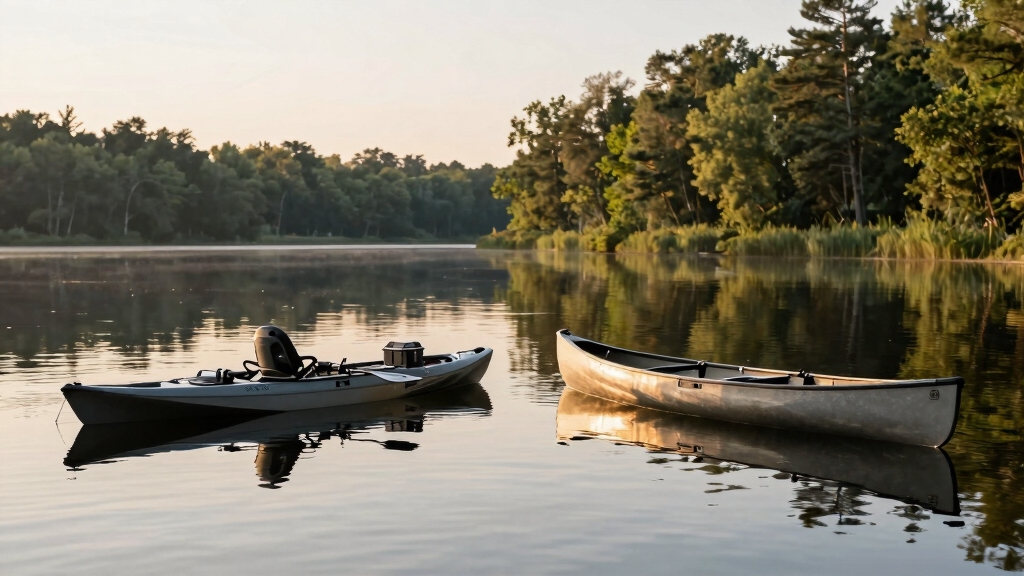
More than 50 million Americans went fishing in 2025, and a growing number are ditching expensive motorboats for paddle-powered options. The debate over kayak vs canoe for fishing isn’t new, but in 2026 the choice matters more than ever as specialized fishing models flood the market. Each platform offers distinct advantages depending on where you fish, how you fish, and whether you’re going solo or bringing a buddy.
Key Takeaways
- Kayaks offer superior stability and maneuverability for solo anglers fishing lakes, rivers, and coastal waters, with modern sit-on-top designs built specifically for standing and casting.
- Canoes provide more storage space and better two-person fishing but require more skill to paddle efficiently and are harder to transport on most vehicles.
- Fishing kayaks cost $400-$3,500 depending on features, while fishing canoes typically run $600-$2,000, with kayaks offering more budget-friendly entry points.
- Sit-on-top kayaks rarely tip over thanks to wide, stable hulls (32+ inches), while canoes can capsize more easily in choppy water or when anglers shift weight suddenly.
- Beginners find kayaks easier to learn because the seated position and double-blade paddle feel more intuitive than the single-blade canoe stroke.
- Transport and storage favor kayaks due to lighter weight (40-80 lbs vs 60-100+ lbs for canoes) and easier roof-rack mounting.
- Shallow-water fishing works well in both, but canoes draw slightly less water when loaded light, giving a small edge in skinny creeks.
What Is the Main Difference Between a Kayak and a Canoe for Fishing?
The main difference between a kayak and a canoe for fishing is the seating position and paddle type. Kayaks position anglers low and seated with legs extended forward, using a double-blade paddle, while canoes feature raised bench seats and a single-blade paddle. This fundamental design difference affects stability, casting comfort, and how much gear you can bring.
Kayaks designed for fishing typically use a sit-on-top hull with a molded seat, built-in rod holders, and enclosed storage hatches. The low center of gravity makes them stable for casting and fighting fish. Modern fishing kayaks often include standing platforms, pedal-drive systems, and accessory tracks for mounting electronics.
Canoes offer an open-hull design with bench seats (or removable seats) that allow anglers to kneel, sit, or stand. The open interior provides more room for coolers, tackle bags, and even a dog. Canoes excel when you need to haul bulky gear or fish with a partner who wants space to move around.
Choose a kayak if you fish solo, prioritize maneuverability in tight spots, and want a platform designed specifically for angling. Choose a canoe if you regularly fish with a partner, need maximum gear capacity, or prefer the versatility of a boat that works for camping trips and family outings beyond fishing.
Which Is More Stable for Fishing: Kayak or Canoe?
Modern fishing kayaks are more stable than canoes for most angling situations. Sit-on-top fishing kayaks typically measure 32-36 inches wide with flat, pontoon-style hulls that resist tipping even when anglers stand to cast. Canoes, with their narrower waterline and higher center of gravity, feel tippier when you shift weight or lean to net a fish.
Kayak stability comes from two factors: hull width and the seated position. A 34-inch-wide kayak with a low seat keeps your weight close to the water, making it nearly impossible to capsize in calm conditions. Many 2026 models include pontoon-style hulls or tunnel designs that create a stable platform even in choppy water.
Canoes can be stable when loaded properly and paddled by experienced anglers, but they require more skill. The raised seating position and rounded hull shape make them more responsive to weight shifts. Standing in a canoe is possible but demands good balance and calm water.
Common mistake: Assuming all kayaks are stable. Narrow touring kayaks (under 28 inches wide) tip easily. For fishing, look for models specifically marketed as stable kayaks with widths above 32 inches and flat or pontoon hulls.
Can You Stand Up to Fish in a Kayak vs Canoe?
You can stand up to fish in both kayaks and canoes, but modern fishing kayaks make it easier and safer. Sit-on-top kayaks designed for fishing feature wide, flat decks (often 34+ inches) with textured standing pads and grab rails. Canoes allow standing but require more balance because the hull sits higher above the water and the rounded bottom responds quickly to weight shifts.
Stand-up kayaks built for fishing in 2026 include features like:
- Textured standing platforms with EVA foam pads for grip
- Elevated seats that adjust or flip up to create standing room
- Pontoon or tunnel hulls that resist rocking side-to-side
- Grab rails or handles for stability when standing or sitting back down
Standing in a canoe works best when you position yourself near the center (the widest, most stable point) and keep your knees slightly bent. Many experienced canoe anglers kneel rather than stand, which lowers the center of gravity and improves stability.
Edge case: Pedal-drive kayaks offer the best standing experience because you can keep both hands free for casting while the pedal system maintains position. This setup is nearly impossible to replicate in a canoe.
How Much Does a Fishing Kayak Cost Compared to a Fishing Canoe?
Fishing kayaks cost $400-$3,500 depending on features and construction, while fishing canoes typically run $600-$2,000. Entry-level sit-on-top kayaks start around $400-$700, mid-range models with better features cost $1,000-$2,000, and premium pedal-drive or feature-loaded kayaks reach $3,000-$3,500. Canoes designed for fishing usually start at $600 for basic models and top out around $2,000 for high-end composite or specialized fishing designs.
Here’s a typical price breakdown for 2026:
| Category | Fishing Kayak | Fishing Canoe |
|---|---|---|
| Entry-level | $400-$700 | $600-$900 |
| Mid-range | $1,000-$2,000 | $1,000-$1,500 |
| Premium | $2,500-$3,500 | $1,500-$2,000 |
Budget-conscious anglers often find better value in kayaks because the entry-level market is more competitive. Inflatable fishing kayaks offer another affordable option at $300-$800, though they sacrifice some durability and performance.
Hidden costs to consider: Both platforms require paddles ($50-$200), personal flotation devices ($50-$150), and transport gear. Kayaks need roof racks or foam blocks ($100-$400), while canoes often require two people to load safely. Check out our fishing kayak buying guide for a complete cost breakdown.

SUPER-TOUGH – 3-ply laminate construction combined with SuperStrong enhanced molecular formulation PVC provides superior structural strength and unmatched resistance to damage from abrasion, impact and sunlight, while allowing more pressure for rigidity

SUPER-TOUGH – 3-ply laminate construction combined with SuperStrong enhanced molecular formulation PVC provides superior structural strength and unmatched resistance to damage from abrasion, impact and sunlight, while allowing more pressure for rigidity
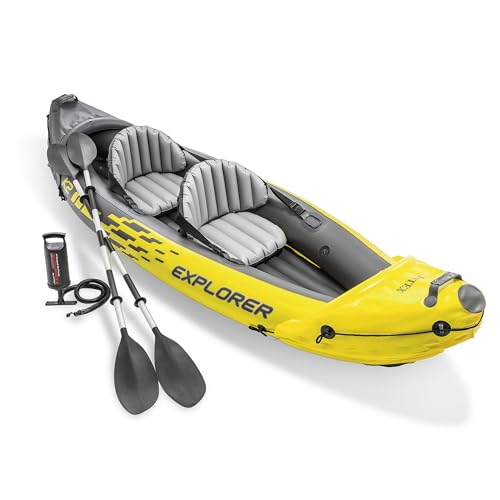
EASY TRANSPORT – Lightweight and compact, this kayak is easy to assemble and, with the Boston valve, it inflates and deflates in minutes; paddles come apart and the pieces can be conveniently stored with the boat in the included carrying bag allowing you to take the fun of kayaking wherever you go
Is a Kayak or Canoe Better for Beginners Who Want to Fish?
Kayaks are better for beginners who want to fish because they’re easier to paddle, more stable, and require less technique to control. The seated position and double-blade paddle feel intuitive to new paddlers, while the low center of gravity reduces the fear of tipping. Canoes demand more skill to paddle efficiently and keep on course, especially in wind or current.
Beginner kayak fishing advantages include:
- Simpler paddle stroke with a double-blade paddle that alternates sides naturally
- Easier to control in wind because the low profile catches less breeze
- Less intimidating for non-swimmers or nervous paddlers due to superior stability
- Faster learning curve for basic maneuvers like turning and stopping
Canoes require learning the J-stroke or switching sides frequently to maintain a straight course. The higher profile catches wind, making them harder to control on breezy days. New canoe paddlers often zigzag across the water until they develop proper technique.
Choose a canoe as a beginner if you’re fishing with an experienced partner who can handle most of the paddling, or if you plan to use the boat for family trips where the extra space matters more than solo fishing performance.
Best Fishing Kayak vs Canoe for Lakes and Rivers
For lakes, fishing kayaks win due to better wind resistance, easier solo paddling, and superior stability for casting in open water. For rivers, the choice depends on water type: kayaks excel on narrow, winding streams with obstacles, while canoes work better on wide, slow rivers where you need to haul gear for multi-day trips.
Lake fishing considerations:
- Kayaks handle wind better because the low profile and seated position keep you stable when gusts hit
- Easier to anchor and hold position with kayak-specific anchor trolley systems
- Better for covering distance solo, especially with pedal-drive models
- Sit-on-top kayaks drain water automatically if waves splash over the deck
River fishing considerations:
- Kayaks maneuver better in tight spots, around logs, and through rocky sections
- Canoes carry more gear for overnight river camping trips combined with fishing
- River kayak fishing requires shorter models (10-12 feet) for quick turns
- Canoes draft less water when lightly loaded, useful in shallow riffles
Common mistake: Using a long kayak (14+ feet) on a narrow, winding river. These models track too well and resist turning. For tight rivers, choose a 10-foot kayak or 12-foot kayak that pivots easily.

Stable: The twin-arched multi-chine hull offers excellent stability for a secure and steady ride. It also makes it incredibly easy to get in and out of the kayak.
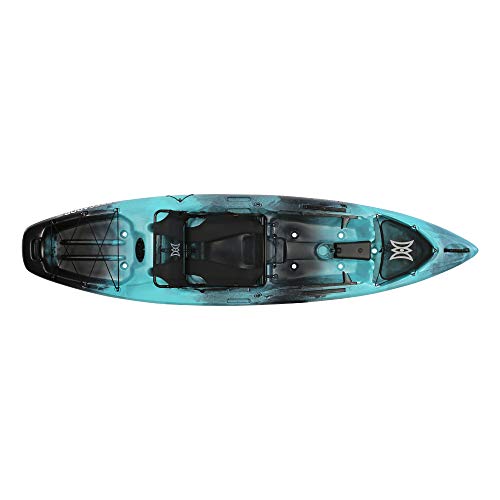
Premium Fishing Experience: The Perception Pescador Pro 10 is a sit-on-top kayak designed for the recreational angler. Equipped with a large front and rear storage area, it provides ample space for all your fishing gear and personal items.

UV-Protected HDPE Construction for Durability: Built with high-density polyethylene (HDPE) plastic, this kayak is both lightweight and highly durable, offering long-lasting protection against UV rays for years of use in various conditions. Paddle included.
Do Fishing Kayaks Tip Over Easier Than Canoes?
Fishing kayaks do not tip over easier than canoes. In fact, modern sit-on-top fishing kayaks are significantly harder to capsize than canoes due to their wide, flat hulls and low center of gravity. Canoes have a higher tipping point and can capsize when anglers lean too far to one side or stand without proper balance.
Kayak capsize risk factors:
- Hull width matters most: Kayaks under 28 inches wide tip easily; models 32+ inches wide are very stable
- Sit-on-top designs self-drain and are easier to re-enter if you do flip
- Weight distribution: Keeping heavy gear low and centered improves stability
- Wave conditions: Short, choppy waves affect narrow kayaks more than wide fishing models
Canoes capsize more often because the rounded hull and higher seating position make them more responsive to weight shifts. Leaning to net a fish or standing up without proper technique can tip a canoe, especially in moving water or wind.
Safety tip: Both platforms benefit from practicing self-rescue in shallow water before heading to deep lakes or rivers. Sit-on-top kayaks are easiest to re-enter after a capsize because you simply climb back on top rather than draining a swamped hull.
Which Has More Storage Space for Fishing Gear: Kayak or Canoe?
Canoes have more storage space for fishing gear than kayaks due to their open-hull design. A typical fishing canoe offers 30-50+ cubic feet of open interior space where you can pile coolers, tackle bags, extra rods, and camping gear. Fishing kayaks provide 10-20 cubic feet of enclosed storage in hatches plus deck space for gear, which is sufficient for day trips but limiting for extended outings.
Kayak storage features:
- Enclosed dry hatches (bow and stern) protect electronics and valuables
- Tank wells (open deck areas) with bungee cords for coolers and bags
- Rod holders (flush-mount or adjustable) keep rods secure and accessible
- Accessory tracks for mounting gear like fish finders and rod holders
- Limited by hull design: You can’t add more storage than the deck allows
Canoe storage advantages:
- Open interior accommodates bulky items like large coolers and camping gear
- No size restrictions on what you can bring as long as it fits and doesn’t overload the boat
- Easier to access gear without leaning or reaching into hatches
- Better for multi-day trips where you need food, camping equipment, and fishing tackle
Choose a kayak if you fish day trips with minimal gear and value organized, secure storage. Choose a canoe if you regularly bring a full cooler, multiple tackle boxes, camping gear, or fish with kids who bring extra equipment.
Can You Fish with Two People Better in a Kayak or Canoe?
You can fish with two people better in a canoe than a kayak. Canoes offer more space for two anglers to cast without tangling lines, easier weight distribution, and room for shared gear. Tandem fishing kayaks exist but feel cramped compared to canoes, and the seated positions limit casting angles when two people fish simultaneously.
Canoe advantages for two anglers:
- More casting room: Anglers can position at opposite ends without interfering
- Easier to switch positions or move around to net fish
- Better for teaching kids because you can sit next to them and help
- Shared paddling effort makes covering distance less tiring
Tandem kayak limitations:
- Fixed seating positions limit where each angler can cast
- Crossing lines happens frequently when both anglers cast
- Harder to coordinate paddling because you can’t see your partner’s stroke
- Less comfortable for long days because you can’t shift positions much
Edge case: If one person paddles while the other fishes, tandem kayaks work fine. The paddler maintains position while the angler focuses on fishing. This setup works well for guides with clients or parents taking kids fishing.
Are Fishing Canoes Better for Shallow Water Than Kayaks?
Fishing canoes and kayaks perform similarly in shallow water, with canoes having a slight edge when lightly loaded. An empty or lightly loaded canoe may draw 4-6 inches of water, while a sit-on-top kayak typically draws 4-8 inches depending on the hull design. The difference rarely matters in real-world fishing situations.
Shallow-water considerations:
- Draft depth (how deep the hull sits) matters less than hull shape
- Flat-bottom kayaks slide over shallow rocks and sand bars easily
- Canoes can be poled in very shallow water using a push pole, which works better than paddling
- Both platforms can navigate water as shallow as 6-8 inches when moving slowly
Common mistake: Assuming kayaks can’t handle shallow water. Modern fishing kayaks with flat or pontoon hulls work great in skinny water, and the sealed hull protects you from rocks better than an open canoe.
Best practice: For serious shallow-water fishing (under 12 inches), consider a kayak with a flat bottom and no keel, or a canoe you can pole. Both work, but technique matters more than boat choice.

【BUILT FOR SHALLOW WATER】 With a total length of 8.39 ft and a solid rod that digs into the bottom firmly, this shallow water anchor pole is purpose-built for skinny water. It locks small boats like kayaks, pontoons, or paddleboards into hard sand or clay—so you stay put, no drifting, no drama. (NOTE: If using with an anchor pole holder, check the holder diameter is over 1.65 inch. If you're not using one, just ignore it.)

Skinny Water Specialist design featuring a kayak gliding across shallow flats with marsh grass, perfect for kayak anglers, paddle fishing fans, and bass fishermen who know skinny water.

Durable Construction & Forced Air-Cooling: Built from high-strength aluminum alloy and nylon with a spray molding finish, this outboard motor is both lightweight (net weight 56.44 lbs) and corrosion-resistant. The forced air-cooling system eliminates the need for water pump maintenance, making it ideal for muddy or shallow waters where debris might clog traditional cooling intakes, ensuring long-lasting performance.
What Are Common Mistakes When Choosing Between Fishing Kayak and Canoe?
The most common mistake when choosing between a fishing kayak and canoe is prioritizing price over intended use. Anglers buy the cheapest option without considering where they’ll fish, how often they’ll go solo, or what features matter for their fishing style. This leads to frustration and often a second purchase within a year.
Other frequent mistakes:
- Ignoring storage and transport: Canoes are harder to load on vehicles and store in garages, especially for solo anglers
- Overlooking stability needs: Buying a narrow kayak or canoe because it looks fast, then feeling unsafe when casting
- Not testing before buying: Sitting in a kayak or canoe in a store feels different than paddling it on water
- Forgetting about fishing style: Stand-up anglers need wide, stable platforms; sit-and-cast anglers have more options
- Underestimating wind impact: Canoes catch more wind and are harder to control on breezy days
Decision framework:
- How often do you fish solo vs with a partner? Solo = kayak; regularly with others = canoe
- What water do you fish most? Lakes and coastal = kayak; big rivers with camping = canoe
- Do you need to stand to fish? Yes = wide kayak (34+ inches); no = more options
- How will you transport it? Solo loading = kayak; two-person loading = either works
- What’s your skill level? Beginner = kayak; experienced paddler = either works
Check out our fishing kayak comparison guide for detailed model-by-model analysis.
Is a Sit-On-Top Kayak Better Than a Canoe for Fishing?
A sit-on-top kayak is better than a canoe for fishing in most situations, especially for solo anglers fishing lakes, rivers, and coastal waters. Sit-on-top kayaks offer superior stability, self-draining decks, easier re-entry after a capsize, and purpose-built fishing features like rod holders and gear tracks. Canoes win only when you need maximum gear capacity or regularly fish with a partner.
Sit-on-top kayak advantages:
- Self-draining deck: Water drains through scupper holes automatically
- Easier to get in and out: No climbing over gunwales or balancing on a narrow seat
- More stable: Wide, flat hulls resist tipping even when standing
- Better fishing features: Built-in rod holders, accessory tracks, and standing platforms
- Safer in rough water: You can’t swamp a sit-on-top because there’s no interior to fill
When a canoe still wins:
- Fishing with kids or a partner who needs room to move around
- Multi-day camping trips where you need to haul tents, food, and fishing gear
- Extreme cold weather where you want protection from water (though sit-inside kayaks also work)
- Poling shallow flats where a canoe’s open design and push-pole technique excel
Edge case: In very cold water (under 50°F), some anglers prefer canoes or sit-inside kayaks because they keep your lower body drier. However, proper cold-water kayak safety gear (wetsuit or drysuit) solves this issue for sit-on-top kayaks.
Which Is Easier to Transport and Store: Fishing Kayak or Canoe?
Fishing kayaks are easier to transport and store than canoes for most anglers. Kayaks weigh 40-80 pounds (lighter than most canoes), fit on standard roof racks, and can be loaded solo with proper technique or accessories. Canoes typically weigh 60-100+ pounds, require two people to load safely, and take up more garage or shed space due to their width and depth.
Kayak transport advantages:
- Lighter weight: Most fishing kayaks weigh 50-70 lbs, manageable for one person
- Easier roof loading: Lower profile and grab handles simplify solo loading
- More rack options: Standard J-cradles, saddles, and stackers work well
- Shorter models (10-12 feet) fit in truck beds or on small cars
Canoe transport challenges:
- Heavier: Most canoes weigh 60-100 lbs, requiring two people to lift safely
- Awkward shape: Wide beam and depth make them harder to grip and balance
- Higher roof loading: Lifting a canoe 5-6 feet onto a roof rack is difficult solo
- Wind resistance: The high profile catches wind on the highway, affecting fuel economy
Storage considerations:
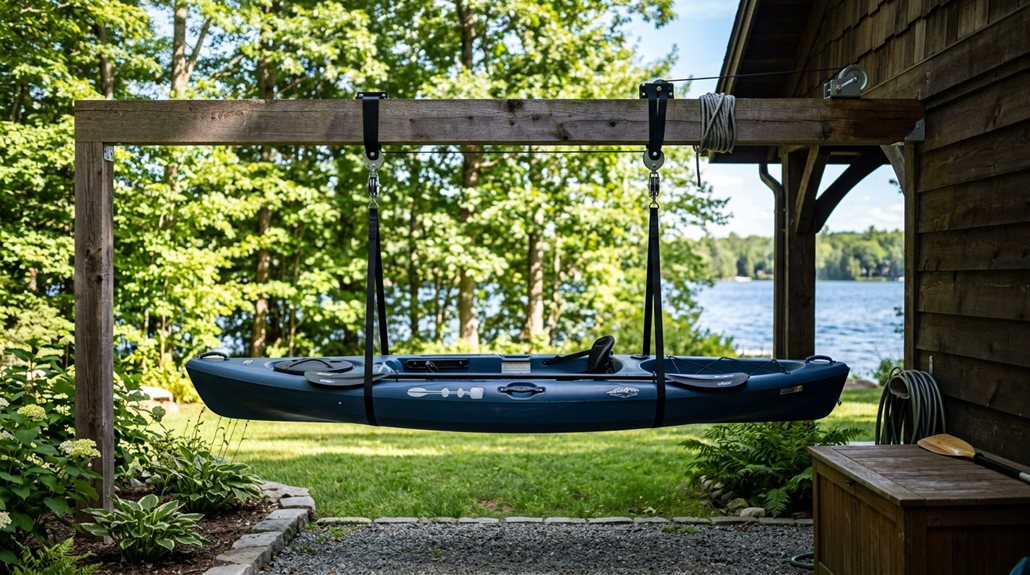
Both platforms store vertically on wall racks to save floor space, but kayaks take up less room overall. A 12-foot kayak is 28-34 inches wide, while a canoe of the same length is 34-38 inches wide and 12-15 inches deep.
Solution for solo canoe transport: Canoe carts, roller systems, and specialized roof racks make solo loading possible but add $100-$300 to your setup cost. For kayaks, simple foam blocks or pool noodles work as budget-friendly roof rack alternatives.
Do I Need a Kayak or Canoe for Saltwater Fishing?
You need a kayak for saltwater fishing in most situations. Fishing kayaks designed for saltwater feature sealed hulls that resist corrosion, self-draining decks that handle waves and spray, and stability for fishing in choppy coastal conditions. Canoes work in protected bays and estuaries but struggle in open water, waves, and wind common in saltwater environments.
Saltwater kayak advantages:
- Better in waves: Low profile and sealed deck handle chop and swells
- Self-draining: Scupper holes drain water that splashes over the deck
- Corrosion-resistant: Sealed hatches and stainless hardware resist saltwater damage
- Easier to paddle in wind: Low profile catches less breeze than a canoe’s high sides
- Purpose-built models: Many kayaks are designed specifically for ocean kayak fishing
When a canoe works in saltwater:
- Protected bays and estuaries with calm water and minimal wind
- Shallow grass flats where you can pole rather than paddle
- Fishing with a partner in sheltered areas like mangrove creeks
- Short trips close to shore where you can return quickly if conditions change
Safety consideration: Saltwater conditions change quickly. Kayaks offer better safety margins because they’re harder to swamp, easier to control in wind, and more stable in waves. If you plan to fish open water, exposed coastlines, or areas with boat traffic, choose a kayak rated for ocean use.
Maintenance tip: Both platforms need freshwater rinsing after every saltwater use to prevent corrosion. Kayaks with sealed hatches and stainless hardware require less maintenance than canoes with exposed metal fittings.
Frequently Asked Questions
Can you fish from a regular kayak or does it need to be a fishing kayak?
You can fish from a regular recreational kayak, but fishing kayaks offer major advantages. Purpose-built fishing kayaks include rod holders, gear tracks, stable hulls for standing, and better weight capacity for tackle and coolers. Regular kayaks lack these features and often feel cramped or unstable when you’re casting and fighting fish.
How long should a fishing kayak or canoe be?
Fishing kayaks should be 10-14 feet long depending on use: 10-12 feet for rivers and tight spots, 12-14 feet for lakes and coastal fishing. Canoes for fishing typically run 14-17 feet, with 15-16 feet being the sweet spot for solo or tandem fishing. Longer boats track better and hold more gear but turn slower.
Do you need a license or registration for a fishing kayak or canoe?
Registration requirements vary by state. Most states require registration for motorized kayaks but not paddle-powered ones, though some states (like Ohio and Pennsylvania) require all kayaks and canoes to be registered. Check your state’s boating regulations before launching. You always need a fishing license regardless of your boat type.
What’s the best width for a stable fishing kayak?
The best width for a stable fishing kayak is 32-36 inches. Kayaks 32-33 inches wide offer good stability for seated fishing and some standing. Models 34-36 inches wide provide excellent standing stability but paddle slower. Avoid kayaks under 30 inches wide for fishing unless you have excellent balance and never plan to stand.
Can you use a pedal drive in a canoe?
You cannot easily use a pedal drive in a canoe. Pedal systems are designed for kayak hulls with sealed compartments and specific mounting points. Canoes lack the hull design and mounting options for pedal drives. If you want hands-free propulsion, choose a pedal kayak rather than trying to retrofit a canoe.
How much gear can you bring in a fishing kayak vs canoe?
Fishing kayaks typically hold 300-500 pounds of gear and paddler weight, with 10-20 cubic feet of storage in hatches and deck space. Canoes hold 600-1,200 pounds with 30-50+ cubic feet of open storage. For day trips with one angler, kayaks provide enough space. For overnight trips or two anglers with full gear, canoes offer more capacity.
Are inflatable kayaks good for fishing?
Inflatable kayaks work well for fishing if you choose models designed for angling. Quality inflatable fishing kayaks offer good stability, rod holders, and weight capacity. They’re easier to transport and store than hard-shell kayaks but are more vulnerable to punctures and perform slightly worse in wind. Budget $500-$1,200 for a quality inflatable fishing kayak.
What’s easier to paddle long distances: kayak or canoe?
Kayaks are easier to paddle long distances solo because the double-blade paddle is more efficient and the low profile cuts through wind better. Canoes require more skill to paddle straight and tire solo paddlers faster. However, two experienced paddlers in a canoe can cover distance efficiently by sharing the work.
Can you fish standing up in a tandem kayak?
You can fish standing up in a tandem kayak if it’s wide enough (34+ inches) and designed for stability, but it’s less comfortable than a solo kayak. The person standing must be careful not to rock the boat for the seated paddler. Most tandem kayaks work better with both anglers seated and taking turns casting.
Do fishing kayaks work in rivers with current?
Fishing kayaks work well in rivers with current, especially models 10-12 feet long that turn quickly. Shorter kayaks maneuver better around obstacles and through rapids. For river fishing, choose a kayak with good primary stability (feels stable immediately) rather than secondary stability (stable when leaned). Avoid long, narrow touring kayaks that resist turning.
What safety gear do you need for kayak or canoe fishing?
Essential safety gear for kayak or canoe fishing includes a properly fitted PFD (personal flotation device), whistle, paddle leash, bilge pump or sponge, and appropriate clothing for water temperature. Add a VHF radio or waterproof phone case for coastal fishing, and always file a float plan with someone onshore. Consider a knife or line cutter for emergency line tangles.
Can you add a motor to a fishing kayak or canoe?
You can add a small electric trolling motor to both fishing kayaks and canoes. Many kayaks include motor-mount points or accept aftermarket motor brackets. Canoes can use transom-mount or clamp-on motors. Electric motors (30-55 lbs thrust) work best and don’t require registration in most states. Gas motors are possible but add weight and complexity.
Conclusion
The kayak vs canoe for fishing debate comes down to how you fish and where you fish. Kayaks win for solo anglers who prioritize stability, maneuverability, and purpose-built fishing features. They’re easier to learn, simpler to transport, and excel on lakes, rivers, and coastal waters. Canoes shine when you need maximum gear capacity, regularly fish with a partner, or want a versatile boat for camping trips beyond fishing.
For most anglers in 2026, a sit-on-top fishing kayak 32-34 inches wide offers the best balance of stability, features, and value. These models let you stand to cast, include rod holders and gear storage, and handle everything from farm ponds to coastal bays. If you fish with family or need to haul camping gear, a 15-16 foot canoe provides the space and versatility kayaks can’t match.
Next steps:
- Test both platforms before buying by renting or borrowing from friends
- Measure your vehicle and storage space to ensure your choice fits
- Start with your budget and prioritize features that match your fishing style
- Consider a fishing kayak buying guide to compare specific models
- Invest in proper safety gear regardless of which platform you choose
The right choice isn’t about which boat is “better” overall but which boat fits your fishing life. A stable kayak that you’ll actually use beats a perfect canoe gathering dust in your garage.