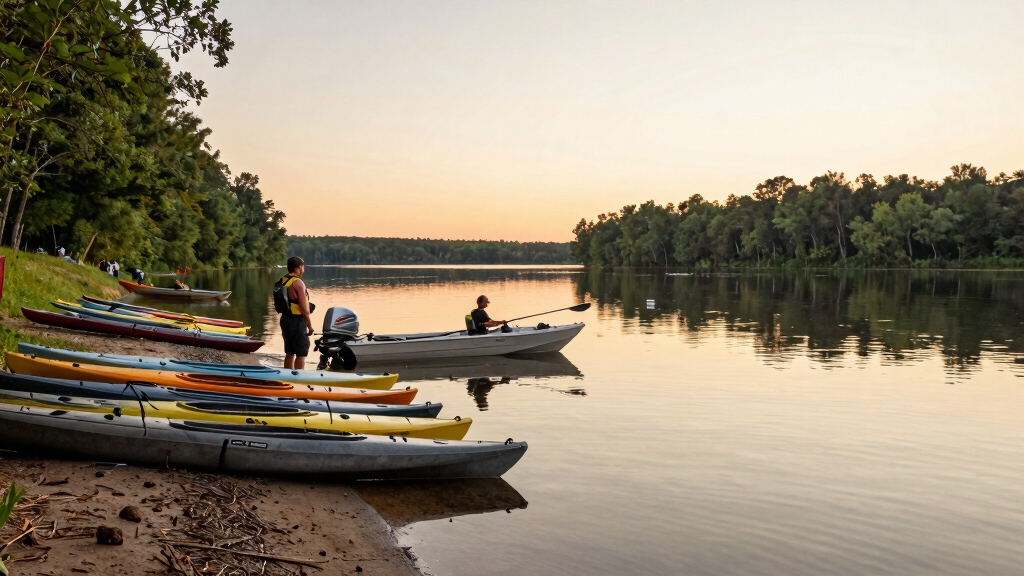
More than 13 million Americans paddled a kayak in 2025, and a growing share of them are fishing from those kayaks at public boat ramps designed decades ago for powerboats. This surge has created friction points where kayakers, bass boaters, and shore anglers share the same limited launch facilities and fishing waters. Understanding Kayak Fishing Etiquette: Ramps, Anglers, and Boaters isn’t just about being polite—it’s about safety, access, and keeping the peace on crowded waterways.
Quick Answer
Kayak fishing etiquette centers on three core principles: efficient ramp use (stage your kayak away from the launch lane, launch quickly, and clear the ramp immediately), respectful spacing on the water (maintain at least 50-100 yards from other anglers unless invited closer), and awareness of navigation rules (kayaks are considered vessels and must yield to larger boats with limited maneuverability). These practices prevent conflicts, ensure everyone gets fair water access, and keep launch facilities running smoothly during peak hours.
Key Takeaways
- Stage away from the ramp: Prepare your kayak, gear, and safety equipment in the parking area, not on the launch ramp itself
- Launch efficiently: Kayakers should take 2-3 minutes maximum at the water’s edge, then immediately move to a staging area
- Respect the 50-yard rule: Stay at least 50-100 yards from other kayak anglers unless you have permission to fish closer
- Powerboats have limited maneuverability: Kayaks must yield to larger vessels that cannot stop or turn as quickly
- Shore anglers have casting priority: Don’t paddle through an area where someone is actively casting from shore
- Communication prevents conflict: A friendly wave or quick conversation can resolve most spacing and access issues
- Know local regulations: Some ramps restrict kayak access during peak powerboat hours or designate specific launch areas
- Be visible: Bright colors, flags, and lights make you safer around larger boats and help prevent close calls
What Is Proper Kayak Fishing Etiquette at Boat Ramps?
Proper kayak fishing etiquette at boat ramps means preparing your kayak completely before approaching the launch area, taking no more than 2-3 minutes at the water’s edge, and immediately clearing the ramp after launch. Boat ramps are shared infrastructure where efficiency matters—powerboats towing trailers need the concrete ramp surface, while kayakers can often launch from adjacent shoreline or grass areas.
The golden rule: never stage or rig your kayak on the ramp itself. Complete these tasks in the parking area before you approach the water:
- Load all fishing gear, tackle boxes, and rods into the kayak
- Attach your paddle leash and rod leashes
- Put on your PFD (personal flotation device)
- Check that drain plugs are secure
- Verify your anchor system is ready but stowed
- Ensure your kayak registration numbers are visible if required in your state
When it’s your turn, carry or cart your kayak directly to the water’s edge, set it in, step in, and paddle away from the launch zone. If you need to adjust anything, do it 30-50 feet away from the ramp in a designated staging area.
Common mistake: Kayakers who arrive with an unrigged boat and spend 15 minutes at the ramp attaching rod holders, organizing tackle, and adjusting seats create bottlenecks that frustrate everyone. One angler blocking a single-lane ramp can back up a dozen trailers into the parking lot.

【Partner For Paddles】 Designed to prevent losing your paddle on water, paddle leash is an essential kayak accessory for every paddler. A leash at a nice price but could keep your paddle always secure. Find the perfect partner for your paddles!

DURABLE MATERIAL-The kayak paddle lanyard is made up of nylon fabric, which features with nice anti-corrosion performance and longer service life, and the fixed elongation will not overstretch and lose its elasticity.

【Partner For Paddles】 Designed to prevent losing your paddle on water, paddle leash is an essential kayak accessory for every paddler. A leash at a nice price but could keep your paddle always secure. Find the perfect partner for your paddles!
How to Launch a Fishing Kayak Without Blocking Other Boaters
Launch your fishing kayak by using designated kayak launch areas when available, or by choosing spots adjacent to the main concrete ramp where you won’t interfere with trailer traffic. Many modern boat ramps include separate kayak launch zones—gravel beaches, floating docks, or marked shoreline areas—specifically to keep paddle craft out of the powerboat lane.
Step-by-step efficient launch process:
- Scout the ramp layout when you arrive—identify the main boat lane, any kayak-specific areas, and the traffic flow pattern
- Stage your fully-rigged kayak on a cart or carry it to a spot 10-20 feet to the side of the concrete ramp
- Wait for a gap in powerboat traffic—don’t walk in front of a boat being backed down the ramp
- Carry or wheel your kayak to the water’s edge in one smooth motion
- Launch in 60-90 seconds: set the kayak in shallow water, step in while holding the dock or shore, and push off
- Paddle immediately to a staging area away from the launch zone to organize final gear
If the ramp has no designated kayak area and powerboats are launching, position yourself to the far left or right of the concrete surface where trailers won’t need to maneuver. Many fishing kayaks can launch from grass, gravel, or shallow beach areas that larger boats cannot access.
Edge case: At extremely busy tournament launch times (bass fishing tournaments often start at dawn), some ramps request that kayakers wait until the initial rush of 20-30 powerboats clears. Check with the ramp attendant or local fishing community about peak times.

240 lbs Heavy-Duty Support: Built with a stainless steel frame, this kayak cart supports up to 240 lbs for reliable transport of kayaks and fishing kayaks. The sturdy structure helps reduce bending and keeps your kayak moving smoothly from your vehicle to the water
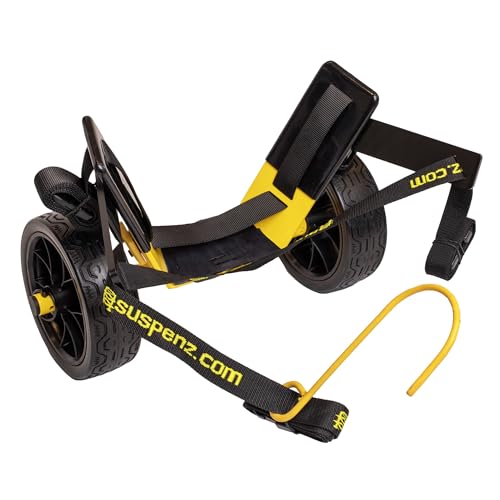
*Patent Pending* - Suspenz is Copied by Many Matched by None

【Enhanced Load Capacity】 Built with 2mm thickened aluminum alloy, it supports up to 280lbs / 127kg, offering stable, deformation-resistant performance. Easily transports heavy kayaks, with enhanced durability for long-term use
Kayak Fishing Etiquette vs Powerboat Etiquette: Key Differences
Kayak fishing etiquette emphasizes flexibility and yielding space because kayaks are highly maneuverable and can fish in shallow areas inaccessible to powerboats, while powerboat etiquette focuses on maintaining safe speeds, minimizing wake in no-wake zones, and respecting the limited maneuverability of larger vessels. The core difference: kayakers can go almost anywhere and stop instantly, so they bear more responsibility for avoiding conflicts.
Key distinctions:
| Situation | Kayak Etiquette | Powerboat Etiquette |
|---|---|---|
| Approaching another angler | Kayakers should stay 50-100+ yards away and paddle quietly | Powerboats should slow to idle speed and pass at a distance that creates no wake |
| Ramp efficiency | Launch in 2-3 minutes from parking area prep | Back trailer down, launch boat, and clear ramp in 5-7 minutes |
| Right of way | Yield to all larger vessels and vessels with limited maneuverability | Yield to vessels that cannot maneuver easily (sailboats, large cruisers) |
| Fishing a spot | Can anchor or drift silently; should move if powerboat was there first | Should not idle near kayakers or create wake that disrupts their stability |
| Shore access | Can beach almost anywhere; must respect private property | Requires deeper water; limited shore access options |
Powerboats create wake that can capsize or swamp a kayak, so boat operators should reduce speed to idle when passing within 100 feet of kayakers. Conversely, kayakers should never assume a powerboat sees them—wear bright colors, use a flag, and stay out of navigation channels during busy periods.
Choose kayak fishing if: you want access to shallow flats, tight coves, and areas where powerboats can’t go. Choose powerboat fishing if you need to cover large distances quickly or fish in rough open water where kayak safety becomes a concern.

Crafted with a premium ripstop polyester shell and replaceable EPE foam inside for superior buoyancy. Inside zipper opening for convenient to take out the floating foam to be a super thin and breathable vest.

ADVENTURE-PROOF YOUR PHONE - Whether you’re paddling, hiking, or camping, losing your phone is a real risk. The Rogue Fishing Protector Tether is your outdoor insurance. The spring-loaded carabiner allows you to attach the ProXD to a variety of anchor points, ensuring it's always within reach. Designed for adventurers, it’s the perfect addition to your hiking gear, outdoor gear, or kayak accessories.

Do Kayak Fishermen Have Right of Way Over Boats?
Kayak fishermen do not have automatic right of way over powerboats in most situations. Under U.S. Coast Guard navigation rules, kayaks are classified as vessels, and the general rule is that more maneuverable vessels must yield to less maneuverable vessels. Since kayaks can stop, turn, and reverse far more easily than powerboats, kayakers typically must yield.
Navigation hierarchy (who yields to whom):
- Kayaks must yield to: commercial vessels, sailboats under sail, vessels restricted in their ability to maneuver (large ships in channels), and any vessel that cannot easily change course
- Powerboats should yield to: sailboats under sail, vessels engaged in fishing with nets or trawls, and vessels restricted by draft
- All vessels must: avoid collisions regardless of right-of-way rules (the “rule of common sense”)
In practical terms, if a bass boat is running a trolling motor along a weed line and you paddle up in your kayak, the bass boat was there first—you should give them space. If you’re anchored and fishing a spot and a powerboat approaches, they should recognize you’re stationary and maneuver around you at a safe distance.
Important exception: In no-wake zones, narrow channels, and areas with posted speed limits, all vessels have equal responsibility to maintain safe speeds and distances. A powerboat creating excessive wake near kayakers in a no-wake zone is violating both etiquette and often local ordinances.
What to do if a powerboat gets too close: Make yourself visible by waving a paddle overhead, use a whistle or air horn if you have one, and if the boat is creating dangerous wake, note the registration number and report it to local marine patrol. Most close calls result from the boat operator simply not seeing the kayaker—bright kayak safety gear and a tall flag prevent most issues.
How Far Should I Stay From Other Kayak Anglers While Fishing?
Stay at least 50-100 yards from other kayak anglers while fishing, with 100 yards being the preferred distance in open water. This spacing allows both anglers to cast freely, drift naturally with wind or current, and avoid tangled lines. In confined areas like narrow creeks or small ponds, reduce this to 30-50 yards but always ask permission before moving closer.
The distance depends on several factors:
- Fishing method: Anglers casting lures need more space (75-100 yards) than those vertical jigging (30-50 yards)
- Water body size: On a 5-acre pond, 50 yards might be the maximum possible; on a 5,000-acre lake, 100+ yards is courteous
- Visibility and communication: If you can clearly see another angler and they wave you over or indicate a spot is open, you can move closer with permission
- Species and structure: If everyone is targeting the same small weed bed or dock, closer spacing may be unavoidable—in this case, communicate and take turns
Is it rude to fish near someone else in a kayak? Yes, if you paddle within casting distance (roughly 50 yards) without asking or acknowledging the other angler. No, if you maintain respectful distance, fish a different depth or structure, or receive permission to share the area. A simple “Mind if I fish this side of the point?” goes a long way.
Common mistake: Paddling directly through an area where another kayaker is actively fishing. Even if you’re not casting, your movement through the water can spook fish and disrupt their pattern. Paddle around at a distance of at least 50 yards, or wait until the angler moves.
Common Mistakes Kayak Fishermen Make at Busy Boat Ramps
The most common mistakes kayak fishermen make at busy boat ramps include rigging their kayak on the ramp itself, launching during peak powerboat traffic without checking for gaps, leaving vehicles and trailers in launch lanes, and failing to use designated kayak launch areas when available. These errors create bottlenecks, safety hazards, and frustration among all ramp users.
Top mistakes and how to avoid them:
Rigging on the ramp: Arrive with your fishing kayak fully loaded and ready to launch. Attach rod holders, load tackle, and organize gear in the parking area.
Blocking the ramp with your vehicle: Drop your kayak at the water’s edge, then immediately move your vehicle to a parking spot. Don’t leave it in the launch lane “just for a minute.”
Ignoring kayak-specific launch areas: Many ramps have designated spots for paddle craft—use them instead of competing for space on the main concrete ramp.
Launching during tournament starts: Bass fishing tournaments often launch 50-100 boats in a 30-minute window at dawn. Scout the ramp the day before or arrive 30 minutes after the rush.
Not communicating with other users: A quick “I’ll be out of your way in 30 seconds” or “Go ahead, I’m just staging” prevents misunderstandings.
Forgetting safety gear: Launching without a PFD, whistle, or lights (if fishing at dawn/dusk) is both unsafe and often illegal. Check your kayak safety equipment before you leave home.
Taking up multiple parking spots: Park efficiently—one vehicle, one spot. If you’re using a kayak transport trailer, park in trailer spots, not car spots.
Beginner tip: If you’re new to a ramp, arrive mid-morning on a weekday to practice your launch routine when traffic is light. This builds confidence and efficiency before you face a busy Saturday morning crowd. For more guidance, check out resources on beginner kayak fishing.
Should I Wait for All Boats to Launch Before Putting in My Kayak?
You don’t need to wait for all boats to launch before putting in your kayak, but you should wait for clear gaps in the launch sequence and use designated kayak areas when available. At moderately busy ramps, launch between powerboats—when one boat clears the ramp and before the next trailer backs down. At extremely busy ramps during tournament launches, waiting 15-20 minutes for the initial rush to clear is courteous and safer.
Decision rules:
- Light traffic (1-3 boats waiting): Launch whenever there’s a 2-3 minute gap between boats
- Moderate traffic (4-8 boats waiting): Use a designated kayak launch area or wait for a natural break in the sequence
- Heavy traffic (tournament or holiday weekend): Wait until the initial surge clears, or launch from an alternate access point if available
- Single-lane ramp with no kayak area: Communicate with waiting boaters—most will wave you through between launches if you’re efficient
What to do if a powerboat gets too close while kayak fishing: Stay calm, make yourself visible by raising your paddle or waving, and paddle perpendicular to the boat’s path to get out of the way quickly. If the boat is approaching fast and hasn’t seen you, use a whistle or air horn. After the encounter, if the boat operator was reckless (excessive speed in a no-wake zone, creating dangerous wake), note the registration number and report it to local authorities.
Most powerboat operators respect kayakers and will give you space—close calls usually result from poor visibility (kayaks are low to the water) rather than malice. Wearing bright colors and using a safety flag dramatically reduces these incidents.
Is Kayak Fishing Allowed at All Boat Ramps?
Kayak fishing is allowed at most public boat ramps, but some facilities restrict kayak access during peak hours, designate specific launch areas for paddle craft, or prohibit kayaks entirely at ramps serving large commercial vessels or high-speed boat traffic. Always check local regulations and posted signage before launching.
Where to check:
- State DNR or wildlife agency websites: Most states list ramp rules and restrictions by location
- Ramp signage: Posted rules at the facility entrance or on the dock
- Local fishing forums and kayak clubs: Community knowledge about which ramps are kayak-friendly
- Ramp attendants: At staffed facilities, ask about kayak-specific rules and best launch times
Common restrictions:
- Peak hour limitations: Some ramps ask kayakers to avoid 6-8 AM on weekends during bass tournament season
- Designated launch areas: Ramps may require kayaks to use a separate beach, dock, or shoreline area
- Commercial vessel priority: Ramps serving charter boats or commercial fishing vessels may restrict recreational kayak access during loading times
- Permit or fee requirements: A few ramps charge launch fees for all vessels, including kayaks, or require a daily/annual permit
Alternative access points: If a ramp is too busy or restricts kayaks, look for:
- Public beaches with water access
- Fishing piers with adjacent launch areas
- State park shorelines (check if launching is permitted)
- Designated paddle craft launch sites (increasingly common in kayak-friendly states)
Edge case: Some private marinas and HOA-controlled ramps prohibit kayak launching entirely. Respect these restrictions and use public access points instead.
How to Be Courteous to Shore Anglers When Fishing From a Kayak
Be courteous to shore anglers by staying at least 30-50 feet away from their casting zone, never paddling through the water they’re actively fishing, and avoiding anchoring directly in front of popular shore fishing spots. Shore anglers have limited mobility and often arrive early to claim productive spots—kayakers have the entire lake or river to explore, so give shore anglers priority in their immediate area.
Courtesy guidelines:
- Observe before approaching: If you see someone fishing from shore, watch their casting pattern for a minute to understand their coverage area
- Pass behind, not in front: If you need to paddle past a shore angler, go behind them (between them and the shore) rather than through their fishing zone
- Communicate: A friendly “Good morning, catching anything?” or “Mind if I fish the other side of this point?” builds goodwill
- Don’t anchor in their spot: If a shore angler is working a specific structure (dock, weed edge, drop-off), don’t paddle up and anchor 20 feet away
- Be aware of your profile: Your kayak can spook fish in shallow water—stay in deeper water when passing near shore anglers
Why this matters: Shore anglers often have limited transportation options, may be fishing with children, or have mobility limitations that prevent them from using a kayak. They also typically arrive earlier and invest more effort to access a spot. Kayakers can easily paddle 100 yards to find equally good water.
Common mistake: Paddling through a cove or along a shoreline where multiple anglers are casting from docks or piers. Your movement through the water can shut down the bite for everyone. Instead, paddle around the outside of the area or wait until anglers move.
What Are the Unwritten Rules of Kayak Fishing Around Other People?
The unwritten rules of kayak fishing around other people include giving the first angler on a spot priority, asking permission before fishing within 50 yards of someone, never paddling through another angler’s drift or trolling path, and sharing information about conditions (but not exact hot spots) with fellow kayakers. These informal norms maintain harmony on crowded waters where formal regulations don’t cover every situation.
Key unwritten rules:
First come, first served: If another angler (kayak or boat) is already fishing a spot, they have priority. Fish a different area or wait until they leave.
Ask, don’t assume: Before moving close to another kayaker, make eye contact or call out “Mind if I fish this side?” Most anglers will either welcome you or politely indicate they’d prefer space.
Don’t follow someone to their spot: If you see a kayaker catching fish and paddle over to join them uninvited, you’re “spot burning.” It’s acceptable to fish the same general area (same cove or weed flat) but not to crowd their exact location.
Share the basics, not the secrets: If another kayaker asks “How’s the bite?” it’s courteous to share general info (“Caught a few on topwater this morning” or “Slow today, water’s muddy”). You’re not obligated to reveal your exact lure, color, or GPS coordinates.
Help in emergencies: If you see another kayaker in distress (capsized, injured, or struggling), offer assistance immediately. Safety trumps fishing.
Leave no trace: Pack out all trash, including broken line, bait containers, and snack wrappers. Kayakers pride themselves on low-impact fishing—maintain that reputation.
Respect private property: Just because your kayak can access a shoreline doesn’t mean you should. Stay off private docks, beaches, and marked no-trespassing areas.
How to handle conflict with boaters while kayak fishing: Stay calm and polite, even if the other person is aggressive. Most conflicts arise from misunderstandings about right-of-way or space. If a boater complains you’re in their way, apologize and move—it’s not worth escalating. If a boater is genuinely reckless (excessive speed, dangerous wake, harassment), document the incident (registration number, time, location) and report it to local marine patrol rather than confronting them on the water.
Choose cooperation over confrontation: The kayak fishing community thrives on mutual respect and shared access. One negative interaction can poison relationships at a ramp or lake for months. Be the angler who diffuses tension, not the one who creates it.
Frequently Asked Questions
Can I launch my kayak from any boat ramp?
Most public boat ramps allow kayak launching, but check for posted restrictions, designated kayak areas, or peak-hour limitations. Private and commercial ramps may prohibit kayak access entirely.
How long should I take to launch my kayak at a busy ramp?
Aim for 2-3 minutes maximum from the time you approach the water’s edge until you paddle away. Complete all rigging and gear loading in the parking area before approaching the ramp.
Do I need to register my fishing kayak?
Registration requirements vary by state. Most states require registration for motorized kayaks or kayaks over a certain length. Check your state kayak laws for specific requirements.
What should I do if a powerboat creates a large wake near my kayak?
Turn your kayak bow into the wake to ride over it safely, brace with your paddle, and lean slightly forward. If the wake was created recklessly in a no-wake zone, note the boat’s registration number and report it.
Is it okay to fish the same spot as another kayaker if there’s room?
Only with permission. Even if a spot looks large enough for two, ask before moving within 50 yards. The other angler may be working a specific pattern or structure that requires space.
Should I use a flag on my fishing kayak?
Yes, especially in areas with powerboat traffic. A bright orange or yellow flag mounted 3-4 feet above your kayak makes you visible to boat operators and significantly improves safety.
Can I anchor my kayak in a navigation channel?
No. Navigation channels must remain clear for boat traffic. Anchor outside the channel markers or in designated fishing areas only.
What’s the best way to pass another kayaker on the water?
Pass at a distance of at least 30-50 feet, paddle quietly, and offer a friendly wave or greeting. If space is tight (narrow creek), ask “Mind if I slip past?” before proceeding.
Do I need lights on my kayak for dawn or dusk fishing?
Yes. Most states require a white light visible 360 degrees when operating between sunset and sunrise. A removable LED light or headlamp meets this requirement for kayaks.
How do I know if a boat ramp is too busy for kayak launching?
If there are more than 8-10 boats waiting to launch and no designated kayak area, consider waiting 20-30 minutes or finding an alternate access point. Tournament launches (usually dawn on weekends) are the busiest times.
Can I fish from my kayak near a fishing pier?
Stay at least 30-50 feet away from pier anglers and never paddle through their casting zones. Pier anglers have limited mobility and established spots—kayakers should fish elsewhere.
What should I do if I accidentally cut off another angler’s line?
Apologize immediately, offer to replace the lure or rig if possible, and learn from the mistake. Most anglers will appreciate the acknowledgment and courtesy.
Conclusion
Mastering Kayak Fishing Etiquette: Ramps, Anglers, and Boaters transforms you from a solo paddler into a respected member of the fishing community. The principles are straightforward: prepare efficiently, launch quickly, respect spacing on the water, yield to less maneuverable vessels, and communicate openly with fellow anglers. These practices prevent conflicts, ensure fair access to shared resources, and keep everyone safer on the water.
Your next steps:
- Scout your local ramps during off-peak hours to identify kayak launch areas, traffic patterns, and any posted restrictions
- Practice your launch routine until you can go from parking area to water in under 3 minutes
- Invest in visibility gear: a bright PFD, a safety flag, and navigation lights for low-light conditions
- Join local kayak fishing groups (online forums or clubs) to learn area-specific etiquette and find kayak-friendly launch sites
- Lead by example: when you see another kayaker struggling at the ramp or unsure about spacing, offer friendly guidance
The kayak fishing community grows stronger when every angler understands and practices these courtesies. Whether you’re launching your first fishing kayak or you’re a seasoned tournament competitor, these etiquette principles ensure that public waters remain accessible, enjoyable, and safe for everyone. Tight lines and smooth launches in 2026 and beyond.