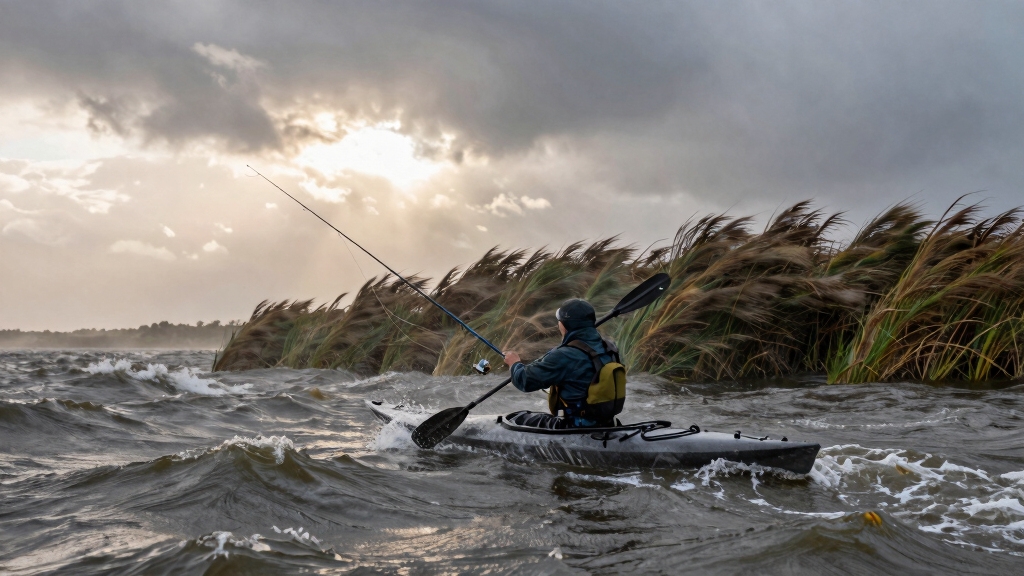
Wind doesn’t cancel fishing trips—it changes the game. Learning how to fish windy days from a kayak means mastering boat control, adjusting your casting technique, and using the right anchoring systems to stay productive when conditions get rough. Most kayak anglers who understand wind positioning and proper gear actually catch more fish on breezy days because wind concentrates baitfish and triggers aggressive feeding.
Key Takeaways
- Wind speeds above 15-20 mph create dangerous conditions for most kayak anglers, especially beginners, and require advanced skills and proper safety gear
- Drift socks slow your drift and keep your kayak positioned correctly, while anchors lock you in place—choose based on whether you want controlled movement or a fixed position
- Pedal-drive kayaks offer significant advantages in wind because they free your hands for fishing while maintaining precise boat control
- Position your kayak at a 45-degree angle to the wind for the best casting opportunities and natural drift patterns that cover more water
- Fish often feed more aggressively on windy days because waves oxygenate water and disorient baitfish, making them easier targets
- Heavier lures (3/8 oz or more) and shorter casts improve accuracy when wind fights every cast
- Anchor trolley systems let you adjust your anchor point from bow to stern, giving you complete control over kayak orientation in changing wind
- Common mistakes include fighting the wind instead of using it, anchoring without a trolley, and venturing out without checking wind forecasts
What Makes Kayak Fishing Harder on Windy Days
Wind creates three major challenges for kayak anglers: constant boat drift, difficult casting, and increased physical fatigue. Your kayak acts like a sail, catching wind and pushing you off your fishing spot faster than you can set up for the next cast. Even a 10 mph breeze can move an unanchored kayak 50-100 feet in just a couple of minutes.
Casting accuracy drops significantly when wind pushes against your line mid-flight. Lightweight lures get blown off course, and your presentation suffers. You’ll also burn through energy much faster because every paddle stroke fights wind resistance, and maintaining position requires constant adjustment.
The good news? Wind isn’t your enemy once you understand how to work with it. Many experienced kayak fishing enthusiasts actually prefer windy days because the challenges keep casual anglers off the water, leaving prime spots open.
Key wind-related challenges:
- Boat control: Constant drift requires active management
- Casting: Wind deflects lures and tangles line
- Fatigue: Fighting wind drains energy quickly
- Safety: Waves and whitecaps increase capsize risk
- Gear management: Loose items blow away easily
Pro tip: Always secure everything in your kayak before launching. A $200 tackle box floating away in 15 mph wind is gone forever.
How Much Wind Is Too Much for Kayak Fishing
Most kayak anglers should avoid winds above 15 mph, and beginners should stay off the water when sustained winds exceed 10 mph. Wind speed matters less than wind direction and water conditions—a 12 mph wind on a protected cove is manageable, while the same wind on open water creates dangerous whitecaps and exhausting paddle conditions.
Safe wind thresholds by experience level:
- Beginners: 5-10 mph maximum, protected waters only
- Intermediate: 10-15 mph, avoid open water above 12 mph
- Advanced: 15-20 mph with proper gear and safety equipment
- Expert only: 20+ mph, requires specialized skills and rescue plan
Check the forecast for sustained winds, not gusts. A forecast showing 10 mph sustained with 18 mph gusts means you’ll regularly face those higher speeds. Also consider wind direction—offshore winds (blowing away from shore) are particularly dangerous because they push you farther from safety.
Common mistake: Launching in calm morning conditions without checking the afternoon forecast. Wind typically picks up between 10 AM and 2 PM, and you don’t want to be a mile offshore when it does.
If you’re just starting out, our beginner kayak fishing guide covers essential safety considerations before tackling challenging conditions.
Best Anchor Setup for Kayak Fishing in Wind
An anchor trolley system is the gold standard for windy kayak fishing because it lets you adjust your anchor point anywhere along the kayak’s length. This system uses a pulley and rope running from bow to stern, allowing you to position your kayak at any angle to the wind—critical for controlling drift and optimizing casting angles.
Essential anchor components:
- Anchor trolley kit: Pulleys, cleats, and rope (around $30-50)
- Anchor: 1.5-3 lb folding anchor for most conditions
- Anchor rope: 50-75 feet of marine-grade rope
- Float: Marks anchor location if you need to release quickly
How to use an anchor trolley in wind:
- Deploy your anchor upwind of your target spot
- Use the trolley to slide the anchor line toward the bow
- Your kayak will weathervane (point into the wind) naturally
- Adjust the trolley position to change your kayak’s angle
- For casting downwind, move the anchor point to the stern
The trolley gives you flexibility that a fixed anchor point can’t match. When wind shifts—and it always does—you simply adjust the trolley instead of pulling anchor and resetting.
Choose a quick-release system for safety. In strong wind or emergencies, you need to detach from your anchor instantly. A simple carabiner or anchor wizard device lets you release with one hand while maintaining paddle control.
For more details on kayak modifications that improve fishing performance, check our comprehensive modification guide.

MAKE EASIER TO FISH WHEN WINDY: This Kayak Anchor System can easily adjust the direction of the fishing kayak in wind or waves, work with anchor pole can allowing you to always adapt to the current or wind direction. Let you fully enjoy the fishing time

H2o Anchor Trolley Kit Marine Grade Fixings

Premium Materials: Our kit comes with a solid 0.39in x 32.81ft Rope, providing ample length and exceptional durability. The stainless steel pulley blocks offer resistance to rust and wear, boasting a robust structure manufactured through a stringent process, ensuring reliability and longevity. Additionally, the versatile nylon cleat can be used alongside ropes to securely fix paddles, nets, poles, and other items on your kayak, boat, or canoe.
Drift Sock vs Anchor for Windy Kayak Fishing
Drift socks slow your drift speed by 50-70% while keeping you mobile, whereas anchors lock you in one spot—choose drift socks when you want to cover water and anchors when you’ve found fish and need to stay put. Both tools serve different purposes, and experienced kayak anglers carry both.
Drift sock advantages:
- Slows drift without stopping movement
- Covers more water naturally
- Easy to deploy and retrieve
- No risk of getting stuck on bottom structure
- Ideal for searching new areas
Anchor advantages:
- Holds precise position over structure
- Allows vertical presentations
- Better for working specific cover thoroughly
- More stable platform in strong wind
- Essential for fishing current breaks
When to use each:
- Use drift sock: Searching for fish, trolling, covering flats, wind 10-15 mph
- Use anchor: Working specific structure, vertical jigging, wind above 15 mph, precise presentations
Many anglers deploy a drift sock first to slow their search pattern, then switch to anchor once they locate active fish. A quality drift sock (36-48 inches for fishing kayaks) costs $40-80 and pays for itself in one trip by keeping you in the strike zone longer.
Pro tip: Attach your drift sock to your anchor trolley system. This lets you adjust the sock’s position just like an anchor, giving you precise control over drift direction and kayak angle.

WHY YOU NEED MOOCY DRIFT SOCK?:MOOCY makes drift sock for fishing boat in all sizes (24''-53'') to match any technique and boat size,and allows for a quick release of the sock to make way for fighting a trophy fish. The blaze-Brown-black Buoy is easily seen and retrieved.

24 inch sea anchor for 15ft boat, and 30 feet kayak throw line with stainless steel clips
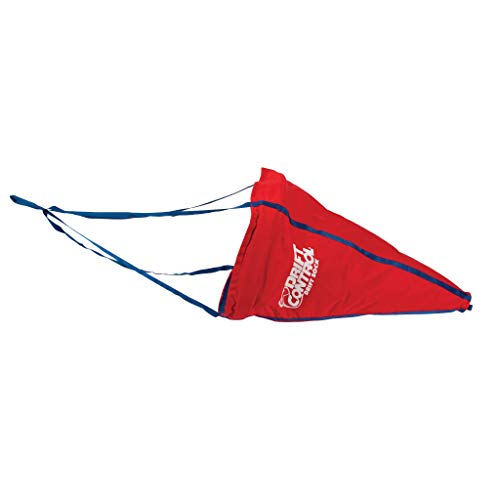
SIMPLE AND EFFECTIVE: Provides a convenient, simple and economical way to slow your drift or more-precisely follow breaklines or other fish-attracting structure when the wind kicks up
How to Position Your Kayak When Fishing Into the Wind
Position your kayak at a 45-degree angle to the wind for optimal casting opportunities and natural drift that covers productive water. This angle lets you cast both with and across the wind while maintaining reasonable accuracy, and it creates a controlled drift pattern that presents your lure to more fish.
Three effective wind positions:
1. Bow into wind (0 degrees):
- Most stable position
- Difficult casting (wind in your face)
- Best for waiting out gusts
- Use when paddling upwind
2. 45-degree angle (recommended):
- Balanced casting opportunities
- Controlled drift speed
- Can cast left or right effectively
- Natural presentation as you drift
3. Stern to wind (180 degrees):
- Easy downwind casting
- Fastest drift speed
- Less stable in waves
- Good for covering water quickly
Adjust your position based on structure. If you’re fishing a weedline or drop-off, position so your drift runs parallel to the structure. This keeps you in the productive zone longer instead of drifting across it in 30 seconds.
Use your anchor trolley to maintain your chosen angle. Without a trolley, your kayak will naturally weathervane (point into the wind), limiting your positioning options. With a trolley, you control the angle regardless of wind direction.
Common mistake: Fighting to maintain an unnatural position. Let the wind work for you—position your kayak so the drift moves you where you want to go, not where you don’t.
Pedal Drive vs Paddle Kayak for Fishing in Wind
Pedal-drive kayaks provide superior wind control because your hands stay free for fishing while your legs maintain position and power through gusts. Traditional paddle kayaks cost less and work fine in light wind, but they require you to put down your rod constantly to adjust position—a major disadvantage when wind pushes you off target every 30 seconds.
Pedal-drive advantages in wind:
- Hands-free operation: Cast, fight fish, and maintain position simultaneously
- More power: Leg muscles generate more sustained thrust than arms
- Better tracking: Continuous propulsion keeps you on course
- Less fatigue: Legs handle positioning while arms stay fresh for casting
- Instant response: Pedal forward or reverse without switching tools
Paddle kayak advantages:
- Lower cost: $600-1,200 vs $2,000-4,000 for pedal drives
- Lighter weight: Easier to transport and launch
- Simpler maintenance: No moving parts to service
- Shallow water: Works in inches of water where drives can’t
- Quieter: No mechanical noise in ultra-clear water
Choose pedal drive if: You regularly fish in wind, target species that require active boat control (bass, redfish), or fish open water where wind is constant. The investment pays off in reduced frustration and increased fishing time.
Choose paddle if: You’re on a budget, fish protected waters, launch from difficult access points where weight matters, or primarily fish calm conditions.
For more guidance on selecting the right kayak type, see our fishing kayak buying guide.

HyDryve II pedal system: The HyDryve II pedal system makes maneuvering in shallow water or around aquatic plants, an absolute breeze.

Fishing Kayak design. Kayak Fishing graphic for kayaking fisherman dad husband fathers who love kayak fishing angling and pedal drive fishing kayaks

Effortless Fins Drive: Glide quietly with our 11lbs kayak pedal fin system, featuring spare fins. Knee-friendly, weed-resistant, and smooth, hands-free propulsion in shallow waters. Ideal for anglers seeking a stealthy, efficient fishing experience
How to Cast Accurately From a Kayak in Strong Wind
Switch to heavier lures (3/8 oz minimum), shorten your casts to 30-40 feet, and use sidearm casting angles to keep your line under the wind. Accuracy matters more than distance when wind fights every cast—a precise 35-foot cast catches more fish than a wild 60-foot heave that lands nowhere near your target.
Wind casting techniques:
1. Use heavier weights:
- 3/8 oz minimum in 10-15 mph wind
- 1/2 oz or more above 15 mph
- Weight cuts through wind better than light lures
- Add split shot to lightweight baits if needed
2. Cast sidearm or low:
- Keep your rod tip near water level
- Line travels under wind instead of through it
- More accurate in crosswinds
- Reduces wind resistance on line
3. Shorten your casts:
- 30-40 feet is plenty in most situations
- Shorter casts = better accuracy
- Easier to detect bites with less line out
- Less line for wind to grab
4. Cast with the wind when possible:
- Position kayak so wind helps your cast
- Let wind carry lures to target
- Much easier than fighting into wind
- Adjust drift to make this work
5. Use low-stretch line:
- Braided line cuts wind better than mono
- Better sensitivity with less line out
- Smaller diameter = less wind resistance
- 10-20 lb braid handles most kayak situations
Pro tip: Practice casting from your kayak in your yard or a pool. The unstable platform changes your casting mechanics, and wind magnifies any flaws in your technique. Ten minutes of practice saves hours of frustration on the water.
For more kayak casting tips, explore our detailed guide on improving accuracy from an unstable platform.
Best Lures for Kayak Fishing When It’s Windy
Heavier jigs (3/8-3/4 oz), spinnerbaits, and lipless crankbaits work best in wind because their weight and design cut through gusts while maintaining castability and natural action. Avoid lightweight finesse baits, topwater lures, and anything that creates excessive line bow in wind.
Top windy-day lure choices:
Jigs (3/8-3/4 oz):
- Excellent wind penetration
- Versatile for all species
- Easy to feel bites with heavy weight
- Work in any depth
Spinnerbaits (3/8-1/2 oz):
- Compact design casts well
- Flash attracts fish in choppy water
- Weedless for working cover
- Vibration helps fish locate in murky conditions
Lipless crankbaits:
- Aerodynamic shape
- Built-in weight for distance
- Vibration cuts through wind noise
- Covers water quickly
Weighted soft plastics:
- Texas-rigged worms with 1/4-3/8 oz weights
- Weighted swimbait hooks
- Drop shot with heavier weights (3/8 oz+)
- Carolina rigs with 1/2-3/4 oz egg sinkers
Avoid in strong wind:
- Topwater lures (blow off target, hard to work)
- Unweighted soft plastics (impossible to cast)
- Shallow crankbaits (light weight, poor casting)
- Flies and ultra-light lures (unless you enjoy frustration)
Match lure color to conditions. Wind creates choppy water and reduces visibility, so use brighter colors (chartreuse, white, orange) or high-contrast patterns (black/blue, black/chartreuse) that fish can locate easily.
What Kayak Modifications Help With Wind Stability
Adding a rudder or skeg dramatically improves tracking in wind, while increasing hull weight with gear placement low and centered enhances stability. Simple modifications make a bigger difference than expensive kayak upgrades.
Most effective wind modifications:
1. Rudder or skeg:
- Keeps kayak tracking straight
- Reduces weathervaning (spinning into wind)
- Rudders adjust with foot pedals
- Skegs are fixed but simpler
- $150-400 depending on system
2. Anchor trolley (already covered):
- Essential for wind control
- $30-50 DIY installation
- Biggest bang for your buck
3. Gear placement:
- Heavy items low and centered
- Improves stability in waves
- Lowers center of gravity
- Free modification
4. Drift sock mounting:
- Dedicated cleat or trolley attachment
- Quick deployment system
- $10-30 in hardware
5. Rod holders:
- Secure rods when paddling
- Prevents wind from grabbing loose rods
- Flush-mount or rail-mount options
- $15-40 each
6. Milk crate or tank well organizer:
- Keeps gear from sliding
- Adds weight low in kayak
- Improves organization
- $10-30
Don’t overlook kayak selection itself. Wider kayaks (33+ inches) offer more initial stability in wind and waves, while longer kayaks (12+ feet) track better and cut through wind more efficiently. If you regularly fish windy conditions, choosing the right fishing kayak length matters as much as modifications.
Do Fish Bite Better on Windy Days From a Kayak
Fish often feed more aggressively on windy days because waves oxygenate the water, break up light penetration, and push baitfish into predictable areas where predators ambush them. Wind also gives you an advantage—fish feel safer in choppy water and are less boat-shy, letting you get closer to productive structure.
Why wind triggers feeding:
- Increased oxygen: Wave action aerates water
- Reduced visibility: Fish feel protected, feed more boldly
- Baitfish concentration: Wind pushes bait to windward banks
- Current creation: Wind-driven current triggers feeding response
- Insect activity: Wind blows bugs onto water surface
Where to fish on windy days:
Windward banks (where wind blows toward shore):
- Baitfish get pushed here
- Predators wait in ambush
- Murky water provides cover
- Most productive zone
Points and structure:
- Wind creates current breaks
- Fish hold on calm side
- Baitfish collect here
- Cast into wind, retrieve with it
Deeper water:
- Big fish move shallow in wind
- Less boat-shy in choppy conditions
- Work edges of drop-offs
Protected pockets:
- Baitfish seek shelter
- Predators know this
- Less wind to fight
- Good backup plan
Species that love wind: Bass, redfish, speckled trout, pike, and muskie all feed aggressively when wind stirs up their environment. Walleye and crappie become more active in wind but often move deeper rather than shallow.
Common mistake: Avoiding windy days entirely. Some of the best fishing happens when conditions aren’t perfect. The kayak anglers who learn to fish wind consistently outfish those who only go out in calm conditions.
Should Beginners Avoid Kayak Fishing on Windy Days
Beginners should avoid sustained winds above 10 mph until they’ve mastered basic kayak control, self-rescue techniques, and understand how their specific kayak handles in waves. Start with protected waters in light wind (5-8 mph) to build skills gradually before tackling challenging conditions.
Skills to master before fishing strong wind:
- Paddle strokes: Forward, reverse, sweep, draw
- Self-rescue: Re-entering kayak after capsize
- Anchor deployment: Setting and retrieving anchor safely
- Weather reading: Understanding forecasts and changing conditions
- Kayak limits: Knowing when conditions exceed your abilities
Beginner-friendly windy conditions:
- Protected coves and bays
- Wind 5-10 mph sustained
- Onshore wind (blowing toward shore)
- Buddy system (never alone)
- Morning sessions (before wind peaks)
Red flags for beginners:
- Wind above 10 mph sustained
- Offshore wind (blowing away from shore)
- Whitecaps visible on water
- Gusts 5+ mph above sustained wind
- Cold water (hypothermia risk if you capsize)
Build skills progressively. Fish calm days first, then add light wind, then moderate wind with a buddy, and finally tackle stronger wind once you’re confident. Pushing too hard too fast leads to dangerous situations and often turns people away from kayak fishing entirely.
Our kayak safety guide covers essential precautions every angler should take, especially when conditions get rough.
How to Safely Paddle a Fishing Kayak in 15 MPH Winds
Paddle at a 45-degree angle into the wind using short, powerful strokes, keep your weight centered and low, and plan your route so wind helps you return to the launch. At 15 mph, wind becomes a serious safety factor—respect it or stay home.
Safe paddling techniques in strong wind:
1. Angle into wind:
- Never paddle directly into 15 mph wind (exhausting and slow)
- 45-degree angle lets you make progress
- Tack back and forth like a sailboat if needed
- Save energy for the return trip
2. Use proper stroke technique:
- Short, powerful strokes
- Plant paddle deep
- Pull with core, not just arms
- Maintain steady rhythm
3. Stay low:
- Keep center of gravity low
- Lean slightly forward
- Avoid standing or sudden movements
- Brace into waves
4. Plan your route:
- Launch into wind, return with wind
- Stay near shore (within swimming distance)
- Know bailout spots along route
- Tell someone your plan
5. Watch for fatigue:
- Take breaks in protected areas
- Don’t push beyond your limits
- Turn back early if struggling
- Fatigue leads to poor decisions
Safety gear for windy conditions:
- PFD (personal flotation device): Non-negotiable, wear it
- Whistle: Attached to PFD for signaling
- Paddle leash: Prevents losing paddle in capsize
- Bilge pump: Removes water from kayak
- Dry bag: Protects phone and emergency gear
- VHF radio: For offshore or large water bodies
When to call it: If you’re fighting to maintain position, feeling exhausted, or conditions are worsening, head back. No fish is worth risking your safety. Experienced kayak anglers know when to quit—that’s why they’re experienced.
For more guidance on handling challenging water conditions, see our resources on ocean kayak fishing, which covers many techniques applicable to windy inland waters.
Common Mistakes Kayak Anglers Make in Windy Conditions
The biggest mistake is fighting the wind instead of using it—trying to hold position without an anchor or drift sock wastes energy and ruins your fishing. Other common errors include poor gear preparation, ignoring safety equipment, and launching without checking the full weather forecast.
Top mistakes and fixes:
1. No anchor or drift control:
- Mistake: Trying to paddle and fish simultaneously
- Fix: Install anchor trolley and carry drift sock
- Result: Controlled position, more fishing time
2. Wrong kayak position:
- Mistake: Letting kayak weathervane randomly
- Fix: Use anchor trolley to control angle
- Result: Better casting opportunities
3. Ignoring wind forecast:
- Mistake: Launching in calm morning without checking afternoon forecast
- Fix: Check hourly forecast, plan return before wind peaks
- Result: Safe trip, avoid getting stranded
4. Lightweight lures:
- Mistake: Using same finesse baits as calm days
- Fix: Switch to 3/8 oz+ lures
- Result: Accurate casts, more hookups
5. Poor gear security:
- Mistake: Loose items blow away
- Fix: Secure everything with leashes or in closed storage
- Result: Keep your expensive gear
6. Paddling directly into wind:
- Mistake: Exhausting yourself fighting wind
- Fix: Angle into wind, use wind for return trip
- Result: Energy for fishing, not just paddling
7. Going alone:
- Mistake: Solo trips in challenging conditions
- Fix: Bring a buddy, especially when learning
- Result: Help available if problems arise
8. Wrong clothing:
- Mistake: Cotton clothes that stay wet
- Fix: Synthetic or wool layers, rain gear
- Result: Stay warm and comfortable
Learn from others’ mistakes instead of making them all yourself. Join local kayak fishing groups, watch experienced anglers, and don’t be afraid to ask questions. The kayak fishing community is generally helpful and happy to share knowledge.
Frequently Asked Questions
What wind speed is too dangerous for kayak fishing?
Sustained winds above 15-20 mph are dangerous for most kayak anglers, and beginners should stay off the water when winds exceed 10 mph. Wind direction matters as much as speed—offshore winds (blowing away from shore) are particularly hazardous because they push you farther from safety.
Can you use a trolling motor on a kayak in windy conditions?
Yes, a trolling motor provides excellent wind control and is more efficient than paddling in sustained wind above 10 mph. Mount a 30-45 lb thrust motor on kayaks designed for motor use, and carry a backup battery for longer trips in windy conditions.
How do you keep a kayak straight in the wind?
Install a rudder or skeg to improve tracking, use an anchor trolley to control your position, and paddle with purposeful strokes rather than fighting the wind constantly. Proper weight distribution (heavy gear low and centered) also helps maintain straight tracking.
Is it better to fish from shore on windy days?
Shore fishing eliminates boat control challenges, but kayaks let you access windward banks and structure that shore anglers can’t reach—often the most productive spots on windy days. If you have the skills and proper gear, kayak fishing in moderate wind (10-15 mph) often outproduces shore fishing.
What’s the best anchor weight for kayak fishing in wind?
Use a 1.5-3 lb folding anchor for most kayak fishing situations, with heavier weights (3-5 lbs) for strong current or wind above 15 mph. Anchor weight matters less than proper scope (rope length)—use 3:1 ratio minimum (30 feet of rope in 10 feet of water).
How do you launch a kayak in windy conditions?
Launch with the bow pointed into the wind so it doesn’t blow sideways during entry, secure all gear before getting in, and have your paddle ready before pushing off. Choose protected launch sites when possible, and avoid launching in offshore winds that push you away from shore immediately.
Do you need a longer kayak for fishing in wind?
Longer kayaks (12-14 feet) track better and cut through wind more efficiently than shorter models (10 feet or less), but they’re harder to maneuver and transport. For regular windy conditions, choose 12+ feet; for occasional wind, 10-12 feet with a rudder works fine.
Can inflatable kayaks handle windy conditions?
Quality inflatable fishing kayaks handle moderate wind (10-12 mph) adequately, but their higher profile catches more wind than hard-shell kayaks, making them harder to control in strong gusts. Inflatable kayaks work best in protected waters with light to moderate wind.
What safety gear is essential for kayak fishing in wind?
Always wear a PFD, carry a whistle, bring a paddle leash, pack a bilge pump, and store your phone in a waterproof case. For wind above 12 mph or open water, add a VHF radio, flares, and a detailed float plan left with someone onshore.
How do you fish a drift sock effectively?
Deploy your drift sock from the bow or stern depending on desired kayak angle, adjust the depth to control drift speed (deeper = slower), and use your anchor trolley to fine-tune position. Retrieve the sock periodically to check for weeds or debris that reduce effectiveness.
Should you use braided or monofilament line in windy conditions?
Braided line performs better in wind because its smaller diameter creates less wind resistance and bow, improving casting accuracy and bite detection. Use 10-20 lb braid for most kayak fishing situations, with a fluorocarbon leader if fish are line-shy.
What’s the difference between a drift sock and a sea anchor?
Drift socks and sea anchors are the same thing—a cone-shaped device that slows your drift by creating water resistance. Some anglers use “sea anchor” for larger offshore versions and “drift sock” for smaller kayak models, but functionally they’re identical.
Conclusion
Learning how to fish windy days from a kayak transforms challenging conditions into productive opportunities. The key is working with the wind rather than against it—use proper anchoring systems, adjust your lure selection, position your kayak strategically, and respect safety limits based on your skill level.
Start with these action steps:
- Install an anchor trolley system on your kayak if you don’t have one—it’s the single most valuable modification for wind control
- Buy a quality drift sock (36-48 inches) and practice deploying it in calm conditions before you need it in wind
- Upgrade to heavier lures (3/8 oz minimum) and practice sidearm casting to improve accuracy
- Check wind forecasts before every trip, focusing on sustained speeds and direction, not just current conditions
- Build skills gradually—start with protected waters in light wind before tackling open water in strong gusts
The kayak anglers who consistently catch fish aren’t the ones who only go out in perfect conditions. They’re the ones who’ve learned to adapt their techniques, respect the wind’s power, and use it to their advantage. With the right gear, proper positioning, and smart decision-making, windy days can become some of your most productive time on the water.
Remember that safety always comes first. No fishing trip is worth risking your life, and the best anglers know when conditions exceed their abilities. Build your skills over time, invest in proper safety gear, and never hesitate to call it a day when conditions deteriorate.
Now get out there and put these techniques to work. The wind is blowing, the fish are feeding, and you’ve got the knowledge to make it happen.