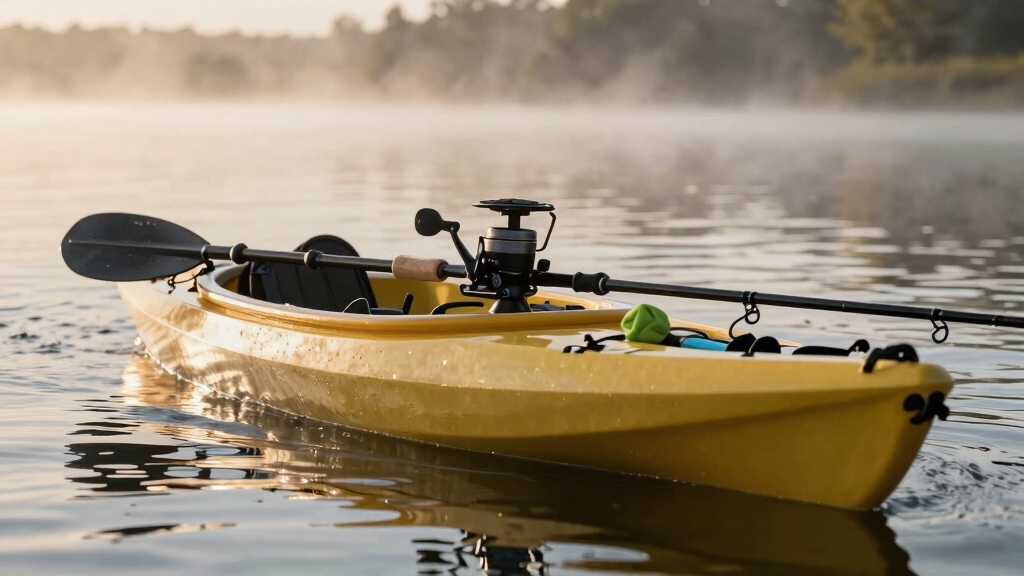
Kayak anglers lose more fish to poor rod choices than to bad lure selection. The confined space, low seating position, and constant motion of a kayak demand rods with specific length, power, and action characteristics that differ significantly from shore or boat fishing setups. What rods are best suited to kayak fishing? Rods between 6 and 7 feet with medium to medium-heavy power and fast action work best for most kayak fishing scenarios, offering the right balance of casting accuracy, fish-fighting control, and maneuverability in tight quarters.
Key Takeaways
- Rod length of 6 to 7 feet is ideal for most kayak fishing, providing casting distance without hitting the kayak or surrounding obstacles
- Medium to medium-heavy power with fast action handles the majority of freshwater and inshore saltwater species while maintaining sensitivity
- Two-piece rods offer better portability and storage than one-piece models, especially important for kayak transport
- Spinning rods are generally more versatile than casting rods for kayak fishing, particularly for beginners
- Budget-friendly options under $100 can perform well for kayak fishing when chosen with proper specifications
- Saltwater kayak fishing requires corrosion-resistant components and slightly heavier power ratings than freshwater setups
- Sit-on-top kayaks allow slightly longer rods (up to 7.5 feet) compared to sit-inside models due to better overhead clearance
- Common mistakes include choosing rods that are too long (over 8 feet), too stiff, or designed for boat fishing rather than kayak-specific needs
What Length Fishing Rod Is Best for Kayak Fishing?
The optimal rod length for kayak fishing is 6 to 7 feet for most applications, with 6.5 feet being the sweet spot that balances casting distance, accuracy, and maneuverability. This length allows anglers to cast effectively without the rod tip striking the kayak hull, paddle, or nearby vegetation while maintaining enough leverage to fight fish from a seated position.
Shorter rods (5.5 to 6 feet) work well in extremely tight spaces like narrow creeks or heavily vegetated areas where river kayak fishing demands precision. Longer rods (7 to 7.5 feet) can be used on open water or from wider sit-on-top kayaks where overhead clearance isn’t an issue.
Choose your rod length based on:
- Fishing environment: Tight creeks need 6 feet or less; open bays can handle 7+ feet
- Kayak width: Wider kayaks (32+ inches) accommodate longer rods more easily
- Target species: Larger fish benefit from longer rods for better leverage
- Casting style: Sidearm casts work better with shorter rods in kayaks
A common mistake is bringing your favorite 7.5-foot bass rod from shore fishing onto a kayak. The extra length becomes a liability when you need to net a fish, change lures, or navigate under low-hanging branches.
Difference Between Kayak Fishing Rods and Regular Fishing Rods
Kayak fishing rods differ from regular fishing rods primarily in length, handle design, and durability features tailored to the unique challenges of fishing from a low, confined platform. Standard fishing rods are typically 7 to 9 feet long and designed for standing positions on shore or in boats, while kayak-specific rods are shorter and built to handle the constant exposure to water and impact.
Key differences include:
- Shorter overall length (6-7 feet vs. 7-9 feet) to prevent tip strikes and improve control in confined spaces
- Split-grip or shorter handles that don’t interfere with paddle strokes or kayak seat backs
- More durable guides and reel seats to withstand saltwater spray and frequent contact with kayak surfaces
- Higher sensitivity to detect bites from a seated position where you can’t feel line tension through your hands as easily
- Lighter weight to reduce fatigue during all-day kayak sessions
Regular fishing rods can work on kayaks if they fall within the 6-7 foot range and have appropriate power ratings, but purpose-built kayak rods incorporate design elements that make them more practical for the environment. The split-grip handle design, for example, allows the rod to fit more easily in rod holders and reduces interference when paddling.
Best Rod Power and Action for Kayak Bass Fishing
For kayak bass fishing, medium to medium-heavy power with fast action provides the best all-around performance for techniques ranging from topwater lures to Texas-rigged soft plastics. This combination offers enough backbone to drive hooks home and control fish in heavy cover while maintaining the sensitivity needed to detect subtle bites from a seated position.
Power and action breakdown:
- Medium power (6-12 lb line): Ideal for crankbaits, spinnerbaits, and lighter topwater lures; better for smallmouth and spotted bass
- Medium-heavy power (10-17 lb line): Best for jigs, Texas rigs, and heavier topwater; handles largemouth bass in vegetation
- Fast action: Tip bends easily for casting accuracy, but backbone remains stiff for hooksets and fish control
Choose medium-heavy power if:
- Fishing in heavy cover (lily pads, submerged timber, thick grass)
- Using jigs, creature baits, or swimbaits over 1/2 ounce
- Targeting largemouth bass over 3 pounds regularly
Choose medium power if:
- Fishing open water or light cover
- Using finesse techniques (drop shot, Ned rig, small crankbaits)
- Targeting smallmouth or spotted bass
A fast action tip is critical for kayak bass fishing because it loads quickly on short casts (common in kayaks) and provides immediate feedback when a bass inhales your lure. Moderate or slow action rods don’t telegraph bites as clearly when you’re seated low to the water.
Can I Use My Regular Fishing Rods on a Kayak?
Yes, you can use regular fishing rods on a kayak if they’re between 6 and 7.5 feet long and have appropriate power for your target species. Most anglers already own rods that will work adequately for kayak fishing without purchasing specialized equipment, though some modifications to technique and expectations may be necessary.
Your regular rods will work if:
- Length is 7.5 feet or shorter (6-7 feet is ideal)
- You can cast comfortably without hitting the kayak or paddle
- The handle doesn’t interfere with your seat or paddling motion
- Rod holders on your kayak can accommodate the grip length
You’ll need kayak-specific rods if:
- Your regular rods are over 8 feet long
- You fish in extremely tight quarters (narrow creeks, mangrove tunnels)
- Your rods have full-length handles that don’t fit standard kayak rod holders
- You need split-grip designs to reduce interference with paddling
Many beginner kayak fishing enthusiasts successfully use their existing rod collection by selecting shorter models from their arsenal. A 7-foot medium-power spinning rod designed for bass or walleye will perform well on a kayak, even if it wasn’t marketed as a “kayak rod.”
The main adjustment involves casting technique. Overhead casts that work great from shore can result in your rod tip striking the kayak behind you. Sidearm and roll casts become more important in the kayak environment.
Spinning vs Casting Rods for Kayak Fishing
Spinning rods are generally better for kayak fishing, especially for beginners and anglers targeting multiple species, because they’re easier to operate one-handed, less prone to backlash, and more versatile across different lure weights. Casting (baitcasting) rods offer advantages for specific techniques but require more skill to manage in the confined, unstable platform of a kayak.
Spinning rod advantages:
- Easier to cast one-handed while stabilizing the kayak with the other hand
- No backlash issues when wind or kayak motion affects your cast
- Better for lighter lures (under 1/4 ounce)
- Simpler to operate when wearing gloves or in cold weather
- More forgiving when casting from awkward angles
Casting rod advantages:
- Better accuracy for pitching and flipping into tight cover
- More power for heavy lures and large fish
- Superior line control during the fight
- Better for techniques requiring constant contact (jigs, Texas rigs)
Choose spinning rods if:
- You’re new to kayak fishing or baitcasting reels
- Fishing open water or using finesse techniques
- Targeting species under 5 pounds regularly
- Using lures under 1/2 ounce frequently
Choose casting rods if:
- You’re experienced with baitcasting reels
- Fishing heavy cover that requires precise casts
- Using heavy jigs, swimbaits, or topwater lures over 1/2 ounce
- Targeting larger species (bass over 4 pounds, redfish, snook)
Many experienced kayak anglers carry both types, using spinning gear for finesse presentations and casting gear for power fishing. If you can only choose one, spinning rods offer more versatility for the typical kayak fishing scenario.
Are One-Piece or Two-Piece Rods Better for Kayaks?
Two-piece rods are better for kayak fishing due to superior portability, easier storage, and simplified transport, while modern manufacturing techniques have eliminated the performance gap that once made one-piece rods preferable. The ability to break down a rod to 3-4 feet makes it far easier to fit in vehicles, store in garages, and carry to launch sites.
Two-piece rod advantages:
- Fits in most vehicles without special roof racks
- Easier to store in apartments or small spaces
- Simpler to carry through wooded trails to remote launch sites
- Can be stored inside some kayak hulls during transport
- Less likely to be damaged during transport
One-piece rod advantages:
- Slightly more sensitive (though the difference is minimal with quality two-piece rods)
- No ferrule connection to potentially fail
- Faster to rig up at the launch site
The performance difference between quality one-piece and two-piece rods is negligible for most fishing applications. Modern ferrule designs create seamless connections that don’t compromise sensitivity or power. Unless you’re a tournament angler chasing every possible advantage, the practical benefits of two-piece rods far outweigh any theoretical performance loss.
Choose two-piece rods if:
- You transport kayaks on top of your vehicle
- You hike to launch sites
- You have limited storage space
- You travel by plane to fishing destinations
Choose one-piece rods if:
- You have a truck bed or trailer that accommodates full-length rods
- You fish the same local spot repeatedly
- You prioritize absolute maximum sensitivity
For most kayak anglers, a quality two-piece rod from reputable manufacturers offers the best balance of performance and practicality.
What Happens If My Fishing Rod Is Too Long for My Kayak?
Using a rod that’s too long for your kayak creates casting difficulties, increases snag risk, and reduces fish-fighting control, with rods over 8 feet becoming particularly problematic in most kayak fishing scenarios. The most immediate issue is the rod tip striking the kayak hull, paddle, or your body during casting motions, which disrupts accuracy and can damage the rod.
Problems with oversized rods:
- Casting interference: Rod tip hits kayak behind you on backcast, reducing casting distance and accuracy
- Snag risk: Longer rods catch on overhanging branches, dock pilings, and vegetation more easily
- Poor leverage: Excess length reduces your ability to apply pressure on fish from a low, seated position
- Storage issues: Long rods don’t fit in standard kayak rod holders or storage areas
- Paddle interference: Rod extends too far forward or backward, hitting paddle during strokes
- Wind problems: More rod length catches wind, making kayak control difficult
If you’re stuck with a rod that’s too long, you can mitigate problems by:
- Using only sidearm casts instead of overhead casts
- Positioning the rod at extreme angles to avoid obstacles
- Fishing only in open water away from structure
- Accepting reduced casting accuracy and distance
However, these workarounds are frustrating and limit your fishing effectiveness. A 9-foot surf rod or musky rod simply doesn’t belong on a kayak except in very specific open-water trolling scenarios.
The breaking point: Rods over 7.5 feet become difficult to manage on most kayaks, and anything over 8 feet is impractical unless you’re fishing from a very wide (36+ inches) stable kayak in completely open water.
What Rod Length Works Best in Tight Spaces While Kayak Fishing?
For tight spaces like narrow creeks, mangrove tunnels, or heavily vegetated shorelines, rods between 5.5 and 6.5 feet provide optimal maneuverability while maintaining enough length for effective hooksets and fish control. These shorter rods allow precise casts into small openings and reduce the chance of snagging overhead or bankside obstacles.
Tight-space rod specifications:
- Length: 5.5 to 6.5 feet (6 feet is ideal)
- Power: Medium to medium-heavy (depends on target species)
- Action: Fast to extra-fast for quick, accurate casts
- Handle: Split-grip design to reduce overall length
When to use ultra-short rods (5.5-6 feet):
- Fishing under docks or overhanging trees
- Navigating mangrove tunnels or cypress swamps
- Casting into small pockets in lily pad fields
- Fishing from narrow kayaks (under 28 inches wide)
Techniques that work best with short rods in tight spaces:
- Pitching and flipping (casting rods)
- Short-range accurate casts with jigs or soft plastics
- Vertical jigging in deep pockets
- Topwater presentations in small openings
The trade-off with shorter rods is reduced casting distance, which matters less in tight quarters where you’re rarely casting more than 30-40 feet. The improved accuracy and reduced snag risk more than compensate for the distance limitation.
A 6-foot medium-heavy fast-action rod is the single most versatile choice for tight-space kayak fishing, handling everything from bass in lily pads to redfish in mangrove creeks.
How Much Should I Spend on a Kayak Fishing Rod?
For most kayak anglers, spending $80 to $150 per rod provides excellent performance and durability without the diminishing returns of premium models costing $200+. This price range includes quality graphite or composite blanks, corrosion-resistant components, and warranties from reputable manufacturers.
Budget breakdown:
Under $60: Entry-level rods suitable for beginners or occasional anglers; expect lower sensitivity and less durable components but adequate performance for learning
$60-$100: Sweet spot for beginners and intermediate anglers; quality construction, decent sensitivity, and components that handle regular use
$100-$150: Best value for serious kayak anglers; high-quality blanks, premium guides and reel seats, excellent sensitivity and durability
$150-$250: High-performance rods with advanced materials and construction; noticeable improvements in sensitivity and weight but diminishing returns for most anglers
$250+: Tournament-grade rods with cutting-edge materials; only worthwhile for competitive anglers or those who fish 100+ days per year
Factors that justify higher spending:
- Fishing in saltwater (corrosion resistance matters more)
- Targeting large, powerful species (redfish, snook, stripers)
- Fishing 50+ days per year
- Needing specialized techniques (heavy flipping, long-distance casting)
Save money by:
- Buying previous-year models (often 30-40% off)
- Shopping end-of-season sales (fall and winter)
- Choosing two-piece over one-piece (often less expensive)
- Focusing on specifications over brand names
For most kayak anglers, two or three rods in the $80-$120 range covering different power ratings and techniques provide better versatility than a single $250 rod. Consider your fishing frequency and target species when setting your budget.

HIGH QUALITY - The kayak fishing rod holder Made of High Quality Material PC+ABC, strong and durable, corrosion resistant, hard to damage.
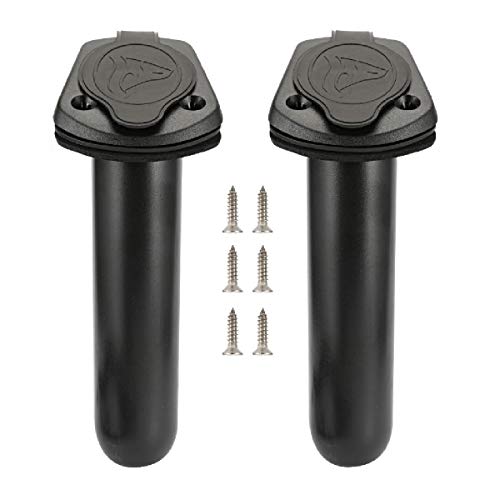
Made of High Quality Material PC+ABC , Which is Strong and Durable. for long life

Convenient: This flush-mount rod holder allows you to turn your recreational kayak into a fishing kayak. It's an essential tool for kayak fishing.
Best Budget Kayak Fishing Rods Under $100
Quality kayak fishing rods under $100 are readily available and perform well for beginners and intermediate anglers when chosen with proper specifications. Several manufacturers produce reliable rods in this price range using composite materials and corrosion-resistant components suitable for both freshwater and light saltwater use.
Key features to look for in budget rods:
- Graphite or graphite-composite blank (avoid pure fiberglass for kayak fishing)
- Stainless steel or aluminum oxide guides (minimum corrosion resistance)
- EVA or cork grip material (comfortable for all-day use)
- Two-piece construction for portability
- Manufacturer warranty (even limited warranties indicate quality standards)
Specifications for budget kayak rods:
- Length: 6.5 to 7 feet
- Power: Medium or medium-heavy
- Action: Fast
- Line rating: 8-17 lb test
- Lure weight: 1/4 to 3/4 ounce
What to avoid in budget rods:
- Rods marketed as “combo” sets with low-quality reels (buy rod and reel separately)
- Rods with ceramic guides (too fragile for kayak fishing)
- Rods without specified power and action ratings
- Rods with full-length handles (harder to store and use in kayaks)
Budget rods typically sacrifice weight and sensitivity compared to premium models, but these differences matter less in kayak fishing where you’re already dealing with kayak motion and seated positioning. A $75 rod with proper specifications will catch as many fish as a $200 rod for most anglers.
When budget rods fall short:
- Detecting subtle bites from finesse techniques
- Fishing in heavy current or deep water where sensitivity matters
- Targeting very large fish (over 10 pounds) regularly
- Fishing 50+ days per year (durability becomes important)
For beginner kayak fishing enthusiasts, starting with a quality budget rod makes sense. Upgrade to premium rods once you’ve identified your preferred techniques and target species.

Fashion Appearance: The most popular color fishing rods this year,well-made of 24T carbon fiber and stainless steel hooded reel seat, possessing resistance to seawater corrosion. Stainless steel line guide ring constructed with ceramic ring enhances better heat dissipation.EVA handle is soft and comfortable to hold.
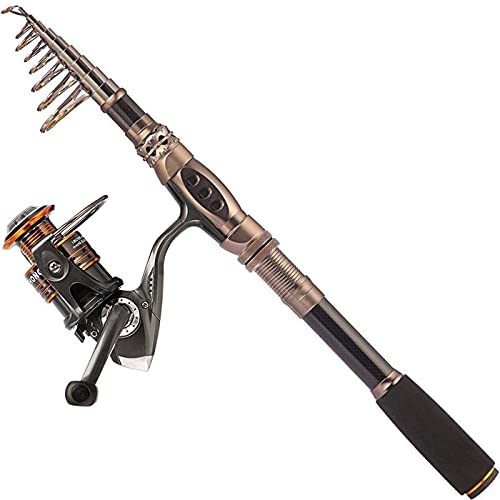
🎣 Warm Prompt: Fishing rod + reel (No Lures & Line) include Only Include 1 Fishing Rod +1 Fishing Reel.

Amazing Quality Graphite Blank: All CR7B 1-piece rods are constructed with 40-ton graphite blanks with carbon-wrapped veils. It's light weight yet providing great power, strength, durability, and sensitivity
Do I Need Different Rods for Sit-On-Top vs Sit-Inside Kayak?
Sit-on-top kayaks accommodate slightly longer rods (up to 7.5 feet) compared to sit-inside kayaks (6.5 feet maximum) due to better overhead clearance and more open casting space. However, the difference is modest, and a 6.5 to 7-foot rod works well on both kayak styles for most fishing applications.
Sit-on-top kayak rod considerations:
- More overhead clearance allows longer rods without striking the kayak
- Open deck design means less interference with rod handles
- Better suited for standing (if kayak is wide enough), which accommodates longer rods
- Rod holders typically positioned higher, accommodating various rod lengths
Sit-inside kayak rod considerations:
- Lower seating position limits overhead casting space
- Cockpit rim can interfere with longer rods during casting
- Rod handles may hit seat back or cockpit edges
- Shorter rods (6-6.5 feet) work best for most techniques
Optimal rod lengths:
- Sit-on-top: 6.5 to 7.5 feet (7 feet is ideal)
- Sit-inside: 6 to 6.5 feet (6.5 feet is ideal)
The kayak style matters less than the kayak width and your fishing environment. A narrow (26-inch) sit-on-top kayak has similar rod length requirements to a sit-inside kayak, while a wide (34-inch) sit-inside kayak can handle longer rods than expected.
Test your setup by:
- Sitting in your kayak on land
- Practicing casting motions with different rod lengths
- Checking for interference with paddle, seat, and kayak edges
- Ensuring rod fits in your rod holders
Most kayak anglers find that a 6.5 to 7-foot rod works across both kayak styles, making it unnecessary to purchase different rods unless you frequently switch between very different kayak models.
Best Rods for Saltwater Kayak Fishing
Saltwater kayak fishing demands rods with corrosion-resistant components, medium-heavy to heavy power, and fast action to handle larger, more powerful species like redfish, snook, speckled trout, and small tarpon. Rods should be 6.5 to 7 feet long with stainless steel or titanium guides and sealed reel seats to withstand constant saltwater exposure.
Saltwater-specific features:
- Corrosion-resistant guides: Stainless steel (minimum), titanium, or ceramic inserts
- Sealed reel seats: Prevent saltwater intrusion into threads and connections
- Durable blank materials: Graphite composites that resist saltwater degradation
- EVA foam grips: More resistant to saltwater than cork
- Heavy-duty tip guides: Reinforced to handle larger fish and heavier lines
Power and action for common saltwater species:
Inshore (redfish, speckled trout, flounder):
- Medium-heavy power, fast action
- 10-20 lb line rating
- 1/4 to 1 ounce lure weight
- 7-foot length for casting distance
Nearshore (snook, small tarpon, jack crevalle):
- Heavy power, fast action
- 15-30 lb line rating
- 1/2 to 2 ounce lure weight
- 7 to 7.5-foot length for leverage
Techniques and rod requirements:
- Topwater: Medium-heavy, fast action, 7 feet
- Soft plastics: Medium-heavy, extra-fast action, 6.5-7 feet
- Live bait: Medium-heavy, moderate-fast action, 7 feet
- Jigging: Heavy, fast action, 6.5 feet
Maintenance for saltwater rods:
- Rinse with fresh water after every use
- Dry completely before storing
- Check guides for corrosion monthly
- Apply reel seat lubricant quarterly
Ocean kayak fishing exposes rods to harsher conditions than freshwater, making component quality more important than in freshwater applications. A $120 saltwater-specific rod will outlast a $200 freshwater rod in coastal environments.
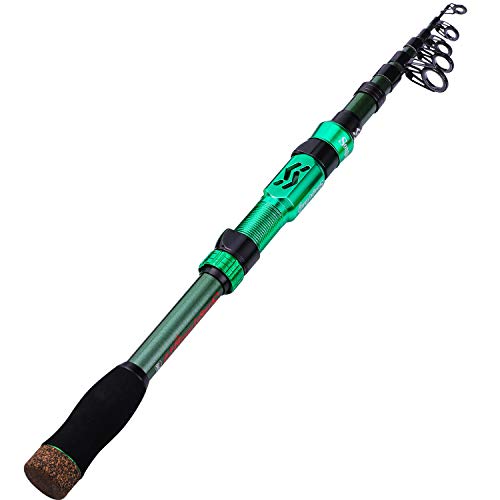
Fashion Appearance: The most popular color fishing rods this year,well-made of 24T carbon fiber and stainless steel hooded reel seat, possessing resistance to seawater corrosion. Stainless steel line guide ring constructed with ceramic ring enhances better heat dissipation.EVA handle is soft and comfortable to hold.

UGLY STIK 7’ COMPLETE SALTWATER SPINNING COMBO: Includes 9 pieces of Saltwater tackle to catch multiple Saltwater Species: 20lb. mono double hook bottom rig (2), 3oz. pyramid sinker (2) and 3/0 circle hooks (5).

Lightweight and Sensitive IM6 Graphite Blanks – Centron Lite Spinning Combos feature a sensitive and light-weight IM6 Graphite blank designed to provide exceptional value and performance for all anglers. All combos are 2 pc and come in 4 lengths from 6’ to 7’6”.
Are Telescopic Rods Good for Kayak Fishing?
Telescopic rods offer excellent portability but sacrifice sensitivity and durability, making them suitable for casual kayak anglers or those with extreme transport constraints but less ideal for serious fishing. Modern telescopic rods have improved significantly, but they still can’t match the performance of traditional two-piece rods in the same price range.
Telescopic rod advantages:
- Collapse to 18-24 inches for ultimate portability
- Fit inside kayak hulls during transport
- Ideal for air travel or backpacking to remote fishing spots
- No ferrule connection to align (extends and locks automatically)
Telescopic rod disadvantages:
- Reduced sensitivity due to multiple connection points
- Less durable (more points of potential failure)
- Heavier than equivalent two-piece rods
- More expensive for comparable quality
- Guides can misalign if sections aren’t fully extended
When telescopic rods make sense:
- Traveling by plane to fishing destinations
- Hiking long distances to launch sites
- Limited storage space (apartments, small vehicles)
- Casual fishing where maximum performance isn’t critical
- Backup rod that stays in kayak storage compartment
When to avoid telescopic rods:
- Primary rod for frequent fishing (50+ days/year)
- Targeting large or powerful species
- Techniques requiring maximum sensitivity (finesse fishing)
- Budget under $80 (quality telescopic rods cost more)
If you choose a telescopic rod, look for models with at least 4 sections (more sections = better collapsed length), stainless steel guides, and positive locking mechanisms. Expect to spend $100+ for a telescopic rod that performs comparably to a $60 two-piece rod.
For most kayak anglers, a quality two-piece rod offers better value and performance. Reserve telescopic rods for specific situations where their portability advantage justifies the performance trade-offs.
Common Mistakes When Choosing a Kayak Fishing Rod
The most common mistake kayak anglers make is choosing rods that are too long (over 7.5 feet), followed by selecting rods with inappropriate power ratings for their target species and fishing environment. These errors lead to frustration, lost fish, and reduced fishing effectiveness.
Top mistakes and how to avoid them:
1. Buying rods that are too long
- Mistake: Using 8-9 foot rods designed for shore or boat fishing
- Fix: Stick to 6-7 feet for most kayak fishing; 7.5 feet maximum for open water
2. Choosing the wrong power rating
- Mistake: Using light power rods for bass or heavy power rods for panfish
- Fix: Match power to target species and lure weight; medium to medium-heavy covers most scenarios
3. Ignoring action ratings
- Mistake: Buying moderate or slow action rods that don’t telegraph bites well
- Fix: Choose fast or extra-fast action for better sensitivity and hooksets from seated position
4. Prioritizing brand over specifications
- Mistake: Buying expensive rods with wrong specs instead of budget rods with correct specs
- Fix: Specifications (length, power, action) matter more than brand name for kayak fishing
5. Buying one-piece rods
- Mistake: Choosing one-piece rods for minimal performance gain but major portability loss
- Fix: Modern two-piece rods perform nearly identically; choose two-piece for practicality
6. Neglecting handle design
- Mistake: Full-length handles that interfere with paddling and rod holder placement
- Fix: Choose split-grip or shorter handles designed for kayak fishing
7. Skipping corrosion resistance for saltwater
- Mistake: Using freshwater rods in saltwater without proper components
- Fix: Invest in stainless steel guides and sealed reel seats for saltwater applications
8. Buying combo sets
- Mistake: Purchasing rod-and-reel combos with mismatched or low-quality components
- Fix: Buy rod and reel separately to ensure both meet your specifications
9. Overlooking rod holder compatibility
- Mistake: Buying rods with handles that don’t fit kayak rod holders
- Fix: Check handle diameter and length against your kayak’s rod holder specifications
10. Not testing casting motion before purchase
- Mistake: Buying rods without simulating kayak casting positions
- Fix: Sit in a chair at kayak height and practice casting motions in the store
The best way to avoid these mistakes is to prioritize specifications over marketing claims and to test rods in positions that simulate kayak fishing before purchasing.
Frequently Asked Questions
What is the ideal rod length for kayak fishing?
The ideal rod length for kayak fishing is 6 to 7 feet, with 6.5 feet being optimal for most situations. This length provides adequate casting distance and fish-fighting leverage while preventing the rod tip from striking the kayak or surrounding obstacles during casting and retrieval.
Can I use my 7.5-foot bass rod on a kayak?
Yes, a 7.5-foot bass rod can work on a kayak, especially on wider sit-on-top models or in open water, but you’ll need to use primarily sidearm casts and may experience some interference with paddling. Rods shorter than 7.5 feet are generally more practical for kayak fishing.
Do I need special rods for kayak fishing or will my regular rods work?
Regular fishing rods work fine for kayak fishing if they’re 7.5 feet or shorter and have appropriate power for your target species. You don’t need specialized “kayak rods,” but shorter lengths and split-grip handles make kayak fishing more comfortable and effective.
What power rod should I use for kayak bass fishing?
Medium-heavy power with fast action is best for most kayak bass fishing, handling jigs, Texas rigs, and topwater lures effectively. Use medium power for finesse techniques and lighter lures, or when targeting smallmouth and spotted bass in open water.
Are spinning or casting rods better for kayak fishing?
Spinning rods are better for most kayak anglers because they’re easier to operate one-handed, don’t backlash, and work well with lighter lures. Casting rods offer advantages for heavy cover fishing and large lures but require more skill to manage from a kayak.
How much should I spend on my first kayak fishing rod?
Spend $80 to $120 on your first kayak fishing rod to get quality construction and components without overpaying for features you may not need. This price range offers excellent value and performance for beginners and intermediate anglers.
What’s the difference between one-piece and two-piece rods for kayak fishing?
Two-piece rods are better for kayak fishing because they collapse to 3-4 feet for easier transport and storage, while modern manufacturing makes them perform nearly identically to one-piece rods. The portability advantage of two-piece rods far outweighs any minimal sensitivity difference.
Will a rod that’s too long damage my kayak or hurt my fishing?
A rod that’s too long won’t damage your kayak but will significantly hurt your fishing by causing casting interference, reducing accuracy, increasing snag risk, and making fish fighting more difficult. Rods over 8 feet are impractical for most kayak fishing scenarios.
Do sit-on-top and sit-inside kayaks need different rod lengths?
Sit-on-top kayaks can accommodate slightly longer rods (up to 7.5 feet) than sit-inside kayaks (6.5 feet maximum) due to better overhead clearance, but a 6.5 to 7-foot rod works well on both styles for most fishing applications.
Are telescopic rods a good choice for kayak fishing?
Telescopic rods offer excellent portability but sacrifice sensitivity and durability compared to two-piece rods at the same price point. They’re suitable for casual anglers or those with extreme transport constraints but not ideal as primary rods for serious kayak fishing.
What rod specifications do I need for saltwater kayak fishing?
Saltwater kayak fishing requires medium-heavy to heavy power rods with fast action, corrosion-resistant stainless steel or titanium guides, sealed reel seats, and 6.5 to 7-foot length. These specifications handle larger inshore species and resist saltwater corrosion.
Can I use ultra-light rods for kayak fishing?
Ultra-light rods (designed for panfish and small trout) can work for kayak fishing if you’re targeting small species, but they lack the backbone for hooksets and fish control from a seated position. Medium power is the lightest practical choice for most kayak fishing.
Conclusion
Choosing the right rod for kayak fishing comes down to matching specifications to your fishing environment, target species, and kayak type. A 6 to 7-foot rod with medium to medium-heavy power and fast action handles the vast majority of kayak fishing scenarios, from bass in lily pads to redfish in coastal marshes. Two-piece construction offers practical advantages for transport and storage without sacrificing performance, while spinning rods provide versatility and ease of use for most anglers.
Start with one versatile rod in the 6.5-foot range with medium-heavy power if you’re new to kayak fishing. As you gain experience and identify your preferred techniques, add specialized rods for specific applications like finesse fishing (medium power, 6 feet) or heavy cover (heavy power, 7 feet). Focus on proper specifications rather than brand names or marketing claims, and don’t hesitate to use quality rods you already own if they fall within the recommended length range.
Take action now:
- Measure your current rods and identify which ones fall in the 6-7 foot range
- Practice casting motions while seated at kayak height to test rod compatibility
- Invest in one quality 6.5-foot medium-heavy rod as your primary kayak fishing tool
- Visit your local tackle shop to test different rod lengths and actions before purchasing
- Check out our fishing kayak buying guide for more tips on optimizing your kayak fishing setup
The right rod transforms kayak fishing from frustrating to effective, allowing you to focus on finding and catching fish rather than fighting your equipment. Choose wisely, and you’ll enjoy years of successful kayak fishing adventures.