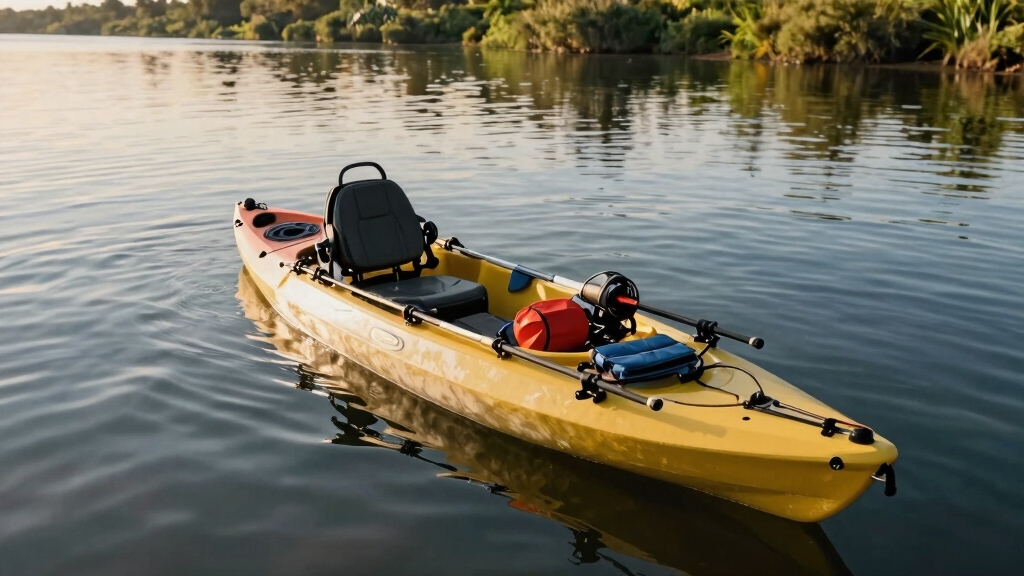
Most kayak anglers perform best with 2-3 fishing rods on the water: one active rod and 1-2 backups rigged for different techniques or as insurance against breakage. Bringing more than four rods on a typical fishing kayak creates clutter, increases snag risk, and rarely improves catch rates unless you’re tournament fishing or targeting multiple species in a single outing.
Key Takeaways
- Two to three rods is the sweet spot for most recreational kayak anglers, balancing versatility with manageable storage
- Beginners should start with one or two rods to master boat control and casting mechanics before adding complexity
- Rod holder count on your kayak determines your practical maximum; most fishing kayaks accommodate 2-6 holders
- Kayak size and stability directly limit how many rods you can safely bring without compromising balance
- Saltwater fishing often requires more rods (3-4) than freshwater (2-3) due to species variety and technique changes
- Tournament anglers typically bring 4-6 rods rigged for rapid technique switching
- Rod leashes are essential when bringing multiple rods to prevent expensive losses overboard
- Common mistake: Overloading a small kayak with gear reduces stability and increases capsize risk
How Many Fishing Rods Can Fit on a Kayak?
The physical capacity of your kayak depends on three factors: the number of rod holders installed, the kayak’s length and deck space, and its weight capacity. Most fishing kayaks come with 2-4 factory-installed flush-mount rod holders, and anglers commonly add 2-4 more aftermarket holders to reach a total of 4-8 mounting points.
A typical 12-foot fishing kayak can physically accommodate 4-6 rods when using a combination of flush mounts, rail-mounted holders, and a center console. Smaller 10-foot kayaks realistically max out at 3-4 rods before deck space becomes cramped. Larger 14-foot models or tandem fishing kayaks can handle 6-8 rods, though managing that many creates practical challenges.
Key constraints:
- Flush-mount holders: Usually 2-4 built into the hull behind the seat
- Rail-mounted holders: Add 2-4 more along the gunwales
- Deck space: Rods stored horizontally take up cockpit room needed for tackle and landing fish
- Weight capacity: Each rod, reel, and rigged line adds 1-2 pounds; total gear must stay within your kayak’s load limit
Choose rod count based on what you’ll actively use, not maximum capacity. A kayak crammed with six rods looks impressive but becomes a tangled mess when you hook a fish.
What Is the Ideal Number of Rods for Kayak Fishing Beginners?
Beginners should bring one or two rods maximum during their first several trips. Starting with a single rod lets you focus on paddle control, casting accuracy, and fish handling without the distraction of managing multiple setups. Once you’re comfortable with basic boat control, add a second rod rigged differently—for example, one spinning rod with soft plastics and one baitcaster with crankbaits.
The learning curve for kayak fishing is steeper than bank fishing because you’re managing a moving platform. Adding equipment complexity too early leads to tangled lines, dropped rods, and frustration. A single well-chosen rod and reel combo will catch the same fish as three rods, and you’ll spend more time fishing instead of rigging.
Beginner progression:
- Trip 1-5: One rod, master casting and paddling simultaneously
- Trip 6-15: Two rods, practice switching techniques mid-trip
- Trip 16+: Three rods if your fishing style demands it
Common beginner mistake: Buying a full tournament-style rod arsenal before understanding which techniques work in your local waters. Start simple, learn what you actually need, then expand your setup based on real experience.
For more guidance on getting started, check out our beginner kayak fishing resources.
Kayak Fishing Rod Holders: How Many Do You Need?
You need at least one rod holder per rod you plan to bring, plus one extra for your active rod while you paddle, land fish, or retie. For most anglers, 3-4 total rod holders provides the right balance: two for backup rods, one for your active rod during transitions, and one spare for a net or gaff.
Rod holder types serve different purposes:
- Flush-mount holders: Built into the hull, best for storing rods while paddling
- Rail-mounted adjustable holders: Clamp onto gunwales, ideal for trolling or quick access
- Rocket launchers: Vertical tubes that hold multiple rods upright behind the seat
- Horizontal rod straps: Secure rods flat on the deck when not in use
Install holders within arm’s reach of your seated position. Rods mounted too far forward or behind you create awkward retrieval angles and increase the chance you’ll drop one overboard during a grab. Most fishing kayak models allow you to add aftermarket holders without drilling if you use rail-mount or track-system accessories.
Decision rule: If you bring three rods, install four holders minimum. The extra holder gives you a place to secure your active rod when you need both hands free.


HIGH QUALITY - The kayak fishing rod holder Made of High Quality Material PC+ABC, strong and durable, corrosion resistant, hard to damage.
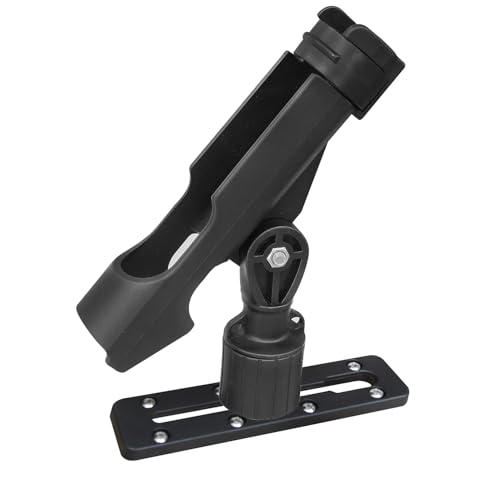
Made of UV stabilized fiberglass reinforced nylon.
Can You Bring Too Many Rods on a Kayak?
Yes, bringing too many rods creates three problems: reduced stability from uneven weight distribution, increased snag hazards from exposed lines and hooks, and decision paralysis that wastes fishing time. Most anglers who load five or six rods onto a kayak use only two or three during the actual trip.
Excess rods shift your kayak’s center of gravity, especially if they’re mounted on one side or stacked in the stern. This asymmetry makes the boat tippy and harder to control in wind or current. Each additional rod also adds another set of hooks, lures, and line that can tangle with your paddle, anchor line, or landing net at the worst possible moment.
Signs you’ve brought too many rods:
- You spend more time untangling lines than casting
- Your kayak feels unstable when reaching for gear
- You haven’t touched two or more rods by mid-trip
- Deck clutter prevents you from safely landing fish
Tournament anglers are the exception—they bring 4-6 pre-rigged rods to adapt quickly to changing conditions. Recreational anglers rarely face scenarios that require more than three techniques in a single outing.
For tips on maintaining balance with your gear, see our guide to kayak stability.
Difference Between Bringing 2 Rods vs 4 Rods Kayak Fishing
Bringing two rods keeps your setup simple, your deck clear, and your focus sharp. You’ll rig one rod for your primary technique (say, a Texas-rigged worm) and a second for a backup approach (a topwater lure or jig). This setup covers most situations without overwhelming you with choices.
Four rods offer more versatility but demand better organization. Tournament anglers and guides often run four rods rigged as follows: one for topwater, one for soft plastics, one for crankbaits, and one for jigs or spinnerbaits. This lets them switch techniques in seconds without retying, which matters when fish are actively feeding and every minute counts.
Two-rod advantages:
- Less weight and clutter
- Faster setup and breakdown
- Easier to manage in wind or current
- Lower risk of tangles
Four-rod advantages:
- Instant technique changes
- Better coverage of the water column (surface to bottom)
- Backup options if a rod breaks or a reel fails
- Efficient for multi-species trips
Choose two rods if you’re fishing a single species or technique. Choose four if you’re tournament fishing, guiding, or targeting multiple species (bass, crappie, and catfish, for example) in one trip.
Best Rod Setup for Small Kayak Fishing
Small kayaks—typically 10 feet or shorter—perform best with a two-rod maximum. These compact boats have limited deck space, lower weight capacity, and less stability than full-size fishing kayaks, so every piece of gear must justify its presence.
For a 10-foot kayak, rig one medium-power spinning rod (6’6″ to 7′) as your workhorse and one medium-heavy casting rod (7′ to 7’6″) for heavier lures or cover fishing. Shorter rods are easier to manage in the confined cockpit of a small kayak and reduce the chance of hitting your paddle or the kayak’s sides during casts.
Small kayak rod strategy:
- Rod 1: 6’6″ medium spinning rod with 10-12 lb test for finesse techniques
- Rod 2: 7′ medium-heavy baitcaster with 15-17 lb test for power fishing
- Storage: Use flush-mount holders only; rail mounts take up precious gunwale space
- Rigging: Pre-tie both rods at home to minimize on-water adjustments
Avoid bringing a third rod on a small kayak unless you’re fishing a tournament. The added weight and bulk will make the boat feel cramped and unstable, especially if you’re also carrying a cooler, tackle bag, and safety gear.
If you’re considering a small kayak, read our kayak size guide to understand how length affects fishing performance.
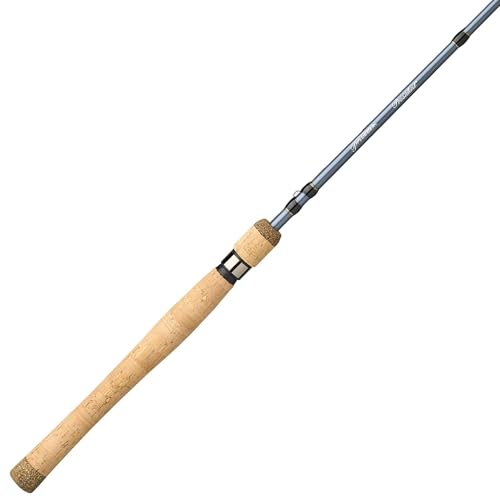
PFLUEGER PRESIDENT 7' SPINNING ROD: Performance meets value in a lightweight and dependable package. With a balanced design, this rod will become a reliable companion when you’re on the water.

All-Day Comfort: The KastKing Spartacus II Fishing Rod features a Stryker Green main body and a slip-resistant rubber cork handle that delivers exceptional comfort, especially during long fishing trips.

BERKLEY AMP 6’6” SPINNING ROD, MODERATE FAST ACTION: The AMP series surpasses all expectations for sensitivity in composite fishing rods. Paired with the tensile strength you need to reel in the big ones.
Do Tournament Kayak Anglers Use Multiple Rods?
Yes, tournament kayak anglers typically bring 4-6 rods rigged with different lures to maximize their ability to adapt to changing fish behavior. Tournaments reward efficiency—the angler who can switch from a topwater frog to a deep-diving crankbait in 10 seconds has a competitive edge over someone who spends five minutes retying.
Professional kayak anglers pre-rig rods for specific scenarios: shallow grass (frog or swim jig), mid-depth structure (crankbait or spinnerbait), deep ledges (Carolina rig or football jig), and open water (swimbait or jerkbait). This preparation lets them cover the entire water column and adjust to fish location without wasting time.
Tournament rod loadout example:
- Topwater (frog or popper)
- Shallow crankbait or spinnerbait
- Soft plastic (Texas or Carolina rig)
- Jig (flipping or football)
- Deep crankbait or swimbait
- Backup rod (duplicate of most productive setup)
Recreational anglers don’t need this level of preparation. If you’re fishing for fun rather than prize money, two or three rods will serve you just as well without the hassle of managing a small arsenal.
How to Store Multiple Fishing Rods on a Kayak Safely
Safe rod storage prevents tangles, protects expensive equipment, and keeps your deck clear for landing fish. Use a combination of flush-mount holders for passive storage and rail-mounted holders for active rods. Always secure rods with leashes to prevent loss if a rod gets knocked overboard during a fish fight or rough water.
Storage best practices:
- Flush mounts: Store backup rods tip-down with reels facing inward to minimize snag risk
- Rail mounts: Position active rods at 45-degree angles, tips pointing up and outward
- Horizontal straps: Use bungee or Velcro straps to secure rods flat on the deck during transport or rough paddling
- Rod leashes: Attach a coiled leash from each rod to a secure anchor point on the kayak
When paddling between spots, store all rods horizontally or in flush mounts to prevent tips from catching tree branches or dock pilings. Keep reel handles facing the center of the kayak so they don’t snag your paddle stroke.
Common storage mistakes:
- Leaving rods in rail mounts with lures dangling (snags your net or paddle)
- Storing rods on opposite sides of the kayak (creates weight imbalance)
- Failing to use rod leashes (one big wave or sudden movement = lost rod)
For more on managing your fishing setup, explore our kayak gear recommendations.

HORIZONTAL ROD STORAGE – Stages and secures up to three rods horizontally, ideal for kayaks with pedal drives or bow-mounted motors where vertical rods don’t fit.

【Strong Alumium Rod Holder】- HiUmi Rod holder is constructed from PVC coated aluminum.

FULLY RIGGABLE KAYAK STORAGE CRATE – The BlackPak Pro is a hard-sided kayak crate designed for organized gear storage and rigging flexibility. The hinged lid, GridLoc mounting panels, and modular structure allow anglers to customize their setup.
Common Mistakes When Bringing Too Many Rods Kayak Fishing
The most frequent mistake is bringing rods “just in case” without a clear plan for using them. Anglers load four or five rods onto the kayak, then default to their favorite setup and ignore the rest. Those unused rods become dead weight and snag hazards.
Another error is poor weight distribution. Mounting all your rods on one side of the kayak or stacking them in the stern shifts the center of gravity and makes the boat unstable. This imbalance is especially dangerous in ocean kayak fishing where waves and wind amplify stability issues.
Mistakes to avoid:
- Overloading a small kayak: More than two rods on a 10-foot kayak creates clutter and instability
- Ignoring rod leashes: One lost $200 rod-and-reel combo will haunt you
- Mounting rods out of reach: If you can’t grab a rod without standing or leaning dangerously, it’s poorly positioned
- Bringing untested gear: Don’t debut a new rod or reel on a long trip; test it close to shore first
If you find yourself using only one or two rods trip after trip, scale back your loadout. Simplicity improves your fishing experience and reduces the risk of equipment loss or kayak capsize.
Is One Rod Enough for Kayak Fishing or Do You Need a Backup?
One rod is enough if you’re fishing close to shore, targeting a single species, and confident in your equipment. However, most experienced kayak anglers bring at least one backup rod as insurance against breakage, lost lures, or changing conditions that demand a different technique.
Rods break—especially when you’re fighting a big fish in a confined kayak cockpit. A backup rod lets you continue fishing instead of paddling back to the launch with a broken tip. A second rod also saves time when you need to switch techniques; instead of cutting off a crankbait and retying a soft plastic, you grab the pre-rigged backup.
Bring one rod if:
- You’re fishing a small pond or calm lake within sight of your vehicle
- You’re targeting a single species with one proven technique
- You’re a beginner still learning boat control
Bring two rods if:
- You’re fishing farther from shore or in moving water
- You want to test multiple techniques without retying
- You’re targeting species that require different lure types
Bring three or more rods if:
- You’re tournament fishing or guiding
- You’re fishing all day and want maximum versatility
- You’re targeting multiple species in a single trip
For most recreational outings, two rods hit the sweet spot between preparedness and simplicity.
How Many Rods for Saltwater vs Freshwater Kayak Fishing
Saltwater kayak fishing typically requires 3-4 rods because saltwater species are more diverse and conditions change rapidly. You might target redfish in shallow grass flats in the morning, then move to deeper structure for speckled trout in the afternoon, then finish the day casting topwater for Spanish mackerel. Each scenario demands different tackle.
Freshwater fishing is often more focused. If you’re bass fishing a lake, two rods—one for shallow cover and one for deeper structure—will handle most situations. Crappie or panfish anglers can get by with a single ultralight rod all day.
Saltwater rod recommendations:
- Rod 1: Medium spinning rod with soft plastics for inshore species (redfish, trout)
- Rod 2: Medium-heavy casting rod with topwater or jerkbaits
- Rod 3: Heavy spinning rod for live bait or cut bait (flounder, drum)
- Rod 4: Backup or specialty rod (popping cork, jigging spoon)
Freshwater rod recommendations:
- Rod 1: Medium spinning or casting rod for primary technique (soft plastics, crankbaits)
- Rod 2: Medium-heavy rod for heavier cover or larger lures
- Rod 3 (optional): Specialty rod for topwater or finesse techniques
Saltwater environments also increase the importance of rod leashes and corrosion-resistant holders. Losing a rod in the ocean is far more costly and dangerous than losing one in a lake.
What Happens If You Overload Your Kayak with Fishing Gear
Overloading your kayak with rods, tackle, coolers, and accessories reduces freeboard (the distance from the waterline to the deck), making the boat sit lower and more vulnerable to swamping. It also raises the center of gravity, which decreases stability and increases capsize risk, especially in wind, waves, or current.
Every fishing kayak has a maximum weight capacity listed by the manufacturer—typically 300-500 pounds for solo models. This capacity includes your body weight, all gear, and any fish you catch. Exceeding this limit compromises the hull’s performance and safety.
Overloading consequences:
- Reduced stability: The kayak feels tippy and harder to control
- Slower paddling: Extra weight increases drag and fatigue
- Increased capsize risk: Lower freeboard means waves wash over the deck more easily
- Gear loss: Overcrowded decks lead to items falling overboard
Before adding a fourth or fifth rod, weigh your total gear. A typical fishing rod and reel weighs 1-2 pounds, but when you add tackle boxes (5-10 pounds), a cooler (10-20 pounds), safety equipment (5 pounds), and your body weight, you can approach your kayak’s limit faster than expected.
If you’re fishing from an inflatable kayak, weight limits are even more critical because these boats have less rigid structure to handle overloading.
Are Rod Leashes Necessary When Bringing Multiple Rods on a Kayak?
Yes, rod leashes are essential when bringing multiple rods on a kayak. A single moment of inattention—a sudden wave, a big fish thrashing in the cockpit, or a clumsy paddle stroke—can knock an unsecured rod overboard. Losing a $200-$400 rod-and-reel combo is painful, and in deep or murky water, you’ll never recover it.
Rod leashes are coiled tethers that attach to the rod handle and clip to a secure point on your kayak (a D-ring, rail, or rod holder). They stretch to let you cast and fight fish normally, then retract to keep the rod close when you set it down.
Rod leash best practices:
- Attach one leash per rod, not one leash for multiple rods
- Clip leashes to fixed anchor points, not loose gear or bungee cords
- Check leash condition before each trip; UV exposure degrades plastic over time
- Use leashes rated for the weight of your rod and reel (most are rated 5-10 pounds)
Some anglers skip leashes on rods stored in flush-mount holders, reasoning that the holder provides enough security. This works in calm conditions but fails in rough water or during a fish fight when the kayak is rocking. Leashes cost $10-$15 and prevent expensive losses—there’s no good reason to skip them.
How Many Rods Do Professional Kayak Fishermen Bring?
Professional kayak fishermen typically bring 4-6 rods rigged for tournament competition, where speed and adaptability determine success. These anglers fish 6-8 hours per day, often covering several miles of water and targeting multiple species or techniques. Pre-rigged rods eliminate downtime and let them capitalize on brief feeding windows.
Pros also carry backup rods in case of equipment failure. A broken rod or seized reel can end a tournament day for an unprepared angler, so redundancy is part of the strategy. However, even professionals rarely use more than six rods—beyond that, the setup becomes unmanageable and the marginal benefit disappears.
Pro angler rod loadout (bass tournament example):
- Frog (hollow-body, heavy braid)
- Flipping jig (heavy cover, 20 lb line)
- Crankbait (medium diving, 12 lb line)
- Soft plastic (Texas or wacky rig, 10 lb line)
- Topwater (popper or walking bait)
- Backup (duplicate of most productive rod)
Recreational anglers should not feel pressured to match this loadout. Pros fish for money and spend 100+ days per year on the water; their needs differ from someone fishing weekends for fun. Two or three well-chosen rods will serve most recreational kayak anglers better than a cluttered deck full of options.
FAQ
How many rods should a beginner bring kayak fishing?
Beginners should bring one or two rods maximum. Start with a single rod to master boat control and casting, then add a second rod once you’re comfortable managing the kayak and landing fish.
Can you bring too many fishing rods on a kayak?
Yes, bringing more than four rods on a typical fishing kayak creates clutter, increases snag risk, and reduces stability. Most anglers use only two or three rods per trip regardless of how many they bring.
How many rod holders do I need on my fishing kayak?
Install at least one rod holder per rod you plan to bring, plus one extra for your active rod during transitions. For most anglers, 3-4 total rod holders is ideal.
What’s the difference between bringing 2 rods vs 4 rods kayak fishing?
Two rods keep your setup simple and manageable, ideal for recreational fishing. Four rods offer more versatility for tournament anglers or multi-species trips but require better organization and more deck space.
Do I need a backup rod when kayak fishing?
A backup rod is recommended for trips farther from shore or when targeting larger fish. Rods break, and a backup lets you continue fishing instead of ending your day early.
How many rods do tournament kayak anglers bring?
Tournament kayak anglers typically bring 4-6 pre-rigged rods to switch techniques quickly and adapt to changing fish behavior. Recreational anglers rarely need this many.
Are rod leashes necessary on a kayak?
Yes, rod leashes are essential to prevent losing expensive rods overboard. A single wave, fish thrash, or clumsy movement can knock an unsecured rod into the water.
How many rods for saltwater vs freshwater kayak fishing?
Saltwater fishing typically requires 3-4 rods due to diverse species and changing conditions. Freshwater fishing often works well with 2-3 rods focused on specific techniques.
What happens if I overload my kayak with fishing gear?
Overloading reduces stability, lowers freeboard, increases capsize risk, and makes paddling harder. Always stay within your kayak’s weight capacity, which includes your body weight and all gear.
What’s the best rod setup for a small kayak?
Small kayaks (10 feet or shorter) perform best with two rods maximum: one medium spinning rod for finesse and one medium-heavy casting rod for power fishing. Use shorter rods (6’6″ to 7′) for easier handling.
How do I store multiple rods safely on a kayak?
Use a combination of flush-mount holders for passive storage and rail-mounted holders for active rods. Always secure rods with leashes and store them horizontally or tip-down to minimize snag risk.
Can one rod be enough for kayak fishing?
One rod is enough for short trips close to shore when targeting a single species. However, most experienced anglers bring at least two rods for versatility and as insurance against breakage.