Quick Answer
Most fishing kayaks weigh between 50 and 90 pounds, with the average falling around 65-75 pounds. Compact sit-on-top models start at 40-50 pounds, while feature-loaded pedal-drive and tandem fishing kayaks can exceed 100-130 pounds. The weight depends on length, width, hull material, and the number of fishing accessories built into the design.
Key Takeaways
- Average fishing kayak weight: 65-75 pounds for a standard 12-foot sit-on-top angler model
- Lightest options: 40-55 pounds for compact or inflatable fishing kayaks designed for solo transport
- Heaviest models: 100-130+ pounds for tandem kayaks and pedal-drive systems with extensive rigging
- Fishing kayaks vs recreational: Fishing models weigh 15-30 pounds more due to wider hulls, reinforced decks, and built-in accessories
- Solo lifting: Most people can carry a 50-65 pound kayak short distances; heavier models require carts or two-person carries
- Material matters: Polyethylene kayaks are heavier (60-90 lbs) but durable; composite and inflatable models are lighter (40-60 lbs) but cost more
- Weight doesn’t equal capacity: A 70-pound kayak can support 350-500+ pounds depending on hull design and volume
- Transport solutions: Kayak carts, roof racks with loading assists, and proper lifting technique make heavy kayaks manageable
- Stability trade-off: Heavier, wider fishing kayaks offer better stability for standing and rough water but sacrifice portability
- Common mistake: Buying based on weight alone without considering how you’ll actually transport and launch it
What Is the Average Weight of a Fishing Kayak?
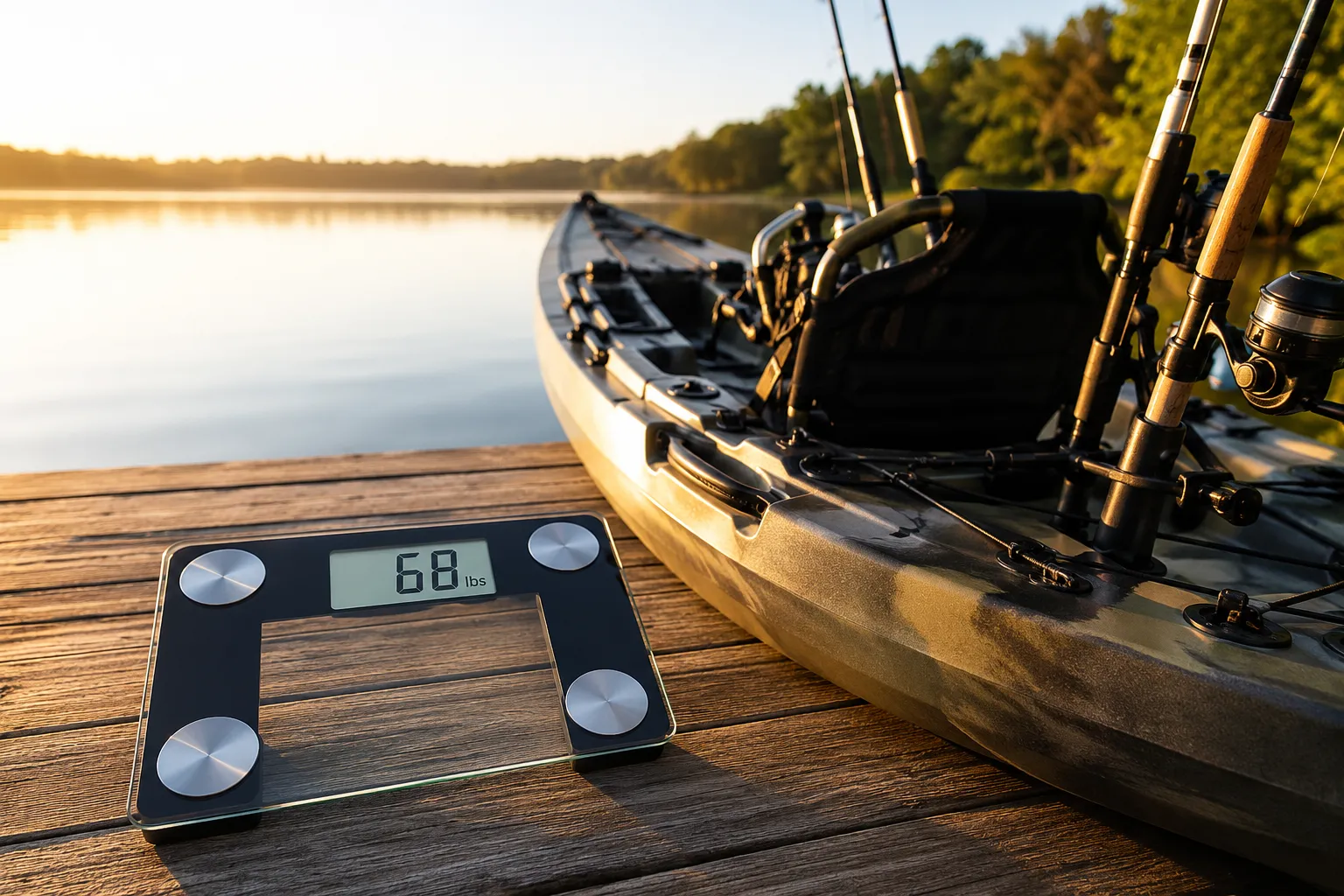
The typical fishing kayak weighs between 65 and 75 pounds. This range covers most 11-13 foot sit-on-top models designed for single anglers with standard paddle propulsion. These kayaks balance fishing features with reasonable portability for solo use.
Weight varies significantly by category:
- Compact fishing kayaks (9-10 feet): 40-55 pounds
- Standard sit-on-top fishing kayaks (11-13 feet): 60-80 pounds
- Premium fishing kayaks with pedal drives: 85-110 pounds
- Tandem fishing kayaks: 100-130+ pounds
- Inflatable fishing kayaks: 35-60 pounds
The 65-75 pound average represents the sweet spot where manufacturers pack in fishing-specific features (rod holders, tackle storage, stable standing platform) while keeping the kayak manageable for one person to car-top and launch. Kayaks below 60 pounds often sacrifice stability or features, while those above 85 pounds typically require transport aids like carts or trailers.
Choose a kayak in the 50-65 pound range if you have limited upper body strength, frequently launch from locations without vehicle access, or store your kayak in a garage where you need to lift it onto wall racks.
How Much Does a Typical Fishing Kayak Weigh Compared to a Regular Kayak?
Fishing kayaks weigh 15-30 pounds more than recreational kayaks of similar length. A 12-foot recreational kayak typically weighs 45-55 pounds, while a 12-foot fishing kayak weighs 65-80 pounds. This weight difference comes from design features that prioritize stability and fishing functionality over speed and portability.
Why fishing kayaks are heavier:
- Wider hull design: Fishing kayaks measure 32-36+ inches wide for standing stability, compared to 26-30 inches for recreational models
- Reinforced deck: Thicker plastic or composite materials support standing anglers and mounted accessories
- Built-in features: Molded rod holders, tackle storage hatches, gear tracks, and anchor systems add 5-10 pounds
- Thicker hull walls: Extra material in high-stress areas prevents damage from hooks, anchors, and rough launches
- Larger cockpit area: More deck space and higher weight capacity require additional structural material
Weight comparison by kayak type:
| Kayak Type | Length | Typical Weight | Width |
|---|---|---|---|
| Recreational touring | 12 feet | 45-55 lbs | 26-29 inches |
| Fishing sit-on-top | 12 feet | 65-75 lbs | 32-36 inches |
| Recreational sit-inside | 12 feet | 40-50 lbs | 24-28 inches |
| Fishing pedal-drive | 12 feet | 90-110 lbs | 33-37 inches |
The extra weight in fishing kayaks directly translates to better on-water performance for angling. The wider, heavier hull stays stable when you’re standing to cast, fighting fish, or reaching for gear. Recreational kayaks prioritize easy transport and speed, making them lighter but less suitable for fishing activities.
Common mistake: Assuming you can use a lightweight recreational kayak for fishing. The narrow hull and minimal weight capacity make standing dangerous and limit the gear you can safely carry.
Can One Person Lift a Fishing Kayak Alone?
Most adults can lift and carry a fishing kayak weighing 50-70 pounds for short distances using proper technique. Kayaks in this weight range are manageable for solo loading onto roof racks, moving from storage to vehicle, and carrying from parking areas to launch sites 50-100 feet away.
Factors that determine if you can solo-lift your kayak:
- Your physical strength: If you can comfortably lift 40-50 pounds overhead, you can handle most standard fishing kayaks with proper form
- Kayak weight: 40-60 lbs (easy for most adults), 60-75 lbs (moderate effort required), 75-90 lbs (challenging for many), 90+ lbs (requires cart or assistance)
- Carry distance: 20-30 feet from vehicle to water is manageable; 100+ feet requires breaks or a cart
- Terrain: Flat pavement is easy; sand, mud, rocks, or stairs make any kayak feel 20 pounds heavier
- Kayak design: Models with comfortable carry handles at balance points are easier to manage than those with awkward grip locations
Proper solo lifting technique:
- Stand beside the kayak at its center point (usually near the seat)
- Squat down and grip the far side of the cockpit rim or scupper holes
- Lift with your legs while pulling the kayak onto your thigh
- In one motion, roll the kayak up and rest the cockpit rim on your shoulder
- Balance the kayak with one hand on the front, one on the back
- Walk with the kayak resting on your shoulder, weight distributed along your upper back
For kayaks over 75 pounds, solo lifting becomes impractical for most people. The awkward length (10-14 feet) and bulk make balance difficult even if you have the raw strength. At this weight, transport aids become necessary rather than optional.
If you can’t lift your kayak alone: Use a kayak cart with large wheels (handles 100+ pounds easily), install a roof rack with loading assists like the Thule Hullavator, or recruit a fishing partner to help with loading and launching.
What Are the Lightest Fishing Kayaks for Solo Transport?
The lightest fishing kayaks weigh between 40 and 55 pounds and include compact sit-on-top models, inflatable fishing kayaks, and ultralight composite designs. These kayaks sacrifice some stability and features but remain manageable for anglers who prioritize easy solo transport.
Lightest fishing kayak categories:
Compact hard-shell fishing kayaks (40-55 lbs):
- Length: 9-10.5 feet
- Width: 30-33 inches
- Best for: Small anglers, calm water, short fishing trips
- Trade-offs: Less storage, reduced stability for standing, lower weight capacity (250-300 lbs)
Inflatable fishing kayaks (35-60 lbs):
- Pack down to duffel bag size for apartment storage or hiking to remote waters
- Setup time: 10-15 minutes with electric pump
- Best for: Anglers without vehicle roof racks, travelers, limited storage space
- Trade-offs: Less rigid feel, vulnerable to punctures, slower paddling speed
Composite fishing kayaks (45-60 lbs):
- Materials: Fiberglass, carbon fiber, or thermoformed ABS plastic
- Premium price point ($1,500-$3,500+)
- Best for: Serious anglers who transport frequently and can afford the investment
- Trade-offs: Higher cost, more susceptible to impact damage than rotomolded polyethylene
Features to look for in lightweight fishing kayaks:
- Comfortable carry handles at the bow, stern, and center balance point
- Adequate weight capacity (at least 300 pounds to carry you plus 50-75 pounds of gear)
- Essential fishing features only: 2-4 rod holders, small storage hatch, basic gear tracks
- Stable hull design that compensates for lighter weight with smart engineering
Choose a lightweight fishing kayak if you launch solo more than twice per week, store your kayak in a second-floor apartment, or have back or shoulder issues that make heavy lifting painful. The convenience of easy transport often outweighs the performance benefits of heavier, more feature-rich models.

SUPER-TOUGH – 3-ply laminate construction combined with SuperStrong enhanced molecular formulation PVC provides superior structural strength and unmatched resistance to damage from abrasion, impact and sunlight, while allowing more pressure for rigidity
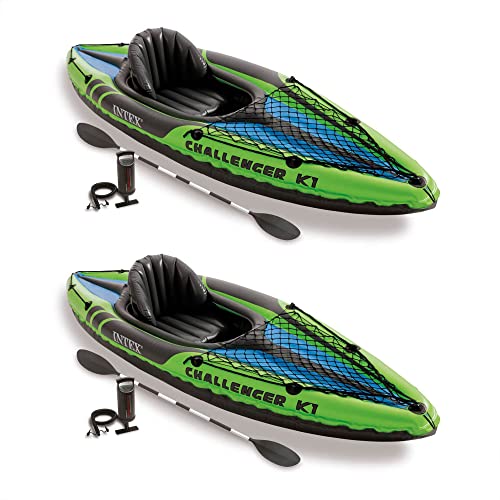
Pack of (2) one-person inflatable kayaks with a maximum weight capacity of 220 pounds and ideal for lakes and mild rivers with oars and air pump; Durable nylon carry bag and repair patch included
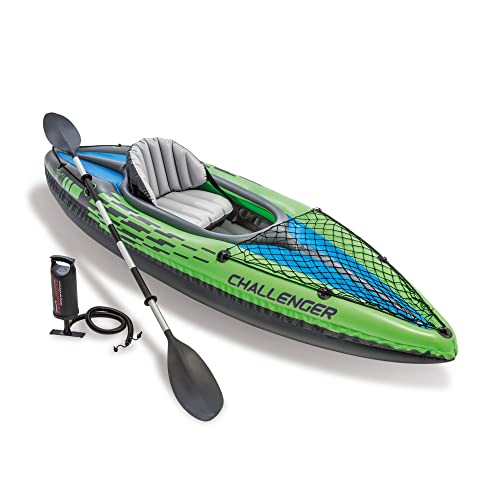
SUPER-STRONG – SuperStrong enhanced molecular formulation PVC provides superior strength and durability, ensuring high impact and abrasion resistance
How to Transport a Heavy Fishing Kayak by Yourself
Transporting a heavy fishing kayak solo requires the right equipment and technique rather than brute strength. Kayaks weighing 75-100+ pounds are manageable alone when you use kayak carts, loading assists, and strategic planning.
Essential transport equipment for heavy kayaks:
Kayak cart ($50-$150):
- Large pneumatic wheels (10-12 inches) handle sand, gravel, and boat ramps
- Weight capacity of 150+ pounds
- Strap system that secures kayak firmly to cart
- Folds for storage in kayak hull or vehicle
- Best use: Moving kayak from parking lot to water, especially distances over 50 feet
Roof rack loading assists ($200-$600):
- Roller systems: Mount on rear crossbar, let you slide kayak up from bumper
- J-cradles with assist: Tilt down for loading, then rotate kayak upright
- Powered lifts (Thule Hullavator): Gas-assist struts do the heavy lifting for you
- Best use: Solo car-topping kayaks over 70 pounds
Step-by-step solo transport process:
- At home: Use kayak cart to wheel from storage to vehicle (don’t carry if you don’t have to)
- Loading vehicle: Position kayak parallel to vehicle, lift bow onto rear crossbar or roller, slide forward onto front crossbar
- Securing: Use cam straps (not ratchet straps) around hull and crossbars, plus bow and stern tie-downs
- At launch site: Park as close to water as possible, unload kayak onto cart, wheel to water’s edge
- Launching: Wade into knee-deep water, slide kayak off cart, board from the side
- After fishing: Reverse the process, using cart to return to vehicle
Pro tips for heavy kayak transport:
- Scout launch sites ahead of time: Choose locations with short carries and vehicle access close to water
- Remove accessories before transport: Take off rod holders, fish finders, and other add-ons to reduce weight by 5-10 pounds
- Use a kayak cart with a kickstand: Lets you position the cart, then load the kayak without holding both
- Install permanent cart mounts: Some kayaks have built-in scupper holes designed for cart axles
- Consider a small trailer: For kayaks over 100 pounds, a $300-$500 kayak trailer eliminates lifting entirely
Common mistake: Trying to save money by skipping the cart and struggling with manual carries. A $75 kayak cart pays for itself in reduced back strain and faster setup time after just a few trips.

【Enhanced Load Capacity】 Built with 2mm thickened aluminum alloy, it supports up to 280lbs / 127kg, offering stable, deformation-resistant performance. Easily transports heavy kayaks, with enhanced durability for long-term use

ALL-TERRAIN PNEUMATIC TIRES FOR ANY SURFACE: Large pneumatic tires with aggressive tread roll easily over sand, grass, gravel, asphalt, and dirt trails, so you can launch from virtually any shoreline without struggling to carry your watercraft.

【Strong Load Capacity】 This compact kayak cart is specially designed for transporting different kayaks. It features a 2mm thickened aluminum alloy frame for a strong weight capacity. It can carry 450 lbs kayaks to meet all your needs for kayak transport
Do Heavier Fishing Kayaks Perform Better in Rough Water?
Heavier fishing kayaks generally perform better in rough water, wind, and current because the extra weight provides momentum and stability. A 75-90 pound kayak cuts through waves and maintains its course more effectively than a 50-pound model, which gets pushed around by wind and chop.
How weight affects rough-water performance:
Advantages of heavier kayaks in rough conditions:
- Better tracking: Heavier hull resists being blown off course by crosswinds
- Smoother ride through chop: Weight and momentum carry you through small waves rather than bouncing over them
- Less weathercocking: The tendency to turn into the wind is reduced with a heavier, longer kayak
- More stable platform: Extra weight lowers the center of gravity, making the kayak harder to tip
- Confidence for standing: Heavier kayaks feel more planted when you stand to cast in moving water
When lighter kayaks struggle:
- Wind speeds above 10-15 mph make lightweight kayaks (under 55 lbs) difficult to control
- Boat wakes and wave trains cause excessive rocking in light, narrow hulls
- Strong current requires constant paddle correction in kayaks that lack weight and tracking keels
Weight isn’t the only factor in rough-water performance:
- Hull design matters more: A well-designed 60-pound kayak with a deep keel and proper rocker can outperform a poorly designed 80-pound kayak
- Width provides stability: A 36-inch-wide kayak at 65 pounds is more stable than a 32-inch kayak at 75 pounds
- Length affects tracking: Longer kayaks (13+ feet) track straighter regardless of weight
- Your skill level: Experienced paddlers can handle lighter kayaks in conditions that would overwhelm beginners
Choose a heavier kayak (75-90+ lbs) if you fish open water, large lakes, bays, or inshore saltwater where wind and waves are common. The improved stability and tracking justify the transport challenges.
Choose a lighter kayak (50-65 lbs) if you fish protected ponds, small rivers, or calm mornings when wind is minimal. The easier transport and maneuverability in tight spaces outweigh the rough-water disadvantages.
Understanding Fishing Kayak Weight Limit and Capacity
Fishing kayak weight capacity ranges from 250 to 550+ pounds and represents the maximum total weight the kayak can support while remaining safe and functional. This capacity includes your body weight, fishing gear, cooler, anchor, safety equipment, and any fish you catch.
How to calculate your needed capacity:
- Your weight: Include clothing, waders, and PFD (add 5-10 lbs to your body weight)
- Fishing gear: Rods, tackle boxes, nets, tools (15-25 lbs)
- Safety and comfort: Paddle, PFD, anchor, rope, dry bag (10-15 lbs)
- Food and water: Cooler with drinks and snacks (10-20 lbs)
- Catch: Fish, live well, or stringer (5-30 lbs depending on target species)
- Add 20% safety margin: Never load a kayak to its maximum rated capacity
Example calculation:
- Angler: 200 lbs
- Gear and equipment: 50 lbs
- Food and water: 15 lbs
- Safety margin (20%): 53 lbs
- Total needed capacity: 318 lbs minimum
For this angler, a kayak rated for 350-400 pounds provides comfortable capacity with room for bigger catches or extra gear.
Weight capacity by kayak size:
| Kayak Length | Typical Width | Weight Capacity | Best For |
|---|---|---|---|
| 9-10 feet | 30-32 inches | 250-300 lbs | Anglers under 180 lbs, minimalist gear |
| 11-12 feet | 32-34 inches | 325-400 lbs | Average anglers, standard gear load |
| 13-14 feet | 34-36 inches | 400-500 lbs | Larger anglers, extended trips, heavy gear |
| Tandem models | 34-38 inches | 500-750 lbs | Two anglers or one angler with extensive gear |
Why weight capacity matters for fishing:
Unlike recreational paddling where you might carry just a water bottle and paddle, fishing requires significant gear. Tackle boxes, multiple rods, anchor systems, fish finders with batteries, and coolers add up quickly. Overloading a kayak causes:
- Reduced stability: The kayak sits lower in the water with less freeboard, making it easier to swamp
- Poor performance: Overloaded kayaks are slow, hard to turn, and track poorly
- Safety risk: Less reserve buoyancy means waves or wakes can more easily flood the deck
- Uncomfortable ride: The kayak feels sluggish and unresponsive
Common mistake: Buying a kayak based on your body weight alone without accounting for gear. A 180-pound angler needs at least 300 pounds of capacity (preferably 350+) to fish comfortably with standard equipment.
What Is the Best Fishing Kayak for Someone Who Can’t Lift Heavy Things?
The best fishing kayaks for anglers with limited lifting ability weigh 45-60 pounds and include compact sit-on-top models, inflatable fishing kayaks, and lightweight composite designs paired with transport aids. These options maintain essential fishing features while prioritizing easy handling.
Top choices for limited lifting strength:
Inflatable fishing kayaks (35-55 lbs):
- No lifting required for transport (carry in duffel bag, inflate at water)
- Setup: 10-15 minutes with electric pump
- Stability: Wide beam (35-40 inches) compensates for lighter weight
- Storage: Apartment-friendly, fits in closet
- Best for: Anglers with back problems, seniors, those without roof racks
Compact rotomolded kayaks (45-55 lbs):
- Length: 9-10.5 feet
- Durable polyethylene construction
- Essential fishing features: 2-4 rod holders, small storage hatch
- Best for: Budget-conscious anglers who fish calm water
Thermoformed or composite kayaks (50-60 lbs):
- Premium materials reduce weight without sacrificing size
- Length: 11-12 feet with full fishing features
- Higher price point ($1,500-$3,000)
- Best for: Serious anglers who can invest in quality equipment
Essential transport aids for limited strength:
- Kayak cart with large wheels: Eliminates carrying entirely for distances over 20 feet
- Roof rack with loading assist: Thule Hullavator or similar powered lift systems
- Kayak trailer: Small utility trailer ($300-$600) removes all lifting from the equation
- Dock or beach launch sites: Choose fishing locations where you can slide the kayak into water rather than carrying it
Features that make any kayak easier to handle:
- Well-placed carry handles: At bow, stern, and center balance point
- Lighter accessories: Aluminum paddles instead of fiberglass, compact anchors
- Modular gear system: Remove heavy items (batteries, coolers) before moving the kayak
- Scupper cart mounts: Built-in holes that accept kayak cart axles for quick attachment
If you absolutely cannot lift 45+ pounds: Consider a kayak cart as mandatory equipment rather than optional. A quality cart with pneumatic wheels lets you transport even a 70-pound kayak with minimal effort, rolling it like a wheelbarrow from vehicle to water.
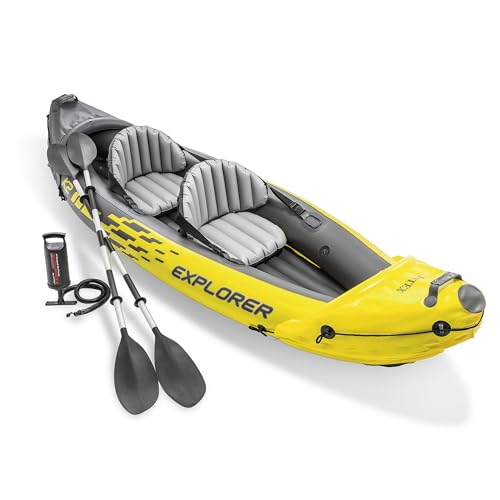
EASY TRANSPORT – Lightweight and compact, this kayak is easy to assemble and, with the Boston valve, it inflates and deflates in minutes; paddles come apart and the pieces can be conveniently stored with the boat in the included carrying bag allowing you to take the fun of kayaking wherever you go

SUPER-TOUGH – 3-ply laminate construction combined with SuperStrong enhanced molecular formulation PVC provides superior structural strength and unmatched resistance to damage from abrasion, impact and sunlight, while allowing more pressure for rigidity

✔ SUPER-STRONG – SuperStrong enhanced molecular formulation PVC provides superior strength and durability, ensuring high impact and abrasion resistance
Why Are Fishing Kayaks Heavier Than Recreational Kayaks?
Fishing kayaks are heavier than recreational kayaks because they’re built with wider hulls for stability, reinforced decks to support standing anglers, thicker material in high-stress areas, and integrated fishing features that add weight. These design choices prioritize fishing performance over portability.
Specific design elements that add weight:
Wider hull (32-38 inches vs 24-28 inches):
- More surface area requires more material
- Adds 10-15 pounds compared to narrow touring kayaks
- Provides stable platform for standing, casting, and fighting fish
- Reduces speed but increases confidence for anglers
Reinforced deck and hull:
- Thicker plastic in cockpit area supports standing weight (150-250 lbs concentrated on small area)
- Extra material around scupper holes prevents cracking
- Reinforced areas where accessories mount (gear tracks, rod holders)
- Adds 5-10 pounds but prevents damage from fishing activities
Built-in fishing features:
- Molded rod holders (2-6 per kayak): 1-2 lbs
- Gear tracks and mounting systems: 2-3 lbs
- Tackle storage hatches with watertight seals: 2-4 lbs
- Anchor trolley system: 1-2 lbs
- Elevated seat with better back support: 3-5 lbs
- Total feature weight: 10-15 lbs
Larger cockpit and deck space:
- More standing room requires larger deck area
- Open cockpit design uses more material than enclosed sit-inside kayaks
- Adds 5-8 pounds but provides workspace for tackle, landing nets, and fish handling
Pedal-drive systems (when included):
- Propeller or fin drive mechanism: 15-20 lbs
- Reinforced hull cavity to house drive system: 5-8 lbs
- Stronger mounting points and structural supports: 3-5 lbs
- Total pedal-drive weight addition: 25-35 lbs
Material choices:
- Most fishing kayaks use rotomolded polyethylene for durability and impact resistance
- This material is heavier than thermoformed plastic or composite materials
- Trade-off: Polyethylene handles abuse from rocky launches, dropped anchors, and hook punctures better than lighter materials
The weight is intentional, not accidental. Fishing kayak designers could make lighter boats, but the reduced stability, durability, and fishing functionality would make them poor fishing platforms. The extra 20-40 pounds compared to recreational kayaks directly translates to better fishing performance.
Common Mistakes When Buying a Fishing Kayak Based on Weight
Anglers often make critical errors when evaluating fishing kayak weight, either prioritizing portability at the expense of fishing performance or buying heavy kayaks without realistic transport plans. Understanding these mistakes helps you choose the right balance for your situation.
Mistake #1: Buying the lightest kayak without considering stability
Many first-time buyers focus solely on weight, choosing a 45-50 pound kayak to make transport easy. Then they discover the narrow, lightweight hull is too unstable for standing, casting, or fishing in any wind or current.
Better approach: Determine your minimum stability requirements first (can you stand? do you fish rough water?), then find the lightest kayak that meets those needs. A 65-pound stable kayak with a cart is better than a 50-pound kayak you’re afraid to stand in.
Mistake #2: Ignoring transport logistics before buying
Anglers fall in love with a feature-loaded 95-pound pedal kayak at the store, then realize they can’t lift it onto their vehicle or carry it to their favorite fishing spots.
Better approach: Before shopping, measure your vehicle’s roof height, assess your physical lifting ability, and scout your typical launch sites. If you can’t realistically transport a heavy kayak, either choose a lighter model or budget for a cart and roof rack loading assist.
Mistake #3: Assuming heavier always means better quality
Weight doesn’t indicate quality. A poorly designed 80-pound kayak isn’t better than a well-engineered 60-pound model. Some heavy kayaks are just overbuilt with excessive material rather than smart design.
Better approach: Evaluate hull design, material quality, and feature integration rather than using weight as a quality proxy. Read reviews from anglers who fish in conditions similar to yours.
Mistake #4: Not accounting for gear weight in capacity calculations
Buyers check that their body weight is under the kayak’s capacity but forget to add 50-75 pounds of fishing gear, food, and safety equipment. The overloaded kayak performs poorly and feels unstable.
Better approach: Calculate your total loaded weight (body + gear + 20% safety margin) and choose a kayak with capacity well above that number. If you weigh 200 pounds and carry 50 pounds of gear, you need at least 350 pounds of capacity, preferably 400+.
Mistake #5: Buying a tandem kayak thinking it’s easier to transport
Tandem fishing kayaks weigh 100-130 pounds, making them extremely difficult for one person to move. Buyers assume they’ll always have help, then end up fishing solo most of the time.
Better approach: Only buy a tandem if you genuinely fish with a partner 75%+ of the time and have realistic transport plans (trailer, two people, or cart). For occasional tandem use, two solo kayaks are more versatile.
Mistake #6: Skipping the test lift at the store
Many anglers buy online or at stores where kayaks are displayed on racks, never actually lifting and carrying the kayak before purchase.
Better approach: Ask the dealer to help you take the kayak off the rack and carry it 50 feet. This reveals whether you can realistically handle the weight. If the store won’t allow this, that’s a red flag about their customer service.
How Much Does a Tandem Fishing Kayak Weigh?
Tandem fishing kayaks weigh between 100 and 130 pounds, with some premium pedal-drive models exceeding 140 pounds. The extra length (13-16 feet), wider beam (34-38 inches), and reinforced hull needed to support two anglers plus gear make these kayaks significantly heavier than solo models.
Tandem weight by category:
- Basic tandem paddle kayaks: 100-115 lbs (13-14 feet)
- Premium tandem with accessories: 115-130 lbs (14-15 feet)
- Tandem pedal-drive kayaks: 130-150 lbs (14-16 feet)
Why tandem kayaks are so heavy:
- Longer hull: 13-16 feet vs 10-13 feet for solo kayaks (adds 20-30 lbs)
- Higher weight capacity: 500-750 lbs requires thicker, stronger material (adds 15-20 lbs)
- Dual seating systems: Two elevated seats with adjustable positions (adds 8-12 lbs)
- More fishing features: 4-8 rod holders, multiple storage hatches, extended gear tracks (adds 10-15 lbs)
- Reinforced structure: Extra support to handle two anglers standing or moving around (adds 10-15 lbs)
Transport challenges with tandem kayaks:
Solo transport of a 100+ pound tandem kayak is impractical for most people. The combination of heavy weight and awkward 14-16 foot length makes lifting dangerous and carrying nearly impossible.
Realistic tandem transport options:
- Two-person carry: Each person lifts one end, carrying the kayak between you
- Kayak trailer: Small utility trailer ($400-$800) designed for kayak transport
- Heavy-duty cart: Commercial-grade cart with large wheels rated for 150+ lbs
- Truck bed: Slide kayak into pickup bed (no lifting required)
When a tandem makes sense despite the weight:
- You fish with a partner (spouse, friend, child) on 75%+ of trips
- You have reliable help for loading and transport
- You own a trailer or truck that eliminates lifting
- You fish from locations with vehicle access right to the water
- You want one stable platform for teaching kids or beginners
When to buy two solo kayaks instead:
- You fish alone more than half the time
- You don’t have consistent help with transport
- You want flexibility for solo and tandem trips
- Your vehicle can carry two kayaks but not one heavy tandem
- You and your partner have different fishing styles or target species
Common mistake: Couples buy a tandem thinking it will be romantic to fish together, then discover they prefer different fishing spots, techniques, and paces. Two 65-pound solo kayaks provide more flexibility than one 120-pound tandem.
Are Inflatable Fishing Kayaks Lighter Than Hard Shell Models?
Inflatable fishing kayaks are significantly lighter than hard-shell models, typically weighing 35-60 pounds compared to 60-90 pounds for rigid kayaks of similar length. This 30-50% weight reduction makes inflatables the easiest fishing kayaks to transport, store, and handle solo.
Weight comparison by construction type:
| Kayak Type | Length | Weight | Packed Size |
|---|---|---|---|
| Inflatable fishing kayak | 10-12 feet | 35-55 lbs | Duffel bag (36″ x 18″ x 14″) |
| Rotomolded polyethylene | 10-12 feet | 60-80 lbs | Full-size kayak (cannot pack down) |
| Thermoformed plastic | 10-12 feet | 50-65 lbs | Full-size kayak |
| Composite (fiberglass) | 10-12 feet | 45-60 lbs | Full-size kayak |
Why inflatable kayaks are lighter:
- Material: Heavy-duty PVC or Hypalon fabric weighs less than polyethylene plastic
- No rigid frame: Air chambers provide structure instead of solid material
- Minimal accessories: Fewer molded-in features reduce weight
- Compact components: Seats, foot braces, and accessories are lightweight and removable
Advantages of lightweight inflatable kayaks:
- Easy transport: Carry in backpack or duffel bag, no roof rack needed
- Apartment-friendly storage: Fits in closet, under bed, or in car trunk
- Airline travel: Take your kayak on fishing trips anywhere in the world
- Hike-in access: Carry to remote lakes and rivers inaccessible by vehicle
- No lifting required: Inflate at water’s edge, eliminating all heavy lifting
Trade-offs of inflatable fishing kayaks:
- Setup time: 10-15 minutes to inflate (vs instant launch with hard-shell)
- Puncture risk: Vulnerable to sharp rocks, hooks, and oyster shells
- Less rigid feel: Flex and give under your weight, especially when standing
- Slower speed: Softer hull creates more drag than rigid kayaks
- Wind sensitivity: Lighter weight makes them easier to blow off course
- Higher maintenance: Requires drying before storage to prevent mold
When to choose an inflatable fishing kayak:
- You live in an apartment or have limited storage space
- You don’t own a vehicle with roof racks
- You fish remote locations requiring hikes to access
- You travel frequently and want to fish while away from home
- You have physical limitations that make lifting 60+ pounds difficult
- You fish calm, protected water without sharp obstacles
When to choose a hard-shell kayak:
- You fish rocky areas, oyster beds, or waters with sharp hazards
- You want maximum speed and tracking performance
- You prefer instant launch without setup time
- You fish rough water where rigidity improves stability
- You have garage storage and roof racks already
- You want to stand and cast frequently (rigid platforms are more stable)
Best inflatable fishing kayaks balance weight and durability: Look for models with reinforced bottom panels, multiple air chambers for safety, and drop-stitch construction that creates a rigid floor. These features add 5-10 pounds but dramatically improve fishing performance.
What Affects the Weight of a Fishing Kayak?
Multiple design and material factors determine fishing kayak weight, with hull material, length, width, and accessory integration being the primary variables. Understanding these factors helps you predict weight and make informed trade-offs between portability and performance.
Primary weight factors:
Hull material (biggest impact):
- Rotomolded polyethylene: 60-90 lbs for 12-foot kayak (most common, durable, affordable)
- Thermoformed ABS plastic: 50-65 lbs for 12-foot kayak (lighter, more expensive, less impact-resistant)
- Fiberglass composite: 45-60 lbs for 12-foot kayak (premium price, requires careful handling)
- Inflatable PVC/Hypalon: 35-55 lbs for 12-foot kayak (lightest, requires inflation, less rigid)
Length:
- Each additional foot adds approximately 8-12 pounds
- 10-foot kayak: 50-65 lbs
- 12-foot kayak: 65-80 lbs
- 14-foot kayak: 80-95 lbs
Width (beam):
- Narrow (28-30 inches): Lighter but less stable
- Standard (32-34 inches): Balanced weight and stability
- Wide (36-38 inches): Heavier but excellent stability for standing
- Each 2 inches of additional width adds 5-8 pounds
Wall thickness:
- Thicker plastic (for durability) adds 5-10 pounds
- Reinforced high-stress areas (cockpit, scupper holes) add 3-5 pounds
- Premium kayaks use variable thickness (thick where needed, thin elsewhere) to save weight
Built-in features and accessories:
- Molded rod holders: 0.5-1 lb each
- Gear tracks: 1-2 lbs per track
- Storage hatches with seals: 2-3 lbs each
- Elevated seat system: 3-5 lbs
- Anchor trolley: 1-2 lbs
- Rudder system: 4-6 lbs
- Total accessory weight: 10-20 lbs depending on features
Propulsion system:
- Paddle-only: 0 lbs (paddle not included in kayak weight)
- Pedal drive (propeller): 20-30 lbs
- Pedal drive (fin system): 15-25 lbs
- Motor mount and battery: 30-50 lbs (usually not included in advertised weight)
Secondary weight factors:
- Manufacturing process: Rotomolding creates thicker, heavier hulls than thermoforming
- Brand philosophy: Some manufacturers prioritize durability (heavier), others prioritize performance (lighter)
- Price point: Budget kayaks often use more material to compensate for cheaper plastic quality
- Target user: Kayaks designed for larger anglers use more material for higher weight capacity
How to estimate a kayak’s weight before seeing specs:
- Start with base weight for material type (polyethylene: 60 lbs, composite: 50 lbs, inflatable: 40 lbs)
- Add 8-10 lbs per foot over 10 feet
- Add 5 lbs for each 2 inches of width over 30 inches
- Add 10-15 lbs for extensive fishing features
- Add 20-30 lbs for pedal-drive system
Example: 12-foot polyethylene kayak, 34 inches wide, full fishing features, paddle-drive
- Base polyethylene: 60 lbs
- Extra 2 feet of length: +16 lbs
- Extra 4 inches of width: +10 lbs
- Fishing features: +12 lbs
- Estimated weight: 98 lbs (actual weight likely 90-105 lbs)
This estimation helps you quickly assess whether a kayak will meet your portability needs when shopping online or comparing models.
Frequently Asked Questions
What is the average weight of a 12-foot fishing kayak?
A 12-foot fishing kayak typically weighs between 65 and 80 pounds, with 70-75 pounds being the most common range. Rotomolded polyethylene models fall on the heavier end (70-80 lbs), while thermoformed or composite kayaks are lighter (60-70 lbs). Pedal-drive versions add 20-30 pounds to these base weights.
Can I carry a 70-pound kayak by myself?
Most adults can carry a 70-pound kayak short distances (50-100 feet) using proper shoulder-carry technique, though it requires moderate physical strength. For longer distances or if you have back problems, a kayak cart is highly recommended. The awkward 12-foot length makes balance more challenging than the weight alone.
How much does a kayak weigh with a pedal drive?
A fishing kayak with a pedal-drive system weighs 85-110 pounds on average, which is 20-35 pounds heavier than the same kayak with paddle-only propulsion. The pedal mechanism, drive unit, and reinforced hull cavity all contribute to the additional weight. Premium pedal kayaks can exceed 120 pounds.
Are lighter kayaks less stable?
Lighter kayaks are not necessarily less stable, but there is often a correlation because stable fishing kayaks require wider hulls and more material. A well-designed 60-pound kayak with a 34-inch beam can be more stable than a poorly designed 75-pound kayak with a 30-inch beam. Hull shape and width matter more than weight alone for stability.
What is the lightest fishing kayak that can handle rough water?
Fishing kayaks in the 55-65 pound range with 13+ foot length and 33+ inch width can handle moderate rough water while remaining manageable for solo transport. Look for models with deep keels, good rocker, and at least 350-pound capacity. Lighter kayaks (under 55 lbs) typically lack the tracking and stability needed for challenging conditions.
How do I know if a kayak is too heavy for me?
A kayak is too heavy for you if you cannot comfortably lift it onto your shoulder and carry it 30 feet without straining. Test this at the store or with a friend’s kayak before buying. If you struggle with the weight, either choose a lighter model or plan to use a kayak cart for all transport. Back strain and injury aren’t worth the extra features of a heavy kayak.
Do I need a kayak cart for a 60-pound kayak?
A kayak cart is optional but highly recommended for a 60-pound kayak if you regularly carry it more than 50 feet or launch from locations with soft sand, gravel, or steep ramps. While most people can carry 60 pounds short distances, a cart reduces fatigue and lets you save energy for fishing rather than exhausting yourself before you even launch.
How much does a fishing kayak weigh compared to a canoe?
Fishing kayaks (60-80 lbs) typically weigh less than fishing canoes (75-95 lbs) of similar length. However, recreational canoes can be lighter (45-65 lbs) than fishing kayaks. Canoes have more interior volume and capacity but are harder to paddle solo in wind. The weight difference is less significant than the handling characteristics.
Can a roof rack hold a 90-pound kayak?
Most aftermarket roof racks are rated for 150-200 pounds of static weight and 75-100 pounds of dynamic (driving) weight per crossbar pair. A 90-pound kayak is within the capacity of quality roof racks from Thule, Yakima, or Rhino Rack. Always check your specific vehicle’s roof load rating and rack specifications before loading heavy kayaks.
What is the weight limit difference between kayak models?
Weight capacity varies from 250 pounds (compact kayaks) to 550+ pounds (large tandem models), with most fishing kayaks rated for 325-450 pounds. Capacity depends on hull volume and design rather than the kayak’s own weight. A 70-pound kayak might have 350-pound capacity while an 80-pound kayak could have 500-pound capacity based on hull shape and size.
Are expensive fishing kayaks lighter than budget models?
Premium fishing kayaks are often 10-20 pounds lighter than budget models of similar size because they use advanced materials (thermoformed plastic, composites) and engineering to reduce weight while maintaining strength. However, some expensive kayaks are heavier due to premium features like pedal drives and extensive accessories. Price doesn’t always correlate with light weight.
How much does a fishing kayak weigh when loaded with gear?
A typical fishing kayak loaded with gear weighs 110-150 pounds total: 65-75 lbs for the kayak, 15-25 lbs for rods and tackle, 10-15 lbs for safety equipment and paddle, 10-20 lbs for food and water, and 5-15 lbs for fish and miscellaneous items. This loaded weight is why adequate weight capacity (350+ lbs) is essential for comfortable fishing.
Conclusion
Fishing kayak weight ranges from 40 pounds for compact inflatables to 130+ pounds for tandem pedal-drive models, with the average single-angler kayak weighing 65-75 pounds. This weight reflects the engineering trade-offs between portability and fishing performance, wider hulls for stability, reinforced decks for standing, and integrated features all add pounds but dramatically improve your fishing experience.
The right weight for you depends on three factors: your physical ability to transport the kayak, the type of water you fish, and how often you launch solo. A 50-pound kayak that’s easy to carry but unstable in wind will frustrate you more than a 75-pound kayak that requires a cart but performs confidently in rough conditions.
Take these next steps to choose the right fishing kayak weight:
- Test your lifting ability: Visit a dealer and actually carry kayaks in your target weight range 50+ feet to assess realistic portability
- Calculate your total loaded weight: Add your body weight plus 50-75 pounds of gear, then choose a kayak with 20% extra capacity
- Scout your launch sites: Measure carry distances and terrain to determine if you need a kayak cart
- Budget for transport aids: A $75 cart or $200 roof rack loading assist makes a 75-pound kayak as manageable as a 50-pound model
- Prioritize stability over portability: It’s easier to solve transport challenges with equipment than to fish confidently from an unstable kayak
The best fishing kayak isn’t the lightest one, it’s the one that balances weight with the stability, capacity, and features you need for your fishing style, paired with realistic transport solutions that fit your physical abilities and budget. A heavier kayak with a cart will serve you better than a lightweight kayak you’re afraid to stand in.