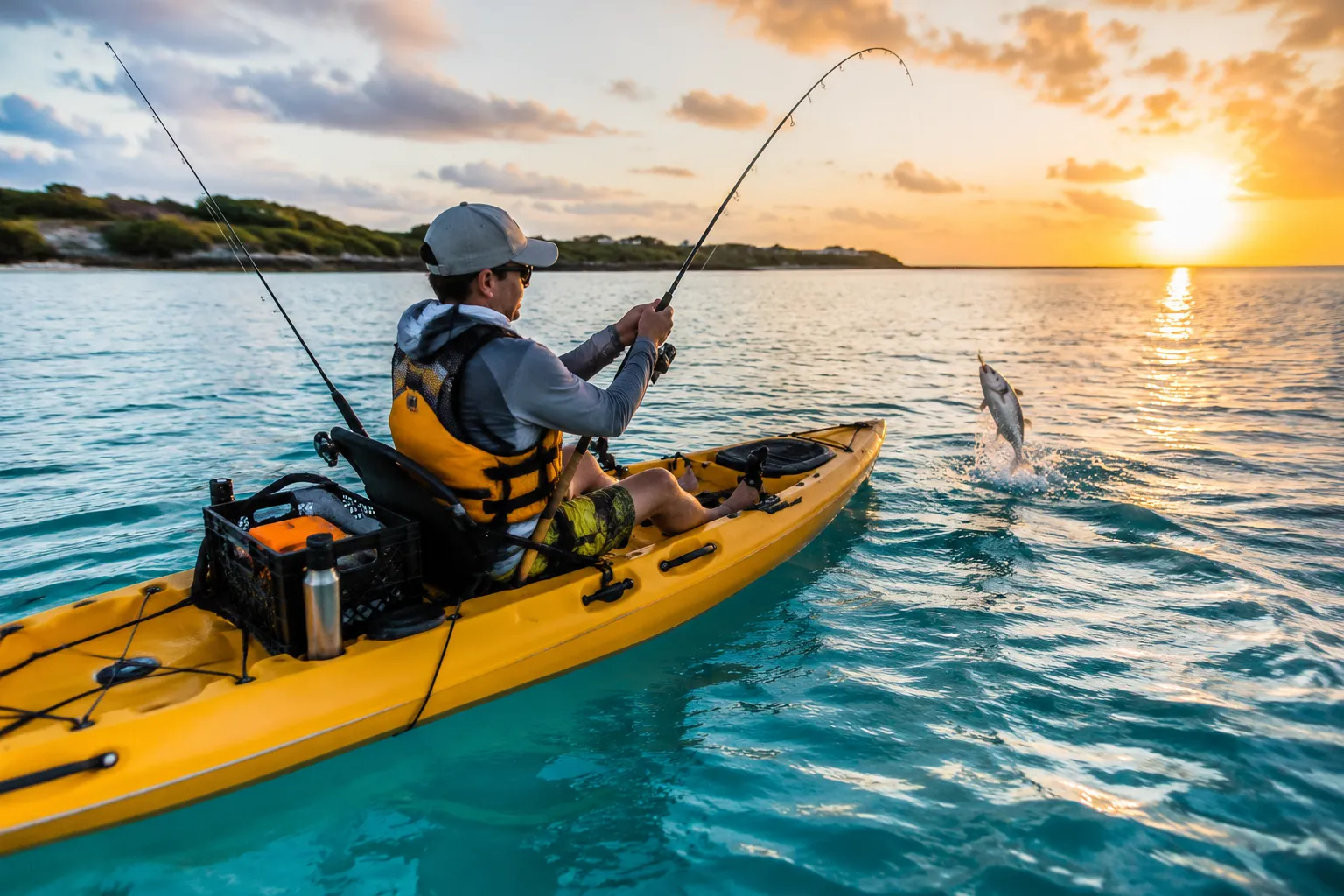
Quick Answer: Yes, you can absolutely kayak fish in the ocean, and thousands of anglers do it successfully every day in 2026. Ocean kayak fishing requires a stable sit-on-top kayak designed for saltwater, essential safety gear including a PFD and communication device, and knowledge of tides, currents, and weather conditions. Beginners should start in protected bays or calm inshore waters before venturing into open ocean environments.
Key Takeaways
- Ocean kayak fishing is safe and accessible when you use proper equipment and follow safety protocols
- Sit-on-top kayaks with self-bailing scuppers are the standard choice for saltwater fishing
- Essential safety gear includes a Coast Guard-approved PFD, VHF radio or communication device, and a kayak leash
- Beginners should start in protected bays and gradually build skills before fishing open ocean waters
- Ocean fishing kayaks range from $600 for basic models to $5,000+ for premium pedal-drive systems
- Saltwater fishing licenses are required in most states, but kayak registration rules vary by location
- Staying within one mile of shore is a common safety guideline for recreational ocean kayak fishing
- Proper preparation for capsizing, including gear leashes and self-rescue practice, is essential
What Is Ocean Kayak Fishing?
Ocean kayak fishing is the practice of fishing from a kayak in saltwater environments, including bays, estuaries, nearshore coastal waters, and open ocean. Unlike freshwater kayak fishing, it involves navigating tides, currents, waves, and saltwater conditions while targeting species like redfish, snook, tarpon, striped bass, halibut, and many other saltwater game fish.
The sport has grown dramatically over the past decade as kayak technology has improved. Modern fishing kayaks offer stability that allows anglers to stand and cast, pedal-drive systems that free your hands for fishing, and specialized rigging for rod holders, fish finders, and tackle storage.
What makes ocean kayak fishing unique:
- Access to fishing spots unreachable by larger boats or from shore
- Quiet approach that doesn’t spook fish in shallow water
- Lower cost compared to owning and maintaining a motorized boat
- Excellent workout combined with productive fishing time
- Ability to launch from almost any beach or boat ramp
Ocean kayak fishing works best in protected waters like bays, sounds, and inshore flats where wave action is minimal. More experienced paddlers venture into open ocean, around jetties, or through surf zones to reach offshore structure and deeper water species.
Difference Between Lake Kayak Fishing and Ocean Kayak Fishing
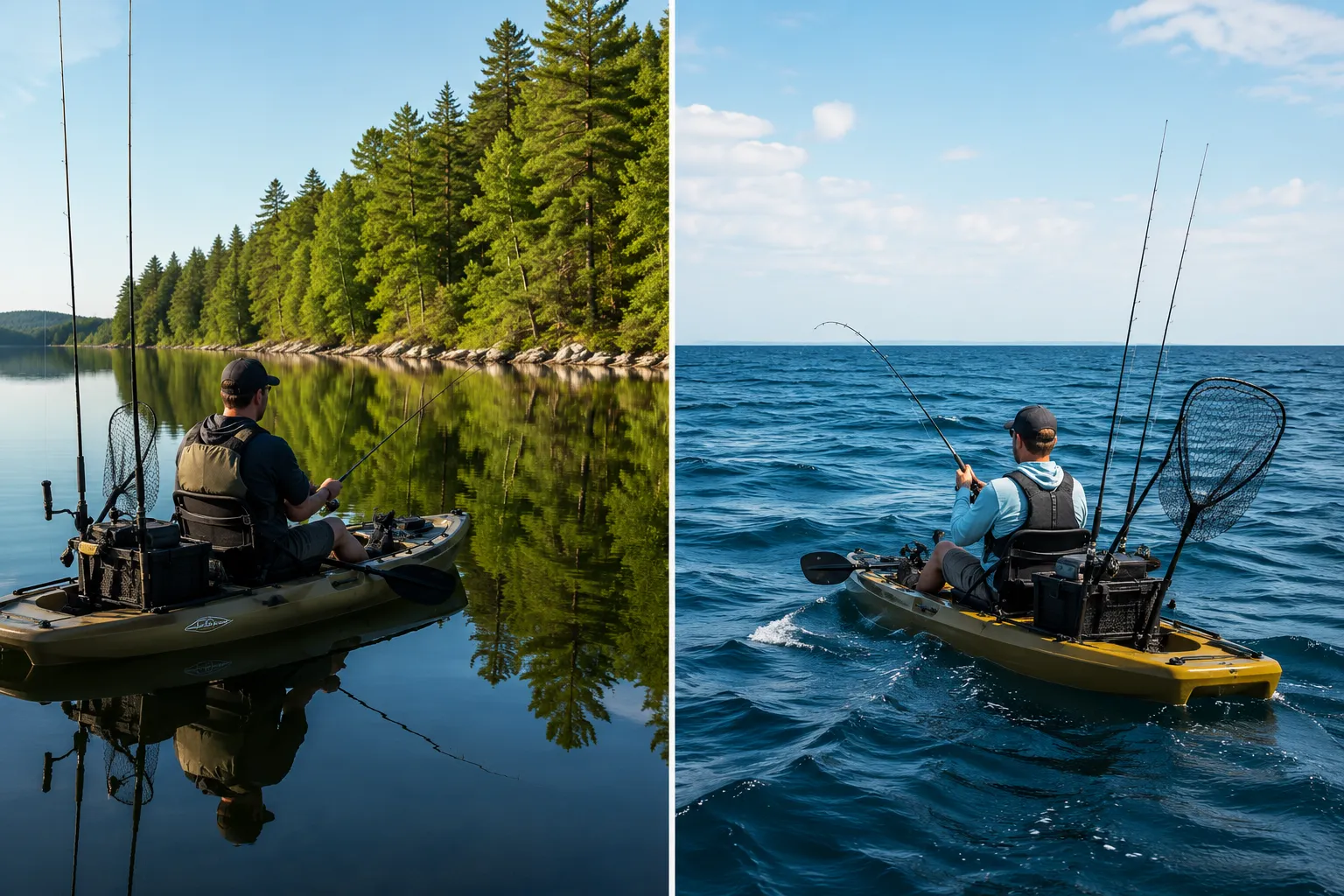
Lake kayak fishing and ocean kayak fishing differ primarily in environmental challenges, safety requirements, and equipment durability. Ocean fishing demands more attention to weather, tides, currents, and wave management, while lake fishing typically offers calmer, more predictable conditions.
Key differences:
| Factor | Lake Fishing | Ocean Fishing |
|---|---|---|
| Water conditions | Generally calm, minimal waves | Tides, currents, waves, swells |
| Weather impact | Localized wind and storms | Rapid weather changes, offshore winds |
| Visibility | Often limited to shore distance | Can lose sight of land quickly |
| Rescue access | Usually closer to help | May be far from assistance |
| Gear corrosion | Minimal saltwater exposure | Requires saltwater-resistant components |
| Navigation | Shoreline references | GPS and compass often necessary |
Safety equipment requirements are more stringent for ocean fishing. While a basic PFD might suffice on a small lake, ocean kayak fishing demands a Coast Guard-approved life jacket, communication device (VHF radio or waterproof phone), whistle, and often a personal locator beacon for offshore trips.
Saltwater also corrodes metal components faster, so ocean fishing kayaks need stainless steel or aluminum hardware, and all gear requires regular freshwater rinses. The kayak itself should have sealed hatches to keep gear dry and multiple scupper holes for self-draining.
Choose lake fishing if: you’re building basic kayak and fishing skills, prefer calmer conditions, or don’t have access to coastal waters. Choose ocean fishing if: you want to target saltwater species, enjoy more challenging conditions, and have developed solid paddling and self-rescue skills.
Best Kayaks for Saltwater Fishing
The best kayaks for saltwater fishing are stable sit-on-top models between 12-14 feet long, with widths of 32-36 inches, self-bailing scuppers, and either paddle or pedal propulsion. Top choices in 2026 include models from Hobie, Old Town, Perception, and Wilderness Systems that balance stability, tracking, and fishing features.
Essential features for ocean fishing kayaks:
- Sit-on-top design, Self-draining and easier to re-enter after a capsize
- Wide, stable hull, Allows standing to cast and sight-fish
- Sealed storage hatches, Keeps gear dry in rough conditions
- Multiple rod holders, Flush-mount and adjustable options
- Anchor trolley system, Positions kayak in current without spinning
- Paddle or pedal clips, Secures propulsion when hands-free fishing
- Gear tracks, Allows customization with accessories
Propulsion options:
Paddle kayaks are lighter, simpler, more affordable, and easier to transport. They require good upper body conditioning but offer a quiet approach and work well in shallow water. Most ocean anglers start with paddle models.
Pedal-drive kayaks free your hands for fishing while moving, cover more water with less fatigue, and maintain position in current more easily. They cost significantly more, add weight, and the drive mechanism requires maintenance and can catch vegetation in very shallow water.
Top-rated ocean fishing kayak categories:
- Budget-friendly ($600-$1,200): Perception Pescador, Lifetime Tamarack, Vibe Sea Ghost, solid entry-level options with basic fishing features
- Mid-range ($1,500-$2,500): Old Town Sportsman, Wilderness Systems Radar, Jackson Coosa, excellent stability and rigging options
- Premium pedal-drive ($3,000-$5,000+): Hobie Pro Angler, Old Town Predator PDL, Native Watercraft Slayer, top-tier features and hands-free propulsion
Common mistake: Buying a narrow, fast touring kayak for fishing. Speed matters less than stability when you’re standing to cast or fighting a fish. A 34-inch-wide fishing kayak will feel much safer in ocean swells than a 24-inch touring model.
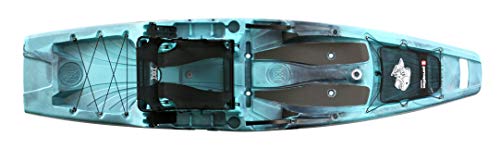
Ultimate Fishing & Storage Space: Perception Outlaw 11.5 is a fishing-optimized sit on top kayak with superior stability and an impressive weight capacity of 425 lbs. It boasts a large rear tankwell and front storage area for all your fishing and personal gear.

UV-Protected HDPE Construction for Durability: Built with high-density polyethylene (HDPE) plastic, this kayak is both lightweight and highly durable, offering long-lasting protection against UV rays for years of use in various conditions. Paddle included.

Ergolounge seating system : Extra-thick cushioning and an extra high and wide padded backrest.
How Much Does an Ocean Fishing Kayak Cost?
Ocean fishing kayaks cost between $600 and $5,000 depending on construction quality, propulsion system, and included features. Entry-level rotomolded paddle kayaks start around $600-$800, mid-range fishing-specific models run $1,500-$2,500, and premium pedal-drive systems with advanced rigging cost $3,000-$5,000 or more.
Price breakdown by category:
$600-$1,200 (Entry-level):
- Basic rotomolded polyethylene construction
- Paddle propulsion
- 2-4 rod holders
- Limited storage and rigging options
- Good for beginners learning the sport
$1,500-$2,500 (Mid-range):
- Higher-quality hull designs with better tracking
- More fishing-specific features (gear tracks, anchor systems)
- Comfortable seating with better back support
- Multiple sealed hatches
- Best value for serious recreational anglers
$3,000-$5,000+ (Premium):
- Pedal-drive propulsion systems
- Standing stability and elevated seating
- Integrated fish finders and electronics
- Extensive customization options
- Professional-grade components
Additional costs to budget:
- Paddle: $80-$250 for a quality kayak fishing paddle
- PFD: $60-$150 for a fishing-specific life jacket
- Anchor system: $40-$100 for anchor, rope, and trolley
- Rod holders: $20-$60 each for additional mounts
- Fish finder: $150-$800 for GPS/sonar combo units
- Safety gear: $50-$150 for whistle, light, radio, first aid
- Transport: $150-$400 for roof rack or trailer
Total first-year investment typically ranges from $1,000-$6,000 depending on whether you buy used or new and which features you prioritize.
Money-saving tip: Buy a used kayak from a local angler upgrading their setup. Fishing kayaks hold value well, and you can often find barely-used mid-range models for 40-50% off retail. Just inspect the hull for cracks and test all moving parts before buying.

【Partner For Paddles】 Designed to prevent losing your paddle on water, paddle leash is an essential kayak accessory for every paddler. A leash at a nice price but could keep your paddle always secure. Find the perfect partner for your paddles!

✔INCLUDE:Complete kayaking/paddle board anchoring kit including anchor(3.5lb), premium 8mm double braided 30ft nylon rope, spring hook, Float and storage bag.

Used Book in Good Condition
Is Ocean Kayak Fishing Safe for Beginners?
Ocean kayak fishing is safe for beginners who start in protected waters, use proper safety equipment, check weather conditions, and gradually build skills before venturing into more challenging environments. Most accidents occur when anglers skip safety gear, ignore weather forecasts, or attempt conditions beyond their skill level.
Beginners should start with:
- Protected bays and harbors with minimal wave action
- Calm weather days with winds under 10 mph
- Incoming or slack tides rather than strong outgoing currents
- Buddy system fishing with an experienced partner
- Staying within sight of shore and other boaters
Essential safety practices:
- Always wear a PFD, Non-negotiable, even in calm conditions
- Check marine weather, Wind, wave height, and tide predictions
- File a float plan, Tell someone where you’re going and when you’ll return
- Bring communication, Waterproof phone or VHF radio
- Practice self-rescue, Know how to re-enter your kayak from water
- Use a kayak leash, Prevents your kayak from drifting away if you fall off
Risk factors that increase danger:
- Offshore winds that can push you away from land
- Strong outgoing tides that create distance from shore
- Cold water temperatures (hypothermia risk)
- Thunderstorms with lightning and sudden wind
- Large boat traffic in narrow channels
- Fishing alone without communication devices
The 120 Rule for cold water: Add air temperature and water temperature together. If the total is less than 120°F, wear a wetsuit or drysuit. Cold water incapacitation happens quickly and is a leading cause of kayaking fatalities.
Most beginners can safely ocean kayak fish within 2-3 trips if they take a basic kayaking safety course, practice in calm conditions, and fish with experienced anglers who can demonstrate proper techniques.
What Gear Do I Need for Kayak Fishing in the Ocean?
For kayak fishing in the ocean, you need a Coast Guard-approved PFD, paddle or pedal system, anchor with trolley, rod holders, waterproof storage, communication device (VHF radio or phone), safety whistle, bilge pump, first aid kit, and sun protection. Fishing-specific gear includes rods, reels, tackle, landing net, and fish storage or stringer system.
Safety gear (non-negotiable):
- Type III PFD with pockets for gear storage
- Whistle attached to PFD
- VHF marine radio or waterproof phone in dry bag
- Paddle leash to prevent losing your paddle
- Kayak leash to stay connected if you capsize
- Bilge pump or large sponge for removing water
- First aid kit in waterproof container
- Navigation lights if fishing dawn, dusk, or night
Fishing gear:
- 2-3 fishing rods (7-7.5 feet work well in kayaks)
- Spinning or baitcasting reels with saltwater-resistant components
- Tackle box or bag with lures, hooks, weights, leaders
- Landing net with extendable handle
- Fish gripper or lip-grabbing tool
- Measuring board for checking legal sizes
- Cooler or fish bag for keeping catch
- Pliers and knife for hook removal and line cutting
Kayak rigging:
- Anchor system (3-5 lb folding anchor with 100+ feet of rope)
- Anchor trolley for positioning anchor point
- Additional rod holders beyond factory-installed
- Gear tracks for mounting accessories
- Paddle clips to secure paddle when fishing
- Dry bags or hatches for phone, keys, wallet
- Milk crate or tank well bag for tackle organization
Clothing and personal items:
- Sun protection, Hat, sunglasses, long sleeves, SPF 50+ sunscreen
- Water, At least 1 liter, more on hot days
- Snacks, Energy bars or trail mix
- Waterproof phone case or dry bag
- Towel for drying hands and cleaning fish slime
Optional but valuable:
- Fish finder/GPS combo for locating structure and navigation
- Camera or GoPro for documenting catches
- Gloves for sun protection and fish handling
- Polarized sunglasses for seeing fish in water
- Flag or visibility pennant so boats can see you
Common mistake: Bringing too much gear on your first trips. Start with essentials and add items as you discover what you actually use. An overloaded kayak sits lower in the water, handles poorly, and increases capsize risk.

U.S. COAST GUARD APPROVED: This USCG-approved inflatable belt pack inflates manually by pulling the inflation handle. Approved for users 16 years or older, and over 80 lbs. The universal size fits up to a 52” waist
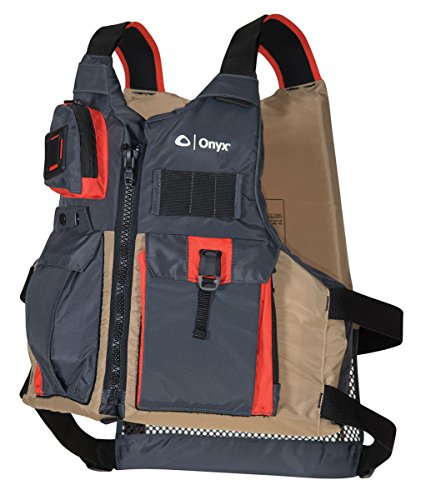
Designed for Anglers – Multiple pockets and tool holders keep fishing gear within easy reach

TRUSTED SAFETY SINCE 1977: Stohlquist has led innovation in life jackets for over 40 years, delivering reliable performance trusted by paddlers, kayakers, and boaters worldwide.
How to Deal With Waves When Kayak Fishing in the Ocean
To deal with waves when kayak fishing in the ocean, point your bow directly into oncoming waves, maintain forward momentum, keep your weight centered, and avoid turning broadside to large swells. For fishing in waves, use a drift sock or anchor to maintain position, and time your casts between wave sets when the kayak is most stable.
Techniques for paddling through waves:
- Approach head-on, Always take waves on the bow, never the side
- Paddle actively, Maintain forward speed to punch through waves
- Lean slightly forward, Shifts weight toward the bow for better wave penetration
- Time your strokes, Power through the wave face, recover in the trough
- Stay loose, Let your hips move with the kayak rather than fighting it
Launching through surf:
- Wait for a lull between wave sets
- Push off and paddle hard to get beyond the break zone quickly
- Keep the kayak perpendicular to waves
- If a wave is about to break on you, paddle hard into it
- Once past the break, angle toward your fishing spot
Landing through surf:
- Watch wave patterns and wait for smaller sets
- Time your approach to ride the back of a wave
- Keep the kayak straight and pointed at the beach
- As you near shore, hop out in knee-deep water and grab the bow
- Pull the kayak up the beach before the next wave arrives
Fishing in choppy conditions:
- Use an anchor or drift sock to maintain position without constant paddling
- Sit lower in your seat for better stability
- Cast between wave sets when the kayak is momentarily stable
- Shorten your rod, 6.5-7 foot rods are easier to manage than 8-footers
- Secure all gear with leashes and bungees so nothing washes overboard
When to stay off the water:
- Wave heights exceeding 3 feet for beginners, 5 feet for experienced paddlers
- Wind speeds above 15 mph creating whitecaps
- Thunderstorms or lightning in the forecast
- Strong offshore winds that could push you out to sea
Practice tip: Spend time paddling in small waves (1-2 feet) without fishing gear to build confidence and learn how your kayak handles. The more comfortable you are with wave dynamics, the more you’ll enjoy fishing in less-than-perfect conditions.
Can You Kayak Fish in the Ocean Alone or Do You Need a Partner?
You can kayak fish in the ocean alone, but fishing with a partner significantly increases safety through mutual assistance, emergency response capability, and shared navigation responsibility. Solo ocean kayak fishing is common among experienced anglers who take extra safety precautions, but beginners should always fish with others until they’ve developed solid skills and self-rescue ability.
Advantages of fishing with a partner:
- Immediate help if you capsize or have an emergency
- Someone to assist with landing large fish
- Shared knowledge of fishing spots and techniques
- Motivation and accountability for safety practices
- Ability to cover more water and share intel on fish location
- More enjoyable social experience
Solo fishing considerations:
- Higher risk if something goes wrong
- Must be self-sufficient for all rescues and repairs
- Requires more conservative decisions about conditions and distance
- Need reliable communication device and float plan
- Should stay closer to shore and other boaters
Safety requirements for solo ocean kayak fishing:
- File a detailed float plan with someone on land
- Carry two forms of communication (phone and VHF radio)
- Wear a PFD with whistle at all times
- Stay within sight of shore or other boats
- Check in regularly via text or radio
- Avoid challenging conditions, be more conservative than when with others
- Practice self-rescue until it’s second nature
- Bring a personal locator beacon (PLB) for true emergencies
When solo fishing makes sense:
- You have 20+ kayak fishing trips of experience
- You’re fishing familiar waters in good conditions
- You’ve practiced self-rescue and can re-enter your kayak from deep water
- You have reliable communication devices
- You’re fishing during daylight with good visibility
- Other boats or kayakers are in the general area
When you should fish with others:
- You’re new to kayak fishing or ocean paddling
- Conditions are marginal (wind, waves, current)
- You’re exploring unfamiliar waters
- You’re targeting large fish that could pull you around
- Water temperature is cold (hypothermia risk)
- You’re fishing far from shore or in low-traffic areas
Common mistake: Solo anglers getting too comfortable and taking unnecessary risks. Even experienced kayakers should maintain conservative safety margins when alone. The ocean is unforgiving, and small problems can escalate quickly without help nearby.
Common Mistakes People Make When Ocean Kayak Fishing
The most common mistakes in ocean kayak fishing include ignoring weather forecasts, skipping safety gear, anchoring from the side of the kayak, fishing in conditions beyond skill level, not securing gear with leashes, and failing to practice self-rescue before it’s needed. These errors account for most accidents, lost equipment, and dangerous situations.
Top mistakes and how to avoid them:
1. Ignoring marine weather forecasts
- Check NOAA marine forecasts, not just general weather apps
- Pay attention to wind speed, wave height, and tide times
- Postpone trips when conditions exceed your skill level
- Weather can change rapidly on the ocean
2. Inadequate safety equipment
- Always wear a PFD, even in calm conditions
- Carry communication devices in waterproof cases
- Bring whistle, light, and signaling devices
- Don’t assume you won’t need rescue equipment
3. Anchoring from the side
- Side anchoring can flip your kayak in current or waves
- Always use an anchor trolley system
- Position anchor point at bow or stern
- Release anchor immediately if kayak starts to tip
4. Not securing gear
- Expensive rods, tackle, and electronics wash overboard easily
- Use rod leashes, gear tethers, and bungee cords
- Assume you will capsize and prepare accordingly
- Waterproof bags for phones, keys, and electronics
5. Overestimating abilities
- Start in protected waters and gradually increase difficulty
- Don’t attempt surf launches without practice
- Avoid strong currents until you’ve built paddling strength
- Turn back if conditions worsen beyond your comfort level
6. Poor hydration and sun protection
- Dehydration and heat exhaustion happen quickly on the water
- Bring more water than you think you need
- Wear sun protection even on cloudy days
- Take breaks in shade if possible
7. Fishing too far offshore
- Distance from shore increases exponentially with offshore wind
- Stay within your ability to paddle back against wind and current
- One mile offshore is a reasonable limit for most recreational anglers
- GPS helps track distance, but visual landmarks are important
8. Not practicing self-rescue
- Capsizing happens to everyone eventually
- Practice re-entering your kayak in controlled conditions
- Know how to right a flipped kayak
- Understand how your gear affects re-entry
9. Ignoring tides and currents
- Strong outgoing tides can push you far from launch points
- Plan fishing around slack or incoming tides
- Understand how current affects your drift and anchor hold
- Tidal current can be stronger than your paddling ability
10. Overloading the kayak
- Exceeding weight capacity reduces stability and freeboard
- Bring only essential gear, especially when starting out
- Distribute weight evenly, keeping heavy items low and centered
- Remember that weight capacity includes you, gear, and any fish you catch
The biggest mistake: Skipping the learning curve. Take a kayaking safety course, practice in calm conditions, fish with experienced anglers, and gradually build skills. Rushing into challenging conditions before you’re ready is how accidents happen.
What Happens If You Flip Your Kayak in the Ocean While Fishing?
If you flip your kayak in the ocean while fishing, stay calm, hold onto your kayak, assess the situation, and perform a self-rescue by righting the kayak and re-entering from the water. Your PFD keeps you afloat, gear leashes prevent equipment loss, and your kayak leash ensures the kayak doesn’t drift away. Practice this scenario before it happens so you can execute it confidently.
Immediate steps after capsizing:
- Stay calm and assess, You’re wearing a PFD, so you’re safe
- Hold onto your kayak, It’s your flotation platform
- Check for hazards, Boats, rocks, strong current
- Secure your paddle, Should be on a leash
- Signal if needed, Whistle or wave for help if in distress
Self-rescue technique (re-entry from water):
- Right the kayak if it’s upside down (flip it toward you)
- Position yourself at the side, near the seat area
- Kick hard and pull yourself onto the kayak from the side
- Get your belly on the kayak deck
- Swing one leg over to straddle the kayak
- Rotate into the seat and get situated
- Bail water using pump or sponge
- Retrieve paddle and assess gear
Why sit-on-top kayaks are safer:
- Self-bailing scuppers drain water automatically
- No cockpit to fill with water
- Much easier to re-enter from deep water
- Can’t get trapped inside if flipped
- Gear stays accessible on deck
If you can’t re-enter:
- Stay with your kayak (it’s visible and floats)
- Use whistle to signal for help
- Wave paddle or bright object to attract attention
- Conserve energy and stay calm
- Your PFD will keep you afloat indefinitely
Preventing gear loss during capsize:
- Rod leashes keep expensive rods attached
- Paddle leash prevents paddle from drifting
- Kayak leash on your PFD keeps kayak close
- Dry bags for electronics and valuables
- Secure tackle boxes with bungees or in hatches
- Tether tools like pliers, net, fish gripper
Cold water considerations:
- Hypothermia can set in within minutes in water below 60°F
- Re-enter quickly or signal for immediate rescue
- Wear wetsuit or drysuit in cold conditions
- The 120 Rule: air temp + water temp should exceed 120°F without thermal protection
Practice makes perfect: Find a warm, calm day and practice capsizing and re-entering your kayak in shallow water near shore. Do it multiple times until you can execute the technique smoothly. This practice builds confidence and muscle memory that will serve you if it happens for real.
Ocean Kayak Fishing vs Surf Fishing: Which Is Better?
Ocean kayak fishing and surf fishing each offer distinct advantages: kayak fishing provides access to offshore structure, reefs, and deeper water beyond casting range, while surf fishing requires less equipment investment, no paddling skill, and allows fishing in rougher conditions from the safety of the beach. The best choice depends on target species, physical ability, budget, and preferred fishing style.
Ocean kayak fishing advantages:
- Access to structure, reefs, and drop-offs beyond shore casting range
- Ability to cover large areas and follow moving fish
- Quieter approach that doesn’t spook fish in shallow water
- Can fish multiple spots in one trip
- Target species that don’t come close to shore
- Exciting combination of paddling and fishing
Ocean kayak fishing disadvantages:
- Higher initial equipment cost ($1,000-$5,000+)
- Requires paddling skills and physical fitness
- Weather-dependent (can’t fish in rough conditions)
- Safety risks if unprepared
- Need transportation for kayak
- Limited to calmer days and protected waters
Surf fishing advantages:
- Lower equipment cost (rod, reel, tackle, cart)
- No special skills required beyond casting
- Can fish in rougher conditions
- Easier to bring friends and family
- No risk of capsizing or getting stranded
- Can fish longer sessions without fatigue
Surf fishing disadvantages:
- Limited to species that come within casting range (100-150 yards)
- Stuck in one location unless you walk the beach
- Competing with other surf anglers for space
- Can’t reach offshore structure or deeper water
- Less variety in target species
- More affected by beach crowds and access restrictions
Species comparison:
| Species | Kayak Fishing | Surf Fishing |
|---|---|---|
| Redfish | Excellent (shallow flats) | Good (near shore) |
| Snook | Excellent (mangroves, structure) | Good (near inlets) |
| Tarpon | Excellent (can follow fish) | Limited (only near shore) |
| Striped Bass | Excellent (offshore structure) | Good (seasonal runs) |
| Flounder | Good (can target specific spots) | Excellent (common in surf) |
| Pompano | Limited (prefer surf zone) | Excellent (primary target) |
| Sharks | Excellent (can reach deeper water) | Good (large sharks near shore) |
Choose kayak fishing if:
- You want to access offshore structure and deeper water
- You enjoy the physical activity of paddling
- You’re targeting species that stay away from shore
- You like exploring and covering water
- You have the budget for equipment
- You’re comfortable on the water
Choose surf fishing if:
- You prefer staying on solid ground
- You want lower equipment costs
- You’re targeting surf zone species
- You want to fish in rougher conditions
- You’re fishing with family or beginners
- You want a more relaxed fishing experience
Why not both? Many anglers do both depending on conditions, target species, and available time. Surf fishing on rough days, kayak fishing when it’s calm. Each method has its place in a well-rounded saltwater fishing approach.
Do You Need a Special License to Kayak Fish in Saltwater?
You need a valid saltwater fishing license in most states to fish from a kayak in ocean waters, but the license is the same as for any saltwater fishing method, there’s no special “kayak fishing” license. Kayak registration requirements vary by state, with some requiring registration for all kayaks, others only for motorized kayaks, and some exempting kayaks entirely.
Fishing license requirements:
- Saltwater fishing license required in most coastal states
- Same license as shore or boat fishing (no kayak-specific license)
- Resident vs. non-resident rates vary significantly
- Annual, multi-day, or daily options available
- Age exemptions typically for children under 16 and seniors over 65
- Purchase online through state fish and wildlife agencies
Kayak registration by state (examples):
States requiring kayak registration:
- California, Florida, New York, Texas, Pennsylvania
- Registration fees typically $10-$50
- Must display registration numbers on hull
- Renewal every 1-3 years depending on state
States NOT requiring kayak registration:
- North Carolina, South Carolina, Georgia (non-motorized)
- Oregon, Washington (non-motorized)
- Many states exempt non-motorized vessels
States with partial requirements:
- Some require registration only for motorized kayaks
- Others require registration if kayak is over certain length
- Check your specific state regulations
Additional permits that may apply:
- Special species permits (tarpon, snook, lobster)
- Marine park or reserve permits for certain areas
- Harvest stamps for specific fish (salmon, trout)
- Federal fishing permits if fishing in federal waters (3+ miles offshore)
Where to check requirements:
- State fish and wildlife agency website
- Department of Motor Vehicles (for kayak registration)
- Local bait and tackle shops
- Marina or boat launch offices
Penalties for fishing without proper licenses:
- Fines typically $100-$500 for first offense
- Confiscation of catch
- Potential confiscation of equipment
- Court appearance may be required
- Repeat offenses carry steeper penalties
Common mistake: Assuming your freshwater fishing license covers saltwater. In most states, these are separate licenses. Also, some states require both a base fishing license AND a saltwater endorsement or stamp.
Pro tip: Many states offer combination hunting and fishing licenses at a discount, and some offer lifetime licenses that pay for themselves after 5-10 years of regular fishing.
How Far From Shore Can You Safely Kayak Fish in the Ocean?
Most recreational kayak anglers safely fish within one mile of shore, where they can paddle back against wind and current, remain visible to other boaters, and reach safety quickly if conditions change. Experienced kayakers with proper safety equipment and communication devices may venture 2-3 miles offshore, but distance should always be conservative based on conditions, skill level, and kayak capabilities.
Factors determining safe distance:
1. Paddling ability and fitness
- Can you paddle back against 10-15 mph wind?
- How long can you maintain a strong paddling pace?
- Do you have the endurance for a 2-4 mile round trip?
2. Weather and sea conditions
- Calm days allow greater distance
- Wind can push you offshore quickly
- Current strength affects your effective range
- Visibility (fog) limits safe distance
3. Kayak type and equipment
- Pedal-drive kayaks cover more distance with less fatigue
- Longer kayaks track better and paddle more efficiently
- Proper safety gear enables longer trips
4. Communication and navigation
- VHF radio range (typically 5-10 miles)
- GPS for tracking position and navigation
- Visual landmarks for orientation
5. Rescue access
- How long would rescue take to reach you?
- Are other boats in the area?
- Can you self-rescue if needed?
Conservative distance guidelines:
- Beginners: Stay within 0.25-0.5 miles of shore
- Intermediate: 0.5-1 mile is reasonable
- Experienced: 1-2 miles with proper equipment
- Expert with safety gear: 2-3+ miles in good conditions
Warning signs you’re too far out:
- Shore features becoming difficult to distinguish
- Feeling anxious about the distance
- Wind or current making return paddle difficult
- Losing sight of other boats or kayakers
- GPS showing distance beyond your comfort zone
Safety practices for offshore fishing:
- Use GPS to track distance and mark your launch point
- Monitor weather continuously (VHF weather channels)
- Check in regularly via radio or text
- Fish with a buddy when going farther offshore
- Carry a PLB (personal locator beacon) for emergencies
- Plan your return before you’re tired
- Leave before conditions deteriorate
Federal waters consideration:
Waters beyond 3 nautical miles (3.45 statute miles) from shore are federal waters and may require federal fishing permits for certain species. Most recreational kayak anglers stay well within state waters.
The offshore wind danger:
Offshore winds (blowing from land toward sea) are particularly dangerous because they push you away from shore and make return paddling extremely difficult. Avoid kayak fishing in offshore wind conditions, especially if you’re planning to go more than 0.5 miles out.
Common mistake: Paddling out with the wind or current and not accounting for the much harder return trip. Always consider the round-trip effort, not just the easy paddle out.
What Fish Can You Catch From a Kayak in the Ocean?
You can catch a wide variety of saltwater species from a kayak in the ocean, including redfish, snook, speckled trout, flounder, striped bass, bluefish, Spanish mackerel, bonito, halibut, lingcod, rockfish, and even larger game fish like tarpon, king mackerel, and small sharks. The species available depend on your geographic location, season, and how far offshore you fish.
Popular inshore species (0-1 mile from shore):
East Coast:
- Striped bass (spring and fall runs)
- Bluefish (aggressive and fun on light tackle)
- Flounder (bottom fishing near structure)
- Weakfish/sea trout (grass flats and channels)
- Black drum (oyster beds and bridges)
- Tautog (rocky structure and jetties)
Southeast/Gulf Coast:
- Redfish (shallow flats and oyster bars)
- Speckled trout (grass flats and drop-offs)
- Snook (mangroves, docks, and inlets)
- Tarpon (bridges, channels, and beaches)
- Spanish mackerel (surface feeders, fast action)
- Pompano (sandy beaches and surf zone)
- Sheepshead (structure with barnacles)
West Coast:
- Halibut (sandy bottoms, 20-100 feet deep)
- Lingcod (rocky reefs and kelp beds)
- Rockfish (various species around structure)
- Calico bass (kelp forests and rocky areas)
- White seabass (deeper water, larger fish)
- Bonito (surface feeders, excellent fighters)
Nearshore species (1-3 miles offshore):
- King mackerel (trolling near structure)
- Cobia (following rays and sharks)
- Amberjack (wrecks and reefs)
- Grouper (bottom fishing on structure)
- Snapper (various species on reefs)
- Sharks (blacktip, spinner, bonnethead)
- Barracuda (aggressive predators)
Techniques by species:
Sight-fishing (redfish, snook, tarpon):
- Stalk fish in shallow water
- Cast ahead of moving fish
- Use polarized glasses to spot fish
Bottom fishing (flounder, halibut, grouper):
- Anchor over structure or sandy bottom
- Use live or cut bait on bottom rigs
- Feel for subtle bites
Trolling (mackerel, bonito, bluefish):
- Drag lures behind kayak while paddling or pedaling
- Cover water to locate active fish
- Use rod holders to manage multiple lines
Casting to structure (striped bass, snook, rockfish):
- Target jetties, bridges, kelp beds, mangroves
- Cast lures or live bait to edges
- Work the structure methodically
Tackle recommendations:
- Light inshore: 7-foot medium rod, 2500-3000 spinning reel, 10-15 lb line
- Heavy inshore: 7-foot medium-heavy rod, 4000 spinning reel, 20-30 lb braid
- Nearshore: 7-foot heavy rod, 5000-6000 reel, 30-50 lb braid
Kayak advantages for different species:
- Shallow water fish (redfish, snook): Kayaks access flats boats can’t reach
- Structure fish (striped bass, rockfish): Quiet approach doesn’t spook fish
- Schooling fish (mackerel, bonito): Mobility to follow moving schools
- Bottom fish (flounder, halibut): Can anchor precisely over productive spots
Landing large fish from a kayak:
- Keep rod tip high and let the fish run
- Use the kayak’s drift to tire the fish
- Net or lip-grab fish alongside kayak
- Consider a fish grip tool for toothy species
- Have a plan for large fish (release or secure in tank well)
Common mistake: Targeting species beyond your skill level or kayak capability. Start with smaller inshore species and work up to larger, more challenging fish as your skills improve.
Frequently Asked Questions
Can you kayak fish in the ocean if you’ve never kayaked before?
No, you should not start kayak fishing in the ocean without basic kayaking experience. Take a kayaking safety course, practice paddling in calm lakes or protected bays, and develop self-rescue skills before attempting ocean fishing. Start in protected waters and gradually build to more challenging conditions.
What size waves can you kayak fish in?
Beginners should limit ocean kayak fishing to wave heights under 2 feet, while experienced paddlers can handle 3-5 foot waves depending on kayak stability and conditions. Waves above 5 feet are dangerous for most recreational fishing kayaks. Always check marine forecasts and err on the side of caution.
Do you need a wetsuit for ocean kayak fishing?
You need a wetsuit or drysuit when the combined air and water temperature totals less than 120°F (the 120 Rule). In warm climates with water above 70°F, a wetsuit isn’t necessary, but in cold water regions or winter fishing, thermal protection is essential to prevent hypothermia if you capsize.
Can you kayak fish in the ocean at night?
Yes, you can kayak fish in the ocean at night, but it requires additional safety equipment including 360-degree white navigation light, headlamp or flashlight, reflective gear, and preferably fishing with a partner. Night fishing is best reserved for experienced kayakers in familiar, protected waters with minimal boat traffic.
How do you keep your phone dry while ocean kayak fishing?
Keep your phone in a waterproof case or dry bag, secured with a lanyard or tether to prevent loss if you capsize. Pelican cases, Lifeproof cases, and quality dry bags rated for submersion all work well. Test the waterproofing in a sink before trusting it on the water.
What do you do if you see a shark while kayak fishing?
If you see a shark while kayak fishing, remain calm, keep the fish you’ve caught away from the kayak (cut the line if necessary), avoid splashing or erratic movements, and calmly paddle toward shore. Most sharks are not interested in kayaks, but avoid fishing in areas with feeding sharks or murky water where visibility is poor.
Can you use a trolling motor on an ocean fishing kayak?
Yes, you can add a trolling motor to many ocean fishing kayaks, though pedal-drive systems are more popular for saltwater use. Trolling motors require battery weight, mounting hardware, and regular maintenance due to saltwater corrosion. They work best in calm, protected waters rather than rough ocean conditions.
How long does it take to learn ocean kayak fishing?
Most people can safely start ocean kayak fishing after 3-5 practice sessions in calm conditions, covering basic paddling, launching, self-rescue, and safety procedures. Becoming proficient takes 15-20 trips, while mastering challenging conditions and advanced techniques takes a full season or more of regular fishing.
What’s the best time of day for ocean kayak fishing?
Early morning (dawn to 9 AM) and late afternoon (3 PM to dusk) are typically the best times for ocean kayak fishing, when fish are most active and winds are usually calmer. Midday fishing can be productive but often involves stronger winds and less active fish. Tide changes also create feeding windows regardless of time.
Can you fish from an inflatable kayak in the ocean?
Yes, high-quality inflatable fishing kayaks designed for ocean use can safely fish in calm to moderate ocean conditions. Look for multi-chamber designs with rigid floors, high-pressure inflation (8+ PSI), and saltwater-resistant materials. Inflatable kayaks are more vulnerable to punctures and less stable than hard-shell kayaks in rough conditions.
Do you need insurance for ocean kayak fishing?
Kayak insurance is not legally required but is recommended, especially for expensive fishing kayaks with electronics and gear. Some homeowners or renters insurance policies cover kayaks and equipment, while specialized kayak insurance offers liability coverage and protection against theft, damage, and loss. Check your existing policies before purchasing separate coverage.
How do you transport fish you catch while kayak fishing?
Transport fish in a cooler secured in the tank well, on a stringer attached to the kayak (in water), in a mesh fish bag, or in a built-in fish bag or livewell if your kayak has one. Keep fish cool and wet, avoid letting them sit in the sun, and follow local regulations regarding fish storage and size limits.
Conclusion
Ocean kayak fishing opens up incredible opportunities to catch saltwater species from an affordable, portable platform that accesses waters beyond the reach of shore anglers. With the right equipment, a stable sit-on-top kayak, essential safety gear, and proper fishing tackle, you can safely enjoy this rewarding sport in 2026 and beyond.
Start your ocean kayak fishing journey by:
- Taking a kayaking safety course to learn basic paddling and self-rescue techniques
- Investing in proper safety equipment including a quality PFD, communication device, and safety whistle
- Practicing in protected waters like bays and harbors before venturing into open ocean
- Fishing with experienced kayakers who can share knowledge and provide backup
- Checking weather and tides before every trip and being conservative about conditions
- Building skills gradually from calm inshore fishing to more challenging offshore adventures
The key to safe, successful ocean kayak fishing is respecting the environment, understanding your limitations, and prioritizing safety over catching fish. Every experienced ocean kayak angler started as a beginner, learned from mistakes, and gradually built the skills and confidence to fish more challenging waters.
Whether you’re targeting redfish in shallow flats, striped bass around rocky structure, or halibut in deeper offshore waters, ocean kayak fishing offers an intimate connection with the marine environment and the satisfaction of catching fish through your own paddling effort and angling skill.
Get out on the water, stay safe, and enjoy the unique adventure that ocean kayak fishing provides. The fish are waiting, and your kayak is the perfect vessel to reach them.