Quick Answer
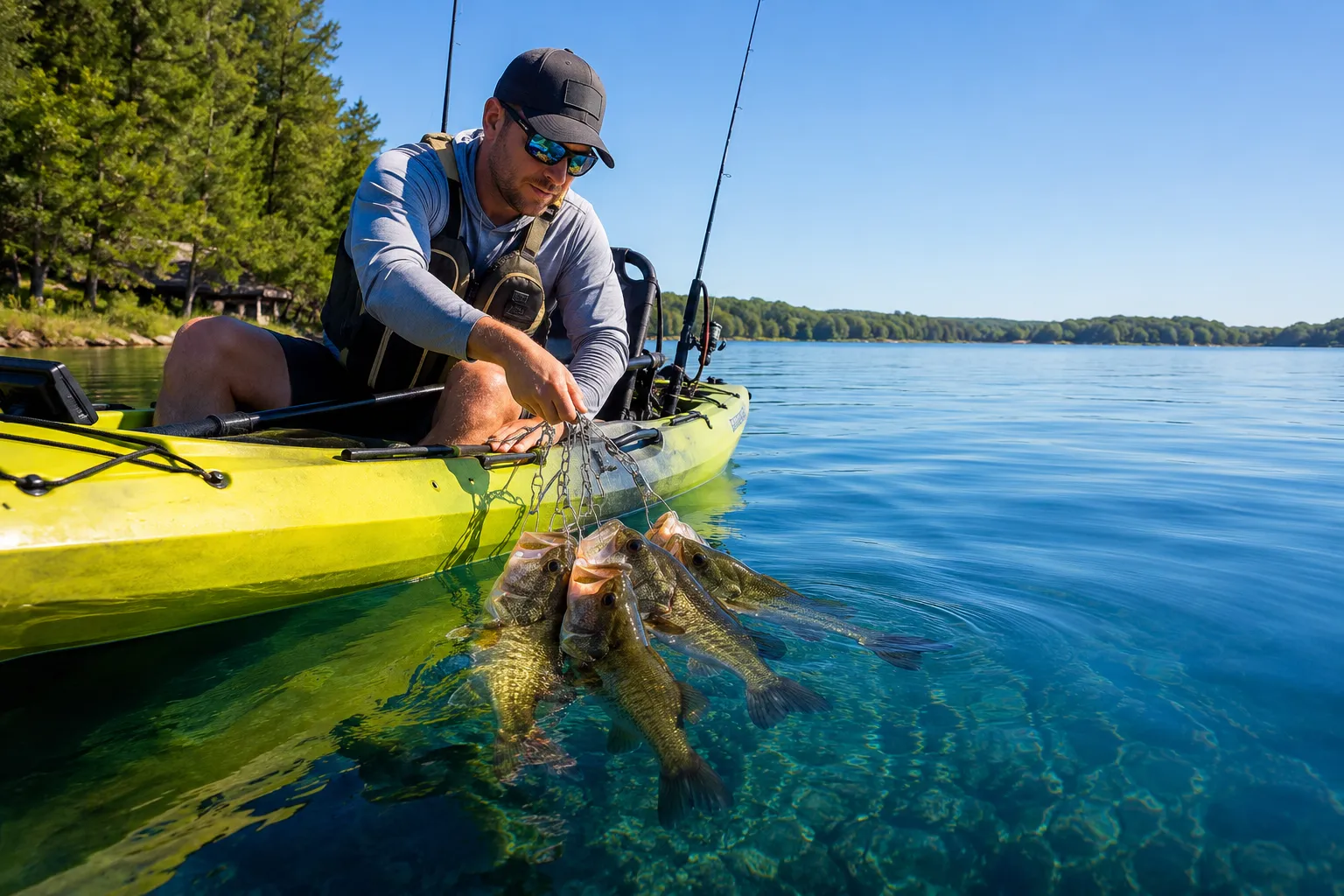
A fish stringer keeps your catch alive in the water while you continue fishing from your kayak, but it only works safely in specific conditions. Attach the stringer to a secure point like a scupper hole or cleat, thread fish through the lower jaw and out the mouth, and keep them submerged in cool, well-oxygenated water. Never use a stringer in waters with alligators or sharks, in warm stagnant conditions, or when targeting species too large to safely tow behind your kayak.
Key Takeaways
- Stringers work best in cool, moving water where fish can breathe easily and stay alive for several hours
- Attach to scupper holes, cleats, or anchor trolley points, never to your paddle or loose gear
- Floating rope stringers are safer than chain for kayak fishing because they’re lighter and less likely to snag
- Skip the stringer entirely in alligator or shark territory, the struggling fish acts as a dinner bell for predators
- Water above 75°F significantly reduces fish survival on stringers, making a kill bag or cooler the better choice
- Large fish (over 5 pounds) can create drag and destabilize your kayak when towed on a stringer
- Always check local regulations, some states restrict or prohibit stringers for certain species or in specific waters
- Thread the stringer through the lower jaw only, never through gills, which damages the fish and reduces survival
- Inspect your stringer before every trip for rust, weak links, or frayed rope that could lose your catch
- Have a backup plan like an insulated fish bag, because conditions can change quickly on the water
What Is a Fish Stringer and How Does It Work?
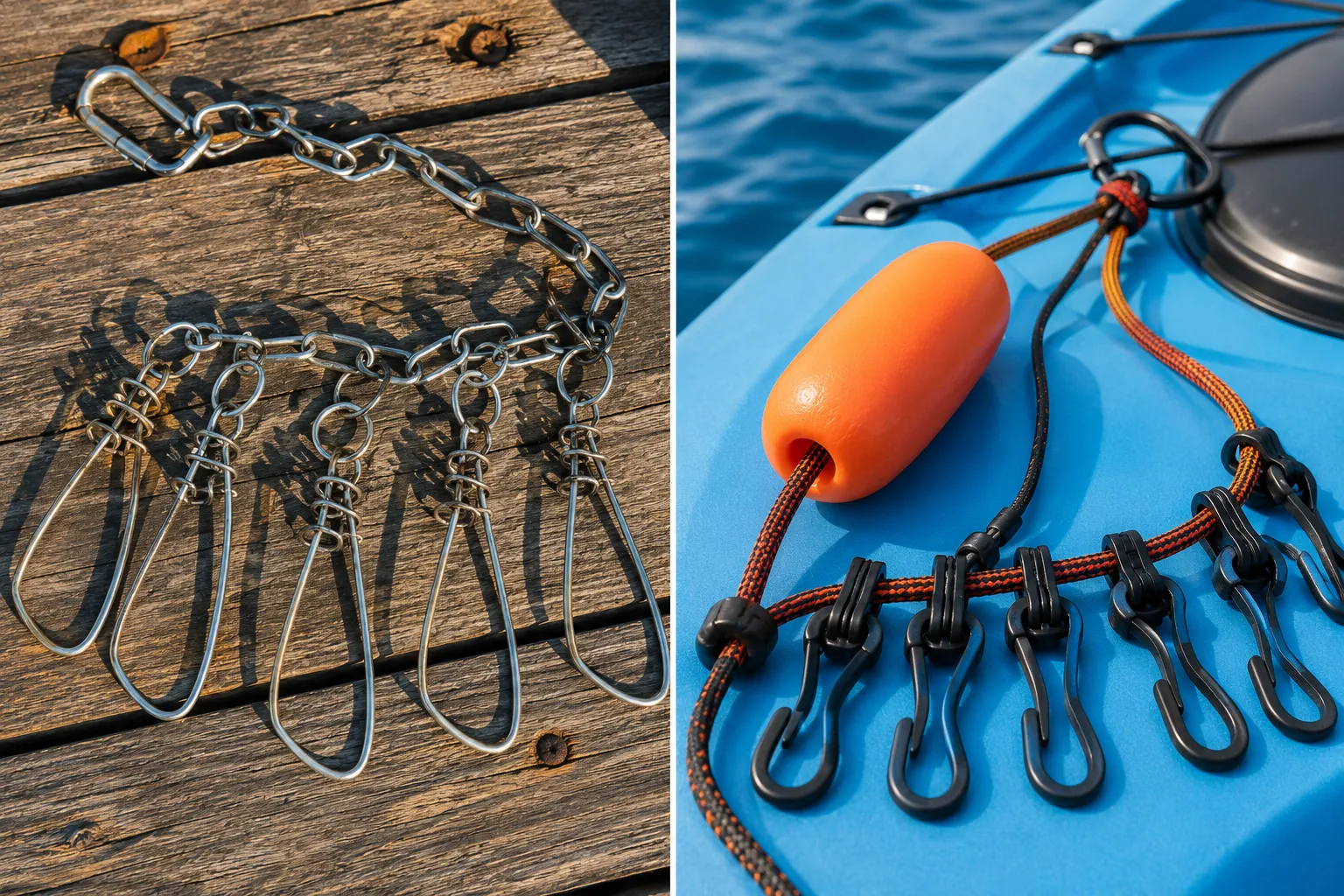
A fish stringer is a simple device that keeps caught fish alive in the water while you continue fishing. It consists of a rope or chain with clips or a pointed needle that threads through the fish’s jaw, securing it while allowing the fish to swim and breathe in the water beside your kayak.
The basic design includes three components: an attachment point (clip, carabiner, or loop) that secures to your kayak, a length of rope or chain (typically 6-10 feet), and a fastening mechanism (snap clip, safety pin style clip, or pointed needle) that goes through the fish. When properly used, the fish remains submerged and can move its gills to breathe, staying alive for hours in the right conditions.
Common stringer types for kayak fishing:
- Rope stringers with clips, lightweight, float-friendly, less likely to tangle
- Chain stringers, durable but heavy, can scratch kayak surfaces
- Floating stringers, include foam floats to keep fish near the surface and visible
- Needle stringers, sharp metal needle threads through jaw, secured with a ring
The stringer keeps fish fresh longer than storing them in a hot kayak, but only if water conditions support fish survival. In warm, stagnant, or low-oxygen water, even a properly stringered fish will die quickly and begin to spoil.
Best Way to Attach a Fish Stringer to a Kayak
Secure your stringer to a fixed, load-bearing point on your kayak, scupper holes, dedicated cleats, or anchor trolley attachment points work best. The attachment must be strong enough to handle the weight and drag of multiple fish without pulling loose or damaging your kayak.
Step-by-step attachment process:
- Choose your attachment point, scupper holes on sit-on-top kayaks are ideal because they’re built into the hull structure
- Use a carabiner or stainless steel clip, creates a secure connection you can quickly release if needed
- Thread through or around the attachment point, for scupper holes, use a scupper plug with a built-in attachment loop
- Test the connection with a firm pull, it should hold at least 20 pounds of force without slipping
- Position the stringer on your non-paddle side, keeps it away from your paddle stroke and reduces tangling
Where NOT to attach a stringer:
- Paddle holders or rod holders (not designed for load-bearing)
- Loose bungee cords or deck rigging
- Your paddle itself (creates dangerous entanglement risk)
- The side of your seat or any non-structural component
For sit-inside kayaks with fewer attachment options, install a small pad-eye or cleat on the rear deck using marine-grade hardware and sealant. Position it behind your seat where the stringer can trail without interfering with your paddling or re-entry after a capsize.

Practical Fishing Tools: The fish stringer solves the troubles of putting the fishing in ship or shore side which often make fish die. 10 stainless steel removable fish buckle, one buckle can lock 2-3 fish to enough using.
Practical Fishing Tools: The fish stringer solves the troubles of putting the fishing in ship or shore side which often make fish die. 10 stainless steel removable fish buckle, one buckle can lock 2-3 fish to enough using.

Premium Material: Our heavy duty snap hooks are crafted from marine-grade 316 stainless steel, providing superior resistance to saltwater erosion throughout the year. Their durable nature makes them the perfect companions for outdoor activities and rough marine environments, securing gear with stability and longevity.
Fish Stringer vs Livewell for Kayak Fishing
A livewell keeps fish in a controlled, aerated environment and offers better survival rates, but adds significant weight, complexity, and cost to your kayak setup. A stringer is simpler and lighter but depends entirely on natural water conditions to keep fish alive.
Stringer advantages:
- Costs $10-30 versus $100-400 for a kayak livewell system
- Zero weight when empty, minimal drag when in use
- No batteries, pumps, or maintenance required
- Works on any kayak without modification
- Easy to pack and transport
Livewell advantages:
- Controls water temperature and oxygen levels
- Protects fish from predators
- Works in any water conditions, including warm or stagnant water
- Keeps fish in tournament-ready condition
- No risk of attracting dangerous wildlife
Choose a stringer if: you fish cool, clean waters (below 70°F), target smaller species (under 3 pounds), fish casually rather than competitively, and want to minimize gear weight and complexity.
Choose a livewell if: you fish tournaments requiring live release, target larger species that need more space, fish warm-water environments, or frequently encounter predators like alligators.
Many kayak anglers use a hybrid approach, a stringer for most trips and an insulated kill bag with ice for hot days or when fishing predator-heavy waters. This gives flexibility without the permanent weight and complexity of a livewell system.
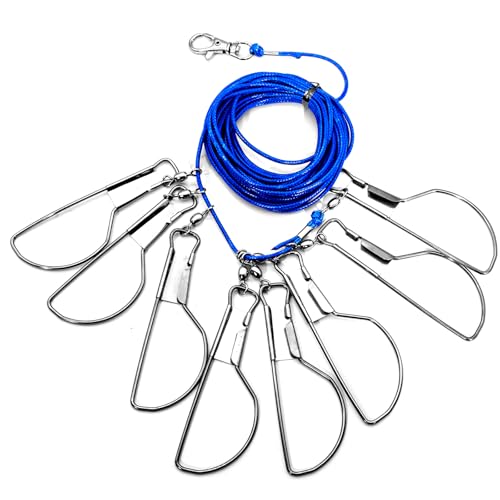
Spacious Design for Versatility: With a generous length of 16 ft, this fishing stringer holder is perfect for securely holding multiple caught fish, catering to a wide range of fishing needs.

Durable 304 Stainless Material: constructed from 304 stainless material with mirror polished finish, designed for long-term use in saltwater and freshwater environments; Helps reduce corrosion issues commonly found in standard fishing clips, making it suitable for frequent outdoor fishing trips and underwater use

Adequate to Meet Your Needs: you will receive 2 pieces of fishing stringers and 2 pieces of fishing stringer clips; The combination is considerate for you to use and replace, and can easily meet your daily use and requirements
How to Keep Fish Alive on a Stringer While Kayaking
Keep fish in water cooler than 70°F with good oxygen levels, minimize handling time, and check on stringered fish every 30-45 minutes to ensure they’re still swimming and breathing normally. Fish survival on a stringer drops dramatically in warm, stagnant, or murky water.
Best practices for fish survival:
- Thread through the lower jaw only, insert the clip or needle through the thin membrane of the lower jaw and out through the mouth, never through both lips or the gills
- Keep fish submerged at all times, adjust stringer length so fish stay 1-2 feet below the surface where water is cooler
- Avoid dragging fish during long paddles, if moving more than a quarter mile, consider transferring fish to a cooler with ice
- Space multiple fish apart, use stringers with multiple clips to prevent fish from tangling or injuring each other
- Move to deeper, cooler water when possible, shallow water heats up quickly in sunlight
Signs a fish is dying on your stringer:
- Gills barely moving or not moving at all
- Fish floating sideways or belly-up
- Cloudy eyes or faded color
- No response when you gently move the stringer
If you notice these signs, immediately harvest the fish and put it on ice. A dead fish left on a stringer in warm water will spoil within an hour, making it unsafe to eat.
Water temperature and fish survival:
| Water Temp | Expected Survival Time | Recommendation |
|---|---|---|
| Below 60°F | 6+ hours | Stringer works well |
| 60-70°F | 3-4 hours | Stringer acceptable, monitor closely |
| 70-75°F | 1-2 hours | Use stringer only for short trips |
| Above 75°F | Less than 1 hour | Use cooler with ice instead |
When Should You Not Use a Fish Stringer From a Kayak?
Never use a stringer in waters inhabited by alligators, sharks, or aggressive predators, in water temperatures above 75°F, or when targeting fish over 5 pounds that could destabilize your kayak. These conditions create safety risks that outweigh the convenience of keeping fish alive.
Situations that require alternatives to stringers:
Predator-heavy waters: Alligators, sharks, bull reds, and even large catfish are attracted to the vibrations and scent of struggling fish on a stringer. In Florida, Louisiana, Texas coastal areas, and other gator territory, a fish on a stringer can bring a predator directly to your kayak. This isn’t theoretical, multiple kayak anglers report close encounters with alligators investigating stringered fish.
Warm water conditions: When surface water exceeds 75°F, fish metabolism increases and oxygen demand spikes. Even in moving water, stringered fish often die within 30-60 minutes in these conditions. The dead fish then spoils rapidly, creating food safety issues.
Large or powerful fish: A 10-pound bass or redfish on a stringer creates significant drag and can pull your kayak off course. If the fish panics or a predator attacks it, the sudden force can capsize a kayak, especially narrower models or when you’re standing.
Rough water or strong current: Waves and current can slam stringered fish against your kayak hull, injuring or killing them. The stringer line can also wrap around your paddle, rudder, or pedal drive, creating a dangerous entanglement.
Regulations prohibit it: Some states ban stringers for certain species (often trout or salmon) or in specific waters. Tournament rules frequently require livewells or immediate release. Always check local regulations before using a stringer.
Better alternatives in these conditions:
- Insulated fish bag or soft-sided cooler with ice packs
- Hard cooler secured to your kayak deck
- Immediate catch-photo-release for conservation
- Kill bag (mesh bag kept in cool water or on ice)
Do Fish Stringers Attract Sharks or Alligators?
Yes, fish on stringers emit distress signals through vibrations and scent that predators detect from considerable distances. Alligators can sense struggling fish from 100+ yards away, and sharks can detect blood and electrical signals from even farther, making stringers a significant risk in waters where these predators live.
How predators detect stringered fish:
- Vibrations: Struggling fish create low-frequency vibrations that travel through water, triggering predator hunting instincts
- Scent: Any bleeding or stress hormones released by the fish create a scent trail in the current
- Visual cues: Predators patrolling shallow water can see fish thrashing on a stringer
- Electrical signals: Sharks detect the electrical impulses from fish muscle contractions
Real-world risk assessment:
In coastal saltwater environments with bull sharks, blacktips, or hammerheads, using a stringer is asking for trouble. These sharks regularly patrol inshore waters where kayak anglers fish, and a stringered fish is an easy meal. While shark attacks on kayaks are rare, investigative approaches and bumps are common when fish are on stringers.
Alligator encounters are even more predictable. In any freshwater or brackish environment in the southeastern U.S., assume alligators are present. They’re particularly active in water above 70°F and during spring/summer breeding season. A fish on a stringer can attract a gator that otherwise would have ignored your kayak.
Safer practices in predator waters:
- Use a cooler with ice from the moment you catch a fish
- If you must use a stringer, keep it very short (3-4 feet) and check constantly
- Avoid fishing dawn and dusk when predators are most active
- Never clean fish while in your kayak in these waters
- If you see a predator, immediately pull in your stringer and move to a different area
Can a Stringer Flip Your Kayak If the Fish Is Too Big?
A large fish on a stringer can destabilize your kayak, especially if it panics or gets attacked by a predator, but it’s unlikely to flip a kayak by itself unless you’re in a very narrow or unstable model. The bigger risk is the sudden jerk when a big fish surges or when you try to lift a heavy stringer into your kayak.
Weight and drag considerations:
A 5-pound fish creates noticeable drag while paddling but won’t affect stability when you’re sitting still. A 10-pound fish adds significant resistance and can pull your kayak slightly off course. Anything over 15 pounds becomes a real handling challenge, lifting that weight from the water while maintaining balance in a kayak is difficult and risky.
Scenarios that increase flip risk:
- Standing when pulling in a heavy stringer, your center of gravity is already high, and the sudden weight shift can tip you
- Multiple large fish on one stringer, 20-30 pounds of fish creates substantial force when they all move at once
- Predator attack on stringered fish, a shark or gator hitting your stringer creates a violent jerk that can capsize you
- Stringer wrapping around paddle or rudder, creates sudden resistance that can throw you off balance
Safe weight limits by kayak type:
- Narrow kayaks (under 30″ wide): Keep stringered fish under 5 pounds total
- Mid-width kayaks (30-34″): Can handle 10-15 pounds safely
- Wide kayaks (34″+): Can manage 20+ pounds but still risky when standing
Better approach for large fish:
Instead of stringing a big fish, use a lip gripper or fish grip to secure it temporarily while you prepare a cooler. Take your photos, measure if needed, then immediately put the fish on ice. This eliminates the stability risk and keeps the fish in better condition.
If you must stringer a large fish, shorten the line to 3-4 feet maximum so the fish stays close to your kayak and can’t build momentum. Never stringer multiple large fish together, the combined weight and movement create too much instability.
Where to Clip Fish Stringer on Sit-On-Top Kayak
Clip your stringer to a rear scupper hole, stern cleat, or anchor trolley attachment point on a sit-on-top kayak. These locations keep the stringer behind you and away from your paddle stroke while providing secure, load-bearing attachment points built into the kayak’s structure.
Best attachment locations ranked:
- Rear scupper holes, strongest option, built into hull, easy to access, use a scupper plug with attachment loop
- Stern cleat or handle, designed for load-bearing, secure, keeps stringer at the back
- Anchor trolley ring, works well if you’re not using the trolley for anchoring
- Dedicated pad-eye, install one if your kayak lacks other options, position 6-12 inches behind seat
Attachment hardware you’ll need:
- Stainless steel carabiner (rated for at least 50 pounds)
- Scupper plug with attachment loop (if using scupper hole)
- Quick-release clip (allows fast removal in emergencies)
Why rear attachment is critical:
Attaching a stringer to the side of your kayak creates several problems. The fish drag pulls you off course, requiring constant correction. The line can wrap around your paddle during strokes. If you capsize, the stringer line can entangle you during re-entry. Rear attachment eliminates all these issues, the fish trail directly behind you, creating minimal drag and zero interference with paddling.
For tandem kayaks:
Attach the stringer to the rear paddler’s side, slightly offset from center. This keeps it away from both paddlers’ strokes and makes it easy for the rear paddler to monitor the fish without the front paddler needing to turn around constantly.
Emergency release consideration:
Whatever attachment method you use, make sure you can release it quickly with one hand. In an emergency, predator approach, sudden weather, or entanglement, you need to be able to cut or unclip the stringer in seconds. Keep a knife or line cutter within easy reach whenever using a stringer.
Floating Fish Stringer vs Chain Stringer for Kayak
Floating rope stringers are better for kayak fishing because they’re lighter, less likely to tangle, won’t scratch your kayak, and the float keeps fish visible near the surface. Chain stringers are more durable and work better for large or toothy fish, but the extra weight and rigidity create problems in a kayak environment.
Floating rope stringer advantages:
- Weighs 4-8 ounces versus 1-2 pounds for chain
- Foam float keeps fish near surface where you can monitor them
- Soft rope won’t scratch or dent your kayak hull
- Easier to pack and store in a small space
- Costs $8-20 versus $15-35 for quality chain
Chain stringer advantages:
- Can’t be bitten through by pike, musky, or saltwater species with sharp teeth
- More durable in rocky or abrasive environments
- Clips are typically more robust and secure
- Lasts for decades with minimal maintenance
Hybrid option:
Some kayak anglers use a rope stringer with a short (12-inch) chain section at the fish end. This gives you the weight savings of rope with the bite-resistance of chain where it matters. This setup works well for pike, pickerel, or small saltwater species.
Maintenance differences:
Rope stringers need rinsing after every saltwater use and should be replaced annually or when you see fraying. Chain stringers need occasional rust treatment (even stainless steel can corrode in saltwater) but last much longer. For most kayak anglers, the convenience and low cost of rope stringers make annual replacement a non-issue.
Best choice for most kayak anglers: A floating rope stringer with quality stainless steel clips. It handles 90% of freshwater and inshore saltwater situations, weighs almost nothing, and costs less than a pack of hooks.

[ANCHOR IN SHALLOW WATER FAST] Essential for your jet ski accessories kit. This PWC mooring line easily links your waverunner or floating water mat to a sandbar anchor or dock, keeping your watercraft exactly where you left it.

Intended Use: Designed for securing and holding caught fishes like catfish during shore, kayak, or boat fishing, keeping fish organized and easy to manage.
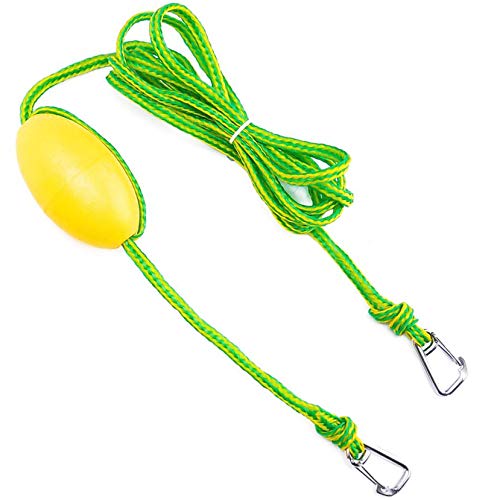
Marine-Grade Durability Salt/Water/Sun Resistant: This float rope is made of premium marine-grade material - it withstands non-stop submersion in saltwater/freshwater without breaking down, and resists UV rays, oil, rot, acid, and chemicals. Plus, it has excellent shock absorption for rough waves, perfect for long-term boating use.
How to Prevent Fish From Dying on a Stringer in Warm Water
You can’t reliably prevent fish death on a stringer when water exceeds 75°F, the best solution is to skip the stringer entirely and use a cooler with ice. If you must use a stringer in warm water, keep trips short (under one hour), stay in moving water or shade, and transfer fish to ice as soon as possible.
Why warm water kills stringered fish:
Water holds less dissolved oxygen as temperature rises. At 75°F, water holds about 30% less oxygen than at 50°F. Fish metabolism increases in warm water, so they need more oxygen exactly when less is available. Even a healthy fish on a stringer will suffocate in warm, stagnant water within 30-60 minutes.
Tactics to extend survival time slightly:
- Fish in current or near aerators, moving water has higher oxygen content
- Keep stringer in shade, position your kayak so the stringer stays in shadow
- Use shorter stringer length, keeps fish in deeper, slightly cooler water
- Add a small aerator, battery-powered bait bucket aerators can clip to a stringer (awkward but works)
- Limit to one or two fish, reduces oxygen demand and stress
The honest reality:
These tactics might extend survival from 30 minutes to 60-90 minutes, but you’re fighting biology. When water is warm, fish belong on ice, not on a stringer. Many states’ fish consumption advisories specifically warn against eating fish that died slowly in warm water, as bacterial growth accelerates rapidly.
Better warm-water strategy:
Bring a soft-sided cooler or insulated fish bag with reusable ice packs. When you catch a keeper, quickly dispatch it with a firm blow to the head or by cutting the gills, then immediately put it on ice. This produces better-tasting fillets, eliminates predator attraction, and removes any stability or safety concerns.
Temperature monitoring:
Use a water thermometer (many fish finders display water temp) to make real-time decisions. If surface temp is above 75°F, don’t even bring the stringer, you know you’ll need the cooler.
Is It Legal to Use a Fish Stringer While Kayak Fishing?
Stringers are legal for most species in most states, but regulations vary significantly by location, species, and water body. Some states prohibit stringers for trout or salmon, require immediate release of certain species, or ban stringers in specific conservation areas, so always check current regulations before your trip.
Common stringer restrictions:
Species-specific rules:
- Many western states ban stringers for trout and salmon (must use livewells or immediate release)
- Some states require immediate release of striped bass or other managed species
- Tournament regulations often prohibit stringers, requiring livewells instead
Location-specific rules:
- National parks and some state parks ban stringers to protect wildlife
- Catch-and-release-only waters prohibit any method of keeping fish
- Some urban lakes ban stringers due to predator concerns
Possession and transport rules:
- Fish on a stringer count toward your daily bag limit
- Some states require fish to remain in a condition where species and size can be verified
- Interstate transport may have additional requirements
Where to find current regulations:
Check your state’s fish and wildlife agency website before every trip. Regulations change annually, and special rules often apply to specific lakes or rivers. Most states offer free mobile apps with searchable regulations, GPS-based location rules, and digital licensing.
Tournament considerations:
If you fish competitively, tournament rules almost always supersede state regulations and typically require livewells with minimum water volume and aeration standards. Using a stringer in a tournament usually results in disqualification and potential penalties.
Conservation perspective:
Even where legal, consider whether a stringer is the most ethical choice. If you’re practicing catch-and-release, don’t use a stringer, the stress and handling mortality defeat the purpose. If you’re keeping fish for the table, a stringer is fine in appropriate conditions, but a cooler with ice produces better-quality fillets.
Common Mistakes When Using a Fish Stringer From Kayak
The most common mistakes are threading the stringer through the gills (which kills the fish), attaching to unstable points that fail under load, using stringers in water too warm to support fish survival, and failing to monitor fish condition throughout the trip.
Critical errors and how to avoid them:
Threading through gills instead of jaw:
This damages the gill filaments fish need to breathe, causing rapid death. Always thread through the thin membrane of the lower jaw and out through the mouth. The needle or clip should never touch the gills.
Attaching to weak or temporary points:
Clipping to bungee cords, rod holders, or paddle holders results in lost fish when the attachment fails. Use only structural attachment points like scupper holes, cleats, or installed pad-eyes.
Using stringer length that’s too long:
A 10-foot stringer allows fish to swim far from your kayak, where they can tangle in vegetation, wrap around your rudder, or attract predators you don’t see. Keep stringers 6-8 feet maximum, shorter in heavy cover.
Ignoring water temperature:
Many anglers use stringers out of habit without checking water temp. If it’s above 75°F, fish will die regardless of your technique. Check temperature before deciding to use a stringer.
Forgetting to check on fish:
Fish can die, escape, or get attacked while you’re focused on fishing. Check your stringer every 30 minutes, look for gill movement and responsive behavior. Dead fish spoil quickly and should be iced immediately.
Mixing species on one stringer:
Different species have different oxygen needs and stress responses. A struggling catfish can injure a bass on the same stringer. Use separate stringers or clips that space fish apart.
Not having a backup plan:
Conditions change, water warms up, weather turns, or you hook a fish too large for your stringer. Always bring an alternative like a cooler bag or kill bag so you’re not forced to release fish you intended to keep.
Lifting heavy stringers while standing:
Trying to pull 15 pounds of fish into your kayak while standing is a recipe for capsize. Sit down, stabilize yourself, and lift gradually, or paddle to shore before retrieving your stringer.
Alternatives to Using a Stringer for Kayak Fishing
The best alternatives are insulated fish bags with ice packs for warm conditions, kill bags for cool water, and immediate catch-photo-release for conservation-minded anglers. Each method has specific advantages depending on your fishing goals, target species, and environmental conditions.
Insulated fish bag or soft cooler:
These bags use closed-cell foam insulation and hold 4-8 pounds of fish plus ice packs. They’re lighter than hard coolers, fit in kayak storage hatches or behind seats, and keep fish at safe temperatures for 6-8 hours. Cost: $30-60.
Best for: Warm water fishing, all-day trips, when you want the best-tasting fillets.
Hard cooler secured to deck:
A small cooler (20-25 quart) strapped to your kayak deck provides maximum ice retention and protection. It doubles as a seat for shore breaks and keeps fish at ideal temperature for 12+ hours.
Best for: Multi-day trips, hot climates, when you’re targeting larger fish that won’t fit in a bag.
Kill bag (mesh or canvas):
A simple mesh bag that you keep in the water (in cool conditions) or pack with ice. Fish are dispatched immediately and stored in the bag. Costs $10-25.
Best for: Cool water conditions (below 65°F), when you want to keep fish fresh without the bulk of a cooler.
Catch-photo-release:
No storage needed, you land the fish, take a quick photo with a measuring board, and release it immediately. This is the most conservation-friendly approach and eliminates all storage concerns.
Best for: Anglers who fish for sport rather than food, heavily pressured waters, or when targeting species with high release survival rates.
Portable aerated livewell:
Battery-powered buckets or bags with built-in aerators keep fish alive in any conditions. They’re bulkier than stringers but far more effective. Cost: $50-150.
Best for: Tournament anglers, when you need guaranteed live release, or when fishing warm water where stringers fail.
Comparison by situation:
| Situation | Best Alternative | Why |
|---|---|---|
| Water above 75°F | Insulated bag + ice | Only option that prevents spoilage |
| Predator waters | Hard cooler | Eliminates attraction risk |
| Conservation focus | Catch-photo-release | Highest survival rates |
| Tournament fishing | Aerated livewell | Meets rules, ensures live release |
| Multi-species trip | Kill bag + ice | Handles different species easily |
| Minimalist approach | Small soft cooler | Lightest option that still uses ice |
How Long Can You Keep Fish on a Stringer Before They Spoil?
In water below 65°F, properly stringered fish stay alive and fresh for 4-6 hours; in water 65-75°F, expect 1-2 hours before quality declines; above 75°F, fish begin spoiling within 30-60 minutes even if still alive. Once a fish dies on a stringer, you have about one hour in cool water or 20-30 minutes in warm water before bacterial growth makes it unsafe to eat.
Factors that affect spoilage time:
Water temperature is the dominant factor. Cold water slows bacterial growth and keeps fish metabolism low. Warm water accelerates both, leading to rapid quality loss.
Fish stress level matters because stressed fish produce lactic acid and stress hormones that affect meat quality. A fish that fought hard and struggled on the stringer will spoil faster than one that was landed quickly and remained calm.
Water quality influences bacterial load. Clean, clear water has fewer bacteria than murky, polluted, or stagnant water. Fish kept in poor-quality water pick up off-flavors and spoil faster.
Species differences exist, oily fish like trout and salmon spoil faster than lean fish like bass or walleye. Saltwater species generally spoil faster than freshwater species due to higher bacterial loads in marine environments.
Signs fish has spoiled:
- Strong fishy or ammonia smell
- Cloudy, sunken eyes
- Gills are gray or brown instead of bright red
- Flesh is soft and doesn’t spring back when pressed
- Slime coat is thick and discolored
Safe handling timeline:
- 0-2 hours on stringer in cool water: Fish is in excellent condition
- 2-4 hours: Quality is good but declining, ice fish as soon as practical
- 4-6 hours: Fish is still safe but flavor and texture are compromised
- 6+ hours: Risk of spoilage increases significantly, especially if fish died
Best practice: Treat stringered fish as temporary storage only. Plan your trip so you can ice fish within 2-3 hours of catching them, or use a cooler from the start if you’ll be out longer.
Food safety rule: When in doubt, throw it out. Spoiled fish can cause serious foodborne illness. If a fish smells off, has cloudy eyes, or you’re unsure how long it’s been dead, don’t risk it.
Frequently Asked Questions
Can you use a stringer on a sit-inside kayak?
Yes, but attachment options are more limited. Install a small pad-eye or cleat on the rear deck behind your cockpit, or use a stern handle if your kayak has one. Keep the stringer short to prevent it from interfering with paddle strokes or cockpit re-entry after a capsize.
How many fish can you put on one stringer?
Most kayak stringers safely hold 3-5 fish depending on size. Total weight should stay under 15 pounds to avoid stability issues and excessive drag. Use stringers with multiple clips to space fish apart and prevent tangling or injury.
Do you need to remove fish from a stringer before paddling long distances?
Yes, if you’re paddling more than a quarter mile. The drag from stringered fish makes paddling exhausting, and the extended time in potentially warming surface water stresses the fish. Transfer fish to a cooler before long moves between fishing spots.
What size stringer do you need for kayak fishing?
A 6-8 foot stringer works best for kayaks. Longer stringers allow fish to swim too far from your kayak, increasing tangle risk and making it harder to monitor fish condition. Shorter stringers keep fish close and manageable.
Can you use a stringer at night while kayak fishing?
Technically yes, but it’s risky because you can’t easily monitor fish condition in the dark, and predators are more active at night. Use a headlamp to check fish every 20-30 minutes, or better yet, use a cooler with ice for night fishing.
How do you clean a fish stringer after use?
Rinse thoroughly with fresh water after every trip, especially after saltwater use. Scrub metal clips with a brush to remove scales and slime, then dry completely before storage. Apply a light coating of WD-40 or reel oil to metal parts to prevent rust.
Will a stringer scare away other fish?
Not significantly in most situations. Fish on a stringer may attract curious fish or predators, but they don’t typically spook other fish away from the area. In very clear, shallow water, the disturbance might affect fishing slightly, but it’s rarely a major concern.
Can you use a stringer for catch-and-release fishing?
No, stringers are only appropriate for fish you intend to keep. The stress of being stringered reduces survival rates after release. For catch-and-release, use a rubberized landing net, handle fish minimally, and release immediately after photos.
What’s the best material for a kayak fish stringer?
Braided nylon rope with stainless steel clips offers the best combination of strength, light weight, and corrosion resistance. Look for UV-resistant rope rated for at least 50 pounds, and clips with smooth edges that won’t damage fish or your kayak.
How do you prevent a stringer from tangling in kayak rudder or pedal drive?
Keep the stringer short (6 feet maximum) and attach it slightly off-center to one side rather than directly at the stern. Check the stringer position every time you change direction, and consider pulling it in before making sharp turns or backing up.
Are there fish species you should never put on a stringer?
Avoid stringering trout, salmon, and other soft-mouthed species that tear easily and die quickly. Also skip toothy species like pike or musky unless using a chain stringer, as they can bite through rope. Check regulations, some species are prohibited from stringers by law.
What do you do if a predator approaches your stringered fish?
Immediately pull in the stringer and secure it in your kayak or cut it loose if necessary. Don’t try to fight a predator for your catch, your safety is more important than any fish. Move to a different area and switch to using a cooler for the rest of your trip.
Conclusion
Learning how to use a fish stringer from a kayak (and when not to) comes down to matching your storage method to the conditions you’re fishing. Stringers work beautifully in cool, clean water when targeting smaller fish, offering a simple, lightweight way to keep your catch fresh while you continue fishing. But they’re the wrong choice in warm water, predator-heavy environments, or when targeting large species that create stability risks.
Your action plan for 2026:
Start by assessing your typical fishing conditions, water temperature, predator presence, and target species size. If you regularly fish water above 75°F or in alligator or shark territory, invest in a quality insulated fish bag or cooler instead of relying on a stringer. For cool-water fishing in safe environments, a floating rope stringer attached to a rear scupper hole or cleat provides an effective, affordable solution.
Always have a backup plan. Bring both a stringer and a small cooler with ice packs, then make the call based on actual conditions when you’re on the water. Check your fish every 30 minutes, know the signs of stress or spoilage, and be ready to switch methods if conditions change.
Most importantly, prioritize safety over convenience. No fish is worth attracting a predator to your kayak or risking a capsize from an oversized catch on a stringer. When in doubt, use the cooler, you’ll end up with better-tasting fillets and a safer, more enjoyable day on the water.