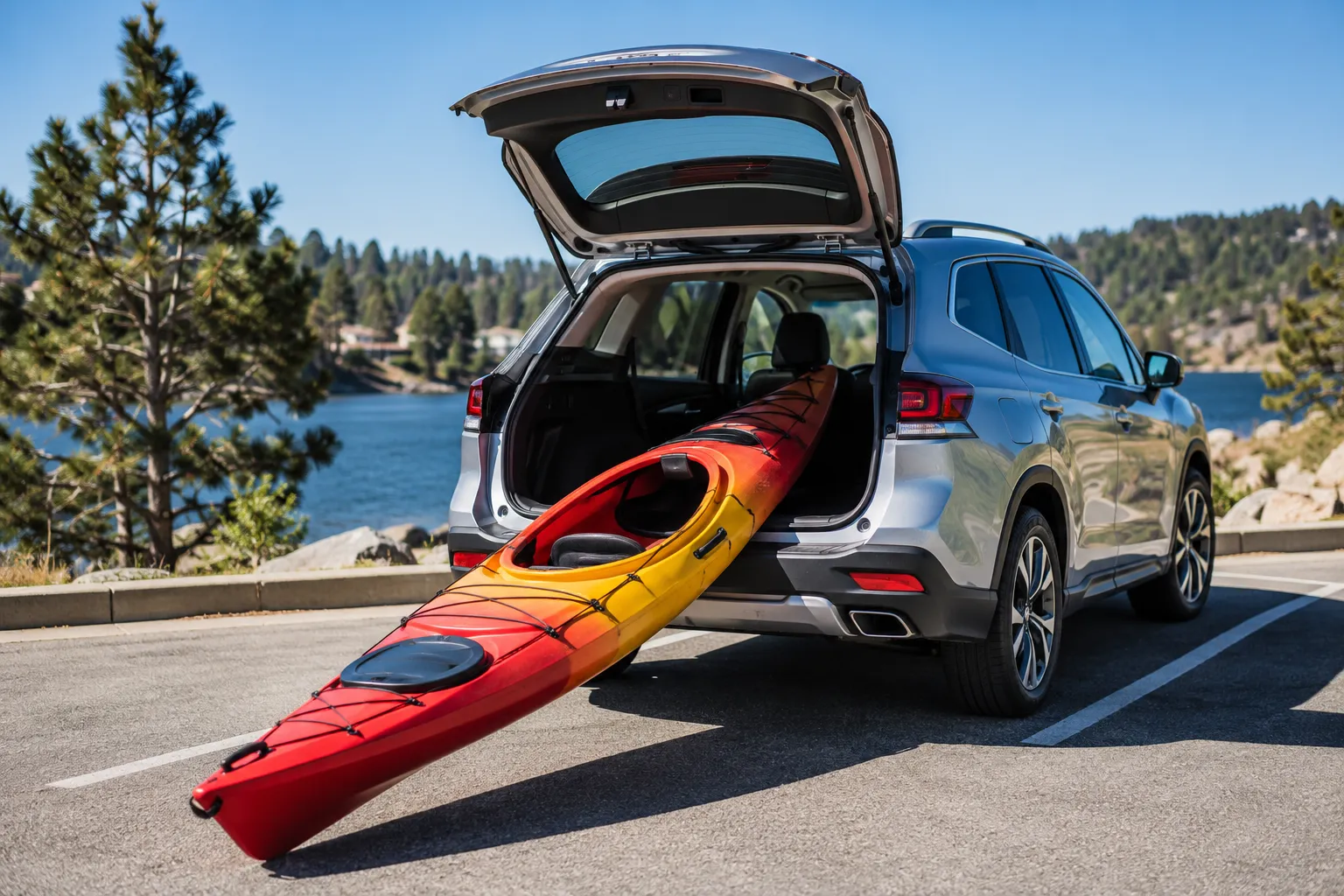
Quick Answer: Yes, most kayaks between 8 and 12 feet can fit inside mid-size and full-size SUVs when you fold down the rear seats and position the kayak diagonally. Shorter recreational kayaks (under 10 feet) fit more easily, while longer touring or fishing kayaks may require the front passenger seat to be moved forward or folded, and the kayak may extend partially into the front cabin or out the rear hatch.
Key Takeaways
- Most 10-foot kayaks fit inside mid-size SUVs like the Toyota Highlander, Honda Pilot, or Ford Explorer with rear seats folded flat
- Diagonal positioning is key, measure your SUV’s cargo diagonal (rear corner to opposite front corner) rather than just cargo length
- Sit-on-top kayaks are often wider and may require more creative positioning than sit-inside models of the same length
- You’ll likely need to fold at least the rear seats and possibly move or fold the front passenger seat for kayaks over 10 feet
- Roof racks are better for kayaks over 12 feet or when transporting multiple kayaks simultaneously
- Protect your interior with moving blankets, foam blocks, and pool noodles at contact points to prevent damage
- Secure the kayak with cam straps attached to cargo tie-down points, never rely on the kayak’s weight alone
- Check local laws about cargo extending beyond your vehicle, most states allow 3-4 feet of overhang with a red flag
- Inflatable kayaks always fit and are the most SUV-friendly option if you’re willing to trade some performance
- Interior transport protects your kayak from weather, theft, and road debris better than roof mounting
What SUV Models Can Fit a Kayak Inside?
Most mid-size and full-size SUVs can accommodate kayaks between 8 and 12 feet when configured properly. The Toyota Highlander, Honda Pilot, Ford Explorer, Chevrolet Tahoe, GMC Yukon, and Nissan Pathfinder all offer sufficient cargo diagonal measurements (typically 9 to 11 feet with seats folded) to fit recreational kayaks inside.
Compact SUVs like the Honda CR-V, Toyota RAV4, and Mazda CX-5 can fit shorter kayaks (8-10 feet) but struggle with anything longer. The Jeep Grand Cherokee and Ford Edge fall into a middle category, handling 10-foot kayaks comfortably but requiring creative positioning for 11-12 foot models.
Key measurements that matter:
- Cargo diagonal (rear corner to opposite front corner with seats folded): 9-11 feet for most mid-size SUVs
- Cargo length (rear hatch to back of front seats): 6-8 feet for mid-size, 7-9 feet for full-size
- Cargo width between wheel wells: 3.5-4.5 feet (critical for wider sit-on-top kayaks)
- Cargo height: 2.5-3.5 feet (affects whether you can close the hatch fully)
Choose a full-size SUV if you regularly transport kayaks over 11 feet, need to keep front passenger seating available, or want to transport two kayaks stacked inside. Choose a mid-size SUV if your kayaks are under 11 feet and you’re comfortable adjusting the front passenger seat.

【SAFETY COMES FIRST】No more using straps that go through the interior of your car to tie down your roof luggage. This is illegal in some states and can prevent airbags from functioning properly. Use our roof rack straps, which are legal and safe.you can rest assured that your door waterproofing abilities will stay intact
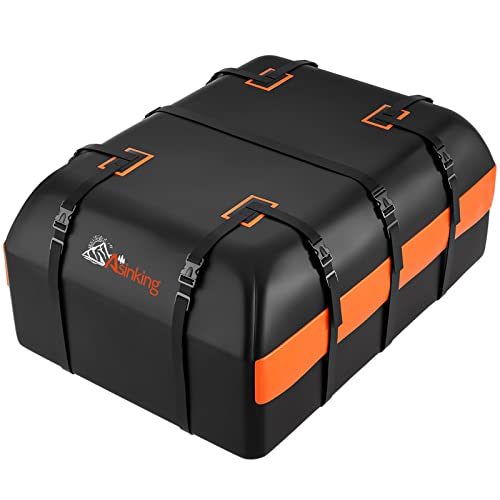
【840D CHAMPION QUALITY MATERIAL】 Made with heavy-duty 840D abrasion-resistant PVC fabric, this ultra-durable car roof cargo carrier stands up to any rough treatment or harsh weather. Better still, the triple-reinforced welded seams make it hard to tear or rip for years to come.

18 cubic foot (510 L) internal cargo capacity
How to Measure If Your Kayak Will Fit in Your SUV
Measure your SUV’s cargo diagonal with the rear seats folded flat and compare it to your kayak’s length, this diagonal measurement from the rear cargo corner to the opposite front corner determines maximum kayak length. Most mid-size SUVs offer 9-11 feet of diagonal space, while full-size models provide 10-12 feet.
Step-by-step measurement process:
- Fold all rear seats completely flat and remove any cargo covers or organizers
- Measure the cargo diagonal: Place a tape measure at the rear corner (where the hatch opening meets the floor) and extend it diagonally to the opposite front corner (where the dashboard meets the floor on the passenger side)
- Measure cargo width between the wheel wells at the narrowest point
- Measure your kayak length from bow to stern (not just the hull, include any handles or hardware that extends)
- Measure your kayak width at the widest point (typically the cockpit area for sit-inside or mid-section for sit-on-top)
- Add 6-12 inches buffer to your kayak length to account for angled positioning and safe clearance
Common mistake: Measuring only the straight-line cargo length instead of the diagonal. A Toyota Highlander has about 48 inches of cargo length behind the front seats but offers 120+ inches diagonally, which is the measurement that actually matters for kayak transport.
If your kayak is within 6 inches of your diagonal measurement, test-fit it before committing to interior transport. You may need to adjust the front passenger seat position or accept the kayak extending slightly into the front cabin.
Do You Need to Remove Seats to Fit a Kayak in an SUV?
You typically need to fold (not remove) the rear seats to fit a kayak inside an SUV, and kayaks over 10 feet often require moving or reclining the front passenger seat forward. Most modern SUVs feature 60/40 or 50/50 split-folding rear seats that create a flat cargo floor without requiring tools or permanent removal.
Seat configuration by kayak length:
- 8-9 foot kayaks: Fold rear seats only; front seats can remain in normal position
- 10-11 foot kayaks: Fold rear seats and slide front passenger seat forward 6-12 inches
- 12+ foot kayaks: Fold rear seats, move front passenger seat fully forward, and kayak bow will extend into front passenger footwell
When you might actually remove seats: Some older SUV models (pre-2015) have removable second-row captain’s chairs that unbolt from the floor. Removing these creates additional space but requires tools and storage for the removed seats. This is rarely necessary for single-kayak transport unless you have an unusually wide sit-on-top model (over 34 inches) that won’t fit between the wheel wells.
Choose to fold rather than remove if you need to quickly restore passenger capacity. Choose to remove seats only if you’re transporting multiple kayaks stacked inside or have an exceptionally wide kayak that requires the extra lateral space.
The front passenger seat position is your adjustment variable, sliding it forward 6-12 inches typically provides the extra diagonal length needed for 10-11 foot kayaks without sacrificing the ability to carry a front passenger (they’ll just have less legroom).
Kayak Inside SUV vs Roof Rack: Which Is Better?
Interior transport is better for kayaks under 12 feet when you prioritize security, weather protection, and fuel efficiency, while roof racks are better for longer kayaks (12+ feet), multiple kayak transport, or when you need to maintain full passenger and cargo capacity. Interior transport typically improves fuel economy by 2-5% compared to roof mounting due to reduced wind resistance.
Interior transport advantages:
- Better security: Kayak is locked inside your vehicle, not visible or accessible to thieves
- Weather protection: No exposure to rain, sun, road salt, or debris during transport
- Lower wind resistance: Improves fuel economy and reduces wind noise
- No height restrictions: Can use drive-throughs, parking garages, and low-clearance areas
- No additional equipment cost: No need to purchase roof rack systems ($200-600)
Roof rack advantages:
- Maintains passenger capacity: All seats remain available for passengers
- Handles longer kayaks: Can transport 12-16 foot kayaks that won’t fit inside
- Multiple kayak capacity: Most roof systems carry 2-4 kayaks simultaneously
- Keeps interior clean: No need for protective padding or cleanup after muddy/sandy trips
- Easier loading for some: Waist-height loading can be easier than maneuvering inside cargo area
Common mistake: Assuming roof racks are always easier. Loading a kayak onto a roof rack requires lifting it 5-6 feet high, while interior loading keeps the kayak at waist height. For solo paddlers or those with physical limitations, interior transport is often easier despite the tighter fit.
Choose interior transport if you have a kayak under 11 feet, frequently park in urban areas where theft is a concern, or want to maximize fuel efficiency. Choose a roof rack if you own multiple kayaks, regularly transport passengers while carrying your kayak, or have kayaks longer than 12 feet.
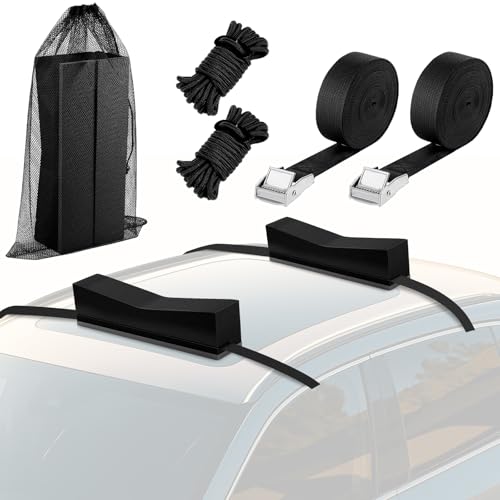
Universal Roof Rack Pad: the package includes 2 soft foam pads, 2 tie-downs with adjustable buckles(15Ft), 2 nylon load straps (13.12Ft)and 1storage bag; All these elements work together to provide good stability, leading to a smoother transportation experience
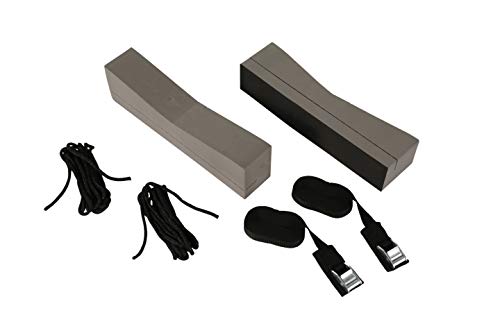
Everything you need for kayak transportation on your car roof

H2o Anchor Trolley Kit Marine Grade Fixings
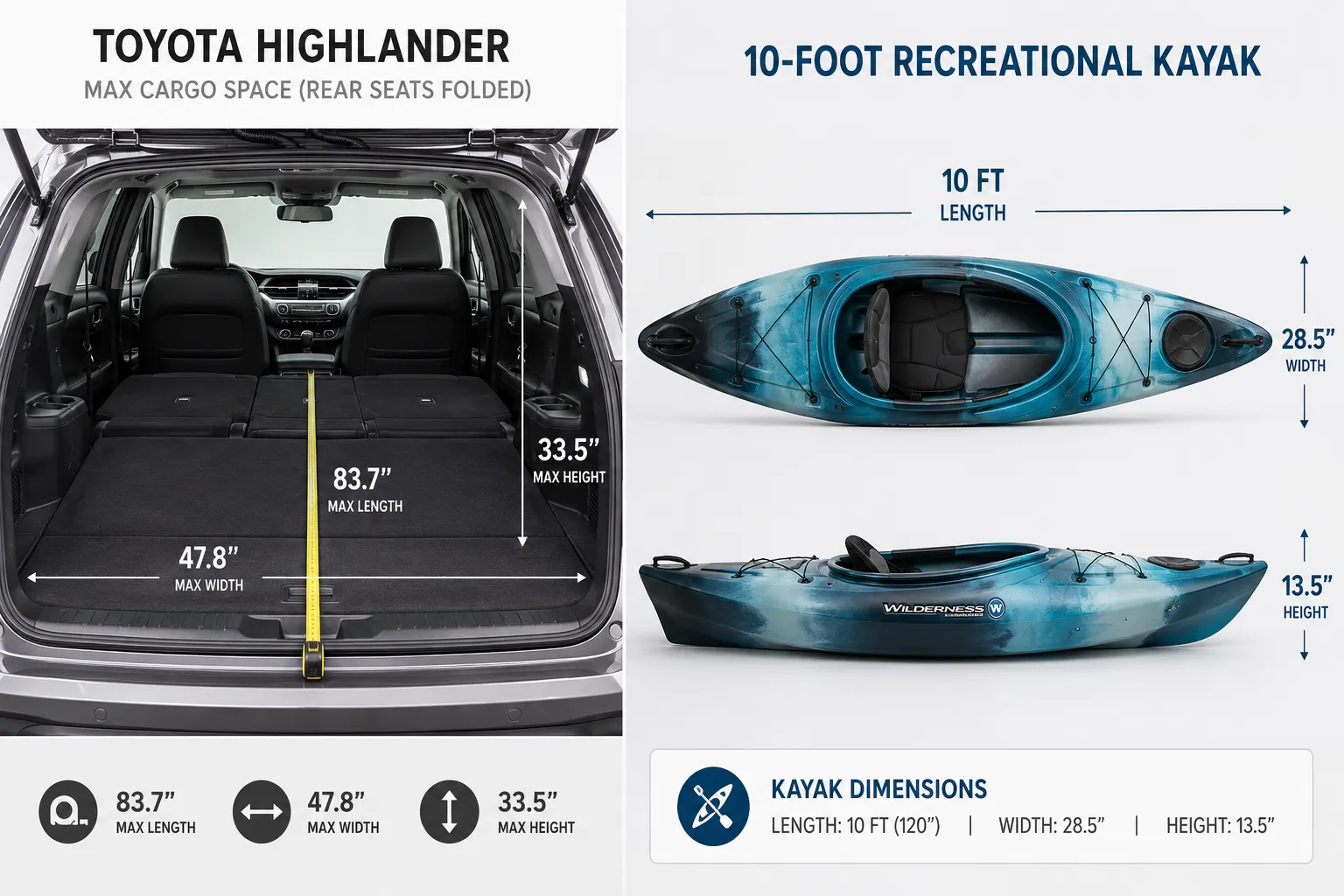
Can a 10 Foot Kayak Fit in a Toyota Highlander?
Yes, a 10-foot kayak fits inside a Toyota Highlander with the rear seats folded flat and the kayak positioned diagonally from the rear cargo corner to the front passenger side. The Highlander offers approximately 120 inches (10 feet) of diagonal cargo space, which accommodates most 10-foot recreational kayaks with minimal adjustment to the front passenger seat.
Toyota Highlander cargo specifications (2020-2026 models):
- Cargo diagonal with rear seats folded: 120-125 inches (10-10.4 feet)
- Cargo width between wheel wells: 42 inches
- Cargo height: 32 inches
- Cargo length (rear seats folded to front seats): 48 inches
Loading process for a 10-foot kayak:
- Fold both rear seats completely flat
- Slide front passenger seat forward 4-6 inches
- Position kayak at a 15-20 degree angle, stern in rear driver-side corner
- Slide kayak bow toward front passenger-side footwell
- The kayak should fit with the hatch closing fully or within 2-3 inches
Sit-on-top vs sit-inside consideration: Wider sit-on-top kayaks (32-34 inches wide) may require more aggressive angling than narrower sit-inside models (24-28 inches wide). The Highlander’s 42-inch width between wheel wells accommodates both, but wider models leave less margin for error.
Choose a different transport method if your 10-foot kayak is exceptionally wide (over 35 inches), has a rudder or skeg that extends beyond the hull, or if you need to maintain full passenger capacity. Otherwise, the Highlander is well-suited for 10-foot kayak interior transport.
How to Protect Your SUV Interior When Transporting a Kayak Inside
Protect your SUV interior by covering the cargo floor and seat backs with moving blankets or cargo liners, wrapping pool noodles or foam pipe insulation around the kayak’s gunwales at contact points, and placing foam blocks between the kayak hull and any hard surfaces. These protective measures prevent scratches, dents, and wear to both your vehicle and kayak.
Essential protective materials:
- Moving blankets or cargo liners: Cover the entire cargo floor and folded seat backs ($20-40 for a set)
- Pool noodles or foam pipe insulation: Wrap around kayak edges where they contact vehicle surfaces ($5-15)
- Foam blocks or yoga mats: Place between kayak hull and hard contact points like wheel wells ($10-25)
- Cam straps with protective sleeves: Secure the kayak without damaging interior trim ($15-30)
Protection placement strategy:
- Lay moving blankets across the entire cargo floor, extending up the back of the folded rear seats
- Position foam blocks at the rear corners where the kayak stern will rest
- Attach pool noodles to the kayak’s gunwales (edges) using bungee cords at points that will contact the vehicle
- Place additional padding where the kayak bow will rest against the front passenger seat or dashboard
- Secure everything before loading the kayak to prevent shifting during placement
Common mistakes to avoid:
- Using only a single blanket that shifts during loading, leaving hard surfaces exposed
- Forgetting to protect the dashboard or center console where the kayak bow may rest
- Skipping protection on the kayak itself, which can get scratched by metal tie-down points or seat hardware
- Using rope instead of cam straps, which can damage interior trim and is harder to tension properly
Choose heavy-duty materials if you transport your kayak weekly or have a particularly heavy fishing kayak (80+ pounds) that puts more pressure on contact points. Choose basic protection if you transport occasionally and have a lightweight recreational kayak.
Will a Sit-On-Top Kayak Fit Inside a Jeep Grand Cherokee?
A sit-on-top kayak under 10 feet will fit inside a Jeep Grand Cherokee with rear seats folded, but wider sit-on-top models (32+ inches) require more careful angling than sit-inside kayaks due to the Grand Cherokee’s 40-inch width between wheel wells. The Grand Cherokee offers approximately 110 inches of diagonal cargo space, which limits sit-on-top kayaks to 9-10 feet maximum length.
Jeep Grand Cherokee cargo specifications (2021-2026 models):
- Cargo diagonal with rear seats folded: 108-112 inches (9-9.3 feet)
- Cargo width between wheel wells: 40 inches
- Cargo height: 30 inches
- Cargo length (rear seats folded): 46 inches
Sit-on-top width considerations:
- Narrow sit-on-tops (28-30 inches): Fit with standard diagonal positioning
- Standard sit-on-tops (31-33 inches): Require 20-25 degree angle and front passenger seat adjustment
- Wide sit-on-tops (34+ inches): May not fit between wheel wells; test-fit required
Loading strategy for wider sit-on-tops:
- Fold rear seats and move front passenger seat fully forward
- Position the kayak at a steeper angle (20-25 degrees) to maximize diagonal space
- The wider beam may require the kayak to rest partially on top of the wheel well rather than between them
- Additional foam padding on wheel wells prevents hull damage from the elevated position
Choose a roof rack instead if your sit-on-top kayak is over 10 feet long or wider than 34 inches. The Grand Cherokee’s more compact cargo area compared to full-size SUVs makes it better suited for shorter, narrower kayaks or inflatable models.
Common Mistakes People Make Putting Kayaks Inside SUVs
The most common mistake is failing to secure the kayak with straps, assuming the closed hatch and tight fit will hold it in place during transport. An unsecured kayak becomes a dangerous projectile during sudden braking or collisions, potentially causing serious injury even at low speeds.
Critical mistakes and how to avoid them:
1. Not using tie-down straps
- Why it’s dangerous: A 60-pound kayak traveling at 30 mph carries tremendous force during sudden stops
- Solution: Always use at least two cam straps attached to factory cargo tie-down points, even for short trips
2. Positioning the kayak straight instead of diagonal
- Why it fails: Straight positioning wastes your SUV’s diagonal space, forcing the hatch to remain open
- Solution: Angle the kayak 15-25 degrees from rear corner to opposite front corner
3. Forgetting to protect contact points
- Why it matters: Repeated trips without padding cause permanent scratches, dents, and wear to both kayak and vehicle
- Solution: Use foam blocks, pool noodles, and moving blankets at every contact point
4. Leaving the kayak loose in the cargo area
- Why it’s problematic: The kayak shifts during turns and braking, damaging interior trim and creating noise
- Solution: Tension straps firmly so the kayak cannot move more than 1 inch in any direction
5. Driving with the hatch partially open without proper flagging
- Why it’s illegal: Most states require red flags on cargo extending beyond the vehicle, and tickets range from $50-200
- Solution: If your kayak extends past the bumper, attach a 12-inch red or orange flag to the stern and check local regulations
6. Overloading the front passenger area
- Why it’s unsafe: Kayak bows pressing against the dashboard can interfere with airbag deployment
- Solution: Position the kayak so the bow rests in the footwell, not against the dashboard or windshield
7. Transporting kayaks with gear still attached
- Why it causes damage: Rod holders, fish finders, and anchor trolleys catch on interior surfaces and break
- Solution: Remove all accessories before loading, or pad them heavily with foam
Choose to transport on a roof rack if you find yourself making multiple compromises (hatch won’t close, front passenger seat unusable, kayak pressing against dashboard), these are signs the kayak is too large for safe interior transport.
Can You Fit Two Kayaks Inside an SUV at Once?
Two kayaks can fit inside a full-size SUV (Chevrolet Tahoe, GMC Yukon, Ford Expedition) when stacked hull-to-hull with both rear seat rows folded flat, but this only works for kayaks under 9 feet and requires significant padding between the kayaks to prevent damage. Mid-size SUVs lack the vertical clearance and cargo volume for safe two-kayak stacking.
Requirements for two-kayak interior transport:
- Full-size SUV with at least 35 inches of cargo height
- Both kayaks under 9 feet in length (shorter recreational or kids’ kayaks)
- Matching or similar hull shapes for stable stacking
- Heavy padding between kayaks (foam blocks, pool noodles, or inflatable kayak pads)
- Four cam straps minimum (two per kayak) to prevent shifting
Stacking configuration:
- Load the first kayak hull-down (bottom of kayak facing cargo floor)
- Place foam blocks or pool noodles along the length of the first kayak’s hull
- Position the second kayak hull-down on top of the first, nesting them together
- Secure both kayaks together with straps, then secure the stack to cargo tie-downs
Why this rarely works well: Even in full-size SUVs, stacking two kayaks leaves minimal vertical clearance, often preventing the hatch from closing fully. The combined weight (100-140 pounds) also makes loading and unloading difficult for solo paddlers.
Better alternatives for two kayaks:
- Roof rack with J-cradles or stackers: Safely carries 2-4 kayaks of any length
- Trailer: Best option for multiple kayaks plus gear
- One inside, one on roof: Compromise that works for couples with different kayak sizes
Choose interior stacking only if you have two short kayaks (under 9 feet), a full-size SUV, and no roof rack option. For most paddlers, roof racks are more practical for multiple kayak transport.
What Size Kayak Is Too Big for SUV Interior Transport?
Kayaks longer than 12 feet are generally too large for safe interior SUV transport, even in full-size models, because they require the front passenger seat to be moved uncomfortably far forward or removed entirely, and often extend into the driver’s space. Most SUVs offer 10-11 feet of usable diagonal cargo space, making 12 feet the practical upper limit.
Size thresholds by SUV category:
- Compact SUVs (CR-V, RAV4, CX-5): Maximum 9-10 feet
- Mid-size SUVs (Highlander, Pilot, Explorer): Maximum 10-11 feet
- Full-size SUVs (Tahoe, Yukon, Expedition): Maximum 11-12 feet
- Extended-length SUVs (Suburban, Yukon XL): Maximum 12-13 feet (but still challenging)
Signs your kayak is too large for interior transport:
- The hatch cannot close within 6 inches of latching
- The kayak bow presses against the dashboard or windshield
- The front passenger seat must be moved so far forward it’s unusable
- The kayak extends into the driver’s footwell or interferes with pedals
- You cannot secure the kayak with straps because it’s under too much tension from bending
Width considerations: Kayaks wider than 36 inches (common for fishing sit-on-tops) may be too wide for the space between wheel wells, even if the length would technically fit. Tandem kayaks (typically 12-14 feet and 34+ inches wide) almost never fit inside SUVs.
Choose a roof rack if your kayak exceeds these dimensions or if loading it inside requires unsafe compromises. Roof racks safely handle kayaks up to 16-18 feet and unlimited width, making them the better choice for longer touring kayaks, fishing kayaks, and tandems.
Do Inflatable Kayaks Fit Better in SUVs Than Hard-Shell?
Inflatable kayaks fit dramatically better in SUVs because they pack down to 2-3 cubic feet when deflated and rolled, easily fitting in any cargo area, back seat, or even a large duffel bag without requiring seat adjustments or protective padding. A deflated 12-foot inflatable kayak occupies less space than a single grocery bag, while a hard-shell 12-foot kayak won’t fit inside most SUVs at all.
Inflatable kayak storage advantages:
- Compact packed size: 24-36 inches long, 12-18 inches diameter when rolled
- No length restrictions: A 14-foot inflatable packs to the same size as a 10-foot model
- Multiple kayak transport: Easily carry 2-4 deflated kayaks in a compact SUV’s cargo area
- No protective padding needed: Soft bags won’t damage interior surfaces
- Fits with passengers: Store deflated kayaks in cargo area while maintaining full seating capacity
Trade-offs to consider:
- Setup time: Inflatable kayaks require 5-15 minutes to inflate and assemble at the launch site
- Performance differences: Inflatables are generally slower and less efficient than hard-shells for long-distance paddling
- Durability concerns: While modern inflatables are puncture-resistant, they’re more vulnerable than hard-shell kayaks
- Cost: Quality inflatable kayaks ($400-1,500) often cost more than comparable hard-shell recreational kayaks ($300-800)
When inflatables make sense for SUV owners:
- You have limited storage space at home (apartments, small garages)
- You own a compact SUV but want a longer kayak (12+ feet)
- You frequently transport multiple kayaks
- You want to maintain full passenger capacity while carrying kayaks
- You paddle in remote locations where deflating for the return trip is practical
Choose an inflatable if transport and storage convenience outweigh performance considerations. Choose a hard-shell if you prioritize paddling efficiency, have adequate storage, and own an SUV large enough to accommodate your kayak’s length.
Is It Legal to Drive With a Kayak Sticking Out of Your SUV?
Driving with a kayak extending beyond your SUV’s rear bumper is legal in most states if the overhang is under 3-4 feet and you attach a red or orange flag to the protruding end, but specific regulations vary by state and some jurisdictions prohibit any unsecured cargo extending from vehicles. Always check your state’s specific laws before driving with an open hatch.
Common state regulations (verify current laws in your jurisdiction):
- Rear overhang limits: Most states allow 3-4 feet beyond the rear bumper without special permits
- Flag requirements: Red or orange flag (minimum 12 inches square) required on cargo extending more than 4 feet past the rear bumper
- Nighttime requirements: Some states require a red light on protruding cargo after dark
- Securing requirements: All states require cargo to be “properly secured” to prevent it from falling or shifting
State-by-state variation examples:
- California: Allows 4 feet of rear overhang; requires 12-inch red flag
- Florida: Allows 3 feet of rear overhang without permit; flag required beyond that
- Texas: Allows 4 feet of rear overhang; requires red flag and light at night
- New York: Allows 3 feet of rear overhang; stricter enforcement in urban areas
Safety considerations beyond legality:
- Visibility: Protruding kayaks reduce rear visibility and make backing up dangerous
- Parking: You cannot park in standard spaces with cargo extending beyond your bumper
- Clearance: Protruding cargo increases your vehicle’s effective length, affecting turns and clearances
- Theft risk: Kayaks extending from open hatches are more vulnerable to theft at stops
Proper flagging method:
- Attach a 12×12 inch red or orange flag to the kayak stern using zip ties or cord
- Position the flag so it’s visible from 200 feet behind your vehicle
- If driving after dark, add a battery-powered red LED light near the flag
- Ensure the flag won’t blow off during highway driving
Choose to close your hatch fully if possible by using a smaller kayak or roof rack. If you must drive with the hatch open, keep trips short, avoid highways, and verify your setup meets local regulations. Many paddlers receive tickets not for the overhang itself but for failing to properly flag or secure the protruding cargo.
Best SUV for Fitting a Kayak Inside Without a Roof Rack
The Chevrolet Tahoe and GMC Yukon are the best SUVs for interior kayak transport without a roof rack, offering 130+ inches of diagonal cargo space that accommodates kayaks up to 11 feet with the hatch fully closed and 12-foot kayaks with minimal hatch gap. These full-size SUVs provide the optimal combination of cargo length, width, and height for kayak transport while maintaining reasonable fuel efficiency.
Top SUV models for interior kayak transport (2024-2026 models):
Full-size category (best for 11-12 foot kayaks):
- Chevrolet Tahoe / GMC Yukon: 130+ inch diagonal, 42-inch width between wheel wells
- Ford Expedition: 128-inch diagonal, 41-inch width
- Nissan Armada: 125-inch diagonal, 40-inch width
Mid-size category (best for 9-10 foot kayaks):
- Toyota Highlander: 120-inch diagonal, 42-inch width, excellent reliability
- Honda Pilot: 118-inch diagonal, 41-inch width, easy seat-folding mechanism
- Volkswagen Atlas: 122-inch diagonal, 43-inch width, widest in class
Compact category (best for 8-9 foot kayaks):
- Subaru Outback (wagon, not SUV): 110-inch diagonal, 39-inch width, lower loading height
- Honda CR-V: 108-inch diagonal, 40-inch width
- Toyota RAV4: 106-inch diagonal, 39-inch width
Key features to prioritize:
- Flat-folding rear seats: Avoid models with seats that don’t fold completely flat (creates uneven surface)
- Wide cargo opening: Larger hatch openings (40+ inches wide) make loading easier
- Low load height: Lower cargo floors (28-32 inches) reduce lifting strain
- Cargo tie-down points: Factory D-rings or tie-down loops for securing straps
- Durable interior materials: Rubber or plastic cargo floors clean easier than carpet
Choose a Tahoe/Yukon if you regularly transport 11-12 foot kayaks, need maximum interior space, and can accept lower fuel economy (16-20 mpg). Choose a Highlander or Pilot if you have 9-10 foot kayaks and want better fuel efficiency (22-26 mpg). Choose a CR-V or RAV4 if you have short recreational kayaks (under 9 feet) and prioritize fuel economy and maneuverability.
How to Secure a Kayak Inside an SUV Safely
Secure a kayak inside an SUV using at least two cam straps attached to factory cargo tie-down points, with one strap near the stern and one near the bow, tensioned firmly enough that the kayak cannot shift more than one inch in any direction. Never rely on the closed hatch or tight fit alone to hold the kayak in place during transport.
Step-by-step securing process:
- Locate factory tie-down points: Most SUVs have D-rings or loops in the rear cargo corners and sometimes along the sides
- Position the kayak diagonally with protective padding at all contact points
- Attach first cam strap around the kayak stern (rear), threading it through or around the kayak’s grab handle if available
- Route the strap to the nearest cargo tie-down point and tension firmly
- Attach second cam strap around the kayak near the cockpit or mid-section
- Route to opposite tie-down point (diagonal pattern distributes force better than parallel straps)
- Tension both straps until the kayak cannot move more than 1 inch when pushed firmly
- Test the setup by pushing the kayak from multiple angles before driving
Strap specifications:
- Type: Cam buckle straps (easier to use than ratchet straps and less likely to over-tighten)
- Length: 12-15 feet for most SUV applications
- Width: 1-inch straps rated for 300+ pounds
- Material: Polypropylene webbing with protective edge sleeves to prevent interior damage
Common securing mistakes:
- Over-tightening: Ratchet straps can crush kayak hulls; cam straps provide adequate tension without damage risk
- Under-tightening: Straps should be firm enough that you cannot easily slide the kayak by hand
- Wrong attachment points: Never attach straps to seat frames, seat belt anchors, or non-load-bearing trim pieces
- Crossing straps over sharp edges: Route straps to avoid contact with metal edges that can fray webbing
Additional securing for longer trips:
- Add a third strap if your kayak extends into the front passenger area
- Use foam blocks or pool noodles under the straps where they contact the kayak to prevent pressure marks
- Check strap tension after the first 15 minutes of driving (straps may settle and require re-tensioning)
Choose cam straps over bungee cords or rope, bungee cords lack sufficient holding power for emergency braking, and rope is difficult to tension properly and can damage interior trim. Cam straps provide the ideal balance of security, ease of use, and interior protection.
Frequently Asked Questions
Can I fit a 12-foot kayak in a Honda Pilot?
A 12-foot kayak is at the absolute limit for a Honda Pilot and will only fit with the rear seats folded, front passenger seat moved fully forward, and the kayak positioned at a steep diagonal angle. The Pilot’s 118-inch cargo diagonal means a 12-foot (144-inch) kayak will extend into the front passenger footwell and may require the hatch to remain slightly open. A roof rack is a better solution for 12-foot kayaks in a Pilot.
Will a kayak damage my SUV’s interior?
A kayak will damage your SUV’s interior if transported without protective padding, causing scratches to plastic trim, dents in soft surfaces, and wear on cargo floors. Prevent damage by using moving blankets on the cargo floor, foam blocks at contact points, and pool noodles wrapped around the kayak’s edges where it touches vehicle surfaces. Properly protected kayaks cause no interior damage even after hundreds of trips.
How do I load a heavy kayak into my SUV by myself?
Load a heavy kayak solo by positioning the stern on the cargo floor first, then lifting and sliding the bow forward while walking toward the front of the vehicle. Use a kayak cart or foam blocks to support the stern at bumper height, reducing the initial lift required. For kayaks over 70 pounds, consider using a loading ramp or asking for assistance to prevent back injury.
Can I transport a kayak inside my SUV with the seats up?
You cannot transport a full-size kayak inside an SUV with the rear seats up because the cargo area behind upright seats is only 30-40 inches long, while even the shortest adult kayaks are 8 feet (96 inches). The only exception is deflated inflatable kayaks, which pack small enough to fit in cargo areas with seats upright.
Do I need insurance coverage for transporting a kayak?
Your auto insurance typically covers damage to your vehicle caused by improperly secured cargo, but may not cover damage to the kayak itself unless you have specific personal property or sports equipment coverage. Check with your insurance provider about adding a rider for kayaks and other recreational equipment, which typically costs $50-150 annually and covers theft, damage, and loss.
What’s the easiest SUV to load a kayak into?
The Subaru Outback (technically a wagon) is the easiest vehicle to load a kayak into because its cargo floor sits only 28 inches high (6-8 inches lower than most SUVs), reducing the lifting height significantly. Among true SUVs, the Honda Pilot and Toyota Highlander offer the best combination of low load height (30-32 inches) and wide hatch openings for easy kayak loading.
Can I leave my kayak in my SUV overnight?
You can leave your kayak in your SUV overnight if it’s secured with straps and the vehicle is locked, but avoid leaving it for extended periods in hot weather (over 85°F) because interior temperatures can exceed 130°F and warp plastic kayak hulls. For overnight storage, park in shade or a garage when possible, and consider removing the kayak if temperatures will exceed 90°F.
How fast can I drive with a kayak inside my SUV?
You can drive at normal highway speeds (65-75 mph) with a kayak properly secured inside your SUV because the kayak is protected from wind forces and secured to the vehicle’s frame. However, if your kayak extends out the rear hatch, limit speeds to 55 mph or less to reduce wind pressure on the open hatch and improve vehicle stability.
Will a fishing kayak with accessories fit inside an SUV?
A fishing kayak with accessories attached (rod holders, fish finders, anchor trolleys) will not fit inside an SUV without damaging the accessories or vehicle interior because these protrusions catch on surfaces during loading. Remove all accessories before transport and pack them separately in the cargo area, or transport the fishing kayak on a roof rack where accessories can remain attached.
Can I transport a kayak inside a rented SUV?
You can transport a kayak inside a rented SUV if you protect the interior with your own padding materials and secure the kayak properly, but check the rental agreement first because some companies prohibit transporting recreational equipment inside vehicles. Enterprise and Hertz typically allow kayak transport with proper protection, while luxury rental companies often prohibit it. Always photograph the interior before and after to document that you left no damage.
Do I need a red flag if my kayak doesn’t stick out past the bumper?
You do not need a red flag if your kayak is completely contained within your SUV’s body and does not extend past the rear bumper, even if the hatch is slightly open. Flags are only required when cargo extends beyond the vehicle’s normal dimensions, typically 3-4 feet past the rear bumper depending on state law.
What’s better for short trips: inside or roof rack?
For short trips under 30 minutes, interior transport is better because it’s faster to load and unload (no climbing or reaching overhead), provides better security at stops, and doesn’t require checking strap tension during the trip. Roof racks make more sense for longer trips where the initial loading time is less significant compared to the convenience of maintaining full interior space.
Conclusion
Most kayaks between 8 and 12 feet can fit inside mid-size and full-size SUVs when you fold the rear seats and position the kayak diagonally from corner to corner. The key to successful interior kayak transport is measuring your SUV’s cargo diagonal (not just the straight-line length), protecting both your vehicle and kayak with foam padding and moving blankets, and securing the kayak with proper cam straps attached to factory tie-down points.
Interior transport offers significant advantages over roof racks for kayaks under 11 feet: better security against theft, protection from weather and road debris, improved fuel economy, and no height restrictions for parking garages or drive-throughs. However, roof racks remain the better choice for kayaks over 12 feet, multiple kayak transport, or when you need to maintain full passenger capacity.
Take these next steps:
- Measure your SUV’s cargo diagonal with rear seats folded to determine maximum kayak length
- Gather protective materials (moving blankets, foam blocks, pool noodles, cam straps) before your first transport
- Test-fit your kayak in your driveway before heading to the water to identify any clearance issues
- Check your state’s regulations about cargo extending beyond your vehicle if your kayak won’t fit with the hatch closed
- Consider an inflatable kayak if you have a compact SUV but want a longer kayak, or if you frequently transport multiple kayaks
The question “Can a kayak fit inside an SUV?” has a clear answer: yes, for most recreational and fishing kayaks under 11 feet. With proper measurement, protection, and securing techniques, interior kayak transport is not only possible but often preferable to roof mounting for solo paddlers and security-conscious kayakers.